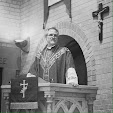
It was inevitable. As blogging has become more and more popular, growing at a rate faster than social ettiquette could catch up - there's now a debate about blogging manners and ethics. This article is an example.
I find the piece interesting, but I think some people are making it more difficult than it really is.
A blog is not much different than one's home. For instance, you're visiting my blog right now. You are in my "home." If I like your company, you can stay. If you get drunk and vomit all over my hard-wood floors, I will toss you out on your ear. There's really no need for an international treaty and a committee of rocket scientists to hash this out. It's kind of a "private property" situation - which is why the simple and easy solution (that the blog owner has ultimate control and say over the content of the posts) isn't acceptable to a lot of folks.
Some people claim a "right" to post anything they want on anyone's blog. They can post profanity, insults, smutty doctored up pictures, threats, or spam - and if you remove such posts, you are "violating their free speech."
I see.
Once again, if you come to my house and become unpleasant, loud, rude, arrogant, annoying, insulting, or otherwise odious - out you go. If I invite you to dinner at my place, and you want to give me an Amway pitch, try to convert me to your religion or political party, or proceed to tell me how to raise my son - you'll be on your way to the local McDonald's. That's because it's *my* house - not a socialist collective.
Similarly, this is *my* blog. I post what *I* want to write and talk about here. If some find it interesting, they'll read it. If not, they'll visit someone else's blog. I do enjoy rigorous debate and other points of view - especially given that I do post personal opinions here (the usual raison d'etre for blogging in the first place) but as the owner of this virtual house, and as the host of this virtual dinner party, I make the rules. Nobody is forced to come here.
Having said that, Father Hollywood's guests have overwhelmingly been ladies and gentlemen. Seldom have I had to remove comments. Sometimes the debate gets a little heated - and that's fine. But there is a line, and I decide where it is. If you feel that this infringes on your free speech, you can express yourself by getting your own blog. They're free and easy to set up.
Personally, I don't read many blogs. First of all, there's way too much out there. To even read all the Lutheran blogs would be a full-time job. There are maybe a half-dozen I check out on a regular basis - and even those, I basically scan. My own blog serves as a place for me to archive my sermons - and if a parishioner wants a copy, he can read it online. I also enjoy writing articles from time to time, and the blog is a way to self-publish and get immediate feedback and discussion. I find writing articles far more satisfying than reading other blogs and getting caught up in arguments. In the past, I've wasted a lot of time doing that - and there is very little to be gained from it.
I've lately been appalled and disappointed by the conduct of posters to a lot of Lutheran blogging sites. Discussions too often devolve into the internet equivalent of Pro Wrestling: posing, name-calling, straw-man argumentation, repeating slogans, personally insulting verbeage, etc. And these are Christians! And typically these are among the "confessional Lutheran" crowd (in other words, our "friends" and allies in the church and in the culture at large).
But I don't think this kind of thing is limited to Lutherans. I think it has become a characteristic of modern conservatism. We LCMS Lutherans have always been on the right-wing side of the spectrum theologically. But something has happened to conservatism in recent years. Conservatives used to be known for being cerebral, well-read, reserved, thoughful, and even aristocratic. Conservatism used to be the movement of G.K. Chesterton and Richard Weaver. But there's now a kind of "white trash" conservatism typified by pseudo-intellectuals who are more entertainer than thinker. And this seems to be the direction of discourse among many in the LCMS. Not all, but many.
I was watching "The Ten Commandments" last night. I was struck at how our culture has changed so much since the 1950s. This movie was an Oscar-winning Hollywood blockbuster. It is a long film, one that requires a certain degree of biblical and historical literacy, an ability to focus on formal polysyllabic dialogue, and is devoid of wise cracks and contrived one-liners. Charleton Heston delivers (in an almost monotone) the simple biblical script in King James English. He never once uses the word "smackdown" or says "Yippee-ki-yay, M.F." He doesn't even squint at the camera and say "make my day." The message of the film is so dignified (being a dramatization of the Word of God) that no attempt to jazz it up or make it a little rougher around the edges was even considered.
But in more recent times, conservatives seem intent on not appearing "stodgy." To be honest, in a lot of the conservative talk-show world, the topics and language used is not all that different than the barrage of "mature themed" Sunday night cartoons on FOX. Some who are considered leaders of the conservative movement carry themselves with the same amount of dignity as streetwalkers, reducing political discourse to schoolyard name-calling; intentionally looking, acting, and speaking like Paris Hilton and her friends.
Basically, American conservatism have been taken over by savages. And a lot of us in the LCMS are part of that American conservatism. We've become a synod of Philistines. And if you think that assessment is a little harsh, check out some of the Lutheran blogs. We're rapidly becoming the theological equivalent of a low-rent trailer park. One has to wonder how long before Will Ferrell will be portraying an LCMS pastor in a movie with a lot of flatulence jokes.
I don't believe that this barbarianism serves the Gospel. I've gotten to the point where I don't even want to read most of the blogs out there. Not because I think I'm better than everyone else, but to the contrary, thanks to original sin (which has been called "the lust for domination" by one of my heroes in the faith, the Rev. Dr. John Stephenson), my "inner barbarian" just needs an excuse to run amok. In the LCMS, we don't bow down before Baal or a golden calf, rather we worship the god "I'mrightandyourwrong." And any commandments we break en route to sacrifice before that altar are fair game, covered by our "freedom in the Gospel."
I think we need a return to an aristocratic conservatism. Not an aristocracy based on wealth or parentage, but one of conduct and personal dignity. I can't help but think about my great-grandmother - an unlikely aristocrat. She grew up as an orphan in West Virginia, was married at 15 to a coal miner. At the age of 25, she was an uneducated widow with two small children and another on the way. She moved to Akron, Ohio and scrubbed floors and toilets to feed her children.
Yet, my great-grandma, though never well-to-do, always conducted herself with personal dignity. She was always dressed nicely, used proper English, was kind, displayed manners and grace, was devout in her faith, and charitable. She sipped tea in cups with saucers. Her house was adorned with flowers. She was not a smart-alec. And though her home and lifestyle were humble, she carried herself with propriety. She was a true aristocrat, and she understood her duty of "noblesse oblige."
I don't know if we'll ever be able to restore such civility in our culture, or even in the LCMS, but what a saint and heroine to emulate!
I would especially like to see our clergy, myself included, strive toward a new culture of refinement. Given that all LCMS pastors are men, I would like to see more of our clergy behave as gentlemen, displaying chivalry and setting the example of the Christian knight in the midst of a decaying and depraved culture of wise-cracking "conservative" talking heads and Howard Stern wannabes.
I once heard some LCMS pastors boasting about going on a retreat and getting drunk, breaking bottles, damaging the furniture, and getting thrown out of the retreat center (which was run by an order of nuns). Their conduct was winked at and excused by an appeal to "freedom in the gospel" and the desire not to be considered a "pietist."
Somehow, I think we have got to get beyond this notion that in order to be a solid Lutheran or a good conservative, one has to be a belligerent lout, a loudmouth, and a neanderthal. Maybe the way we behave on others' blogs might be a good place to start.

Sunday, April 08, 2007


Sermon: Easter Vigil and Baptism of Heather and Samantha Imbraguglio
 8 April 2007 at Salem Lutheran Church, Gretna, LA
Text: Mark 16:1-8 (Gen 1:1-2:2; 7:1-5, 11-18; 8:6-18; 9:8-13; Ex 14:10-15:1; Ezek 36:24-28; 1 Cor 15:1-11)
In the name of + Jesus. Amen.
Christ is risen! He is risen indeed! Alleluia!
Today is a matter of life and death. Your presence here in this place is God’s will. He has brought you here to give you the most important gift you will ever receive: life.
The two most solemn, and yet most joyful, feasts of the Christian Church are Christmas and Easter. Both of these ancient commemorations are matters of life and death. For on Christmas, we celebrate the gift of the birth of God in the flesh. Birth is always a wondrous, even miraculous event. The birth of our Blessed Lord, the incarnation, the enfleshment of God as one of us, limited by space and time, surrounded by sinners, subject to pain, and even submitting to death – that most unique birth of all - is one of the two greatest triumphs of life over death, of good over evil, in all of history.
And of course, we celebrate the second of these two today, Easter Sunday, the festival of that same enfleshed God, whose life was taken violently by all of us poor miserable sinners, but who rose again from death to life.
In a way, Jesus has been born twice. Once from the womb, and again from the tomb. Though just as physical and fleshly as his birth from Mary, this second birth is a birth to immortality – to a literal, physical eternal life.
And we, dear Christians, are likewise born twice. Once, in the flesh, mortal and sinful, being conceived in guilt and subject to pain and death. But we are also born a second time, born again by water and the Spirit. This second birth, this spiritual birth, this birth into the Kingdom of God is what we celebrate this Easter Sunday.
This is why the Mother that gave us this second birth, the Christian Church, has for centuries celebrated and commemorated baptisms on this Holy Vigil of the Festival of the Resurrection of our Blessed Lord. Easter and Baptism are one and the same.
For Jesus was born a second time, in His bodily resurrection, in order that we too might be born again, just as we too will be bodily resurrected.
When God created the universe, with His Spirit hovering over the waters, He created everything and declared it all “good.” “Very good,” in fact. All creation was good, perfect, and holy – including human flesh.
But thanks to our rebellion and rejection of His will, our flesh became corrupt. It began to shrivel and age. It became subject to suffering and death. Our sins multiplied and became so great that the waters over which the Holy Spirit brooded became a cleansing agent, wiping out sinful men from the face of the earth – except Noah and His family.
Creation was, in a very real physical way, born again.
And even as the Children of Israel, the chosen people from whose loins the Christ would come to give the second birth, found themselves facing extinction at the hands of a wicked Pharaoh, those same spiritual waters gave the Israelites a fresh start, a rebirth as a nation.
The Old Testament people of God were, in a very real physical way, born again.
The prophet Ezekiel also looks forward to the coming Messiah, promising that the Lord God would sprinkle water on his mortal, dying people, and they would be cleansed. They are to receive new life through a new heart. And this new life comes with a new spirit – and yet this new heart is also “a heart of flesh.”
And on that first Easter, the Messiah, the New Adam, the New Moses, the Prophet of all prophets, the Giver of the second birth into whose name all Christians are baptized, walked out of His own grave, alive, demonstrating His mastery over creation, over death, and over Satan.
This morning, we have all borne witness to two births. Heather and Samantha have been born a second time, by water and the Spirit, walking away from death to life. These two daughters of Israel, by the holy water prophesied by Ezekiel combined with the same Word and Spirit proclaimed by the prophet, have received the gifts of new hearts, of the Spirit of God, and of everlasting life.
Their holy baptisms are the fulfillment of thousands of years of their ancestors’ participation in the covenant of the blood of the Lamb. For as their forefathers had the blood of the sacrifices sprinkled on them by priestly hands, they have now been covered by the blood of the once-for-all sacrifice of the priestly Lamb that the Lord Himself supplied.
These two daughters of Abraham have, in a very real physical way, been born again.
Of course, no two births are exactly the same. In our Epistle lesson, St. Paul calls himself “one born out of due time.” St. Paul, a pious Jew, came to faith by a special revelation from Jesus Himself – and Paul’s baptism sealed that conversion and rebirth.
Most Christians are born again shortly after their first birth. But some are “born out of due time,” being converted to the faith through the Word of God, through the preaching of the Gospel, through the miraculous forgiving work of the same Spirit that brooded over the waters and preserved Israel from all of her troubles. Some come to faith and are baptized as older children, while others are born anew in the waters as adults.
The result is the same. Rebirth. New life. Forgiveness of sins. A reclaiming of the goodness of creation. A Christ-won conquest over death. Baptism gives us a historic reality to which we can cling when doubts arise and Satan accuses. Whether we have the privilege of being able to remember our baptisms or not, we can all call them to mind as we make the sign of the cross.
For new Christians are not made, they are born. Born of water and the Spirit. Born of the will of God that all men receive life and salvation. Born of the sacrifice of Jesus Christ on the cross, and born of His walk from the tomb.
This is why Christians take Easter so personally. For we are born again by name at the font. We are baptized in the name of the Triune God. We are given the name “Christian” at this birth. Having been baptized into the death of Jesus, being crucified with Christ, we rise with Him to a life that will never end.
Most people around the world mark their calendars to commemorate the date of their birth. We give gifts on this date to celebrate the gift of life. We eat a feast in honor of the person who has done nothing more than draw breath for another year. We celebrate life with joy, and even giddy silliness.
And we Christians also mark time. The Christian has several birthdays in time – even as we exist outside of time, in eternity. We too celebrate the day in which we passed from our mother’s womb to draw our own breath. And we also commemorate the date in which we are born anew of God our Father and the Church our Mother – the date of our holy baptism. And when we die in this flesh, we mark that date as a Christian’s spiritual birthday, enjoying paradise in expectation of the resurrection of the body. And finally, the Christian Church acknowledges another birthday – one that changes every year according to the phases of the moon that the Lord Himself set into motion in the heavens. That birthday, dear friends, is today. The day of the resurrection of our Lord Jesus Christ, the Firstborn of the dead, and the Giver of life.
On this day, we Christians celebrate the rebirth of our Lord’s body, having passed from the tomb, to give us breath. We celebrate with gifts – gifts which are given to us: reconciliation with the Father, forgiveness through the Son, and newness of life by the Holy Spirit. We eat a feast – the greatest banquet of all – the Body of the Passover Lamb and the Blood of the New Covenant.
Today is indeed a matter of life and death. His death has given you life. His resurrection has given you hope. His baptism has washed you clean and made you a Son of God. His Supper has brought you forgiveness, life, and salvation, enfleshed in the very creation He has pronounced “good.” “Very good,” in fact.
Christ is risen! He is risen indeed! Alleluia!
In the name of the Father and of the + Son and of the Holy Spirit. Amen.
Saturday, April 07, 2007
Sermon: Good Friday

6 April 2007 at Christ Lutheran Church, Chalmette, LA
Text: John 18 & 19 (Isa 52:13-53:12; 2 Cor 5:14-21)
In the name of + Jesus. Amen.
Dear Christians, today is the one thousand nineteen hundred and seventy seventh time the Church has looked back and commemorated the crucifixion of our Lord. Through the rise and fall of empires, during wars and persecutions, in plague and sickness, and even as the foundations of the Church herself have been rocked by controversy and scandal – we Christians soldier on, following our Crucified Captain, and standing in the train of the millions of our brothers and sisters who have gone on before us.
And how silly we look!
For in the eyes of the world, we annually commemorate the death of the founder of our religion, calling it “good.” We wear crosses around our necks and adorn our churches and homes with images of a man who has been nailed to a piece of wood. More than one comedian has pointed out the foolishness of such a faith.
We kneel and scrape before a table and solemnly eat a little wafer of bread and take a tiny sip of wine – when we could be outside having a crawfish boil, drinking beer, and laughing. But instead, we huddle around a table and chant ancient words translated from languages nobody speaks anymore.
The Kingdom of God has always been different than what reason tells us it should be. Adam and Eve’s reason, distorted by the wicked serpent, concluded that God’s Kingdom was just a trick that God was using to keep them down. Their faulty reason made them think they knew better than God, and so they disobeyed.
The children of Israel again and again, convinced they knew the Kingdom of God better than God himself, turned to false gods, putting the prophets to death, and disobeying God’s Law.
And even when God Himself assumes human flesh, works miracles in the plain sight of all, speaking and preaching about the Kingdom – that Kingdom was misunderstood and distorted by the people. Even at Jesus’ arrest, Peter thought the Kingdom could be attained by the violent work of human hands (although, in a way, it was). Caiaphas thought the Kingdom of God would be advanced by the expediency of killing one man, Jesus, instead of many dying (and, in a way very different than what he understood, there was truth in this statement). Pilate perceived Jesus to be something more than a man, and himself thought he would be helping this King whose Kingdom was not of this world by finding Him innocent (though Pilate unwittingly advanced God’s Kingdom by allowing Jesus to be crucified).
And what about the crowds? They thought the advancement of the Kingdom of God would come through killing Jesus and releasing a sinner in place of Him who was innocent (and ironically, how right they were!).
For no matter how many human beings conspire with Satan throughout the centuries to destroy God’s Kingdom, His will shall be done, His Kingdom shall come – on earth and in heaven.
For even as we think we understand the mysteries of God, we can’t even begin to comprehend them. Like children, all we can do is trust. We must trust even when our eyes and our reason are filled with images and thoughts that tempt us to take God’s Kingdom into our own hands. For God is in control. Obedience, dear brothers and sisters, is a direct result of trust. When we jump out of a burning building into the arms of a fireman, we do so in faith and trust that he will catch us. When we struggle against sin and temptation, we do so in faith that there is a very good reason why we ought to obey God and trust in His Word.
This is the very reason such a sad day is called “good.” For all of the misery of our Lord’s passion, His humiliation, His physical and mental anguish, His torment upon the cross, and the apparent victory of Satan over Him are all part of the great plan that we accept by faith and not by sight. For the passion, the cross, and the death of Jesus were not in vain, nor were they defeat. Jesus’ triumphant cry of: “It is finished!” is not a waning wail of submission of the conquered, but rather it is the superlative shout of victory of the Conqueror.
For though the eyes tell us otherwise, faith, fed and nourished by the Scriptures, teach us that this is the greatest victory in history – a victory over the devil, a triumph over the grave, a rout of death itself.
The disobedience of Adam and Eve have been rolled back. The infidelity of the children of Israel has been undone. Even the sins of the disciples, of the Jewish leaders and the mob, of Pilate, and of all of the world have been atoned for by this ultimate act of love by our Lord.
The crucifixion of our Lord Jesus is a bittersweet goodness. Through His passion and death, we can confess with St. Paul per our epistle: “God… has been reconciled us to Himself through Jesus Christ, and has given us the ministry of reconciliation, that is that God was in Christ reconciling the world to Himself, not imputing their trespasses to them, and has committed to us the word of reconciliation…. For He made Him who knew no sin to be sin for us, that we might become the righteousness of God in Him.”
And so, today is rightly called “Good” Friday. Though our joy is still stifled by mourning our Savior. For we join those first disciples in space and time as they looked upon their friend and their master, stricken, smitten, and afflicted, lifeless on the cross, with blood and water pouring from his riven side, seeing Him seemingly defeated and laid into a tomb. And with the disciples, we now wait for our Lord to return. For His rising from the dead is a victory lap of the Great Triumph. And on the third day hence, we will join two billion Christians around the world and will celebrate the resurrection of our Lord for the one thousand nine hundred and seventy seventh time.
But until Eastern morning, we contemplate His death and passion. We sing praise to God, though our Alleluias are muted. We know that our Redeemer liveth, though we hold our joy in check.
Let us wait for the Easter triumph in expectation of God’s grace, even as the “love of Christ compels us.” Dear Christians, the Lord’s death has reconciled you to God. Your sins have been put to death, and through baptism you have been crucified with Christ. His victory is your victory. Death has been defeated, now and unto eternity. Amen.
In the name of the Father and of the + Son and of the Holy Spirit. Amen.
Text: John 18 & 19 (Isa 52:13-53:12; 2 Cor 5:14-21)
In the name of + Jesus. Amen.
Dear Christians, today is the one thousand nineteen hundred and seventy seventh time the Church has looked back and commemorated the crucifixion of our Lord. Through the rise and fall of empires, during wars and persecutions, in plague and sickness, and even as the foundations of the Church herself have been rocked by controversy and scandal – we Christians soldier on, following our Crucified Captain, and standing in the train of the millions of our brothers and sisters who have gone on before us.
And how silly we look!
For in the eyes of the world, we annually commemorate the death of the founder of our religion, calling it “good.” We wear crosses around our necks and adorn our churches and homes with images of a man who has been nailed to a piece of wood. More than one comedian has pointed out the foolishness of such a faith.
We kneel and scrape before a table and solemnly eat a little wafer of bread and take a tiny sip of wine – when we could be outside having a crawfish boil, drinking beer, and laughing. But instead, we huddle around a table and chant ancient words translated from languages nobody speaks anymore.
The Kingdom of God has always been different than what reason tells us it should be. Adam and Eve’s reason, distorted by the wicked serpent, concluded that God’s Kingdom was just a trick that God was using to keep them down. Their faulty reason made them think they knew better than God, and so they disobeyed.
The children of Israel again and again, convinced they knew the Kingdom of God better than God himself, turned to false gods, putting the prophets to death, and disobeying God’s Law.
And even when God Himself assumes human flesh, works miracles in the plain sight of all, speaking and preaching about the Kingdom – that Kingdom was misunderstood and distorted by the people. Even at Jesus’ arrest, Peter thought the Kingdom could be attained by the violent work of human hands (although, in a way, it was). Caiaphas thought the Kingdom of God would be advanced by the expediency of killing one man, Jesus, instead of many dying (and, in a way very different than what he understood, there was truth in this statement). Pilate perceived Jesus to be something more than a man, and himself thought he would be helping this King whose Kingdom was not of this world by finding Him innocent (though Pilate unwittingly advanced God’s Kingdom by allowing Jesus to be crucified).
And what about the crowds? They thought the advancement of the Kingdom of God would come through killing Jesus and releasing a sinner in place of Him who was innocent (and ironically, how right they were!).
For no matter how many human beings conspire with Satan throughout the centuries to destroy God’s Kingdom, His will shall be done, His Kingdom shall come – on earth and in heaven.
For even as we think we understand the mysteries of God, we can’t even begin to comprehend them. Like children, all we can do is trust. We must trust even when our eyes and our reason are filled with images and thoughts that tempt us to take God’s Kingdom into our own hands. For God is in control. Obedience, dear brothers and sisters, is a direct result of trust. When we jump out of a burning building into the arms of a fireman, we do so in faith and trust that he will catch us. When we struggle against sin and temptation, we do so in faith that there is a very good reason why we ought to obey God and trust in His Word.
This is the very reason such a sad day is called “good.” For all of the misery of our Lord’s passion, His humiliation, His physical and mental anguish, His torment upon the cross, and the apparent victory of Satan over Him are all part of the great plan that we accept by faith and not by sight. For the passion, the cross, and the death of Jesus were not in vain, nor were they defeat. Jesus’ triumphant cry of: “It is finished!” is not a waning wail of submission of the conquered, but rather it is the superlative shout of victory of the Conqueror.
For though the eyes tell us otherwise, faith, fed and nourished by the Scriptures, teach us that this is the greatest victory in history – a victory over the devil, a triumph over the grave, a rout of death itself.
The disobedience of Adam and Eve have been rolled back. The infidelity of the children of Israel has been undone. Even the sins of the disciples, of the Jewish leaders and the mob, of Pilate, and of all of the world have been atoned for by this ultimate act of love by our Lord.
The crucifixion of our Lord Jesus is a bittersweet goodness. Through His passion and death, we can confess with St. Paul per our epistle: “God… has been reconciled us to Himself through Jesus Christ, and has given us the ministry of reconciliation, that is that God was in Christ reconciling the world to Himself, not imputing their trespasses to them, and has committed to us the word of reconciliation…. For He made Him who knew no sin to be sin for us, that we might become the righteousness of God in Him.”
And so, today is rightly called “Good” Friday. Though our joy is still stifled by mourning our Savior. For we join those first disciples in space and time as they looked upon their friend and their master, stricken, smitten, and afflicted, lifeless on the cross, with blood and water pouring from his riven side, seeing Him seemingly defeated and laid into a tomb. And with the disciples, we now wait for our Lord to return. For His rising from the dead is a victory lap of the Great Triumph. And on the third day hence, we will join two billion Christians around the world and will celebrate the resurrection of our Lord for the one thousand nine hundred and seventy seventh time.
But until Eastern morning, we contemplate His death and passion. We sing praise to God, though our Alleluias are muted. We know that our Redeemer liveth, though we hold our joy in check.
Let us wait for the Easter triumph in expectation of God’s grace, even as the “love of Christ compels us.” Dear Christians, the Lord’s death has reconciled you to God. Your sins have been put to death, and through baptism you have been crucified with Christ. His victory is your victory. Death has been defeated, now and unto eternity. Amen.
In the name of the Father and of the + Son and of the Holy Spirit. Amen.
Sermon: Maundy Thursday
 5 April 2007 at Salem Lutheran Church, Gretna, LA
Text: John 13:1-15, 34-35; (Ex 12:1-14, 1 Cor 11:23-32)
In the name of + Jesus. Amen.
Today is known as “Maundy” Thursday based on one of the words in our Gospel reading. For it was on Thursday of Holy Week that our Lord celebrated the Last Supper, washed the disciples’ feet, and then gave his followers a new commandment (which in the Church’s Latin is the word mandatum).
Of course, we Lutherans celebrate our freedom in the Gospel, and confess with St. Paul that we are saved by grace through faith, and not by works of the law. That being said, our Lord Jesus Christ still gives us a new mandatum – something that is “mandatory.” As Christians, this mandate is placed upon us: that we love one another even as Christ has loved us.
This mandate from our Lord isn’t optional. It is something that is a defining mark of being a Christian.
But the good news is that our Lord doesn’t require of us something that he hasn’t equipped us to do. For our King is not like Pharaoh who ridiculously demanded the Israelites make bricks without straw. The Christian life is all about gifts – and those gifts the Lord bestows on us, we are to freely and liberally “re-gift.” Jesus has just shown us what true love is, and then he tells us to go and do likewise.
The loveless Pharaoh, whose heart was hardened by the Lord in response to his impenitence and arrogance, is the opposite of our Lord Jesus. For Pharaoh seeks to hold God’s people in bondage, to benefit from the toil of others. And this is what led to the first Passover described in our Old Testament lesson, in which the lamb was slaughtered and eaten, in which the blood of that sacrifice was placed upon the children of God, marking them as those who are being spared the ravages of the angel of death.
By contrast is our blessed Lord, who opposed Pharaoh by freeing the Israelites, who becomes the sacrificial Lamb of the final Passover, described in our Epistle lesson. In this Last Passover, the Lamb Himself is slaughtered and eaten. The blood of this Last Passover is placed upon the tongues of the children of God, marking us as those spared the ravages of the angel of death.
It is this sacrificial act that embodies pure, perfect love – the kind of love we Christians are mandated to carry out. The Church is commanded not only to have orthodox doctrine, but also to love. Indeed, we are to correct the erring, but we are to “speak the truth in love.”
And contrary to everything our culture screams at us, love is not a feeling or emotion. It isn’t libido, an obsession, or a self-centered passion. Love doesn’t exist in a vacuum, nor is love necessarily manifested by flowery words. For love is quite simply acted out in deeds.
And those deeds are not always moonlight and roses. Dying on a cross after being humiliated and flogged, isn’t exactly the stuff of Hallmark cards. Handing out small pieces of bread and passing around a chalice of wine doesn’t look all that romantic in the eyes of the world. Putting on a towel and washing people’s dirty feet isn’t something you’ll likely ever see on a commercial for a cruise-line. But these are the kinds of deeds that embody love – deeds of humble service.
For love, true Christian love – is often pretty dull, if not outright unappealing. Husbands and wives who take care of one another in their old age is such an example. Children who have to help their parents deal with their brothers’ and sisters’ vomit and dirty diapers is that kind of love. Police officers who risk their lives for very little pay in return exhibit the kind of self-sacrificial love our Lord orders us to do. Being a faithful student, or teacher, or clerk, or grandparent is the epitome of this mandate. For we are all called to serve someone.
The lover thinks of his beloved instead of himself. The lover will go to any length, suffer any personal loss, will endure any inconvenience or even pain to himself in order to ease the suffering or serve the needs of his beloved. A true lover will even die for his beloved.
And doesn’t that describe our Lord Jesus to a tee?
For after establishing the Lord’s Supper, in which the Almighty God of the universe is willing to condescend to be contained in bread and wine for our sakes, after teaching by humble example how baptism washes away sin while demonstrating how the apostles and their successors are to busy themselves with cleansing the members of their congregations through menial service of the Gospel, and just before Himself being subjected to betrayal, arrest, torture, mockery, and murder by the very people Jesus repays with love and forgiveness – He tells us, He command us, to carry out the same mission of divine love ourselves.
Of course, like all the other mandates of our Lord, we’re not so good at keeping this one. We are weak and weary – like the disciples who fell asleep as Jesus suffered anguish in Gethsemane. We are unreliable and self-serving just like the disciples who scattered when their Shepherd was struck. We are like Peter, whose boasts melted away when they made the transition from nice-sounding theory to action in the real world.
And this is why Maundy Thursday is so important.
For if you strive to obediently keep the Lord’s love mandate, you have no choice but to fill yourself with the Lord’s love. If you want to love others, you must first be filled with love yourself. And that kind of love only comes from the Lord – directly and physically. He offers Himself to you in His body and blood. He doesn’t merely set an example to follow (though what an example he does set!), nor does he simply recite a TV commercial jingle and say “Just do it!” – (as though we have any power at all to “just do it”), nor does He simply give you a Bible as a guidebook for the Christian life (though it contains such information). Rather Jesus Himself works these acts of love through His own body, the Church. Which is to say, He works through you, dear people.
For “when you eat this bread and drink this cup, you proclaim the Lord’s death until He comes.” And in that proclamation, that confession, you are loving the other members of your family. You are loving your fellow Christians. And you are loving your Lord. For in being forgiven, you are demonstrating to others their need to be forgiven. And when you partake in the Lord’s gifts, he is as pleased as a father watching his children play happily with gifts he provides them.
This mystical meal gives us everything we need to carry out the mandate. For when we are weak, He is strong. When our feelings tell us we are not good enough, the very real blood of our Lord that you see and taste from this cup pleads with the Father on our behalf. When our own personal Pharaohs lovelessly oppress and crush us – we have no need to retaliate, to debase ourselves with bitterness or revenge – for we have the luxury of responding in love – having been given everything and then some by our gracious Lord.
Love is a mystery. The more you give it away, the more it comes back to you. The Holy Supper is likewise a mystery. We can’t any more rationally explain the Lord’s Real Presence in the Sacrament than we can explain love. And yet, we know both exist. In fact, they exist as one. For when you partake of this Supper, dear brothers and sisters, the unbounded love of Almighty God becomes part of your very body and soul.
For “He has given food to those who fear Him; he will be ever mindful of His covenant.” This Holy Supper is love that can be eaten and drunk – it is literally a “love-feast” – a banquet in which God and man sup together in friendship and love. And the irony is this: the more our Lord binds us with the mandate to love one another, the more we are freed up to love one another. The more we give, the more we receive. The more our bodies are filled with this Supper, the more we can fill others with the milk and honey of divine love.
So come to this table, dear brothers and sisters! It is a foretaste of the love-feast that will have no end! For here you are free to carry out the mandate of the Lord. Amen.
In the name of the Father and of the + Son and of the Holy Spirit. Amen.
Monday, April 02, 2007
"Insanity" according to a homosexual pastor
The following article is an interesting look at how a gay Anglican priest views the Gospel of the atonement of Jesus Christ for the sins of the world. His is an increasingly prevalent way of interpreting Scripture in order to make the reader the master and the text the servant. This was foretold by traditionalists a generation ago when they opposed women's ordination - and their much-ridiculed prediction has come true.
He believes the idea that Jesus died as payment for sins is "insane." He has some other opinion of why Jesus died - a much more politically-correct and malleable explanation - one that avoids the issue of sin all together. The fact that the Old Testament is replete with sacrificial prophecies and types of Jesus' sacrifice on the cross, that the New Testament epistles overwhelmingly speak of the reason for the crucifixion, and the gospels themselves contain this kind of theology of ransom and atonement - make no difference to this cleric.
The fact that the Christian Church has proclaimed the forgiveness of sins by virtue of Jesus' death on the cross for 2,000 years means nothing to him. He claims to be right where age upon age of church fathers are wrong. The Nicene Creed and the proclamation of the liturgy embraced by Anglican Christians (both recitations of Scripture) hold no sway with this shepherd of souls.
Scripture and the tradition of the church are considered "insane" - and yet two men pathetically using body parts for things they obviously weren't designed to be used for is somehow "sane"? This shows the depths of denial into which people can sink who reject not only Scripture and churchly tradition, but even natural law and common sense. They are so deluded as to call good evil, and evil good. It has gotten to the point where they can look at "2 + 2" and see "5".
Our sinful flesh is such that it's easier to deny the clear truth of the written word and to declare obvious deviance to be the norm than it is to submit to a higher authority (even biological reality itself) and to repent of sin.
He believes the idea that Jesus died as payment for sins is "insane." He has some other opinion of why Jesus died - a much more politically-correct and malleable explanation - one that avoids the issue of sin all together. The fact that the Old Testament is replete with sacrificial prophecies and types of Jesus' sacrifice on the cross, that the New Testament epistles overwhelmingly speak of the reason for the crucifixion, and the gospels themselves contain this kind of theology of ransom and atonement - make no difference to this cleric.
The fact that the Christian Church has proclaimed the forgiveness of sins by virtue of Jesus' death on the cross for 2,000 years means nothing to him. He claims to be right where age upon age of church fathers are wrong. The Nicene Creed and the proclamation of the liturgy embraced by Anglican Christians (both recitations of Scripture) hold no sway with this shepherd of souls.
Scripture and the tradition of the church are considered "insane" - and yet two men pathetically using body parts for things they obviously weren't designed to be used for is somehow "sane"? This shows the depths of denial into which people can sink who reject not only Scripture and churchly tradition, but even natural law and common sense. They are so deluded as to call good evil, and evil good. It has gotten to the point where they can look at "2 + 2" and see "5".
Our sinful flesh is such that it's easier to deny the clear truth of the written word and to declare obvious deviance to be the norm than it is to submit to a higher authority (even biological reality itself) and to repent of sin.
Goodbye to Girlhood
There is a cultural phenomenon going on that has disturbing long-term consequences. This article describes the disappearing window of childhood innocence in young people - especially in girls.
Teaching 6th, 7th, and 8th grade kids, I have to agree with the article. Thanks to cable TV, the internet, absentee parenthood (whether caused by two working parents or divorce), and peer pressure, children feel the need to engage in "adult" (though not necessarily "mature") behavior at increasingly younger ages - things like smoking, drinking, sexuality, exposure to mature themes in media, crass vulgarity, piercings, and tattoos. They are being manipulated and encouraged by advertizing experts who see these children as nothing more than a potential market.
I find that either parents 1) are too disconnected to even know what their children are doing, or 2) approve of, and even assist, in the behavior!
The results are disastrous.
Of course, there are the obvious physical manifestations: promiscuity, an increase in the percentage of teenage pregnancy (which may even lead to abortion), drug use, drinking, smoking, the spread of disease, or even suicide. But there are also other, perhaps more subtle consequences: guilt, lack of courage, materialism, bullying, emotional problems, lack of discipline, difficulties in relating to people of the opposite sex, distorted family relationships, and even involvement in the occult.
Though I'm not exactly sure why, my intuition tells me this is more destructive to the feminine psyche than it is hurtful to boys (though it isn't healthy for them either). And when the feminine in a culture is destroyed or watered down, there is no longer the social force to civilize the testosterone-laced boys and men. When mothers are no longer feminine and can no longer teach their sons how to relate to women, woe to the next generation! And when parents teach and encourage their daughters to appear and conduct themselves as sexual objects, one wonders how they will ever regain their dignity (how can the salt be made salty again?).
Of course, not all parents raise their children this way, and there are a lot of kids out there who are content not to push the envelope. But there is definitely a cultural pressure on parents and children to move away from traditional boundaries.
The irony is that in ages past, children had to grow up more quickly than in today's culture. They moved from childhood right into adulthood without the luxury of being teenagers (think of the Blessed Virgin Mary, or numerous examples from our own family histories of great-grandparents who responded heroically to hardship). However, that kind of maturity was true maturity - becoming an adult by being forced into responsibility by hardships forged of necessity (war, poverty, family obligations, etc.). What we have today is actually a lack of maturity - displayed by parents and children alike - an indulgence in childish conduct that masquerades as "adult" behavior - brought about by such things as wealth, greed, disdain for family and social obligations, lack of proper role models, etc.
Being a junior high student and getting one's belly-button pierced, using MySpace to engage in sex talk, and sneaking into R-rated movies are not hallmarks of maturity (though that is the overwhelming perception among young people). A pre-teen might say something like: "I'm a very mature person because I smoke cigarettes with my mom and use the f-word." Ironically, a junior high kid who is content to play pickup basketball and ride a bike around the neighborhood may be the most mature of all.
I foresee a lost generation of children of gen-x-ers who were themselves raised as guinea pigs by their baby-boomer parents. These children aren't the hippies who rebelled against tradition, but rather these kids have no clue what the very concept of tradition is. They are being pushed into a Lord of the Flies existence of savagery and short-term self-indulgence. And before long, they will become parents themselves.
Pray for this generation!
Teaching 6th, 7th, and 8th grade kids, I have to agree with the article. Thanks to cable TV, the internet, absentee parenthood (whether caused by two working parents or divorce), and peer pressure, children feel the need to engage in "adult" (though not necessarily "mature") behavior at increasingly younger ages - things like smoking, drinking, sexuality, exposure to mature themes in media, crass vulgarity, piercings, and tattoos. They are being manipulated and encouraged by advertizing experts who see these children as nothing more than a potential market.
I find that either parents 1) are too disconnected to even know what their children are doing, or 2) approve of, and even assist, in the behavior!
The results are disastrous.
Of course, there are the obvious physical manifestations: promiscuity, an increase in the percentage of teenage pregnancy (which may even lead to abortion), drug use, drinking, smoking, the spread of disease, or even suicide. But there are also other, perhaps more subtle consequences: guilt, lack of courage, materialism, bullying, emotional problems, lack of discipline, difficulties in relating to people of the opposite sex, distorted family relationships, and even involvement in the occult.
Though I'm not exactly sure why, my intuition tells me this is more destructive to the feminine psyche than it is hurtful to boys (though it isn't healthy for them either). And when the feminine in a culture is destroyed or watered down, there is no longer the social force to civilize the testosterone-laced boys and men. When mothers are no longer feminine and can no longer teach their sons how to relate to women, woe to the next generation! And when parents teach and encourage their daughters to appear and conduct themselves as sexual objects, one wonders how they will ever regain their dignity (how can the salt be made salty again?).
Of course, not all parents raise their children this way, and there are a lot of kids out there who are content not to push the envelope. But there is definitely a cultural pressure on parents and children to move away from traditional boundaries.
The irony is that in ages past, children had to grow up more quickly than in today's culture. They moved from childhood right into adulthood without the luxury of being teenagers (think of the Blessed Virgin Mary, or numerous examples from our own family histories of great-grandparents who responded heroically to hardship). However, that kind of maturity was true maturity - becoming an adult by being forced into responsibility by hardships forged of necessity (war, poverty, family obligations, etc.). What we have today is actually a lack of maturity - displayed by parents and children alike - an indulgence in childish conduct that masquerades as "adult" behavior - brought about by such things as wealth, greed, disdain for family and social obligations, lack of proper role models, etc.
Being a junior high student and getting one's belly-button pierced, using MySpace to engage in sex talk, and sneaking into R-rated movies are not hallmarks of maturity (though that is the overwhelming perception among young people). A pre-teen might say something like: "I'm a very mature person because I smoke cigarettes with my mom and use the f-word." Ironically, a junior high kid who is content to play pickup basketball and ride a bike around the neighborhood may be the most mature of all.
I foresee a lost generation of children of gen-x-ers who were themselves raised as guinea pigs by their baby-boomer parents. These children aren't the hippies who rebelled against tradition, but rather these kids have no clue what the very concept of tradition is. They are being pushed into a Lord of the Flies existence of savagery and short-term self-indulgence. And before long, they will become parents themselves.
Pray for this generation!
Sunday, April 01, 2007
Sermon: Dominica Palmarum (Palm Sunday)
 1 April 2007 at Salem Lutheran Church, Gretna, LA
Text: Matt 21:1-9 (Matt 27:11-54; Zech 9:9-12; Phil 2:5-11)
In the name of + Jesus. Amen.
On this Palm Sunday, we have two Gospel readings (which, incidentally also happens every time we have a baptism). As we processed into this holy place named after Jerusalem, we called to mind our Lord’s procession into David’s Holy City. We heard anew the proclamation of St. Matthew concerning the commencement of our blessed Lord’s passion.
Year after year, we wave palms and sing All Glory Laud and Honor to Him, our Redeemer and King. As we are in our final week of the penitential season of Lent, and even as we still refrain from singing Glory Be to God on High and as we hold off chanting Glory Be to the Father, Son, and Holy Spirit, we can’t completely stifle our praise to the Redeemer King who makes his triumphal entry into his kingdom on a lowly donkey.
But we also replay a bit of this Palm Sunday pageantry every week in the Divine Service – in the Sanctus. Right before our Lord comes to us humble, and riding under the forms of bread and wine, we laud and magnify his name as he processes into this holy place, this Salem, with the very same shout: “Hosanna! Blessed is He that cometh in the name of the Lord! Hosanna in the Highest!”
For as the old saying goes, the more things change, the more they stay the same. Just as our Lord and King rode among His subjects, and just as He came bearing gifts, and just as He came humbly, motivated not by a desire for self-aggrandizement, but in order to do His Father’s will, and just as He is the One who loves us with such a perfect love that He would lay down His life for His friends – He continues to do the same today.
For no truer confession has ever been uttered than those divine words penned by St. Paul about our Lord Jesus: “being in the form of God, did not consider it robbery to be equal with God, but made Himself of no reputation, taking the form of a bondservant, and coming in the likeness of men. And being found in appearance as a man, He humbled Himself and became obedient to the point of death, even the death of the cross.”
Though He is exalted and sits at the right hand of the Father, and though He is in His glorious body that shall never again die, that shall never see corruption – it is a body that He continues to subject to space and time, permitting Himself to be handled by sinners.
For Jesus, the triumphant King and Master of the universe is still playing the servant, still kneeling before us to wash our feet, still doing our bidding as a common slave. He continues to invite us to His table where He is both host and feast. He drinks the fruit of the vine anew with us in the Kingdom of God – just as He promised.
He continues to serve us, dear brothers and sisters, even as we continue to be fickle, to praise Him with our tongues and betray Him with our deeds. For the same crowds that sang “Hosanna” in our first Gospel were shouting “Let Him be crucified” in our second. The more things change…
This is what makes Jesus a truly divine King. For history has many examples of kings who lay down their lives for their people, their country, their homes, or even a noble idea. The new movie 300 is a retelling of the story of the 300 Spartan heroes who stood up against a million man army of invading Persians at a critical pass called Thermopylae nearly 2,500 years ago. The heroic sacrifice of King Leonidas and his brave soldiers who laid down their lives in order to fight a delaying action until Greece could ready itself to repel King Xerxes and the mighty Persian Empire has been told and retold thousands of times. A good king will lay down his life for his people. Good kings are rare, but they do exist.
Jesus does this, and more. For He is not just a good king, he is the Good Shepherd, he is the Son of David, he is the great I AM, who lays down His life not just for his own tribe, his own supporters, but even for His enemies, even for those who drive the nails, even for His mockers, even for sinners like us whose wicked thoughts, words, and deeds brought the pain of the passion, cross, and death to Him. Jesus not only dies for His friends, but for His enemies as well – for us who choose to please ourselves instead of submitting to our rightful King, we who seek to serve ourselves instead of others, we who routinely opt for evil instead of good.
For our Good King, our Good Shepherd, has humbled Himself and come as a sheep, as a sacrificial lamb that “goes uncomplaining forth.” For Jesus knows His Father’s will, He knows His mission, and even as the adoring crowds wave palms and sing His praise, He knows they will soon become a lynch mob. And yet, he rides on in majesty just the same.
Even as the adoring crowds sang “Hosanna” as Jesus began his holy week journey – a word that means “Save Him!” – a word that basically means “God save the King!” – they will soon join the malignant taunts of jeering multitudes as He suffered on the cross, saying: “save Yourself… He saved others, Himself He cannot save.” Indeed, even as He saves others, He Himself dies. And yet, it isn’t true that He cannot save Himself, for that will come at Easter.
For in rescuing us, He will indeed rescue Himself. The grave will not hold Him. Evil will not declare victory. The taunts of the crowds will be silenced. The pain of the cross will be removed. The stench of death will give way to the fresh breath of life. The sting of the thorn will be replaced by the sweetness of wine. The sweat of the brow will be overcome by pools of living water. The groans of pain of giving birth to new life will be supplanted by the joyful singing of the multitudes of heavenly saints waving palms. The cemetery plot will be replaced by gardens, and the Lord will once more walk with His people, and His beloved children will see Him face to face. And “at the name of Jesus, every knee should bow, of those in heaven, and of those on earth, and of those under the earth, and that every tongue should confess that Jesus Christ is Lord, to the glory of God the Father.”
Until that great and glorious day, we Christians can only experience the foretaste of the Great Feast. We sing “Hosanna” – “God save the King” - even as our God and King saves us, even as he invites us to dine with Him, even as we continue to fall into sin and even as we seem helpless in the face of death. We come to this altar week after week to receive everlasting life from the King who humbles Himself, who dies for our sakes, and who continues to give us rich and eternal gifts.
The more things change, the more they stay the same.
And so with angels and archangels, and all the company of heaven, we laud and magnify Your glorious name, evermore praising You and saying:
Holy, holy, holy Lord God of Sabaoth.
Heaven and earth are full of Thy glory.
Hosanna! Hosanna! Hosanna in the highest!
Blessed is He, blessed is He; blessed is He
That cometh in the name of the Lord.
Hosanna, Hosanna, Hosanna in the highest! Amen.
In the name of the Father and of the + Son and of the Holy Spirit. Amen.
Sunday, March 25, 2007
La Nouvelle Maison, La Nouvelle Vie

Moving is no fun, but in some cases, the payoff is great!
The Hollywoods have moved from the Suburb of Kenner (which meant a 17 mile commute each way on crowded I-10, crossing the Mississippi River via the toll-required Crescent City Connection Bridge) to Old Gretna - a block and a half from church.
Our lives have changed for the better!
If any of Father Hollywood's readers are strapped with a long commute, you may want to consider downsizing and moving close. For most of my adult life, I have had long drives to work - spending thousands of hours on highways, fighting with traffic, spending countless amounts of money in gasoline and car maintenance - not to mention increasing my risk of an encounter with a jack-knifed tractor-trailer or a drunk driver. But now, I walk to and from work - a three minute pedestrian commute. Since moving, we hardly drive at all. In fact, I had to stop the police from towing our Saturn which was parked in front of church. A neighbor thought it had been abandoned!
Maybe I should ask Al Gore to buy some "green credits" from me! I don't really know what a "carbon footprint" is, but I know that buying gas is a rarity for our family now!
In just about three weeks since we've moved, my pants fit looser, I have a no stress from "road rage," and (this is a huge bonus) I get hours and hours more time at home with my family! I can walk home for lunch, to fetch a book, or just to have a coffee with my wife. Mrs. Hollywood and Lion-Boy routinely amble into our church and school for a visit. The days of leaving for work at 7:00 am and returning home at 10:00 pm are over. If it weren't Lent, I'd exclaim "Hallelujah" at this point...
Our new neighborhood is known as "Old Gretna" - which a member of our faculty at Salem describes quite accurately as a "Little French Quarter." It is an old historic area with train tracks running right down our street. It usually passes a couple times a day - which Leo greatly enjoys. He sits on the porch swing and waves as the cargo-carriers rumble by blasting their horns.
On Saturday mornings, we walk the one block to the Farmer's Market. Locals sell everything from milk, eggs, and yogurt, to orchids, salsa, and fruit trees. There is always a band playing, usually classic Southern rock or Louisiana blues. It's in the open air, there are people of all ages, and lots of critters on leashes. And the farm fresh food is really better. You have to shake the cream-laden milk (since it isn't ultra-pasteurized) and the farmers can tell you which hens laid which eggs by name. The quality is mind-blowing - far better than any of the agri-business slop sold at WalMart that we've come to accept as normal. I have been converted to family-farm food. My goodness! You can actually taste the food, and it really has color!
One Saturday a month, Old Gretna offers another treat - the Art Walk. Just a couple blocks past the Farmer's Market, just south on Huey P. Long Avenue in the Neutral Ground (which is New Orleanianese for the green space between the northbound and southbound lanes of the street), local artists and craftsmen sell their wares - everything from expensive oil paintings, right down to decorative fleur-de-lis and ladies' jewelry.
Only one block from home (on the way to both the Farmer's Market and Art Walk) is Common Grounds - a local restaurant and coffee shop. Not a chain, but a real neighborhood establishment, CG even has a shoe-shiner, a bar with a TV, and back rooms with couches and comfy chairs. They serve everything from cheeseburgers to crawfish, from cappuccino to Dixie Beer. There are high ceilings and friendly waitresses (as opposed to friendly ceilings and high waitresses, I suppose).
Old Gretna is a safe haven in the midst of crime-ridden post-Katrina New Orleans. We lie between two police stations within a short walk. It's safe to go on foot even at midnight (which means I don't have to load a briefcase up at the end of the work day and make sure I have everything). The neighbors are friendly, and take ownership of the neighborhood.
Four blocks from our house is the mighty Mississippi. We can stroll on over to the levy and sit on the bench, look at the skyline, and watch huge ships cruise the River. The ferry station is right there. We can ride for free back and forth across the river. There's not much to see on the other side (at Jackson and Tchoupitoulas - and if you can pronounce the latter, you must be a true New Orleanian), but the view on the River is remarkable. There are also running- and bike-paths along the levy for many miles. It's a great place to get in shape without spending a dime.
Now, if we drive for a few minutes to Algiers Point, we can take the other ferry over to the French Quarter. We look forward to doing that later on. When Leo is a little older, maybe we'll ride bikes along the path and bring them onto the ferry - and save the five bucks it costs to park at the station!
Our house itself is very comfy. It's a "shotgun" home from the late 19th century. We don't know exactly how old it is, but it probably dates back to just after Reconstruction (the older post-bellum, not the current post-hurricane Reconstruction - which went on in Louisiana until 1877, and was so harsh, that our state has only had one freely-elected Republican governor in our history. Of course, Louisiana politics is a topic in and of itself!) These homes were originally built as apartments for railroad workers. The name "shotgun" refers to the design - they are long and narrow, and typically have no hallways. One could shoot a shotgun in the front door and have the shells fly out the back door (don't try this at home...). These old homes were solidly constructed out of treated cypress wood, have no basements (heck, even our dead are above ground here!), and sit on blocks . Our home has survived over a century of hurricanes - including Camille, Betsy, and Katrina. As a result of Katrina, our home lost merely a couple of roof shingles. It goes without saying that they don't make them like they used to.
Now, a lot of people might be shocked to find out that our home is only 930 square feet. It's small, but somehow it seems bigger than that. The rooms are large (14 x 14) with ten-foot high ceilings. We have nice modern windows and ceiling fans. There are no closets - so we do have to be creative. There is a very large, solid outbuilding - calling it a "shed" doesn't do it justice. Whatever we end up calling it, it does give us a good bit of storage. There is also an attic that is, so far, unexploited. The previous owners installed new stainless steel appliances and magnificent granite countertops. There is also a gas fireplace, and beautiful kitchen cabinets. Once again, there are no hallways. One room opens up into another room.
Of course, our library has had to be distributed around the house. A lot of our books will have to go into our limited storage. Maybe at some point we can build in bookcases, but now, we'll just have to be selective about what gets displayed.
We have a large deck out back, a porch, and a porch swing. Along with the trains, the air resounds with the church bells and carillon from historic St. Joseph's Roman Catholic Church very nearby - which rings the Westminster Chimes, the Angelus, and magnificent hymns (including, for Lent, O Sacred Head Now Wounded, which was the first Lutheran hymn to appear in a Catholic hymn book).
The air is literally perfumed with the blossoms from our citrus trees. On the side of our small fenced-in lot is a magnificent little alley that looks like a courtyard. The stone walkway is lined with elephant ears and sago palms. There is a lemon tree and an orange tree, filled with sweet flowers and hundreds of fruits. There's also a bonus tree in the back we didn't know about when we bought the house - a tall, navel orange. The trees on the side are now nearly done, but the navel out back is just now filled with hundreds of unripe green fruits and blossoms. Whoever planted these trees had a great sense of planning. We'll not be lacking for vitamin C here!
Proximity is such a great thing for a pastor. I'm part of the community I serve. My neighbors see me strolling to church on Sunday mornings in my cassock - and contrary to what some might think - they dig it. Visiting shut-ins and making hospital visits no longer involve a long commute or extensive planning. I believe this move will ultimately make a better parish priest of me, and will allow both pastor and flock to be blessed by physical closeness to one another.
So, things are great here - thanks be to God! However, there are still a lot of boxes to unpack, and while our house in Kenner is still up for sale, we still have more work to do (though we do have a buyer now, God willing!). But even moving work isn't so bad when you can take a break, sit on the porch-swing sipping fresh-squeezed lemonade from your own tree, wave at the train conductor, listen to church bells, and breathe in the perfumed warm air with wife and son.
The Hollywoods have moved from the Suburb of Kenner (which meant a 17 mile commute each way on crowded I-10, crossing the Mississippi River via the toll-required Crescent City Connection Bridge) to Old Gretna - a block and a half from church.
Our lives have changed for the better!
If any of Father Hollywood's readers are strapped with a long commute, you may want to consider downsizing and moving close. For most of my adult life, I have had long drives to work - spending thousands of hours on highways, fighting with traffic, spending countless amounts of money in gasoline and car maintenance - not to mention increasing my risk of an encounter with a jack-knifed tractor-trailer or a drunk driver. But now, I walk to and from work - a three minute pedestrian commute. Since moving, we hardly drive at all. In fact, I had to stop the police from towing our Saturn which was parked in front of church. A neighbor thought it had been abandoned!
Maybe I should ask Al Gore to buy some "green credits" from me! I don't really know what a "carbon footprint" is, but I know that buying gas is a rarity for our family now!
In just about three weeks since we've moved, my pants fit looser, I have a no stress from "road rage," and (this is a huge bonus) I get hours and hours more time at home with my family! I can walk home for lunch, to fetch a book, or just to have a coffee with my wife. Mrs. Hollywood and Lion-Boy routinely amble into our church and school for a visit. The days of leaving for work at 7:00 am and returning home at 10:00 pm are over. If it weren't Lent, I'd exclaim "Hallelujah" at this point...
Our new neighborhood is known as "Old Gretna" - which a member of our faculty at Salem describes quite accurately as a "Little French Quarter." It is an old historic area with train tracks running right down our street. It usually passes a couple times a day - which Leo greatly enjoys. He sits on the porch swing and waves as the cargo-carriers rumble by blasting their horns.
On Saturday mornings, we walk the one block to the Farmer's Market. Locals sell everything from milk, eggs, and yogurt, to orchids, salsa, and fruit trees. There is always a band playing, usually classic Southern rock or Louisiana blues. It's in the open air, there are people of all ages, and lots of critters on leashes. And the farm fresh food is really better. You have to shake the cream-laden milk (since it isn't ultra-pasteurized) and the farmers can tell you which hens laid which eggs by name. The quality is mind-blowing - far better than any of the agri-business slop sold at WalMart that we've come to accept as normal. I have been converted to family-farm food. My goodness! You can actually taste the food, and it really has color!
One Saturday a month, Old Gretna offers another treat - the Art Walk. Just a couple blocks past the Farmer's Market, just south on Huey P. Long Avenue in the Neutral Ground (which is New Orleanianese for the green space between the northbound and southbound lanes of the street), local artists and craftsmen sell their wares - everything from expensive oil paintings, right down to decorative fleur-de-lis and ladies' jewelry.
Only one block from home (on the way to both the Farmer's Market and Art Walk) is Common Grounds - a local restaurant and coffee shop. Not a chain, but a real neighborhood establishment, CG even has a shoe-shiner, a bar with a TV, and back rooms with couches and comfy chairs. They serve everything from cheeseburgers to crawfish, from cappuccino to Dixie Beer. There are high ceilings and friendly waitresses (as opposed to friendly ceilings and high waitresses, I suppose).
Old Gretna is a safe haven in the midst of crime-ridden post-Katrina New Orleans. We lie between two police stations within a short walk. It's safe to go on foot even at midnight (which means I don't have to load a briefcase up at the end of the work day and make sure I have everything). The neighbors are friendly, and take ownership of the neighborhood.
Four blocks from our house is the mighty Mississippi. We can stroll on over to the levy and sit on the bench, look at the skyline, and watch huge ships cruise the River. The ferry station is right there. We can ride for free back and forth across the river. There's not much to see on the other side (at Jackson and Tchoupitoulas - and if you can pronounce the latter, you must be a true New Orleanian), but the view on the River is remarkable. There are also running- and bike-paths along the levy for many miles. It's a great place to get in shape without spending a dime.
Now, if we drive for a few minutes to Algiers Point, we can take the other ferry over to the French Quarter. We look forward to doing that later on. When Leo is a little older, maybe we'll ride bikes along the path and bring them onto the ferry - and save the five bucks it costs to park at the station!
Our house itself is very comfy. It's a "shotgun" home from the late 19th century. We don't know exactly how old it is, but it probably dates back to just after Reconstruction (the older post-bellum, not the current post-hurricane Reconstruction - which went on in Louisiana until 1877, and was so harsh, that our state has only had one freely-elected Republican governor in our history. Of course, Louisiana politics is a topic in and of itself!) These homes were originally built as apartments for railroad workers. The name "shotgun" refers to the design - they are long and narrow, and typically have no hallways. One could shoot a shotgun in the front door and have the shells fly out the back door (don't try this at home...). These old homes were solidly constructed out of treated cypress wood, have no basements (heck, even our dead are above ground here!), and sit on blocks . Our home has survived over a century of hurricanes - including Camille, Betsy, and Katrina. As a result of Katrina, our home lost merely a couple of roof shingles. It goes without saying that they don't make them like they used to.
Now, a lot of people might be shocked to find out that our home is only 930 square feet. It's small, but somehow it seems bigger than that. The rooms are large (14 x 14) with ten-foot high ceilings. We have nice modern windows and ceiling fans. There are no closets - so we do have to be creative. There is a very large, solid outbuilding - calling it a "shed" doesn't do it justice. Whatever we end up calling it, it does give us a good bit of storage. There is also an attic that is, so far, unexploited. The previous owners installed new stainless steel appliances and magnificent granite countertops. There is also a gas fireplace, and beautiful kitchen cabinets. Once again, there are no hallways. One room opens up into another room.
Of course, our library has had to be distributed around the house. A lot of our books will have to go into our limited storage. Maybe at some point we can build in bookcases, but now, we'll just have to be selective about what gets displayed.
We have a large deck out back, a porch, and a porch swing. Along with the trains, the air resounds with the church bells and carillon from historic St. Joseph's Roman Catholic Church very nearby - which rings the Westminster Chimes, the Angelus, and magnificent hymns (including, for Lent, O Sacred Head Now Wounded, which was the first Lutheran hymn to appear in a Catholic hymn book).
The air is literally perfumed with the blossoms from our citrus trees. On the side of our small fenced-in lot is a magnificent little alley that looks like a courtyard. The stone walkway is lined with elephant ears and sago palms. There is a lemon tree and an orange tree, filled with sweet flowers and hundreds of fruits. There's also a bonus tree in the back we didn't know about when we bought the house - a tall, navel orange. The trees on the side are now nearly done, but the navel out back is just now filled with hundreds of unripe green fruits and blossoms. Whoever planted these trees had a great sense of planning. We'll not be lacking for vitamin C here!
Proximity is such a great thing for a pastor. I'm part of the community I serve. My neighbors see me strolling to church on Sunday mornings in my cassock - and contrary to what some might think - they dig it. Visiting shut-ins and making hospital visits no longer involve a long commute or extensive planning. I believe this move will ultimately make a better parish priest of me, and will allow both pastor and flock to be blessed by physical closeness to one another.
So, things are great here - thanks be to God! However, there are still a lot of boxes to unpack, and while our house in Kenner is still up for sale, we still have more work to do (though we do have a buyer now, God willing!). But even moving work isn't so bad when you can take a break, sit on the porch-swing sipping fresh-squeezed lemonade from your own tree, wave at the train conductor, listen to church bells, and breathe in the perfumed warm air with wife and son.
Vicar, Julius, Athena, and Churchill like the place too!

Saturday, March 24, 2007
From the Seminarian Hollywood Archives...
Before Father Hollywood was a cranky old smart-alec pastor, he was a cranky old smart-alec seminarian. I wrote the following back in 2001 B.B. (Before Blogging) and e-mailed it to a few people. Apparently, it made the rounds, and just today, a colleague in the ministry contacted me and asked me if he could send this on to someone else.
And yes, Peter, if you're reading, I imagine you scolded me then for being sarcastic and caustic, and I suspect you will again - but daggone it, I don't like being jerked around!
Anyway, here is my six-year-old rant that I think is probably still relatively current.
Fr. H.
Subject: Church Growth and our Synod
Dear Friends:
We were recently graced with a visit from a synodical official who was sharing his ideas regarding evangelism with us [seminarians]. In the course of his presentation, he suggested that we should modify the Divine Service so as to include "testimonials" from congregation members explaining what Jesus means to them.
I asked this gentleman how we might practically insert such a rubric into the liturgy of the Western Church.
He replied that we need not lock ourselves into liturgical worship, that to do so would be to "make the gospel into a law."
Interesting.
Anyway, I noted that the fastest growing Christian body in the United States is the Roman Catholic Church. For all of the goofiness that indeed goes on in Roman parishes since Vatican II, they don't have testimonials in the Mass. They do have a liturgical form. They don't mimic freeform worship styles of neo-evangelicalism in their Sunday service. They don't change the words of their worship service every Sunday or recite things like "Christmas Creeds" which were written in the 1960s.
The synodical official disputed my claim that the Roman Catholic Church was the fastest growing church body, claiming that the Assemblies of God is actually the fastest growing. So, I dug up the numbers from the 2001 Yearbook of American and Canadian Churches. Here is what I found on page 12 - which is a listing of the 10 largest denominations in the U.S. along with membership statistics:
In terms of raw percentages, the Assemblies of God did indeed grow the fastest: 1.9% - compared to the .6% growth rate of the Roman Church. This says to me that the synodical official is familiar with these statistics. However, percentages do not tell the whole story. In fact, percentages can be deceiving. For example, if you declare yourself to be the pope of the new Me Myself and I Christian Church(tm), and next year persuade five people to join, you will have increased by 500% - roughly at a rate 250 times faster than the Assemblies of God in the United States. Get the picture?
Here's the rest of the story using real numbers:
In 1999 (the most recent year with such statistics in the 2001 yearbook), the Roman Catholic Church gained 373,048 members. The second greatest number in terms of growth came from the Southern Baptist Church, with 122,400. The Assemblies of God came in with a positive growth of 48,719 - which is less than 8% of the Roman Church's growth. When the stats from 1996 thru 1999 are compiled, the picture really starts to gel: The Roman Church grew by 2,466,885 - not a lot less than the total membership in the entire LCMS! By comparison, the Assemblies of God grew by: 186,549. So, between 1996 and 1999, the Roman Church increased in membership by 13 times as much as the Assemblies of God. There are today 2.2 million more Catholics than AOG members than there were back in 1996. That paints a little different picture, doesn't it?
Now, the church growth people tell us we need to emulate the worship practices of the churches that are growing. The big elephant in the parlor that no-one wants to acknowledge is the growth of the Roman Catholic Church in the U.S. Yes, we Lutherans have our theological differences with Rome - and they are not to be minimized. However, Wittenberg is a direct scion of Rome. We are Western Christians in the tradition of Aquinas, Gregory, and Augustine. We have more in common with the sacramental theology of historic Christendom than we do the heretical, Montanistic worship style of Pentecostalists. We are not Arminians, and so have no reason for a mourning bench and subjective testimonials. We are not Calvinists, and hence we recognize the physical presence of Christ in our midst - and should conduct ourselves accordingly in public worship (that is, unless we no longer believe in the Real Presence...)
I don't accept the premise of the church growthers. I don't think we should alter our worship practices based on the Barna studies and Gallup polls du jour. However, the church growthers are being fundamentally dishonest with us when they ignore the growth of the Roman Catholic Church - as well as the smaller, but significant numbers being posted by Eastern Orthodox Christians. They tell us we need TV screens, theater seats, praise bands, and happy-clappy worship (the alternative is to "make the gospel a law..."). If their own premise is true, maybe what we need more of are vestments, candles, crucifixes, and centuries-old ceremony.
Some seminarians raised valid concerns with the direction Rome has been going since Vatican II regarding their worship practices. These are valid issues. However, the charismatic movement in Rome is still small; the parishes that experiment with happy-clappy music, balloons, and TV screens are likewise not the norm. And even in those cases, the liturgy is preserved, such as it is, by canon law. No Roman Catholic pastor writes his own Sunday Mass. There are no celebrations of Sunday services in which the Eucharist is not offered in Roman parishes. There is no place - even in the Novus Ordo Mass - for "testimonials." The reality is that Roman churches are more liturgical than LCMS parishes - and certainly more liturgical than the Assemblies of God churches - and they are outgrowing the pants off of both! Why don't the bean counters ever suggest incense and chasubles? It would be consistent with their stated goal of increasing numbers.
Finally, someone else brought up the point that immigration has brought numbers into the Catholic Church. Well, if we are to reach immigrants with the Gospel, what works? Immigrants - especially those from Roman Catholic countries - wouldn't recognize the services in many LCMS parishes as even remotely Christian - our common historical ties to the Western rite notwithstanding. If we are going to preach to immigrants, should we give them the liturgical forms they can pick up through repetition (in spite of the language barrier), forms they may recognize from their own worship back home, and ceremonies which they may find comforting and familiar - or are we going to give them words which change every week and a service that seems crassly commercial and unchurchly? One also has to wonder about the current conventional wisdom that says we must use happy-clappy worship in foreign missionary endeavors. If this is true, why has immigration resulted in explosive growth of the Roman Church?
Again, brethren, I don't accept the numbers game. Numbers go up, numbers go down. Our job is simply to sow the seeds and let the Holy Spirit do the rest. There is no mention of a bean-counter in the Parable of the Sower. But by the same token, I bitterly resent being lied to by "experts" intent on abolishing the liturgy and turning the Gospel into a mockery.
If LCMS officials want testimonials and hand-waving, there's a Baptist or Pentecostal Church near you. Like we say in Georgia, "Delta's ready when you are!"
Larry Beane
PS: The LCMS - with all of its church growth experimentation in recent years - lost 11,964 members in 1999. We have lost 12,115 members in the same period that Rome gained 2,466,885 in the United States.
And yes, Peter, if you're reading, I imagine you scolded me then for being sarcastic and caustic, and I suspect you will again - but daggone it, I don't like being jerked around!
Anyway, here is my six-year-old rant that I think is probably still relatively current.
Fr. H.
Subject: Church Growth and our Synod
Dear Friends:
We were recently graced with a visit from a synodical official who was sharing his ideas regarding evangelism with us [seminarians]. In the course of his presentation, he suggested that we should modify the Divine Service so as to include "testimonials" from congregation members explaining what Jesus means to them.
I asked this gentleman how we might practically insert such a rubric into the liturgy of the Western Church.
He replied that we need not lock ourselves into liturgical worship, that to do so would be to "make the gospel into a law."
Interesting.
Anyway, I noted that the fastest growing Christian body in the United States is the Roman Catholic Church. For all of the goofiness that indeed goes on in Roman parishes since Vatican II, they don't have testimonials in the Mass. They do have a liturgical form. They don't mimic freeform worship styles of neo-evangelicalism in their Sunday service. They don't change the words of their worship service every Sunday or recite things like "Christmas Creeds" which were written in the 1960s.
The synodical official disputed my claim that the Roman Catholic Church was the fastest growing church body, claiming that the Assemblies of God is actually the fastest growing. So, I dug up the numbers from the 2001 Yearbook of American and Canadian Churches. Here is what I found on page 12 - which is a listing of the 10 largest denominations in the U.S. along with membership statistics:
In terms of raw percentages, the Assemblies of God did indeed grow the fastest: 1.9% - compared to the .6% growth rate of the Roman Church. This says to me that the synodical official is familiar with these statistics. However, percentages do not tell the whole story. In fact, percentages can be deceiving. For example, if you declare yourself to be the pope of the new Me Myself and I Christian Church(tm), and next year persuade five people to join, you will have increased by 500% - roughly at a rate 250 times faster than the Assemblies of God in the United States. Get the picture?
Here's the rest of the story using real numbers:
In 1999 (the most recent year with such statistics in the 2001 yearbook), the Roman Catholic Church gained 373,048 members. The second greatest number in terms of growth came from the Southern Baptist Church, with 122,400. The Assemblies of God came in with a positive growth of 48,719 - which is less than 8% of the Roman Church's growth. When the stats from 1996 thru 1999 are compiled, the picture really starts to gel: The Roman Church grew by 2,466,885 - not a lot less than the total membership in the entire LCMS! By comparison, the Assemblies of God grew by: 186,549. So, between 1996 and 1999, the Roman Church increased in membership by 13 times as much as the Assemblies of God. There are today 2.2 million more Catholics than AOG members than there were back in 1996. That paints a little different picture, doesn't it?
Now, the church growth people tell us we need to emulate the worship practices of the churches that are growing. The big elephant in the parlor that no-one wants to acknowledge is the growth of the Roman Catholic Church in the U.S. Yes, we Lutherans have our theological differences with Rome - and they are not to be minimized. However, Wittenberg is a direct scion of Rome. We are Western Christians in the tradition of Aquinas, Gregory, and Augustine. We have more in common with the sacramental theology of historic Christendom than we do the heretical, Montanistic worship style of Pentecostalists. We are not Arminians, and so have no reason for a mourning bench and subjective testimonials. We are not Calvinists, and hence we recognize the physical presence of Christ in our midst - and should conduct ourselves accordingly in public worship (that is, unless we no longer believe in the Real Presence...)
I don't accept the premise of the church growthers. I don't think we should alter our worship practices based on the Barna studies and Gallup polls du jour. However, the church growthers are being fundamentally dishonest with us when they ignore the growth of the Roman Catholic Church - as well as the smaller, but significant numbers being posted by Eastern Orthodox Christians. They tell us we need TV screens, theater seats, praise bands, and happy-clappy worship (the alternative is to "make the gospel a law..."). If their own premise is true, maybe what we need more of are vestments, candles, crucifixes, and centuries-old ceremony.
Some seminarians raised valid concerns with the direction Rome has been going since Vatican II regarding their worship practices. These are valid issues. However, the charismatic movement in Rome is still small; the parishes that experiment with happy-clappy music, balloons, and TV screens are likewise not the norm. And even in those cases, the liturgy is preserved, such as it is, by canon law. No Roman Catholic pastor writes his own Sunday Mass. There are no celebrations of Sunday services in which the Eucharist is not offered in Roman parishes. There is no place - even in the Novus Ordo Mass - for "testimonials." The reality is that Roman churches are more liturgical than LCMS parishes - and certainly more liturgical than the Assemblies of God churches - and they are outgrowing the pants off of both! Why don't the bean counters ever suggest incense and chasubles? It would be consistent with their stated goal of increasing numbers.
Finally, someone else brought up the point that immigration has brought numbers into the Catholic Church. Well, if we are to reach immigrants with the Gospel, what works? Immigrants - especially those from Roman Catholic countries - wouldn't recognize the services in many LCMS parishes as even remotely Christian - our common historical ties to the Western rite notwithstanding. If we are going to preach to immigrants, should we give them the liturgical forms they can pick up through repetition (in spite of the language barrier), forms they may recognize from their own worship back home, and ceremonies which they may find comforting and familiar - or are we going to give them words which change every week and a service that seems crassly commercial and unchurchly? One also has to wonder about the current conventional wisdom that says we must use happy-clappy worship in foreign missionary endeavors. If this is true, why has immigration resulted in explosive growth of the Roman Church?
Again, brethren, I don't accept the numbers game. Numbers go up, numbers go down. Our job is simply to sow the seeds and let the Holy Spirit do the rest. There is no mention of a bean-counter in the Parable of the Sower. But by the same token, I bitterly resent being lied to by "experts" intent on abolishing the liturgy and turning the Gospel into a mockery.
If LCMS officials want testimonials and hand-waving, there's a Baptist or Pentecostal Church near you. Like we say in Georgia, "Delta's ready when you are!"
Larry Beane
PS: The LCMS - with all of its church growth experimentation in recent years - lost 11,964 members in 1999. We have lost 12,115 members in the same period that Rome gained 2,466,885 in the United States.
Wednesday, March 21, 2007
Sermon: Wednesday of Laetare (Lent 4)

21 March 2007 at Salem Lutheran Church, Gretna, LA
Text: Passion Narrative (IV: The Praetorium) & Holy Baptism
In the name of + Jesus. Amen.
After His arrest and following His kangaroo trial at the home of the high priest, Jesus is brought before the Roman governor of Judea to finally come before the Law. His Excellency Pontius Pilate stood as a representative of Caesar Augustus himself – to be known after his death as the divine Augustus, Augustus the god. This minister of a false god is, ironically, given real authority by the true God to execute justice.
Jesus, the fulfillment of all the law and the prophets, has been treated by the priests and children of Israel in the same disgraceful way as the prophets of old, and now, he stands accused by the law, being put on trial by an unwitting minister of the true God to execute divine judgment upon the scapegoat for all the sin of the world.
The old saying “lex semper accusat”, that is, “the law always accuses” holds true yet again – even when the one being accused is God in the flesh.
Pontius Pilate is a study in contradiction. He finds Jesus “not guilty” in a criminal trial, and yet allows the innocent Prisoner’s execution to go forth. He is a servant of the false god Caesar, and yet his wife has great sympathy for Jesus (she may herself have been a Christian). Pilate has been vilified by name every day around the world for two millennia as Christians recite his infamy in the Nicene and Apostles Creeds, and yet Pilate is eager to acquit and release Jesus (in fact, there is a tradition among some Christians that Pilate later became a Christian himself).
This complex figure is known for his famous quote: “Ecce homo!” – “Behold the Man!” as he presents to the world the true King of the Jews, the true Divine Emperor, the One who wears a crown of thorns, a royal robe of mockery, and the bruises and blood befitting His royal sacrifice.
Pilate is also known for the gesture of washing his hands. For even as the fastidious and self-righteous Pharisees mocked Jesus and the disciples for refusing to take part in a hand-washing ritual designed to place oneself in the spotlight, Pilate washes his hands in a ritual designed to remove himself from the spotlight: “I am innocent of the blood of this man; see to it yourselves.” The mob replied: “His blood be on us and on our children.” Unwittingly, in praying a curse upon themselves, they were recognizing Jesus as exactly what He is: the living and incarnate fulfillment of the lamb sacrificed for the sins of Israel. For on the Day of Atonement, the high priest would literally throw the blood of the lamb onto the people.
However, the true Lamb, the “Lamb of God that takest away the sin of the world” – is Himself the once-for-all Victim and the highest Priest, whose precious blood covers the sins of all mankind, who offers it and sheds it of His own accord. While Pilate believes he has ultimate power – it is actually Jesus who is the executor of justice. And while the Jewish mob claims to enforce the Law of Moses – it is actually Jesus who fulfills the Law of Moses.
Pilate is the law. He puts Jesus on trial and finds Him innocent. And yet, the law still accuses. The law of God, the debt of our transgressions, the wages of sin, fall squarely on the gory back of Him by whose stripes we are healed. For in spite of the law’s verdict of “not guilty,” the Lamb goes uncomplaining forth. The Imperial Governor finally washes his hands in a bowl of water before the very people who pray for the blood of the Lamb to be upon them and their children.
We are like Pilate in many ways. How often we have had the opportunity to do what is right, but out of cowardice, laziness, or a desire to not make waves, we wash our hands of our obligation to bear the fruits of repentance and good works. How often we wash our hands rather than stepping up to the plate and following in the footsteps of our Lord and carrying our cross. How often we think that our ineffectual attempts to appease the enemies of Jesus somehow absolve us from our duty to confess the faith in word and in deed.
And so, just as the law accuses our Lord, the law accuses us. And if the law condemns our Lord, dear friends, what does the law do to us? If the law brought forth the passion, the cross, and the death of our perfect and divine Lord Jesus, what do we deserve?
Even as we hang our heads at our unfaithfulness, our deceit, our misplaced priorities, our weakness, our own inability to stand up for what is right, our own desire to make nice with the enemies of the cross – we too wash our hands of our guilt.
More accurately, our Lord washes our hands of our guilt. Our High Priest washes our hands, by throwing His blood on us, he washes our bodies with water that isn’t merely the external removal of dirt, but rather the washing of regeneration.
For we too are washed in a basin and declared innocent of the blood of Jesus, innocent of all transgressions of the law, and yes, even innocent of our own Pilate-like cowardice and shameful treatment of our Lord.
And in that washing, the priestly blood of Jesus is truly “on us and on our children.” However, to those who confess Jesus as the Messiah, as the Lord and God, the presence of the Lord’s blood is not bloodguilt, but blood-innocence.
And as a result, we are all not only like Pontius Pilate, but also like Barabbas (whose name means “Son of the Father”), whose own worthy sentence of death was commuted by the substitutionary death of the One who allowed Pilate’s weakness and the mob’s bloodthirst to work out the very will of God. For our blessed Lord outwitting the wily devil by trickery, cheated death by dying, and abolished sin through submitting to the worst sin imaginable: Deicide: the murder of God.
It is fitting that in the creeds, especially the Apostles Creed, the creed confessed at baptism, the name “Pontius Pilate” is repeated by the Church again and again. For his act of infamy led to the washing of many hands – indeed, every hand in the body of Christ. It is also fitting that we make the sign of the cross with our sacramentally-washed hands to remember our own baptism – for under the authority of the Roman governor of Judea, under the execution of the law by God’s accidental minister Pontius Pilate, our Lord was sent to the cross, where his blood was shed for the sins of the world, where it was indeed poured out in mercy on us and on our children. It was under Pilate’s order that the King of Creation bore the title “Rex” above his head, even as he wore the thorny crown and sat upon the throne of the cross.
The law always accuses, and always finds us wanting. The law demands payment, and the wages of sin is death. But the good news, dear Christians, is that the tab has been picked up, the debt has been paid. The accuser’s gaze has been redirected to the Lamb upon whose thorn-encircled head, that sacred head now wounded, our sins have been laid. We, like Barabbas, guilty and deserving of death, sons of the Father through Holy Baptism, walk away with a resounding verdict of innocent.
For we have washed our robes in the blood of the Lamb. We have washed our hands in the holy font, those same hands that trace the sign of the holy cross upon ourselves. We are declared innocent by virtue “of the blood of this man.” His life-giving blood is on us and on our children: the blood of Christ, shed for you.
“Ecce homo!” Behold, the Man! Behold your King! Behold your God! Behold your Savior! Amen.
In the name of the Father and of the + Son and of the Holy Spirit. Amen.
Text: Passion Narrative (IV: The Praetorium) & Holy Baptism
In the name of + Jesus. Amen.
After His arrest and following His kangaroo trial at the home of the high priest, Jesus is brought before the Roman governor of Judea to finally come before the Law. His Excellency Pontius Pilate stood as a representative of Caesar Augustus himself – to be known after his death as the divine Augustus, Augustus the god. This minister of a false god is, ironically, given real authority by the true God to execute justice.
Jesus, the fulfillment of all the law and the prophets, has been treated by the priests and children of Israel in the same disgraceful way as the prophets of old, and now, he stands accused by the law, being put on trial by an unwitting minister of the true God to execute divine judgment upon the scapegoat for all the sin of the world.
The old saying “lex semper accusat”, that is, “the law always accuses” holds true yet again – even when the one being accused is God in the flesh.
Pontius Pilate is a study in contradiction. He finds Jesus “not guilty” in a criminal trial, and yet allows the innocent Prisoner’s execution to go forth. He is a servant of the false god Caesar, and yet his wife has great sympathy for Jesus (she may herself have been a Christian). Pilate has been vilified by name every day around the world for two millennia as Christians recite his infamy in the Nicene and Apostles Creeds, and yet Pilate is eager to acquit and release Jesus (in fact, there is a tradition among some Christians that Pilate later became a Christian himself).
This complex figure is known for his famous quote: “Ecce homo!” – “Behold the Man!” as he presents to the world the true King of the Jews, the true Divine Emperor, the One who wears a crown of thorns, a royal robe of mockery, and the bruises and blood befitting His royal sacrifice.
Pilate is also known for the gesture of washing his hands. For even as the fastidious and self-righteous Pharisees mocked Jesus and the disciples for refusing to take part in a hand-washing ritual designed to place oneself in the spotlight, Pilate washes his hands in a ritual designed to remove himself from the spotlight: “I am innocent of the blood of this man; see to it yourselves.” The mob replied: “His blood be on us and on our children.” Unwittingly, in praying a curse upon themselves, they were recognizing Jesus as exactly what He is: the living and incarnate fulfillment of the lamb sacrificed for the sins of Israel. For on the Day of Atonement, the high priest would literally throw the blood of the lamb onto the people.
However, the true Lamb, the “Lamb of God that takest away the sin of the world” – is Himself the once-for-all Victim and the highest Priest, whose precious blood covers the sins of all mankind, who offers it and sheds it of His own accord. While Pilate believes he has ultimate power – it is actually Jesus who is the executor of justice. And while the Jewish mob claims to enforce the Law of Moses – it is actually Jesus who fulfills the Law of Moses.
Pilate is the law. He puts Jesus on trial and finds Him innocent. And yet, the law still accuses. The law of God, the debt of our transgressions, the wages of sin, fall squarely on the gory back of Him by whose stripes we are healed. For in spite of the law’s verdict of “not guilty,” the Lamb goes uncomplaining forth. The Imperial Governor finally washes his hands in a bowl of water before the very people who pray for the blood of the Lamb to be upon them and their children.
We are like Pilate in many ways. How often we have had the opportunity to do what is right, but out of cowardice, laziness, or a desire to not make waves, we wash our hands of our obligation to bear the fruits of repentance and good works. How often we wash our hands rather than stepping up to the plate and following in the footsteps of our Lord and carrying our cross. How often we think that our ineffectual attempts to appease the enemies of Jesus somehow absolve us from our duty to confess the faith in word and in deed.
And so, just as the law accuses our Lord, the law accuses us. And if the law condemns our Lord, dear friends, what does the law do to us? If the law brought forth the passion, the cross, and the death of our perfect and divine Lord Jesus, what do we deserve?
Even as we hang our heads at our unfaithfulness, our deceit, our misplaced priorities, our weakness, our own inability to stand up for what is right, our own desire to make nice with the enemies of the cross – we too wash our hands of our guilt.
More accurately, our Lord washes our hands of our guilt. Our High Priest washes our hands, by throwing His blood on us, he washes our bodies with water that isn’t merely the external removal of dirt, but rather the washing of regeneration.
For we too are washed in a basin and declared innocent of the blood of Jesus, innocent of all transgressions of the law, and yes, even innocent of our own Pilate-like cowardice and shameful treatment of our Lord.
And in that washing, the priestly blood of Jesus is truly “on us and on our children.” However, to those who confess Jesus as the Messiah, as the Lord and God, the presence of the Lord’s blood is not bloodguilt, but blood-innocence.
And as a result, we are all not only like Pontius Pilate, but also like Barabbas (whose name means “Son of the Father”), whose own worthy sentence of death was commuted by the substitutionary death of the One who allowed Pilate’s weakness and the mob’s bloodthirst to work out the very will of God. For our blessed Lord outwitting the wily devil by trickery, cheated death by dying, and abolished sin through submitting to the worst sin imaginable: Deicide: the murder of God.
It is fitting that in the creeds, especially the Apostles Creed, the creed confessed at baptism, the name “Pontius Pilate” is repeated by the Church again and again. For his act of infamy led to the washing of many hands – indeed, every hand in the body of Christ. It is also fitting that we make the sign of the cross with our sacramentally-washed hands to remember our own baptism – for under the authority of the Roman governor of Judea, under the execution of the law by God’s accidental minister Pontius Pilate, our Lord was sent to the cross, where his blood was shed for the sins of the world, where it was indeed poured out in mercy on us and on our children. It was under Pilate’s order that the King of Creation bore the title “Rex” above his head, even as he wore the thorny crown and sat upon the throne of the cross.
The law always accuses, and always finds us wanting. The law demands payment, and the wages of sin is death. But the good news, dear Christians, is that the tab has been picked up, the debt has been paid. The accuser’s gaze has been redirected to the Lamb upon whose thorn-encircled head, that sacred head now wounded, our sins have been laid. We, like Barabbas, guilty and deserving of death, sons of the Father through Holy Baptism, walk away with a resounding verdict of innocent.
For we have washed our robes in the blood of the Lamb. We have washed our hands in the holy font, those same hands that trace the sign of the holy cross upon ourselves. We are declared innocent by virtue “of the blood of this man.” His life-giving blood is on us and on our children: the blood of Christ, shed for you.
“Ecce homo!” Behold, the Man! Behold your King! Behold your God! Behold your Savior! Amen.
In the name of the Father and of the + Son and of the Holy Spirit. Amen.
Sunday, March 18, 2007
Sermon: Laetare (Lent 4)
18 March 2007 at Salem Lutheran Church, Gretna, LA
Text: John 6:1-15 (Exodus 16:2-21, Acts 2:41-47) (One Year Series)
In the name of + Jesus. Amen.
Our sinful flesh is never satisfied. The more of anything we get, the more it becomes expected, and the less we appreciate what we have. This is nothing new. In the Garden of Eden, mankind had everything his heart could desire. Our first parents lived in complete and total bliss and had nothing to bother them – no fears, no sickness, no disease, no pain, and no death. They enjoyed the richness of the fruits of the earth, and complete freedom. Well, almost complete freedom. The one thing they could not do was to unseat God.
All the gifts of God became expected and unappreciated, and the one thing they could not do became the thing they desired. And like the dog in Aesop’s fable who saw his own reflection in the pond and greedily went after the image of the bone belonging to his reflection, mankind lost everything. Bored with the bounty of God, mankind chose to trade it all in for sin, death, and the devil.
It’s a very old story, one that is told again and again.
It plays out historically in our Old Testament lesson as God has given his chosen people freedom after 400 years under the Egyptian yoke. Leaving behind the cruelty of slavery, of centuries of exile only being able to dream about the land promised to their father Abraham, after what seemed to be a situation devoid of hope – the Israelites were set free. They were led by God’s powerful prophet Moses. The children of Israel witnessed miracle after miracle and sign after sign of God’s providence and grace. They saw the plagues visited upon the Egyptians. They were passed over from the wrath of God as their own children were spared while the Egyptian boys were cut down. They saw first hand God working through Aaron and Moses to part the Red Sea, keeping them safe while destroying their enemies. And now, they find themselves on the road to take possession of the Land of Milk and Honey promised to Abraham.
But in short order, this was becoming old and boring. “Then the whole congregation of the children of Israel complained against Moses and Aaron in the wilderness.” The wonders and mercy of God had become familiar, taken for granted, and worst of all: boring. The menu was so much better in Egypt. There was a variety at mealtime that is missing here in the desert. And imagine how the décor just isn’t cutting it!
In His patience, the Lord provides them the miraculous bread from heaven, the manna, that will sustain them on their journey. He also blesses them with quail meat that falls into their hands with no effort – not unlike the way food was provided in the Garden of Eden. And since it was all being provided, there was no need to hoard. And yet, some did. And so the grumbling people of God respond to God’s grace by being unappreciative and greedy. And we really haven’t changed much, have we?
In our Gospel reading, the New and Greater Moses, is leading the New Israel to the Promised Land, to the recreated Eden, by doing what God has always done: sustaining and feeding His people, giving them their daily bread.
It was nearly the Passover, the commemoration of God’s miraculous deliverance of His people from slavery in Egypt. Great crowds are there to listen, but they have no food. Jesus slyly points out that money will not resolve this situation, the bread He plans on giving them is not for sale at any price. And as He did through Moses, God provides bread and meat for His people through the signs and wonders of His prophet – in the case of Jesus, “the Prophet who is to come into the world” – the very Bread of Life Himself, in the flesh and in the loaf.
Jesus Himself gives thanks, and orders the distribution of this holy bread to those who follow Him, who hear His Word, those burdened by their sins and who wish to be disciples of this Prophet of all prophets, this fulfillment of Moses, this living Bread from Heaven. He uses his ministers to distribute the food, and to reverently collect what is not consumed by the people “so that nothing is lost.” The people believed in Jesus by this sign, by hearing His Word, and by eating the bread He distributes through His servants.
But in spite of all the Lord has done for them, in the face of all He has taught them, in the aftermath of this miraculous sign, the Lord’s followers are still sinners. They misconstrue this sign, and seek selfishly to crown Him king. Instead of seeing a kingdom not of this world, and a King who is Creator, Prophet, Priest, and Redeemer – these sinful disciples of Jesus see a welfare program, a politician who can hand out free food. And Jesus proves He is no politician, for rather than form an exploratory committee and hire a PR firm, He slips away to be alone.
Dear friends, we are like the children of Israel, who grumble in the face of God’s extravagant mercy and lavish gifts. We are like the five thousand insofar as we want God to provide us with goodies of this world rather than treasures to be stored up in Heaven. We are no different than Adam and Eve, wanting what was not ours and showing contempt for what has been given us. We need to repent of our inability to be content, our hoarding, our blindness to what is really important.
These passages of Holy Scripture are a mirror, and in them, we see every flaw and blemish writ large upon our very faces.
In the early church of our reading from the Book of Acts, we also see a gathering of God’s people, of signs, and of bread. First, these people were baptized. Then, they heard the doctrine of the apostles, followed by fellowship with their brothers and sisters in that faith. And that fellowship is nothing other than the liturgy: the breaking of bread and prayers. And these early Christians did not hoard, but shared of their bounty. Instead of having less, they had more – not unlike the twelve basketfuls left over after our Lord fed the five thousand. “The Lord added to the church daily those who were being saved.”
In baptism, in preaching and teaching apostolic doctrine, in fellowship, in the liturgy, and in storing up treasure in heaven by sharing with those in need, the Church was blessed with growth. The early Christians made no provision for grumbling, for a sinful desire for variety and for satisfaction of the selfish craving to be entertained. The church did not water down doctrine to appease the tolerant and deviant Roman culture. They did not only think of themselves, and jealously guard their time and possessions. They took comfort in what might have been seen as boring by others: by the reading of Scripture, the preaching of the Word, by the participation in the sacraments, by prayer and the singing of praise to God in pious hymns.
And though the Book of Acts is describing the people of God of nearly two thousand years ago, God is still doing the “same old same old” – and thanks be to God that He is! For we are also the “same old same old” - rebels from the gifts of Eden, whiners and complainers in the face of grace and plenty, seekers of earthly treasure and a desire for others to provide for our wants, and despisers of the Word of God and the sacraments. We are poor reflections of our forbears in the ancient Church, who lived in times of peril, of martyrdom, who never had the luxuries we all enjoy today, and yet who served as saintly examples enshrined in Holy Scripture of what the Church is expected to be, yes, even what she shall be for all eternity when this flawed earth and heaven pass away.
In a few moments, God will once again provide sustenance for his rebellious wanderers in the desert, for us complainers and hoarders. The Lord will once again break bread for the many and will use His unworthy ministers to distribute the Bread of Life of His body to you. They will likewise pour the very New Testament of His blood into your mouths. And just as the children of Israel were sustained by this miracle, so too will we. And just as Jesus was physically present to His people in the Book of Acts in the liturgy, so too He is for you today.
So, if you find the liturgy boring, if you want Jesus to give you something worldly instead of eternal life, if you want to break the commands of God in the delusion that you can be like God through your disobedience, repent! God is giving you the miracle of everlasting life, right here, and right now.
And this is why we call this Sunday in Lent “Laetare.” It means “to be glad.” For even in Lent, even as we ponder our sins, even as we struggle to deny ourselves and take up our cross, even as we come to grips with our grumbling, unbelieving flesh – we are glad.
As we sang upon our entrance, our Introit, into this house: “I was glad when they said to me, ‘Let us go into the house of the Lord.’” For this house is the House of God, the House of Bread, the House of Peace! “Rejoice with Jerusalem and be glad with her, all you who love her; that you may feed and be satisfied with the consolation of her bosom.” Amen.
In the name of the Father and of the + Son and of the Holy Spirit. Amen.
Text: John 6:1-15 (Exodus 16:2-21, Acts 2:41-47) (One Year Series)
In the name of + Jesus. Amen.
Our sinful flesh is never satisfied. The more of anything we get, the more it becomes expected, and the less we appreciate what we have. This is nothing new. In the Garden of Eden, mankind had everything his heart could desire. Our first parents lived in complete and total bliss and had nothing to bother them – no fears, no sickness, no disease, no pain, and no death. They enjoyed the richness of the fruits of the earth, and complete freedom. Well, almost complete freedom. The one thing they could not do was to unseat God.
All the gifts of God became expected and unappreciated, and the one thing they could not do became the thing they desired. And like the dog in Aesop’s fable who saw his own reflection in the pond and greedily went after the image of the bone belonging to his reflection, mankind lost everything. Bored with the bounty of God, mankind chose to trade it all in for sin, death, and the devil.
It’s a very old story, one that is told again and again.
It plays out historically in our Old Testament lesson as God has given his chosen people freedom after 400 years under the Egyptian yoke. Leaving behind the cruelty of slavery, of centuries of exile only being able to dream about the land promised to their father Abraham, after what seemed to be a situation devoid of hope – the Israelites were set free. They were led by God’s powerful prophet Moses. The children of Israel witnessed miracle after miracle and sign after sign of God’s providence and grace. They saw the plagues visited upon the Egyptians. They were passed over from the wrath of God as their own children were spared while the Egyptian boys were cut down. They saw first hand God working through Aaron and Moses to part the Red Sea, keeping them safe while destroying their enemies. And now, they find themselves on the road to take possession of the Land of Milk and Honey promised to Abraham.
But in short order, this was becoming old and boring. “Then the whole congregation of the children of Israel complained against Moses and Aaron in the wilderness.” The wonders and mercy of God had become familiar, taken for granted, and worst of all: boring. The menu was so much better in Egypt. There was a variety at mealtime that is missing here in the desert. And imagine how the décor just isn’t cutting it!
In His patience, the Lord provides them the miraculous bread from heaven, the manna, that will sustain them on their journey. He also blesses them with quail meat that falls into their hands with no effort – not unlike the way food was provided in the Garden of Eden. And since it was all being provided, there was no need to hoard. And yet, some did. And so the grumbling people of God respond to God’s grace by being unappreciative and greedy. And we really haven’t changed much, have we?
In our Gospel reading, the New and Greater Moses, is leading the New Israel to the Promised Land, to the recreated Eden, by doing what God has always done: sustaining and feeding His people, giving them their daily bread.
It was nearly the Passover, the commemoration of God’s miraculous deliverance of His people from slavery in Egypt. Great crowds are there to listen, but they have no food. Jesus slyly points out that money will not resolve this situation, the bread He plans on giving them is not for sale at any price. And as He did through Moses, God provides bread and meat for His people through the signs and wonders of His prophet – in the case of Jesus, “the Prophet who is to come into the world” – the very Bread of Life Himself, in the flesh and in the loaf.
Jesus Himself gives thanks, and orders the distribution of this holy bread to those who follow Him, who hear His Word, those burdened by their sins and who wish to be disciples of this Prophet of all prophets, this fulfillment of Moses, this living Bread from Heaven. He uses his ministers to distribute the food, and to reverently collect what is not consumed by the people “so that nothing is lost.” The people believed in Jesus by this sign, by hearing His Word, and by eating the bread He distributes through His servants.
But in spite of all the Lord has done for them, in the face of all He has taught them, in the aftermath of this miraculous sign, the Lord’s followers are still sinners. They misconstrue this sign, and seek selfishly to crown Him king. Instead of seeing a kingdom not of this world, and a King who is Creator, Prophet, Priest, and Redeemer – these sinful disciples of Jesus see a welfare program, a politician who can hand out free food. And Jesus proves He is no politician, for rather than form an exploratory committee and hire a PR firm, He slips away to be alone.
Dear friends, we are like the children of Israel, who grumble in the face of God’s extravagant mercy and lavish gifts. We are like the five thousand insofar as we want God to provide us with goodies of this world rather than treasures to be stored up in Heaven. We are no different than Adam and Eve, wanting what was not ours and showing contempt for what has been given us. We need to repent of our inability to be content, our hoarding, our blindness to what is really important.
These passages of Holy Scripture are a mirror, and in them, we see every flaw and blemish writ large upon our very faces.
In the early church of our reading from the Book of Acts, we also see a gathering of God’s people, of signs, and of bread. First, these people were baptized. Then, they heard the doctrine of the apostles, followed by fellowship with their brothers and sisters in that faith. And that fellowship is nothing other than the liturgy: the breaking of bread and prayers. And these early Christians did not hoard, but shared of their bounty. Instead of having less, they had more – not unlike the twelve basketfuls left over after our Lord fed the five thousand. “The Lord added to the church daily those who were being saved.”
In baptism, in preaching and teaching apostolic doctrine, in fellowship, in the liturgy, and in storing up treasure in heaven by sharing with those in need, the Church was blessed with growth. The early Christians made no provision for grumbling, for a sinful desire for variety and for satisfaction of the selfish craving to be entertained. The church did not water down doctrine to appease the tolerant and deviant Roman culture. They did not only think of themselves, and jealously guard their time and possessions. They took comfort in what might have been seen as boring by others: by the reading of Scripture, the preaching of the Word, by the participation in the sacraments, by prayer and the singing of praise to God in pious hymns.
And though the Book of Acts is describing the people of God of nearly two thousand years ago, God is still doing the “same old same old” – and thanks be to God that He is! For we are also the “same old same old” - rebels from the gifts of Eden, whiners and complainers in the face of grace and plenty, seekers of earthly treasure and a desire for others to provide for our wants, and despisers of the Word of God and the sacraments. We are poor reflections of our forbears in the ancient Church, who lived in times of peril, of martyrdom, who never had the luxuries we all enjoy today, and yet who served as saintly examples enshrined in Holy Scripture of what the Church is expected to be, yes, even what she shall be for all eternity when this flawed earth and heaven pass away.
In a few moments, God will once again provide sustenance for his rebellious wanderers in the desert, for us complainers and hoarders. The Lord will once again break bread for the many and will use His unworthy ministers to distribute the Bread of Life of His body to you. They will likewise pour the very New Testament of His blood into your mouths. And just as the children of Israel were sustained by this miracle, so too will we. And just as Jesus was physically present to His people in the Book of Acts in the liturgy, so too He is for you today.
So, if you find the liturgy boring, if you want Jesus to give you something worldly instead of eternal life, if you want to break the commands of God in the delusion that you can be like God through your disobedience, repent! God is giving you the miracle of everlasting life, right here, and right now.
And this is why we call this Sunday in Lent “Laetare.” It means “to be glad.” For even in Lent, even as we ponder our sins, even as we struggle to deny ourselves and take up our cross, even as we come to grips with our grumbling, unbelieving flesh – we are glad.
As we sang upon our entrance, our Introit, into this house: “I was glad when they said to me, ‘Let us go into the house of the Lord.’” For this house is the House of God, the House of Bread, the House of Peace! “Rejoice with Jerusalem and be glad with her, all you who love her; that you may feed and be satisfied with the consolation of her bosom.” Amen.
In the name of the Father and of the + Son and of the Holy Spirit. Amen.
Wednesday, March 07, 2007
Sermon: Wednesday of Reminiscere (Lent 2)
7 March 2007 at Salem Lutheran Church in Gretna, LA
Text: The Passion Narrative (Gethsemane) and the Apostles Creed
In the name of + Jesus. Amen.
Christians are not “either/or” people, but rather “both/and” people. To say that something is both one thing and another at the same time is a matter of faith. For we see with our eyes, hear with our ears, we measure, we poke, we prod, we weigh, and we scope things out on sophisticated technological equipment to find out just exactly what something is. But with the eyes of faith, we conclude something different, sometimes even opposite, of what our senses tell us. Then we say both are true at the same time.
Jesus is a human being. We hear in the passion account that he suffers. He is ridden with anxiety. He sweats blood in his flesh. He prays to God that he doesn’t want to do what His Father asks of Him. Jesus does not want to be in pain, and He doesn’t want to die. Jesus is completely human.
In the Creed, we confess that Jesus was conceived, born, suffered, was crucified, died, and was buried. These are all completely human things. Jesus is completely human.
In fact, skeptics agree with us that Jesus is completely human. So much so that they are dying to “prove” that Jesus’ body can be found in an ossuary in Israel. Of course, even the most world-renowned non-Christian scholars reject such silly claims made by hacks and showmen. Sadly, we Christians can tell these people exactly where the body of Jesus can be found – on our altars – but they choose to stop up their ears and believe in fairy tales instead.
We, along with the skeptics, confess the completely human Jesus: Jesus the teacher, Jesus the preacher, Jesus the pastor, Jesus the son of Mary, Jesus the stepson of the carpenter Joseph, Jesus who thirsts and hungers, Jesus who is tempted, Jesus who weeps, Jesus the Man of Sorrows, Jesus who is nearly stoned by a mob, Jesus who is unjustly tried and condemned by corrupt men for a corrupt world, Jesus who is flogged and crucified, and Jesus who dies and is entombed.
These are all historic facts, are attested to by eyewitnesses, and are hardly controversial.
But our Creed doesn’t stop there: for we Christians confess that Jesus descended into hell to proclaim His victory over death and Satan, He rose on the third day, He ascended into heaven to take His place alongside God the Father as ruler and judge of the universe, and He will come back again to execute judgment, to give eternal glory to those baptized into His name, to restore corrupted bodies back to incorruptible glory. He does this through the forgiveness of sins, and this bodily resurrection is part and parcel of everlasting life.
In other words, Jesus is completely divine. He is, in the words of the longer Nicene Creed, God of God, Light of Light, very God of very God. As our passion account testifies, Jesus, though His human nature is appalled at the cup He must drink, His divine nature embraces the will of the Father. Even though the man Jesus knows exactly who His betrayer is, the Lord Jesus refuses to save Himself from Judas’s treachery. Though Jesus faces His own impending death, He still preaches and prophesies, showing love and devotion to the disciples who were going to abandon Him. Jesus is completely divine.
Jesus goes to His own arrest without resisting, determined to carry out the mission of His Father’s will. Even during His arrest, He takes the time to work a miraculous healing of the ear of Malchus the servant. He tells Peter to sheath his sword, reminding him that He, Jesus, has command of legions of angels. Jesus is completely divine.
Jesus is both completely human and completely divine.
This is how Christians can eat what is both bread and the Body of Christ. This is how we drink what is both wine and the Blood of Christ. This is how we are to live in the world, but not be of the world. And it is truly how we poor miserable sinners are at the same time saints.
The Christian faith is indeed a both/and faith, because, once again, Jesus is both completely human and completely divine.
But it is the divinity of Jesus that scandalizes the world. It is the divine atoning death of the Man Jesus on the cross that pays for the sins of the world, that the world Jesus came to save, rejects. It is the supernatural element of Jesus that is a stumbling block to skeptics the world over. For divinity cannot be measured. It can’t be hooked up to a meter and be proven by data on a computer printout. It cannot be ascertained by eyes and ears, but is something that is believed. It is a matter of faith that Jesus is divine in addition to His being human.
This is why the Creed is a confession. To speak these ancient words that summarize the catholic faith that has been handed down to us by the apostles and by generations of Christians is to express belief, faith in something that simply cannot be measured. For though there were thousands of eyewitnesses of Jesus’ miracles and actions in His divine nature, accepting this divine nature still boils down to a matter of faith. Faith which is a gift of God. Faith that is known without empirical proof. Faith that is “the assurance of things hoped for, the conviction of things not seen.”
This faith in Christ, this faith of Christ, this justifying faith, this faith by which the just shall live, this faith through which we are saved, this faith of which Jesus is the “author and perfecter” is, in the words of another Creed, the Athanasian Creed, “the catholic faith” – that is to say, the universal faith clung to, believed, and confessed, by Christians in every time and place.
And furthermore, “whoever desires to be saved must, above all, hold the catholic faith.” The catholic faith is indeed a both/and faith. It embraces Jesus, the Man, the one who is conceived and born in the flesh, who teaches, preaches, suffers and dies. It also embraces Christ the Lord God, who rises from the dead, who commands all things in the universe, visible and invisible, who forgives our sins, who recreates all things anew, who defeats Satan, and who will indeed destroy evil for all eternity.
This faith is also our confession. We do indeed hold the catholic faith in our hearts, and we confess it with our mouths. And it is most certainly a faith, a belief. It is knowledge without proof. It is hope borne of that knowledge. And it is life borne of that hope.
We all believe in Jesus Christ
His own Son, our Lord
Possessing an equal Godhead, throne and might,
Source of every grace and blessing;
Born of Mary virgin mother,
By the power of the Spirit,
Word made flesh, our elder brother;
That the lost might life inherit,
Was crucified for all our sin
And raised by God to life again. Amen.
In the name of the Father and of the + Son and of the Holy Spirit. Amen.
Text: The Passion Narrative (Gethsemane) and the Apostles Creed
In the name of + Jesus. Amen.
Christians are not “either/or” people, but rather “both/and” people. To say that something is both one thing and another at the same time is a matter of faith. For we see with our eyes, hear with our ears, we measure, we poke, we prod, we weigh, and we scope things out on sophisticated technological equipment to find out just exactly what something is. But with the eyes of faith, we conclude something different, sometimes even opposite, of what our senses tell us. Then we say both are true at the same time.
Jesus is a human being. We hear in the passion account that he suffers. He is ridden with anxiety. He sweats blood in his flesh. He prays to God that he doesn’t want to do what His Father asks of Him. Jesus does not want to be in pain, and He doesn’t want to die. Jesus is completely human.
In the Creed, we confess that Jesus was conceived, born, suffered, was crucified, died, and was buried. These are all completely human things. Jesus is completely human.
In fact, skeptics agree with us that Jesus is completely human. So much so that they are dying to “prove” that Jesus’ body can be found in an ossuary in Israel. Of course, even the most world-renowned non-Christian scholars reject such silly claims made by hacks and showmen. Sadly, we Christians can tell these people exactly where the body of Jesus can be found – on our altars – but they choose to stop up their ears and believe in fairy tales instead.
We, along with the skeptics, confess the completely human Jesus: Jesus the teacher, Jesus the preacher, Jesus the pastor, Jesus the son of Mary, Jesus the stepson of the carpenter Joseph, Jesus who thirsts and hungers, Jesus who is tempted, Jesus who weeps, Jesus the Man of Sorrows, Jesus who is nearly stoned by a mob, Jesus who is unjustly tried and condemned by corrupt men for a corrupt world, Jesus who is flogged and crucified, and Jesus who dies and is entombed.
These are all historic facts, are attested to by eyewitnesses, and are hardly controversial.
But our Creed doesn’t stop there: for we Christians confess that Jesus descended into hell to proclaim His victory over death and Satan, He rose on the third day, He ascended into heaven to take His place alongside God the Father as ruler and judge of the universe, and He will come back again to execute judgment, to give eternal glory to those baptized into His name, to restore corrupted bodies back to incorruptible glory. He does this through the forgiveness of sins, and this bodily resurrection is part and parcel of everlasting life.
In other words, Jesus is completely divine. He is, in the words of the longer Nicene Creed, God of God, Light of Light, very God of very God. As our passion account testifies, Jesus, though His human nature is appalled at the cup He must drink, His divine nature embraces the will of the Father. Even though the man Jesus knows exactly who His betrayer is, the Lord Jesus refuses to save Himself from Judas’s treachery. Though Jesus faces His own impending death, He still preaches and prophesies, showing love and devotion to the disciples who were going to abandon Him. Jesus is completely divine.
Jesus goes to His own arrest without resisting, determined to carry out the mission of His Father’s will. Even during His arrest, He takes the time to work a miraculous healing of the ear of Malchus the servant. He tells Peter to sheath his sword, reminding him that He, Jesus, has command of legions of angels. Jesus is completely divine.
Jesus is both completely human and completely divine.
This is how Christians can eat what is both bread and the Body of Christ. This is how we drink what is both wine and the Blood of Christ. This is how we are to live in the world, but not be of the world. And it is truly how we poor miserable sinners are at the same time saints.
The Christian faith is indeed a both/and faith, because, once again, Jesus is both completely human and completely divine.
But it is the divinity of Jesus that scandalizes the world. It is the divine atoning death of the Man Jesus on the cross that pays for the sins of the world, that the world Jesus came to save, rejects. It is the supernatural element of Jesus that is a stumbling block to skeptics the world over. For divinity cannot be measured. It can’t be hooked up to a meter and be proven by data on a computer printout. It cannot be ascertained by eyes and ears, but is something that is believed. It is a matter of faith that Jesus is divine in addition to His being human.
This is why the Creed is a confession. To speak these ancient words that summarize the catholic faith that has been handed down to us by the apostles and by generations of Christians is to express belief, faith in something that simply cannot be measured. For though there were thousands of eyewitnesses of Jesus’ miracles and actions in His divine nature, accepting this divine nature still boils down to a matter of faith. Faith which is a gift of God. Faith that is known without empirical proof. Faith that is “the assurance of things hoped for, the conviction of things not seen.”
This faith in Christ, this faith of Christ, this justifying faith, this faith by which the just shall live, this faith through which we are saved, this faith of which Jesus is the “author and perfecter” is, in the words of another Creed, the Athanasian Creed, “the catholic faith” – that is to say, the universal faith clung to, believed, and confessed, by Christians in every time and place.
And furthermore, “whoever desires to be saved must, above all, hold the catholic faith.” The catholic faith is indeed a both/and faith. It embraces Jesus, the Man, the one who is conceived and born in the flesh, who teaches, preaches, suffers and dies. It also embraces Christ the Lord God, who rises from the dead, who commands all things in the universe, visible and invisible, who forgives our sins, who recreates all things anew, who defeats Satan, and who will indeed destroy evil for all eternity.
This faith is also our confession. We do indeed hold the catholic faith in our hearts, and we confess it with our mouths. And it is most certainly a faith, a belief. It is knowledge without proof. It is hope borne of that knowledge. And it is life borne of that hope.
We all believe in Jesus Christ
His own Son, our Lord
Possessing an equal Godhead, throne and might,
Source of every grace and blessing;
Born of Mary virgin mother,
By the power of the Spirit,
Word made flesh, our elder brother;
That the lost might life inherit,
Was crucified for all our sin
And raised by God to life again. Amen.
In the name of the Father and of the + Son and of the Holy Spirit. Amen.
Sunday, March 04, 2007
Sermon: Reminiscere (Lent 2)
4 March 2007 at Salem Lutheran Church, Gretna, LA
Text: Matt 15: 21-28 (Genesis 32:22-32, Rom 5:1-5) (One year series)
In the Name of + Jesus. Amen.
This second Sunday in Lent is known by its Latin name: Reminiscere. This is the first word of our Introit in Latin, which comes from Psalm 25, and begins with the prayer: “Remember, O Lord...”
It seems strange to ask God to remember something. Surely God doesn’t need to tie a string around his finger, have his archangels put appointments on Post-Its around the holy throne room of God, or scribble notes in a divine electronic PDA. He’s God. It seems to be a no-brainer that he has a good memory.
In fact, we may worry, like King David, that the Lord’s memory is too good. For in the next verse after he prays: “Remember, O Lord…,” he turns around and prays: “Do not remember…” – just as we did in our Introit.
For like David, we all want God to remember some things: like his promises to us, while forgetting other things, like our sins: “Remember, O Lord, Your tender mercies and Your loving-kindnesses, for they are from of old. Do not remember the sins of my youth, nor my transgressions; according to Your mercy remember me, for your goodness’ sake, O Lord.”
I suppose married people can kind of relate to this “remember, don’t remember” contradiction. We all want our spouses to remember anniversaries, birthdays, and the things we have done right, but we want our spouses to forget all the times we have let them down, hurt their feelings, or forgot something important.
We, the bride of Christ, likewise want a Spouse with a selective memory. And this is what Reminiscere Sunday is all about.
Our Old Testament lesson is a very weird encounter that Jacob has with God. A strange Man shows up in the middle of the night and wants to wrestle. They fight to a draw all night, until the Opponent whacks him on the hip, and leaves Jacob limping. The Opponent asks to be released, but Jacob refuses, and instead demands that his Supernatural Adversary give him a blessing. And so He does. The mysterious Wrestler also changes Jacob’s name to Israel: “He who wrestles with God.” This solves the mystery of who the Wrestler is.
God was testing Jacob. He asked Jacob to go away, but Jacob would not. Jacob demanded that the God of his grandfather Abraham and his father Isaac keep his word. God was pleased at this demand – just as any loving father looks upon his children in adoration when they call to mind the father’s promise made out of love for the child. Jacob “won” this wrestling match with God, not because he was bigger, stronger, or a better grappler – but because he clung to the Word of God. God reveals his Word, God keeps His Word, and God is pleased when we demand that God remember His promises.
Nineteen centuries after this historic grappling match, the descendant of both wrestlers (the Son of Jacob and the Son of God) is involved in a similar scuffle. This one was not physical, but mental. Instead of wrestling a man, this time, God, the Word made flesh, debates a woman. Instead of the father of the nation of Israel, this time, God goes toe-to-toe with a daughter of Gentiles.
The woman prays to Jesus, just as we do every Sunday, “Lord, have mercy!” For like us, she is being harassed by evil. Like us, she has family members who are in eternal peril, thanks to the ministrations of the devil. She pleads her case directly to the God-man, the same Protagonist that gave Jacob a gimpy leg. For Jesus is the only Wrestler capable of binding the strong man that holds her daughter hostage. Jesus is the Fighter who will not merely strain a hip tendon, but will fatally crush the skull of the evil one. This Gentile woman loves her daughter, and humbles herself in order to get help.
But Jesus ignores her.
The disciples pick up on this, and actually ask Jesus to send the annoying woman away. It seems that Jesus has no mercy to give, and the disciples don’t seem to have any of their own to spare. But this is only a strategy on the part of our Lord. For He is indeed merciful. For as we prayed in the Introit: “Good and upright is the Lord, therefore He teaches sinners in the way.” He has a lesson to teach this Gentile woman, the disciples, and all of us. The Great Teacher then engages the woman in a debate.
“I was not sent,” says Jesus, “except to the lost sheep of the house of Israel.” Unfazed, she initially replies not with words, but with deeds: she worships Him. Thus she confesses that He is indeed God. Only then she pleads: “Lord, help me.” Our Lord takes the initiative, and counters: “It is not good to take the children’s bread and throw it to the little dogs.” He reminds her that she is not a daughter of the promise according to the Old Testament. She is little, and she is of no more consequence than a mangy stray canine. But here, our Lord’s worthy opponent proves her mettle, she delivers the winning blow: “Yes, Lord,” notice that she again confesses the divinity of her Adversary, and continues: “yet even the little dogs eat the crumbs which fall from their master’s table.”
What a remarkable day! A Gentile woman has “outwitted” God. Of course, “outwitted” is in quotes. She hasn’t won because she is smarter or more gifted in rhetoric than God. Rather, she persists, she refuses to take the bait, she hangs in there, and she holds the Almighty Lord to His promises. Even as we sing in the Liturgy with St. John the Baptist: “Behold, the Lamb of God, that takest away the sin of the world,” For though she is not a child of Jacob, our blessed and merciful Lord indeed gives “crumbs” to the entire world, the whole kosmos. She, like Jacob, refuses to concede the struggle, and in fact, demands a blessing.
And she got it.
For the Lord delights in His people holding his holy, blessed, nail-punctured feet to the fire. And He further delights in giving us poor, miserable sinners, us little dogs, crumbs from the table. For we are all mangy strays, but we are the Lord’s strays. The pedigreed and pampered purebreds think they need no Savior, but we lost and hungry mongrels know better. The “crumbs” He gives us have fallen to us like holy Manna, and come from a table prepared for us in the face of our enemies. For we all approach this altar with another adversary – not a God who wrestles with us or debates with us, but rather with a true enemy, a hateful roaring lion who seeks to devour us. And so we take these crumbs from the table, realizing that these Crumbs are indeed the Body of Him who defeats the devil, who conquers death, and who vanquishes sin. These crumbs fall from the Master’s table, and the Master delights in giving his children good gifts. He delights in his children when they persist, and demand that the Master keep his promises, that he abide by his own Word.
Lent is a time for us not only to wrestle against Satan, not only a season for us to struggle against our sinful flesh, but also a time to go to the mat with God. We, like Jacob, demand that God bless us, through his very promises found in His holy Word. We, like the sainted Gentile woman, demand that the Lord show us mercy and heal us from the ravages of the devil through the sacramental crumbs that fall like manna from the Master’s table.
In so doing, we can indeed, as St. Paul exhorts, “glory in tribulations, knowing that tribulation produces perseverance, and perseverance, character; and character, hope. Now hope does not disappoint, because the love of God has been poured out in our hearts by the Holy Spirit who was given to us.”
To those cry out “Lord, have mercy,” our Lord keeps His promises. For His mercies are tender and His loving-kindnesses are from of old. He indeed says to those who seek forgiveness, life, and salvation: “Let it be to you as you desire.” Amen.
In the Name of the Father and of the + Son and of the Holy Spirit. Amen.
Text: Matt 15: 21-28 (Genesis 32:22-32, Rom 5:1-5) (One year series)
In the Name of + Jesus. Amen.
This second Sunday in Lent is known by its Latin name: Reminiscere. This is the first word of our Introit in Latin, which comes from Psalm 25, and begins with the prayer: “Remember, O Lord...”
It seems strange to ask God to remember something. Surely God doesn’t need to tie a string around his finger, have his archangels put appointments on Post-Its around the holy throne room of God, or scribble notes in a divine electronic PDA. He’s God. It seems to be a no-brainer that he has a good memory.
In fact, we may worry, like King David, that the Lord’s memory is too good. For in the next verse after he prays: “Remember, O Lord…,” he turns around and prays: “Do not remember…” – just as we did in our Introit.
For like David, we all want God to remember some things: like his promises to us, while forgetting other things, like our sins: “Remember, O Lord, Your tender mercies and Your loving-kindnesses, for they are from of old. Do not remember the sins of my youth, nor my transgressions; according to Your mercy remember me, for your goodness’ sake, O Lord.”
I suppose married people can kind of relate to this “remember, don’t remember” contradiction. We all want our spouses to remember anniversaries, birthdays, and the things we have done right, but we want our spouses to forget all the times we have let them down, hurt their feelings, or forgot something important.
We, the bride of Christ, likewise want a Spouse with a selective memory. And this is what Reminiscere Sunday is all about.
Our Old Testament lesson is a very weird encounter that Jacob has with God. A strange Man shows up in the middle of the night and wants to wrestle. They fight to a draw all night, until the Opponent whacks him on the hip, and leaves Jacob limping. The Opponent asks to be released, but Jacob refuses, and instead demands that his Supernatural Adversary give him a blessing. And so He does. The mysterious Wrestler also changes Jacob’s name to Israel: “He who wrestles with God.” This solves the mystery of who the Wrestler is.
God was testing Jacob. He asked Jacob to go away, but Jacob would not. Jacob demanded that the God of his grandfather Abraham and his father Isaac keep his word. God was pleased at this demand – just as any loving father looks upon his children in adoration when they call to mind the father’s promise made out of love for the child. Jacob “won” this wrestling match with God, not because he was bigger, stronger, or a better grappler – but because he clung to the Word of God. God reveals his Word, God keeps His Word, and God is pleased when we demand that God remember His promises.
Nineteen centuries after this historic grappling match, the descendant of both wrestlers (the Son of Jacob and the Son of God) is involved in a similar scuffle. This one was not physical, but mental. Instead of wrestling a man, this time, God, the Word made flesh, debates a woman. Instead of the father of the nation of Israel, this time, God goes toe-to-toe with a daughter of Gentiles.
The woman prays to Jesus, just as we do every Sunday, “Lord, have mercy!” For like us, she is being harassed by evil. Like us, she has family members who are in eternal peril, thanks to the ministrations of the devil. She pleads her case directly to the God-man, the same Protagonist that gave Jacob a gimpy leg. For Jesus is the only Wrestler capable of binding the strong man that holds her daughter hostage. Jesus is the Fighter who will not merely strain a hip tendon, but will fatally crush the skull of the evil one. This Gentile woman loves her daughter, and humbles herself in order to get help.
But Jesus ignores her.
The disciples pick up on this, and actually ask Jesus to send the annoying woman away. It seems that Jesus has no mercy to give, and the disciples don’t seem to have any of their own to spare. But this is only a strategy on the part of our Lord. For He is indeed merciful. For as we prayed in the Introit: “Good and upright is the Lord, therefore He teaches sinners in the way.” He has a lesson to teach this Gentile woman, the disciples, and all of us. The Great Teacher then engages the woman in a debate.
“I was not sent,” says Jesus, “except to the lost sheep of the house of Israel.” Unfazed, she initially replies not with words, but with deeds: she worships Him. Thus she confesses that He is indeed God. Only then she pleads: “Lord, help me.” Our Lord takes the initiative, and counters: “It is not good to take the children’s bread and throw it to the little dogs.” He reminds her that she is not a daughter of the promise according to the Old Testament. She is little, and she is of no more consequence than a mangy stray canine. But here, our Lord’s worthy opponent proves her mettle, she delivers the winning blow: “Yes, Lord,” notice that she again confesses the divinity of her Adversary, and continues: “yet even the little dogs eat the crumbs which fall from their master’s table.”
What a remarkable day! A Gentile woman has “outwitted” God. Of course, “outwitted” is in quotes. She hasn’t won because she is smarter or more gifted in rhetoric than God. Rather, she persists, she refuses to take the bait, she hangs in there, and she holds the Almighty Lord to His promises. Even as we sing in the Liturgy with St. John the Baptist: “Behold, the Lamb of God, that takest away the sin of the world,” For though she is not a child of Jacob, our blessed and merciful Lord indeed gives “crumbs” to the entire world, the whole kosmos. She, like Jacob, refuses to concede the struggle, and in fact, demands a blessing.
And she got it.
For the Lord delights in His people holding his holy, blessed, nail-punctured feet to the fire. And He further delights in giving us poor, miserable sinners, us little dogs, crumbs from the table. For we are all mangy strays, but we are the Lord’s strays. The pedigreed and pampered purebreds think they need no Savior, but we lost and hungry mongrels know better. The “crumbs” He gives us have fallen to us like holy Manna, and come from a table prepared for us in the face of our enemies. For we all approach this altar with another adversary – not a God who wrestles with us or debates with us, but rather with a true enemy, a hateful roaring lion who seeks to devour us. And so we take these crumbs from the table, realizing that these Crumbs are indeed the Body of Him who defeats the devil, who conquers death, and who vanquishes sin. These crumbs fall from the Master’s table, and the Master delights in giving his children good gifts. He delights in his children when they persist, and demand that the Master keep his promises, that he abide by his own Word.
Lent is a time for us not only to wrestle against Satan, not only a season for us to struggle against our sinful flesh, but also a time to go to the mat with God. We, like Jacob, demand that God bless us, through his very promises found in His holy Word. We, like the sainted Gentile woman, demand that the Lord show us mercy and heal us from the ravages of the devil through the sacramental crumbs that fall like manna from the Master’s table.
In so doing, we can indeed, as St. Paul exhorts, “glory in tribulations, knowing that tribulation produces perseverance, and perseverance, character; and character, hope. Now hope does not disappoint, because the love of God has been poured out in our hearts by the Holy Spirit who was given to us.”
To those cry out “Lord, have mercy,” our Lord keeps His promises. For His mercies are tender and His loving-kindnesses are from of old. He indeed says to those who seek forgiveness, life, and salvation: “Let it be to you as you desire.” Amen.
In the Name of the Father and of the + Son and of the Holy Spirit. Amen.
Subscribe to:
Posts (Atom)