Sunday, July 08, 2007

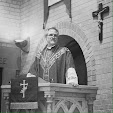
Sermon: Trinity 5

8 July 2007 at Salem Lutheran Church, Gretna, LA
Text: Luke 5:1-11 (1 Kings 19:11-21, 1 Cor 1:18-25)

In the name of + Jesus. Amen.

Our epistle reading speaks of power. Everyone understands power. It’s what makes electrical things go when you plug them into the wall. Power can also be understood as ability – a paralyzed person doesn’t have the power to move his legs. But most often we understand power as being in the position to lord over another person.

Wealthy people have power by being able to dangle money under the noses of politicians. Celebrities have power by having access to the news media and by wielding influence over their admirers. A criminal with a gun has power over his victims by having the control of life and death over them.

Most people seek power. Nobody likes to be powerless. We all know the corrupting influence of power, as Lord Acton said: “Absolute power corrupts, absolutely.” Julius Caesar was assassinated by men fearful that he was taking all power unto himself. The founders of the United States knew that power concentrated into too few hands could result in misuse of power.

Obviously, God has all the power in the universe. As Jesus told Pontius Pilate at His trial, even mighty worldly government officials have no power unless it is delegated to them by God.

As sinners, there are times when we need to see God flex His muscles. Pharaoh, who thought he was god, was made powerless in the face of the ten plagues. The only power Pharaoh had in that position was the power to repent. And even then, we are told the Lord hardened his heart, and his power to repent was taken away from him.

Jesus chastised his listeners more than once for demanding signs. They wanted to see Jesus’ credentials by a show of power.

But they didn’t realize what they were asking for.

God’s power is different than any other power on earth. Government power is compulsion. If you don’t obey, you will be forced to – even if you have to be shackled and put into a cage. The power of celebrity is an appeal to our own hollow vanity. The only power LeBron James or Paris Hilton have in making us buy certain products or influencing the way we speak is our own desire to be fawned over the way they are.

God’s power is different.

God wants us to be as He designed us and intended us to be: perfect, without sin, loving, willing to lay down our lives for others, content with a godly vocation, virtuous, set apart from the world, and in perfect communion with the Father, Son, and Holy Spirit. While He could simply get us from point A to point B by sheer force, compulsion, a raw display of shock and awe – He instead gives us freedom – freedom we abuse. In our freedom, we worship other gods. In our freedom, we serve ourselves instead of our neighbors. In our freedom we hoard what he has given us to share. In our freedom we misuse his gifts and twist them into that which they were never intended to be.

Those who mock the Christian faith look at us pathetic Christians, so full of shortcomings, unable to carry out the most basic tasks given us by God, and they jeer: “Where is your God now?”

What these mockers don’t realize is that when they say this, they are quoting God. For the Lord Himself told us they would say these very words three thousand years ago through King David in Psalm 42.

The power of God is in the Word of God. God doesn’t operate by compulsion or by appeals to our vanity. God simply speaks, and reality happens. “Let there be Light,” He says, “and there was light.” The Word of God doesn’t appear powerful because it doesn’t huff and puff and pose and threaten. The world mocks because the Word of God appears weak. Paul, in our epistle, tells us the “Word of the cross is foolishness to those who are perishing, but to us who are being saved, it is the power of God.”

God operates by declaring things to be so. He declares you to be saints. He declares me to be His messenger. He declares our sins forgiven. He declares the Church to be holy. He declares Satan to be defeated. He declares that He will come back at the end of time to recreate the universe anew. The world looks at us and laughs. Instead of seeing mighty deeds, they see words in a book that they are free to ignore. Instead of armies of men with guns forcing them to comply with God’s law, they see preachers that appear to be unarmed and lacking any authority over them at all. They see evil seemingly running unchecked. They see the Church weak and full of flaws. And yet, the Word of God does what it says. It does so quite often without fanfare. Some people get it, while most do not.

In our Gospel reading, Peter got it. He saw Jesus, by uttering a few simple words, create a miracle of a great catch of fish. Jesus didn’t make the earth stop, or turn the fish into giant squids, or unleash the power of the atom – rather He told Peter where to cast His net, and provided for the daily needs of these men. But the Word of Jesus did something else – it drove Peter to repentance: “Depart from me, for I am a sinful man, O Lord.” While others witnessed Jesus’ great miracles – such as the feeding of the 5,000 – and responded by saying: “Let’s harness this power” and “what’s in it for me,” Peter responded by acknowledging his sin in the presence of the powerful God.

However, the powerful Word of Jesus did not leave Peter in a state of despair over his sins. For notice how our Lord again uses His Word to create reality: “Do not be afraid. From now on you will catch men.” He removed the source of Peter’s fear by absolving Peter of His sins, and additionally told Peter that he would preach the Gospel as a called and ordained servant of the Word.

That, my dear brothers and sisters, is the power of the Word of God.

Some who witnessed this exchange may have mocked Peter. They may have boisterously shouted out for Jesus to do more tricks. But what was really happening was the softly-spoken Word of God working powerfully upon one who was being saved. As Jesus is offering this gift, where are the smart-alecs? Where are the know-it-alls? Where are the clever debaters and mockers? They want displays of power as the world knows it. They seek special wisdom. But Jesus doesn’t give them these things. Rather he gives the world the Gospel, the “word of the cross” that the world considers foolishness. And “we preach Christ crucified” which most people in the world do not get. But once again, to those being saved, those about whom Jesus speaks of being caught in St. Peter’s net – the power of God to save, to forgive, to create anew, is at work. And it is mighty and powerful.

In our Old Testament lesson, the prophet Elijah was shown the true power of the Word of God. But first, he is shown the mighty rushing wind that is so fierce – and has the power to rip up houses and blow down levees and to destroy lives. But it is not the Word of God. In fact, it is nothing compared to the Word of God. Next he is shown earthquakes and fires. And though terrible in the force they exert over man and beast, are again of no consequence next to God’s Word. Finally, Elijah heard the Word of God in a “still, small voice.” For while these other loud noises and boisterous displays can tear down and destroy, only the “still, small voice” of the almighty Creator can convict the sinner of sin, bring the erring to repentance, save the lost, forgive us our trespasses, empower us to forgive others of their trespasses, provide fish to the fisherman, give us our daily bread, and make preachers able to catch men in the net of the Gospel.

In the Kingdom of God, power lies not in armies, wealth, or the ability to control others. Rather the boundless power of God is found in the Word of the cross and of the preaching of Christ crucified unto everlasting life, even as the “still small voice” proclaims, “I forgive you all your sins:

In the name of the Father and of the + Son and of the Holy Spirit. Amen.

Wednesday, July 04, 2007

Happy Secession Day, Y'all!


Today we commemorate the unilateral American secession from the British Empire. However, we're celebrating the wrong day. Independence was actually declared on July 2, 1776. In a letter written to his wife the following day, John Adams predicted:

The Second Day of July 1776, will be the most memorable Epocha, in the History of America. I am apt to believe that it will be celebrated, by succeeding Generations, as the great anniversary Festival. It ought to be commemorated, as the Day of Deliverance by solemn Acts of Devotion to God Almighty. It ought to be solemnized with Pomp and Parade, with Shews, Games, Sports, Guns, Bells, Bonfires and Illuminations from one End of this Continent to the other from this Time forward forever more. You will think me transported with Enthusiasm but I am not. I am well aware of the Toil and Blood and Treasure, that it will cost Us to maintain this Declaration, and support and defend these States. Yet through all the Gloom I can see the Rays of ravishing Light and Glory. I can see that the End is more than worth all the Means. And that Posterity will tryumph in that Days Transaction, even altho We should rue it, which I trust in God We shall not. (The Book of Abigail and John: Selected Letters of the Adams Family, 1762-1784, Harvard University Press, 1975, 142).

The Fourth of July is actually the date that the wording of the document we today call the
Declaration of Independence (written mainly by Thomas Jefferson, with emendations made by the Congress as a whole) was adopted by Congress. Somehow, the independence holiday came to be celebrated on the 4th. Anyway, it is a good and fitting thing to review the Declaration from time to time. One of the reasons our wealthy white male slave-holding founders led a secession from the union with the British Empire (while vehemently denying that they were rebels or traitors) was the following from the Declaration's list of grievances:

"He [the King] has erected a multitude of New Offices, and sent hither swarms of Officers to harrass our people, and eat out their substance."

He is speaking of bureaucrats (which are enabled by one of the other major gripes of the Americans: taxes). That's the cause of the American War of Independence in a nutshell: overbearing government made possible by excessive taxation. The general government had become too big, and the colonies were in favor of a small federation of independent states. They had had enough of Big Government, Big Taxes, and Big Control from Washington, DC, er... I mean, London.

As the French (who made our independence possible) say: “Plus ça change, plus c’est la même chose.”


Anyway, I just ran across a great little story that captures Thomas Jefferson's complaint about parasitic "swarms of Officers" sent by the government to sap the economic strength and productivity of our people. This is from the July-August 2007 issue (Vol. XVIII No. 4) of
The Parapet, the newsletter of the Point Lookout POW organization (PLPOW), page 6:

A cocky Department of Agriculture representative stopped at a farm and talked with an old farmer, "I need to inspect your farm."

The old farmer said, "OK, but don't go in that field right over yonder."

The Agriculture representative said, "Mister, I have the authority of the U.S. Government with me. See this card? This card means I am allowed to go WHEREVER I wish on any agricultural land... no questions asked or answered. Do you understand?"

The farmer nodded politely and went about his farm chores. Later, he heard loud screams and saw the department of agriculture rep running for the fence and close behind was the farmer's huge-horned prize bull. The bull was madder than a nest of hornets. The bull was gaining on the rep at every step.

The old farmer called out, "Show him your card! Show him your card!"

Happy Fourth of July, everyone.

Tuesday, July 03, 2007

God Save the Queen

What a tableau!

Anyone who ever utters: "Don't you know who I am?" is under the severe delusion that he is something other than what he truly is.

Take poor Elton John. Excuse me, Sir Elton John, Knight Commander of the British Empire. You know, a knight, a Christian warrior/gentleman who rides a white horse and bears his sword to defend the crown, the Church, and damsels in distress everywhere.

Isn't this the picture of a knight - with his lily motif on the sleeve, purple shades, and earring? Can't you just picture him slaying a dragon? Sitting at the Round Table with King Arthur and Sir Lancelot? Protecting Christian pilgrims while singing Crocodile Rock?

Indeed, think of the long, illustrious history of the British Empire from the days of King Egbert and the Saxons, The Venerable Bede, Edward the Confessor, William the Conqueror, St. Thomas Becket, King John and the nobles who confronted him with Magna Carta, Henry VIII, St. Thomas More, James VI, Elizabeth I, Victoria, Sir Winston Churchill, and...

(drumroll...)

the guy who sings Saturday Night's All Right for Fighting.

Well, he does bear a title of nobility, after all. He is a legend, a maker of history, a truly great man of all ages, a British hero, a role model to the youth, a, well, a court jester. A very sad and pathetic court jester. Like they say, there's no queen like an old queen. Just ask George Michael.

But think about the delusion that this sad entertainer is under. He is fawned over. His every whim is met by groveling lackeys. He is knighted by the queen. He is treated like royalty by royalty. But in the end, he isn't royalty. For William and Harry, for all of their faults, are royalty. They are princes. And like it or not, they are targets of violence. With car bombs blasting away in London, the princes need extraordinary protection. For that reason, automobiles were simply not permitted to drive right up and drop people off at the door - not even puffed-up old gals who go by the fake name Elton John (whose real name is, in fact, Reginald Dwight).

Convinced of his own royalty, his gravitas and importance to England, his own status as a Knight Commander of the British Empire, Mr. Dwight huffs and puffs, whines and whimpers, protests and pouts - all the while other celebrities comply with the security measures with dignity. Three cheers for the cop who doesn't cave to celebrity snobbishness.

"Don't you know who I am?"

Yes indeed. You're a self-important court jester who performs like a clown for people of the class to which you aspire, but will never occupy. You had the opportunity to display class and dignity at a public function to honor the royal family and your country's heritage - but instead chose to make a spectacle of yourself, acting like a foot-stamping toddler or a petulant teenager going to her prom in a tube-top.

Well, they say you can take the white out of the trash, but you can't take the trash out of the white. Or should we say "Dwight."

Monday, July 02, 2007

The Devil on the Internet?

Check out this new blog that I have come across: Tapescrew Letters.

Don't tell anyone, but I think I have stumbled onto something here.

It seems that a demon named Screwtape - whose letters to his nephew Wormwood were exposed and published by C.S. Lewis - has taken up blogging as a way to send his letters. He has "cleverly" disguised his name as "Tapescrew" and calls his nephew "Woodworm" - and he seems to think either 1) obody else can read his blog, or 2) figure out who he is. I'm not sure which is the case.

Please keep in mind the disclaimers published by C.S.Lewis in The Screwtape Letters back in 1942, as I believe they are equally valid today in the Internet age: "Readers are advised to remember that the devil is a liar. Not everything Screwtape says should be assumed to be true even from his own angle." Dr. Lewis also wisely points out that "There are two equal and opposite errors into which our race can fall about the devils. One is to disbelieve in their existence. The other is to believe, and to feel an excessive and unhealthy interest in them. They themselves are equally pleased by both errors and hail a materialist or a magician with the same delight."

Finally, I do think Lewis's two quotes before the preface of his book are worth keeping in mind:

"The best way to drive out the devil, if he will not yield to texts of Scripture, is to jeer and flout him, for he cannot bear scorn."
- Martin Luther

"The devil... the prowde spirite... cannot endure to be mocked."
- Thomas More

European Persecution

The secularist states of Europe are degenerating into neo-fascism and neo-nazism - even as they sing the praises of their liberality, democracy, and freedom. This article from Brussels tells of a pro-life Lutheran pastor who has recently been sentenced by a German (who else?) court to one year in prison for comparing legalized abortion to the Nazi Holocaust. In their perverted, diabolical reasoning, for a man to decry what he believes to be (and, of course is) a horrific evil by comparing it to the Holocaust, is, to deny the Holocaust. Incredible!

In the current age, the Approved Religion is Secular Statism. Do as your masters in Almighty Government say, and no-one will get hurt. It's a very German way to go about it (sorry, fellow Lutherans, but I'm of Celtic stock, and while German beer and music are wonderful, the German cultural mindset about unconditional obedience to authority and the desire to brutally silence any and all opposition is, to me, a very strange trait. I'm sorry, but putting a guy in jail for a year because of an expressed political belief is Hitlerism at its finest.)

But we should hardly be surprised. Our Lord Himself warned us that we too would be persecuted. The fact that we've had a few hundred years without anyone burning us at the stake, racking us up, or feeding us to lions is becoming increasingly irrelevant as secular governments become less and less tolerant of religious (especially orthodox Christian) belief. In his 2001 work The Spiritual Society: What Lurks Beyond Postmodernism? LCMS pastor Dr. Fred Baue argues that trends in contemporary art and poetry indicate that we're in for a cateclysmic cultural shift that includes an increasing hostility to Christianity, one that will become violent - a fact being borne out in the past six years since the publication of his book. (Note: Dr. Baue was not only my parish pastor when I lived in Philadelphia, he laid hands on me at my ordination, and is himself being bullied by certain people in power in our own church body who seek to silence him for telling the truth. Please keep Dr. Baue in your prayers. He is a faithful pastor and a gentleman of integrity).

The tenor of the debate in the Council of Europe is irrational to the point of hysteria. The way they argue, you would think that there are armies of Christians waiting to seize power and reinstitute the Inquisition. Please. How many of those magnificent European cathedrals have more than a few dozen faithful in them on any given Sunday? How many Europeans are active Christians anyway?

Meanwhile, blinded by their diabolical rage against the Church, they are straining the gnat and swallowing the camel. For radical Islam is crouching at the door - thanks to the secular ideology of "tolerance" that flung open Europe's borders and cultural institutions to Muslims. If these folks think the Christians pose an ideological threat to their cherished institutions of abortion, infanticide, homosexuality, and Darwinism - wait until a critical mass of Muslims are in political control of Europe (especially given the Western tendency to shoot themselves in the foot by extremely low birth rates). According to a study published June 6, 2007 by the London Times, "Muhammad is now second only to Jack as the most popular name for baby boys in Britain and is likely to rise to No 1 by next year."

Islam is the elephant in the European parlor that no-one wants to notice while they're hysterically trolling behind the curtains and under the chairs with magnifying glasses looking for Christians to step on.

Meanwhile, these "useful idiots" of Satan think a handful of Baptists pose a clear and present danger to the state. Equally stupid is to persecute the few remaining Lutherans in Germany - for the Lutherans routinely speak of separating the "two kingdoms" (church and state) and have no desire to create a theocracy - even if Christians were anything more than a tiny minority in Europe.

Europe's arrogance is like that of Israel and Judah in the Old Testament. They will be severely judged. Perhaps the secularists will be in the same prison camps with the Christians one day.

Until then, maybe everyone should ponder the words of another German Lutheran pastor who was jailed by the German state for holding an unapproved political viewpoint, the Rev. Martin Niemöller (1892–1984):

"In Germany they came first for the Communists, and I didn't speak up because I wasn't a Communist. Then they came for the Jews, and I didn't speak up because I wasn't a Jew. Then they came for the trade unionists, and I didn't speak up because I wasn't a trade unionist. Then they came for the Catholics, and I didn't speak up because I was a Protestant. Then they came for me, and by that time no one was left to speak up."

Sunday, July 01, 2007

Sermon: Trinity 4

1 July 2007 at Salem Lutheran Church, Gretna, LA
Text: Luke 6:36-42 (Gen 50:15-21, Rom 8:18-23)

In the name of + Jesus. Amen.

It is a horrible thing to be called a hypocrite. To be accused of hypocrisy is to be called a filthy liar, a cheater, a person who wears one face in front of certain people to benefit himself, while acting in a completely different way around others. To be called a hypocrite is to be called evil.

Calling people hypocrites makes them mad. It makes them defensive. It’s the kind of thing that can get you crucified.

Jesus often laid bare the hypocrisy of the Pharisees. He humiliated them in public. He told them they were worse than thieves and prostitutes. He told them Satan was their father.

But today, dear children of the heavenly Father, our blessed Lord uses the h-word on us. He is not speaking to the Pharisees today. He isn’t addressing those outside of the church. For St. Luke records this sermon after informing us that Jesus “lifted up His eyes toward His disciples.” That would be us. Jesus is speaking to us, here and now, when He says: “Hypocrite!”

We are a church full of hypocrites.

We’re very good at acting pious within these walls. It certainly doesn’t hurt our self-image to be seen here, to serve on boards and committees, to stand in front of the church in priestly vestments. But what kind of people are we when we leave this sanctuary? Our Lord has it just right: “Hypocrites!” We say one thing, and do another. We behave one way in front of one person, and in another way in the presence of another. We are good at putting on the show and playing the role – but the problem, brothers and sisters, is that Almighty God is always in the audience. He knows that behind the actor’s masks, under the make-up, away from the stage on which we recite our lines is something entirely different.

For underneath the titles we carry, chairman of this board, member of that committee, the Reverend so-and-so is just what we confessed at the beginning of this service: a “poor miserable sinner.” One who commits “sins and iniquities.” We who offend God, who deserve temporal and eternal punishment. We are like Joseph’s brothers who deserve to be repaid with the same evil we have done to God and to our neighbors. And let’s not quibble – we don’t only commit a few indiscretions out of ignorance, no way, my dear friends in Christ, we are like Joseph’s brothers who willfully and repeatedly commit evil – and we mean it.

And God is not the only one who sees it. When we as Christians behave as heathen, we hurt the cause of the Gospel. Non-Christians who refuse to come to church because “the church is filled with hypocrites” are right – at least about that part. They are only saying the same thing as Jesus is in our Gospel reading.

But they’re also wrong.

The fact that there are hypocrites in church is no reason to stay away. For they too are hypocrites. For them to absent themselves from the House of God because of the hypocrites is like an alcoholic indignantly refusing to attend AA meetings “because of all the drunks that go there.” Yes indeed, we are hypocrites. Every last one of us. In the words of the children’s song: “The Bible tells me so.” Indeed. The Word of God tells me so. The Ten Commandments tell me so. The incarnate Word of God, our Lord Jesus Christ, tells me so in this Gospel reading today.

And that is exactly why it is a Gospel reading.

For our Lord is warning us. He is giving us loving correction. He isn’t treating us as expendable employees, but rather treats us all as His dear children. For as Luke reminds us, our Lord’s words are being addressed “toward His disciples.” You cannot be a “disciple” without being “disciplined.”

The Lord admonishes us to treat others with mercy – even as we pray: “Lord have mercy upon us. Christ have mercy upon us. Lord have mercy upon us.” We are not to be judgmental, holier-than-thou scolds with our noses in the air. This doesn’t mean we are not to condemn evil nor to uphold what is right. But we certainly should never take pleasure when others stumble, nor should we see ourselves as any more righteous than anyone else. For the measure we mete out to others will be applied right back to us. “Forgive us our trespasses,” we say just before receiving the Lord’s forgiving Supper, “as we forgive those who trespass against us.”

When we see others’ faults, our Lord commands us (he doesn’t merely suggest, ask, or offer a helpful hint), he orders us, to treat those faults as specks in the eye, while seeing our own as planks. Of course, you can’t see very well what kind of sawdust others have when our own vision is impaired by eye-logs. We are to focus on ourselves, our own faults, our own sins, our own flaws and imperfections. We have more than enough there to occupy us for a whole lifetime in this vale of tears.

For once our own sins are removed, we can then truly help our neighbor with his. We can then lovingly assist in spreading the grace of God rather than simply use our neighbor’s sins and errors, something to gossip about, something to take pleasure in because we perceive our sins as somehow more minor or acceptable.

But once more, dear friends, what does Jesus say? He is telling us point blank that our sins are not less than our neighbors. He is telling us they are planks compared with specks.

So what to do? Well, our blessed Lord doesn’t simply call us hypocrites and tell us we are condemned. That’s why our Lord’s harsh words for us today are merciful. They are indeed Gospel. For he tells us to “remove the plank.” Using a carpentry metaphor, he tells us our sins are removable. Just as a plank of wood can be taken away, so can our sins – even the great sin of hypocrisy that stains all of us.

That is why we are here. All of God’s hypocrites assemble together in weekly commemoration of His resurrection. We pray, sing, read the Scriptures, and break bread. For we are indeed recovering hypocrites. We struggle against temptation moment by moment, day by day, year by year. We fall off the wagon again and again. We come back here to receive mercy, grace, forgiveness, and healing. For just as our Lord has destroyed death by death, he uses hypocrites to cure hypocrites. He provides for his hypocritical people by giving them hypocritical pastors with the authority to remove their planks, specks, and every sin in between. For remember the promise spoken by our Lord in our Old Testament reading, spoken to a group of men who kidnapped their brother, threw him in a well, told their father he was dead, and sold him into slavery. Speaking through the brother who was wronged, God says: “‘Do not be afraid; I will provide for you and your little ones.’ And he comforted them and spoke kindly to them.”

For the Lord even takes our intended evils and turns them to good, for the salvation of all people.

So when those outside the church – people for whom the Lord suffered and died, people whom the Lord earnestly seeks to save – complain that “the church is full of hypocrites,” we can certainly smile, admit that Jesus Himself says as much, and add: “There’s always room for one more.”

We who suffer the brokenness of creation can take comfort in our baptism, in the forgiveness of sins, and in the promise that “the sufferings of this present time are not worthy to be compared with the glory which shall be revealed in us.” For our decaying, hypocritical, sinful “creation itself also will be delivered from the bondage of corruption into the glorious liberty of the children of God.” Amen.

In the name of the Father and of the + Son and of the Holy Spirit. Amen.

Sunday, June 24, 2007

Sermon: Nativity of St. John the Baptist

24 June, 2007 at Salem Lutheran Church, Gretna, LA
Text: Luke 1:57-80 (Isa 40:1-8; Acts 19:1-7)

In the name of + Jesus. Amen.

Today the Church commemorates St. John the Baptist, the one of whom our Lord said: “Among those born of women there has not risen one greater.”

Our Lord is not one to carelessly fling around flattering words. For consider what He says – there isn’t man born of a woman who is greater than John. Our Lord Himself was born of a woman, and so He is telling us John the Baptist is as great as Himself. Of course, John did not live the perfect life, or die for our sins, nor rise from the dead. But the faith he bears, the repentance he preaches, the condemnation he metes out to the unrepentant, and the Good News he gives to those who earnestly desire peace with God - is the very same faith, preaching, law, and grace worked by our Lord Jesus Himself. In fact, John is a prophet, the greatest prophet, the last prophet to precede the Prophet to end all prophets. John bears the very Word of God – the Word of God that is Jesus Himself.

This is why the Church throughout the world pauses to praise God for John’s life, death, witness, and preaching – his boldness, his suffering for the sake of Christ and His Church, his martyrdom, and his ministry of baptism.

But you will notice that we are not surrounded in the red paraments and vestments that commemorate the death of a martyr. Today, we do not focus on John’s faithful ministry and the laying down of his life for the sake of Christ and His Word – rather we focus on something John could never in a thousand years take credit for: his miraculous birth.

John was conceived by a godly elderly barren woman, St. Elizabeth. She becomes a New Testament reflection of the numerous examples in the Old Testament of the Lord’s favor shown to faithful women who have been subjected to shame for the sake of a fruitless womb.

John’s father, St. Zacharias, was a righteous old priest, who shared in his wife’s shame of not having a child. He faithfully carried out his ministry according to the laws and statues of God, giving the gift of absolution to the people of God based on the covenant of the promised Messiah – who was closer than Zacharias could have imagined. While obediently burning incense as an offering to the Lord, the angel announced that Zacharias’ and Elizabeth’s shame was coming to an end (which was also to mean the shame of the entire world since the sin of Adam and Eve was going to be made right through the birth of this child and his cousin).

For just as the elderly Zecharias and Elizabeth would have to wait no more for the blessing of a son, all the world would soon no longer have to wait for the blessing of all blessings, the birth of the very Son of God. It was to be Zecharias’ son who would point to the Son of God, and give us the gift of the canticle used in our liturgy: “O Christ Thou Lamb of God, that takest away the sin of the world!”

The Gospel reading for this celebration of St. John’s nativity begins with rejoicing – Elizabeth’s friends and neighbors rejoice and celebrate the great mercy of the Lord shown to her after the birth of her son. In the midst of this rejoicing, Zacharias and Elizabeth still have an obligation to the law. As faithful parents within the covenant of God, they bring their son to shed blood through ritual circumcision. In this ceremony, their son John becomes an adopted son of God, becoming an heir to the kingdom. In this ritual, a young boy is given a name, for his identity is rooted not in himself and his accomplishments, but rather in being born into the family of God through the blood of the covenant.

Zacharias and Elizabeth shock their friends by naming the boy “John” – a break from family tradition, a name that means “God is gracious.” Of course, they did not pick this name, but God Himself did. “God is gracious” means “God is merciful.” It means “God is forgiving.” For this is God’s message to the world through the birth of His last prophet, the final messenger to herald the birth of God in the form of man. The Good News that “God is gracious” is proclaimed through a miraculous birth, a boy born to a woman who, according to science and reason, should never have conceived. John is not only the forerunner to Jesus in his preaching, but even in his very birth.

What makes John as great as any man born of a woman is not his faithfulness (though it is great indeed), not his martyrdom (which is certainly heroic), not his preaching (which is truly the Word of God) – but rather, the very birth our Lord mentions. John was “born of a woman” – and that miraculous birth, that proclamation “God is merciful” carried out by a helpless child born under the curse of the law to aging parents racked by shame – is where his greatness truly lies. John did not become great by what he did for the Kingdom of God, rather he was made great for the sake of what God did in establishing His Kingdom. John did not become St. John at his death, but rather John had already been St. John for nine months by the time he was born, circumcised, and given the name “God is gracious.”

“Among those born of women there has not risen one greater than John the Baptist…”

John’s sainthood was a gracious gift to John when John could do little more than leap in the womb in confession of being near the yet-unborn Jesus. John’s sainthood was given to him when he was conceived, given birth, circumcised, and called by a name that is also a confession. And John’s life was a testimony to that grace of God, his good works a living out of that grace, his preaching a vocalization of the grace, and his death a blessed entrance to the Kingdom he heralded through the grace of the Savior to whom he pointed.

“Among those born of women,” says our Lord Jesus in tribute, “there has not risen one greater than John the Baptist…” However, our Lord doesn’t end his tribute to His cousin named “God is gracious” here. He goes on to say something curious, something that captures the mystery of the Kingdom of God. He continues: “but he who is least in the kingdom of heaven is greater than he.” Our Lord Jesus on one hand says “no one is greater…” and then says: “he who is least” is greater.”

The Kingdom of God is not like our fallen, miserable world in which we judge by appearances. It is not like our sinful existence in which each person has a different “worth” depending on usefulness to society, intelligence, material wealth, or any other criterion. The Kingdom of God is a Kingdom of mercy, of graciousness, of gifts given. Greatness is a function of humility, the first shall be last, the last shall be first, “every valley shall be exalted and every mountain brought low, the crooked places shall be made straight and the rough places smooth.” What the Godless world calls evil, is in fact, good. What the world and its prince embraces as virtue, is in fact wicked.

The wild-looking preacher in the desert is, according to God’s kingdom, a man of sober greatness. The poor prophet who eats bugs and wears camel hair is, according to God’s kingdom, a man of riches. The provocative teacher who comes across to kings and priests as a trouble-maker is, according to God’s kingdom, the one who ushers in the Prince of Peace. The child whose conception rendered mute a priest of the Old Covenant, was in fact one whose birth brought forth the inspired New Testament song of St. Zacharias, words of Holy Scripture that have been sung by the Church, by those redeemed by the Lamb, by fellow members of this topsy-turvy Kingdom in their liturgy of morning prayer that has continued for centuries:

Blessed is the Lord God of Israel,
For He has visited and redeemed His people,
And has raised up a horn of salvation for us
In the house of His servant David,
As He spoke by the mouth of His holy prophets,
Who have been since the world began,
That we should be saved from our enemies
And from the hand of all who hate us,
To perform the mercy promised to our fathers
And to remember His holy covenant,
The oath which He swore to our father Abraham:
To grant us that we,
Being delivered from the hand of our enemies,
Might serve Him without fear,
In holiness and righteousness before Him all the days of our life.

This glorious hymn composed by the father of John the Baptist on the occasion of John’s nativity is the very summary of the Kingdom of God, of the Christian life. For it is God who saves us, who is merciful, who visits us, and redeems us. He keeps his promises, he remembers his covenant – which means we have this merciful gift of holiness and righteousness, so that we may indeed serve him without fear all the days of our lives – just as the saintly example of his son John has been given to us to emulate.

Thanks be to God for the holy nativity of St. John the Baptist, with whom this day we yet again thank, praise, and worship the “Lamb of God that takest away the sin of the world.” Amen.

In the name of the Father and of the + Son and of the Holy Spirit. Amen.

Verbalousitinaciousness


From an actual resume...

Objective To ascertain a position as an educator, that will allow me to instruct and interact with students to obtain their maximum potential. To work assiduously with multi-diversified cultural ethnicities in a therapeutic environment that will be conductive to learning

As they say, if you can't dazzle 'em with brilliance...

Wednesday, June 20, 2007

On a personal note...

...today is my 25th baptismal anniversary.

On 20 June 1982, I was baptized in the name of the Father and of the Son and of the Holy Spirit at the age of 18 by the Rev. Alvin Boehlke at Redeemer Evangelical Lutheran Church in Cuyahoga Falls, Ohio. On the same day, I was confirmed by the Rev. David Belasic, and was given my first Holy Communion.

I was baptized with a group of about 6 or 7 other adults - everyone else was Hmong (Cambodian). It was probably the one time in my life I towered over everyone else. Of course, such a large number of adults being baptized at once was a rather solemn occasion. The sensation of water on my forehead reminds me of my baptism to this very day.

Of course, I'm grateful to all of my pastors - especially to Pastor Al Boehlke, a soft-spoken Seelsorger from Wisconsin, whose old-fashioned law and gospel sermons brought forgiveness, life, and salvation to myself and others under his gentle care. This kind and faithful pastor patiently taught the faith to me, and gave me a copy of the Augsburg Confession (which I still have in my possession). I read it in one sitting and asked to be baptized.

I spent this auspicious anniversary tutoring Latin students (for six hours), trimming weeds, teaching adult Bible class, saying Mass, and preaching a sermon. Afterwards, I came home, lit my baptismal candle and prayed a prayer of thanksgiving to the Triune God for keeping me in the faith through no worthiness or merit on my own part. My dear wife surprised me with a baptismal birthday gift of a fine beers from around the world and even finer chocolate (not to mention she baked me a cherry pie) - perfect gifts to celebrate the lavish and abundant life given to us by the Holy Trinity. To commemorate my second birth, I drank a Kronenbourg - a French beer from a brewery established in 1664 - exactly three centuries before my first birth.

Today was also marked by a milestone regarding my two-and-a-half year old son Leo (whom I had the honor to baptize into his second birth the day after I cut his umbilical cord following his first birth). It seems the little genius found my old digital camera, and on his own, figured out how to operate it. He shot quite a few pictures of, shall we say, random subjects. Grace helped him take a few more shots of actual things. Later on, I showed him how to line up images in the LCD viewfinder - and so he took his first two portraits - one of me, and one of his mother.

So, 25 years to the day after my own baptism (of which I have no picture), my son (whom I baptized with my own hand) has taken his fist snapshot of his father and pastor.

Milestones such as a 25th baptismal anniversary are times to reflect on the grace of God, as well as on the ironical fact that in the baptismal life of the Christian, time blends into eternity - where the very concept of marking time becomes meaningless.

And yet, just the same, today was a remarkable day for me to observe within the confines of time - thanks to a humble pastor, a shell-full of water, and the mighty Word of God that converged on my head 25 years ago today.

Baptizatus sum. Deo gratias in saecula saeculorum!

Tuesday, June 19, 2007

Technology, Chimeras, and the Devil

This article about inter-species cloning made me ponder the theological and ethical issues. Just a few thoughts out loud...

1) Technology can be a gift of God, or a tool of Satan to oppose God. There are sects of Christians, such as some Amish people, who believe technology is always a bad thing, and they generally seek to stop the clock of technology at the horse-and-buggy stage. They make the mistake of viewing God's gift of the mind and reason as completely evil, that technology is never a gift of God that can be used for good. On the other hand, our culture pretty much goes 180 degrees the other way, supporting unfettered technology. If we can do it, we should - especially if there are "benefits" to us.

Of course, there are always unintended consequences - and ethicists argue about how to manage these often unforeseen circumstances (think Jurassic Park).

Traditional Christians may want to remind themselves of the lesson of the Tower of Babel. In Genesis 11, the descendants of Noah were supposed to spread out and repopulate the world. Instead, a large number gathered into a city, began to see themselves as great, ignored the divine mandate, and using the cutting-edge technology of uniform baked bricks (instead of randomly-sized stones) and mortar, began to build skyscrapers. They sought to make a name for themselves by challenging God's dominion over heaven. Their building project became an idol. God did not approve, and confused their languages - thus destroying their lofty plans.

The Babelites used technology as a means to "play God" and in the end, their efforts came to naught.

2) God's mandate for man to multiply is under diabolical attack.
From the beginning, man was instructed to "be fruitful and multiply" and was given a rather pleasant natural method of reproduction (which incidently mixes the gene pool quite well and provides a nurturing environment for children).

However, there have always been those who want power of life and death - those who run concentration camps, those who engage in selective breeding and eugenics, those who sterilize "undesirables" etc. In recent years, "birth control" and abortion have become technological "solutions" to the "problem" of unwanted life. To be master of life and death is to truly "play God." The modern wranglings over euthenasia, assisted suicide, etc. are often cast as pure technological issues. In the twentieth century, even in otherwise orthodox churches, contraception became ethically acceptable. Ironically, in churches that allow, or even bless, contraceptive technology, their numbers are dwindling - a divine judgment brought upon themselves by the very technology they have embraced.

And now, technology has advanced to where living embryos and fetuses are able to be screened for flaws which may preclude their being born. Soon, parents will be able to manipulate genetic data to create their own "designer children" as though they are ordering toppings on a pizza. Not only is this "playing God," it will result in all kinds of cultural and sociological upheavals - e.g. generations of people obsessed with bodily perfection, unequal numbers of men and women, etc. The natural diversity of the human form will give way to a "super race" mentality.

3) The incarnation and the image of God are under attack with this technology.
The current fascination with mixing human and animal genes, growing them into living embryos for spare parts, for research, or for God knows what, is yet another example of the diabolical use of technology. Even in ancient times, the idea that mankind was created in the image of God was mocked by Satan through the crafting of false gods that mixed human and animal forms. For example, the Philistine god "Dagon" was a chimera of human and fish.

Not only do chimeras mock the in imago Dei of man, they also mock the incarnation. For when God takes the form of a man, man is exalted to the Godhead by virtue of Jesus Christ. Humanity is thus the very icon of the divine. What better diabolical mockery of this incarnational mystery than to not only confuse the Creator with the creature, but also to degrade man to the level of beasts not made in the image of God.

The ability to clone and splice genetic material from humans and animals - and create fertilized eggs incorporating both - is a way of drawing confusion between what God had separated in his order of creation. It is a way of taking the chimera out of the realm of fanstasy stone idols and making them real creatures.

While the general culture doesn't view an embryo as a person, the fact of the matter is that once again, scientists are playing the role of pagan priests challenging the hegemony of the True God, seeking to be creators, instead of protectors, of life. While they swear upon stacks of Darwin's Origin of Species that they will never allow such embryos to come to term, inevitably, the question "why not?" will arise. If there can be some "benefit" to the rest of us (for instance, spare organs, medical research, or even the creation of superstar athletes), eventually such ethical prohibitions will be lifted. And even if they aren't someone, somewhere, will try it.

Consider the horror of chimeras not only living as embryos, but actually being born. What will happen when we have a human mind stuck in the body of a cow? Will a cross between human and mule be given the right to vote, own property, and marry, or will such a creature merely be a slave and pack animal for anyone rich enough to buy him? Will such creatures be grown in veal cages and kept alive for organ harvesting?

Will such chimeras bear the image of God? Will they have human rights? Do we baptize them? Will God simply not allow us to take technology that far? Or will we destroy ourselves through unintended consequences of messing with DNA and "playing God"? Genetic tinkering is our generation's Tower of Babel.

All we can do is pray: "Come Lord Jesus."

Sunday, June 17, 2007

One Lutheran...Ablog!™: Innocence Lost

Wow!

An extraordinary post by my friend, classmate, and brother LCMS pastor, Rev. Paul Beisel.

Paul is a delegate to the 2007 convention of The Lutheran Church - Missouri Synod. His observations about the politicization of our synod are frank and blunt.

Thanks for your integrity and courage to say what needed saying, Paul. I have no doubt that some folks are going to approach you and try to make you shut up and just go along with the program. The folks in our congregations need to know what goes on in their name with the money they have been assessed.

The Word of God and the Faith of our Fathers are not subject to the whims of a political process.

Sermon: Trinity 2


17 June 2, 2007 at Salem Lutheran Church, Gretna, LA
Text: Luke 14:15-24 (Prov 9:1-10; 1 John 3:13-18)

In the name of + Jesus. Amen.

In our Gospel text, our Lord Jesus spins a tale that could make Rod Serling take a long drag on his cigarette and nod admiringly on a little black and white TV screen. For this parable of our Lord is short and sweet, but it is one that can be studied and examined for a lifetime without exhausting its riches. It is a parable that reveals the grace and love of God and the nature of His kingdom. There is no more clear picture of the Gospel than you will find in this little narrative, which our Lord Himself has “submitted for your approval.”

Just before Jesus begins the story, one of His listeners proclaims: “Blessed is the man who shall eat bread in the kingdom of God! Of course, we Christians, we who feed on the living Bread from Heaven, we truly understand that the bread of which this man speaks is not ordinary bread (which is in and of itself a truly wondrous gift of God), rather this bread, the bread of the Kingdom is the flesh of Jesus given for the life of the world.

But the world rejects this bread, just as they rejected Him when they crucified Him, just as they continue to mock Him, to forsake Him, and to seek after other gods today. But Jesus is not only rejected by the world, by those outside of the church, we reject Jesus every time we sin. We reject the bread of the kingdom when we pay homage to our own worthless idols instead of submitting to Him who creates, redeems, and sanctifies us. We reject this bread when the invitations have gone out, when all things are ready, and when we find other activities to do that we consider more important than breaking bread with God.

For Satan is not only the father of lies, he is the father of excuses. Satan not only deceives those who openly reject Christ, those who do not believe: the mockers, the idolaters, those who worship gods of their own making, he also deludes believers by tempting them to skip the holy life-giving banquet here and there for the sake of something more fun, more fulfilling, or more lucrative.

One of my classmates and colleagues in the ministry received a note from one of his flock that said: “I guess if it were up to me we would be doing some contemporary worship and praise services on occasion… I wish we had the opportunity to do that more in some of our services instead of being told how we can’t do anything Sunday after Sunday, so we should just sit back and appreciate God’s gifts to us by going to communion.”

Blessed is the man who shall eat bread in the kingdom of God.

So important is it to the evil one that Christians not partake of the holy sacrament that he even deceived many generations of otherwise pious and devout Lutherans to see to it that Holy Communion was offered less than every week. Of course, all sorts of excuses are offered for not having communion on Sunday, all worthless excuses conjured up by Satan and his minions.

But before we become smug, dear sinner-saints of Salem, patting ourselves on the back for offering the sacrament every Sunday and Wednesday, let us examine ourselves honestly. Do we really see this Holy Supper as the most important meal we will ever eat? Will we go to any trouble, make any sacrifice, pay any price, rearrange our schedules at all cost, and completely plan our lives around the precious opportunities to “eat bread in the kingdom of God”?

If anyone in this sanctuary answers “yes,” you need to repent, for you are lying to yourself. Your sinful flesh will not allow you such perfection. On the other hand, if you answer “no,” you need to repent for taking God’s gift for granted, and for grieving the Holy Spirit. We all need to repent – which is why our Lord gives us this “blest communion” that promises the forgiveness of sins in the first place.

For ponder our Lord’s parable. The “certain man” invites many to supper. This is no ordinary man, but the Master of all things, visible and invisible. And this is no ordinary supper, but a “great supper”, a banquet thrown by God Himself. Following the invitation of the many, the RSVPs begin to come in with all sorts of excuses for not coming.

For the purposes of the tale, our Lord gives three examples. The first two excuses both involve business. The third involves a family obligation. Though work and family obligations are important, the master of the feast is terribly insulted. His feast ought to take priority over even these things. Taking one day off work is not much to ask, considering the Master has created us, has shown mercy to us, and given us eternal life. A Sabbath day of fellowship with Him, of receiving His gifts, of being a good son or daughter doesn’t seem like too much to ask.

The mercy of the master has been spurned. His gracious offer has been taken for granted. He has been treated rudely by those for whom He lovingly sacrificed, loved, and gave of Himself. He is hurt, grieved, and angry.

And so the master’s mercy is at an end.

What a terrifying picture! The life-sustaining grace of God is withheld. Instead, His wrath is exposed. The invitation is revoked. The master’s servants are told to find new guests at the table. The doors of the merciful Lord are swung open to all those who do not take Him for granted, while the doors are bolted shut to those who would rather engage in commerce or family activities apart from the table of the master.

The master drags in all sorts of disreputable people: wheezing bums, welfare wards, hobbling cripples, sinners, cheats, frauds, tax collectors, prostitutes, drug dealers, lepers, those with shady pasts, the dirty, the smelly, and the homeless. Last Sunday’s reading speaks of just who is invited to the banquet when the rich are too busy to come: a starving beggar on the street whose festering sores are lapped by filthy stray dogs.

The dregs of humanity amble their way to the ornate place settings and mountains of sumptuous food.

What a glorious picture of the church! How true it is, and thanks be to God for it. We are here not because we are spiritually rich, but rather because we are poor in spirit (and ours indeed is the kingdom of God). We aren’t here because it’s the trendy thing – in fact, the world mocks us (and even hates us as John tells us in our epistle text) for believing as we do, kneeling to receive a bit of bread and a sip of wine, and calling it a feast. Apart from faith it just seems silly. We aren’t here because taking part in this banquet will make us richer. In fact, we are called upon to give to the Lord with the same faith as the poor widow who gave her two pennies – everything she had - to the temple treasury. In reality, we own nothing, but are merely stewards of what belongs to God.

We are here because we, the unworthy, the sinful, the sick, the suffering, and the dying, have been graciously invited. By our own reputations, we don’t belong here. This is God’s holy house, and we are ragamuffins. This is a palace, and we are vagrants. This is a table fit for kings and angels, and we are criminals more fit for a jail cell.

And because we don’t belong here is exactly why we do belong here. For like a story on The Twilight Zone, there is an unexpected ending, a great twist, in this case, a happy exchange.

What makes you worthy, dear brothers and sisters, is your acknowledged unworthiness. Those who swagger their way to this table like they own the place will be turned back. Those who are convinced of their righteousness and fitness for eternal reward will be sent away on the Day of Judgment. But those who come with head bowed, with a self-conscious sense of not belonging, those who step falteringly with heart pounding to this banquet table, those who kneel seeking the forgiveness of Him whom we have offended – they are declared worthy, invited, raised up without shame, washed, clothed, and made rich beyond all measure.

The Master Himself invites you. Hear His joyful Word in our Old Testament reading: “Come, eat of my bread, and drink of the wine I have mixed. Forsake foolishness and live.” He has given us His bread, the bread of His body, and He has given us His wine, the wine he has mixed Himself, mixed and poured from His veins to place in the cup of salvation for our forgives, our salvation, and especially for our life. For we have “passed from death to life.” Let us forsake the foolishness of the devil’s delusions and excuses. Let us acknowledge our sin and humbly and gratefully join the Master in this most glorious feast that has no end! Amen.

In the name of the Father and of the + Son and of the Holy Spirit. Amen.

Saturday, June 16, 2007

A backhanded compliment!

I ran across a traditionalist Roman Catholic's blog (and I am deeply sympathetic to his complaints about how non-traditionalists and their liturgical radicalism have truly hurt the faith and practice within churches of the Roman communion - we too bear a similar cross).

Anyway, I enjoyed his remark under the topic "Horror Stories"...

Another priest there used to insist that people consume all of the remaining sacramental elements after his mass, because he was "uncomfortable" with the idea of adhering presence. I told him he really ought to think about becoming a Lutheran, earning me an irritated look. He wasn't anywhere near good enough as a preacher to be a Lutheran anyway.

Even among traditionalist Roman Catholics (at least some), Lutheran pastors enjoy a reputation and respect for their proclamation of the Gospel.

Friday, June 15, 2007

Some Questions...

Am I being unreasonable in my belief that a young woman funeral home employee ought not be wearing a skin-tight miniskirt in my sanctuary during a funeral at which she is working and over which I am officiating? And would it have been proper to say something to her and risk making a scene in the sanctuary in front of the grieving family? [For the record, I was hoping to say something discreetly to her after the graveside service, but she did not go with the other workers to the cemetery. I considered making a visit to the funeral home, and still might - but I am honestly unsure of how to best address the situation. I'm not even sure she is an employee - she may actually be the daughter of one of the directors. Things were so much simpler when modesty was something to take for granted.] We do have to work with the folks at this funeral home, and I'm just not sure there is a way to address the matter without coming off as a jerk - especially considering that she may never show up again anyway. I can just imagine the scandal if she were to go to an Eastern Orthodox or Tridentine Roman church - or Moslem Mosque for that matter - so clad. Too bad such things seldom shock Lutherans these days. Ideas?

How is it that members of the Missouri Synod (that is to say, congregations, pastors, and lay church workers) can not only hold and teach false (not merely errant, but diabolical) doctrine - but further to actually publish such beliefs in the synodical convention handbook? The example I'm thinking of involves a congregation that is proposing that the LCMS allow the "ordination" of women. Instead of censure or removal from synod for deviation from Holy Scripture - the synod actually published their proposal! I will go out on a limb and predict that nothing, absolutely nothing, will happen to them as a consequence of their public repudiation of the Bible. Meanwhile, I know of a faithful pastor who was not long ago hauled before a super-secret LCMS tribunal and was nearly expelled from synod over a technical handbook issue that had nothing at all to do with false doctrine or moral turpitude. What if one of our churches or pastors sent a memorial to the synod proposing that we worship Satan, or perhaps proposing to add a fourth person to the Trinity, or maybe proposing that the resurrection of our Lord be considered merely a myth? Would the synod simply publish such proposals and forward them off to a committee for debate? Does this kind of thing fall under the rubric of Christian freedom according to our synod? What gives?

Has any pastor, congregation or other member of the LCMS been removed from the roster for advocating women "clergy"? If not, why not?

And while on the topic of priestesses, I'm disappointed that Concordia Theological Semininary (from which I graduated in 2004) will allow the pan-Lutheran Society of the Holy Trinity (STS) to hold its general retreat on campus. Women "pastors" will be staying in CTS dorms. Will they also be leading worship in Kramer Chapel? Will our beautiful campus be desecrated by the sight of women wearing clerical collars, cassocks, and ecclesiastical vestments on the grounds of the seminary and in the chapel? Will there be a joint communion service between ELCA and LCMS pastors (as the current Senior of the Society has written he supports happening at STS retreats)? Hopefully, the STS will be sensitive to their host venue's "Neanderthal" views on scripture and at least be discreet in their gender-bender abominations. Here's a shot from their 2005 retreat's communion service (picture this at Kramer, CTS grads)...


Of course, I know there are indeed faithful LCMS pastors (I know several) who somehow swallow hard and overlook the priestess issue and belong to the STS. I also know the seminary is financially strapped. But can anyone hold conferences and religious services at CTS if they just flash the cash?

And finally...


How could America vote to send Melinda Doolittle home? I know this is old news, yea, even ancient news - but man, I'm still puzzled. Mrs. Hollywood (who never asks for anything) has specifically requested that whenever Miss Doolittle records a CD, Mrs. H. would like to have it - regardless of what musical genre it is. She can sing anything, absolutely anything, with poise, elan, and sheer joy - and make it all look so easy. She also seems like a genuinely kind and humble person.

Wednesday, June 13, 2007

Sermon: Wednesday of Trinity 1

13 June 2007 at Salem Lutheran Church, Gretna, LA Text: Luke 16:19-31

In the name of + Jesus. Amen.

There’s an old saying: “The rich get richer, and the poor get poorer.” Our Lord Himself said as much in the Parable of the Talents: “For to everyone who has, more will be given, and he will have abundance, but from him who does not have, even what he has will be taken away.”

In our Gospel text, Jesus makes the same point by telling a different parable.

Of course, to our sinful flesh and to the world, the very opposite seems true. There are two men in this little tale. One is not given a name, he is simply called “a certain rich man.” He wears the finest clothes and eats the best meals. The other is a beggar. He is hungry, and his skin is covered with sores. There could not be a greater contrast between the “haves” and the “have nots” here.

But like all great short stories, there is a twist in the plot. Our Lord Jesus takes us to scene two. Both men die, and we find out that what seemed to be wealth, security, and happiness in the eyes of the world, as judged by our sinful flesh, was nothing more than an illusion. Our “rich” man was in fact poor. He had a few trinkets that wear out, and temporary comforts that are useless now. For he amassed “treasures on earth, where moth and rust destroy,” forsaking the true treasures of the kingdom of God For where his treasure was, there was his heart. And his heart was with the gifts instead of with the Giver.

The poverty of our so-called rich man is apparent for all to see. For he is too poor to even buy a thimble of water, too poor to hire transportation to go the short distance that separates himself from Abraham’s Bosom. He is too poor to engage a messenger to warn his brothers of what is to come unless they forsake the path that leads to the poor rich man’s fate.

But consider the beggar. In the eyes of the world, his life was worthless. He wore rags. He ate garbage. His festering wounds were licked by dogs. He was despised, stricken, smitten, and afflicted. He was laughed at. People wagged their heads at him. He was rejected by his own people, the smug, the well-to-do, the spiritually arrogant. And yet, this beggar was truly rich – in spite of appearances, and in spite of the sinful world’s erroneous conclusions.

For what the beggar lacked in trinkets, in gadgets, in luxuries, in wasteful indulgence, in trust in his own possessions, he made up for in his faith. We know the beggar was a believer, for after his death, he was “carried by the angels to Abraham’s bosom.”

With the eyes of this sinful flesh, we see a loser, a man cursed of God, a person to be ignored or even trampled. But with the eyes of faith we see a man wealthy beyond all measure, a son of God, an heir of all things in the universe, a man whose treasure is in heaven.

The rich get richer, and the poor get poorer. To him who has, more will be given. To him who has not, even that will be taken away.

Of course, this strikes us as terribly unfair. Why doesn’t God take a more Marxist approach and take from him who has, and share with him who has not? Why doesn’t God allow the rich man’s brothers to be warned? Why didn’t God intervene in the life of the rich man to prevent him from the torment he suffers now?

Our Lord Jesus addresses this in the shocking conclusion of the story. For God indeed did warn the rich man. For God’s messenger, the reverend Father Abraham tells the poor rich man: “They have Moses and the prophets; let them hear them.” All the world has been warned not to be deceived by transient worldly riches, by all that glitters, by the passing things of this world. For material things are not bad – in fact, our Lord called all creation “good” at creation. But they do become bad when they are misused, when they become false gods, when they become impediments for God’s kingdom.

The rich man was so distracted by the shiny things of this world that he spent a lifetime ignoring the desperate pleas of God’s prophets and of the Holy Scriptures. God did indeed come to him in many and various ways, but the man would not listen. He chose to serve Mammon instead of the God who so earnestly wished to take him into Paradise, into Abraham’s Bosom.

The rich man protests to Father Abraham: “But if one goes to them from the dead, they will repent.” Jesus delivers the punch line, the moral of the story, through the mouth of Father Abraham: “If they do not hear Moses and the prophets, neither will they be persuaded though one rise from the dead.”

Those blinded by riches, those who turn God’s good and gracious gifts into idols, those who serve their own bellies instead of their neighbors – will neither be convinced by Scripture, nor by the historic reality of the empty tomb. Their ears are shut up, their hearts are hardened, and they have decided to suffer eternal poverty for the sake of a few temporary comforts.

Dear brothers and sisters, our Lord is warning us. Don’t be deceived as the rich man was. Don’t allow Satan to win you over by tempting you with baubles. For the evil foe tried that with our Lord in the desert, and our Lord spurned him with Scripture. It was also in the desert that John the Baptist lived, and in baptism, you are given riches beyond measure.

Your baptism, your faith, your status as a son of God is of infinitely more value than anything this world can give. Any one of us can lose every one of our material possessions in the blink of an eye. But no calamity by fire or water can take away your baptism, can negate the Word of God, can undo the resurrection of our Lord Jesus Christ. Any one of us could end our life in this world with not even a bed of our own, covered with sores, in hunger and in pain. And even if the world mocks us or ignores us, we have treasure beyond compare.

We who are rich will indeed be richer. For our Lord is lavish. He shares all that he has with those whom he loves. But those who are poor (even if they appear rich to the world) will indeed be poorer. For our Lord pleads with them to come into His kingdom, he beckons, he cajoles, he woos. At times he uses the stick, other times he dangles the carrot. He himself is the wounded beggar who gives his life for those who reject him, pleading for them to repent and seek first the kingdom of God – promising that all other things will be added as well. But our Lord will not compel. He will not force. He will not drag a person kicking and screaming into true riches and into Abraham’s Bosom.

Let us store up riches in heaven, dear friends. Let us continue to hear Moses and the prophets – for they have good news for us, and many riches to bestow on us. Let us be persuaded by Him who has indeed risen from the dead, the beggar who is indeed a king, the One who promises to send his angels to carry us to Abraham’s Bosom. Let us hear the Word of God, and keep it. Let us rejoice in the riches of the sumptuous feast laid before us this evening. Let us enjoy the things of this world, while knowing where our true treasure lies. And let us remember our baptismal treasure that cleanses our wounds and gives us riches on top of our riches.

For the rich do indeed get richer, now and unto eternity.

In the name of the Father and of the + Son and of the Holy Spirit. Amen.