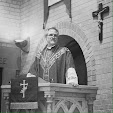
Thursday, March 06, 2008

Thoughts on the Pastoral Call Process

There are different practices for determining how a pastor serves a particular congregation.

The traditional method, used historically by the vast majority of Christians, has been appointment by a bishop. In other words, a man will serve in a ministerial capacity that his bishop (Greek: episkopos, lit. "overseer") has ordered. This is how the Roman Catholic, Eastern Orthodox, and Anglican churches work to this day (as do many Lutheran churches around the world).

It's my understanding that the United Methodist Church (a spin-off of the Anglican church) operates this way, but has the added stipulation that a pastor not serve one specific congregation for more than a few years (seven?), that the pastors are periodically "rotated" at the discretion of the bishops.

A less traditional way of placing pastors puts the congregation as an assembly (instead of a bishop or other hierarch) in charge of the process. Thus, a council or a type of voting body within the congregation will issue a "call" to a pastor, and that pastor may then accept or decline this offer. This method is obviously favored by less hierarchical and more democratic (and congregational) polities. It is an inherently more American methodology.

My own church body, the Lutheran Church - Missouri Synod, though tilting in the traditionalist direction in many ways, calls and places pastors mainly along the latter (congregational) model using a "call process" (sometimes called the "divine call").

With the exception of a man's first call out of seminary (in which case the Council of Presidents, our equivalent of a council or synod of bishops, unilaterally places a man to serve as a pastor of a particular congregation or other ministerial capacity), congregations issue calls, and pastors either accept or decline them.

Of course, the process is surrounded in a pious appeal to the Holy Spirit, with a ritual of the pastor announcing that he is "prayerfully considering" a call - even though his wife may already be packing even while the pastor is announcing to his congregation and colleagues that he "covets their prayers" as he is "prayerfully considering this call."

And while the process is treated with the mystery of a papal election, some very practical matters really must be weighed: salary, housing, schools, proximity to family, type of congregation, etc. And yet, pastors do try very hard not to treat the process as a form of moving up to a better "job." Unlike in times past, these days there are often even interviews and sometimes flights to the potential congregation - thus turning the process more and more like a secular job interview. Sometimes salaries are even tacitly negotiated - which is not actually allowed.

Even apart from such abuses, I do think our current system has some flaws.

There was a time when a pastor's call was sacrosanct and treated like a marriage. For example, in Salem's parish hall (also known as Schmid Hall) - there is a portrait of the Rev. Eugene E. Schmid (1894-1967). He served Salem Lutheran Church right out of seminary from 1919 (at the age of 26) until his death in 1967 (at the age of 73). That's 47 years at this one parish. In the course of his ministry, he saw the roaring twenties, talking movies, the Model-T, the Great Depression, a World War (against the Germans at that), the breaking of the sound barrier, the post-war economic boom, the birth of television, the entrance of women in the work force, the Second Vatican Council, and the social upheaval of the sixties. Pastor Schmid continues to be revered and loved by the people here at Salem. Salem was his first and only call. In some cases, he baptized, confirmed, married, and buried people - and even their children. No matter how chaotic the world was becoming in the 1960s, there was Pastor Schmid preaching the same Gospel.

This was not that unusual in days gone by. In fact, many of the early church fathers interpreted Paul's instruction to Timothy that a pastor be the "husband of one wife" (1 Tim 3:2) as a reference to the relationship between pastor and congregation being like a marriage.

In many ways, pastoral ministry is like a marriage. Pastor and congregation do need to be compatible, they need to give-and-take in order to get along, they need to love and forgive each other. They need to be mutually faithful. The congregation, as a good wife, must yield to her husband's headship - provided, of course, that the husband is not abusive or ungodly. The Pastor is not to "lord over" his beloved (Matt 20:20-28), and his beloved is not to rebel against her God-given head (Heb 13:17). When a pastor is a faithful husband to his church (as our Lord Jesus is), and when the church is a faithful bride to her pastor, things go well. The wife is to be submissive, and the husband is to lay down his life for the wife (Eph 5:22-33).

But in this fallen world, things don't always go well. Pastors have to be removed. Parishioners have to be excommunicated. Pastors must be admonished, congregations must be called to repentance. Sometimes the relationship will no longer work. Sometimes a pastor's continued tenure would become so disruptive to the work of the Gospel that it is simply time to move on. Sometimes a congregation can't afford to pay a pastor enough to support his family, and it becomes time to find a different pastor that they can pay enough for his needs. Sometimes pastor and congregation separate with rancor, other times the split is amicable.

It can get complicated at times.

In the Missouri Synod, a pastor may opt to go on a "call list." Perhaps he is not being paid enough. Maybe he no longer fits in with his congregation. Maybe he is burned out. Perhaps it is time for him to move in a different direction in the Lord's kingdom. In such a case, he can announce that he is open to a call. He may get one, he may not. The district office has him on a list, and the district president (our rough equivalent of a bishop) may assist in the matchmaking process. Congregations are also free to issue calls apart from any district involvement at all.

Congregations can also appeal to the district president to get a pastor placed on a call list. Hopefully, they do this for legitimate reasons, and not merely out of rebellion or to settle personal scores.

In Pastor Schmid's case, he served Salem as his only ecclesiastical bride until his death. Pastor Schmid is my hero. I love my parish and my parishioners, and unless they reject me, or unless something supernatural calls me away, I see no reason to ever get a wandering eye. I would no more consider trading in my call here at Salem than I would consider trading in my wife. Obviously, if the church became unable to pay me, or if a hurricane should wipe us out (God forbid!), I may have to look at other options. But barring that, given my situation (which is not to speak for anyone else's) I believe it would be wrong for me to put myself on a call list or to consider a call somewhere else.

With all the talk of "healthy" congregations these days, I do think it is better spiritually for pastors and congregations alike to stay put. There is far too much of a "hire and fire" mentality among the congregations and far too much of a mercenary attitude among the pastors. There is not always a determination to work through problems, to lovingly do what needs to be done to make the relationship work. Of course, things don't always work out, but how often do people even try everything possible before throwing up their hands?

In the Missouri Synod, we have the situation where churches (often rural) who are small and don't have much money only have the option of calling a seminarian (due to the ability to pay him less than a more experienced pastor). In some cases, the seminarian is called to a double or even triple parish situation (serving two or three small congregations simultaneously). And in these cases, what often happens is that the young pastor in the ensuing years, marries, has children, and then can no longer afford to stay in that call. He goes on a call list, leaves, and is replaced by another seminarian. That's just a fact of life in many places. It is so uncommon for a pastor to remain in his original call for more than two or three (or maybe five) years that it has become common to refer to receiving one's "first call" out of seminary. It's a strange terminology. Can you imagine getting ready for your wedding, and then excitedly telling everyone about your upcoming marriage to your "first spouse"?

For the most part, the system works. Capitalism of a sort takes care of underpaid pastors as well as poorer congregations. But there is also a predatory nature of our system which I find problematic.

For example, a man may be happily serving a congregation. Maybe they aren't so big or so rich, but they are meeting the needs of their pastor. The pastor has no intention of leaving. But if he is a good pastor, his reputation will spread. Inevitably, even without his being on a call list, he will get a call from another congregation - probably a more "attractive" congregation in terms of money and prestige. The pastor is then given a dilemma: 1) Take a call that pays better money and gives him the opportunity to get out of debt, to provide for a better education for his family, perhaps even advance his education, and look to his own future, or 2) stay at this faithful parish that is paying him the best they can.

One of my colleagues was recently put into such a dilemma. He is the sole pastor of a small, but faithful parish that was founded not that long ago. The pastor and the congregation have a good, scriptural relationship. He was not on any call list. However, out of the blue, a call came from out of state to a very old, established, prestigious, and wealthy congregation - one with great visibility to one of the church's seminaries, with very important and influential members - both lay and clergy.

He would have been an associate pastor at this imposing congregation. His salary would likely have skyrocketed (though I don't know this for a fact). This congregation already has a solid senior pastor, and they were seeking a second pastor, and in the process, were willing to deprive a smaller, not as wealthy, less prestigious parish of her only pastor.

The process strikes me as unchristian, as predatory. It puts pastors into being tempted by money and prestige. It reminds me of Nathan's example to King David about a rich man who had many sheep conniving to deprive another man of his one and only beloved ewe (2 Sam 12:1-6). Of course, luring a pastor away from his congregation is more a case of "shepherd stealing" than "sheep stealing" - especially considering that the word "pastor" is Latin for a "herder of sheep."

In the example I'm thinking about (that is, my friend who was given a call to a prestigious church), I'm pleased to report that he turned down the call, and opted to stay put. This speaks volumes about my colleague's character and devotion to the parish the Lord gave him to serve.

Personally, I think it should be forbidden for a congregation to issue a call to any man who is not on a call list. Maybe we should treat our "first calls" as our "first wives" - and commit to them, pastor and congregation alike, "until death us do part" - unless there are real issues (whether unresolvable conflict or salary) that would make a "divorce" necessary. As it stands now, there is an unspoken understanding that a man's "first call" is temporary, and that if he is a good pastor, another congregation will "put the moves on" him and lure him away from his current call. Perhaps it should be as off limits to woo a pastor who is not on a call list as it is to seek to lure a person who is wearing a wedding ring into marital unfaithfulness.

I'm sure my view is a minority view, and that this situation will not be changed in the Missouri Synod. I'm also sure many will argue that such predatory calls are the work of the Holy Spirit, and thus should be permitted. It can be argued that allowing these kinds of calls ultimately raises the pay and standard of living for pastors, and gives congregations a "supply and demand" incentive not to be stingy. But I still find the process distasteful and neither in the interest of pastors, laymen, nor the work of the Gospel. I have no evidence to support my opinion, but I honestly believe serial pastors are as desirable in the parish as serial marriages are in the family. I also believe the stability of a consistent parish pastor in the lives of the congregants is akin to the continued presence of a family's father in the lives of the household.

Every day, I walk past Pastor Schmid's portrait. Although we Lutherans don't pray to saints, I have to confess, I can't help but give my predecessor a respectful nod and a warm greeting when I stroll by. I have heard "Pastor Schmid stories" for as long as I have been here. Pastor Schmid could be strict and harsh, but also tender and kind. He knew his people, loved them, served them tirelessly and selflessly, and stuck with them even through terrible trials. He stood manfully at his post until the Lord called him to Himself. I never met the man, but there is a bond between us that transcends this earthly life. He is part of the "angels and archangels and all the company of heaven" with whom we worship the Triune God in our sanctuary. It is my privilege to take my place in the same pulpit and at the same altar where Eugene Schmid ministered for nearly half a century.

Wednesday, March 05, 2008

Sermon: Wednesday of Laetare (Lent 4)

2 March 2008 at Salem Lutheran Church, Gretna, LA

Text: John 9:1-41

In the name of + Jesus. Amen.

Nearly every time our Lord got Himself into trouble with the Jewish authorities, it was over a dispute over the Sabbath.

The Sabbath today remains a point of controversy among Christians. Some groups argue that it is sinful for churches to meet on Sunday, since the Sabbath day, per Jewish law, runs from sunset Friday to sunset Sunday. One sect even claims that any church that meets on Sunday bears the mark of the antichrist (which, if true, condemns the apostles themselves, whose Sunday services are recorded in the Book of Acts).

Why is the Sabbath such a hot-button issue?

I don’t think it is the Sabbath itself, but rather who defines the Sabbath. The Sabbath is our Lord’s institution, dating back to the creation. And since our Creator rested on the seventh day, He decreed that creation likewise rest.

Man and beasts of burden alike are to spend a day out of seven to rest. Even the land was commanded to lie fallow one year out of seven. All over the world, even in Pagan countries, a seven-day week is acknowledged.

But the Pharisees in our Gospel do not see the Sabbath as a gift from God, but rather as something they do for God. This seemingly small misunderstanding results in big consequences. For when our Lord Jesus Christ Himself seeks to save, to heal, and to renew on the Sabbath, the Pharisees see some sort of violation of the law. So blinded are they to the idea of love, of service to their fellow man, of the need to build up and help – that instead of rejoicing in miracles, they seek to put God on trial and kill Him for playing around with their Sabbath.

This hatred for Jesus for stealing their thunder is even doled out to the man born blind whom our Lord healed. He who was told to wash in the Pool of Siloam, whose eyes were recreated anew, was promptly charged with defending a lawbreaker who would do a good work on the Sabbath.

For disagreeing with their twisted logic, the Pharisees “cast him out.” This man was excommunicated from the synagogue – not for living an immoral life, not for unrepentance, not for false doctrine – but because he pointed out the simple logic that Jesus must be divine to do such marvelous things, such as give sight to a man born blind.

Our Lord finds the man cured of his blindness, and asks him: “’Do you believe in the Son of God?’ He answered and said, ‘Who is He, Lord, that I may believe in Him.’ And Jesus said to him, ‘You have both seen Him and it is He who is talking with you.’”

Now here is a critical point in their conversation. For note this man’s attitude, he whom the Pharisees have cast out. He wants to meet this “Son of God.” He wants to “believe in Him.” Our Lord reveals Himself to him, and unlike the Pharisees, look at his response: “’Lord, I believe!’ And he worshiped Him.”

It didn’t matter what charges the Pharisees had made against Jesus. This man knew what Jesus had done for him. He understood that the Son of God has authority even over the Sabbath. Far be it from him to accuse God of breaking God’s own laws.

In the end, the Pharisees were the blind men. For even with God standing before them, doing miracles, giving sign after sign, fulfilling all prophecy and all righteousness, they were blinded to the very truth looking them in the eyes.

And this indeed fulfills our Lord’s prophecy, as He proclaims: “‘For judgment I have come into this world, that those who do not see may see, and that those who see may be made blind.’”

Those who believe they are more righteous by their own interpretation of the law than those who have been made righteous by the healing power of our Lord Jesus Christ are truly blind, spiritually blind, eternally blind. Their darkness cannot be healed, for their sin is unforgivable. Those who refuse to believe, refuse to see – unlike the blind man who confessed: “Lord, I believe.”

“Then some of the Pharisees who were with Him heard these words, and said to Him, ‘Are we blind also?’ Jesus said to them, ‘If you were blind, you would have no sin; but now you say, ‘we see,’ therefore your sin remains.’”

The Pharisees were more culpable, more accountable for their sins because they were students of the law – and they were also hypocrites. Had they not seen the works of our Lord Jesus, they might have been able to claim ignorance. But far from being ignorant, they were arrogant. And it is that spirit of arrogance that drove them to the point of spiritual madness not to see God’s grace at work, to be blinded to the fact that the Sabbath rest was not a matter of the law, but was actually the Lord’s grace and mercy at work.

The Sabbath rest is a gift from God. A police officer, a fireman, a nurse, or a pastor is not sinning against the Sabbath when he carries out his work of mercy on the seventh day. For Sabbath-keeping is not a job, it is not work. To make the Sabbath a work is to work on the Sabbath! The Sabbath is a rest – a respite from sin. When our Lord frees sinners from the results and the guilt of their sin, He is fulfilling the Sabbath, not merely keeping it.

The Sabbath is not about putting on a show to your neighbors that you don’t cut the grass or play cards on Sunday (for Sunday isn’t even technically the Sabbath), but rather the Sabbath is a rest for you, a time to step away from work (which is a curse for sin), a time for you to relax in body and soul, an opportunity for you to be forgiven of your sins, and like the man born blind, to be made whole by the wholesome Word of God.

For thanks to the holy presence of our Lord Jesus, every day is a Sabbath! This is how it is that St. Paul tells the Colossians (2:16): “Let no one judge you in… Sabbaths, which are a shadow of things to come, but the substance is Christ.” This is how St. Paul exhorts the Romans (14:5): “He who observes the day, observes it to the Lord; and he who does not observe the day, to the Lord he does not observe it.”

Whether you observe your seventh day of rest on the Sabbath Day, which is Saturday, or on Sunday (which is the apostolic custom), or even on Wednesday, the importance is that you are resting, you are hearing the Word of God, you are partaking of the Holy Supper, and that your sins are forgiven. You are receiving His gifts.

For as the God-Man Himself declares: “The Sabbath was made for man, and not man for the Sabbath. Therefore the Son of Man is also Lord of the Sabbath.”

And because our Lord keeps the Sabbath for us, “we should fear and love God so that we do not despise preaching and His Word, but hold it sacred and gladly hear and learn it.” Amen.

In the name of the Father and of the + Son and of the Holy Spirit.” Amen.

Sunday, March 02, 2008

1 Dead Rodent, 2 Thurifers, and 3 Firetrucks

1-2-3. The excitement never ends at Salem Evangelical Lutheran Church (whose real name is Evangelical Salem Lutheran Congregation).

It seems that a rodent of some kind (mouse, rat, nutria?) got into a nook or cranny near the entrance of my office. It has given up the ghost, and is now decomposing. Needless to say, the stench is getting worse by the day. Nobody can find the critter - but we all know he's in there. Somehow, I think he's way too pungent to be a mere mouse - though I doubt very much that a nutria has found his way into our air conditioning ducts. My guess is that I have a dead rat doing what dead rats do best. It got so bad today after the Divine Service and Confirmation class that I nearly retched.

This sounds like the set-up to an episode of Bless Me, Father. What Would Duddleswell Do?

After everyone except my own family was gone, I tried burning little sticks of incense (gifts of frankincense and myrrh from one of my elders), but the relief was only slight. Big dead rodents need big solutions. This called for the "nuclear option."

So, I had a "brilliant" idea: a fully charged thurible (the traditional ceremonial censor such as is found in the Bible and in traditional Christian worship), armed to the teeth with a large charcoal covered with a hillock of Pontifical brand church incense. I stoked the coal, heaped a mass of the little stones of resin, closed the lid, and very soon, the smoke rose majestically from the holes in the top shaped like the Greek Letters "Chi" and "Rho" - the first two letters of "Christ" in the language of the New Testament. Billows heaved forth, curling in blue clouds to my ceiling.

The plan was working beautifully. The office looked like a cross between a French Quarter jazz club and "Smoky Mary's" Episcopal Church in New York. The golden censor happily hurled its symbolic prayers toward heaven in a divine haze as the odor of the deceased rodent yielded (though stubbornly) to the blend of the bite of frankincense, the sweetness of myrrh, and the bouquet of cedar.

As to be expected with a three-year old boy, the tableau of fire and smoke was a cause of joy for Lion Boy. To Leo's delight, I taught him the rudiments of being a thurifer. He examined the thurible mechanism. He observed the broiling melange of sooty coal and melted sap. He devoutly blew inside the censor and watched the smoke increase. His intensity was interrupted by the occasional giggle and observation about the smoke. You can never start subdiaconate training too young, I say. Leo and I shared the solemn duty of swinging the thurible back and forth on the gold chain.

We were having a great father and son moment, when our smoky reverie was interrupted by the ear-splitting claxon of the fire alarm.

Oops. I hadn't considered that. Mea culpa, which is Latin for "my bad."

The screech was nearly as unbearable as the dead rat smell that started this blasted chain of events in the first place. Adding to the confusion, my cell phone was buzzing at the same time as the landline was ringing (of course, I could only see the blinking red light). I picked up the phone, and indeed, it was the fire protection company. They wanted me to punch in a code that I didn't know. I wandered outside and called the school principal on my cell. He informed me that there is no such code to punch in, and that the alarm controls are in his office. He told me how to disarm the wailing sentinel, but (as one would expect from an episode of Bless Me, Father) I had no key with which to open the door. For the want of a nail... and the principal was returning from a trip, and was still an hour away. Furthermore, the poor thurible didn't know what all the fuss was about, and naively continued hurling his spicy-sweet smoke into my office. Mrs. Hollywood took him aside and convinced him to wait until a more opportune time to offer his priestly supplications before the Lord's throne.

Well, I sure hope the dead rat was amused.

I hunted and hunted in vain for a spare key to the principal's office, as my blood pressure continued to rise to match the decibels. And to think we were going to have a relaxing Sunday afternoon. Finally and suddenly, the air-raid sirens stifled themselves. The flashing white lights went back to sleep. Quiet once more reigned; quiet as a church mouse? The smoke dissipated. Even after all that, not even a full load of Pontifical could completely eradicate the smell of death (and as a certain seminary professor was wont to say, "Sermon illustration!"). But at least my ears were no longer being shattered.

We were finally free to go. We gathered our things and prepared to stroll in the sunshine back to our peaceful abode... only to hear another round of sirens - this time outside, from a distance.

Uh-oh. I hadn't considered that either. I think we'd just entered part two of this week's Bless Me, Father episode.

To the further delight of Lion Boy, three (count 'em, three!) fire trucks showed up in front of our building (Davy Crocket Volunteer Fire Company No. 1, Gretna, LA - the oldest continually operating volunteer fire company in the U.S.A.). The firemen were courteous, and didn't even blink as I recounted my red-faced tale of woe. I'm sure they have heard much worse. One of the officers was naturally quite happy to find no fire, and said he could now get back to his franks and beans. I should have asked them if they could at least blast the fire-hose into our AC vents to try to get rid of my rat.

So, I think I need a less churchly (not to mention less "brilliant") solution to the rotten rat problem. I may just be working from home for a few days.

Never a dull moment!

Sermon: Laetare (Lent 4)

2 March 2008 at Salem Lutheran Church, Gretna, LA
Text: John 6:1-15 (Ex 16:2-21; Acts 2:41-47)

In the name of + Jesus. Amen.

“Man does not live by bread alone, but … by every word that comes from the mouth of the Lord,” says Moses when he preached about Manna to the children of Israel. And thus says our Lord Jesus when He preached about stones to the devil.

And the children of Israel were certainly vexed by the devil as their flesh got the best of them in the desert. Their growling bellies made them irrationally yearn for their former bitter days of slavery, forgetting the signs and wonders given them by the Lord’s prophet Moses.

The Lord heard their pleas, and literally rained bread from heaven upon them. Even in their unbelief, He reminded them to believe. Even as they complained against His prophet, the Lord commanded His servants Moses and Aaron to oversee the feeding of the Lord’s people.

Every year, at Passover, the children of Israel would call to mind their escape from Egypt under the leadership of Moses and Aaron. This memorial took the form of a meal, a meal in which the sacrificial lamb’s blood brought about the passing over of the angel of death. A meal in which blessed bread and blessed wine were consumed.

And it is as Passover approaches that our Lord took bread, “And when He had given thanks,” broke it, gave it to His disciples, and invited the five thousand to sit on the grassy hillside and eat with Him. This miracle was a kind of a memorial of Passover, though the people did not realize that the Passover Lamb Himself stood in their presence, that the One who is the Word of God, the very One through whom all things were made, the One who sustains us not only by bread, but by His every Word – was Himself distributing miraculous bread through His ministers, bread that combines with the Word of God to nourish, strengthen, and give life.

Like the Manna and like the Passover, this feeding of the multitudes was a great sign of something better to come, a foretaste of the real feast. That later Passover feast would be the day before the Passover Lamb to end all Passover lambs would be sacrificed, that He would once more take bread, give thanks, break it, and give it to the disciples saying: “Take, eat,” giving His flesh for the life of the world. He would also give them the cup of the New Testament, saying: “Take, drink,” giving His blood for the forgiveness of sins.

It is through this miracle, the feeding of the five thousand, that our Lord would proclaim Himself to be the bread of life. And it would be through this proclamation that the Lord would explain that in eating the bread of life, we are eating His flesh – given for the life of the world. Indeed, unless we eat His flesh and drink His blood, we have no life in us.

Our Lord, in His mercy, doesn’t only feed the five thousand because they were hungry, but also because we are hungry – not merely for earthly food, but for supernatural food. For we live not by bread alone. The Word of God that creates, also forgives, also re-creates, also makes new, also gives eternal life.

And just as not everyone in the days of Moses would receive this blessing, refusing to heed the words of the Lord’s prophet, seeking to hoard, acting without faith in the Lord’s providence, so too we see such rebellion in the days of our Lord’s earthly sojourn. For after using the feeding of the five thousand as a lesson of the Eucharist to come, one third of our Lord’s followers would abandon Him, refusing to accept and trust in His Word that we are to eat His flesh and drink His blood unto eternal life.

And we see a similar lack of faith in these last days. Many of our brethren in the Christian Church refuse to believe our Lord’s clear words that “this is my body” and “this is my blood.” Many in our own communion believe these words, but attach greater importance to turning worship into entertainment, measuring “success” according to numbers. And even if we confess the Lord’s presence in the sacrament, and even if we profess it to be of the highest importance, and even if we strive to do so reverently - our lives do not bear out this confession and profession.

Too often we ponder things earthly minded instead of the Lamb of God who has taken away the sin of the world. Too often we find other priorities competing for our time on those days when the Lord’s ministers are distributing the miraculous bread of life and the holy blood of the New Testament to starving sinners who trust in these words: “given and shed for you.” Too often we see the liturgy as a show of reverence that comes to an end when the final chord of the postlude sounds, and when we leave the sanctuary and return to our secular vocations. And far too often, we, like the Israelites in the days of Moses, grouse and complain, gripe and moan, rant and rave – all in the face of the Lord’s abundant and boundless mercy.

And like the multitudes that wanted to make Jesus a king by force, we too depend on our own means, seeking to take the will of God into our own hands – rather than humbly submitting to Him and to His will.

How often do we try to make the Kingdom of God into our own image? What kind of faith is shown when we think we have all the answers, when we try to impose our vision of the kingdom of God into others instead of, as Luther said, letting God be God.

The Christian life is about submission and surrender, about putting our faith and trust in Him by whose every Word we live. He will give us this day our daily bread. He will not let us starve in the wilderness. He will feed us according to His own means and measure. And look at His measure! None of the children of Israel lacked food in the form of daily provisions of Manna. And when the True Son of Israel provided bread for those who came to hear the Word of God, twelve baskets of this miraculous bread were left over!

Dear children of God, “Rejoice with Jerusalem, and be glad with her, all you who love her; that you may feed and be satisfied with the consolation of her bosom.”

Let us receive the Bread of Life Himself. Let us commune with the Word of God, from whose mouth comes “all that we need to sustain this body and life.” Let us continue “steadfastly in the apostles’ doctrine and fellowship, in the breaking of bread, and in prayers.” Let us repent of our complaining and lack of faith. Let us joyfully receive the good gifts of the Lamb of God, who gives Himself for us, “for us men and for our salvation,” “for the life of the world.” Let us continue “daily with one accord in the temple, and breaking bread from house to house,” eating our daily bread “with gladness and simplicity of heart.”

And “let us give thanks unto the Lord, for He is good, and His mercy endureth forever.” Amen.

In the name of the Father and of the + Son and of the Holy Spirit.” Amen.

Monday, February 25, 2008

Just in case...

anyone still believes the president of the United States is actually an elected office...

In related news, this just in:

Tooth Fairy contacts ACLU to support his constitutional right to marry anyone of his choice, Easter Bunny and Social Security Trust Fund unavailable for comment.

Is it a sin...

... for Lent to be so glorious?

It's sunny. The temperature is in the mid-seventies. The lemon and orange trees are laden with glowing ripe fruits. The bells of stately St. Joseph's Roman Catholic Church are pealing out O Sacred Head Now Wounded. The purple-red magnolia in the front yard is exploding with blossoms, perfuming the air with the natural incense of creation's glory, a fragrant offering unto the Lord which we are invited (and enticed) to share.

I just had lunch with my dear wife in our cozy kitchen, taking lessons in relaxation from our four expert feline instructors who were taking turns basking in the sunshine beaming through the open window. While our son played, we sipped sweet pungent espresso from simple white demi-tasses with saucers. We read aloud passages from a beloved book. When lunch was concluded, I ambled back to Salem in the sunshine, inhaling the intoxicating aromas, beholding the vernal imagery, and indulging in the euphony of church bells which chanted the ancient hymn with haunting melancholy and perfect pitch. I am now preparing for Latin class with my eighth graders - who continue to astound me with their abilities.

Even in the penitential seasons, our merciful Lord gives us imperfect and brief glimpses into the Paradise that is promised to be restored among us again.

Sunday, February 24, 2008

Sermon: Oculi (Lent 3)


24 February 2008 at Salem Lutheran Church, Gretna, LA
Text: Luke 11:14-28 (Jer 26:1-15, Eph 5:1-9)

In the name of + Jesus. Amen.

There is a big difference between license and forgiveness. “License” means permission. It means that something is lawful. It means you can do it with no fear of punishment or negative consequence.

Forgiveness is something else entirely. To be forgiven means one doesn’t have permission. In this sense, it is the opposite of license. For if you need forgiveness, it means you acted without license. You did something unlawful, something that breaks the law.

And yet, to be forgiven means to be released from the punishment. It doesn’t mean you have permission to sin, in fact it’s the opposite. To admit the need for forgiveness is to admit wrongdoing, to admit guilt, to admit being deserving of punishment.

The Gospel is the good news that because of the life, passion, death, and resurrection of Jesus, forgiveness is offered to every person. The sins we have accumulated, the laws we have shattered, the messes we have made, the hurts that we have inflicted, the selfishness we have displayed, and the evil we have entertained have all been atoned for by the very blood of our Lord Jesus Christ on the cross.

The Gospel is forgiveness, not license.

But dear friends, be on guard. For your sinful flesh will tempt you to see the Gospel as license. Your Old Man will try to convince you that since Jesus died on the cross, since you have been baptized, since you are a church member, since you can accurately repeat the doctrine of the church –you therefore have license to sin in thought, word, and deed. Your fallen human nature will try to convince you that a little dalliance with sin here, a little overindulgence there, just a peccadillo that everyone else is doing – is no problem. It’s all good.

Thanks be to God that our Lord is merciful enough to send us prophets, to give us Holy Scripture, and to take on flesh as the Son of Man to cast out this demon of defiance we trifle with.

For our Lord Himself says: “Blessed are those who hear the Word of God and keep it.” And while it is true that our Lord Himself keeps the law for us, it is equally true that treating that reality as license to sin is nothing less than the repudiation of the faith and a forfeiture of salvation.

Sin is never a trifle. It is always a big deal.

This is why our Lord warns us that a demon, once expelled, will return, and if given the opportunity, will bring seven of his friends, and will do so with a vengeance. Don’t ever forget this, dear brothers and sisters.

The first president of the Missouri Synod, the Reverend C.F.W. Walther, made the following statements that some Lutherans today might even consider false doctrine:

He wrote: “While it is impossible to obtain salvation by holiness, it is entirely possible for a person to lose his salvation again by the neglect of his holiness,” and furthermore: “A Christian who will not continually fight against sin, earnestly strive after the virtues that please God, faithfully watch over his heart and life, and always pray for new power and grace soon ceases to be a Christian.”

You cannot save yourself by your good works, as Walther writes us, as Luther reminds us, as St. Paul preaches to us, and as the Holy Spirit reveals to us, but don’t let your sinful flesh take that ball and run with it by drawing the conclusion that you are free to neglect prayer, treat the divine service as a low priority, spurn confession and absolution, gossip, not practice godly stewardship, be unforgiving of others, be a glutton, commit sexual sins, be uncompassionate, display greed, turn away from self-discipline, and make all sorts of excuses for your sins – and that your baptism gives you license to do these things. That may be a popular religion, but it is not the Christian faith.

St. Paul, the apostle whose letters articulate the Gospel with such clarity and grace, has this to say to the saints at Ephesus, the baptized children of God in the Church: “But fornication and all uncleanness or covetousness, let it not even be named among you, as is fitting for saints; neither filthiness, nor foolish talking, nor coarse jesting, which are not fitting, but rather giving of thanks.”

This isn’t just a suggestion or a helpful hint, dear brothers and sisters. For St. Paul continues (and please listen very carefully to this): “For this you know, that no fornicator, unclean person, nor covetous man, who is an idolater, has any inheritance in the kingdom of Christ and God.”

We Lutherans are very quick to weasel out of this by saying something along the lines that since we’re baptized, we don’t have to worry. Is that what St. Paul is saying? Is Paul giving us license to do whatever we want? Is repentance simply being able to quote the Book of Concord and remember your baptism with the sign of the cross?

Listen to the rest of the holy apostle’s warning: “Let no one deceive you with empty words, for because of these things the wrath of God comes upon the sons of disobedience. Therefore do not be partakers with them. For you were once darkness, but now you are light in the Lord. Walk as children of light (for the fruit of the Spirit is in all goodness, righteousness, and truth),”

St. Paul is not telling you to give in to temptation and just play the baptism card. He’s telling you to fight back! This is your eternal salvation we’re talking about. This is no time to be flippant. The enemy is inside your house, and he wants to destroy you and your children. Your options are simple: fight or give up. The Christian life is nothing other than warfare. We are to punch, kick, scrap, spit, pull hair, gouge eyes, and grab any weapon at hand. And look at the weaponry the Lord has provided us with! Look at the opportunities you have week in and week out to arm yourselves and your children for battle.

Now, you will lose battles. You will sin. You will allow the Old Man his way. That’s precisely when you need the power of the Holy Spirit to gird your loins for battle, to get back up, and fight again.

Listen to the prophet Jeremiah (whose message was so unpopular that everybody wanted to kill him): “Amend your ways and your doings, and obey the voice of the Lord your God, then the Lord will relent concerning the doom that He has pronounced against you.”

A warning is an act of mercy. A tornado warning may not be good news in and of itself, but the opportunity to seek shelter is. God’s wrath is not to be trifled with. Our sins are serious. Every sin, great and small. Every sin, those committed years ago, and those committed right now. Listen to the prophet! Listen to the apostle! Most of all, listen to our Lord!

God is pleading with us to repudiate the darkness and walk in the light. He is demanding that we give no quarter to evil, show no hospitality to the devil, and certainly don’t take the Gospel for granted.

The warnings of Isaiah, Paul, and Jesus are as real today as they were when the Holy Spirit inspired them. Those warnings are for us, right here and right now. God is pleading with us to repent, to have a change of heart. To come to grips with just how serious our sins are.

It is only in this context that the Gospel is the Gospel. A life jacket is only an unnoticed prop on a boat until the boat is sinking. When that happens, that dirty orange vest is more beautiful than the fanciest gown worn by an Oscar winner, and worth more than the swankiest tailored suit sported by a king.

The Gospel, the real Gospel – not empty words and slogans – but the real flesh and blood atonement won for you by God in the flesh dying on the cross and offering forgiveness to you, is your only hope. The Lord grants you complete and total forgiveness, not license, but rather grace. He gives you the weapons you need to hurl at the devil. And they are the Word of God and the Sacraments that bear His promises. Use those weapons, dear friends, wield them! Brandish them!

Bible class is not about learning trivia – but rather arming yourself for battle. The Divine Service isn’t a time-filler between breakfast and lunch, or a chance to chit chat with friends – but rather preparation and fortification for war. Confession and absolution isn’t just for mass murderers and rapists – it’s for every person who has ever sinned – and it is also a weapon for you to take aim at the one who wants to drag you into hell.

For the Lord Jesus is here to cast out the demons. Demons are not our playmates, but our mortal enemies. And these enemies are to be defeated and given no terms.

For even in our imperfect flesh, dear brethren, we have been given the power to “walk as children of light” and “walk in love” for “Christ also has loved us and given Himself for us.” These are the words of Scripture. This is the Word of the Lord.

Let us turn from our sins and flee from cheapening the Gospel into mere license. Rather let us embrace the forgiveness of sins that our Lord has won for us, proclaims into our ears, places on our tongues, and instills in our hearts. For only in Him can we be, as St. Paul implores us, “imitators of God as dear children.” Amen.

In the name of the Father and of the + Son and of the Holy Spirit.” Amen.

Thursday, February 21, 2008

E.R., the Glory, the Cross, and the Hammer

Thanks to my friend, colleague, and former classmate, the Rev. David Juhl for posting this.

The Theology of Glory is a term coined by Martin Luther nearly 500 years ago for what is today sometimes called "name it and claim it" theology or the "health and wealth gospel." You'll find this approach to the Christian faith by all the usual suspects - the megarich TV preachers and "miracle-working" hucksters telling you that God wants you to be healthy and wealthy (not to mention God wants you to buy their book telling you how God wants you to be healthy and wealthy in seven easy steps, as well as how God wants them to have a private jet and several mansions - not to mention a Mercedes or eight). One of the sixteenth century's famous "televangelists" was the indulgence-hawker John Tetzel, the Dominican preacher who used the Theology of Glory to raise lots of money to build St. Peter's Basilica in Rome and pay off the Vatican's extensive loans. Even without a satellite network, Fr. Tetzel was quite the showman.

But the reality of this life is quite different. We live in a fallen world. We live under the cross. We have problems. We struggle with finances. We get things like cancer. We die. Life in this world is not all peaches and cream - not for our Lord Jesus Christ, not for the original apostles, not for saints like Job and Paul, and not for the myriads of faithful martyrs who suffered persecution for the holy faith, taking up their crosses to follow our Blessed Lord. Dr. Luther called this reality the Theology of the Cross. You'll find this approach to the Christian faith in the Bible.

We pastors (I don't mean the phony ones on TV or with the big book deals) serve people under the cross day by day. People are abandoned by their spouses, their children rebel, they struggle with drugs, they wrestle with serious illnesses and chronic pain. In this life (as opposed to the fantasy life of private jets, mansions, and celebrity), bad things happen. There are hurricanes, fires, floods, and epidemics. There is bitterness, fear, hurt, and grief. Violence and strife are staples in this life. In fact, all of us are on a crash course with death itself.

It is on the deathbed that all the nonsense stops. There, The Seven Steps to a Richer You With Whiter Teeth and Fatter Wallets doesn't get a lot of traction. Pastors (the real ones) are with people as they struggle with their own crosses. And it is only the Theology of the Cross, the presence of our Lord even in (and especially in) suffering that brings comfort even in the face of our own mortality.

New Age platitudes and other wishy-washy psychobabble (beautifully demonstrated by the actress in the clip) don't cut it. The patient's reaction is as real as it gets. Only the cross of Jesus can bring comfort when we face our own crosses - especially death itself. The patient sought atonement for sins, not therapy for bad feelings.

If you want to see a similar contrast between the Theology of Glory (which fails miserably at the hands of a clueless young pastor armed with nothing but Glory) and the Theology of the Cross (which succeeds by way of an wise elderly woman layman who truly understands the implications of the Cross), you can read it in the opening chapter of the Hammer of God, a somewhat autobiographical novel of spiritual care written by a now-sainted Lutheran bishop from Sweden named Go Giertz.

There is also a movie version of Hammer, though there are no excepts on YouTube. It is available for purchase from Lutheran Visuals. It magnificently captures the historical feel and the Cross Theology of the book.

As Bishop Giertz's tombstone reads: "Verbum crucis Dei virtus" (which, in his native language is: "Talet om korset Guds kraft," or as we would say: "The word of the cross is the power of God," from 1 Cor 1:18).

Wednesday, February 20, 2008

Sermon: Wednesday of Reminiscere (Lent 2)

20 February 2008 at Salem Lutheran Church, Gretna, LA
Text: John 3:1-17

In the name of + Jesus. Amen.

“And I believe in the Holy Spirit, the Lord and giver of life.” We confess this in the Nicene Creed every Sunday and Wednesday. In this evening’s Gospel, we hear anew of the regenerative, life-giving, death-defying work of the Holy Spirit.

It’s no accident that baptismal certificates often the symbolism of the dove on them, for in our Blessed Lord’s own baptism, the Lord and Giver of Life Himself descended upon our Lord and Redeemer of Life.

Nicodemus came to Jesus looking for answers. Interestingly, St. John doesn’t report any questions from the mouth of Nicodemus until our Lord Himself begins to answer questions that may well have not been asked aloud. For there are questions, and there are Questions. There are queries about square roots and logarithms, subjects and verbs, dates and places and even questions about what is going to happen in the future. But Nicodemus seems to have sought out Jesus with bigger questions. The Questions. He skulks about like the stereotypical seeker looking for the meaning of life. And our Lord answers those questions seemingly without even being asked.

Holy Scripture is like that. It provides answers even we are so feeble that we can’t formulate the questions. The Bible provides us much more than information, historical data, secret knowledge, or even things to satisfy our curiosity. For the Scriptures testify of Him who has come to ransom us from death.

It is the Question of Life and Death that Nicodemus really wants answers for. Our Lord knows it, and begins to explain the secret of life in terms of “the kingdom of God.”

We begin to interact with the world apart from our mothers at our birth. On this day so momentous that we will celebrate its anniversary our whole lives long, we draw our own breath, look fellow human beings in the eye, and begin receiving the gifts of God through something other than an umbilical cord for the first time.

So, it seems reasonable that there should be a similar experience in our spiritual life, our life in the kingdom of God. If we are born once into the world, it stands to reason that we must be born a second time, born anew, born again, regenerated to start a New and Greater Life, a life that will have no end.

And the Holy Spirit is indeed the Lord and giver of life.

This regeneration, this renaissance, this rebirth is a mystery to us – just as is the mystery of life itself. Why are all of us here? Why were we permitted to become individual human beings? Why were we allowed to survive as conceived children in the womb, be born, and then go on to enjoy this second birth? Why are we here when so many are not? Maybe Nicodemus had these kinds of questions too, but these weren’t answered. But what was answered was the unstated question: “How do we receive eternal life.”

Listen to our Lord’s simple answer. We are born to it, dear brothers and sisters. This is the Good News. We don’t aspire to eternal life by our good works, our piety, or our lack of sins. For who of us would be anything other than a stillborn Christian? We can’t buy God’s kingdom – though Nicodemus the Pharisee had been taught that the kingdom of God was within his grasp by following lots of silly rules and making a show of throwing money in the temple treasury. God’s kingdom is a gift – as free and unmerited as the birth of a baby.

Just as you had to be born once to be alive here today, you certainly had to be born again in order to claim the life that has no end. You are a child of the flesh, but you have also been “born of the Spirit.”

But how can you be sure that you have been “born again.” We sometimes hear someone being described in the news media as a “born again Christian” as if there were any other kind! Just as you can’t be a ‘non-born human” you can’t be a “non-born-again Christian.” Did you ask to be born the first time? When you came from your mother naked and with nothing of your own other than a piece of now-useless umbilical cord, did you say, do, or will anything to achieve life? Life was given to you as a gift. You did nothing to get it. You didn’t ask for it, live a certain way for it, or even say a certain prayer to make it happen.

“And I believe in the Holy Spirit, the Lord and giver of life.”

Just as life is a gift, the gift has a Giver. The Holy Spirit gave birth to you, in the words of our Lord, “of water and the Spirit.” Just as the Holy Spirit descended on our Lord in the Jordan, so too he descended upon you – perhaps in a river, maybe with an eye-dropper in a hospital, but most likely in a baptismal font in a church building.

You were baptized “in the name of the Father and of the Son and of the Holy Spirit.” You didn’t baptize yourself. You didn’t give birth to yourself. In fact: “The wind blows where it wishes, and you hear the sound of it, but cannot tell where it comes from and where it goes. So is everyone who is born of the Spirit.”

Just as you were born once, amid a mixture of blood and water, so too did the Lord and giver of life vivify you in the quickening blood and water from the side of Christ. For it is through our Lord’s death that the Holy Spirit gives you life. It is in the shame of the cross that you have the exaltation of eternity.

“And as Moses lifted up the serpent in the wilderness, ever so must the Son of Man be lifted up, that whoever believes in Him should not perish but have eternal life.”

It is through the Lord’s death that we have life, by His shed blood, in the waters over which the life-giving Spirit hovers, given to us as a gift without end, free and boundless.

And so, through the life-giving work of the Holy Spirit, we have two birthdays. Our second birthday is one that marks the beginning of a life that will never end, a life that is both spiritual and physical, a life that is all that life was meant to be as designed and intended by the Lord and giver of life Himself.

Even as we struggle in this body – with sin, with disease, and with death itself – we look forward to the Great rebirth of all creation, celebrating our birthday of water and Spirit not only for a lifetime, but throughout eternity.

Thanks be to the Lord and giver of life, now and unto the ages of ages. Amen.

In the name of the Father and of the + Son and of the Holy Spirit.” Amen.

In the beginning was the...

Language has become a hot topic in the letters to the editor of the latest (February 2008) Lutheran Witness. A lot of people didn't like Uwe Siemon-Netto's previous article bemoaning the changes political correctness has wrought on the English language.

Some people are simply griping about the "curmudgeonly" style of Siemon-Netto's prose. Personally, I appreciate someone who writes in a direct and unique manner instead of the cookie-cutter limp-wristed touchy-feely style that has become the norm in Christian publications. I do disagree with Mr. Siemon-Netto about certain things - and quite forcefully on some, in fact. But I don't think his style of writing should be a problem to anyone. Frankly, I find his "curmudgeonly" tone refreshing. I think we could use a little more G.K. Chesterton and a lot less Joel Osteen in our Christian discourse.

One response in the Letters to the Editor section was troubling to me.

It was written by a "Mission and Ministry Facilitator" (Bruce Wurdeman) from Texas. I wonder how St. Paul and Pope St. Gregory the Great ever managed without such bureaucratic offices as they evangelized Europe. I also don't know if Mr. Wurdeman is an ordained pastor or not, since Lutheran Witness didn't use a titular form a address on his name. Some of these offices are held by the laity, others by clergy.

Wurdeman critiques Siemon-Netto's style as "the unfortunate stereotypical characterization of Lutherans as a bunch of stodgy old curmudgeons desperately trying to turn back the clock and falling ever more out of touch with the culture in which they find themselves."

Oh my! There is a certain "neocurmudgeonly peevishness" at work here - a kind of Michael Moore-snarkiness-trying-to-be-hip that strikes me as more annoying than Andy Rooney. But that's just my opinion.

In his litany of negative adjectives, one finds "old." I do think this reveals an unspoken truth in the LCMS - especially among "missional" folks - we really hate old people. I don't say it lightly. We put up with them, but we really hate them. They are "speed bumps." They resist "change." They cling to old hymns and old hymnals. Being "missional" means embracing the youth culture, using rock and hip-hop music, making use of technology and lingo that are the hallmark of young people. I find this especially true about the "emerging church." It's all about young people, the youth, the emergent generation, whatever you want to call them. It's all about rock and roll, ipods, coffee shops, and funky facial hair. It is as though in their world, people simply fall off the planet when they turn 28.

We have taken sides in an ungodly division and segregation of God's people. Instead of seeing our elders as fonts of wisdom and vessels of respect, our official position is that they are a stereotype to be avoided, best shoved off into a nursing home until they kick off so we can collect their money. It is because of them that we have to have any traditional services at all - but we can plunk them into the earliest time slot available to make church more convenient for the demographic more likely to be hung over.

I'm disturbed that this "professional church worker" would use the word "old" as an insult. This speaks volumes.

Furthermore, we Christians are indeed called upon to be counter-cultural, instead of always looking to change the Church to make it more appealing to her enemies, persecutors, and slanderers. Not long ago, it was considered offensive to use "damn" and "hell" on broadcast TV. We have now (in spite of those "stodgy old curmudgeons desperately trying to turn back the clock") gotten to the point where the following words are acceptable on network TV: sucks, ass, sh*t, a**hole, God-d*mn, and even in some cases, f*ck. Words that would have been considered in poor taste, like douchbag and fart, find their way into cartoons and on magazine covers these days. Not all linguistic change is salutary change.

Culturally, it has now become acceptable, even laudable, to promote abortion, false religion, homosexuality, and other deviances from God's created order (notwithstanding the opposition of those bad old coots who are "ever more out of touch with the culture in which they find themselves").

Like it or not, the culture at large hates us. Why? Because we believe in absolute truth. We believe in right and wrong. We believe in an exclusivity of Jesus Christ and the Christian faith. We believe words have meanings. We believe in a standard of behavior and language that is deemed antiquated by today's cultural elite. For those who have a chameleon approach to the faith ("let's just sneak into the antichristian culture by aping it, and then trying to execute a bait and switch"), conservatism and traditionalism are to be marked and avoided - if not mocked.

Mr. Wurdeman states correctly that "language is a fluid thing - it changes with the times and adapts to the circumstances." Yet, not all change is good and orderly. We Christians ought not automatically embrace every linguistic change. When being against abortion is no longer considered "pro-life" by the general culture, should we start calling ourselves "anti-choice"? When the "sexes" (biology) have been renamed "genders" (grammar), should we accept this? Especially considering the fact that "gender" is a matter of "choice" whereas "sex" is an ontological reality based on God's created order.

Language indeed changes - but not always for the better.

Furthermore, there is a difference between gradual evolution and a deliberate attempt to manipulate words to control thoughts. The former is a natural part of the human existence, e.g. Latin evolving into French over centuries, or the antiquated English pronouns of the 16th century falling into disuse today. What Siemon-Netto is criticizing is not a natural evolution, but a deliberate thought-control attempt by a specific political agenda (one at odds with the holy catholic and apostolic church). His example of "flight attendant" being pushed on people instead of "stewardess" is a clear example. This was a deliberate attempt to gender-neutralize - which in modern parlance is more accurately described as sex-neutralization. How can Wurdeman be so naive as to think this was simply a "natural" linguistic change, like the gradual evolution of "thou" to "you"? There is a clear-cut "gender" agenda at work. The LCMS is not immune to participation in this ungodly attempt to control thought by controlling language. Note how often you will see the word "chairperson" in official publications, or how often women are called "Ms." in surrender to feminists who refuse to submit to God's created order.

I think little lingusitic acts of rebellion are called for - even if it makes us "less popular" - apparently a terrible thing according to Wurdeman. Our ancestors who refused to burn a pinch of incense to Caesar were doing the same thing. I suppose they weren't acting within the conventional wisdom of the "missional" types, but against all odds, their defiance actually coincided with the church's most explosive growth in history. To be truly "missional" (not in the trendy but shallow "guy-man-dude" sort of way) is to be "martyral." For in being counter-cultural unto death, these non-compromising witnesses bore witness to Jesus Christ and her Bride.

I believe Mr. Wurdeman should read (hopefully reread) George Orwell's Nineteen Eighty Four. Back in 1948, only three years after the end of the second world war, the prescient Orwell saw our era's "political correctness" coming. Of course, such control over words as a means to control thoughts had already been at work among the Communists in Eastern Europe as well as their Socialist counterparts in England for decades - which is something I would assume hardly needs saying to someone of Siemon-Netto's background as a European living in the troubled cold war times.

The English language is under a terrible attack of debasement right now: writing skills being compromised by e-mail and text messaging, being manipulated by the left-wing academy and political hacks, being assaulted by ever-decreasing standards of education, and losing integrity (and clarity) through the acceptance of non-standard and even vulgar grammar. I think Christians do well to uphold the integrity of language, and to avoid aping the world's constant drive to attack beauty and order - even if "everyone else is doing it."

Language can almost be considered sacramental, for it was through the Word that the Lord created all things, just as it was the Word made flesh that has redeemed us. It is also through his enscripturated Word that we have the Gospel. As a means to attacking the Word, Satan can, and does, attack words.

At the risk of being dismissed as a "curmudgeon" and a "stodgy old Lutheran" (guilty on all counts), I will remind Mr. Wurdeman in good crusty old traditionalist Latin: "Verbum Domini manet in aeternum!" And if he thinks that "the youth" can't understand such "passing old words," I have three grades of young Latin students who beg to differ.

Tuesday, February 19, 2008

Sex and the City of God

As the Church Growth industry has become more aggressive, as secular marketing models have become more and more embraced by mainstream Christianity, we should have seen this coming.

We have moved away from the Gospel being communion - physical and spiritual - with the Father, Son, and Holy Spirit through the incarnation of Jesus Christ via his Word and Sacraments to something else. That something else is the Gospel as merely a "message."

Messages are forced to compete with a lot of other messages - which is why companies are willing to spend millions of dollars to create commercials, why corporations agonize over seemingly minor details of colors and designs of logos, why entire careers are dedicated to marketing. If you want your message to stand out over and against the other messages, you need psychology, gimmickry, and/or a consumer-driven methodology.

The Gospel-as-message has reduced the Christian faith to a jingle, a bumper sticker, or a tee shirt. The demotion of the Gospel as a commodity to be marketed and "sold" has turned Christianity into a crass commercial endeavor.

I once heard a retired pastor earnestly explain that seminarians should be required to sell Fuller Brushes door-to-door for a year - since we pastors are "salesmen for Jesus."

Of course, as our culture has degenerated, so have our marketing methodologies. If you want to sell something these days, it must be entertainment driven (especially when it comes to the ever-changing entertainment world of the "youth culture"), and sexual (we all know "sex sells").

Sex sells everything: beer, cars, music, clothing, TV shows, movies, hamburgers... so how long before Christians start using sex to sell Jesus?

It's already happening.

It's bad enough that Christian parents allow their young daughters to wear skimpy clothing with suggestive words written on their buttocks and hand out condoms to their young sons with a wink and a nod. But now the marketing power of sexuality is being unleashed as an "evangelism tool."

Here are a couple of blogsites that have linked to a couple of the latest trends: one from a Lutheran perspective, another from a Reformed point of view.

The idea seems to be that we need to bait "consumers" into listening to our pitch, and then swap the "commodity" from something sexual to something spiritual. In other words, hook them with something lurid, and then somehow trick them into chastity.

This is kind of like a book Mrs. Hollywood recently ran across by Jessica Seinfeld, the wife of the comedian. It is a very clever way for mothers to get their kids to eat their vegetables. Basically, it is a recipe book of tasty foods children love, but made with added vegetable juice that has been extracted by a food processor that doesn't change the flavor of the food. Thus kids can eat stuff they like, and yet get all the vitamins and minerals they need without having to taste flavors they don't like.

I personally think this is a great idea. It would be better for young children to develop a taste for broccoli and spinach, but isn't it better that they get the vitamins of these foods even before they develop a taste for such foods?

I do think some people honestly believe this can be done with Christianity. If you accept the premise that the Gospel is merely information, and if you believe that style does not effect substance, it follows that the Gospel can be "packaged" and "marketed" in a way that people will eat it up lustily, while inadvertently consuming the "nutrition."

Dan Kimball, an "emerging church" pastor and leader (who was recently invited as the keynote speaker to a Lutheran Church - Missouri Synod youth ministry conference) is one example. I believe that he is a genuinely devout believer. I don't think he is a huckster or a flimflam man by any means (we have commented on one another's blogs, and though we disagree, I found him to be a gentleman). His book on the "emerging generation" makes the point that young people are culturally very different than their ancestors. They are open to, and accepting of, things which the Church (and Scripture) condemn - especially sexual matters like: homosexuality, cohabitation, female ordination, as well as displaying an ambivalence to claims of absolute truth. Young people are also so wedded to their entertainment media that many of them can only relate to church music that is the same style they listen to in their secular lives.

Kimball argues (along with many others) that the Church needs to repackage the Gospel to appeal to the younger generation. This means a more democratic model of polity that blurs the line between the clergy and the laity. This means a shift away from traditional hymnody to more pop music in worship. This means far less liturgical rigidity. This means somehow proclaiming the Gospel in a way that will not come across as judgmental or "fundamentalist" (though Kimball has explained his own faith as being very conservative and even "fundamentalist" at times). This means not offending gay and cohabitating couples, but rather finding a way to make them feel welcome in our churches.

So, we need conservative doctrine marketed in a non-traditional way.

This is a major source of conflict in my own church body - the Lutheran Church - Missouri Synod. Mirroring what is going on elsewhere in the American Church, there seem to be two streams of thought.

First, there is a resurging traditionalism: seminarians and pastors wearing cassocks and traditional vestments, praying the ancient liturgy of the hours, singing Gregorian chant, making use of traditional Latin texts, studying the church fathers and the confessional writings of the Reformation, using things like bells, icons, statues, and incense in worship, etc. This movement is also found among Traditionalist Roman Catholics (bolstered by Pope Benedict and the return of the Tridentine Mass), as well as among liturgically-minded Reformed and Evangelical Christians who have rediscovered the church year and the creeds, the liturgy and chanting. Even some of the "emerging churches" have stumbled upon the spiritual richness of these ancient traditions. This Traditionalism is undergirded by a belief that the Gospel is incarnational, rooted in a deeper communion than simply having information. This kind of Christianity cannot be mass marketed with gaudy gimmicks or sold with shallow slogans.

Second, there is a concurrent wave of anti-traditionalism. There is a fear that young people will abandon the Church unless the Church changes. In the 1960s, traditional texts were set to folksy tunes. God's might was de-emphasized while His accessibility was stressed. Thus Churches began to look less like churches, and more like friendly secular spaces for the exchange of information.

As time went by, the music changed with the pop trends. The production of church services became more sophisticated. Technology was incorporated. Attention spans became shorter and shorter. Sermons became "messages" and teaching became coaching. Doctrine and sacraments became less important, while feelings became paramount. The churches became community centers, and then, almost shopping malls. These "mega-churches" then had to compete with one another, offering bigger and greater perks for members. The "emerging churches" began to chafe against the phoniness of the mega-church, groping for something different, while still clinging to the need to "market" the Gospel in "new" ways.

It has gotten to the point now where Bibles are sold as fashion magazines filled with sexuality, and church services are little more than celebrations of various lifestyles and showcases of every kind of pop music and performance. In many of these churches (which are often held up as the "models of success" due to their wealth and numbers), it's all about the "sizzle" (the noise) and not about the "meat" (which, in Latin, is "caro" - from where we get the word "incarnation").

In many church bodies, the Traditionalists are either condescendingly tolerated with a pat on the head, or they are denounced as "speed bumps" and impediments to the "progress" of the "Gospel message."

I'm concerned that the people who are brought into the Church with the sizzle of sex never get to the meat of the incarnation. Furthermore, the embrace of the kingdom of this world changes the proclamation of the Kingdom of God (the howls of protest of the anti-traditionalists notwithstanding). Style does change substance.

This is because the way we do things in our churches speaks as loudly as what we say. There simply is a different doctrine of the Lord's Supper being taught and confessed if we bow reverently as the pastor is consecrating the bread and wine on the altar vs. if we're cutting up and swilling a cappuccino. There is a different doctrine of the sixth commandment being articulated if the pastor is vested in traditional garb and preaching from a pulpit with profound reverence for the Word of God vs. dressed casually and showing suggestive pictures on the video screen while cracking people up with innuendos and double entendres.

To put the best construction on it, the teen-girl Bible and these various emphases on sexuality by churches are an attempt to seek "relevance" and trying to successfully communicate the Gospel (which, again, they see as information). However, there are two major problems: first of all, they are sending a mixed message that muddies the waters of their own intended message. Second of all, the Gospel isn't just a message. I believe that for these two reasons, I believe "bait and switch" is doomed to fail as an "evangelism model" (and certainly our Blessed Lord's Parable of the Sower stands in stark contrast to such gimmickry).

I believe Satan is wily and audacious, and seeks to strike at the very heart of the very tools given to the Church to carry out her mission: Word and Sacrament. The devil distorts the proclaimed Word by reducing the Gospel to a message, a mere data stream, and then twisting it into a marketing model focused on fickle secular "relevance" instead of the constant, eternal, and unchanging Truth. The devil distorts the sacraments (the incarnational Presence of Christ under physical elements sanctified by His Word) by mocking our Lord's bodily and fleshly incarnation by denigrating the carnal body into something to be lusted after in the sinful flesh, an object to be used for selfish physical gratification. Sadly, many in the Church - even those in positions of power and authority - see no danger in toying with both diabolical distortions of our Lord's mandates of preaching and presiding.

However, I honestly believe that when it comes to the proclamation of the Gospel and living a life of holy communion with the Holy Trinity, reverence trumps relevance.

Monday, February 18, 2008

Voting and Freedom

This is the time of year when we get unsolicited e-mails and phone calls urging us to vote for this person or that. I got an e-mail from a poly-sci grad student from George Mason University urging me to vote for a particular candidate because I'm an ordained minister. To his credit, he did write back when I replied to his spam. Usually, you just get annoying recorded phone messages - being on the "do not call" list notwithstanding.

I did vote in the primary this year. I may vote in the general election, but I'm not sure that I will. I could exercise the write-in vote if the partisan picks are unacceptable - but then again, if I have something more important to do than cast a protest vote, I'll do that instead. I'm pretty busy these days serving a kingdom that is not of this world.

To read on, click here.

Sunday, February 17, 2008

Yeah, that'll fly...

... in Alabama. Abortion and gay marriage. Alabama. "Conservatives are fake Christians." Alabama. Yes, this is a really smart guy.

He can play basketball, so that qualifies him to run the executive branch of one of the 50 states. Yeah, it's about the same thing. Anyway, that should be a heckuva campaign. Bring popcorn.