Thursday, December 28, 2017

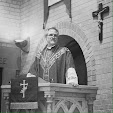
Sermon: Funeral of Dorothy Grimes

28 December 2017

Text: John 14:1-6 (Isa 25:6-9, 2 Cor 4:7-18)

In the name of + Jesus.  Amen.

Dear family and friends, brothers and sisters in Christ, and honored guests: peace be with you!

This is a time of year when families get together, when old memories are rekindled, when we trade the cares and worries of this world for a few days of cheer – and when we look to a brighter future in the next year.

To lose someone at this time of year is painful.  I speak from experience.  It is made even more of a cross to bear because Miss Dottie’s love and joy and desire to be with her family and friends radiated from her year round.  Christmas will be different from this time forth.  Don’t worry.  It won’t be ruined, but it will be different.  Each passing year of life is different.  There will be bittersweetness in future Christmasses, but there will also be a profound Christian joy in knowing that Dottie’s passing is closely tied to the birth of Jesus.  For Jesus did not remain the baby in the manger.  In time, He bore His own cross and died His own death on His own cross; He died in order to give us His own life as a gift to save us.  He rose from the grave on Easter in order to give us resurrection and eternal life as a gift as well.

We heard His comforting promise in His own words in our Gospel reading: “Let not your hearts be troubled….  I go and prepare a place for you” and “I will come again and will take you to Myself.”  For “in My Father’s house are many rooms.”  Jesus has prepared a place for Dottie and for all who are baptized and believe in Him, who trust in His grace and mercy. 

There is a connection between the life, death, and resurrection of Dorothy Grimes, and the life, death, and resurrection of Jesus Christ.  And so not only will Christmas bear a sense of separation from her, but Christmas will always remind you that Jesus, whose birth we celebrate, came to conquer death, to take us to Himself, and to promise us a glorious reunion in the flesh with those we love.  Scripture puts this separation into perspective, calling it a “slight momentary affliction.”

This sense of connection is also illustrated by what the church calls Dottie’s “heavenly birthday,” the 23rd of December – which was also the anniversary of her wedding to her beloved George.  Now, they are no longer separated, and no longer suffer the pain of being apart, nor the pain of the mortal body, nor of the pain that is our legacy of sin in this fallen world.  All of that is gone, dear friends!  The grief we experience – which is a natural thing because we are temporarily separated from our loved ones – is not experienced by George and Dorothy in eternity!  Knowing this brings us joy.  And indeed, we await the promised resurrection in Christ, when we will have renewed bodies and a new physical home in a perfectly restored world. That is why Jesus came.  That is the ultimate meaning behind Christmas!

This is not some pie-in-the-sky mythology, dear friends, this is a promise rooted in historical reality.  For just as there is a little village to this very day called Bethlehem, where Jesus was born, there is also a tomb in what is today part of Jerusalem, a tomb unlike any other on the planet: the tomb whose occupant walked out of under His own power.  That tomb where the body of Jesus lay is today a church, and from the pulpit of that glorious empty grave, the same Word of God that we heard today, the same Gospel, the same unchanging historical Good News of Jesus Christ, is proclaimed.

And listen, dear friends, to the Word of God from Isaiah: “The Lord of Hosts will make for all peoples a feast of rich food, a feast of well-aged wine….  He will swallow up death forever; and the Lord God will wipe away tears from all faces… for the Lord has spoken.”

This is God’s promise to you, just as He spoke through St. Paul in our epistle reading to the church in Corinth: “We have this treasure in jars of clay, to show that the surpassing power belongs to God and not to us.”  In His infinite wisdom and plan, God created Dottie and breathed life into her seventy five years ago.  He saw to it that she was baptized.  Through her life, many of you came into existence, also according to the Lord’s plan.  He had a reason to create her, and He has a reason and a plan for all of you as well!  And we know that this plan transcends the grave: “knowing that He who raised the Lord Jesus will raise us also with Jesus and bring us with you into His presence.”

Although we don’t see this with our eyes, we take the Lord’s promise on faith: “We look not to the things that are seen but to the things that are unseen.  For the things that are seen are transient, but the things that are unseen are eternal.”

Eternal, dear friends.  What comfort there is in that word!  It means life that never ends, a life without pain, sorrow, suffering, separation, mourning, and without death!  God has brought you here on this day to hear these words and these promises of His.  He has brought you here to tell you that He has prepared a place for Dottie, and that He came into our world to free us from sin and death, to being us life and joy – not just a temporary season of joy, but eternal joy in Christ Jesus.

And this is why I greeted you the way Jesus greeted His disciples after His resurrection, the way we Christians have greeted one another for two thousand years – a greeting that is not just a wish, but a promise from the same Jesus who has prepared a place for His servant Dorothy: “Peace be with you!”  Amen.


In the name of the Father and of the + Son and of the Holy Spirit.  Amen.

Monday, December 25, 2017

Sermon: Christmas Day - 2017


25 December 2017

Text: John 1:1-18 (Ex 40:17-21, 34-38; Titus 3:4-7)

In the name of + Jesus.  Amen.

The last word of the last line of the last stanza of the last hymn that we will sing this Christmas morning is the word “appearing.”  It’s from this line: “Word of the Father, now in flesh appearing.”

Of course, the reference to the Word is from our Gospel of John’s introduction of Jesus: “In the beginning was the Word, and the Word was with God, and the Word was God.… and the Word became flesh and dwelt among us.”  But the reference to “appearing” is from our epistle reading from St. Paul’s letter to Titus: “But when the goodness and loving kindness of God our Savior appeared, He saved us.”

And notice that “God our Savior” is exactly how the pregnant virgin Mary described the baby Jesus in her womb – as we will sing in the Magnificat: “My soul magnifies the Lord, and my spirit rejoices in God my Savior.”

Dear friends, there is something magnificent and beautiful here that cries out for our attention this happy morning.  For Jesus is truly the Word of God.  By Him all things were made.  When God created the universe, He spoke, and it came into being.  And this Word “was with God” and this Word “was God.”  This Word in the original Greek of the New Testament is Logos, where we get the word “logic.”  By speaking it into being, God created an orderly and logical universe, set into motion according to the laws of physics, bodies of matter that interact with one another perfectly like a great precise clock in space and time. 

But the Logos is more than just a cosmic brain that makes the galaxies whirl with cold logical precision.  There is something personal and loving about this God our Creator, for by means of His Word, He is also God our Savior.

To save us means that He cares about us, and it also means that we are in trouble.  We were created in His image, given a mind and a soul and a heart, and the ability to think and to love, to study the universe, and to discern the Creator from the created order.  But we chose to rebel against our Creator.  We chose sin over the goodly order that God placed us into.  We vainly imagined ourselves to be superior to the Word, uttering our own word instead: “No.”  We refuse to serve.  We refuse to submit.  We refuse to obey.

And we are in grave peril, as if the galaxies of the universe were to suddenly rebel against the laws of physics.  Dear friends, in our sin, we have placed ourselves on a path to destruction.

But God is determined that He will not allow this to happen to us.  For “when the goodness and loving kindness of God our Savior appeared, He saved us.”

“He saved us,” dear brothers and sisters, “not because of works done by us in righteousness, but according to His own mercy, by the washing and regeneration and renewal of the Holy Spirit, whom He poured out on us richly through Jesus Christ our Savior.”  And so when we needed a Savior, He appeared: “Word of the Father, now in flesh appearing.”

The Almighty Mind, the Logic, the Word that created the universe now appears in time and in matter, appearing in flesh, appearing to us not mightily but mildly, in goodness and loving kindness and mercy, making His appearance to us as one of us, “and the Word became flesh and dwelt among us,” “God our Savior appeared.”  “Now in flesh appearing.”

The Greek word for this appearing is where we get the word “epiphany.”  The appearance of the Word of God in the flesh as our Savior is a startling and universe-changing epiphany, a shining forth of light into a vast darkness.  God has not revealed Himself only in words, but in His being, not merely by enforcing the laws of the universe, but by graciously bending those laws by His will, out of love for us.  He wills to appear in flesh and to reduce Himself to a microscopic speck in time and space, to imbed Himself in the womb of a virgin in a tiny village in the middle of nowhere, and to suffer, to be crucified, and to die for us – all in order to save us, to rescue us.

He does this out of mercy, dear friends, out of love.  Not only the love for His creation, but love for you as His beloved creature.  He became one of us, and dwelt among us, to save each one of us, and to join Himself to each one of us out of love.  We are renewed and regenerated, by the Holy Spirit, washed in baptismal water “poured out on us richly,” calling to mind that “in the beginning… the Spirit of God was hovering over the face of the waters” just before the Word spoke, “Let there be light.” 

He continues to appear in flesh, dear friends, in His flesh and blood given to us in the Sacrament of the Altar.  He uses His Word to appear to us in space and time, appearing in the form of bread and wine so that He might continue to save us out of “goodness and loving kindness.”

Of course, we give gifts at Christmas.  Part of the reason is because the magi bore gifts to the baby Jesus.  But there is another reason: our gifts call to mind the original Gift: the Word made flesh.  Our giving calls to mind His giving, that is, His appearing.  Our gifts are small acts of love in time and space, calling to mind His infinite love in robing Himself with time and space in order to be our Savior, to love us by making Himself the ultimate gift at the cross, and giving us the gift of resurrection to eternal life, even as the Word took up His flesh again on Easter morning.

The gift of the “Word of the Father, now in flesh appearing is given to us for the following reason: “so that being justified by His grace we might become heirs according to the hope of eternal life.”

So come, all ye faithful, joyful and triumphant.  Come ye to Bethlehem (Hebrew for the “house of bread”), come to the altar, come to where the Word of God, your Savior, is proclaimed and present for you year after year, and week after week.  Come and behold Him, behold His goodness and loving kindness, behold the “Word of the Father, now in flesh appearing.”  Behold the Lamb of God that takest away the sin of the world!

“O come let us adore Him, Christ the Lord!”  Amen.


In the name of the Father and of the + Son and of the Holy Spirit.  Amen.

Sunday, December 24, 2017

Sermon: Christmas Eve - 2017


24 December 2017

Text: Isa 7:10-14, Mic 5:2-5a, Isa 9:2-7, Matt 1:18-25, Matt 2:1-12, John 1:1-18

In the name of + Jesus.  Amen.

A sign is something that gives us information.  Signs don’t just crop up all by themselves.  Signs are placed because someone wants us to know something.  On the highway, we sometimes miss signs because there are too many of them.  There is information overload.  So when God wanted to give us the greatest sign of all, a sign that God said could be “deep as Sheol or high as heaven,” He chose to give us something normal, but given in an extraordinary way.  The sign is a baby, but a baby that came by means of a miracle. 

Moreover, this baby is God in human form, but not blasting mountains and moving galaxies with His fingers, but rather a newborn, wrapped in swaddling cloths, lying in a manger.

The sign is the fact that this is not what we would expect God to look like.  Like the old story about a turtle on a post, we know that this is not just a random act of nature.  “Behold, the virgin shall conceive and bear a Son, and shall call His name Immanuel.”

“Immanuel” means “God with us.”  Almighty God is not coming to us as our angry judge, but as one of us, an extraordinary baby wrapped in the ordinary cloths of this world.  He is the ultimate turtle on a post, a twist in the plot.  He is with us not to destroy us, but to save us.

Moreover, He doesn’t come to Rome in majesty, or even in Jerusalem as Israel’s capital.  “But you, O Bethlehem Ephrathah, who are too little to be among the clans of Judah, from you shall come forth for Me one who is to be Ruler in Israel.”  And this King doesn’t come to collect taxes (but to give His lifeblood as a ransom), nor to enslave our sons to fight His wars (rather to take the form of a servant to fight and die for us). This King comes to “shepherd His flock,” not to fleece it.  For, “He shall be their peace.”

Peace, dear friends, comes as a result of victory over our enemies.  As long as there are those who hate us, who wish our destruction, who plot night and day for our demise, we can never sleep secure.  But once those enemies have been vanquished, we can indeed sleep the sleep of the saints, confident of being aroused from slumber on the Day of Resurrection.  When the foe has been crushed, we can sing for joy, and relax in the knowledge of our security.

And with the coming of our Prince of Peace, the one who crushed the serpent’s head as He won the victory for us upon the cross, laying down His life for His people, we can indeed cry out: “For every boot of the tramping warrior in battle tumult and every garment rolled in blood will be burned as fuel for the fire.”

“For to us a Child is born, to us a Son is given; and the government shall be upon His shoulder, and His name shall be called Wonderful Counselor, Mighty God, Everlasting Father, Prince of Peace.”  This newborn Warrior-King comes to establish “justice” and “righteousness from this time forth and evermore.”

This greatest sign, the incarnate God in human form, born of a virgin, and appearing in a tiny unimportant village, “took place to fulfill what the Lord had spoken by the prophet: 'Behold, the virgin shall conceive and bear a Son, and they shall call His name Immanuel.'”  And the news of this ultimate turtle on a post (that was predicted seven hundred years before) was announced to Joseph by the Angel of the Lord.  And this Immanuel shall be called “Jesus,” that is, “God saves,” because this God With Us is here for that reason: “for He will save His people from their sins.”

The Lord also gave signs in the stars to point the whole world to the baby Jesus.  For this news is too good to keep hidden.  The entire planet would come to ponder the extraordinary in the ordinary.  This good news was not only for Israel, for Judea, or even for the Roman Empire.  This good news isn’t only for the people of the first century.  For “wise men from the east came to Jerusalem, saying, ‘Where is He who has been born King of the Jews?’”  These Gentiles and their descendants are all over the world, and to this day, we of every nationality, are blessed by this Jewish Messiah. For these wise men have, as have we, “come to worship Him.”

We have come to worship Him, dear friends!  For He is more than the fulfillment of prophecies, more than our champion and King, more than our ticket to heaven, more than a curious turtle on a post – He is God, Immanuel, God with us, God in our skin, God in our world, God in our midst, God not only with us but for us, God by whom all things were made, God who was there in the very beginning!

This, dear friends, is the glory of the mystery of this Holy Child and this holy night, the reverberations of which continue to rumble the universe to this very day: “In the beginning was the Word, and the Word was with God, and the Word was God.  He was in the beginning with God.  All things were made through Him….  In Him was life, and the life was the light of men.”

“The light shines in the darkness, and the darkness has not overcome it….  The true light, which enlightens everyone, was coming into the world.”

He is coming, dear friends, coming to give us the right “to become children of God.”  For this is the ultimate sign and mystery that was to forever change the fabric of the universe: “The Word became flesh and dwelt among us, and we have seen His glory, glory as of the only Son of the Father, full of grace and truth.”

This sign, dear friends, not only communicates something; it communicates the truth, and this is the ultimate and most important truth ever told, and ever received: the truth is that God Himself has done the impossible by squeezing His almighty and infinite being into the confines of space and time, into the single-cell of a fertilized human egg, one not naturally conceived. 

He developed in the womb and was born in a tiny village without royal human fanfare, but to the song of angels and lowly shepherds, a song that still resounds today: “Gloria in excelsis Deo.” 

He is the Word, God of God, Light of Light, begotten not made, wrapped in swaddling cloths, nursed by His mother and cared for by His stepfather.  He is the Light that dispels all gloom – even the darkness of death – by defeating the devil through His own sacrifice on the cross and His own resurrection from the tomb.  He who was baptized by the preacher John will baptize us by means of other men called into the preaching ministry.  We too will continue to hear this good news of Immanuel, God with us.  Each year we celebrate, each week we partake, each day we pray, each moment we draw breath by God’s grace, and when we die, we will die in the Lord to be brought by our Immanuel into eternal glory: “glory as of the only Son from the father, full of grace and truth.”

Let us give praise to God, not only for the sign, but for Him who signifies, and who is the Truth.  Let us give thanks for this truth that we are beloved of God and redeemed by this Holy Child, that “from His fullness we have all received grace upon grace.”

Evermore and evermore.  Amen.


In the name of the Father and of the + Son and of the Holy Spirit.  Amen.

Sermon: Rorate Coeli (Advent 4) - 2017


24 December 2017

Text: John 1:19-28 (Deut 18:15-19, Phil 4:4-7)

In the name of + Jesus.  Amen.

There is no certification process for a prophet.  There’s no curriculum or diploma.  There’s no pattern or standard evaluation.  We are told that if a prophet’s words are untrue, he is a false prophet.  In Old Testament Israel, this was punishable by death.

In the days of John the Baptist, however, people claiming to be prophets were a dime a dozen.  The Romans didn’t really care, as long as they paid their taxes.  The Jewish authorities took them in stride.

But John the Baptist was different.

He scared them.  He spoke like one of the Old Testament prophets.  He did not shy away from calling out the rich and powerful.  And he spoke about the coming of the Messiah.

The prophets had been silent for four centuries regarding the promised Savior of Israel, but now, John preached in the desert with urgency, and without regard to the status of his listeners.  He was in a category by himself.

The leaders of the Jews, the “priests and Levites” traveled from Jerusalem to interrogate him.  He made them very uneasy.  “Who are you?” they asked.  Was John claiming to be the Messiah?

To their amazement, “he confessed, and did not deny, but confessed, ‘I am not the Christ.’”

Had John been a huckster or showman or someone suffering from mental health delusions, he would certainly have said “yes.”  Ironically, this seemed to frighten the priests and Levites all the more.  They ask if he is Elijah reincarnated, or perhaps the Prophet that Moses had foretold, this “prophet like [Moses] from among their brothers,” who would speak the Word of God, and who also came with a warning, “whoever will not listen to My words that He shall speak in My name, I Myself will require it of him.”

Could John be this prophet?  No. He is not.

The priests and Levites are on pins and needles.  “Who are you?  We need to give an answer to those who sent us.  What do you say about yourself?”  These men are clearly frightened.  John is not a megalomaniac.  John is not just another rabble rouser.  Who is this John?  They need to know.

John replies: “I am the voice of one crying out in the wilderness, ‘Make straight the way of the Lord,’ as the prophet Isaiah said.”

John speaks the voice of God – that voice that had lain silent for four hundred years.  For John is the last prophet, who urgently preaches repentance, for the kingdom and the King are at hand: “I baptize with water, but among you stands one you do not know, even He who comes after me, the strap of whose sandal I am not worthy to untie.”

John is not the one they should fear, but rather the one John speaks of, the Messiah, the Prophet, the Word made flesh, the One who is God incarnate, the one whom John will baptize in the Jordan as the voice of God will declare Him to be the Son, even as the Holy Spirit will appear visibly as the one whom John will prophetically proclaim to be “the Lamb of God.”

John the Baptist sends the uneasy priests and the Levites back to Jerusalem with more questions than answers.  And they must continue to wait.

But their waiting will not be long now.  Jesus of Nazareth, the cousin of John, the one born in Bethlehem and visited by shepherds who saw signs in the sky, is the one whom they seek, the one whom they should worship, the one whom they will crucify.  He is the one who dies for their sins, who offers them salvation by grace as a free gift, who calls them to repent, who preaches the gospel to them.  He is the one whom the prophets foretold and whom John introduced. 

This Jesus is the one who is worshiped by people in every county on the globe, and whose birth will be commemorated by the entire world as today dissipates into evening.  Many people, like the priests and Levites, are afraid and intimidated by God’s Word.  Many deny the Lord’s coming and the Lord’s atonement for the sins of the world.  Many people deny the existence not only of Jesus, but even of sin itself!  There are modern people, who like the priests and Levites, interrogate us and wish to silence our voice, even as they sought to cut off the voice of John by cutting off his head. 

But the Word of God cannot, and will not, be silenced.  We preachers are merely messengers, and while we can individually be silenced, the Voice itself cannot be.  People may plug up their ears and throw stones, but the Voice is heard loud and clear when the Scriptures are read, when the faith is confessed, and when the Gospel is preached.  For the Jesus whom John proclaimed is not just a preacher of words, but the Word Himself.  He is the Word who is God, who was with God, by whom all things were made, and who became flesh and dwelt among us, full of grace and truth: the Christ.

Dear friends, we are not only waiting for the celebration of Christmas to begin, we are waiting for the consummation of the Lord’s kingdom to begin.  We are not only waiting to celebrate the infant Jesus, we are also waiting to give ear to John’s voice by the return of the conquering Jesus, coming in glory to restore perfection to a new heaven and new earth, to our new bodies and cleansed souls, to the final disposition of Satan and his demons, and for the final prophecies of the Old and New Testaments to be brought to fruition in Christ for eternity!

So like the children of Israel, we wait for our Messiah, but unlike the priests and the Levites, we do not wait in fear, but rather in expectant joy – a joy that the world celebrates beginning later this day as we collectively call to mind the humble birth of the King of kings, the Lord of lords, the eternal Savior and re-creator of the universe.

Dear friends, while the priests and the Levites were troubled, those whom Jesus healed and forgave, and to whom He proclaimed good news, rejoiced.  And so do we, dear brothers and sisters, for we who have been redeemed by the cross cannot help but “rejoice in the Lord always,” for we celebrate the Christ child’s coming into the world knowing the promise He bears and fulfills: “The peace of God, which surpasses all understanding, will guard your hearts and your minds in Christ Jesus.”  Amen.


In the name of the Father and of the + Son and of the Holy Spirit.  Amen.

Sunday, December 17, 2017

Edward Bellamy's Socialist Plan to Use Theology and Economics, 1892 or 2017?

Edward Bellamy, ca. 1889
One of the pioneers and leaders of Socialism in the United States was Edward Bellamy (1850-1898).  He described his particular brand of Socialism as "Nationalism" - based on the idea of nationalizing all industry.  He felt it had a more patriotic sound than "Socialism" (his cousin Francis Bellamy, also a Socialist, was the author of the Pledge of Allegiance).

His philosophy was inscribed in his greatest literary work, an 1888 novel entitled Looking Backward 2000-1887. It is a remarkable science fiction novel that envisioned and described a Socialist Utopia in America by the year 2000 - as well as how it happened.  Looking Backward became one of America's best selling and most influential works of fiction of all time, and was a favorite of many American intellectuals, including John Dewey, one of the fathers of modern Progressive education.  The book spawned "Bellamy Clubs" or "Nationalist Clubs" throughout America.

In 1892, Bellamy's paper "Progress of Nationalism in the United States" was published by The North American Review (June 1892).  The complete essay can be found here.

There are a couple passages from the paper that lay out a plan for the preacher's pulpit and the professor's lectern in the service of Bellamy's brand of Nationalism-Socialism. Both seem to have come to pass in our own day.

The Clergy:

It is unnecessary, surely, to do more than call attention to the great moral awakening upon the subject of social responsibilities and the ethical side, or rather the ethical soul and centre, of the industrial question, which has taken place within a very recent time. It was but yesterday that the pulpit was dumb on this class of themes, dumb because its hearers were deaf. Now, every Sunday hundreds of pulpits throughout the land are preaching social duty and the solidarity of nations and of humanity; declaring the duty of mutual love and service, whereby the strong are made bondmen to the weak, to be the only key to the social problem. This is the very soul of Nationalism. To be able to present this theme effectively has become the best passport of the clergyman to popular success, the secret of full houses. One of the most hopeful features of the Nationalist outlook from the first has been the heartiness with which a large contingent of the clergy has enlisted in it, claiming that it was, as it truly is, nothing more than Christianity applied to industrial organization. This we hope to make so apparent that erelong all Christian men shall be obliged either to abjure Christ or come with us. (emphasis added)


The Economics Faculty

Economic discussion and the debate of radical social solutions absorb the attention of the country, and are the preponderating topics of serious conversations. Economic papers have the precedence in our periodicals, and, even in the purely literary magazine, they crowd the novel and the romance. Indeed, the novel with a sociological motive now sets the literary fashion, and a course in political economy has become necessary to write a successful love story.

It is not so much the increased volume of economic discussion that marks the social growth of Nationalism as the fact that its tone is chiefly given by the adherents of the new and humane schools of political economy which, until recently, had obtained but little hearing among us. Up to within a very few years the old school of political economy, although it had long before begun to fall into discredit in Europe, still held practically undisputed sway in America. To-day the new school, with its socialistic method and sympathies, is the school to which nearly all the young and rising professors of political economy belong. The definition of labor as "a commodity," would now endanger the position of an instructor in that science in any institution of learning which did not depend for its patronage upon a reputation for being behind the times. There are a few such yet despite the growth of Nationalism. (emphasis added)


Sermon: Gaudete (Advent 3) - 2017

17 December 2017

Text: Matt 11:2-11 (Isa 40:1-11, 1 Cor 4:1-5)

In the name of + Jesus.  Amen.

John the Baptist has done just what God commissioned him to do, and now he is in prison.  He has baptized Jesus and sent his own disciples to follow Him instead – and now he is left virtually alone.  He has spoken truth to power, and that power has come back upon his own head – and John will soon lose his head to the executioner.

How is John expected to feel about all of these events?  Did he make the right choices?  Has he said the right things?  Was he speaking the Word of God as a prophet, or just raving as a madman?  Is this Jesus “the one who is to come, or shall we look for another?”

Some people don’t believe that John is actually experiencing doubt here.  Some argue that John is just asking Jesus for reassurance for the sake of his disciples, because surely John the Baptist could never have doubts.  But given the fallen human weaknesses of so many of our other heroes in Scripture, I find such arguments unconvincing. 

Our Lord praises His cousin John, saying, “Truly, I say to you, among those born of women there has arisen no one greater than John the Baptist.”  And yet, Jesus also said, “Yet the one who is least in the kingdom of heaven is greater than he.”

John is a preacher.  He knows the state of the world.  He has called the most religious and powerful men in his community to repent.  John was given the task to baptize Jesus and to point all of humanity to Him, to the One whom John was to call the “Lamb of God that takes away the sin of the world.”

And after doing all of these things, John languishes in prison, even as his own disciples leave him.

But John has heard things about Jesus from prison.  John knows the Scriptures.  Is Jesus really and truly the Lamb of God, the Messiah, the Savior?  Are the Scriptures being fulfilled in our hearing?  Does John’s prophetic preaching reflect the truth about who Jesus is?  Is this all really true?

John wants to know, and so he prays.  He asks Jesus.  He pleads with God for a Word – a Word about Jesus.  John seeks the comfort with which the prophet Isaiah was sent to preach to the people seven centuries earlier: “Comfort, comfort My people, says your God.” 

Does Jesus give comfort to John the Baptist?  Jesus sends Word back to John.  He sends these messengers running with good news: “Go and tell John what you hear and see.”  He calls upon these men whom He has sent to be witnesses.  Our Lord says, “the blind receive their sight and the lame walk, lepers are cleansed and the deaf hear, and the dead are raised up, and the poor have good news preached to them.”  Indeed, these are the things the prophets said would happen.

This is true comfort to the prophet John the Baptist, whose greatest comfort is the truth: the truth of who Jesus is, and the truth that John himself has preached faithfully concerning this coming, promised Messiah, whom John Himself heard being blessed by the very voice of the Father: “This is My beloved Son” on the day that John baptized Jesus.

John is comforted. And not even prison, not even death, can rob him of his joy in Christ.  And this joy, dear friends, is not only the theme for this Sunday, this Gaudete (that is “Rejoice”) Sunday, this day in Advent in which we light the joyful rose candle and chant St. Paul’s uplifting epistle to the Philippians: “Rejoice in the Lord always.  Again will I say, rejoice!” – it is rather the theme of our entire life in Christ, in our incarnate and risen Lord, in Him who has come to restore us to the Father, raise us from the dead, and give us the free gift of eternal life! 

Joy, dear friends!

Joy is a scarce commodity in our world and culture.  People are anything but joyful today.  Many are depressed and bewildered, sorrowful and angry, hateful and bitter – both inside and outside of the church.  Some seek happiness by the pill or the bottle.  Some look for happiness in unfulfilled and unfulfilling relationships.  Some seek thrills and riches.  But happiness is elusive.

Joy, however, dear brothers and sisters, is all around us in the Word of God, in the promises of our Lord Jesus Christ, in His divine love and mercy and comfort to us through the cross.

For through Christ, joy is found even in sorrow and suffering – and yes, even in death.  Joy is defiance against the devil, the world, and our sinful flesh.  Joy is the hope we have in Christ, borne of faith, given to us as a free gift at the font and nurtured by the Word of God and the sacraments.  Joy is not happiness, but joy is rather contentment and trust that, in Christ, all shall be well.  No matter what happens in this fallen world, all shall be well.  No matter what befalls us in this broken existence, all shall be well.  For what do we see Jesus doing?  Curing the blind and the lame and the deaf and the leprous; raising the dead, and preaching the Gospel.  In the work of Jesus, we see the words of the prophets of old become reality: “He will tend His flock like a shepherd; He will gather the lambs in His arms.” 

Joy is better than happiness, dear brothers and sisters.  Happiness is temporary, whereas joy is eternal.  Happiness depends on our moods, whereas joy depends on the Word of God.  Happiness is like the grass that withers and the flower that fades, but joy is found in the “Word of our God” that “will stand forever.” 

John the Baptist does not find joy in wearing soft clothing and living in a palace; rather he finds joy in Christ and in His redemptive work: work that leads to and radiates from the cross.  In Christ, we are made whole: we see, we walk, we are cleansed and we hear.  We are raised from the dead and good news is preached to us.  Here is our joy, dear friends, in the Word!  For “the grass withers, the flower fades, but the Word of our God will stand forever!” 

Rejoice in the Lord always.  Again will I say, rejoice!  Amen.

In the name of the Father and of the + Son and of the Holy Spirit.  Amen.

Sunday, December 10, 2017

Sermon: Populus Zion - 2017

10 December 2017

Text: Luke 21:25-36

In the name of + Jesus.  Amen.

There is the old illustration that shows how different people can look at the same situation differently: the glass with water in it.  Some people see the glass as half-full, while others see it as half-empty.  I was taught that this illustrates the difference between an optimist and a pessimist.

So what are Christians?  Do we see the water-glass of this fallen world pessimistically as half-empty, or do we see it optimistically as half-full?  I don’t think that the optimist/pessimist dichotomy is very helpful.  I think a better way of thinking about this is whether or not we believe our Lord’s teaching in Scripture.

For in a very real sense, we Christians are not optimists.  The optimists are the Communists and the Darwinists, the Fascists and the storytellers in Hollywood.  All of these people have a completely unrealistic view of our world and of humanity.  They don’t believe in original sin, but they believe in an innate goodness of mankind – even though these elites all inexplicably lock the doors of their mansions at night.  They see mankind in the midst of a cosmic evolutionary improvement leading to a universal Utopia.  Some believe technology will solve our problems and even make God obsolete.  Others believe that we are evolving into a kind of collective human supercomputer that will evolve to new heights of consciousness.  Others think that we can upload our minds into robots and individually live forever.

But of course, these are the same people that promised us that we should all have flying cars and world peace by the year 2000, and 2001 was supposed to be a great Space Odyssey instead of the year the World Trade Towers were blown up by Moslem invaders.

We Christians know better than to be optimistic, at least in that naïve Utopian way.  We know about original sin, the fall, Satan, and the second law of thermodynamics – that says things left at rest wear down and fall into chaos over time.  It’s funny how they think we’re the ones who are anti-science.

The optimists of the 20th century gave us a hundred million dead beneficiaries of their optimism.  On that great road to Utopia, they gave us the concentration camp and the mass grave.  But we Christians know better than to put our trust in princes and to see the world through rose-colored glasses.  We are neither optimists nor pessimists – we are realists.

We Christians believe what is real, because reality has been revealed to us in Jesus Christ.  He who created us and placed us in a perfect world, He Himself descended into that chaos that we made, so that He could rescue us from ourselves.  We killed Him, and He did not resist.  He submitted to the sacrifice of the cross out of love.  He rose again.  And now the launch sequence has started on the Lord’s reclamation and re-creation of the entire world. 

Meanwhile, we know that things are getting worse, and will degrade much more, dear friends.  Jesus has told us so: “There will be signs in sun and moon and stars… distress… perplexity… people fainting with fear… foreboding.”  Moreover, “the powers of the heavens will be shaken.”

And this means the end is near.  The Son of Man will be coming on the clouds.  And while our deluded optimists and Utopians (who speak so confidently of “cosmic consciousness” and other New Age gobbledygook that they think is so sophisticated), they will find themselves curled into a fetal ball in a panic attack.  Instead, it will be the realistic Christians, who will recognize the signs of the times, who will “straighten up and raise [their] heads,” because, as our Lord has said, “your redemption is drawing near.”

The tables will turn.  We who are so often accused of being pessimists, people who are negative and judgmental and always interfering with the next planned Utopia, we will be shouting for joy, while they, the optimists, will find their bubble burst, as the reality that mankind needs a Savior, just as Christians have always known and confessed, sets in. 

Dear friends, this will happen.  It is inevitable.  The Lord is returning to this world to put an end to our misery, and to usher in something better than a Utopia: true eternal paradise.  This is the central lesson of Scripture, for as our Lord says, “Heaven and earth will pass away, but my words will not pass away.”  The Word of God, dear friends, is where you will find your bearings and your comfort amid change and chaos.  You will not find reality anywhere else. 

So watch yourselves, dear friends!  Stay awake!  Be ready!  “Look at the fig tree,” says our Lord, “and all the trees.  As soon as they come out in leaf, you see for yourselves and know that the summer is already near.”  The proof is everywhere around us: the glass which is half-full and half-empty: the brokenness and fallenness of our world, but also the redemption of that same world in Christ. 

That is the power of the cross, dear friends.  On the cross, the Lord took our sins and imperfections and crucified them.  In exchange He gives us His perfection and righteousness.  The world is being recreated, not through evolution or unrealistic economic theories, but by the loving redemption of a loving Redeemer, by His Word, and by His very body and blood.  

So in that sense, we Christians also see the glass as half-full.  For in that tiny splash of water is the explosive Word of God poured upon us to deliver us from evil and bring us to eternal life.  This is the hope of Advent, the message of Christmas, and the good news proclaimed by the Church throughout the year, and through the centuries: we who see the glass as both half empty and half full, not Utopians but realists, who can indeed raise our heads amidst the chaos, for our “redemption is drawing near!”  Amen.


In the name of the Father and of the + Son and of the Holy Spirit.  Amen.

Wednesday, December 06, 2017

Sermon: St. Nicholas of Myra - 2017

6 December 2017

Text: Luke 14:26-33

In the name of + Jesus.  Amen.

St. Nicholas is one of the world’s most beloved heroes of the faith.  He lived in the fourth century in Asia Minor, which is today Turkey.  Nicholas was a pastor and bishop and defended the Christian faith at a critical time.  In fact, he was at the council of Nicaea when the Nicene Creed was born.  Tradition says that he actually got into fisticuffs defending the doctrine of the Trinity – something we generally try to avoid these days.

Bishop Nicholas had a reputation not only for being a staunchly orthodox theologian and defender of the faith, but he had a soft spot for children and the poor.  There are many stories about his charity and kindness – including the giving of gifts to children.

And since the St. Nicholas died on December 6, 343 AD – 1,674 years ago today – the Church all over the world celebrates his feast day today.  This being the case, the good bishop has been forever linked to Christmas, and the celebration of the Lord whom St. Nicholas served his whole life.

And so it seems weird that the Gospel reading chosen in honor of St. Nicholas’s feast day as we approach Christmas should be Jesus telling us to hate our families – including our children.

Yes, indeed, what could be more triggering than Jesus instructing His followers to “hate” – and to say this at Christmas time.  Why would our Lord Jesus Christ say to hate the children?  

Well, obviously, Jesus is using what is known as “hyperbole” – a form of exaggeration to get our attention.  What our Lord is saying here is tremendously important, for He makes us take a long, hard look in the mirror to see how many ways that we sin.  He calls us to repent of the most basic sin of all: idolatry.  He points out that our worst sins often camouflage themselves as virtues.

Our Lord Jesus Christ says, “If anyone comes to Me and does not hate his own father and mother and wife and children and brothers and sisters, yes, and even his own life, he cannot be My disciple.”

To be a disciple of Jesus, dear friends, means that Jesus is our number one priority – even more important than our families.  For we cannot serve two masters.  We cannot worship two gods.  And we have a habit of finding anything to worship other than the one true God.

Yes, even our families can become a false idol, turning us inward upon ourselves in our homes, and away from the Lord, where He is to be found in the Holy Scriptures and in the sacraments.  How often pastors hear that parents have to take their families out of church because of a soccer game or a dance recital!  It is as though anything and everything takes priority over hearing the Word of God and receiving His holy sacraments.  People who never miss work or pull their children out of school will routinely miss church – and will do so in a way that sounds virtuous: for the sake of their families, in love for their children.

Jesus calls us out on this false piety.  For if we really love our children, we will love God first, and we will raise our children to put their Christian faith before anything and everything.  Or as we say in the Catechism: “we should fear, love, and trust in God above all things.”  “Above all  things,” dear friends, even above our love for our families.

Paradoxically, if we “love” our children more than God, we are really hating them.  And if we “hate” our children compared with our love for God, we are really loving them.

And in fact, to be a disciple of Jesus means that we even love God more than we love our own lives.  For our Lord pointed out the similar paradox that whoever would save his life will lose it, and whoever would give up his life for the kingdom will save it for eternity.

This is what our Lord means that in order to follow Him, we must “bear [our] own cross.”  To follow Jesus means to make absolutely everything in this life subservient to Him.  No exceptions.  That includes our own lives, our families, and all that we hold dear in this world.  And this is real faith, dear friends.  To have faith in Jesus doesn’t just mean we think that He is a real person, or even that we intellectually acknowledge His historic work on the cross.  Rather it means that we trust Him, here and now unconditionally, even to place our most beloved people and things in His hands, knowing that in doing so, we don’t lose them, but in fact, save them. 

Jesus compares this life of discipleship to a building project.  If we want to build something, we get an estimate.  We make sure that we know what we are getting into before we commit and begin.  He also compares the Christian life to the calculations performed by military strategists.  How many troops do we have, and can we win?

Dear brothers and sisters, our Lord doesn’t want you to follow Him blindly, but knowingly.  To be a Christian is costly.  It will cost your life.  It means placing all things in His trust, and withholding nothing for yourself.  But it isn’t like you are leaving behind the things you love, but rather you are putting them in a kind of bank, into the hands of Jesus, as the ultimate act of trust.  Do you have faith enough in Jesus to let go of your most beloved people, and even your own life?

Well, here is the good news, dear brothers and sisters, what is important is that Jesus has exactly this kind of faith for us.  He loves God the Father and He loves us more than He loves His own life.  He bore His own cross and hated His own life in order to save us.  He counted the cost of building the tower to Heaven – not the phony tower of Babel, but the true tower of the tree upon which He was suspended between heaven and earth, in accordance with the Father’s will, and for the purpose of redeeming us.  He calculated the cost of the war between good and evil, determining that His blood was sufficient for victory.

Our Lord Jesus loved us and redeemed us by His blood.  He humbled Himself to be born of the Virgin Mary.  He came to the Christians in Myra sixteen centuries ago when Bishop Nicholas preached and officiated over the divine services, distributing the body and blood of Christ to those whom Christ loved, and our Lord continues to pour Himself out for us today, dear friends, challenging us and strengthening us with His Word, and instilling in us a faith capable of self-sacrificial love by feeding us with His body and pouring His blood into us, as the Holy Spirit works upon us as the gift given to us in Holy Baptism, uniting with us, and making us holier and more loving with each passing day in His presence, even as we do nothing but sit and kneel and be fed and nourished.

This is the lesson of St. Nicholas for us: that we poor miserable sinners, we children of God, receive divine gifts through the work of the Lord’s servants, giving us faith as a gift, calling us to love our children and our families not by idolizing them, but by placing God first and living out that divine love with our families, whom we truly love by our “fear, love, and trust in God above all things.”

That is the faith the Lord calls us to, the faith we confess in the Nicene Creed, the faith St. Nicolas preached, the faith of Jesus Christ given to you, dear friends, now and even unto eternity!  Amen.


In the name of the Father and of the + Son and of the Holy Spirit.  Amen.

Sunday, December 03, 2017

Sermon: Ad Te Levavi - 2017


3 December 2017

Text: Matt 21:1-9 (Jer 23:5-8, Rom 13:8-14)

In the name of + Jesus.  Amen.

Words are important.  Every year, there is a cultural battle over whether or not it is appropriate to say, “Merry Christmas” or not.  Sometimes the words of traditional Christmas carols are changed to make them more politically correct.  Some words are not worth fighting over, but some words are certainly worth defending, and contending for them to be said and understood. 

Many people put up trees and plastic snowmen and celebrate Christmas without knowing what the word means at all.  Christmas is “Christ’s Mass,” as He comes to us in the manger and in the sacrament of Holy Communion.

We have just begun the season of Advent – a four Sunday preface to Christmas. “Advent” means something very specific: a coming towards, or, an approach.  In Advent, we anticipate Jesus coming near to us: in the past in His birth, in the future in His second coming, as well as in the eternal present of Holy Communion.

And in this first week of Advent, there is another word that is so important that we say it in its original Hebrew.  This word is of such gravity that it was never translated into Greek or Latin or German or English.  It’s easy to forget what this word means.  On the one hand, we only encounter it in our readings on Palm Sunday, and the first week in Advent.  But we also hear it every single Divine Service in the Sanctus, when we say: “Hosanna, Hosanna, Hosanna, in the highest!”

This “Hosanna” was used to welcome King Jesus to David’s Royal City five days before His coronation as King upon the cross.  The crowds chanted “Hosanna!” as they waved their palms.  Our Lord rode a donkey into Jerusalem just as did another King who entered Jerusalem to be crowned: and that was King Solomon, the Son of David.

We might think that “Hosanna” means “praise” or “hooray” or “long live the King!” or something like that.  But it means something a little different.  And it is indeed an important word, for it sums up His purpose in coming, why He was born and why he died, why He came and will come again, and why He comes to us week in and week out in the Holy Sacrament.

“Hosanna” means “Save us!”

Whether they fully understood what they were saying or not, the crowds prayed for salvation as Jesus rode triumphantly into Jerusalem as Holy Week began.  Whether we fully understand it or not, we pray for salvation as we await the Lord’s return in glory.  And whether we fully understand it or not, we pray for salvation each and every week that we partake of His body and blood in Holy Communion.  “Save us!” is our prayer, our motto, our hope, our joy, and our confident confession of who Jesus is, why Jesus came, and what Jesus’s mission was, is, and is to come.  “Hosanna!  Hosanna!  Hosanna!”

Jesus is inseparable from the salvation of sinners that is His mission, His Advent to us.

As St. Paul reminds us in our epistle, “Salvation is nearer to us now than when we first believed.”  Time marches on.  One year draws to an end, as a new year begins.  “The night is far gone,” says the apostle, “the day is at hand.”

He means “the” day, the day of our salvation, the day when Christ will come again.  For He has not come to condemn us, but to save us.  He has come to answer our Hosannas with salvation itself, to rescue us from sin, Satan, and death, from our fallen world and mortal flesh, from the darkness of a broken world and a heart turned in on itself. 

“Hosanna, hosanna, hosanna!”

“Besides this you know the time,” St. Paul says, “that the hour has come for you to wake from sleep.”

Jesus has come to awaken us from our slumber and to rouse us to the glory that is ours in Him: forgiveness, life and salvation.  These are exciting times, just as it was on that Palm Sunday when the people welcomed their King, humble as He was on a donkey; or when the shepherds welcomed their King, humble as He was in a manger, a food trough for donkeys; or when He comes to us as Eucharistic food, freely given to us who are stubborn as donkeys in our fallenness.  And so we Christians continually pray, “Save us!”  Hosanna!

And let us reflect on the prophet Jeremiah’s words for us as well, dear friends, as He spoke of our Lord and King and Savior Jesus as “David’s righteous Branch,” as a “King” who shall “deal wisely, and shall execute justice and righteousness in the land.”  For “in His days Judah shall be saved, and Israel will dwell securely.  And this is the name by which He will be called: ‘The Lord is our righteousness.’”

What a glorious answer to our prayer of “Hosanna!” dear brothers and sisters!  For we are not saved by our own righteousness, but rather by His: “The Lord is our righteousness!”

Our King who was born in Bethlehem is our righteousness and our salvation, Hosanna!  Our King who rode into Jerusalem and was crucified, died, and rose again is our righteousness and our salvation, Hosanna!  Our King who will come again with glory is our righteousness and our salvation: Hosanna!

And what’s more, dear friends, even as we ponder His miraculous birth and as we expect His return, we do not live in the past or the future.  For our King is with us here and now, in His Word and in His sacrament: our righteousness and our salvation, Hosanna!

Words are indeed important.  And the Word of God, the Word Made Flesh is most important of all, dear friends.  For He has come to answer our prayer and to save us!

“Hosanna in the highest!”  Amen.


In the name of the Father and of the + Son and of the Holy Spirit.  Amen.

Sunday, November 26, 2017

Sermon: Last Sunday - 2017

26 November 2017

Text: Matt 25:1-13 (Isa 65:17-25, 1 Thess 5:1-11)

In the name of + Jesus.  Amen.

Our America is the land of extremes.  And our religion is no exception. 

On the one hand, American preachers are famous for their “hellfire and brimstone” sermons. In 1741, the Rev. Johnathan Edwards famously preached his “Sinners in the Hands of an Angry God” sermon.  It was filled with frightening and lurid images of Hell, including inviting his listeners to see themselves as spiders being helplessly dangled by the thinnest of webs over the flames to be burned alive.  A hundred years later, it was common for American churches to have an “anxious bench” in which sinners were forced to sit and be antagonized and frightened until they made their decision for Jesus.

On the other extreme, Americans also produced a denomination of Universalists, who believed nobody actually ever goes to Hell.  And today, there are many people across all denominations who believe this, and therefore, see no need to actually obey the commandments or to “fear God’s wrath” as our Catechism warns us that we should do.

And then, there is the “extreme middle,” where people believe there is a Hell, and it’s really bad, but only a select few Hitlers or Stalins ever actually make it there.  Such people typically believe they are good enough by their own works and deeds so as to avoid being cast into Hell. 

Our readings today on this last Sunday of the church year expose the weaknesses of all of these “extreme” positions.

In fact, our Lord Jesus Christ kind of sounds like Jonathan Edwards in His Parable of the Ten Virgins.  It is a frightening story that makes it clear that Hell is not a metaphor, nor is it restricted to just the vilest of all humanity.

In fact, in the story, five young women are shut out of God’s grace and are told, “Truly, I say to you, I do not know you.”  Can you even imagine the horror of hearing those words from Jesus on the Last Day?  Dear friends, our Lord is warning us to repent, now, while we have time.  He is not trying to scare us into repentance, but He is honestly warning us what awaits the “foolish.”  And what made these maidens “foolish” vs. their wise counterparts?  They were not prepared.

Our Lord’s story is in some ways similar to Aesop’s fable about the ant and the grasshopper.  The grasshopper played and sang and danced all summer, while the ant labored and set aside food for later.  When winter came, the ant was prepared for the cold weather.  The grasshopper was unprepared.  The ant survived the winter, but the grasshopper did not.

But our Lord’s story has to do with eternal life, dear friends.  It is a sobering story, which is the very word used by St. Paul in His letter to the Thessalonians: “Let us be sober, having put on the breastplate of faith and love, and for a helmet the hope of salvation.”

Lest we forget, we are in the midst of a war.  God and His angels are in a cosmic battle against Satan and his demons.  And here we are, dear friends, in the crossfire.  Within our own flesh and spirits we are waging a civil war, as Paul himself admitted.  This is why the apostle tells us to put on our breastplate and helmet, the armor we need to wage war.  We need to be prepared! 

So what prepares us, dear friends?  Are you prepared for spiritual battle just because you aren’t a Hitler or a Stalin?  Are you prepared for battle because you’re physically here this morning?  Do you pray when you wake up and when you lie down to sleep?  Do you pray before meals?  Do you read the Scriptures and study God’s Word?  Do you faithfully take part in the sacraments, and do so often?  Do you look for opportunities to love and serve your neighbor?  When you look in the mirror, do you see someone who is prepared to meet the Lord when He comes “like a thief in the night”?  Or do you comfort yourself with delusions about being a “good person”?

The good news, dear friends, is that Jesus is not toying with us.  He is warning us.  It is His desire that all ten of the young women in His story join the Bridegroom for eternity and that none should be lost.  But He also respects the fact that these young women are free to make their own choices and decisions.  He does not force Himself on them, but rather calls to them, urges them to come to Him, and warns them of the consequences of being unprepared.  But ultimately they are free to live their lives.

The five wise young women were wise because they were prepared.  They used their freedom wisely. They knew that the Bridegroom was coming.  And they did not assume that they had time to waste.  They had their lamps trimmed and their oil stocked.  They lived their lives prepared for the unexpected coming of the Bridegroom. 

Or to use the warrior metaphor, they had their armor on and were ready for battle: the faith and love that protects the heart of the Christian, and the salvation won for us by our Lord upon the cross, a gift that guards our minds and covers the thoughts of the prepared and the wise.

And lest we think the Christian life is only about avoiding Hell, the prophet Isaiah gives us a glimpse of the world to come, the world promised to the prepared, to the wise, to those who do not squander the Lord’s gift of grace: “new heavens and a new earth,” freed even from the memories of sin and suffering and death. The prophet describes the destiny of the wise and prepared, those who receive the Lord’s mercy, using words like “joy” and “gladness,” with no “weeping” and no “cry of distress.”  The prophet describes a world of fruits and wine and pleasant houses and ancient trees, of rewards for work, and of peace that we can’t even imagine where even predatory animals graze with their former prey.

Jesus has come to give us this everlasting life, dear friends, the cure for death itself.  Do you miss your loved ones who have gone on before you?  Are you tired of pain, or regrets, or disappointments?  Would you like to live a full life without frustration or discomfort or fear?  Can you imagine living forever in a perfect world that exists just as God always meant it to be?  This is what God has destined for the wise, the prepared, those who gladly hear and receive His Word, those who repent and do not foolishly reject His free gift, His mercy, and the means through which He gives you these gifts.

The Lord is warning us not to be foolish, but to be wise; to redeem the time that we have left, to repent and receive the wondrous gifts the Holy Spirit has for us through the Gospel, given to us in Holy Baptism, Holy Absolution, and Holy Communion, to be armored up for battle, to get our priorities in order, and not to foolishly wait.  For now is the day of salvation.  Now is the time to have your lamp filled with oil and trimmed, dear friends – not tomorrow, not next week, not next year. 

For we are neither led to dismay by sermons designed to frighten us, nor are we led into a false sense of security by assuming Jesus is our “homeboy” or our genie in a bottle who does our bidding.  Almighty God has spoken, and He has sobering words for us, but He also has comforting words for us, dear brothers and sisters.  He went to the cross so that you can indeed put on the breastplate of faith and love and the helmet of salvation.

Hear these extreme and true words of faith and love and salvation, and be wise, dear friends.  Be prepared for His coming. Turn away from your sins, receive His free and limitless gifts of love and mercy and forgiveness and eternal life!  “For God has not destined us for wrath, but to obtain salvation through our Lord Jesus Christ.”  Amen.


In the name of the Father and of the + Son and of the Holy Spirit.  Amen.

Wednesday, November 22, 2017

Sermon: Thanksgiving Eve - 2017


22 November 2017

Text: Luke 17:11-19 (Deut 8:1-10, Phil 4:6-20)

In the name of + Jesus.  Amen.

In our Gospel, 90% of the people that Jesus served didn’t really understand the mission of Jesus at all.  One of the ten, a guy most people would dismiss as a “foreigner,” did understand Christianity.

I think today’s numbers are worse.  Even among Christians!

Most people think of the Christian faith as “being good” – or perhaps more so today, being “nice” or being “inclusive.”  Being a Christian is, in the eyes of many, being a Democrat or a Republican, being an American, or being critical of America, being a capitalist or being a communist.  In fact, being a Christian is transcends all such understanding.  To be a Christian is to give thanks, and not just one time, but at all times, constantly, in fact.

And likewise, many like to pontificate about Jesus, in a sense, attempting to create a God in their own image, instead of letting God be God, the God who took human flesh, died for the sins of the world, and who comes to us in the manner of His choosing: the cross, the font, the pulpit, the altar, the confessional, the vocations of those who serve God and neighbor, and by the words of the Holy Scriptures.

But what does this have to do with the grateful leper in our Gospel text?  What does this have to do with us, or this holiday of Thanksgiving, with football and turkeys?

Dear friends, our problem is death.  Our problem is sin.  Our problem is that we are broken.  We can’t fix it with medicine, technology, ecology, will power, therapy, education, or any other way.  We can’t fix it, period.  We are like lepers suffering with a debilitating disease.  In a very real sense, we are all dying of a terminal disease.

And so along comes Jesus.  The Word of God who becomes God in the flesh, the Creator who has become the Savior, the one who has been sinned against but who comes to put things right through forgiving us, the sacrificial Lamb who dies the death we deserve.  He heals us like He healed the ten – He declares it done, and it is so.  Our healing, our salvation, comes from the mouth of the Lord.

What do the ten do with their new bodies, their renewed minds, their newly freed spirits?  Well, nine of them don’t return – and Jesus is clearly aghast: “Were not ten cleansed?  Where are the nine?  Was no one found to return and give praise to God except this foreigner?”

Dear friends, the Christian life is that we “return and give praise to God” by leading lives of gratitude for what Jesus has done for us.  We give thanks because someone has done us a good turn and given us something.  And in the case of Jesus, that Someone has given us eternal life, victory over the grave, dominion over the devil, a second chance, a new lease on life, a transformation in body and soul that no force in heaven or on earth can take away from us!

He died for us on the cross and washed us from our old sinful dying nature through Holy Baptism.  He proclaims this gift to us through the preaching of the Good News.  He liberates us from this body of death by Holy Absolution.  And He invites us to the greatest Thanksgiving feast of all: Holy Communion with Him in His body and blood – for the word “Eucharist” is literally Greek for “Thanksgiving.”

And having been cleansed, we turn back, “praising God with a loud voice.”  And we do this when we serve our neighbor by our deeds, when we worship God and praise Him for His mercy, when we support our congregation by our sacrifice of thanksgiving, calling on the name of the Lord in the Divine Service.  We do this when we fall at Jesus’s feet by studying the Scriptures, by praying, by learning all that we can about Him and His kingdom, and when we teach our children and the children of others how Jesus has saved us, cured us, and gave us everlasting life.

This is the Christian life, and it is a life of joyful service, not begrudging rule-following.  It is a life of the desire to be where Jesus is, not a life of complaining that we “have to go to church.”  It is a life of the freedom to love our neighbor in many and various ways because we have been set free to do so, not a life of trying to be good enough to get into heaven by selfish "good works” – because you’re just not that good, and neither am I. 

The Christian life is the life of the tenth leper.  And far from being a life of drudgery, it is a life of liberty and celebration, a life in which every day is a Thanksgiving Feast, a cheerful acknowledgment that we have been cured of the leprosy of mortality and the ultimate end of death and hell – even though that is what we deserve.

We have so much to be thankful for, dear friends.  We live in a prosperous and free country.  We enjoy the pinnacle of technology and comfort.  We are free from the sword of the invader on our soil.  We revel in luxuries and riches that even kings and queens could not have imagined in our grandparents’ days. 

But even more than that, dear friends, we have a God who is also our Savior, a merciful Lord who is also our Salvation, our Priest who is also our Lamb, our Great Physician of body and soul who comes directly to us and answers our own plea: “Jesus, Master, have mercy on us,” by marking us with the sign of the cross and declaring us off-limits to the devil, compelling death to pass over us as we enjoy a meal celebrating our exodus from slavery, so that “you know that man does not live by bread alone, but man lives by every word that comes from the mouth of the Lord.”  The Christian life is a Thanksgiving Feast that never ends!

This is the Christian life, dear friends!  It is a bounty, a feast, a celebration of life, an eruption of boundless and eternal joy!  For “in everything by prayer and supplication with thanksgiving let your requests be made known to God.  And the peace of God, which surpasses all understanding, will guard your hearts and your minds in Christ Jesus.”  

Let us give thanks unto the Lord, for He is good!  And His mercy endureth forever!  Amen.


In the name of the Father and of the + Son and of the Holy Spirit.  Amen.

Sunday, November 19, 2017

Meditation: Trinity 26 - 2017


Note: This meditation was delivered by Deacon Richard Iverson at Salem Lutheran Church

19 November 2017

Text: Dan 7:9-14, 2 Pet 3:3-14, Matt 25:31-46

In the name of + Jesus.  Amen.

In our Old Testament reading, the prophet Daniel has a vision of heaven.  He meets God the Father, whom he calls “the Ancient of days.”  His white hair is a symbol of wisdom.  He is so ancient that He is eternal.  He is surrounded by fire, and tens of thousands worship Him.  He is the judge, and He opens the books of the deeds of men.

Evil is destroyed with fire, and evil’s dominion is taken away.  And then comes another heroic figure: the Son of Man, a title that Jesus claimed for Himself.  This is the Son of God, Jesus Christ, who is given dominion and glory and a kingdom by the Father.  And His kingdom has no border.  It consists of all “peoples, nations, and languages” who serve Him.

His kingdom is everlasting.  It will not pass away.  It shall never be destroyed.

In our Epistle reading, St. Peter writes about what things will be like as the final judgment of the Ancient of Days and the dominion of the Son of God are coming.

He says that in the “last days” there will be “scoffers.”  People will mock Christians.  They will say, “Where is the promise of His coming?”  They think that everything will just continue as it has always been.  They think that evil will continue to have its way.  But they are wrong. 

They are willfully ignorant, they “deliberately overlook” the fact that God created the universe just as the Book of Genesis reveals.  They laugh at people for believing in creation.  They mock the idea that God judged the world with water in the flood.  But God will judge the world with fire. 

And while it seems that Jesus is taking His time in returning, God doesn’t treat time the way we do.  A thousand years is nothing to God.  It’s actually an act of mercy that God is taking His time.  For He is giving the wicked time to repent.  Let us pray they do!  For when He returns like a thief in the night, it will be too late to repent.

Our Lord Jesus Christ speaks to us of these things as well in our Gospel reading.  In the judgment, the sheep will be separated from the goats, the good from the evil.  We have so many opportunities to do good works in this life, just as we have many opportunities to sin. 

This is why our Lord came to earth to rescue us, to die on the cross to forgive us, to rise from the dead that we may live new lives of good works: not to earn salvation, but to thank God for His mercy and serve our neighbor.

If we see people who are hungry and thirsty, alienated and in need of clothes, sick and imprisoned, and we show them love – then God is working through us, His redeemed people, to show mercy to those in need. 

But if we see people who are hungry and thirsty, alienated and in need of clothes, sick and imprisoned, and we do not show them love – then we are demonstrating that we are lacking in God’s grace. 

We do well, brothers and sisters, to examine our lives, to repent of our sins, to pray the Lord to send His Holy Spirit to us, to participate in Word and Sacrament, and to hear the Gospel, so that we might be continually transformed from darkness to light, from sinner to saint, from evil to righteous.  We cannot do this on our own, but we must pray that the Son of Man would use His dominion to instill faith in us.  And true faith produces true good works, so naturally, that we don’t even think about it. 

Dear friends, we are in the Last Days.  The Lord may return at any time.  Let us repent of our sins.  Let us plead for His mercy.  Let us joyfully serve our neighbors.  Because when we were hungry and thirsty for righteousness, when we were alienated from God and naked in our shame, when we were made sick through sin and imprisoned by death and the devil – Jesus gave us the food and drink of the Sacrament, welcomed us to the kingdom, clothed us with His righteousness, visited us with His mercy, and came to us in prison to set us free. 

Indeed, His kingdom is everlasting.  It will not pass away.  It shall never be destroyed.  It is yours by the blood of the Son of Man, by His cross.  And you are His sheep!  Amen.


In the name of the Father and of the + Son and of the Holy Spirit.  Amen.