Sunday, October 06, 2019

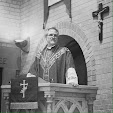
Sermon: Trinity 16 - 2019

6 October 2019

Text: Luke 7:11-17

In the name of + Jesus.  Amen.

Death is the one thing that nobody wants to talk about, and everybody wants to talk about.  

The secular world doesn’t believe in the resurrection of Jesus or of our Lord’s promise to raise us from the dead – but they believe in a whole spectrum of weirdness: from reincarnation, to ghosts, to the idea that we’ll achieve immortality by uploading ourselves into computers where we will all Facebook, Instagram, and Tweet into eternity.

The secular world loves the theme of death, as movies and TV shows wallow in it like pigs in slop.  Halloween is no longer kids with sheets on their heads; it is now grown-ups making themselves look like grotesque, disfigured corpses.  

And, of course, the world sees death as a solution to its problems.  For unwanted children, we have abortion on demand.  For the elderly, we have euthanasia.  Respected scientists tell us that we need to drastically reduce the world’s population and that we should take up cannibalism instead of eating hamburgers because of global warming.  A hysterical young woman was recently shrieking that we need to “eat babies” to save the environment while a popular congressman and those around her hardly blinked at the suggestion.  Hopefully that was just a stunt. These days, it’s hard to tell.  Planned Parenthood is suing a heroic journalist for exposing their illegal market in dead baby parts, propped up by wealthy people who are in the market for young cells and organs to try to keep themselves from dying.

While the world is confused about death, we Christians aren’t.  We know what it is.  Just two days ago, we buried our dear sister in Christ, Myra Thalheim.  Her confirmation verse sums up the entire problem, and the answer, in one sentence from St. Paul’s Letter to the Romans: “For the wages of sin is death, but the free gift of God is eternal life in Christ Jesus our Lord.”

Death is not a solution or a hobby or a problem that can be mastered by medicine or technology.  Death is the wages of sin.  It is the tragic result of our rebellion against God’s will.  Mortality is a universal human dysfunction that is a result of the Fall.  And because we all suffer from it, the world considers it to be natural and normal – when it is neither.

Death is always lurking around in the shadows, and when it strikes, it affects everyone.  Consider the widow of Nain.  Being a widow in the first century was much different than it is today.  Widows were entirely dependent upon the family and on the religious community for even the most basic support of life.  The widow in Nain was doubly cursed by death, for not only had she lost her husband, but also her only son.

Not only must this mother carry the horrific grief of seeing her only son in an open casket being carried out of the town gate to be buried, she is likely facing an uncertain life of begging for the rest of her life.  Death has been devastating to this poor woman. 

Jesus, who is also an only Son, who will also soon die, whose own mother was very likely also a widow, comes across the funeral procession.  “And when the Lord saw her, He had compassion on her.”

God Himself has compassion upon all of us who suffer the ravages of death and its many bitter consequences.  Even though we die precisely because we betray the God who made us and gave us life, nevertheless, God has compassion, and comes to save us.

“For the wages if sin is death, but the free gift of God…”

On this day, the widow of Nain and her son were to receive the greatest of all free gifts of God: life itself.  And this is not the gift of life from the womb, but rather the gift of life from the tomb.  Jesus comforted the widow, saying, “Do not weep.”  But rather than simply comfort her with words, the Word of God made flesh speaks a command to the body of the widow’s son: “Young man, I say to you, arise.”

Literally, he tells him to wake up and to stand up.  

“And the dead man sat up and began to speak.”  There is to be no burial on this day.  The Word of God spoke a word, and then the breath of the man’s spirit returned to the body, and he in turn spoke.  The grim silence of death has been shattered by the Word and by words – and those who witnessed this glorious manifestation of life defeating the ancient enemy of death, likewise had words.  

They had fear (and we know that the fear of the Lord is the beginning of wisdom), and they began to formulate a confession of Jesus (“A great Prophet has arisen among us!” and “God has visited His people”).  The word about what the Word had done to death “spread through the whole of Judea and all the surrounding country.”

And what’s more, dear friends, this report did not stop at the borders of Judea.  For we know that as Jesus sent out the apostles, and as they sent out their own disciples whom they ordained as preachers – this Word of God, this Good News that death has surrendered to life according to the will and compassion and Word of God, by means of the cross and through the resurrection of Jesus – this report traveled beyond Judea into Samaria, throughout the empire, to Rome itself – even Caesar’s household – to all of Asia and Europe and Africa, and even to the ends of the earth.  

This Good News that death has been defeated by the death and resurrection of Jesus has never stopped being spread by word of mouth, and even when the forces loyal to death and hell have tried to silence this Good News, they have failed at every turn.

For once again, this is the reality that the devil, the world, and our sinful nature itself are impotent to stifle: “For the wages of sin is death, but the free gift of God is eternal life in Christ Jesus our Lord.”

Eternal life is a free gift granted by the Word, through the cross, by means of Holy Baptism, and continuously fed to you by the preaching of the Gospel and by your receiving of the very same body and blood of Jesus, who raised the widow’s son on that glorious day when Jesus “ruined” a perfectly good funeral.

Dear brothers and sisters, death is not our friend, but neither is death our conqueror.  Death has been defeated.  The wages of sin has been paid by our great Benefactor, by His own sacrificial and atoning death.  And just as He spoke to the widow’s son with the command, “Arise,” so too will you hear this command and invitation on the Last Day.”  

So don’t be deceived by the deceiver, and don’t allow your faith to die on account of the evil one who wants you to “fear, love, and trust” in death, instead of the God who gave you life, gives you life, and will give you life.

Remember the compassion of Jesus.  Remember the cross and the resurrection.  Remember your baptism.  Remember to hear the proclamation of the Gospel and to praise the God who “has visited His people.”  Remember to rejoice that life has conquered death.

And remember, dear brothers and sisters, remember and speak these words of life: “For the wages of sin is death, but the free gift of God is eternal life in Christ Jesus our Lord.”  Amen.

In the name of the Father and of the + Son and of the Holy Spirit.  Amen.

Note: This sermon was videoed by Gene Wilken at Flaneur Record:


Saturday, October 05, 2019

Sermon: Holy Matrimony of Barry and Elizabeth Spahr


5 October 2019

Text: Matt 19:4-6 (Gen 2:7, 18-24; Eph 5:1-2, 22-33)

In the name of + Jesus.  Amen.

Dear Barry and Liz, family and friends, brothers and sisters in Christ, and honored guests: we are here to witness and to bless an event that is at the same time solemn and joyful.  

In the middle of a whirlwind of planning and coordinating, of pictures and double-checking the details, getting from this place to that place, and a lot of crossing off items off of a list – we are here for just a brief moment in this sanctuary, gathering as the Church, as the Bride of Christ, gathering around Christ, our Bridegroom – to solemnize and to acknowledge this union, and to reflect upon God’s Word and the blessings He bestows upon all of us through this mystery of Holy Matrimony.

As our reading from Genesis reminds us, marriage is not something that we decided to do, or invented.  Marriage is not the creation of the state or of any culture.  It is a unique part of being human, for we are created in God’s image, male and female, and we are completed by joining with one other of the opposite sex.  In Holy Matrimony, we don’t lose our autonomy or freedom, but rather we gain it.  We gain a second brain, a second set of eyes, and another consciousness – another person to take care of us in good times and bad.  And this diversity of male and female is how God intended it to be.

Some people have the gift of living a complete life as a single person.  But most of us are truly incomplete apart from Holy Matrimony.  Barry and Liz are each gaining another person created in the image of God, by means of their vows and obedience to God’s will – and their families likewise join together.

And because Holy Matrimony is grounded in who we are as human beings, and because it is a reflection of Christ and the Church, Holy Matrimony is based on love.  This is not the kind of love we see on TV or in the movies.  It is a love that gives of itself.  It isn’t a flash in the pan emotion, but is rather grounded in commitment.  It is a thinking of the other person first.

St. Paul teaches us how it is supposed to work, and when it works best: when the wife submits to her husband and respects him, and when the husband lays down his life for his wife and loves her as his own flesh.  Marriages fail today because of selfishness, because of husbands who love themselves more than their wives, and refuse to sacrifice for her, and because of wives who respect themselves more than their husbands, and refuse to submit to him.  

Our popular culture is filled with depictions of bossy wives dominating their husbands and telling their friends how stupid he is, as well as immature husbands playing with toys and shirking their responsibilities, and then telling their friends that their wives are nags.  Of course, this is a formula for disaster.  A much better model for a successful marriage is found in the Bible, in the politically-incorrect words of St. Paul.

Our Lord Jesus Christ blesses marriage.  He quoted the very same passage from Genesis to the Pharisees when they were trying to trick him into denigrating marriage.  And Jesus speaks to all of us when He reiterates the words of Genesis with His own commentary: “What therefore God has joined together, let not man separate.”

Barry and Liz, this Holy Matrimony into which you are entering is God’s work.  When you remain steadfast to one another, when you love and respect each other, when you remain committed to one other day in and day out, you are doing God’s work.  It is a holy work, and by it, you, your family, your culture, and the entire world are blessed.

And likewise all of us gathered here have a responsibility: to encourage Barry and Liz to be faithful to one another, to encourage them in their holy married estate, and to not make their lives difficult through sinful actions like gossip or interference in their new life.  

And may the two of you find joy not only in each other, but in the God who has joined you together, in the Bridegroom who lays down His life for the Church, and in the Bride who submits to our Lord Jesus Christ.  And may you enjoy many years of blessedness, happiness, and steadfastness as one flesh.  Amen.

In the name of the Father and of the + Son and of the Holy Spirit.  Amen.

Friday, October 04, 2019

Sermon: Funeral of Myra Thalheim


4 October 2019

Text: Luke 2:25-32 (Job 19:23-27a, Phil 1:21-23)

In the name of + Jesus.  Amen.

Dear Ruth, Margaret, Richard, Mark, family, friends, brothers and sisters in Christ, and honored guests: Peace be with you!  This word “peace” is the first word that Jesus spoke to His disciples after His resurrection.

When a person has been an integral part of your life for nearly a century – as Myra has been to you, Ruth, in your case, inseparable –the sense of loss is beyond words.  To lose a dear mother, grandmother, aunt, friend, parishioner, colleague, or a beloved teacher who changed the course of one’s life – to lose someone of that importance to death is truly a profound sense of loss.  It is common to console people with the words, “I’m sorry for your loss.”

Indeed, upon the death of a person with a footprint as large as Myra’s on our entire community, the sense of loss is immeasurable.  

We Christians experience this loss, though in a different way than the unbelieving world.  St. Paul says that we grieve, but not as unbelievers – because we have “hope.”  And that hope is grounded in the cross and resurrection of our Lord Jesus Christ.

This is why St. Paul says to us in our epistle lesson: “For to me, to live is Christ, and to die is gain.”  The word Paul uses here, translated as “gain,” is literally the opposite of “loss.”  It’s actually a business word that can be translated as “profit.”  

But we Christians see a Christian death as “gain” far differently than the world sees death, dear friends.  Our degraded culture treats death as a solution.  Twenty-five years ago, Pope John Paul said that we live in a culture of death.  The unbelieving world sees death as a solution to everything from an unexpected pregnancy, to political dissent, to curbing healthcare costs, to saving the environment.  Our popular culture has a strange fascination with death because the world does not appreciate what it means to be human, to be created in God’s image, and to have a divine purpose.

But Myra understood this, dear friends, and she wants her funeral to be about that.  If you came here for a celebration of Myra’s life, or a tribute to her and her works – you have come to the wrong place.  Myra’s handwritten instructions said, “No eulogy… Praise to God only.”  Myra was well-catechized, for according to our faith, a funeral is not about what she has done in her life, but rather what Christ has done for her by His life, death, and resurrection.

Myra’s specific and beautiful instructions for her funeral also say that people should sit quietly in place, and no loud talking.  We teachers understand.  You can take the teacher out of the classroom, but you cannot take the classroom out of the teacher.  And boy, does Myra still have much to teach us, dear friends!

Myra was well-catechized and well-prepared for her death – starting when she was just 25 days old, and was baptized by Pastor Eugene Schmid in that very baptismal font 92 years ago.  She was taught the faith and confirmed by Pastor Schmid in 1940.  Her confirmation verse is Romans 6:23, in which the Apostle Paul says: “For the wages of sin is death, but the free gift of God is eternal life in Christ Jesus our Lord.”

This, dear friends, is why we have funerals.  It is because of sin.  It goes back to the garden of Eden, to opposition from the devil, the world, and our sinful flesh.  This is why Myra chose the hymn: “Chief of sinners though I be” as the opening hymn of her funeral.  

Our sister in Christ Myra would return week after week to this church, to this holy place, in the presence of this font, this pulpit, and this altar, where she was absolved of her sins, where she heard the Scriptures read and the Good News preached, and where she took the Lord’s very body and blood from Pastor Schmid and from eight of his successors in the office of the holy ministry here in this parish.

And this is precisely why Myra wants you to hear about Jesus.  She understood what death is: it is the enemy.  It is not a solution to a problem, but is rather a symptom of the problem.  But it is also a symptom that goes away when the ailment is cured.  Sin is the ailment, dear friends, and the cross of our Lord Jesus Christ is the cure.  His death atones for the world.  And as our Lord said, “Whoever believes and is baptized will be saved.”  Our Lord also said, “I am the bread of life.... I am the living bread that came down from heaven.  If anyone eats of this bread, he will live forever… Whoever feeds on My flesh and drinks My blood has eternal life, and I will raise him up on the last day.”  That offended a lot of people at the time, and still does, but this is what Jesus says.  This is Myra’s confession.

Myra received the true body and blood of Christ her whole life long.  This is why she was prepared last Friday when she breathed her last on this side of glory.  She was prepared, for to her, to live is Christ and to die is gain.  Not because death is good, but rather because death has been conquered.  Death has been defanged and declawed and defeated – by Christ.  As the ancient prayer of the church says, “By His death, He has destroyed the power of death, and by His resurrection, He opened the kingdom of heaven to all believers.”  We Christians can even mock death with St. Paul, saying, “O death, where is your victory?  O death, where is your sting?”  We can say that because Christ defeated death.

Myra, ever the teacher, wants you to know that.

I prayed our Gospel reading with Myra last Friday – which is the canticle we Lutherans sing week in and week out after receiving the body and blood of our Lord: “Lord, now you are letting Your servant depart in peace, according to Your Word.”  Note that word “peace.”  Again, this is the first word Jesus spoke to His disciples after His resurrection.  Myra departed peacefully last Friday in the comfort of Good Friday, knowing the joy that is to come on Easter Sunday.  We who believe and are baptized, who eat the flesh and drink the blood of Christ, we are prepared to depart in peace, waiting with joyful anticipation of Myra’s resurrection, and the resurrection of all who die covered by the blood of the Lamb.  She is with our Lord, and she waits – with us and with all of creation – for the glorious “resurrection of the body and the life everlasting.”

For Myra knows that her redeemer lives – even as blessed Job in our Old Testament lesson confessed: “For I know that my redeemer lives, and at the last, He will stand upon the earth.  And after my skin has been thus destroyed, yet in my flesh I shall see God, whom I shall see for myself, and my eyes shall behold, and not another.”

Yes, dear friends, this is Job’s confession of Christ.  It is the church’s confession, and it is Myra’s confession.  And it is why though we Christians do grieve and feel loss, we Christians are also comforted – even to the point of defiance, of seeing death as “gain” – for we are with Christ.  

Myra, the teacher, the Christian, the beloved and redeemed of Jesus – wants you all to know all of this.  She wants me to preach this Good News to you.  She wants you to know that she loves you, and more importantly, that Christ loves you, that He died to destroy death, and that He lives so that you too might have eternal life in His name.  We will see blessed Myra again, in the flesh, and we will behold her and her Lord for ourselves, with our own eyes.  “For to me, to live is Christ, and to die is gain.”

“For the wages of sin is death, but the free gift of God is eternal life in Christ Jesus our Lord.”  Peace be with you.  Amen.

In the name of the Father and of the + Son and of the Holy Spirit.  Amen.

Tuesday, October 01, 2019

Sermon: Wittenberg Academy – Oct 1


1 October 2019

Text: Matt 6:16-34

In the name of + Jesus.  Amen.

“Do not be anxious,” says Jesus.  His words are often distorted into a stern command.  Sadly, I have heard people who are worried about the health of a loved one, or someone who is struggling with very real terrifying concerns, being scolded, because worry is a sin.

Dear brothers and sisters, is this what you take away from our Lord’s sermon on the mount?  Should we beat down people who are hurting or struggling with threats from God’s law?  What is our Lord teaching us about His kingdom?

When He says not to be anxious, He is catechizing us.  He is guiding us to understand the kingdom of God – which does not work like the secular world.  To an unbeliever, a financial crisis needs money, a sick person needs health care, and when it comes to death, well, there is nothing to be done.  But God’s kingdom is different.

Listen to the comfort that the Lord gives us: “Is not life more than food and the body more than clothing?  Look at the birds of the air: they neither sow nor reap nor gather into barns, and yet your heavenly Father feeds them.  Are you not of more value than they?”

Similarly, He points us to the plants in the field which God “clothes” with beauty.  And He asks us rhetorically if we are worth more to God than grass.

Jesus doesn’t scold us for worrying, but rather gives us comfort and teaches us that the Father loves us.  He encourages us to pray.  And He teaches us how we can move away from worry and trust Him more: “Seek first the kingdom of God and His righteousness, and all these things will be added to you.”  And He even gives us a little ironic humor: “Tomorrow will be anxious for itself.” 

Dear brothers and sisters, our Lord invites us to leave behind the world’s fixation on passing things and to focus on that which is eternal – the love and care of our heavenly Father, the Son who not only instructs us, but dies for us, and the Holy Spirit who calls us into the eternal safety of the kingdom. 

Amen.

In the name of the Father and of the + Son and of the Holy Spirit.  Amen.

Sunday, September 29, 2019

Sermon: Michaelmas - 2019


29 September 2019

Text: Matt 18:1-11 (Dan 10:10-14, 12:1-3; Rev 12:7-12)

In the name of + Jesus.  Amen.

Today is the Feast of St. Michael and All Angels.  It is also known as Michaelmas.  Unfortunately, it’s not one of the most popular feasts of the Church, but in our day, it needs to be.

First of all, we don’t consider the angels enough.  These spirits minister to us and to our churches without ceasing, and are yet almost always unseen.  Maybe we’re a little embarrassed to admit to our unbelieving friends that we believe in angels.  

There are other unfortunate things about our relationship to the angels.  One is that we sometimes hear people describe our dead relatives as becoming angels, like the schmaltzy Christmas movie “It’s a Wonderful Life.”  When a child dies, we sometimes describe the little one whom has been called home “an angel” – unintentionally degrading him as something less than a human being created in God’s image.

Then there are the depictions of angels as little naked babies or pale womanish beings who look weak.  Clearly, such artists have never cracked open a bible.  A more accurate depiction of the angels and their works is the famous statue of St. Michael the Archangel as a muscular warrior holding a spear to the throat of the ugly dragon (representing Satan) at his feet.

We have things so easy in our country that we forget that we are at war.  We forget that there are demons that are seeking to devour us by separating us from Jesus.  Our World War II era ancestors were tough.  Our grandfathers and great-grandfathers stormed the beaches while they were teenagers.  Our grandmothers and great-grandmothers temporarily gave up their scarves and gloves and took up power tools in factories working long hours to contribute to the war effort.  Today, our young people need safe spaces because someone might disagree with them in a college classroom.

Spiritually, we have become similarly weak.  But worse yet, dear friends, we don’t even know it.  When we let other things take priority over the Word of God and the Sacrament of the Altar, we are becoming spiritually weak, ripe for the temptation of the devil and his evil angels.  When we stop praying, stop reading and studying the scriptures, and when we allow the world to shape us and mold us through hours and hours of devouring entertainment, we are taking the bait.  As the famous book title says, we are entertaining ourselves to death.

Michaelmas reminds us that we are at war.  And this war is largely unseen except through the eyes of faith.  And the stakes of this war are eternal – for us and for our children.  

And children are special targets of the evil one.  In our Gospel, our Lord Jesus Christ reminds us that the “greatest in the kingdom of heaven” are little children.  For they humble themselves and are willing to be dependent.  We are instructed to “turn and become like children.”  And children are especially beloved by our Father in heaven.  Jesus says: “See to it that you do not despise one of these little ones.  For I tell you that in heaven their angels always see the face of My Father who is in heaven.  For the Son of Man came to save the lost.”

We live in a culture that hates children and hates families.  People with large families are especially hated.  They are seen as selfish destroyers of the planet.  Abortion clinics are praised by politicians and celebrities for cutting back the surplus population (which is supposedly good for the environment and mother earth).  It is also good for feminism, for motherhood is seen as a curse upon womanhood.  Men are trained to see children as a nuisance, as infringements on the ability to buy motorcycles and beer and to pour money into the man-cave.

And children are being trafficked and enslaved around the world.  There are many, many global elites – loved and admired even by Christian people – who are part of this worldwide movement to abuse children.  It is diabolical and the height of evil.  Jesus Himself says the most vile of our human race are such as these: “Whoever causes one of these little ones who believe in Me to sin, it would be better for him to have a great millstone fastened around his neck and to be drowned in the depth of the sea.”  Even churches are willing to protect such predators.  It is a sobering and frightening thought.

I was recently debating someone who argued that Jesus was the villain for making the millstone comment, since He was apparently advocating “murder” of such people.

Dear friends, we are very far along in this war.  The contempt for children – as well as for God’s children – is in the open.  Even in our public libraries, places where children were once protected, and books were available to educate and edify these little ones – now these places are being used by perverts to sexualize and groom our little ones, even as some of these people are convicted sexual predators.  And this behavior is not just tolerated, dear friends, it is celebrated and encouraged by our debased and degraded culture.

If you and your family are not rushing to the altar each and every week to be strengthened, you are setting yourself up to be victims of the devil, the world, and our sinful nature.  Like our great-grandfathers and –grandmothers, we need to face this war head on and not pretend that it isn’t there.

And forwarding sentimental Jesus-stories on Facebook is only making you weaker and giving you a false sense of security.  You need Christ – not a cartoon parody.  You need the warrior Christ, the one whose blood was splattered by the nails and spear at the cross, for this is where Satan was defeated.  The cross is what empowers St. Michael to slay the dragon, and empowers you, dear brothers and sisters, to resist the relentless assaults of the evil one.

You need to adopt the mindset of the warrior.  You worship a God who took flesh so as to make war on the devil.  Jesus is not a Precious Moments figurine, but rather the epic and heroic figure of the Crucified King who lays down His life defeating the enemy of His people.  And we who follow Jesus, do just that, dear friends: we follow Him.  We take up our cross.  As our Epistle speaks of Christians: “And they have conquered [Satan] by the blood of the Lamb and by the Word of their testimony, for they loved not their lives even unto death.

Which of you parents would not die for your children?  That is not difficult.  What is difficult is living for your children: making them go to Church, leading them in prayer, seeing to it that they are equipped for battle, teaching them, setting the example.  Warriors are made through discipline, training, and learning to serve their brothers and sisters in battle instead of thinking only of themselves and their comfort.  

We live in times of trial, not unlike the early Christians who had to choose between the world and their faith – and sometimes had to prove those decisions by laying down their lives.  St. John speaks to us, dear friends, to us today when he says: “But woe to you, O earth and sea, for the devil has come down to you in great wrath, because he knows that his time is short.”

Similarly, Daniel speaks to us concerning what the angel spoke to him: “And there shall be a time of trouble, such as never has been since there was a nation till that time.”

Dear friends, we need to pray that the Lord will defend us by His grace and through the ministry of the angels.  It is not an accident that our Small Catechism includes the two little morning and evening prayers that Lutheran families have prayed together and parents have taught their children to pray in the morning and evening.  Both of these prayers include the line: “Let Your holy angel be with me, that the evil foe may have no power over me,” and these prayers are to be prayed twice daily.

Let us look to Jesus and the cross, and let us pray for our Father in heaven to defend His little ones by means of St. Michael and the holy angels.  Let us come to grips with who these angels are, and why they are fighting.  Let us adopt their warrior mindset, just as our heroic ancestors rose to the occasion in times of war and in times of peace.  

Let us steel ourselves for battle by Word and Sacrament, and by prayer.  Let us continually pray, “Let Your holy angel be with us, that the evil foe may have no power over us.”  Amen.

In the name of the Father and of the + Son and of the Holy Spirit.  Amen.

Tuesday, September 24, 2019

Sermon: Wittenberg Academy – Sept 24


24 September 2019

Text: 1 Tim 6:3-21

In the name of + Jesus.  Amen.

People have all sorts of opinions and points of view.  And we are encouraged to be tolerant of those who believe differently than we do.  And certainly, there is a time and place for this.  In order to live in a community of people with different beliefs, we need to get along.  But there is one context where this is exactly what we are told not to do by the Holy Scriptures.

St. Paul writes, “If anyone teaches a different doctrine and does not agree with the sound words of our Lord Jesus Christ and the teaching that accords with godliness, he is puffed up with conceit and understands nothing.”

In other words, when it comes to preaching and teaching in our churches, we are not to be tolerant and accepting of other points of view.  For in that context, preaching a different Gospel is a sinful act of defiance.  For we submit to the Word of God – both the Word that is recorded in Scripture, and the Word who is our Lord Jesus Christ. 

False teachers are “puffed up with conceit,” says St. Paul, much like the serpent in the garden who said, “Did God actually say…?”  And nothing good comes from false teachings in the church: “controversy, quarrels…, envy, dissention, slander, evil suspicions, and constant friction among people who are depraved in mind and deprived of the truth.”  And St. Paul points out a possible motive for a false teacher – not that he is honestly mistaken, but rather that he is in it for the money.

We certainly see this among the false teachers of the “prosperity Gospel” and the TV preachers who teach a “theology of glory” promising riches and wealth and your best life now if you do things their way (and often, if you send them money). 

The apostle goes on to say what the opposite is, what we Christians ought to strive for, and that is “contentment, for we brought nothing into the world, and we cannot take anything out of the world.  But if we have food and clothing, with these we will be content.”  St. Paul explains that the desire for riches is a “temptation” and a “snare…. For the love of money is a root of all kinds of evil.”

But preachers and teachers of Jesus Christ proclaim our Lord’s sound teaching, and we are all instructed to “flee these things” that tempt us.  For lusting after money isn’t merely a sin of lack of self-control, it leads to the Word of God being distorted – and this is like tampering with medicine.  False doctrine and love of money lead people to hell.  And we who are rich (and if we look at how we live compared to the rest of the world, that includes us) are warned not to be haughty, or to put our trust in our wealth, but rather to be “rich in good works, to be generous and ready to share… so that [we] may take hold of that which is truly life.”

Let us be content, dear friends, content with the Lord’s grace that promises us unlimited riches and a life that never ends!  Amen.

In the name of the Father and of the + Son and of the Holy Spirit.  Amen.

Sunday, September 22, 2019

Sermon: Trinity 14 - 2019


22 September 2019

Text: Luke 17:11-19

In the name of + Jesus.  Amen.

Last week’s Gospel was our Lord’s Parable of the Good Samaritan.  And it was a fictional story in which the hero was a Samaritan, that is, a man of mixed ethnic heritage that the Jews hated and looked down upon. 

This week’s Gospel is the Lord’s healing of the ten lepers, and once again, the hero of this account is a Samaritan.  But unlike last week’s Gospel, this is not one of Jesus’s parables.  This is an actual account.  This really happened – and even Jesus is amazed by it.

While He was traveling – and doing so in an area populated by Gentiles and Samaritans, Jesus is spotted by a small group of lepers.  Lepers are people suffering with a horrible, deadly disease called “leprosy.”  Today we call it Hansen’s Disease, and it can be treated.  But in the first century, it was a slow and painful death sentence.  And worst of all, since it was contagious, lepers had to be sent away to live in leper colonies.  Their faces and their body parts became disfigured as the flesh died on their bones and fell off. 

So this one day, while Jesus was passing through, ten lepers “stood at a distance and lifted up their voices, saying, ‘Jesus, Master, have mercy on us.’”

In case this isn’t clear, this cry for help is a prayer.  These men who are dying, whose flesh is rotting because of our fallen and sinful world, cry out to the God who can cure them.  Maybe they don’t yet know that Jesus is God, but they have heard of His miracles, and they cry out together for help: “Lord, have mercy upon us,” as we sang together to the same God today.

Dear friends, this is why Jesus came into our world.  He came to cure, to fix, to heal, to raise from death.  He came to roll back the effects of sin.  He has come to rescue us and to re-create the heavens and the earth anew.

He did not come to teach people how to live a moral life (Moses and the Prophets had already done this).  He did not come to scold and punish (the Law does this already).  He did not come to encourage us to take charge of our lives, pull ourselves up by our bootstraps, and fix ourselves (in a very real sense, dear friends, we are all lepers: aging and dying day by day, and unable to stop the decay).  Jesus came to save.  Jesus has mercy, and He takes away their leprosy.  He encourages them, saying, “go and show yourselves to the priests,” – for the priests have the authority to declare them to be healed, so that they could return to their communities and reclaim their lives again.

Our Lord has given them their lives back!

Notice that Jesus did not tell them to start attending temple.  Jesus did not order them to read the Bible.  Jesus did not command them to pray.  He simply healed them, motivated by what the lepers’ prayer calls “mercy.” 

Sadly, when the ten left, they didn’t so much as say, “thank you.”  However, one of the lepers, “when he saw that he was healed, turned back, praising God with a loud voice; and he fell on his face at Jesus’ feet, giving Him thanks.”

And this only grateful healed leper of the bunch “was a Samaritan.”

What is the Samaritan doing, dear friends?  He is thanking Jesus, of course, but this is not how we might thank a doctor or nurse or inventor of a cure for a disease.  Falling at Jesus’ feet is an act of worship.  The Samaritan is grateful, and He literally worships at the feet of Jesus, on his face, in the posture of humility before God.

Of course, the irony is that this man, the only one who was grateful, the only one who is worshiping Jesus, is a Samaritan – one who does not worship the true God.  Of course, He is now the only one who is worshiping the true God – the other nine have moved on to other things and chose not to worship the true God who healed them.

The Samaritan is worshiping Jesus, not because he wants something, but because he has already received something.  He is grateful, and because of this grace shown to him, he is motivated to worship.  Jesus did not command him to worship, rather he worships because he appreciates what Jesus has done for him.

His worship is not compelled.  He is not guilted into it.  He is not doing it to please someone else, or because it is expected.  In fact, the Samaritan’s worship is unexpected!  He is a Samaritan, after all.  But it is genuine worship, because it is motivated by the Gospel. 

Our Lord blesses this former leper, saying: “Rise and go your way.  Your faith has made you well.”

There is a close relationship between faith (which is belief) and gratitude (which is thankfulness for a grace received).  Jesus has saved this man by grace, through faith.  And this, dear friends, is Christianity.

Every Sunday and Wednesday, this congregation opens its doors to all who hunger and thirst for righteousness.  There are countless people who have been baptized at this font, and many more who have come here to this congregation to worship over the course of their lives.  But sadly, there are way more ungrateful people who do not “turn back” and return to this place to kneel before Christ our Lord – who is here physically and miraculously, curing us from the leprosy of our sins, and raising us from death and hell.  Jesus is here, and He has saved you, dear brother, dear sister!  So why are there so many empty pews?  Where are the nine?  Were not ten cleansed? 

Why is worship the first thing to go when we get busy or tired or other things pop up? 

Too often, the Lord’s beloved, whom He has saved by baptism and the Word, all by grace and through faith, carry on like the nine ungrateful lepers.  And often it is only when we are sick or terrified or in some kind of dire need that we turn back and cry out, “Lord, have mercy upon us.”

Because of our sinful nature, in a very real sense, it is more of a danger to be well than to be sick, to be wealthy rather than poor, to be secure rather than be filled with anxiety, because that, dear friends, is when we go our merry way and forget about the Lord who saved us by dying on the cross, by seeing to it that we were baptized, by providing for our pastoral care through an ongoing ministry of Word and Sacraments, by giving you the freedom and the opportunity to worship.

Thanks be to God for this saint whose name we don’t even know, for he has taught us how to be a Christian – which is, how to worship.  The Athanasian Creed puts it bluntly: the faith is “that we worship.”  That’s what we do.  We Christians are the tenth leper.  Christians gather and pray, “Lord, have mercy upon us.  Christ, have mercy upon us.  Lord, have mercy upon us.”  And He hears our prayer.  He creates in us a clean heart, and renews a right spirit within us – a spirit of gratitude, a spirit of worship, a spirit like that of the tenth leper.

Let us never take our Lord’s mercy for granted, or cease praying to be cleansed.  Let us never cease praising the Lord, hearing His holy words of absolution, kneeling before His very flesh with grateful hearts, and continuing to receive His body and blood in a renewal of our own bodies and souls.

Dear friends, “rise and go your way.  Your faith has made you well.”  Amen.

In the name of the Father and of the + Son and of the Holy Spirit.  Amen.

Tuesday, September 17, 2019

Sermon: Wittenberg Academy – Sept 17


17 September 2019

Text: 2 Chron 36:1-23

In the name of + Jesus.  Amen.

This one reading captures the decline and fall of Judah – but also brings us to her redemption by God’s mercy.

This is painful to read.  We want to shout through the ages and beg these kings to heed the Word of the Lord!  Think of how much unnecessary suffering there is because we don’t listen to God’s Word!  Good King Josiah was the last faithful ruler of Judah.  He reigned 31 years – and even he died because he foolishly ignored the Word of God.  His son Jehoahaz reigned only three months before being deposed by Egypt.  His brother Eliakim (also known as Jehoiakim) ruled 11 years, but “did what was evil in the sight of the Lord.”  He was taken into exile by Babylon in chains.  His son Jehoichin was evil and ruled only three months, and was also removed in chains.  His brother Zedekiah was the last of this rotten dynasty.  He mocked the preaching of Jeremiah, and make stupid political decisions.  The people mocked the prophets “until there was no remedy.”

Babylon invaded, slaughtered the young men of Judah, and captured the king.  They destroyed the temple and all of Jerusalem.  And this exile was to last 70 years, making up for the seventy years that Judah ignored God’s command to give the land a Sabbath rest every seven years. 

But even in the midst of this gloom, dear friends, the Lord did not forsake His people.  The Persians defeated the Babylonians, and King Cyrus, fulfilling the prophecy of Jeremiah, allowed the people to return, saying, “The Lord, the God of heaven, has given me all the kingdoms of the earth, and has charged me to build Him a house at Jerusalem, which is in Judah.  Whoever is among you of all His people, may the Lord his God be with him.  Let him go up.”

The Lord has mercy on His people, dear brothers and sisters.  And in that rebuilt temple, our Lord Jesus Christ would preach and teach, and not far from that sacred mound, He would be crucified for our salvation.  We are much like Judah, to our dismay.  We take the Word of the Lord for granted.  Let us confess, let us repent, let us receive the Lord’s forgiveness, and may we learn from history, particularly that which the Holy Spirit causes us to hear and ponder.  And thanks be to our merciful Lord and God for treating us not as we deserve, but according to His grace.  Amen.

In the name of the Father and of the + Son and of the Holy Spirit.  Amen.

Sunday, September 15, 2019

Sermon: Trinity 13 - 2019


15 September 2019

Text: Luke 10:23-37

In the name of + Jesus.  Amen.

Our Lord’s Parable of the Good Samaritan is one of the most recognized stories in history.  

In response to a dishonest question from a lawyer who was trying to trick Jesus over the definition of the word “neighbor,” Jesus tells the famous story.  To really mix it up, He makes the main character a Samaritan – an ethnic group that was hated by the Jews.  And the Samaritan is not just the main character, but the hero.  The Samaritan encounters a crime victim, who “fell among robbers, who stripped him and beat him and departed, leaving him half dead.”  

Next Jesus introduces two characters who would normally be “good guys” – but not in this story.  For the priest and the Levite pretend not to see the crime victim.  But in contrast to the priest and Levite, the Samaritan has “compassion.” 

He goes overboard to help the victim, treating him with first aid, transportation, and even housing until he can heal up.  And he promises to come back.

And Jesus asks the lawyer for his judgment of the case: “Which of the three, do you think, proved to be a neighbor to the man who fell among the robbers?”  What could the lawyer say?  The hunter has become the hunted.  The lawyer who sought to snare Jesus fell into the trap himself.  There was no way to get out of admitting the correct answer: “The one who showed him mercy,” says the lawyer.  He cannot even bring himself to use the distasteful word “Samaritan.”

And Jesus acknowledges the correct answer, and as a rebuke to the lawyer’s trickery and self-justification, our Lord tells him: “You go, and do likewise.”

Of course, there is a lot to this story, and there are two main ways to understand it.

The first is that the parable is about us, that it is a morality fable.  “You go, and do likewise,” is, after all, the last word of the story, not unlike the “moral” of a fable.  Jesus is telling us to be merciful, to “do likewise.”  We are to be doers of the word and not merely hearers.  We are to get our hands dirty helping those in need.  We are to be compassionate workers in the kingdom, and not be hypocritical religious people like the terrible examples of the priest and the Levite who refused to lift a finger.

The second is that this parable is actually about Jesus (who was actually denounced by the Jewish priestly and Levitical elites and called a “Samaritan”).  For the Good Samaritan in the story is a savior.  He shows selfless compassion to one in need and rescues him from sin and from death.  And whereas the priest and the Levite, representing the Law, could not save the man who had been beaten down by sin in our fallen world, what could help him?  Compassion, that is, the Gospel.  And so the Samaritan heals by means of elements: oil and wine.  The Samaritan brings the victim where he needs to be, provides shelter for him, ransoms him at his own cost, and promises to return.

The crime victim was helpless to do anything for himself, and in his half-dead state, the Old Testament was of no use to him.  He needed to be saved by the merciful outcast who has compassion.

And so there is a bit of a debate about this parable.  Is it about us, or about Jesus?  What does it mean?  Those who believe that it is about calling us to practice a godly life and to be doers of good deeds look at the second interpretation, and see excuses to be lazy.  For if the parable is all about Jesus, and if Jesus does everything, how are we any different than the priest and the Levite who don’t do anything?  So they deny that Jesus is the Samaritan, arguing rather that we are called to be the Good Samaritan in our own lives.

Others look at the parable as stressing God’s mercy (not ours), God’s grace (not ours), and our helplessness to save ourselves.  They look at the unmerited forgiveness won by the One who administers the oil used in Holy Baptism as we are sealed by the Holy Spirit, and the wine use in Holy Communion: the blood of Christ that cures us of even death itself – and they ask how this parable can possibly be about us and not the Lord Jesus Christ.

But, dear friends, why must it be one or the other?  Isn’t our Lord Jesus Christ both God and man?  Aren’t the Scriptures both written by men and by God?  Aren’t we both saints and sinners?  Aren’t the elements of Holy Communion both bread and wine and also body and blood?  

Our Lord is indeed teaching us about Himself.  He is revealing Himself as the Good Samaritan, the despised and hated one whose love is infinite – even to the point of the cross.  He is the Savior who rescues the victim of the devil, the world, and of his own sinful flesh.  And He does show compassion where the Law shows none, and He does save where priests and Levites can at best only point forward to the coming of Christ.  For where they fail, Jesus succeeds.  And unlike the exclusive nature of the Old Covenant, in the New Covenant, both Jews and Gentiles are given new life.  

But why must the interpretation stop here, dear friends?  For our Lord is calling the lawyer to repent.  He is telling him to reorient his heart and mind away from sin and toward loving God and neighbor.  And indeed, he calls him to repent of his lack of compassion – for the lawyer is not unlike the sinful priest and Levite.  Jesus calls the lawyer to task for his lack of compassion and bids him to amend his ways – and not merely in word, but in deed: “You go, and do likewise.”  “You” he says, using the singular personal pronoun, “You go, and do likewise.”

When we acknowledge this parable as being a call to repentance and an exhortation to live a godly life, we are not denying that the parable is about Jesus.  Of course it is.  But it is also about why Jesus has to have compassion on us in the first place: because we are sinners: poor, miserable sinners bloated with pride, always seeking to put the Word of God to the test, always looking to do something to inherit eternal life (as if there were something that we could do).  Like the lawyer, we want to justify ourselves and play games with the definitions of words, looking for loopholes.  

Dear friends, our Lord isn’t playing games here.  You bet that he is calling us to repent.  He is telling us to “go and do likewise.”  And think of the many ways we behave like the priest and the Levite.  Our failures are mainly not as spectacular as avoiding a bloodied crime victim.  We are the priest and the Levite when we turn aside and refuse to financially support our church.  We are the priest and the Levite when we choose not to come to church (for we are letting our neighbors down who greatly benefit from well-attended services, as there is indeed strength in numbers).  We are the priest and the Levite when we don’t pray, don’t study God’s Word, don’t lead our children in devotions, and when we are too ashamed to admit to our friends and colleagues that we are Christians.  We are the priest and the Levite when we sit next to people in the church year after year and don’t even know their names – avoiding the blessings of Christian fellowship and love, and seeking our own selfish ends.  

Being a Good Samaritan is to be inconvenienced.  It is to put others before ourselves.  It is to be merciful to our neighbor without looking for a loophole.

And indeed, our Lord Jesus Christ is the ultimate Good Samaritan.  For when we are beaten up by the Law, when we look at the bloody mess that is ourselves being self-centered and uncompassionate, when we fail to love and serve our neighbor, and when we are beaten up by the devil, the world, our sinful flesh, and by God’s law itself, it is our Lord who comes to rescue us.

Yes, he calls us to repent.  Yes, He commands us to “go and do likewise.”  But He does not leave us as orphans.  He sends the Holy Spirit to work in and through us.  He sends us His mercy so that we can be merciful to others.  He forgives us so that we can go and do likewise and forgive others.  He provides the wine and the oil of the sacraments to comfort and strengthen us.

For the Good Samaritan is not either/or, but rather both/and.  It is both Law and Gospel.  Thanks be to God for our Good Samaritan who has come to rescue us, to save our lives – even unto eternity!  

You go and do likewise, dear brothers and sisters, for He has done likewise to, and for, you!  Amen.

In the name of the Father and of the + Son and of the Holy Spirit.  Amen.

Tuesday, September 10, 2019

Sermon: Wittenberg Academy – Sept 10


10 September 2019

Text: Phil 2:12-30

In the name of + Jesus.  Amen.

“Work out your own salvation with fear and trembling, for it is God who works in you, both to will and to work for His good pleasure,” says St. Paul.  Our old Adam might be tempted to take credit for “working out” our own salvation through our own will, our own righteousness, and our own works.  But what does the apostle say?  We should work out of salvation with “fear and trembling,” that is, in the fear of the Lord, in humility, knowing that we cannot earn our salvation by our works.  St. Paul goes on to explain that the working out of our salvation is actually done by “God who works in you, both to will and to work.”  And so this “working out” of our salvation is really best understood that we allow the Lord to work in us, and this is the result of His gift of salvation.

And this is truly an empowering and comforting thought!  For salvation is not up to us, to our will, to our discipline, and to our own righteousness.  And yet, we do work, with fear and trembling, submitting to the Lord’s “good pleasure.” 

And from this reality, St. Paul can exhort us to keep life in perspective, so that we can “do all things without grumbling or questioning.”  And this also enables us to being people to Christ, living in stark contrast to this “crooked and twisted generation” since we “shine as lights in the world.”  For in this culture of death and of nihilism (the belief that life has no real purpose), we are “holding fast to the Word of life,” demonstrating to the world by our own faith and life that our lives are not “in vain.”  There is a purpose for our existence!  We Christians, even in our frailty and struggles with sin, serve as lanterns guiding people out of darkness into the light: the light of Christ.

And it is this sense of divine purpose and the expression of the Lord’s will that enables St. Paul, and all of us, to “be glad and rejoice” – for even when our lives are “poured out as a drink offering,” we rejoice that Christ Himself was poured out as a drink offering on the cross, giving us forgiveness, life, and salvation.  So let us rejoice, dear brothers and sisters, and let us pray for those who sit in darkness and in the shadow of death, for we bear the Light that works out salvation for all who seek it in humility by our merciful Lord’s grace!  Amen.

In the name of the Father and of the + Son and of the Holy Spirit.  Amen.

Sunday, September 08, 2019

Sermon: Trinity 12 - 2019


8 September 2019

Text: Mark 7:31-37

In the name of + Jesus.  Amen.

Deafness deprives people of a full participation in many things that most of us take for granted: verbal communication, music, audio books, movies, and even things like hearing one’s children snoring, or a bolt of lightning, or someone calling for help.  The deaf are deprived of hearing laughter and things like rain hitting the ground.  

The worst part for people in the ancient world was being deprived of hearing the Word of God.  Most people were illiterate and almost nobody had scrolls containing the Bible.  There was no American Sign Language, and communication was frustrating.  Deaf people were typically reduced to begging on the streets.

And this is why the deaf man in our Gospel “begged [Jesus] to lay His hand on Him.”  More than anything, he wanted to have his hearing restored.  

In our day and age, the deaf have many options that did not exist in the first century.  We do have standard sign language, not to mention access to books and captioned movies and videos.  We even have medical breakthroughs that can cure many kinds of deafness.

But one thing that hasn’t changed is sin.  

For example, when the cochlear implant first came out, offering deaf children the ability to hear by means of a surgical procedure, there were deaf parents that opposed getting their deaf children the surgery.  There was concern about what this would mean for the “deaf community,” and there was a discussion about whether or not deafness should be treated like something to be “cured.”  Some parents (whose children inherited deafness from a genetic condition) chose not to get the implant for their children, choosing instead to keep them in a world of silence for the sake of their “culture.”

But, dear friends, something else has also remained unchanged: the power of the Word of God to restore that which is broken, and to open that which is closed!

For in response to the prayer of the deaf man, our Lord took him “aside from the crowd privately, He put His fingers into his ears, and after spitting touched his tongue.”  The action of touch was accompanied by the Word, as Jesus, the living and incarnate Word of God in the flesh, spoke a miraculous command: “Ephphatha,” which means, “Be opened.”

Jesus speaks the Word, and He makes use of a physical element and action – and as a result, the deaf man is healed.  The Word that Jesus speaks becomes reality: “And his ears were opened, his tongue was loosed, and he spoke plainly.”

Our Book of Concord quotes St. Augustine’s famous explanation of a sacrament: “The Word is joined to an element, and it becomes a sacrament.”

Sacraments heal.  They cure us of what ails us.  The Sacrament of Holy Baptism heals us, as Christ Himself gives us His cruciform life as our sins are washed away by the element of water.  The Sacrament of Holy Absolution heals us, as Christ Himself forgives us by means of the element of the pastor’s voice speaking words by Christ’s authority, and the sins that weigh us down even to hell itself are released from us (the same word St. Mark uses to explain the healing of the deaf man’s tongue: “released” – which is to say, set free from bondage).  The Sacrament of Holy Communion heals us, as Christ shares His very sacrificial body and blood with us to eat and to drink, fortifying us against Satan and sanctifying us by His own holiness and righteousness in the flesh as the “medicine of immortality.”

Sacraments heal, because Christ heals us by means of the sacraments.  A sacrament apart from Christ is no sacrament at all.  A sacrament not received in faith is no sacrament at all.  But when Jesus touches us and speaks His Words upon us and over us, and we believe His Word – we are truly healed.  And in the Greek language of the New Testament, the word “healed” is the same word as “saved.”  Salvation and healing are the very same thing.  To be healed is to be saved from death.  And when the deaf man was healed, Jesus gave him his life back.  That part of himself that had died had been resurrected – that is, his ability to hear and to speak.

And in fact, even though Jesus told him to “tell no one,” the man with the newly released tongue could not help but tell what Jesus had done for him.  For the more that Jesus urged everyone  not to speak about this (as the time was not yet right for Him to be revealed), “the more zealously they proclaimed it.”

In spite of our medical technology, our literacy, our ability to hear God’s Word in many and various ways, there is a real sense in which we suffer deafness, dear friends.  We have so many entertainment options, that almost nobody reads or listens to the Holy Scriptures.  It is as though we are deaf, and our children are deaf, and we are content not to do anything about it, because we like our culture.

We are surrounded by movies and sports and entertainment.  Our children are busy with every kind of extracurricular activity that the Word of God is just sort of pushed to the side.  We don’t hear, because we don’t want to hear.  But nevertheless, Jesus still comes to us.  He still patiently baptizes our children, still pronounces absolution and offers us a clean slate, and He still communes physically with us in the miracle of the Holy Eucharist.  

Jesus speaks to us, and begs us to listen to Him.  Jesus wants to open the heavens to us, even as He promises to open our grave on the last day: a greater “Ephphatha” that will herald the opening of the new heavens and the new earth, as well as our release from death and the grave!  And this reality of what Jesus does for us is too good for us to keep to ourselves, as we have been healed from death itself, and our pathway to eternal life has been opened, and our bondage to sin, death, and the devil has been released.  We too ought to be zealously proclaiming what Jesus has done for us!

Jesus is still speaking to us, dear friends.  He still heals us by means of His Word.  He still uses physical elements to save us.  Indeed, “He has done all things well.  He even makes the deaf hear and the mute speak.”  Amen.

In the name of the Father and of the + Son and of the Holy Spirit.  Amen.