Sunday, December 18, 2016

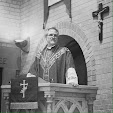
Sermon: Rorate Coeli (Advent 4) – 2016

18 December 2016

Text: Luke 1:39-56

In the name of + Jesus.  Amen.

In the Roman world, the least powerful people were women and children.  While it is true that some women and children – by virtue of aristocracy – could wield power, the vast majority were poor and taken for granted.

Although all of us started out in our mother’s wombs, although every human being born with the exception of Adam and Eve experienced life as a pre-born baby, then as an infant, and as long as life lasted, a child, and perhaps an adult - the ancient world did not think too highly of children.

They were dispensable, by means of abortion or exposing infants to nature to allow them to perish.  They were valued mainly for the work they could do, for their utility.  Handicapped or injured children were useless, and disposable.

Women were likewise not typically of great value to society.  Prostitution and human trafficking were legal and common. There was no real social stigma for men committing adultery.  Women had no presence in most matters of government, society, or religious affairs in the Pagan Roman world.

And so, how extraordinary that our Gospel reading records a meeting that changed the entire course of world history. This was not a meeting between king and counselors, or between members of a senate, nor between a general and his lieutenants, nor even between great philosophers and sages.  This was a meeting between two women and two fetuses.

And yet, this meeting is one of the most remarkable in history, translated into nearly every known human tongue, and even quoted in gathered assemblies of Christian people for nearly two millennia all over the planet.

This meeting was the first between the final prophet and the Messiah, and they exchanged no words, for both men were in their mother’s wombs.  And these two women were not from aristocratic Roman families, though they were of royal Israelite extraction in spite of their worldly poverty.

Mary was a pregnant teenager whose fiancé was not the father.  She was too poor to even afford the usual Temple sacrifice when her Son was born.  She had no influence in Judean or Roman politics.  And yet, she is the most unique and extraordinary woman who has ever lived, the mother of the mightiest King in history, and the author of lyrics sung, and words prayed, for centuries.

Mary’s cousin Elizabeth was older, a woman who had been socially shamed by being barren. She was a priest’s wife, whose husband was struck mute after a strange encounter in the Temple, and who shockingly became pregnant at an advanced age.

The meeting of two unknown pregnant cousins in the backwater hill country in rural occupied Palestine was not something of interest to the proud in the thoughts of their hearts, nor the mighty from their thrones.  

Indeed, this meeting went unnoticed by kings and counselors, senators, military leaders, and philosophers.  

But we notice it today, recorded in the Word of God, two mothers that epitomize motherhood, and stand as living historical symbols of both the Old and New Testaments.  For the two men growing in their wombs were John the Baptist and our Lord Jesus Christ.

When the four were close to one another, hearing the voice of Mary, the mother of His cousin Jesus, John leaped in his own mother Elizabeth’s womb.  His leap was a response to Jesus, to the proximity, the closeness of the physical presence of the Lord.  And Elizabeth was herself filled with the Holy Spirit, honoring the Mother of Jesus, who is truly the mother of God, with the immortal words recorded in Scripture: “Blessed are you among women, and blessed is the fruit of your womb.”

The Blessed Virgin Mary was likewise filled with the Holy Spirit, and she prophesied in agreement with her cousin about herself: “all generations will call me blessed.”

While the future prophet and the future Savior held their silence awaiting their births, their holy mothers confessed their faith and proclaimed what had been revealed to them.  They prepared John and Jesus for their life to come, feeding and mothering, nurturing and teaching.  The hands that rocked their cradles truly revolutionized the world.  These two women, dear wives and mothers and saints of the church, have exercised far more power than any Cleopatra, Elizabeth, or Victoria, changing the world in ways that no queen could ever come close to doing.

For God worked through St. Elizabeth to launch the last great prophetic voice, the Savior’s herald: St. John the Baptist. And God worked through the Blessed Virgin Mary to bring God Himself incarnate into the flesh, the one perfect all-atoning sacrifice for the sins of the world, and the conqueror of sin, death, and the devil, the crucified one who dies to give us life, mightier than any Pharaoh, Caesar, General, or President could even imagine to be.

In this meeting, these two women and two children testified to the Lord’s plan of redemption that involved each of them as His servants.  As St. John would testify, the mountains are to be laid low, the valleys raised up like mountains.  St. Mary puts it like this: “He has shown strength with His arm; He has scattered the proud in the imagination of their hearts; He has brought down the mighty from their thrones and exalted those of humble estate; He has filled the hungry with good things, and the rich He has sent empty away.”

Indeed, the Lord Jesus Christ humbles the proud, and raises up the humble.  He afflicts the comfortable, and comforts the afflicted.  He kills with the law and resurrects with the Gospel.  

For Jesus is the King of the universe, and John was His counselor, with the Lord governing not by means of elected senators, but by called and ordained servants of the Word, leading a war “not against flesh and blood, but against… the spiritual forces of evil”, and being the incarnation of Wisdom Himself, before whom all great philosophers and sages must bow.  Indeed, this meeting was not between tissue, or blobs of flesh, or as parts of their mothers; but of men who would change the world forever: John, the final prophet, and Jesus who is God and Savior.

Let us thank and praise the Father for showing mercy to them that “fear Him from generation to generation.”  Let us thank and praise the Son, the Lord Jesus Christ, Mary’s God and Savior, the Redeemer of all mankind by the cross. Let us thank and praise the Holy Spirit, whose mighty creative and redemptive voice goes forth not only in inspired words given to men and women for us to sing and pray, and not only by the preaching of the Gospel by prophets and pastors, but also by the leaping of a fetal human being, created by God for us as a prophetic testimony to Him who lives and reigns with the Father and the Holy Spirit, one God, now and forever.  Amen.


In the name of the Father and of the + Son and of the Holy Spirit.  Amen.

Sunday, December 11, 2016

In Memoriam: John C. Kiletico


John Kiletico was a member of Salem Lutheran Church virtually all of his life of 77 years.  He passed away on Friday, December 9, 2016.

Here is the announcement.

John began his life in Christ on his baptismal birthday on December 10, 1939 at less than a month old.  He was baptized by the Rev. Eugene E. Schmid (served 1919-1967), by whose own hand it was recorded in our congregation's historic Tauf-Register, the very last baptism at Salem of the decade of the 1930s.


John would live to see the restoration of the century-old font in which he was baptized.


Like our historic baptismal font, John was a fixture at Salem.  Over the course of his nearly eight decades of life, he held virtually every position one can hold in a congregation.  He took the Lord's Supper from the hands of nine pastors of Salem in his sojourn on this side of the grave.  He was also proud of his service with the Army during the Vietnam War, and you could always spot John in his Vietnam Veteran's hat, or driving his car with the Big Red One license plates.  He was ever quick to strike up conversation with visitors to church, especially fellow servicemen or veterans.

The greatest thing, however, I believe, that John did for his church and country was to faithfully raise up four children in the Christian faith, passing along the Gospel of Jesus Christ to succeeding generations.  The effects of this faithfulness is immeasurable.  His grandchildren today bear the fruits of John's tireless service as a Christian husband and father, one who always made sure the family under his care confessed the faith, participated in Word and Sacrament, and lived out the Christian life.  There is nothing comparable in the life of a faithful Christian.

In accordance with his wishes, we will hold funeral services at Salem Lutheran Church.  And it is particularly poignant that we will gather this Wednesday, the week of Gaudete.  Today is Gaudete Sunday, named for the Introit in today's liturgy, which begins in Latin: "Gaudete in Domino Semper: iterum dico, gaudete."  That is: "Rejoice in the Lord always.  Again will I say, rejoice!" from Philippians 4:4-5.  We also lit the single rose-colored candle in the Advent wreath today as a reminder that even in the gloom of winter, in the penitential season of Advent, in the at-times tedious and frustrating period of waiting for the Lord's return, in the midst of the world's anguish and bodily suffering - and even in the very face of death itself - we Christians have cause to rejoice.  We rejoice in Christ, in the Gospel, in the promise of the resurrection, in the new life that will have no end.  We rejoice in the hope and promise of a heavenly reunion.  And rather than curse the darkness, we defiantly light a rose-colored candle as a testimony against sin, death, and the devil - over which our Lord has triumphed!


Many years ago, John told me that it was his wish to have this passage of Scripture read at his funeral.  He will receive a double blessing from the Lord's hand, as it will be used both as the Introit of the service, as well as the epistle reading.

The Gaudete Introit as we sang it at Salem today is particularly poignant in light of John's departure from this life and entrance into eternity:
Rejoice in the Lord always.
Again, will I say rejoice!
Let your gentleness be known to all men.
The Lord is at hand. (Phil 4:4-5).
Lord, You have been favorable to Your land;
You have brought back the captivity of Jacob.
You have forgiven the iniquity of Your people;
You have covered all their sin.
Will You not revive us again,
that Your people may rejoice in You?
I will hear what God the Lord will speak,
for He will speak peace to His people. (Ps 85:1-2; 6, 8) 
Glory be to the Father and to the Son
and to the Holy Spirit;
as it was in the beginning,
is now, and will be forever.  Amen. (Gloria Patri) 
Rejoice in the Lord always.
Again, will I say rejoice!
Let your gentleness be known to all men.
The Lord is at hand. (Phil 4:4-5).

For today's gradual we used the fourth of the Great O Antiphons, which includes this petition to our Lord:
Come and rescue the prisoners who are in darkness and the shadow of death.

As part of our Gospel procession, we sang the fifth verse of "O Come, O Come, Emmanuel":
O come, Thou Key of David, come,
And open wide our heavenly home;
Make safe the way that leads on high,
And close the path to misery. 
Rejoice!  Rejoice!
Emmanuel
Shall come to thee, O Israel.
Today's readings provided the opportunity to proclaim comfort to the Lord's people, especially those of us who have lost loved ones at this time of year.  We can indeed rejoice in the Word and promise of the risen Lord!

The final hymn today was a reminder of the hopeful words of our Old Testament reading, the glorious passage from Isaiah 40, spoken to the children of Israel in the darkest days of their mourning and exile:
"Comfort, comfort ye My people,
Speak ye peace," thus saith our God;
"Comfort those who sit in darkness,
Mourning 'neath their sorrows' load.
Speak ye to Jerusalem
Of the peace that waits for them;
Tell her that her sins I cover
And her warfare now is over."

It was the Lord's merciful and providential will to call John home on this week, honoring his wish to proclaim St. Paul's bold and audacious call to rejoice, even as St. Paul himself was imprisoned at the time when he wrote this joyful epistle to the Philippians.  It is an act of defiance to hold a funeral in the midst of lighted Christmas trees and an Advent Wreath joyfully flickering with flame upon a rose-colored candle of joy.

For in the midst of sorrow, sadness, and suffering, dear Christians, we have a promise, a joyful expectant hope of the return of Christ, the putting off of the fallen flesh, and the resurrection of our flesh in eternal perfection, and joy.  Even the gloom of separation cannot snuff out our rose-colored flame that calls to mind the light of "Jesus Christ, the light of the world, the light no darkness can overcome!"

Our congregation's name, Salem, means "peace," calling to mind the prophet's message that for those redeemed by Christ, our "warfare is ended" (Isa 40:2) in Christ's victory at the cross and the empty tomb.  And in this victory, John is at peace, even as we continue our callings in the church militant until the Lord calls us home as well.

With love and affection, we pray for John's family, his wife Shelly, and his children Danielle, Lynette, Micah, and Leslie, their spouses and their children, as well as his brother Derril and his wife, in the hope of the resurrection and in the merciful providence of our Lord to call us all to rejoice even in the midst of our mourning.

I'm grateful for John's selection of Philippians 4 for his funeral, as well as amazed at the Lord's providential timing in driving home this theme that in Christ, even in the face of death, we have cause to rejoice.  Christ has won the victory.  Our warfare is ended.  The Word of God brings comfort, comfort to us, his people, including John's family and his church family who will miss him in our lives on this side of the grave.

And in spite of our mourning, we are bold to rejoice!

Rejoice in the Lord always.  Again will I say, rejoice!  Amen.


Sermon: Gaudete (Advent 3) – 2016

11 December 2016

Text: Matt 11:2-11 (Isa 40:1-11, 1 Cor 4:1-5)

In the name of + Jesus.  Amen.

God tells Isaiah to “Comfort, comfort my people.” 

The Lord is not directing Isaiah to make sure the thermostat is set correctly or to fluff up their pillows.  The word “comfort” has a very deep and complex meaning.  It is a Hebrew word that can be translated in many different ways.  The root of the word means to “sigh,” as in breathing heavily in sorrow.  And so there is a sense of repentance and forgiveness in the word, a sense of sorrow, and a sense of mercy being shown to the one who is sorrowful. 

It calls to mind the sigh of our Lord when he opened the ears of the deaf man. 

The sense of healing and forgiveness comes through in the Lord’s instructions to Isaiah to preach to His people that “her warfare is ended, that her iniquity is pardoned, that she has received from the Lord’s hand double for all her sins.”

This comfort being spoken as a sighing gospel preached by the prophet points forward to the very last in the long line of prophets before the God who sighs, who pardons, who comforts us, and who is to come into the world.

This last prophet, St. John the Baptist, fulfils this prophecy, as a sighing voice of one crying in the wilderness: “Prepare the way of the Lord.”  John the Baptist preaches the words delivered to Isaiah: “The grass withers, the flower fades, but the Word of our God will stand forever.”  John’s comfort is a joyful message that the kingdom is near, because the King is near. 

The entire world wants to know the answer to John’s question posed to our Lord Jesus Christ: “Are You the one who is to come, or shall we look for another?”

Our Lord sends the messengers back to John not just with an answer, but with an answer bearing with it proof, testimony of Jesus’ standing as Lord and Messiah; as Prophet, Priest, and King; as God incarnate, as the Savior: “Go and tell,” says our Lord, “Go and tell John what you hear and see: the blind receive their sight and the lame walk, lepers are cleansed and the deaf hear, and the dead are raised up, and the poor have good news preached to them.”

These miracles of Jesus are not only mighty acts that confirm that He is no mere ordinary, fallen man; they not only demonstrate the mighty power of the Lord.  For in addition to that, they also reveal the Lord’s mission.  He is undoing the work the Satan, rolling back the degradation of the evil one, reversing the curse of Eden.  For the Lord takes the blind and the lame, whose bodies are malfunctioning as a result of the brokenness of the sinful fallen world, and Jesus restores their sight and their mobility.  Jesus takes the leper, whose body has turned against its own flesh in a one-man civil war, cell against cell, flesh against flesh, in a painful and disfiguring mortal struggle, and Jesus takes away the disfiguration, the pain, and the destructive ravaging disease, replacing that flesh with new flesh, calling to mind the innocence of Adam and Eve before the fall.  Jesus raises the dead, showing us not only His divine power but His divine mercy, the comfort, comfort that He delivers to His people and the Word He puts into His preachers’ mouths, that not even death itself stands in the way of God’s plan to restore paradise, and the sure and certain hope of the “resurrection of the body and the life everlasting.”  The Lord remembers the poor, that the good news is that poverty and scarcity itself are replaced by riches and abundance in the kingdom of God, in the new heaven and new earth to come.

This, dear friends, is the comfort of the Christian faith.  Comfort for us Christians is not found in fluffy words or vague feelings, but rather in the unequivocal promises of Christ Himself, who promises us that “He who believes and is baptized will be saved,” and “not even the gates of hell will prevail” against His people, those to whom the “comfort, comfort” is being preached by patriarch, prophet, and pastor.

For even as Isaiah was sent with a message, and even as St. John the Baptist was given a mission, so too does that same proclamation of Christ go on today, dear friends, and will continue to do so until the return of the Lord in glory.  As St. Paul points out: “This is how one should regard us, as servants of Christ and stewards of the mysteries of God.”  The pastor is a servant, a steward, one who brings food to the table and who serves it with His hands. He announces the decrees of his Lord and he obeys the commands of his Master.

The object of all preaching – that of Isaiah, that of John the Baptist, and that of the Church of every age, is Christ, the comfort, comfort in His name given to His people by God’s grace and mercy, comfort, comfort given to us by means of the blood of the Lamb, shed upon the cross, willingly offered as a sacrifice to atone for our sins and bring us into communion with the Father once more, and the comfort, comfort of knowing that we are baptized even as our Lord was baptized, and that we are sealed with the Holy Spirit in the name of Jesus, the name of God the Father, Son, and Holy Spirit, set apart and kept until the day of the Lord, when “the dead are raised up” and “the poor have good news preached to them” that the words of the prophets and preachers are fulfilled, brought to their fullness in Jesus Christ, who is our true comfort:

“Comfort, comfort My people, says your God.  Speak tenderly to Jerusalem, and cry to her that her warfare is ended, that her iniquity is pardoned, that she has received from the Lord’s hand double for all her sins.”  Amen.


In the name of the Father and of the + Son and of the Holy Spirit.  Amen.

Thursday, November 17, 2016

Augustana L.C. Festival of Worship


Crossposted from Gottesdienst Online...

Augustana Lutheran Church in Hickory, NC hosted a great one day conference Saturday, November 12, 2016 in the beautiful nave of the church.

Augustana's pastor Father Gavin Mize is a great friend of Gottesdienst, having been published in both the print journal and online.  The narthex of Augustana has a stack of Gottesdienst for parishioners to pick up.

Pastor Mize opened the conference with an introduction: 'Parameters of Presentations and Liturgy According to Catechetical Aesthetics":


The next presentation, "Revolution Versus Revolution": Christ at the Center was given by Gottesdienst editor the Rev. Larry Beane:


The keynote address of the conference, "The Sacred Manger: Reverence for the Incarnate Word", was given by Gottesdienst editor the Rev. Dr. Richard Stuckwisch in two parts:


The Festival concluded with a Divine Service, a commemorative Mass of St. Jonah the Prophet, which Pastor Mize streamed live via Facebook:


The sermon was preached by Pastor Beane:


As a bonus, the following morning, Dr. Stuckwisch preached at the Sunday parochial Mass at Augustana for the 26th Sunday after Pentecost:


Thank you to the delightful and faithful people Augustana Lutheran Church, who provided Southern hospitality and cooking along with making this conference happen free of charge. Thank you to Pastor Mize for leading this wonderful event that taught, in word and by example, the concept of catechetical aesthetics in the context of the Lutheran liturgy!

Friday, October 14, 2016

The Word Remains: a Review

The Word Remains is the kind of book that can be read quickly from cover to cover in one sitting, or opened to any random page and enjoyed.  But in fact, the book is best sipped like a fine glass of wine, taken in unhurriedly, and meditated upon.  This book is neither stuffy nor frivolous - but rather profound and yet accessible to the thinking Christian of any vocation.

Manfred Seitz describes the book as a "portal" to the writings of Wilhelm Löhe.  I prefer to think of it as a sample plate, a tapas repast of high delight that is neither filling nor unsatisfying.  Like an appetizer, it leaves the palate eager for more.  Seitz recommends reading the book in a "contemplative" way, "lingering" over the text in the way of the ancients (p. 3).  He elaborates on this kind of reading by appealing to St. Benedict, making a case for renewing this kind of meditation among modern Christians.  Blessed Wilhelm, who saw modern Lutherans in continuity with the ancient church, would most certainly approve.

My impression of Wilhelm Löhe is that he was a man ahead of his time.  He was fiercely devoted to the sacrament of the altar, private confession, the Book of Concord, and the richness of the church's traditional liturgy.  He understood the centrality of mission, and though he never set foot in America, his influence upon American Lutheranism is extraordinary.  He also suffered for the sake of his confession, opposing rationalism and enforcing church discipline, and for his steadfastness was rewarded by being temporarily suspended from office.  He also established and oversaw a deaconess institution, to which the modern LCMS deaconess program owes a debt and bears some similarity.  Löhe saw theology not as a theoretical academic subject, but rather as the living, breathing Gospel of Jesus Christ lived out in the community of flesh-and-blood people.

The Word Remains is inspiring and encouraging, bringing the writings of Wilhelm Löhe to life in our day and age, in our likewise controverted context, in which confessional Lutheranism is, in the words of another confessor, Herman Sasse, a "lonely way."  And yet it is a path of joy, concerning which Löhe writes, "should awaken from suffering, and joy should bloom and flourish despite suffering" (p. 90).

Without sharing too much, I offer a shining excerpt in a beautiful English rendering of Löhe's lyrical reflection on the Lord's glorious resurrection on the day of Easter:
"No other act done by God for the world is as praised and commended as the resurrection of our Lord.  The earth quaked, angels came down, saintly bodies arose, guards fled.  Pharisees and scribes could not conceal what happened with a lie; no veil of darkness could have hidden the splendor of Easter morning.  Where is your denial, O world?  He is risen!" (p. 22).
The Word Remains is a little treasure, a breviary, a portal, an introduction to Wilhelm Löhe's life and work, and an invitation, in the words of Manfred Seitz, "to linger, immerse, yourself in these words, and read with a listening heart" (p. 5).

Sunday, August 21, 2016

Sermon: Trinity 13 – 2016

21 August 2016

Text: Luke 10:23-37 (2 Chron 28:8-15; Gal 3:15-22)

In the name of + Jesus.  Amen.

The word “Samaritan” is one of those biblical words that has come into our language and is even used by people who have never read the Bible it all.  The fact that we have this word, and it is usually preceded by the word “good,” – the “good Samaritan” – is a testimony to the influence of Jesus even among unbelievers.

Most people know that a “good Samaritan” is someone who helps someone else, a volunteer, sometimes a person who just happens to be on the scene and gives aid to another person.  Maybe there’s someone choking in a restaurant, and a stranger gives him a squeeze and dislodges the food from the victim’s windpipe.  Or a good Samaritan might be the guy who is seen changing the tire for someone on the side of the road.

There are good Samaritan vans that help motorists, good Samaritan centers that feed the hungry, and even good Samaritan laws that protect people from being sued for doing a good deed in an emergency.

In the modern, secular world, most people think about the word Samaritan in that way: as a good guy.

But to those listening to the story, the Samaritan is not a good guy, not a beloved person.  And this is an important part of our Lord’s story.  For at that time, a Samaritan was a hated person.  He was an outcast.  If you associated with him, you were afraid that some of his unpopularity might rub off on you.  You avoided and hated Samaritans.  You made fun of them and told jokes about them.  They were certainly not the heroes of any stories.

This is part of what makes our Lord’s parable so utterly remarkable.  Jesus is like no storyteller in history.  For He is the author of history itself.

This story came about because of a lawyer’s question, a man who would have grown up hating Samaritans.  He wants to know what to do to inherit eternal life.  Lawyers know that inheritors don’t do anything.  You inherit stuff by virtue of the kindness of the deceased person.  So he asks a flawed question.  Maybe he is trying to trick Jesus.  There was a lot of that going on in those days.  “Teacher, what shall I do to inherit eternal life?”

Our Lord answers the lawyer by asking him to recite the law and to interpret it.  And the lawyer knows the law.  You can have eternal life by keeping the law: love God and love your neighbor as yourself.  So Jesus matter-of-factly tells the man to do that.  Jesus tells him to just be perfect and it’s all good: “You have answered correctly; do this, and you will live.”  

But the lawyer misses the point.  He should have said: “But I can’t be perfect!  I fail to keep the law!”  And he would not have been far from the kingdom.  But instead, “desiring to justify himself,” our proud lawyer, “said to Jesus, ‘And who is my neighbor?’”

For if you can narrow the definition of “neighbor,” you can make it easier to keep the law.  If you are only required to love your family and friends, that’s a lot easier than loving strangers, or even enemies.  So the lawyer seeks a loophole.

Jesus does not deal in loopholes.  Instead, the lawyer gets a story that has changed the world.  And this is that story:

A guy gets robbed and beat up.  A priest sees the victim bleeding in the street, and ignores him. A Levite, that is, a priest’s helper, also sees him and ignores him.  And then comes the Samaritan, the dirty foreign half-breed that we have been taught to hate, mock, and avoid for as long as anyone can remember.  And this filthy Samaritan “had compassion.”  “He went to him and bound up his wounds” and administered medicine.  He transported him to an inn.  He paid for his lodging.  He promises more money if it is needed.  He promises to come again.

And Jesus asks the loophole-seeking lawyer is own question: “who is the neighbor: the priest, the Levite, or the Samaritan?”  Our lawyer cannot get out of it.  He has been backed into the corner.  He answers: “The one who showed him mercy” – because he can’t even bear to say: “the Samaritan.”  

“You go and do likewise,” says Jesus.  He calls the selfish and proud lawyer to repent and to love his neighbor.

But Jesus is telling another story between the lines.  In the kingdom of God, the Samaritan, the one who is hated, the one who is accused of being illegitimate, the one who is the enemy of the priests and the Levites and the lawyers, is the One who is good: the One who shows mercy.

Jesus is the Good Samaritan.  Though hated by the priests, he shows mercy.  Though reviled by the Levites, he blesses but does not curse.  Though He is beaten to death through a corrupt legal system, He applies the medicine of immortality: His very body and blood and healing Word – to a world that hates Him.  Though He is nailed to a tree and offered vinegar to drink, He is the one bearing oil and wine, who binds up our wounds of sin and suffering and death, offering Himself as a ransom.  He transports us from the broken road of sin and suffering to the inn of eternal life.  He pays for our lodging with His very own lifeblood, shed upon the cross, and shared within the chalice.  He promises even more, as His treasury of mercy is limitless.  And indeed, He promises to come again.

He, who was rejected by this world, by His nation, by the priests and the Levites and the scribes and the lawyers, He shows mercy, even where the Law is merciless toward us, where the Temple sacrifices in and of themselves do not save us.  This Samaritan, this Savior, is the only one who is “good,” for “His mercy endureth forever.”

Indeed, dear friends, our Lord is the only truly Good Samaritan, who saves us in our greatest need, who rescues us in our moment of our most fearsome peril.  He takes the wrath of God that we deserve, and exchanges it for the eternal reward that we don’t deserve.  He does this out of love and mercy for each one of us.  This is a cause of rejoicing, dear friends.  We do not need a loophole, because we have a Savior.  We do not need to justify ourselves by manipulating the Law, because He has justified us by manumitting us by grace. 

Yes, indeed, dear friends, let us rejoice in our Good Samaritan, our good and merciful Savior. “Blessed are the eyes that see what you see!”  Amen.


In the name of the Father and of the + Son and of the Holy Spirit.  Amen.

Sunday, August 14, 2016

Sermon: Trinity 12 – 2016

14 August 2016

Text: Mark 7:31-37 (Isa 29:17-24, 2 Cor 3:4-11)

In the name of + Jesus.  Amen.

When something is really important, we say that it is a “matter of life and death.”  Christianity is of the highest importance of anything in this world, and St. Paul calls it a matter of death and life, “For the letter kills, but the Spirit gives life.”

The way the world works, you start out alive, and end up dead.  You do anything and everything to stave off death, for you love your life, and will do anything to save it.  But according to the Spirit, we are born dead (in sin), and end up alive (in Christ).  At the first opportunity, we take a child and drown his or her sinful nature in Holy Baptism, making the child a disciple and killing off the Old Man so that a New Man might arise in its place.  And our Lord Jesus says that whoever loves his life will lose it, but whoever loses his life for Christ’s sake will find it.

And though we Christians understand the death of a Christian to be a portal to eternal life, we, unlike the world, don’t see death as a part of life, a friend, or the solution to a problem.  No indeed, we Christians see death as a vile enemy, but, a conquered enemy, a defanged tiger, a grounded dragon, a subdued foe.

Indeed, the letter of the Law kills.  It kills our pretensions and claims to righteousness.  It kills our hypocrisy and dishonesty with ourselves.  It kills any hope of salvation through works.  And once the sinful flesh has been put to death, this flesh is restored, just as Jesus restored the flesh of lepers, restored sight to the blind, restored hearing to the deaf, and restored speech to the mute. As St. Paul says: “Now if the ministry of death, carved in letters of stone, came with such glory that the Israelites could not gaze at Moses’ face because of its glory, which was being brought to an end, will not the ministry of the Spirit have even more glory?”

The apostle tells us that the “ministry of righteousness” given by the Spirit under the Gospel is of greater glory than the “ministry of condemnation” given under the Law.

So we Christians start off dead and end up alive by the Spirit, who is the “Lord and giver of life.”  And yet we are surrounded by a kind of walking dead in this world, people whose bodies function but whose spirits are not made alive by the Spirit.  We are surrounded by a culture of death in which the solution to pain is euthanasia, the solution to unplanned pregnancy is abortion, and the solution to conflict is murder.

We look around at our shrinking churches and the growing hostility to the faith.  Christians are forced to take part in antichristian ceremonies, children are forced to bear with the opposite sex in their restrooms, the elderly must live in fear of being declared a burden and put to sleep like a sick pet, Christians are threatened around the world by militant jihadists, and the popular culture mocks us, marginalizes us, and draws our children into secularism and selfishness.

But hear anew the promise of the Prophet Isaiah, dear brothers and sisters: “The ruthless shall come to nothing and the scoffer cease, and all who watch to do evil shall be cut off.”  “For when he sees his children, the work of My hands in his midst, they will sanctify My name; they will sanctify the Holy One of Jacob and will stand in awe at the God of Israel.”

These are promises of hope, dear friends, and they were first given to the people of God who were held captive in Babylon, defeated by their enemies, enslaved, force-fed a new language and a new culture, and kept by military might from ever going home.  And yet, the Lord uttered these promises to these very people.

These words have been fulfilled, and will be fulfilled, in, and by, our Lord Jesus Christ.

In our Gospel, our Lord is brought a victim: a victim of sin, of death, and of the devil, a man whose body bears the scars of the Fall, not only marked for death, but impeded by silence, by the inability to hear and to speak.  In his distress, this poor man from the Decapolis cannot cry out to Jesus for help.  He cannot hear the word of Absolution, the words of forgiveness, the words of the Gospel.  He cannot hear the words of the prophets and the words of promise of hope.  Moreover, he cannot speak words of prayer, words of praise, words of thanksgiving.  There is something of death in his prison of silence.

But Jesus has come to rip the prison doors off the hinges, to burst the very bars of the portal to the grave, and to blast open the gates to heaven itself.  That which has been silenced is to be heard.  That which has been slammed shut is to be flung open.  That which has been condemned to death is to be restored unequivocally to life.

“And taking him aside from the crowd privately, He put His fingers into his ears, and after spitting touched his tongue.  And looking up to heaven, He sighed and said to him, ‘Ephphatha,’ that is, ‘Be opened.’”

And, dear brothers and sisters, look at what was opened: his ears to hear the condemnation of the Law and the forgiveness of the Gospel; ears to hear the words of the prophets, the words of Christ, the words of the apostles, the promises of God and the assurance of the resurrection!  And what else was opened?  His mouth was opened, “his tongue was released, and he spoke plainly.”  His mouth was opened to thank His Lord and Master, to praise His God and Savior, to tell his neighbors the good news of his restoration, to sing, to pray, to praise, and to give thanks unto the Lord, even as the Psalmist prays: “O Lord, open my lips, and my mouth shall declare Your praise.”

And what’s more, heaven was opened to this man as the sin-induced closure was unobstructed.  Righteousness was opened because the impediment to hearing the Gospel was taken away.  The path to victory over evil was opened as the Word of the Lord, delivered by Word and by earthly element, presented by hands, and testified in Scripture – broke through the oppressive silence with the Word of Life.

And the same miracle happens to us, dear friends. For sin closes us up, turns us in on ourselves, shuts our ears to the Word of God, and clogs our mouths so that we do not pray, praise, or give thanks.  In reflecting on this miracle from our text, the great preacher St. Ambrose noted: “In this way the minister is now touching your ears, that your ears may be opened to this sermon and exhortation.”

And so, once more, my dear brothers and sisters, this “Ephphatha” that you hear yet again in the Aramaic language of Jesus, in the very sound that reverberated in the ears of this man from the Decapolis twenty centuries ago, this “Be opened” is not my word, and not my command.  It is rather the word of Jesus.  It is a command that not even Satan himself can silence.  Hear this word, dear people of God, “Ephphatha, that is, be opened.”

And by the power of Christ, may your ears be opened to the Holy Word, and may your mouths be opened to receive the Holy Sacrament, and may your tongues be loosened to sing the praises of Him who won eternal life for you at the cross, and may all of our tongues confess and profess ever more zealously and boldly that our Lord “has done all things well. He even makes the deaf hear and the mute speak.”  And let us add that He has saved us from our sins and given us the gift of new and everlasting life.

Ephphatha!  Be opened! It is a matter of death and life. Amen.


In the name of the Father and of the + Son and of the Holy Spirit.  Amen.

Friday, August 12, 2016

The Olympics: Sometimes the Tiny Triumph

The Summer Olympics are usually dominated by major sports: gymnastics, swimming, track and field, basketball, etc. and by major nations: the USA, Russia, Canada, China, etc.

Every now and then, a tiny country like Fiji is victorious in a sport that many Americans are not familiar with, such as their recent gold medal in Rugby Sevens, the mini-nation's very first.

But here is a winter sport that a very small country, like the Stateless Micronation of Beanelandia, could actually compete in.

Pyeongchang 2018?

Wednesday, August 10, 2016

Sermon: St. Lawrence - 2016


10 August 2016

Text: Mark 8:34-38

In the name of + Jesus.  Amen.

Like all days in which we celebrate the Divine Service, today is a day of remembrance. For our Lord said, “Do this in memory of Me.”  And so we do this in remembrance of Him.  On this day, we also remember the words of our Lord, “If anyone would come after Me, let him deny himself and take up his cross and follow Me.”  Moreover, we don’t just remember these words, we hopefully live them out, and hopefully we call to mind and honor our faithful brothers and sisters who did just that: who took up their cross to follow our Lord, and who lost their lives in order to save them.

On this date, one thousand six hundred and fifty eight years ago, our dear brother in Christ, the Deacon Lawrence of Rome, lost his life in order to save his life; he took up His cross and followed our Lord to the grave and to heaven.

In times past, dear friends, we have had the luxury of viewing the Christian martyrs as interesting tidbits of history, safely removed from our lives as we sit on comfortable couches in air conditioned rooms with no thought that we ourselves might be called upon to offer our blood as martyrs.

But no more.

More Christians are being martyred today than in the days of the ancient Romans.  Islamist jihadists routinely slaughter Christian people in the Middle East, and now in Europe, and perhaps soon, in the United States.  We certainly hope and pray to be delivered from this scourge.  But, dear friends, we must understand what it means to bear the cross.

St. Lawrence was a beloved servant of the church, the head deacon in Rome.  And when the emperor began yet another systematic extermination of the Christians, and after the bishop of Rome had been killed, the government came after the head deacon.  Since deacons were responsible for overseeing the church’s charity, Lawrence was ordered to turn over the treasures of the church to the government.

After a short delay in which the deacon quickly gave everything to the poor, he was asked to produce the treasures of the church.  St. Lawrence brought in the poor of Rome, and told the government that this was the church’s treasure, the poor, the people in need, the people whom the Church had given the treasure of Jesus Christ and the Gospel.

For his insolence, Deacon Lawrence was tortured to death on a hot gridiron.  As the legend goes, he was defiant to the very end, even telling his tormenters that they could turn him over because this side was done.  It was remembered that St. Lawrence went to his death with joy, knowing that he did indeed lose his life for the sake of the Gospel, and thus saved his life for eternity, being a baptized and forgiven sinner made new by the blood of the Lord Jesus at the cross.

In his ministry, the deacon likely assisted the bishop at the altar, very likely bringing the chalice of the Lord’s blood to the lips of the parishioners, these very treasures of the church, with the words: “The blood of Christ.”

And so we remember the blood of Christ, the blood of St. Lawrence, and the blood of Christian martyrs ancient and modern, even as we receive the same blood of Christ and hear the same Word of God, the same teaching of Jesus, the same Gospel on this day of remembrance.

And we not only remember St. Lawrence, but we treasure his example of service, his courage, his mercy, and his witness of the faith.

In a day and age in which boys want to emulate LeBron and girls look up to Beyonce as a role model, we do well to remember and teach about brothers like Lawrence instead, and sisters like Perpetua – heroic men and women whose blood testifies to the blood of Christ, whose crosses are mirrors directing all of us to the very cross of the Lord Jesus Christ.

For when it comes to remembrance of Christian saints, we not only remember them in the way of history, but knowing that we will meet them in eternity.  We will see them face to face.  We will talk to them.  We will join with them, side by side, in worship of Him who lost His life in order to save our lives.

For our lives have been saved through Christ’s cross and blood, even as St. Lawrence has been given the crown of everlasting life by grace and through faith.  And even as we look to the past to the heavenly birthday of Lawrence on this date, and even as we look toward eternity future to our joyful reunion with St. Lawrence and all the saints, we are present here, in this holy place, taking up our cross and confessing the Lord’s cross, perhaps one day to shed our blood, but certainly to receive the Lord’s blood.

We may never be put to death for the sake of the Lord, but certainly the Lord was put to death for the sake of us men and our salvation.  And in life or death, in good times and in bad, in joy and in sorrow, we, like St. Lawrence, are witnesses, martures in the Greek, we whose lives are testimonies to our Lord and His Gospel.

We thank our Lord not only for the blessings of St. Lawrence, the courageous martyr, but we also thank Him that we are indeed the treasury of the Church, so beloved of the Lord that He would deny Himself, take up His cross, shed His blood, and lose His life for our sakes, and for our everlasting life.

For faithful deacon Lawrence,
We praise Your name, O Lord.
Upon the poor and suff’ring
The Savior’s love he poured.
When ordered to surrender
The Church’s earthly wealth,
He claimed the martyr’s laurel
By sacrificing self. (hymn stanza © 2014 Walter P. Snyder)

Amen.


In the name of the Father and of the + Son and of the Holy Spirit.  Amen.

A letter to the Jefferson Parish Council

Dear Councilman Templet

I was present for the August 10 council meeting and was hoping to speak.  However, as the ordinances concerning ride-sharing were delayed, it turns out that my 17-mile drive each way across the river and my entire morning were wasted.  It is my understanding that this has happened repeatedly, and for people who work multiple jobs, this makes it very difficult to have a voice in government.  And so I am writing this letter to you instead.  I may still address the council at a later time.

I have served as the pastor of Salem Lutheran Church in Gretna since two weeks before Katrina. As with many other people, the skyrocketing cost of health insurance and other expenses has resulted in my accepting several jobs to make ends meet. 

I have driven for Uber since November of last year, and with Lyft since they began operations in our area.  Ride-sharing enables me to work a flexible schedule and still carry out a full-time ministry serving my congregation and my family.

Ride-sharing provides many benefits to our parish and to our community.  Most important is keeping drunk drivers off the road.  I have given more than 800 rides and have excellent ratings.  A majority of my customers have been drinking (they are mainly tourists, conventioneers, and college students).  In particular, my younger passengers often drink excessively, and it is not only money in my pocket, but also a community service to make sure they are not on the road.  I believe quite firmly that if Jefferson Parish regulates Uber and Lyft out of Jefferson Parish, many, if not most, of these young people will not call cabs.  They will get in their cars and drive. Their entire culture is lived out through technology.  They are used to very short wait times and being able to track their driver – as well as to rate their driver, and to know what they are paying up front, paying by phone app, and all without the suspicious use of a meter.  As a rule, they loathe taxicabs.

Studies have proven that Uber and Lyft significantly diminish drunk driving and thus save lives.  I urge you not to regulate us out of business and thereby cause the unnecessary deaths that would inevitably result.

This is also an issue of liberty.  For example, in my ministerial duties, I fly to other locations to speak and teach.  I have never been picked up at the airport by a cab. Instead, someone from the church will come and get me at the airport – a person whom I have never met.  There has been no drug test, background check, vehicle inspection, or check of driving record.  As an adult, I can choose whose cars to get into.  It is not the business of government at any level to tell me with whom I can ride, or whom I can drive. 

Ride-sharing is the wave of the future.  It is now possible and thriving due to technological innovation and the business culture of peer-to-peer marketing.  Government is not our nanny or our parents.  As the namesake of our parish wrote in the Declaration of Independence, government exists in order to secure our rights and to protect our liberties.  It is the duty of parish government – and all government – first and foremost to respect our freedom – which includes our freedom to travel and our liberty to engage in free trade.

I would also like to add that given that I am using my personal car – the one in which I drive my wife and children – there is greater incentive for me to maintain and keep my car clean. I am routinely told by passengers that Uber cars are cleaner and appear better maintained than taxi cabs – which are often smelly, dinged-up, and messy – government regulations notwithstanding.

Finally, in reading the arguments of the cab industry, this isn’t about safety.  Rather it is about a protection racket to bottleneck entry into the marketplace and thus inflate prices, a cartelization that is detrimental to the consumer and stifling to the economy.  It is not government’s job to economically manipulate an industry so as to inflate prices.  The fact that cab companies are not joining us to call for reduction or abolition of regulations is evidence of this fact.  They can afford the costs of compliance, where a part-time Uber or Lyft driver – perhaps a single mom, or a person saving to buy a house, or a professional person defraying healthcare costs – cannot.

Again, if a person feels calling an Uber or Lyft to be risky, he or she can continue to call a cab.  I still see a lot of cabs while I am out driving.  It is the nature of competition to increase innovation and cause prices to fall for customers.  By contrast, it is the nature of monopolies and cartels to stifle innovation and delink customer service from the product being offered.

In short, ride-sharing is here to stay.  It is not going to go away from Orleans Parish, but it could leave Jefferson Parish.  If that happens, count on tourists avoiding Jefferson Parish hotels and Jefferson Parish restaurants and bars – since they will have to take a cab instead of a ride-share.  Ride-sharing is used successfully around the country and world.  It is part of the evolving business model of peer-to-peer marketing.  Change is hard to navigate, especially for government, which itself is under no pressure to innovate and streamline.  But I do believe in this case, the people and government of Jefferson Parish will be well-served by welcoming Lyft and Uber, but will be ill-served by regulating them out of Jefferson Parish.

I would also like to make the political argument that Uber and Lyft are extremely popular.  This is an issue that people will not just shrug and walk away from.  If you kill ride-sharing, I do believe that you will pay for it at election time.  There are just certain issues that are political hot-potatoes.  I believe this is one of them.

I urge you to either deregulate the car-transportation industry, or take a minimalist approach (perhaps like Orleans Parish) with our commerce and thereby encourage and enjoy the benefits to our economy, to the people of the parish, to drivers, and to your own standing with your constituents. 


Thank you,

Rev. Larry L. Beane II

Note: If you would also like to write to the Jefferson Parish Council regarding what you think about ride-sharing and how it might affect your potential visits to Jefferson Parish, here is the info,,,

Christopher L. Roberts, Councilman-at-Large, Division A, ChrisRoberts@JeffParish.net
Deano Bonano, Assistant (East Bank), DBonano@JeffParish.net
Brett J. Lawson, Assistant (West Bank), BJLawson@JeffParish.net
East Bank: Suite 1016, Yenni / Phone: 736-6615 Fax: 731-4646
West Bank: Suite 6200, GGB / Phone: 364-2616 Fax: 364-3499
Cynthia Lee-Sheng, Councilwoman-at-Large, Division B, CynthiaLeeSheng@JeffParish.netGreg Giangrosso, Assistant, GGiangrosso@JeffParish.netEast Bank: Suite 1018, Yenni / Phone: 736-6016 Fax: 736-6598
West Bank: Suite 6200, GGB / Phone: 364-2624 Fax: 364-2657
Ricky J. Templet, Councilman, District 1, RickyTemplet@JeffParish.net
Terry Talamo, Assistant, TJTalamo@jeffparish.net
West Bank: Suite 6400, GGB / Phone: 364-2607 Fax: 364-2615
Paul D. Johnston, Councilman, District 2, PaulJohnston@JeffParish.netBryan St. Cyr, Assistant, BSTCyr@JeffParish.netEast Bank: Suite 1013, Yenni / Phone: 736-6607 Fax: 731-4433
West Bank: Suite 6300, GGB / Phone: 364-3446 Fax: 364-3417
Mark D. Spears, Jr., Councilman, District 3, MarkSpears@JeffParish.netCasey Jumpiere, Assistant, CJumpiere@JeffParish.netEast Bank: Suite 1011, Yenni / Phone: 736-6591 Fax: 736-6598
West Bank: Suite 6500, GGB / Phone: 364-2603 Fax: 364-3704
E."Ben" Zahn, III, Councilman, District 4, BenZahn@JeffParish.netJeff Zapata, Assistant, JZapata@JeffParish.netEast Bank: Suite 1015, Yenni / Phone: 736-6622 Fax: 736-6639
Jennifer Van Vrancken, Councilwoman, District 5, JenniferVanVrancken@JeffParish.net
Jeffrey Simno, Assistant, JSimno@JeffParish.net
East Bank: Suite 1014, Yenni / Phone: 736-6634 Fax: 736-6632
Eula Lopez, Parish Council Clerk
West Bank: Phone: 364-2626 Fax: 364-2633
East Bank Council Address
Joseph S. Yenni Building
1221 Elmwood Park Blvd., 10th Floor
Jefferson, LA 70123-2337
Receptionist: 736-6600
 
West Bank Council Address
General Government Building
200 Derbigny Street, 6th Floor
Gretna, LA 70053-5850
Receptionist: 364-2600

Sunday, August 07, 2016

Sermon: Trinity 11 – 2016

7 August 2016

Text: Luke 18:9-14

In the name of + Jesus.  Amen.

The basis of any kind of thinking or doing anything in this life is to accept reality.  Things are what they are.  If you need a small Phillips screwdriver to do a job, no amount of wishful thinking is going to make a sledgehammer do the trick.  Things will probably not end well.

The importance of accepting reality is also the case in matters of faith.  Dr. Luther once said that a true theologian, a theologian of the cross, calls a thing what it is.

One of the most popular expressions among Louisianans is the concession, “It is what it is.”

It is what it is.

Of course, nowadays we are told that things are not what they are, but what they are identified as.  This is why such formerly uncontroversial topics such as men’s and ladies’ restrooms are now topics for the Supreme Court to figure out.  For nowadays, especially with human beings, it is becoming controversial to say that a person is this or that, even when reality itself says so.

Our Lord’s Parable, “The Pharisee and the Tax Collector”, could also be called “It Is What It Is.”  Of the two characters in the Lord’s story, one of them is a true theologian of the cross, while the other is condemned to hell because he has not been “justified.” And like many of the Lord’s short stories, your expectations are challenged.

Let’s consider the Lord’s story in which two men come to the Temple to pray.

The first man is a Pharisee.  This means he is a very clean-cut religious guy. He “stands by himself” – which is a way of saying that he perceives himself to be holy, that is, set apart from other men.  And in fact, he thanks God for that kind of separation: “God, I thank you that I am not like other men” – and then he lists a bunch of sins that he thanks God that he doesn’t commit.  Then he regales God with a litany of his own good works: “I fast… I give tithes.”

In fact, our Lord actually instructs us Christians to pray, to fast, and to give alms, teaching us this in the Sermon on the Mount.  And so our Pharisee is obviously doing all three.

But the Pharisee is not addressing reality in his own self-examination.  For the Lord Jesus Christ invents this character as a rebuke to “some who trusted in themselves that they were righteous, and treated others with contempt.”

Where is our Pharisee’s trust?  Is it in the blood of the sacrifice?  Is it in the grace and mercy of the Lord?  Is it in the promises of God revealed to the prophets and in the Scriptures?  Or is his faith ultimately a faith in himself, in his supposed goodness, and in his own works?

And what is our Pharisee’s view of others?  Does he treat the struggling tax collector with love and encouragement?  Or is he using prayer as an excuse to insult the tax collector who has come seeking the mercy of God?

Before we can really think too much about the Pharisee, the Lord introduces us to another character, a tax collector.  This means that he is a dirty collaborator with the enemy, a cheat and a thief, a liar, and one greedy for gain who intimidates and threatens his way to other people’s money. 

And notice that the tax collector stands “far off” – perceiving himself to be damaged goods and unclean, unworthy of the holiness of God’s presence.  He won’t even raise his eyes for fear of offending God on account of his sins.  He beats his breast, a sign of sorrow.  And he makes no reference to the sins he is innocent of, to the guilt of others, or to claimed good works.  Instead, he cries out simply: “God, be merciful to me, a sinner.”

In his humility, the tax collector faces the reality of his own sinful condition, one that no man is exempt from, corruption springing from Adam and Eve, and carried about by every man ever born of woman with one sole Exception – who is Himself telling the parable.

Our tax collector does not trust in himself, but in the mercy of God as his only hope of righteousness.  He does not attack or insult the Pharisee, but simply focuses on his own sins and his own need for a Savior. 

The Lord Jesus Christ dies on the cross for every fallen son of Adam and daughter of Eve.  The sins of all have been paid for by the blood of the one who not only tells parables but who works forgiveness by His atoning death on the cross.  And what’s more, He has been raised from death for our justification, a justification that is applied to every poor miserable sinner ever born.

And yet, our Lord says something very exclusive and shocking to modern ears: one of these men is not justified.  One of these men is bound for hell.  Only one of these men goes down to his house having received the free gift of justification that Jesus has won for everyone. 

“Everyone who exalts himself will be humbled, but the one who humbles himself will be exalted.”

Who has exalted himself, dear friends?  Was it the religious Pharisee or the filthy tax collector?  Who has humbled himself?  Our aloof self-righteous braggart or our broken and sorrowful tax collector?

Which of these two men acknowledges the reality about himself?  Which is the real theologian of the cross?  Before one can repent and believe the Gospel, as our Lord preaches to us, one must see the reality of who he is.  The tax collector saw reality, confessed reality, and received the reality that Jesus has forgiven his sins and won for him everlasting life.  The Pharisee ignored reality and followed a fantasy, identifying himself with something not real, and thus there is no repentance here, and no desire for God’s mercy.

The tragedy is that Jesus truly justified the Pharisee on the cross, but the Pharisee chose instead to justify himself with a lie.  And as a result, he never asks for that which God would gladly give him: mercy, forgiveness, and eternal life.

Dear friends, the Christian faith is not about self-righteousness and earning a place in heaven by good works.  The Christian faith is not about seeing oneself as good and looking down at others.  For this is to deny reality.  The Christian faith is receiving the mercy of God because we need that mercy.  We lack righteousness on our own.  For we are sinners. That is the reality.  But Jesus has come to save sinners and restore us to life.  It is what it is.

We Christians call a thing what it is.  We confess the simple reality of the Gospel.  We are not justified by anything other than the mercy of God which we receive only in humility.  “God, be merciful to me, a sinner!”

Yes, indeed, it is what it is!  Thanks be to God!  Amen.


In the name of the Father and of the + Son and of the Holy Spirit.  Amen.

Sunday, July 31, 2016

Sermon: Trinity 10 – 2016


31 July 2016

Text: Luke 19:41-48

In the name of + Jesus.  Amen.

One of the charges against our Lord Jesus that got Him in trouble with the Romans was this false story that Jesus was threatening to destroy the Temple.  Our Lord’s enemies were trying desperately to get Him in trouble with the Romans so that they could execute Him, and one way to do that would be to portray Him as a revolutionary, a rabble-rousing zealot who wants to blow things up and overthrow the government: in other words, a terrorist.

In fact, when Jesus spoke about rebuilding the Temple three days after its destruction, He was referring to the Temple of His own body.  But a rumor got started that Jesus was threatening to destroy the Jewish Temple as some kind of terrorist plot.

And maybe His prayer recorded in our Gospel lesson was twisted and distorted to promote this false narrative.  For Jesus is prophesying not only the destruction of the Temple: “And they will not leave one stone upon another in you because you did not know the time of your visitation,” but also of “the city” – that is Jerusalem itself.  For Jesus draws near and sees the city, and “weeps over it.”  He laments, “Would that you, even you, had known on this day the things that make for peace!  But now they are hidden from your eyes.  For the days will come upon you when your enemies will set up a barricade around you and surround you and hem you in on every side.”

Jesus is describing a military maneuver known as the siege.  The Romans were good at sieges, in which a city is surrounded.  Nothing goes in or out.  And gradually, a city has to surrender because it is starving and lacking water.  This process often takes years, but it is very effective.

And our Lord’s prophecy came true about forty years after He spoke this prayer.  In the year 66, the Jewish zealots revolted, and the Romans laid siege to the City.  In the year 70, the Romans entered Jerusalem and attacked it ruthlessly, flattening the Temple.  It has never been rebuilt to this day.  Not one stone stands upon another.

After reporting on this prophecy, St. Luke tells us that our Lord entered the Temple and drove off the merchants, saying, “It is written, ‘My house shall be a house of prayer, but you have made it a den of robbers.’”

And so when they were groping around for some imperial crime to pin on Jesus, treason and terrorism, supported by provocative speech and actions regarding the Temple, was seen as a solution. 

Ironically, our Lord did not destroy the Temple, nor Jerusalem.  In fact, in His knowledge of these events yet to come, Jesus weeps for the city.  He loves the city.  He loves the chosen people of God.  But they did not love Him, for they “did not know the time of [their] visitation.”

So what brought on this shocking destruction of Jerusalem and the toppling of the ancient treasure that was the holy Jewish Temple?  One could argue that the Romans – whose bloodthirsty legions under General Titus – who was later to become Caesar – were to blame in their lust for domination and power.  One could also argue that agitators and rebels among the Jews, the party of the Zealots, were responsible by their rioting.  But there is a much more basic reason: sin.

For in rejecting their visitation, the Herodian kings, the Sanhedrin, the priests, the Levites, the Temple police, the Temple merchants, the Pharisees, the Sadducees, the Zealots, the Essenes, the scribes, the “principal men of the people” and finally, most rank and file Jews “did not know the time of [their] visitation.”  Their God, their Messiah, their Savior, the living embodiment of their sacrifices for the forgiveness of sins, the living bread from heaven, had come to visit them – and the vast majority of them rejected Him.

And like a terminal patient who refuses life-saving treatment, there was nothing to do but watch the people die – while all the while, the cure was in their midst, visiting them.

Thus Jesus weeps at what is to come.

Of course, Luke doesn’t record this to give us an interesting history lesson or a classical study in military tactics.  The Evangelist isn’t reporting this for the sake of giving us a sense of superiority over the Jews, nor hatred for the Romans, nor to teach us about politics, nor to encourage us to scold people that they should have listened to Jesus.  No indeed.  We have heard this Word of God yet again, dear friends, right here and right now, because we need to hear and to heed the Lord’s warning.

For God’s people can stumble and fall away.  God’s people can become ignorant of their time of visitation.  God’s people can put more faith in their leaders or their politics or their own status as God’s people than in Jesus Himself, who comes to visit us, to call us to repent, to forgive us, to make us new, and to dwell with us in Word and Sacrament.

For like our Lord’s listeners, we have many distractions.  Like the first century Greco-Roman Jews, we have the circus of politics.  We have theaters and sports.  We have shopping malls.  We have road-trips and getaways.  We have money and families and jobs.  We have our own reputations and self-esteem.

Of course, there is nothing inherently wrong with these things, so long as they don’t interfere with, or eclipse, what is truly important: that we recognize the time of our visitation from our Lord Himself.

Jesus continues to visit us, dear brothers and sisters.  I am not giving you a history lesson today, but the very Word of God.  Jesus is not telling us what we want to hear, but telling us what we need to hear: that we are sinners in danger of hellfire, and that we are sinners for whom He gave His lifeblood at the cross.  He calls us to repent and believe the Gospel, to fix our eyes upon Him.  He calls to know and live out our visitation.  He bids us to take and eat, and to receive the gift of eternal life, of the promise of the resurrection in a new heaven and a new earth.  He invites us to this House of Prayer where He visits us, and He turns our lowly flesh into Temples of the Holy Spirit.  And though our flesh will die, we will live yet again according to His promise and His baptism that He has given us as part of this “visitation” of which He speaks.

Dear friends, our Lord warns us and He invites us: to pray, to study and meditate upon His Word, to live out the forgiven baptized life, to confess our sins and receive absolution, and to receive His bodily visitation in Holy Communion. 

For we do not have Romans seeking to besiege us, but we have rather the far more dangerous and cruel world, devil, and sinful nature.  But Jesus has visited us, dear friends, and He is our impregnable wall and mighty fortress!  He is our food and drink, our sustenance, our defense, and our life.  He is our victory!  And even as “Jerusalem” means the “City of Peace,” our congregation’s name “Salem” is the part of the word “Jerusalem” that means “Peace.”  The peace that stands in stark contrast to warfare and destruction and rebellion and the attacks of the devil, the peace that passes all understanding, is ours, dear brothers and sisters, by Him who is the very prince of Peace, through His visitation, and by His grace, by His blood, and by His cross. 

Peace be with you in this time of your visitation!  Amen.


In the name of the Father and of the + Son and of the Holy Spirit.  Amen.