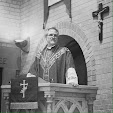
Sunday, February 27, 2011

Sermon: Sexagesima - 2011


27 February 2011 at Salem Lutheran Church, Gretna, LA

Text: Luke 8:4-15 (Isa 55:10-13, Heb 4:9-13)

In the name of + Jesus. Amen.

“As for the good soil,” explains our blessed Lord, “they are those who, hearing the word, hold it fast in an honest and good heart, and bear fruit with patience.”

Patience is the hardest thing in the world. Patience is also the easiest thing in the world. Our Lord teaches us that we are good soil when we receive the seed and it sprouts and grows and bears fruit, when we not only hear the Word and hold onto the Word, but when we are patient with the Word.

Again, that is both hard and easy.

The hard part is the waiting. We live in a culture of instant gratification. We are used to getting things right now. As hard as it is for young people to fathom, there was a time when people used to travel to places called “record stores.” They had to shop for music, hope that the store had what they wanted in stock, wait in line, and then go back home to listen to their purchases played on big bulky equipment. Now, we can browse, purchase, download, install, and listen to music directly into our ears in a matter of seconds. Who has time to wait? And books are becoming this way too.

And just because books are made up of words, we should not think that God’s Word works the same way, even as a seed hitting the ground doesn’t mature and bear fruit in a matter of seconds – though it would be surprising indeed if there isn’t an agribusiness research company working on it. Such planting, growing, maturing, and bearing fruit takes time. Even eating a fruit that is not yet ripe defeats the whole process. There is a waiting period. God determines how much time is to pass. There is a need for patience. There comes a time when time itself has reached its fullness. And it simply isn’t our decision.

God’s Word comes to us according to His will: by hearing, by our being surrounded by His Word read and proclaimed, by His Word of the Gospel sounding forth, and by His Sacraments administered. The Word is implanted and watered at Holy Baptism, is protected from harm by Holy Absolution, and is nourished by Holy Communion. And in the course of a life of faithful care by the Holy Spirit and by being surrounded by the Word, we grow into the creatures we were meant to be – even though we will not reach full maturity until after death itself. For even as Jesus taught us: “unless a grain of wheat falls into the earth and dies, it remains alone; but if it dies, it bears much fruit. Whoever loves his life loses it, and whoever hates his life in this world will keep it for eternal life.”

There will come a time, actually when time is no more, in eternity, when we will be fully ripened and matured to perfection. But until that day, we must contend with worldly assaults on the seed of God’s Word.

First, the devil lunges at us, hoping that we are like the path, where the seed can be easily snatched away from us. Second, our own shallowness threatens the Word of God, for if we have no root in the heavenly things, instead investing ourselves in the fallen world that is passing away, we may experience temporary growth – but all for naught as our own shallowness causes us to fall away at the first sign of trouble. Third, the “cares and riches and pleasures of life” also distract us and draw us away from maturity, threatening to kill us by choking out the Lord’s life-giving, life-bearing, and life-saving Word. Like thorns and weeds choking out a struggling seedling, such things that take our hearts and minds off of the kingdom of God threaten to extinguish our lives that were given to us at baptism.

And yet, we cannot make God’s Word grow. We cannot force ourselves to become good soil. We are unable to compel God’s Word to do anything. We cannot speed up the process. We cannot control where or if the Word takes root. We cannot earn God’s favor or buy His grace.

And this is where the easy part of patience comes in. We need not worry about that which we cannot control. God’s Word is a gift, and it comes to us when and how God Himself chooses. The easy part of patience is acknowledging that we cannot force God to do our bidding. What makes patience bearable is that God is in control and He has promised to bless us.

But, dear friends, surrendering to God’s will is not an invitation to become idle or lazy. For the writer to the Hebrews warns us: “Let us strive to enter that rest, so that no one may fall by the same sort of disobedience.” We can pray for the Lord’s Word to be effective among us, even as a “two-edged sword,” rejecting neither the Law which calls us to repent, nor the Gospel which gives us the promise without strings attached. We are indeed “naked and exposed to the eyes of Him to whom we must give account.” We cannot fool God, and we should not try to fool ourselves. Patience with God’s Word doesn’t mean license to sin nor taking the gift for granted, but rather the patience expounded by Jesus calls for us to wait upon the Lord with expectant eyes, fixing our gaze on Him, regardless of what the world hurls at us, in spite of what we see with our eyes of fallen flesh in this broken world. Our patience is a prayerful patience, a hopeful surrender to the Lord’s mercy, an active faith that indeed produces fruit – even if imperfect and unripe. We trust in the Lord and the riches of His Word. And in that light, we can afford to be patient.

For we have the ancient promise from the prophet Isaiah, the promise fulfilled by Jesus, the Seed of the woman Himself, who not only gives us the Parable of the Sower, but who is the Sower and who is the Word: “So shall My Word be that goes out from My mouth; it shall not return to me empty, but it shall succeed in the thing for which I sent it.”

“For you shall go out in joy and be led forth in peace; the mountains and the hills before you shall break forth into singing, and all the trees of the field shall clap their hands.”

Dear brothers and sisters, that is the glorious promise given to God’s people, the promise fulfilled in Christ, the promise received by the world, and the promise that we Christians shall see brought to maturity in us by the miracle of God’s Word.

This is how it is that we can wait patiently, while not waiting idly. We wait expectantly, because the Word has power: power to give life, power to bring to repentance, power to save, and power to bear fruit that never ends. Amen.

In the name of the Father and of the + Son and of the Holy Spirit. Amen.

Wednesday, February 23, 2011

Sermon: St. Polycarp - 2011

23 February 2011 at Salem Lutheran Church, Gretna, LA

Text: Matt 10:26-33

In the name of + Jesus. Amen.

“Do not fear those who kill the body,” says our Lord Jesus. And this is something He knows about. For our Lord, even God in the flesh, was killed in such a way. He was put to death by an angry mob that used the government to give itself cover for its wickedness and cruelty. And in the face of such things, the Lord tells us not to be afraid. For though evil people can, do, and will, harm Christians physically, they cannot hurt them where it is important – in their communion with God, in the righteousness they bear in their flesh because of the Lord’s cross, and the resurrection they in which they share because of our Lord’s rising from the dead.

St. Polycarp of Smyrna was a disciple of a disciple. He was taught the Christian faith by his pastor the apostle John, whose own pastor was Jesus Himself. On this date 1,856 years ago, Bishop Polycarp took the Lord’s words to heart, as was also persecuted by a mob claiming legitimacy because they were allied with the government.

The elderly bishop had refused to treat the emperor as a god. He was led to a stake and threatened to be burned to death unless he would “revile Jesus.” St. Polycarp had spent his entire adult life preaching the faith, confessing Jesus, and providing a living link to the apostles. He fought like a lion against heretics, and he spread the love of Christ with the gentleness as a lamb among his flock. He oversaw a church that was under persecution, and he stood firm in his conviction. He was neither bitter nor intimidated, but when called upon to renounce Christ, replied simply and clearly: “For eighty and six years have I been his servant, and he has done me no wrong, and how can I blaspheme my King who saved me?” With an almost matter-of-fact statement of faith, Polycarp was then burned alive at the stake.

For St. Polycarp knew the passage well: “So everyone who acknowledges me before men, I also will acknowledge before My Father who is in heaven, but whoever denies Me before men, I will also deny before My Father in heaven.”

The saints teach us what is important – especially those who have given their lives for the faith. They keep us grounded. They provide real examples of how the faith is lived out – especially in a world and culture that is hostile to God, opposed to the holy, ever at odds with the Church, and at enmity against our Lord Jesus Christ. Twice in this short text, our blessed Lord tells us not to be afraid. For even if our opponents can kill the body, even if they have that kind of power – it is nothing compared to the benevolent power of the God who created us, redeemed us, loves us, guides us, calls us, and gives us everlasting life as a free gift of grace and mercy.

St. Polycarp died because of his confession of Jesus, but Jesus actually died for Polycarp, for the apostles, for you and me, and for every person in the world who was ever conceived – even as we confess together that Christ is “the Lamb of God that takest away the sin of the world.” And this reality is nothing that can be taken away by anyone – not even a mighty emperor, not even a lynch mob, not even a Muslim court that claims the right to extinguish the precious lives of innocent Christians because of their confession of Christ.

“Are not two sparrows sold for a penny?” asks our Lord. “And not one of them falls to the ground apart from your Father.” It is not God’s will that even a sparrow should die. For our Lord created a world in which nothing died – not even a little bird. But this is the reality we live and die in, dear friends. We live in a broken world of sin and death. And though the Lord didn’t create it, He understands it. He gets us through it. He redeems us from it. And He promises to end it and give us a new and greater world, perfect as the Garden of Eden was perfect before our human sin put us where we are today.

And, the Lord continues, “Fear not, therefore; you are of more value than many sparrows.” Dear friends, God loves you. He cares about you. It matters to Him when you hurt, when you are stressed, when you are mistreated, and even when you suffer terrible pain and illnesses. God did not create anything to suffer and die, but God will use all things – even pain and suffering, even persecution, even death itself – to accomplish His will in this world, His will that the saving Word go forth, His will that all people see the testimony of those who give their lives for the faith and come to know that the Christian faith is the one true faith, and to understand the mystery and the reality that God does not abandon us in our suffering.

In fact, when we look at the cross, that is where we see God’s love the most. We see the price the Father is willing to pay for us, we see the sacrifice the Son is willing to be for us, and we see the work of the Holy Spirit to call us, gather us, enlighten us, and sanctify us, the church, and to keep this church “with Jesus Christ in the one true faith.”

For if a faith is not worth dying for, it is not worth living for.

Christianity is not a preference, a hobby, or a choice. It is the very truth that God became man, took flesh, willingly suffered to save us, defeated death by dying, rose again, and then bids man and women of every time and place to take up their own crosses and follow Him, to follow Him not only to the cross, but to the empty tomb, not only to the pain and suffering of this broken world, but through that suffering to the triumph of eternity when we will all bask in the glory of Christ the victorious King!

Polycarp’s life was a ransom for the sake of the confession of Jesus. But Jesus’s life is a ransom for the sake of the sins of all the world, even unto the salvation of all who call upon His name and seek His forgiveness, life, and salvation.

Polycarp was a beloved pastor and bishop, writer and teacher, saint and martyr. His example of faithfulness unto death only makes his memory sweeter and serves to underscore the truth of His confession. And no matter how old we are, we can say with our dear brother in the faith: “I am a servant of Jesus, and he has done me no wrong, and how can I blaspheme my King who saved me?” even as the Lord’s words ring in our ears, come what may: “So have no fear.” Amen.


In the name of the Father and of the + Son and of the Holy Spirit. Amen.

Sunday, February 20, 2011

Sermon: Septuagesima - 2011

20 February 2011 at Salem Lutheran Church, Gretna, LA

Text: Matt 20:1-16 (Ex 17:1-7, 1 Cor 9:24-10:5)

In the name of + Jesus. Amen.

The Lord has created us, has given us our very lives, and we grumble. He gives us our daily bread and all that we need for this body and life, and we grumble. He placed us in one of the richest and freest countries on the planet, and we grumble. He gives us the opportunity to freely gather as Christians, to sing, to pray, to hear God’s Word, to be forgiven of all of our sins, and we grumble.

It goes to show how much like the Israelites we are.

For God delivered them from slavery in Egypt, and they grumbled. He led them safely across the Red Sea and drowned hard hearted Pharoah and his pursuing army, and they grumbled. He provided quail and manna for their sustenance, and they grumbled. He gave them His very presence in the tabernacle, and they grumbled.

It is our sinful flesh’s inability to be content that causes us to grumble, to covet, to bear false witness, to steal, to commit adultery, to kill, to dishonor our parents, to forget the Sabbath, to misuse God’s name, and to have other gods before Him who gave us life in the first place.

Our sinful flesh grumbles at unfairness – most especially when it is against us: real or perceived. For we always think of ourselves more highly than we ought, as greater than we truly are, even as we perceive our neighbors to be less than we are. And so, when we observe others receiving a greater reward for less work, rather than share in our neighbor’s good fortune, rather than “rejoice with those who rejoice,” instead, we grumble – even when it means someone has received salvation and eternal life.

For how much in need of repentance must we be to begrudge the Lord’s generosity? How much more could we dishonor God than by questioning what He does with what belongs to Him?

Our Lord’s parable is all about the grumbling. And it is a call to repent of it. It is also a reminder not to judge others, but to be content with what the Lord has given us. Most importantly of all, it is a call to see salvation for what it truly is: a free gift and blessing that none of us are worthy of in the first place! For which one of us – in spite of our delusion that we have earned God’s favor, and in spite of our self-righteous grumbling – deserves anything other than death and hell based on our own works? We are all sinners and we don’t deserve even a denarius for a lifetime of our works.

And yet, here is our merciful Lord handing out rewards for work not done, with the lavish liberality of a float rider tossing out bags full of doubloons and beads as fast as his hands can move, to people who hold their hands heavenward in petition and beg to be given something. God gives all of those who labor in His kingdom – be they preachers or hearers, teachers or students – not what we deserve, but rather what Jesus deserves. He does not give us what we think we need, but rather that He knows we need. He calls us to repent of our sins. And by His grace, our sins are forgiven, our failures are forgotten, and by means of the cross, we are made alive forever, to be paid in full when the foreman calls our labors in the vineyard to cease.

This freedom, this generosity, this kindness and graciousness of our Heavenly Father through His Son Jesus and in the workings of the Holy Spirit is what makes it possible for us to train like an athlete. The prize is already ours. And we’re not talking about perishable wreaths: trinkets, material goods that are eaten by rust and moth, things that are stolen and which end up in the landfill. No indeed! The Lord gives us the best of what He has to offer, the promise of a new heaven and a new earth, a resurrected body without sin and without death, even everlasting life without sickness or sorrow. In the race that St. Paul speaks of, “all the runners run, but only one receives the prize.” Jesus has won that crown, and it is a prize He shares with us with the generosity of the master of the house who pays the laborers more than they deserve. And so we are free to run with confidence, with faith, and with joy, for we know that a glorious crown awaits us at the finish line. And that, dear friends, gives us the energy and the encouragement to discipline our bodies, keeping them under control, in anticipation of receiving the imperishable crown, the denarius, the living water from the Rock.

For “our fathers were all under the cloud,” all covered by the darkness of sin and death, and yet by God’s kind providence, “all passed through the sea” being rescued by God in His mercy. And “all were baptized into Moses in the cloud and in the sea” – all rescued through the water together, regardless of age or sex or intelligence or perceived righteousness. “All ate the same spiritual food and drank the same spiritual drink. For they drank from the spiritual Rock that followed them, and the Rock was Christ.”

And so, dear friends, we have received our undeserved denarius, the crown won for us by our Lord Jesus Christ, the gift of watery life received in the dry wilderness of sin, the salvation that “unto us has come by God’s free grace and favor.” We are not paid according to our transgressions but according to Christ’s righteousness. And for that we can sing now and forevermore:


All blessing, honor, thanks, and praise
To Father, Son, and Spirit,
The God who saved us by His grace;
All glory to His merit.
O triune God in heav’n above,
You have revealed Your saving love;
Your blessed name we hallow.

Amen.

In the name of the Father and of the + Son and of the Holy Spirit. Amen.

Sunday, February 13, 2011

Sermon: Transfiguration - 2011 and Baptism of Eric Edrington


13 February 2011 at Salem Lutheran Church, Gretna, LA

Text: Matt 17:1-9


In the name of + Jesus. Amen.

In His mission to rescue us “poor miserable sinners” from destruction, death, and the devil, our Lord came into our sinful world with His unspeakable glory hidden under a fleshly veil. He came as a tiny infant. He lived in a simple family. He grew in stature and wisdom. He preached and taught. He called people to repentance and forgave their iniquities. He healed their infirmities, cast out their demons, and raised people from the dead.

He called disciples, taught them to pray, proclaimed the Gospel to them, and gave them the Holy Sacrament of His body and blood. He ordained the apostles into the preaching ministry to draw men into the nets of salvation, dying on the cross and rising from the empty tomb.

And yet, Jesus kept the full measure of His glory under wraps, only revealing who He is by little glimpses at a time.

One of those apostles, those fishers of men in the preaching ministry, St. Peter, had the reality of who Jesus is, revealed to him “not by flesh and blood.” Six days before the Lord’s transfiguration on the mountain, Peter confessed with his mouth what was revealed to him in His heart: that Jesus is the Christ, the Son of the living God.

And six days after this earth-shattering confession that the New World was being wrought in the transformative work of the Creator God, in the Redemption of God the Son, and by the power of the Holy Spirit, six days after this eruption of faith by the one whom our Lord would nickname “the rock,” – six days later, the same amount of time that the Lord took to create the heavens and the earth, the Lord Jesus raises the veil some more: for Peter, James and John. Heaven was to come to earth for a longer glimpse. That which was normally veiled was to shine uninhibited like the sun, white as light, transfigured and changed in form, the curtain peeled back to reveal and confirm St. Peter’s confession (which is the Church’s confession) that Jesus is the Christ, the Son of the living God!

This is the confession that Jesus is who He Himself says He is. He is as human as any of us here, and He is divine even as His Father is God. And His mighty power is not wielded in wrath, but graced in love. He has come in dazzling array not to frighten, but to bring peace. And in their confusion and terror, the veil was replaced, they were comforted, and “they saw no-one but Jesus only.”

This was no fantastical story, a “cleverly devised myth,” or an optical illusion. Three men – two of whom would later die as followers of Jesus confessing this reality until their dying breath – experienced this lifting of the veil together. And the Holy Spirit has caused a word to be used, “overshadowed” – a word that is only used in Scripture to indicate the presence and the power of God.

Dear friends, even as the meek and mild imagery of the Christ child comforts us with the confession that God condescends to our level, wraps Himself in our flesh, joins us in the depths of our sinful world, we can also take comfort that this is no ordinary baby, no typical adolescent who debates with His elders, no mere magician who turns water into wine, not just a healer of diseases and caster out of demons, no mere prophet or preacher – but this is the Christ, the Son of the living God, the one whose power and might chases the demons away, transforms the very particles of the matter of the universe, and who fulfills the Old Testament promises of both the Law and the Prophets.

For Jesus does what the Law cannot do.

The Law cannot save, but can only accuse. The transformative might and compassionate redemption of Jesus melt our sin and guilt away and change our hearts like the beams of the sun irresistibly turn the hardness of ice into the softness of water.

Jesus does what the Prophets cannot do.

The Prophets cannot save, but can only point to the One who can. Like St. Peter, the Church, like a rock, confesses Him who is the true Stone, the One the builders rejected who has become the Cornerstone. And He is the founding stone upon which the new heavens and the new earth are hewn and edified, even calling us imperfect pebbles to be transformed into the living stones of a new and greater temple!

Dear brothers and sisters, take comfort in the hidden power of God, for Jesus hides His power that we might experience Him as one of us, a fleshly man who traverses the same highways and byways that we do. He hides His power under the misery of the cross (the same cross that saves us) and under the humility of baptism (the same humble water and word that saves us, that has drawn Eric into the Lord’s mighty transformative power along with Christians of every time and place).

For we worship a God who is both a helpless child in the manger and a bombastic vision of energy glowing like the sun. His power is not used for destruction or for revenge for what we have done to the Lord’s good creation, but rather His might and glory are used for redemption and for forgiveness of what we have done to the Lord’s good creation.

Jesus has come to make all things new, to restore goodness to that which has become corrupted, to wash away sin and death, to drown the Old Adam in the watery grave of baptism, and to give all of us a little glimpse under the veil of the Lord’s might – which is His mercy.

“Lord, it is good that we are here” we join St. Peter in saying. The presence of God is good. By His grace, His presence restores us, refreshes us, forgives us, makes us new, and energizes us with the very restorative power of God. And the Lord encourages us: “Rise and have no fear.” For we have been absolved of our guilt and we are being remade into what our Creator has meant us to be all along. He is powerful and He is in charge.

And this transformation is accomplished for us, dear friends, in the same was as it was for Peter, James, and John: as we shun the false glitter of the world and look to where real power and real mercy originate, seeing “Jesus only.” For the Father proclaims: “This is My beloved Son… listen to Him.” He has good news for us today and forevermore!

The peace of our transfigured mighty God and merciful Savior shine upon you as the very light of Christ, now and unto eternity. Amen.

In the name of the Father and of the + Son and of the Holy Spirit. Amen.

Sunday, February 06, 2011

Sermon: Epiphany 5 - 2011

6 February 2011 at Salem Lutheran Church, Gretna, LA

Text: Matt 13:24-30 (Gen 18:20-33, Col 3:12-17)

In the name of + Jesus. Amen.

Our Lord tells a story that calls to mind creation.

The plants of this earth reproduce by seeds “each according to their own kind.” After the fall, sinful man had to put up with weeds, which steal vital resources from the good fruit, which cause mankind to struggle in order to eat, which also lead the poor and handicapped to poverty and envy, while tempting the skilled and ambitious to greed and avarice and self-righteousness. The weeds lead to division among people, and are the source of seemingly endless strife.

Our Lord’s story, the Parable of the Weeds, follows on the heels of the more popular tale of the Parable of the Sower – in which God’s Word is compared to a little seed, that is often ignored, choked out, or scorched – but which sometimes takes root in good soil and multiplies by producing heads of grain that not only feed mankind but also replicate the wheat.

This parable, however, is not so much about God’s Word (which is always true), but rather about the Satan’s word (which contains falsehood). For Satan is the father of lies, and while he cannot create, he can distort. He can mutate and corrupt. And it leads to death. His word, though it can mimic the Word of God, is truly deadly and poisonous.

Since the fall, our world has been caught in a crossfire between the spawn of the “good seed,” the wheat, versus that of the “weeds” sown by “the enemy.” Jesus teaches us how we are to live in such a mixed and corrupted environment, and to do so in such a way as to minimize the work of Satan in our midst while enjoying the fruits of the Word in such a mess.

In describing the weeds, our Lord employs a word that translates into English as “darnel” – a particular kind of weed that mimics wheat. However, the seed of the darnel plant is actually poisonous. It is no accident that our Lord frames the story in this way.

The Word of God sprouts and grows in direct competition with the progeny of poisonous plants. And even as the good seed matures, multiplies, and feeds mankind – so too do the poisonous imitations of the Word. The corrupted imitations grow side by side with the good plants.

In the end, wheat is harvested, beaten into flour, sifted, and becomes the bread that also becomes the body of Christ. So too, the wheat in the Lord’s story is harvested, beaten into flour, sifted, and becomes the body of Christ, the Church. Christians are grown from the Word. Christians are fed on the Word. Christians are sowers of the Word.

And yet, the weeds are still here – even as they have been since the fall. They impede the progress of God’s Word and tempt man into further sin. By imitating what is good, mankind is often tripped up by evil.

And so, what do we do?

Our impulsive nature says to rip out the weeds by the roots and give the Word of God (and the wheat it produces) a chance to thrive. And yet, at the same time, sometimes the “cure” is worse than the disease. God does not immediately uproot that weeds, but waits and will call upon the angels do this at the end of the age – when the weeds will be cast into the flames along with Satan and his fallen angels and “all causes of sin and all law-breakers.”

Dear friends, people get anxious when Jesus speaks about hell. But the destruction of evil is what allows the good seed to thrive for eternity, as “the righteous will shine like the sun in the kingdom of their Father” as a result. Good cannot triumph unless evil is defeated.

Dear friends, our Lord is beseeching us to cling to God’s Word at all costs. Don’t seek after the seduction of some other seed because it may be less costly, or promises greater yield, or makes claims of a tastier bread. Don’t be fooled by Satanic imitation. And don’t allow yourselves to be merely imitators of the wheat.

For we delude ourselves if we think we have no weeds in our midst. The work of the devil is spread by the poisonous seeds of malice, gossip, distortions, threats, greed, envy, and self-righteousness. The weeds do their work by distracting people from the cross and from the forgiveness of sins, from God’s Word and from the holy sacraments. Dear friends, we must all examine ourselves. We must all resist the devil’s siren song, no matter how slick the packaging or how convincing the message. For Satan’s poison never comes in a box with a skull and crossbones on it. The devil always masquerades, always deceives, always allures. And yet his seed is always poisonous.

Let us not take the Lord’s grace for granted, as the people of Sodom and Gomorrah. As the Lord promised, he would indeed spare Sodom for the sake of ten righteous men – and yet there were not even ten to be found there. The weeds spread and prosper and choke out God’s Word. The Lord is calling us to caution and diligence, dear friends, to hard work in the kingdom and to integrity, even as He calls us to submit to Him as the ultimate Judge, the one who casts evil into the fire.

And how do we beat back the onslaught of the devil’s weeds, of the poisonous darnel, of the influence of those who seek to destroy God’s Word and tear apart his holy Church? St. Paul has taught us what we need to know, brothers and sisters: “Put on then, as God’s chosen ones, holy and beloved, compassionate hearts, kindness, humility, meekness, and patience, bearing with one another and, if one has a complaint against another, forgiving each other; as the Lord has forgiven you, so you must forgive.”

Do not allow evil to embitter you, to make you imitate evil, to cause you to fall into the devil’s snare in your frustration with the tangled weeds in either the world or the Lord’s vineyard. Our almighty and merciful Lord has it all under control, and He has promised a good and healthy yield in the fullness of time and at the harvest.

If you are cooperating with the devil’s work, now is the time to repent. The harvest could come at any moment. The reapers are always at the ready. Now is the time to renounce the spread of poison that threatens to take over your body and soul and leave you cast into “the fiery furnace” where “there will be weeping and gnashing of teeth.” In this fallen natural world, darnel cannot be transformed into wheat, but just as Christ turned water into wine, the Lord can miraculously change a tangle of weeds into beautiful stalks of grain in a supernatural way! Jesus does this every day. It is the work of repentance, and it is the cause of rejoicing in His entire creation.

Repent, dear friends! Repent and live!

For the good seed is a pure gift, pure grace, offered in pure mercy, and received purely by faith. It is indeed an act of faith to be patient with the weeds, knowing that their damage will be limited by God’s mercy. In the fullness of time, the wheat will be rid of the weeds, and the Church will be rid of oppression. How we long for that day, as we pray “Come, Lord Jesus!”

Meanwhile, nurture the Word; “Let the Word of Christ dwell in you richly, teaching and admonishing one another in all wisdom, singing psalms and hymns and spiritual songs, with thankfulness in your hearts to God.”

And we can do this, dear friends, because we have been forgiven. Our weeds have been transformed into wheat. The darnels have been displaced by the Good Seed. We are fed with the Word, the very Bread of Life. We can resist the poison of the weeds because we are connected to the True Vine, the Seed of the woman, our Lord Jesus Christ who has come to cast the devil into the furnace.

For the Lord created His good creation out of love, even as He encourages us, His beloved creatures: “Above all, put on love, which binds everything together in perfect harmony. And let the peace of Christ rule in your hearts, to which you were called in one body.”

“He who has ears, let him hear.” Amen.

In the name of the Father and of the + Son and of the Holy Spirit. Amen.

Thursday, February 03, 2011

A great tribute to a great sainted parishioner

Mrs. Hilda Ziifle Jung +
The following tribute to Hilda Jung appeared in today's Times-Picayune.  Many people never knew that Hilda, a constant presence at Salem Lutheran Church, was a retired world-renowned physicist and chemist.

Hilda was remarkable parishioner in many ways.  I had the honor to be Hilda's pastor and to officiate at her funeral.  She is already sorely missed, by her close-knit family, by her brothers and sisters in Christ, and by friends all across the City of Gretna.

In giving Hilda pastoral care, I received the lion's share of God's blessing.  Her closeness with her two surviving sisters (also talented and remarkable ladies) and brother (who is 98 years old) was the very picture of Christ's love for the church.  Where one sister was to be found, all three were to be found.  And as often as not, they are taking care of one sibling or another who was in need, or in many cases, looking after younger relatives who are ailing.


But in spite of our grief of having Hilda taken from us on this side of the veil, we can take comfort in that while she awaits the resurrection of the body, Hilda is in the divine presence of our Lord in all His manifest glory! 

Thanks be to God for this extraordinary woman and the privilege we had (and will have forever) to call her a beloved sister in Christ!

“Oh what [her] joy and [her] glory must be,
Those endless Sabbaths the blessed ones see!
Crowns for the valiant, to weary ones rest;
God shall be all, and in all ever blest.”
 
 
Hilda (left) with sisters Ruth Ziifle and Myra Thalheim
 

Wednesday, February 02, 2011

Sermon: The Purification of Mary and the Presentation of Our Lord - 2011

2 February 2011 at Salem Lutheran Church, Gretna, LA

Text: Luke 2:22-40 (1 Sam 1:21-28, Heb 2:14-18)

In the name of + Jesus. Amen.

“And when the time came,” says God’s Word concerning the Lord and His mother visiting the temple. That phrase is better translated “when the time was brought to completion,” or “in the fullness of time.”

For what we see in Mary’s purification and in Jesus’s presentation is the universe being changed. As St. Paul wrote to the Corinthians, the new has come and the old has passed away. The Old Covenant with its sacrifices unto the forgiveness of sins, with its static location, and its longing for the time of the coming of the Messiah is being brought to its fullness. For the Messiah has come to be the sacrifice for the forgiveness of sins, and the temple has been brought into the world to all nations.

Our Lutheran confessions speak of Mary as being holy and pure. And that she is. For she has been sanctified and cleansed by the One to whom she gave birth. Even as she brings God to the temple to present Him, Jesus brings Mary to the temple to purify her. Even as Mary seeks forgiveness from the temple where sacrifices have been made for thousands of years, the One who will go to the sacrifice of the cross in 30 years brings eternal forgiveness to the temple that bore Him.

“Every male who first opens the womb shall be called holy to the Lord.” And our Lord Jesus is the first of the first, for He is the first to open the virgin’s womb, even as He will later be the first to open the virginal tomb. He is the first of our race to emerge from the sinful flesh, from that which found its ancestry in Adam’s body that was made of the dust of the earth, and our Lord opens that womb and is uniquely holy among men – in order to offer the gift of holiness to all men.

Our Lord emerged from the fleshly temple of His mother in order to be the sacrifice for His brothers in obedience to His Father.

But before He fulfills the Law on our behalf, He brings the Law to completion by His own presence. And Mary, being too poor to afford the customary sacrifice of a lamb, offers pigeons. But nevertheless, the Lamb without blemish is there, the very fulfillment of the thousands of lambs whose blood was spilled on the temple’s altar has come Himself in the flesh to consecrate the altar, even He whose blood would be shed on the cross to sanctify all of us whose sins are covered by the blood of the cross.

Indeed, we see the old become new, the sacrifices become the Sacrifice, and we see a woman born of her sinful father Adam being made pure by her sinless Son Jesus.

The old man Simeon has become the new man Simeon, fully prepared to depart this world in peace, according to the Lord’s Word. His eyes have seen our salvation prepared in the presence of all peoples. Simeon’s song is our song, and like Simeon, we are prepared to depart in peace when our days have reached the fullness of time.

Old Anna also became new Anna, spending her years of widowhood praying the temple and waiting for the Christ. “And coming up at that very hour she began to give thanks to God and to speak of Him to all who were waiting for the redemption of Jerusalem.”

The word translating “waiting” really means “to watch out for in expectation.” Anna and the others in the temple were not just idly waiting around, they were prayerfully anticipating the fulfillment of the Word, and they were to experience the Word in the flesh, the Word made flesh, the Word carried in flesh from the flesh of the Blessed Virgin Mary.

“And when they had performed everything according to the Law of the Lord, they returned to Galilee, to their own town of Nazareth.”

Dear friends, like Mary, we have been purified by our Lord. We have been made holy through the flesh of Him whose flesh is the holy and living Word of God. Indeed, our Lord has Himself “performed everything according to the Law of the Lord” and has brought reconciliation and forgiveness between us “poor miserable sinners” and our Most High God. And even as we sing with St. Simeon, “Lord lettest now Thy servant depart in peace,” we do depart in peace and go to our homes. We go out upon the highways and byways of the world. And like Mary, we bear Christ in our bodies, His flesh connected to ours, His blood mingled with ours, His righteousness having become ours, and His eternal life given to us by grace as life eternal which is also ours.

And when the time comes for us to leave our home, to “depart in peace” according to the Word of God, when we are called to our fullness in heaven to await the resurrection of the body, we will do so by the sacrifice of the cross, the purity of the temple cleansed by the physical presence of Jesus, and the presentation of His very flesh and blood before the Lord that wins for us purification and everlasting life.

The time has indeed come. The fullness of time has been brought to completion. The old has passed away, and the new has come! Amen.

In the name of the Father and of the + Son and of the Holy Spirit. Amen.

Monday, January 31, 2011

The Year of the DP?

The Rt. Rev. David Stechholz, English District President

According to the Chinese calendar, we are in the Year of the Rabbit.  But rendering the current year according to the Missouri Synod, it may be shaping up as the Year of the District President.  First, we see the high honor of the Gottesdienst Sabre of Boldness being awarded to a Missouri Synod District President, the Rev. Brian Saunders.  Then we see this: a Missouri Synod District President, Rev. David Stechholz, wearing a miter and carrying a crosier to carry out his episcopal functions. 


Bishop Stechholz and LCMS clergymen (including Rev. David Petersen, 2nd from right) at Redeemer Lutheran Church, Fort Wayne)


Maybe this is our great-great-great-great-great-grandfather's church after all.  Bishops looking like bishops (instead of guys who work at the local country club pro-shop) and bishops showing not just bureaucratic leadership, but theological acumen and courage in the face of a hostile culture, have been part and parcel of Christian churchmanship since the days of the apostolic fathers.

In our very young American church body, we have traditionally shunned having any kind of episcopal oversight over pastors or churches.  We Americans are a democratic and independent people, and our churches often reflect that frontier spirit.  However, God's regime is neither a democracy nor a republic, but a hierarchical kingdom - with Jesus as the Overseer (Bishop) of our Souls.

Traditionally, the Christian church has governed itself in a hierarchical manner.  While not referred to as "pope" in the New Testament, St. Peter was clearly respected as a leader among the apostles - at very least, a "first among equals."  We see St. Titus, who seems to have been ordained by St. Paul, being instructed to appoint "elders" (Greek: presbuteroi), which is to say, pastors, in every city.  The pastors are themselves overseen.

The biblical term "presbyter" (presbuteros) is the source of the word "priest," and the biblical term "bishop" (episkopos) is the source of the word "episcopal" - as in "pertaining to bishops."

We Lutherans are not dogmatic about church polity, or how a church body is governed.  Scripture does not mandate any particular form of government other than that a congregation is overseen by what scripture calls (interchangeably) a presbyter or bishop.  Scripture also speaks of deacons in a supporting role to the presbyter/bishop.

Early on in the church (very early in fact!), the church begins to organize clusters of congregations and pastors underneath overseers.  The terminology quickly reflects this reality by presbyters (priests) generally being those ministers who oversee a congregation, and overseers (bishops) generally being those ministers that oversee the pastors and congregations.  In time, the Roman geographical term "diocese" was used to indicate a territory underneath a bishop's churchly jurisdiction.  Bishops are themselves often overseen by other bishops (overseers).  In the Latin west, the Bishop of Rome was given a status not unlike St. Peter (the first bishop of Rome) as a kind of "first among equals."  In the Greek east, several prominent bishops share oversight over other bishops.

Bishops have generally (though not exclusively) been the grade of minister used to ordain bishops, priests, and deacons.  Bishops often "confirmed" priestly baptisms by a laying on of hands.  Bishops have generally had the authority to discipline pastors and congregations.  And bishops have generally continued serving as pastors, preaching and administering sacraments, in addition to their administrative duties.

The American Lutheran churches have generally not only shunned the term "bishop," but also most of the trappings of the episcopate.  The reasons for this are complicated, and beyond the scope of this post.  In the Missouri Synod, our synodical and district overseers have traditionally been styled and titled as "presidents" instead of bishops.  One exception to this rule is the president of the English District of the LCMS (which was at one time its own synod) who also bears the title "bishop."  Most district presidents understand that they exercise episkope (oversight) as they oversee or delegate all ordinations; they discipline wayward congregations, pastors, and other rostered church workers; they place all newly-certified candidates for the holy ministry into their first calls, and they serve as "ecclesiastical supervisors" for all pastors and church workers under their jurisdiction.  But there is a hesitation to identify this office of episkope (oversight) with the office of episkopos (overseer). 

I believe there is an inconsistency here.  Either these District Presidents are merely bureaucratic advisers, or they exercise genuine episcopal oversight.  Maybe we in the LCMS are still trying to figure all that out.  I do think our bylaws and ways of governing ourselves sometimes say two different things.  But not every Lutheran church body has this American aversion to hierarchical authority.

Moreover, the LCMS is now in fellowship with many Lutheran bodies that have retained the custom of unabashed episcopal oversight.  In many places around the world - such as in Africa - Lutherans who have episcopal polity enjoy a higher level of respect among other Christian churches.  The now sainted Rt. Rev. Andrew Elisa, for example, was the synodical president of the Evangelical Lutheran Church of Sudan.  But most African Christians did not understand what a "president" was.  After he had been serving as president for quite some time, Pastor Elisa was consecrated as a bishop by other Lutheran bishops, and Bishop Elisa was understood as the Lutheran primate of Sudan.

While American churches often seem to be pushing the envelope of "casualness" - even to the point of slovenliness - there is also a backlash the other way.  More younger pastors are wearing the traditional garb of the clergyman in their day to day life, as well as the traditional vestments of the Church in the Divine Service.  And as the LCMS has more and more international contacts, we are seeing the value of traditionalism - in thought, word, and deed.  As St. Ignatius of Antioch wrote in his Letter to the Smyraneans around 110 AD, the church finds its unity around the bishop's office.  In our democratic "everyone a minister" and "every pastor a pope" ethos in the LCMS, we see a devastating lack of unity - even on such matters as whether or not to use the liturgy in worship.  There is a sense in the LCMS that anything and everything can be settled by a 51% majority in convention.

The oversight of bishops (the preferred polity according to our Lutheran confessions) may well serve as an antidote to our current chaos.  And if nothing else, the image of a bishop clad in historic vesture should stand and confess in stark contrast to the Protestantizing tendencies that plague our church body while reminding everyone that we are Catholic Christians.

Anyway, I applaud bishops Saunders and Stechholz for the good confession they are making, the courage to take a stand, and for their faithfulness under fire.  Leadership is more than just being elected.  It involves stepping out in faith to blaze a trail for other men likewise in the service of the Bishop of our Souls Himself.

Bishop Stechholz blesses the congregation

Note: Pictures are from Cyberstones.

Sunday, January 30, 2011

Sermon: Epiphany 3 - 2011

30 January 2011 at Salem Lutheran Church, Gretna, LA

Text: Matt 8:23-27 (Jon 1:1-17, Rom 8:18-23)


In the name of + Jesus. Amen.


Jonah is a prophet who is more remembered for being “in the belly of the fish three days and three nights” than he is called to mind as a preacher of God’s Word. And while it is a miracle that the Lord preserved his life under such extraordinary conditions, it is an even greater miracle that the people of Nineveh – from the king on down – heard Jonah’s preaching, repented of their sins, and were saved from the Lord’s wrath – all by the power of the Word!

And the people of Nineveh were not the only ones to repent in the account of Jonah. For Jonah himself resisted the call of God to go to Nineveh, and instead he headed to Tarshish “away from the presence of the Lord.” As if there really were such a place on this divinely-created planet.

But the Lord had mercy on Jonah. He didn’t just allow him to flee his presence. God had salvation to distribute to the Ninevites, and He had a prophet to deliver it to them. God did not give up on Jonah, although the prophet himself had to be converted before his hearers could be converted.

And so Jonah’s adventure really began to unfold while fast asleep on the ship. Frightening waves battered the vessel, and the other men on the boat were afraid that they might perish. And in their distress, they sought out Jonah’s God – who heard their prayer and calmed the storm.

Jonah would spend three days and nights tucked away inside the fish, and he would also emerge safe and sound according to God’s will.

Unlike Jonah, our Lord Jesus is often remembered more for His teachings than His three days in the belly of the earth, in the tomb. In fact, many people today treat Jesus as a great philosopher, teacher, or perhaps even a prophet – but certainly not as the Savior who defeated death by dying and who gave us eternal life by rising again!

For unlike Jonah, our Lord Jesus obeyed His Father’s will from the start, being sent as a baby into a world not unlike wicked and hard-hearted Nineveh. For far from fleeing the “presence of the Lord,” the fleshly Lord Jesus is the very presence of the Lord in His flesh.

And through the Lord’s three day passion and resurrection, the Lord has mercy on us! For God had salvation to distribute to the world, and He had His own dear and only-begotten Son to deliver it to us.

And so we find our Lord Jesus, our New and Greater Jonah, fast asleep on a boat. Frightening waves battered the vessel, and the other men on the boat were afraid that they might perish. And in their distress, they sought out Jonah’s God, Jesus, who heard their prayer and calmed the storm. He calls the disciples to repentance for their “little faith” while saving them through their little faith. Matthew says: “He rose (not an accidental turn of phrase, by the way), and rebuked the winds and the sea, and there was a great calm.”

This calm is a precursor to the fulfillment of time when all conflict will cease, when Satan and his angels are cast into the lake of fire, and when the Lord’s reign for eternity will no longer be our hope for the future, but rather our ever-present reality.

For Jesus would find Himself tucked away in the tomb, and on the third day, he would emerge safe and sound and victorious according to God’s will.

Dear friends, Jonah preaches the same sermon as our Lord Jesus, as every prophet of former times and every preacher of future times. It is this call to repent, to turn away from our sins, to resist the ugly part of our broken selves that seeks to flee the Lord’s presence. And this call is a gracious invitation to start fresh with a clean slate. It is the call to leave behind the world of sin and death and corruption, and climb aboard a new boat upon the calm waters of the new earth and new sea and new heavens remade by Him “by whom all things were made,” Him whom “the winds and seas obey.”

For the sign of Jonah was given to point us to the Greater Jonah. The prophet who spent three days buried in the fish was ultimately a preacher of Him who emerged from the grave on the third day. Both called their hearers to repentance, and both offered hope, forgiveness, victory, and life.

Nineveh repented. Nineveh turned back to God. And God turned away His wrath from Nineveh. And this was accomplished through a faith that came by hearing, a hearing of the Word of God.

Dear friends, “the Word became flesh and dwelt among us.” He preached from a boat, walked on water, calmed the wind and the waves, called fishermen to become fishers of men, called men to repent, and He forgave men their sins. He commanded that all nations be baptized. He took bread, and said, “Take, eat. This is My body.” He took wine, and said, “Take drink, this cup is the New Testament in My blood.” And He instructs His followers to “do this in memory of Me.”

And both Jonah and our blessed Lord suffered; they both suffered for sin. Jonah suffered for his own, and our most blessed Redeemer suffered for Jonah’s, Nineveh’s, Israel’s, and for our sins. “Behold the Lamb of God that takest away the sin of the world!” We sinners, like Jonah, deserve to suffer. Jesus, as the Greater Jonah suffers in the place of all of us “poor miserable sinners” who indeed deserve to suffer.

But as St. Paul confessed with us again today: “I consider that the sufferings of this present time are not worth comparing with the glory that is to be revealed to us.”

Just as Jonah’s odyssey ultimately had a happy ending, so does the pilgrimage of the Church. For in her suffering, she will be comforted. In her repentance, she has found forgiveness. In the cross and the blood of Christ, she finds her faith and her life. And in the forgiveness of sins, she eternally finds her grace and her rest and her salvation.

For our most holy and merciful God is:

[O]ur help in ages past,
Our hope for years to come,
Our shelter from the stormy blast,
And our eternal home.

Amen.


In the name of the Father and of the + Son and of the Holy Spirit. Amen.

Friday, January 28, 2011

Revolution in Real Time


Follow the extraordinary events in Egypt live on Al Jazeera English.

Even Christians and Muslims are working together against tyranny, to which this remarkable incident of three weeks ago bears witness.We're also seeing how the Internet is no friend of repressive regimes, and even though the government has disabled the Internet and cell phones, Egyptians have found a way to access Twitter through land-line telephones.  The world continues to see what is going on! 

Pray for peace and freedom in Egypt!


J. Peterman Lives!


J. Peterman, the quirky Seinfeld character, that parodies the real J. Peterman, lives wherever products are marketed by over-the-top prose.

A recent trip to one of my favorite stores, World Market, was a case in point that marketing can never go too far.

First, the jelly beans.  World Market sells a Jelly Belly knockoff called Teenee Beanees.  They're don't have quite as much of a kick as Jelly Belly, but they are almost as good and a lot cheaper.  But what is really a hoot is the blurb on the back of "American Medley," a melange of the rather staid and standard flavors of strawberry, lime, cherry, grape, orange, and lemon:

Americana Medley - classics from coast to coast. Sit back and enjoy a cross-country tour to six luscious locales: Savannah Strawberry, Laredo Lime, Chesapeake Cherry, Napa Grape, Indian River Orange, and La Jolla Lemon. Open up and discover a delightfully delicious land with liberty and flavor for all.

There is also another collection called "Island Breeze" which includes strawberry banana, punch, pineapple banana, lime, and orange pineapple.  On the back you will find this gem:

Feel the Island Breeze - Whether you're enjoying the savory flavors of Cabana Strawbana, Caribbean Punch, Kauai Pineapple Banana, St. Kitt's Kiwi Lime, or Martinique Orange Pineapple, Island Breeze includes exotic flavors so authentic you can almost hear the sound of steel drums.  Get ready, get set, getaway.

Common to both collections is the following blurb:

"Experience the world's biggest flavor in a tiny bean.  Visit Teenee Beanee Delicious Destinations.  Like tiny passports to flavor paradise, Delicious Destinations transports you to the most mouth-watering places on earth.  This thrilling collection of superpremium jellybeans features the planet's finest, most delectable handcrafted confections."

Wow.  I mean, they're just jelly beans for crying out loud!

Not to be outdone by candy makers, a purveyor of tea called Zhena's Gypsy Tea also goes all Peterman in its marketing.  Case in point: Coconut Chai:

"A robust and full flavored black tea accented with exotic imperial spices. The bold concentrated character of this lush black tea lends itself well to the full notes of cardamom, ginger and clove. The sweet hint of tropical coconut fragrantly fills the cup, offering an inviting taste of paradise to savor from any spot on the map. Delicious with a splash of milk. A bright and flavorful steep. Sunglasses not included." 

It's good tea and all, but it's still tea.

It goes to show that its not so much about selling jelly beans and tea as much as it is selling a person on his own taste, convincing him that he is a kind of cosmopolitan James Bond even as he is pushing around a shopping cart with a wobbly wheel.

Thursday, January 27, 2011

President Schiff's State of the Union


If you really want the state of the union instead of political posturing, don't waste your time paying attention to governmental presidents who want to control your life and tax you for the privilege of doing so, instead, listen to the straight-talking president of Euro Pacific Capital and get the real story in less than ten minutes.

Real Worship


I believe one of the reasons we have "worship wars" among American Christians is that it has been a long time since we have had physical warfare on our own soil.  9-11 was close, but even that was dominated not by the theology of the cross of Christ, but rather by a sense of the national therapy of Oprah. 

Consider this poignant picture above of the ruins of a bombed-out church in Germany, where amid all the chances and changes of this life, the one thing that people could hold onto is the liturgy of the Church, the Mass, the real physical communion with the real physical Lord.

Notice what you don't see: entertainment.  There is no gyrating chanteuse working the microphone like a Vegas performer, a spotlight shining on a grimacing drummer, a perfectly-coifed guitarist wearing the latest fashions, or a trendy prancing made-up motivational speaker with gelled-up hair and a plastic smile emoting in overly-dramatic hushed intonations.

Instead, we see a celebrant, deacon, subdeacon, and two servers, all reverently and historically vested, each stationed in his proper order, proclaiming by their very placement that no matter how unpredictable and desperate things may get in this war-torn existence, Jesus is here, week in and week out, in the midst of our pain and uncertainty.  And the Church is here, century in and century out, bearing the Good News by proclaiming Christ crucified, the eternal Word of the cross.  And even amid the rubble and missing walls and blown-out windows, the old stone edifice of the church building, even in its humiliated state, carries a reverent gravitas of which the latest and greatest multi-million-dollar "worship centers" are bereft.

And at the center of it all is the chancel.  There is no stage, big screens, lasers, or sound system paraphernalia, but rather a simple but elegant book containing the liturgy and the Word of God, dignified candles flickering with the soft glow of the flames reminiscent of the Day of Pentecost and silently confessing the Son as "light of light, very God of very God."  And of course, the Holy of Holies is the stone altar, anchored like the rock of St. Peter's confession amid the gravel of a desperate world, the marble slab upon which one finds the Cornerstone, the Christ Himself in the Holy Eucharist, the mystery of the Lord's Presence for the forgiveness of sins given by means of the simple creatures of bread and wine.

By contrast, "contemporary worship" is a sad and spiritually impoverished display of vulgar bourgeois suburban kitsch, a puerile frivolity that is more at home in a sterile strip mall or a vacuous night club than in the gritty real world inhabited by real people who suffer real pain and who need a real saving encounter with the real God.

That is why we need real worship.

Note: I cross-posted this at Gottesdienst Online.  Please feel free to comment there.

Extra Orbem (Out of This World!)


Here is a repeat of a short podcast that is both a Latin lesson featuring the beautiful Latin of St. Leo the Great and the even more beautiful incarnational Christology of this fifth century bishop of Rome and defender of the doctrine of the Trinity - as recounted by the brilliant, curmudgeonly, and delightful Latin professor and Carmelite monk, Fr. Reggie Foster

This podcast is especially poignant during the season of Epiphany.

For more of Fr. Foster's addictive podcasts, click here.  They are not only insights into the Latin language, but also history, theology, and western civilization.  There is not a dull moment, and you just never know what is going to come out of his mouth next!  Here is the unique method by which he teaches Latin - which he has taught in Vatican universities, Roman hillsides, and in a church basement in Milwaukee - to appreciative students from around the world.

I had the privilege to meet Reggie and sit in on one of his classes last Summer (along with Deacon Latif Gaba).  If I were to win the lottery and be able to take a sabbatical, I would spend a summer in Milwaukee studying Latin with Reggie.  But I count it a great gift from God to have "accidentally" met one of his students on the train from Chicago to Milwaukee that allowed me to meet him and be his student if only for a couple hours.

Wednesday, January 26, 2011

Sermon: St. Titus - 2011

26 January 2011 at Salem Lutheran Church, Gretna, LA

Text: Titus 1:1-9 (Acts 20:28-35, Luke 10:1-9)

In the name of + Jesus. Amen.

On this day, the Church honors St. Titus, a pastor and bishop whose name gives us one of the books of the New Testament. St. Titus was ordained into the ministry by St. Paul, and traveled with him spreading the Gospel: preaching and administering the sacraments. Unlike many of the fathers of the Church, it seems that St. Titus lived a full life well into his nineties, serving in Eastern Europe as well as on the Island of Crete.

St. Paul prepared Titus for his pastoral ministry in Crete by describing what Bishop Titus would find there. Paul did not have too much good to say about the Cretan Christians. Just a few verses after our lesson, St. Paul writes:

“‘Cretans are always liars, evil beasts, lazy gluttons…. Therefore rebuke them sharply…. To the pure, all things are pure, but to the defiled and unbelieving, nothing is pure; but both their minds and their consciences are defiled. They profess to know God, but they deny Him by their works.”

One only wonders if St. Titus read these words from his mentor wondering why Paul didn’t explain all this to him before he was ordained!

But this is the point of having a pastor and having a church. Pastors are sent to sinners, and the sinners congregate together in worship; a church is a bunch of sinners gathering together. But they are not gathering together to pursue their sinfulness, but rather to be forgiven. They do not call pastors to tell them how wonderful they are, but rather because they know that they need to be called to repentance.

It goes without saying that what is true of people in Crete is true of people of every time and place. We are all sinners and we all need to repent. We are all condemned by our works, and we all need salvation by the Lord’s grace.

And that, dear friends, is why St. Paul laid hands on Titus and sent him to Crete.

St. Paul prepares the men called by the Holy Spirit and sent out by the apostles by giving them fatherly advice: “Pay careful attention to yourselves and to all the flock, in which the Holy Spirit has made you overseers [that is, bishops], to care for the church of God, which He obtained with His own blood.” Paul warns of spiritual battles with “fierce wolves” and those teaching unbiblical doctrines.

He reminds his fellow ministers that the “Word of His grace… is able to build you up and give you the inheritance among those who are sanctified.” Dear friends, is there anything more comforting and calming than “the Word of His grace”? Jesus has not come to condemn, but to save. He has come to call us to repentance and to offer us forgiveness! For all of the filth and muck of human sin and the fallen world in which we live (and worse yet, to which we contribute), we have the promise of the cleansing of baptismal waters, washing us clean in the mercy of the very Lord who sends out ministers armed with the pure Word!

St. Paul reminds Titus and all men who bear the Holy Office that much is expected of them. They are to be “above reproach, the husband of one wife” with obedient children. A bishop must not be “arrogant or quick-tempered or a drunkard or violent or greedy for gain, but hospitable, a lover of good, self-controlled, upright, holy, and disciplined.” He is to be a sound teacher of Christian doctrine and he is charged with the difficult task to “rebuke those who contradict it.”

This is a tall order for men who are themselves far from perfect and also under the curse of sin. And this is why St. Paul explains the ordination ceremony of his other associate Timothy as the giving of the gift of the Holy Spirit, reminding him “to fan into flame the gift of God, which is in you through the laying on of my hands, for God gave us a spirit not of fear but of power and love and self-control.”

Likewise, Titus is reminded that he is not only to be a teacher of doctrine, but also a man of encouragement and exhortation, “so that those who have believed in God may be careful to devote themselves to good works. These things are excellent and profitable to people.” He is to discipline those who cause trouble: “But avoid foolish controversies, genealogies, dissentions, and quarrels about the law, for they are unprofitable and worthless. As for a person who stirs up division, after warning him once and then twice, have nothing more to do with him, knowing that such a person is warped and sinful; he is self-condemned.”

But the bulk of Titus’s work as a minister of the Gospel and a steward of the mysteries will be far more joyful. For Titus is a bishop of faithful souls, a pastor of the flock, a preacher of the Good News of the coming of God in human flesh in order to forgive sins and save sinners, and he is a man with the privilege – by grace alone – to stand at the holy altar and distribute the true body and blood of Jesus Christ to those who hunger and thirst for righteousness.

He is also a minister of Holy Baptism, as St. Paul writes to Titus: “But when the goodness and loving kindness of God our Savior appeared, He saved us, not because of works done by us in righteousness, but according to His own mercy, by the washing of regeneration and renewal of the Holy Spirit, whom He poured out on us richly through Jesus Christ our Savior, so that being justified by His grace we might become heirs according to the hope of eternal life.”

There is no greater or more eloquent summary of the Gospel that these words given to St. Titus to preach, dear brothers and sisters in Christ! And thanks be to God that this Good News still resounds the world over, declared from marble pulpits and whispered in prison cells, preached from rooftops, and chanted in the shade of mud huts. Wherever Christians gather, called and ordained servants of the Word declare that Word, forgive the sins of those who repent, and joyfully deliver eternal life to those called by the Holy Spirit.

For St. Paul does not send out Titus to preach on his own authority. Titus was called, ultimately, as every other proclaimer of the Good News of our Lord, by the Lord Himself. For Titus was ordaind by Paul, and Paul was ordained by Jesus. And it was Jesus Himself who first sent laborers into the harvest “as lambs in the midst of wolves.” It was our blessed Lord who commanded His preachers to say: “Peace be to this house” and to “heal the sick and say to them, ‘the kingdom of God has come near to you.’”

This ministry did not end with the death of the twelve, nor with the death of St. Paul, nor even with the death of St. Titus. For those upon whom hands were laid in ordination, likewise laid hands on other servants of the Word. And this ministry continues to this very day.

Cretans are not the only ones in need of rebuke and forgiveness. That is why the Word is proclaimed to “all nations” and disciples continue to be made by Holy Baptism in every corner of the globe. What St. Titus preached, we too hear, dear friends. For Titus proclaimed the Word. That Word is still just as valuable and relevant to us today. Though Cretans may lie, the Word of God is always true!

For as Paul reminds Titus, and us in this time and place, we have the “hope of eternal life, which God, who never lies, promised before the ages began and at the proper time manifested in the Word through the preaching with which I have been entrusted by the command of God our Savior.”

Thanks be to God for Titus, for the Word, and for our life as forgiven sinners that will have no end! Amen.

In the name of the Father and of the + Son and of the Holy Spirit. Amen.

Sunday, January 23, 2011

Sermon: Epiphany 3 - 2011

23 January 2011 at Salem Lutheran Church, Gretna, LA

Text: Matt 8:1-13

In the name of + Jesus. Amen.

“When Jesus heard this, He marveled and said to those who followed Him, ‘Truly, I tell you, with no one in Israel have I found such faith.”

Jesus marveled!

Dear friends, think about how extraordinary something must be to make Jesus marvel, to strike God with awe, to cause the master of the universe to pause for a moment in wonder. And the thing that makes Jesus marvel is a remark made by a soldier, a Gentile soldier, a man who is asking for the Lord’s help. But there are thousands of people seeking out Jesus, pleading for help, asking for a healing or an exorcism or some sign or wonder from God. And many such petitions come from Gentiles. But what makes the centurion so marvelous is his faith.

He doesn’t come before Jesus dazzling Him with his knowledge of the Bible. From Luke’s Gospel, we know that this soldier is sympathetic to the Jews, but as a captain in the Roman Army, he does not worship in the temple or synagogue. He doesn’t come before Jesus citing rabbis and ancient religious commentaries – for he has not come to the Lord to discuss theology. Nor does he try to convince Jesus of his own knowledge, righteousness, or worthiness. Indeed, as a Roman soldier, an officer in the service of a cruel and pagan regime, one would be hard-pressed to entertain such a claim from such a man.

And yet this centurion comes to Jesus, seeking His help in an almost matter-of-fact way – and Jesus marvels and declares that he has more faith than any of the thousands of the children of Israel that Jesus has encountered.

The Holy Spirit uses this incident to teach us what faith truly is.

Faith is nothing more than believing a promise. And when the one making the promise is Jesus, and when the promise itself is restoration, health, and life – that is the kind of faith that results in sins forgiven, death repealed, Satan defeated, communion with God restored, and eternal life offered as a free and full gift.

Indeed, how often we have heard our Lord exclaim to those who received His merciful gifts of healing and of the forgiveness of sins with this declaration: “Your faith has made you well.” For the promise comes from the mouth of God, faith receives the promise, and the promise becomes a reality.

The centurion has faith because he believes in that which He cannot see: the promise of Jesus. A military officer routinely puts faith in his subordinates. He tells men what to do and depends on them to do it. If they don’t, lives will be lost. And soldiers obey their officers because they know there will be severe consequences if they don’t. In the military, following orders is simply a way of life.

This is what it means to be a “man under authority.” The captain takes orders from the colonel and gives orders to the sergeants. Or as the Roman centurion says it so simply: “I say to one, ‘Go,’ and he goes, and to another ‘Come,’ and he comes, and to my servant, ‘Do this,’ and he does it.’

The centurion knows that he doesn’t have to keep asking. He doesn’t have to visit each private soldier with each minor task. Nor does he have to check later to see if the tasks are fulfilled. For that is what it means to wield authority. It is the confidence, the faith, that one’s words will be obeyed and the work will get done.

The centurion understands that Jesus too has authority – over diseases and demons – and even over death itself. And just as the centurion has faith that his men will fear his wrath, respect his authority, and obey his word, he likewise has faith that disease and sickness will flee the Lord’s wrath, respect the Lord’s authority, and obey the Lord’s Word.

Dear brothers and sisters, this is what our Lord marvels at. The centurion needs no proof, no sign, nor even the touch of a hand or a personal visit. He doesn’t ask for a token or a piece of paper. He simply takes Jesus at His Word, at His promise. He simply believes. And he even declines Jesus’s offer to come and heal the servant in person, for the centurion knows and confesses his own uncleanness, but also confesses his belief in the one who overcomes uncleanness: “Lord, I am not worthy to have you come under my roof, but only say the word and my servant will be healed.”

“I am not worthy. Only say the Word.” That, dear friends, is the very definition of faith.

Faith is that kind of belief in the Word of Jesus, and is so sure of the Word’s promise that it needs no external confirmation. Jesus said it. I believe it. The Word does what it says it will do. I am forgiven. I am healed. I have eternal life. All according to the Word and the promise. “I am not worthy… only say the Word.”

“And to the centurion,” and to all of us who cling to the Word and promise of our merciful and mighty Savior, Jesus says: “Go; let it be done for you as you have believed.” And we are healed the very hour that we make such a confession of faith.

For centuries, Christians have prayed a version of the centurion’s prayer upon drinking the blood of Christ, upon receiving the free gift of the Lord’s salvation promised in the Word and attached to the wine of His most holy and precious blood, “shed for you for the forgiveness of sins,” a prayer of such faith that the Lord not only carries out the promise to forgive, heal, and make whole, but also causes Him to marvel:

“Lord, I am not worthy that you should come under my roof, but only say the word and Your servant will be healed.” Amen.

In the name of the Father and of the + Son and of the Holy Spirit. Amen.

Saturday, January 22, 2011

Sermon: Funeral of Hilda Jung


22 January 2011 at Salem Lutheran Church, Gretna, LA

Text: Rom 8:28-39

In the name of + Jesus. Amen.

Dear Robert, Ruth, and Myra; James and Ronald; nieces, nephews, grandchildren, family, friends, brothers and sisters in Christ, and honored guests: the peace of the Good Shepherd Jesus Christ be with you all.

What a sense of loss we have on this sad day, the hollow emptiness that comes from having to say goodbye to someone who has been among us for the better part of a century. Right up until her last moments on this side of the veil that separates the living from the dead, Hilda’s ever-present sisters watched over her with loving and tireless devotion, and Hilda constantly expressed her gratitude and her love back to them in return. It was a rare thing indeed to see them apart from one another.

It has been my honor to give pastoral service to Hilda at the stage in her life when age and infirmity make spiritual care perhaps more common and more intense than for younger folks. And, dear family members and friends, I want you to know what a privilege it has been for me to bring God’s Word and Sacrament to Hilda. Not only was she always appreciative and grateful, but profoundly inspiring to me as her pastor. Hilda was always an example of faith to me.

For Hilda Jung truly hungered and thirsted for righteousness, and according to the promise of the Lord, she has now been satisfied!

According to our reason and senses, Hilda hungered and thirsted because of the frailties of her body. To the world, Hilda was fragile and sick – especially in her later days. To the senses, Hilda was weak and not of much consequence in a world that worships money and position and power, a culture that admires swagger and bluster. Indeed, we live in a society that doesn’t understand the treasures waiting to be discovered among those who have accumulated a long lifespan of experience, nor their love and their prayers that the world deems foolish.

But, dear friends, the Lord’s kingdom laughs at such self-important blather. For according to God’s Word, it is when we are weak that we are strong. When we let go of self-reliance and instead depend on the Lord’s providential grace, it is then, brothers and sisters in Christ, when we are at our strongest.

In the kingdom of God, Hilda Jung was, is, and ever more shall be, a woman of might, a warrior, one who is “more than a conqueror” because she held fast to the promise that “for those who love God all things work together for good,” and that indeed, this is most certainly true for those who “are called according to His purpose.”

And this is where Hilda drew deeply from the well of divine strength. It is from the Word and promise of her Creator and Redeemer and Sanctifier, the holy name into which she was baptized – the Father, Son, and Holy Spirit – which endowed dear Hilda with courage and strength and a spirit of calm in the face of her increasing struggles of health.

Hilda’s faith was not merely an inspiration to us, but also for her, a passport to eternal communion with God and everlasting life. The veil that separates sinful man and righteous God was shredded when our Lord Himself died on the cross, in His own suffering and bodily weakness. For listen again, dear friends, listen and hear the mighty words of St. Paul: “If God is for us, who can be against us? He who did not spare His own Son but gave Him up for us all, how will He not also with Him graciously give us all things? Who shall bring any charge against God’s elect?”

Who indeed, brothers and sisters? Hilda has no accuser, for she has been judged righteous by God through the cross and according to the blood of Christ. For just as Hilda understood that her strength did not lie in her physical power, she also confessed in word and deed that her righteousness does not lie in herself, but rather in her blessed Savior. For as the apostle continues, “It is God who justifies.”

Hilda understood, and now understands for all eternity, that she stands in the presence of God just as she is, “without one plea” – except the only plea that counts: the blood of Christ shed on the cross as a pure sacrifice and all availing atonement.

And she also understood, as perhaps only those who have suffered physical distresses truly can, that our strength lies not in ourselves. For Hilda often prayed and confessed these very words of St. Paul and of Holy Scripture, the rhetorical question that is actually a statement of victory: “Who shall separate us from the love of Christ? Shall tribulation, or distress, or persecution, or famine, or nakedness, or danger, or sword?”

Hilda’s tribulation and distress included physical ailments and frustrations over an aging body that would not respond to her wishes.

But Hilda, along with St. Paul actually answers the rhetorical question with a firm “No!” And that “No!” is Hilda’s confession. It is the “No!” of the whole Christian Church on earth. It is the “No!” of every soul who has suffered for the sake of Jesus, of every person who has come to faith in Christ, of every man, woman, and child washed by baptism and set apart for eternal life. For it is the “No!” of this response:

“No, in all these things we are more than conquerors through Him who loved us.” Though the world saw a frail woman and now sees a body stilled by death, we cling to the Lord’s promise and the Lord’s resurrection, and we see the Lord’s dear child who is now with Him and awaiting the “resurrection of the body and the life everlasting.”

“For I am sure,” says St. Paul, says the Scripture, says the Church, and says Hilda Jung for all eternity, “for I am sure that neither death nor life, nor angels nor rulers, nor things present nor things to come, nor powers, nor height nor depth, nor anything else in all creation, will be able to separate us from the love of God in Christ Jesus our Lord.”

Hilda has won the victory because Jesus has won the victory. And just as God was hidden on the cross and revealed in the empty tomb, Hilda confesses with us and with the Church: “I know that My Redeemer lives!” Hilda knew that “God so loved the world...” Hilda held fast to the comfort that “The Lord is [her Shepherd] – and now she has no want. Hilda suffers and struggles no more, dear friends. And though we feel the grief, she feels the joy; though we struggle with the feeling that something is missing, she rejoices in the very real fullness of God’s glory.

“Oh what [her] joy and [her] glory must be,
Those endless Sabbaths the blessed ones see!
Crowns for the valiant, to weary ones rest;
God shall be all, and in all ever blest.”

Amen.

In the name of the Father and of the + Son and of the Holy Spirit. Amen.