Showing posts with label Blogging. Show all posts

Saturday, March 30, 2024

Holi Saturday? CUW Employee Doubles Down

At Prabupadha's Palace of Gold, Moundsville, WV, 1991


Concordia University Wisconsin’s Facebook Page continues to honor the Hindu festival Holi - which fell in Christian Holy Week this year. One of their employees (at Ann Arbor), an Academic Support Specialist, has lashed back against criticism of CUW by scolding those of us who don’t approve. Her Facebook profile makes no mention of her religious beliefs, nor do I have any mutual online friends with her - which suggests that she probably isn’t a Lutheran. But she is belittling Lutheran laity and clergy who have expressed a theological objection to something that our university is doing. And during Holy Week.

I guess she knows better how Lutheran Christians should treat this matter than we do. This is one of those times when the name of our university system is ironic. Indeed, in terms of the vaunted goal of fostering “Lutheran Identity,” Discordia Wisconsin has a lot of "Lutheran Indentitying" to do.

In response to my pointing out that Hinduism is not a culture but a religion, and that there are indeed Indian Christians - including Lutherans - and that “there are a lot of ways to celebrate Indian culture without endorsing rituals to Hindu gods,” her reply was to educate me as follows:

Hinduism is a big part of the culture in India!  There's nothing wrong with learning other religion [sic] and cultures [sic] holidays and traditions!  It's surprising to me that others spend this much time being angry.  Bring love into the world not anger.  I'm not directing this at just you but everyone who is ridiculously upset in these comments.

Understanding, respecting, and observing with the people who celebrate different religious holidays than us [sic] is not the same as idol worship.

It is a good thing to be knowledgeable and accepting of different cultures (and yes religion is apart [sic] of culture.  I will not be commenting further but again would suggest looking at the love and acceptance you can bring into the world through God instead of the hatred and anger.

She concluded her correction of me and all the other "hateful" Lutherans with a heart emoji.

I'm not suggesting that every employee must be a Lutheran.  But to show such callous insensitivity to her Christian employers and supporters of the university suggests that there is either no training for non-Lutheran and non-Christian employees so that they know what we believe, teach, and confess, or HR is prioritizing woke idealism over a commitment to our Lord Jesus Christ and our confession of the faith.  Or maybe, and perhaps more likely, it's just not a priority.

This is classic wokeism: to scold us for expressing our opinions based on our faith - and then couch it in syrupy love-talk.  But we know what it is, and we know where it comes from.  

Instead of engaging further after accusing all of us of hatred and not properly confessing God, her response was to block me and remove "Academic Support Specialist at Concordia University Ann Arbor" from her bio.  I double-checked the screenshot to make sure that I'm not misstating things.

Again, I'm not suggesting that Concordia employees all be Lutherans, but it would be helpful if they respected our faith and did not attack us during Holy Week.  

On a personal level, and as a postscript, I would encourage everyone to find an authentic Indian restaurant, preferably with a buffet, and try everything.  Indian food is wonderful (and, of course, varies considerably depending on region).  And I personally find Indians to be delightful and fun to hang around with.  My best friend when I lived in New York (a Hindu) and his roommate (a Muslim)  - took me to a countless number of Indian restaurants in Manhattan.  I once had an Indian cab driver try to refuse to take my money because I spoke with him in a few words in Hindi (I said some things that made him laugh).  I was making authentic chai at home long before it became popular in America, and probably before my critic was born (the secret is that you have to start with the dark, black, tannin-rich Assamese tea that makes your tongue stick to the roof of your mouth, none of that American sockwater).

One of my fondest memories (from thirty-three years ago) was driving in my tiny little ford Escort, crammed together with four of my Indian friends, leaving the Upper East Side of Manhattan at 4:00 am to drive to Moundsville, West Virginia, to visit a strange curiosity: an exotic gilded building - which was a Hare Krishna shrine.  One of my Hindu friends was not impressed with the Hare Krishna sect, as she believed that they were, what we would call today, LARPers - not real Hindus.  But we all had a great time on our roadtrip (see picture above, taken long before smartphones and selfies.  I'm easy to pick out.).

So, far from being ignorant of Indian culture and hateful toward Indian people, and in need to being scolded and educated - as my critic seems to surmise - I have great affection and respect for Indian culture.  It is a false accusation to accuse us of hatred, though that is currency among young people who want to discredit instead of constructively engage those who hold different beliefs than they.  They should apply their criticism and their woke bromides to themselves.

All of that said, and as St. Polycarp declared before his execution: "I am a Christian."  And the Lutheran confession within Christianity is what Concordia University Wisconsin is committed to.

CUW and its employees ought to respect Christians and the Christian faith.  It seems like so little to ask.  And though it is a bit early liturgically, I'm going to say it anyway: "Christ is risen!"

At the Assam Center, Edison, NJ, 1991, I'm on the left, and Prayag is on the right.  Good times!

Saturday, December 12, 2020

Moderation is a Virtue

In the murky, distant, and ancient past before social media, dinosaurs ruled the earth and blogs ruled the Internet.  This blog, Father Hollywood, regularly had 400 hits a day.  Facebook made it easy to publish one's thoughts and disseminate them from the phone.  The age of the blog began to recede.

But as Big Tech continues to censor conservative and libertarian opinions, and as the discourse on social media has gotten, well, stupider, I'm finding myself wanting to blog more again.

I do post all of my sermons to Father Hollywood, and cross post them on Facebook.  And I noticed that there are no comments on the blog, but there are sometimes comments and discussion when I post them to Facebook.  And then it dawned on me.

I have comment moderation turned on.

I did this years ago when I was getting bombarded with spam.  I forgot that I did that, and as I don't blog nearly as much as I used to, I never check for comments.  So I did today.

I had dozens of comments "awaiting moderation" going back several years.  Many were indeed spam.  Some were comments from friends and intelligent contributions to dialogue.  I apologize for not posting these!  Sorry, guys!

Others were from nutters - which gave me a lot of entertainment.  

One particular post that dealt with fitness and losing weight brought out some interesting commentary.  As Luther once quipped, if you throw a stick into a pack of dogs, the one that yelps is the one that got hit.  I had overweight Lutherans castigating me for proclaiming too much Law and not enough Gospel (this wasn't a sermon, by the way). Two people said (in unmoderated comments that I just saw) that overweight people should "trust their baptism."  I don't see weight loss in the Small Catechism's discussion of benefits that baptism confers, but what do I know?  

Another comment was from a nutter who decided that Ron Paul, Lew Rockwell, and the entire Mises Institute were antisemites and racists.  I emailed Walter Block (who is, of course, Jewish) - whom I had just met at the time - and he responded with a video blog.  I posted it here.  In response, I got a comment (which I didn't post) from the nutter that made the accusations in the first place.  Interesting reading!  LOL.

Since that time, I have become very close friends with Walter Block.  I know many of the folks at the Mises Institute, and am honored to call them my friends.  I do indeed know Lew Rockwell now - not that we are close friends, but we have had many conversations over the years, and he has published many of my articles.  I have had the honor to have been invited to an event at Dr. Paul's house.  And there are others at the Mises Institute whom I consider very close friends.  I don't say this to brag or name drop (in fact, it makes me laugh because I'm often the real Forrest Gump, and somehow I end up in places that make me wonder, "How did this happen?").  I'm saying this because the charges of antisemitism and racism at the Mises Institute and anyone associated with it are false.  They are malicious lies.  

Another commenter told me that the early church had women clergy and that I should study up on it.  Another fellow decided that funeral sermons - often read by families of the deceased - would be a great place to argue about the theology of death.  Another fellow insisted repeatedly that I was a "Calvinst" while another called me an "Arminian."  How I pulled off that trick, I don't know.  

Great stuff!

At any rate, I did release a bunch of comments today.  Many are years old, so you probably won't notice them.  I will try to blog more often and check comments more often as well.  As convenient as it is to use Fashbook, it has its downsides - being run like the Third Reich for one, and not having a good search engine is another.  

So who knows?  Maybe blogging will make a comeback.  I'm still going to practice the virtue of comment moderation, though.  If I really want to deal with spam and nutters, I'll just stick to Facebook.  


Monday, September 02, 2019

Thank you, Facebook...


... for protecting our safety (click the link for the details)!


Saturday, September 01, 2018

The Economics of Death

One of my colleagues in the ministerium of the Lutheran Church - Missouri Synod, the Rev. Graham Glover, wrote an anti-abortion piece in a blog called The Jagged Word.  Our church body opposes abortion and is active in the pro-life movement.

Interestingly, Pastor Glover looks at the issue not from the moral, cultural, or ethical aspect, but rather from the political viewpoint of "policies and laws."  He goes on to express ambivalence toward the political issue of Supreme Court justices, even a bit of skepticism, while also expressing the possibility that Supreme Court appointments might help.

The real answer, the author opines, is politics of a different stripe: "policies and laws that end, or at least seek to radically reduce, poverty."

His well-intentioned argument is that abortion is not at its root an ethical or philosophical issue, but rather one of economics, and that as such, it is actually rooted and grounded in poverty.  Poverty is the keystone.  If we can "end" it or "radically reduce" it, that would in fact "end" the "hundreds of thousands of abortions that occur every year in America."

Of course, poverty is not something that can be cured with enough research, the right policy prescription, technology, or even the milk of human kindness.  Poverty is caused by scarcity: demand exceeding supply, which, according to Christian anthropology, is a consequence and curse of the Fall.  Poverty will always be with us in this age, if we are to believe Jesus.  This is not to say that we should not seek out behaviors which bring relief to our fellow man.  Quite the opposite!  That is what charity and alms-giving are all about.  Though we cannot cure poverty in the abstract, though we cannot overcome the Fall by our own prowess, though we cannot scientifically make supply exceed demand - we can love our neighbor in need.

Pastor Glover, however, proposes that the road to the ending or the radical reduction of poverty lies in Socialism.  Interestingly, he begins his argument by an appeal that we "imagine."


Pastor Glover writes: "[I]magine a nation that insures every one of its citizens from conception to death."  Has socialized medicine resulted in fewer abortions in nations where it is the norm?  And how does it work for a fertilized egg to have health insurance, but at the same time, can be aborted?

The author invites us to "imagine a nation that guarantees a living wage to every one of its citizens."  He invites us to "imagine a nation that has more generous maternal leave policies and begins to have a serious conversation about paternal leave."  He alludes to the myth of "the gross income disparity between men and women."  He calls for "radically expanding foster and adoptive services and supporting them in ways far beyond what our budgets currently allot" meaning more government intervention in the economy.  Do all these things, and "maybe" says the author, "just maybe, more women will choose not to have an abortion."

Of course, the argument that Socialism alleviates poverty is monstrous.  What brings countries out of poverty are markets, not Marxism.  This is not opinion; it is empirically and historically demonstrable.


Moreover, even Europe's soft democratic-socialist countries already have these very policies and laws that the author asks us to "imagine", as if such Utopias were only a glimmer in the mind of Lennonesque dreamers.  Has abortion ended in these countries?  Has it been radically reduced?  Or have we seen a further degradation of the value of human life by an increase in related atrocities such as euthanasia and its related boon for tourism in countries that champion such policies?

What about the Soviet Union?  In its seven decades of socialized medicine from cradle to grave, its guaranteed living wage, its maternal leave policy, its unabashed advocacy for women's rights, as well as its famous government-run orphanages - did the USSR end or radically reduce abortion?

There are two fatal flaws in Pastor Glover's argumentation:

1) That Socialism is a way out of poverty, and
2) That abortion is primarily a matter of having more money as opposed to how one views human life.

A little perspective is also called for.  In the United States today, most of the people we consider poor have a place to live, clean potable drinking water, indoor plumbing, electricity, television, and telephones.  They typically have access to free health care through Medicaid, greatly reduced food bills through EBT and other welfare programs, breakfasts and lunches for their children enrolled in the nation's free public schools and free head start programs. People that we consider poor often have luxuries like cellphones, cable TV, sports tickets, pets, tattoos, video games, jewelry, cigarettes, air conditioning, automobiles, etc.  Moreover, they also often manage to find the money to get abortions.

I do agree that we should support policies and laws that push back against poverty (even though it is impossible to eradicate it in this fallen world).  I believe that the free market system, not Socialism, has demonstrably proven itself to be exponentially and consistently superior in that endeavor.  Socialism has not only given us more abortions - paid for by tax money - but has also given the world a hundred million corpses and a legacy of the concentration camp and the mass grave.

Pope St. John Paul II - a player in the downfall of the very Union of Soviet Socialist Republics that championed Pastor Glover's various policy prescriptions - put his finger on the problem.  At its root, the issue of abortion is not economic or political.  Politics follows the anthropological philosophy, of the culture.  Economics is about choice and human action based on one's subjective values.

The root issue which underlies the politics and economics of abortion, according to Pope John Paul, is the "culture of death."  And so it is.


Thursday, May 08, 2014

Capitalism is the Only Divinely-Sanctioned Economic System

“You shall not steal.”
~ Ex 20:15

Methodist minister and blogger Morgan Guyton wrote an April 22, 2014 post in his blog Mercy Not Sacrifice called “Six Ways that Capitalism Fails the Church.”  He takes a common tack among modern Christian writers, from the pope to popular evangelicals of both the right and the left, that capitalism is bad for Christianity, if not inimical to our faith. 

He could not be more wrong.  In fact, capitalism is the only biblical economic system.

The seventh commandment is: “You shall not steal” (Ex 20:15).  This is the basis for capitalism.  Without the seventh commandment, there is no civilization, but only barbarism, the law of the jungle, and the ethical principle of “might makes right.”  By contrast, God’s Law recognizes private property as not only a nice thing, but a commandment to be obeyed.  Respect for private property lays down the capitalist economic system.  No other system respects the seventh commandment.

By divine revelation, private property is a given, and it follows that non-aggression against that private property is God’s Law.  And by definition, property can be freely used by the owner in whatever way he does not aggress against his neighbor.  As we would like to maintain our own property, so we should do unto others (Luke 6:31).  The seventh commandment is the basis of the rule of law at home and of treaties abroad, of respected borders and is manifested in Scripture by stone markers laying out property lines (e.g. Prov 22:28).  It is the foundation of trade, in which property-owners barter with one another, or use a common medium of exchange (money) to affect mutually-beneficial transactions.

This is capitalism.  Nothing more, nothing less.

But there are rules in capitalism.  “You shall not steal” precludes fraud.  For selling something under false pretenses is not only theft, it is also a breaking of the eighth commandment prohibiting “false witness” against one’s neighbor (Ex 20:16).  Compelling the buying or selling of something at bayonet point is a violation of the fifth commandment against murder (Ex  20:13), that is, aggression against one’s neighbor in his body.  Scripture is replete with trade and price negotiations (e.g. Gen 23:4-16).  In capitalism, a transaction only happens voluntarily when both buyer and seller reach a mutually acceptable deal.  Scripture is also laden with prohibitions against fraud in the marketplace (e.g. Prov 11:1, prohibiting rigged scales – a tool for unscrupulous merchants to cheat customers based on false weights and measures).

Capitalism, like every other form of economics, is a result of the Fall.  In the Garden of Eden, there was no scarcity.  All resources were available in abundance.  Some argue that land was scarce, as two people could not occupy the same ground at the same time, but I argue that the same could be said of the air we breathe.  And even though two people cannot share the same breath of air at the same time, this does not make air economically scarce, a commodity to be bought and sold or rationed by a state or a tribal leader.  In the Garden of Eden, there was no competition for scarce resources, including productive land, as all creation was declared by God to be “very good” (Gen 1:31).  All was perfect and in abundance. 

After the Fall, we see the economic problem emerge (Gen 3:17-19).  Adam is told that the ground is cursed, getting food was to be painful, thorns would interfere with his labor, and that he would work to make bread “by the sweat of [his] face,” that is, he would have to live by his labor mixed with the resources of the soil.  Here we see the classic economic transition from a “Robinson Crusoe” scenario to an economic community of people owning property, discovering the division of labor, and engaging in productive free trade so as to enrich everyone.

So in a nutshell, capitalism is simply living in a world of scarce resources by obeying the seventh commandment.

Articles like the Rev. Guyton’s piece perform a shell-game sleight-of-hand by properly criticizing human sin, dishonestly, and fraud, but falsely labeling those things “capitalism.”  But once again, capitalism is simply private property and its voluntary trade.  Capitalism is simply the seventh commandment in action.

In each of his six citations of “capitalism” and its “failures”, it isn’t capitalism that is failing, but rather sinful man.  For there are God-pleasing ways to use one’s property, and God does not compel, but rather entreats.  God loves us, but He also allows that love to be unrequited.  God is not a rapist.  Human beings are not robots.  God allows men to have property, and to make choices regarding that property.  The ethics of the decisions we make concerning our property are not an indictment against property itself any more than the fact that there is violence in the world is proof that the fifth commandment, the ethical assertion that life is sacred, has failed the church.  The problem is not God’s Word, the problem is us.  The problem is sin.

Moreover, if capitalism “fails the church,” this implies that a non-capitalist economic system might be a more attractive alternative.  This was Marx’s view.  He believed that private property and free trade is exploitive, and that by abolishing private property and free exchange, and by reconditioning mankind to no longer be motivated by profit, then a return to Edenic life was not only possible, but inevitable.  And as a transition to this Paradise Restored, Marx believed that a period of state socialism was necessary.  In socialism, the state takes property from the one who has, and redistributes it to the one who has not.

But the seventh commandment remains: “You shall not steal.”  The fact that the stealing is done by an elected or appointed henchman, the fact that violating the God-given paradigm of private property is being carried out officially for some pie-in-the-sky hope for something good down the road, not only doesn’t excuse it, but turns the state into a false god.  And this is exactly what we have seen in communist countries that accept this Marxist dogma of a restoration of Eden without Christ and the cross, seeing an alternative pathway to redemption instead by a hammer and sickle.  According to Marxist (communist and socialist) ideology, the problem is not sin, but capitalism.

Guyton repeats the error of Marx and recapitulates the communist and socialist critique of private property, which is itself a critique and repudiation of God’s Law.

Another economic alternative to capitalism is fascism, which is not the complete abnegation of private property, not state ownership of the means of production as in Marxism, but rather it is state control of these means.  It attempts to split the baby of private property between the owner and the state.  It tries to reap the vast human benefits of voluntary trade and the innovations and incentives provided by the price system and the profit motive, while holding onto state central economic planning and skimming the profits for the benefit of the state (and its “cronies,” hence the term “crony capitalism”), in wealth and power.

But this is just more of the same.  Under fascism, there is no real respect for the seventh commandment.

Modern western states function under a “mixed” economy – which is sometimes portrayed as capitalism (with “reasonable” state regulation), when in fact, it is actually more of a mix between socialism and fascism.  Some economic sectors are completely socialized, such as government roads, “public” schools, parks, military, police, judges, Social Security, welfare, etc.  Other sectors are private, but subject to government regulation and central economic planning, such as health care, insurance, transportation, utilities, etc.  Even one’s private home and income are subject to ever-increasing taxation and regulation as to how they can be used.  Very few parts of the economy are truly privatized.  Even labor is subject to federal and state regulation and multiple price controls.

Guyton acknowledges that in addressing the question, “Has capitalism failed?” one must define the term.  And while he does acknowledge that capitalism may well be defined as “the free market system itself,” he goes on to criticize the “worship of the market.”  And here is where he begins a series of self-contradictions, wrongly labeling what he calls “worship of the market” as “capitalism” and then knocking down this straw man that he has created.  He criticizes many things by calling them “capitalism” when they are not capitalism at all.

He writes: “It’s possible to navigate the free market system without worshiping the market.  The problem is that passive participants in the capitalist market do end up making it their god insofar as they allow the market to determine the value of the created objects in our world in place of God.”

But in no place in Scripture does God assign “the value of the created objects.”  Value is a subjective and temporal matter, not an objective and eternal matter.  Oranges cost more after a freeze because the supply is less than the demand.  Computers are more powerful and cheaper today because of innovation and changing technologies.  The costs of slide rules and oil lamps have changed radically because our world has changed radically.  Prices adjust organically to these changes.  To the ancient Israelites, yokes and swords and potter’s wheels were high-demand objects, whereas in our day, the vast majority of people will never own any of these things.  The same variation exists for labor.  The demand for blacksmiths and telegraph operators isn’t what it used to be.

So what determines something’s value – be it material or labor?  It’s a matter of supply and demand and how badly an individual wants something.  To a coffee drinker, it may be entirely reasonable to pay $4.95 for a latte, but he might not be willing to pay ten cents for a cup of tea.  Others would not be willing to pay a penny for a cup of coffee, because they don’t drink it.  A coffee shop owner takes all of this into account, and sets a price that will enable him to stay in business and hopefully prosper, and at the same time, he serves his neighbor by providing beverages for customers who voluntarily make purchases.  If his product or service is not worth the price, he will adjust his prices accordingly, or may go out of business.  Competing businesses provide feedback, and incentivize the shop owners to work hard to please their customers based on value and desire to do business.  And customers can opt to buy coffee or tea, or may opt to save their money for something else.

None of this is evil.  None of this “fails the church.”  This is the biblical and civilized way for human beings to live together peacefully in society.  Anything else is aggression.  A bank robber enriches himself by fear and intimidation.  A government-granted monopoly has no concern for pleasing customers.  A fascist system sets the price of coffee regardless of what is best for buyer and seller – and being necessarily authoritarian and bureaucratic, is also unable to flex efficiently between shifts in supply and demand (e.g. a fad for drinking tea instead of coffee, a freeze in the areas where coffee is grown, a sudden glut in dairy products, rising costs of heating and air conditioning, etc.).  It is doomed to fail even under the best of intentions with the brightest minds calling the shots.

The six “failures” cited by Guyton have nothing to do with capitalism.

His first critique is: “Capitalism fails the church when discipleship becomes an industrial complex.”  He cites “a monster Christian publishing industry” that “desperately needs to sell its books and videos in order to grow.”  He cites a shift in Christian culture from true discipleship to a desire for “results” and an emphasis on “stewardship campaigns.” 

But this has nothing to do with capitalism.  The problem is not the freedom to trade.  The problem is not that the state doesn’t own the means of production.  The problem is not that there isn’t enough government regulation or central planning.  He is actually complaining about the way people use their God-given freedom.  The problem is not the God-given freedom (which manifests itself economically by the free market), but rather with human sin.

If people believe the Holy Spirit isn’t “good enough,” this is a sin problem, not an economics problem.  If people don’t understand discipleship in a capitalist-leaning economy, the problem would not be fixed by changing to a communist economy.

In fact, godly stewardship presumes capitalism.  It depends on “cheerful” givers (2 Cor 9:7) voluntarily sharing their time, talent, and treasure with the church and in giving alms (Matt 6:2).  In a non-capitalist system, there isn’t the freedom to support a church or a chosen charity – and it may even be considered “criminal” to do so.  Such matters are planned by the state and overseen by bureaucrats for the supposed common good, precisely to avoid “misuses” of freedom and resources of the type complained about by the Rev. Guyton.  In a non-capitalist system, Christian book publishers are simply shut down.  I don’t think this is a good alternative, and I don’t believe this would fix the discipleship issue complained about by the author. 

In fact, some have tried to argue that Christianity and Marxism are compatible, that the “social gospel” is a way to gainsay capitalism while looking after the poor as we are commissioned to do by our Lord.  Some critics of capitalism point to the sharing of resources in the early church (Acts 4:32) and even Marx’s maxim: “From each according to his ability, to each according to his needs” is biblical (Acts 4:34).  The crucial difference is that Christian sharing with each other and with the poor is voluntary.  There is no state mechanism to compel “gifts” to the poor.  They are freely given.  And as is the case with Adam and Eve, freedom can be used properly or improperly.  And yet, God does not remove their freedom.  They must live with the consequence of their choices, but God never removes their ability and free will to disobey Him.  All attempts to create Utopia at the point of a gun have ended in abysmal failure, in gluts and shortages and poverty and concentration camps for dissidents.

Guyton’s critique of capitalism implies that Christians ought not support economic freedom and should examine the alternatives.  The twentieth century is a hard lesson and a bitter warning as to where such restrictions against freedom lead.

His second thesis is: “Capitalism fails the church when consumerism becomes a moralistic obligation.”

He decries people using their money not to support the kingdom of God (seen as grudgingly throwing “a bunch of money at God”) but instead spending the money on sports, entertainment, education, etc. “as part of a middle-class existence that is defined by a guilt-ridden moralistic consumerism” such as buying food that doesn’t have high fructose corn syrup or certain kinds of milk that might be healthier.

I agree that younger generations of people have a greatly reduced sense of stewardship and responsibility for their church and for taking care of the less fortunate.  But again, the problem isn’t capitalism – the freedom to make choices.  The problem is making choices based on a reduced priority of God in our lives (the first commandment, “you shall have no other gods” Ex 20:3).  The problem is not the economic system, but sin.  The problem isn’t the market, but idolatry.  This cannot be fixed by taking away economic freedom and having state compulsion any more than Marx’s Utopia can come about through forced redistribution of wealth.  The problem of a godless society can’t be fixed by godless communism.  The problem of a lack of respect for God’s Law can’t be fixed by we ourselves dishonoring the seventh commandment.  The solution is not in the abolition of capitalism, but in repentance.  Our freedom to make decisions is not to blame for our sin any more than the tree of the knowledge of good and evil was to blame for Adam and Eve’s sin.

His third critique is: “Capitalism fails the church when churches with bling build their membership on transfer growth from churches without bling.”

I agree that the “sheep-stealing” – especially by wealthy mega-churches with all the bells and whistles – over and against modest or even poor churches where God’s Word is proclaimed in truth and purity – is a great and vexing problem.  But again, the problem is not the money, but the love of money (1 Tim 6:10).  The problem is not in the freedom to attend any church, but in the human sin of selecting a church based on the color of its screens and cup-holders rather than on the content of its doctrine and practice.  In economies that lean more in the direction of capitalism, there is more relative freedom of religion and freedom to worship.  In societies with less economic freedom, there is more state restriction on churches and on the freedom of individuals to worship as they please.

If people are taken in by “bling” and by entertainment style (self-)worship, by phony faith healing and false teachings about “name it and claim it” theology, if people are allured by false prophets (Matt 7:15) and by what their own itching ears long for (2 Tim 4:3), the problem is not economic freedom, but faithlessness.  And heresy can and does happen in any economic system.  When Esau sold his birthright (Gen 25:29-34), the problem wasn’t that God allowed him to do it through private property and economic freedom, the problem is that he did it because he was faithless and foolish in that he “despised his birthright” (v. 34).  Esau’s sin was the problem, not the mechanism of the free market.

Fourth, the author writes: “Capitalism fails the church when people who don’t tithe say the church should take care of the poor.”

Here the author criticizes those who believe the role of government should diminish, and he implies that government should, in fact, be in the business of helping the poor.  He suggests that churches “could take some of the load off of the government’s hands.”

Here he has the problem entirely in reverse.  Before the Progressive Era, before the Federal Reserve Act (1913), before the alphabet soup agencies of the federal government created in the twentieth century, private agencies – including churches – founded hospitals, universities, orphanages, relief societies, and myriads of institutions to care for the poor and needy.  Today, the average American is taxed at the rate of more than 50% of his wealth in income taxes, property taxes, excise taxes, sales taxes, etc. at every level of government.  We live in a non-capitalistic system of mandatory Social Security, Medicare, Medicaid, and ObamaCare.  There are differing opinions about the value and efficiency of these institutions, but what we have today is certainly not free-market capitalism.  The average churchgoer is not in a financial position to tithe a full ten percent, and most churches can barely pay their bills and clergy salaries – let alone run soup kitchens and start schools as used to be the norm.

The problem is not the capitalist paradigm, but the non-capitalist paradigm.  All charitable giving suffers when taxes rise, when government assumes an increasingly greater role in taking care of the poor.  And unlike churches and private charity, government gets its money through force. 

Here, Guyton has it entirely backward: Socialism and fascism have failed the church, failed society, failed the poor, and has crushed the ability of churches to care for the poor to virtually nil. 

Fifth, he writes: “Capitalism fails the church when ‘helping’ becomes a consumer product.”

He criticizes church-based charities that are subject to market forces, such as their stance on homosexuality.  But this is the nature of freedom.  If I start a charitable organization and I announce that I am in favor of practices explicitly condemned in Scripture, I can’t compel Christians to take part in it.  By contrast, government can, and does.  For instance, the federal government now compels Christians to pay for birth control and abortion contrary to their consciences.   While a specific agency that sponsors needy children may lose money by adopting one stance or the other regarding homosexuality, the free market ensures that any vacuum that happens as a result will be filled.  This is the flexible and adaptive nature of the market.  Entrepreneurs, motivated by the profit motive, find niche markets and ways to be more efficient and to please their customers and clients.  In the case of non-profit organizations, the “profit” is not monetary, but is what is termed by economists as “psychic capital.” 

For example, as a pastor, I am motivated to bring the Good News of Jesus Christ to the people in my parish and to evangelize those outside of my parish.  I economize my time and resources so as to seek “profit” – not monetary, but spiritual.  In other words, if the kingdom of God will “profit” more by my spending time writing or visiting shut-ins, over and against spending the church’s money on signs or in spending my time doing door-to-door “cold calls” to try to teach people the faith, it stands to reason that I will invest my time and money accordingly in a way that increases the “profit” that I’m seeking.  This is economics 101. 

The solution is to let people make choices according to the rewards they will reap for the kingdom.  Charities will have to decide what is more important, having a stand one way or the other on homosexuality or global warming or endorsing a particular political party or controversial doctrinal stance – and they will have to live with the results.  The best way for an organization to serve the church and to serve man is to be in harmony with God’s Word and to leave the trendy political stuff to others.  Again, the problem is not with freedom of choice, but the reality is that some choices are not as wise as other choices.  The solution isn’t to take away choice.

Finally, the Rev. Guyton argues: “Capitalism fails the church when God is defined as a banker instead of a shepherd.”

Here, the author criticizes the idea of sin as “debt” – although this is precisely how our Lord describes it in the Lord’s Prayer (Matt 6:12) and elsewhere (e.g. Matt 18:21-35).  Our Lord uses capitalistic illustrations in His parables explaining the kingdom of God, such as in the parable of the talents (Matt 25:14-30) and the parable of the laborers in the vineyard (Matt 20:1-16).  Such teachings are not opposed to the “shepherd” imagery of our Lord, as the author claims.

I think his point would be better made by recounting what actually happened in the church, when grace became seen as a scarce product that could be earned, bought, sold, and brokered by church bureaucrats as a commodity.  This manifested itself in the medieval sale of indulgences and the treating of salvation as a physical good to be obtained by labor and/or purchase.  This failure was not because of capitalism, but because Christians lost their rightful monergistic understanding of grace.

Grace is not a substance, like gold or silver.  Grace is not scarce.  Economically, it is like the air we breathe.  It is not for sale.  It is limitless and boundless.  It is not a commodity, but rather the disposition of our Lord toward us in forgiving our sins and restoring us to life through faith and delivered to us in Word and Sacrament – in a true Paradise Restored, without money and without price (Rev 22:17).  And He does this by virtue of a transaction, the ransom payment of the debt of our sins on the cross by our Benefactor, Jesus Christ, “not with… silver or gold” (1 Pet 1:18) but “with His holy, precious blood and with His innocent suffering and death” as confessed in Luther’s Small Catechism.

I think Guyton’s criticisms are not only misguided, but harmful.  If people buy into the myth that capitalism is not in harmony with Scripture, or to take it further, that capitalism fails the church, this may encourage more people to view aggression as a godly way for the church to exist in the world through embracing unbiblical economic systems, like socialism and fascism, that have proven themselves antithetical to the Lord Jesus Christ and His kingdom, the church.

Capitalism has not failed the church, sin has.  And the Rev. Guyton’s “cure” is more of the disease itself.  The only godly and biblical economic system, benefiting Christians and non-Christians alike, is capitalism. 

“You shall not steal.”



Wednesday, January 22, 2014

Goals! Devotional and Educational Reading for 2014, etc.

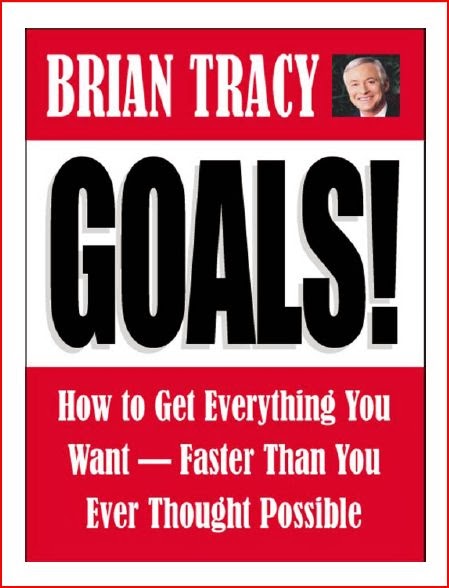
Last year, I read an article that mentioned a book by self-help guru Brian Tracy called Goals(also available in Kindle format).  I was intrigued enough to buy the e-copy and give it a read.

We Lutherans tend to be smugly skeptical of self-help books, programs, and speakers, because there is so much of this kind of stuff "playing church" out there - supposedly Christian books teaching you how Jesus can help you to have a whiter smile, better breath, bigger hair, a faster private jet, health, wealth, and fame in just seven easy steps - that I think we have a healthy (or sometimes not so healthy) cynicism toward any hint that we can improve ourselves.  We certainly don't want to be accused of denying original sin or not placing the Doctrine of Justification at the front and center, so we typically don't even try to improve ourselves (an endeavor with which the sinful flesh is ever eager to assist).

In fact, the Rev. William Weedon may be on the trajectory to canonization for taking slings and arrows from many of his Lutheran brethren who see his enthusiasm for being healthy and fit to be scandalously un-Lutheran, bordering on the worship of Baal or siding with the French in the Franco-Prussian war.

Well, that's the caricature, anyway.

In spite of my Lutheran scruples, I found the Tracy book (as well as another book of his called No Excuses!) to be intriguing.  The gist of the Goals! book can be found here.

Our own auto-educational program here at Chez Hollywood has included the One Year Bible for several years now, and it is the foundation of our home study and family devotions (along with the LSB family prayer cards from CPH).  We typically add another reading of some sort, before or after COSEMP (the Caffeinated Order of Scrambled Eggs and Morning Prayer) - and the nature of the lection has been wide and varied over the years, e.g. spiritual authors such as Augustine, Chesterton, Pascal, and Lewis, etc. along with the pursuit of academic interests, such as the Free Market newsletter and political, philosophical, and economic thinkers by way of articles, essays, and various other books and podcasts.

For this year's devotional readings, we decided to take up the bibliography given by the Rev. Dr. Joel D. Biermann of Concordia Seminary - St. Louis as part of his course called "Woman and Man According to God's Plan" (we attended an abbreviated version of the lecture series last year in Pensacola).  We also listened to the entire lecture series on a subsequent road trip (available free of charge at iTunes University as video and audio).

Disclaimer: I heartily endorse Dr. Biermann's treatment of the vocation of male and female according to the order of creation, but I completely disagree with his views of government.

Anyway, given that the issue of the roles of the sexes is "the" issue in society, in the Church at large, and even the source of great disagreement within the Lutheran Church - Missouri Synod (which I would refer to as the GMWO issue: gay 'marriage' - women's 'ordination'), we have decided to systematically read through all of the texts referenced in Dr. Biermann's lectures - some of which are theological, some secular.

Here is the list (dates refer to publication):

Since it was available electronically, we started with Eggerichs's Love and Respect right off the bat.  The author is a Ph.D. and an ordained Protestant minister who spent many years serving as a pastor.  We both found his book remarkably illuminating - even as we celebrate our 20th anniversary next month.  We would love to have had this book when we were first married.  Today's feminist culture virtually assures that men and women go into marriage brainwashed that there are no fundamental differences between the sexes other than the obvious plumbing, and to the really radical, perhaps admitting some very slight difference in upper body strength (although TV shows and movies have largely taught us that women and men are even identical in regards to physical strength, Girl Power and all that).

We highly recommend Dr. Eggerich's book for married people, engaged couples, and anyone who might want to be married.  I recommend the book also to pastors.  It is a scriptural treatment of how husbands and wives can better communicate with one another, and avoid the communication breakdown the author calls "the crazy cycle."  It is a very practical work, fun to read, based on both scripture and years of seminars given by the author and his wife.

We have bought Grudem, Rhodes, and Sax in non-digital form, and they are patiently waiting their turns.  We will buy the others as the time gets closer, though the Fritz book is out of print and may prove more of a challenge.  We are working through Dr. Sax's book (Why Gender Matters) now.  The author is both an M.D. and a Ph.D.  His book is culturally iconoclastic, arguing from a purely clinical and biological secular perspective that the sexes are wired differently.  He cites a lot of research and presents it in an engaging way.  It is funny, though, how often he tries to weasel out of the obvious conclusions to be drawn.  We're just shy of being a quarter of the way through the book, and find it fascinating.  The egalitarian and feminist foundations of our entire culture - which is driving the current debate about marriage, sex vs. "gender," the role of women in the church, women in combat, etc. - are really laid bare for the fraud that they are.

Another project - which actually takes about five minutes a day - which Grace and I are pursuing separately, is the reading of St. Augustine's epic The City of God over the course of this year.  We joined a facebook group dedicated to that goal and have joined up with more than a thousand people on the moderator's reading schedule.  I am also taking a more disciplined approach to reading literature that I should have read in school, but didn't.  I began reading Fyodor Dostoevsky's Crime and Punishment while in Russia two years ago, but got busy and stopped reading.  I restarted, made an overall goal and reading plan, and am now more than halfway done with the book.  This is especially good reading at bedtime (I'm reading this one without the electronic screen, as it seems that e-reading interferes with the production of melatonin which helps the body sleep).  The chapters are not long, and as long as I don't "stall" again, I should be able to complete it within a few weeks with just a short bit of reading each day.  We're also finishing up a delightful book about books, given to us as a Christmas gift by a friend: Howard's End is On the Landing by Susan Hill.  It makes for good reading in the car while running errands.  We'll have that one done in a few days.

Along the suggestions of Brian Tracy's Goals! book, I am tracking our reading and various projects using a planning Moleskine.  So far, I like the way this keeps us focused.  I'm using this same Moley to work on other projects that I have let slip because of not writing things down.

For example, I am working on the Pimsleur Russian course, which is an outstanding audio based series.  I own all 90 half-hour lessons broken down into three courses.  I have never gotten past about lesson 17 or so.  I am going to see if Tracy's premise that writing things down is the key to getting things done really works.  So far, it is helping!  I started back at the beginning with Unit 1 and and trying to get through 5 units or so a week (more if I am able).  I'm currently on Unit 10.  And since this course is audio, I listen while walking (which I am doing now), jogging (which will be a transition), and running (which I'm looking forward to doing regularly again, once more using the journal to keep myself in line).  I am also figuring out how to work in some more ambitious fitness goals, but at age 49, running a marathon by just showing up the morning of the race isn't an option the way it was when I was in my 20s (though even then that wasn't my brightest, shining moment, not that I regret doing it, for like most crazy things we do in life, I got a story out of the deal).  So I'm taking it a little slower these days.  We also eat paleo, though we need to tighten up after loosening the reins a bit during the holidays.

Another goal I've set for myself this year is to work on my Latin in a more disciplined way.  I have never completed the entire book Lingua Latina Per Se Illustrata: Pars I Familia Romana by Hans Oerberg (which is the natural method Latin course I taught to Junior High students for many years).  I want to not only complete all 35 chapters (I restarted with Chapter 1, and am currently on Chapter 9), but also want to read the sequel, Roma Aeterna.  Once those are done, I might like to tackle the two volumes of ecclesiastical Latin in Latin Grammar and Second Latin by Cora and Charles Scanlon.  Of course, elephants are eaten one bite at a time.

FH readers will note that I have not been keeping up with posting my sermons nor have I done much blogging.  I hope to be more diligent on both counts.

I also have other projects that need to be done bit by bit, and I am journalling those as well.  I adopted this Circle System for project management, and here is how it works, as explained below by Sara Caputo at Radiant Organizing (note: some of the links are dead):


The Circle System is another that was developed out of pure need and logic by another gentleman from Amsterdam.  Simply put, it’s a blending of his own to-do list with a series of circles that he devised and gave meaning to — here’s a picture of what it looks like:
Cool, huh?
Here’s the jist from his site:
Ok, this was about the bones and now it’s the meat. The Cir­cle.
We now have projects with its actions, all with cir­cles in front. And we surely have indi­vid­ual actions that are not part of any project, like Pay this bill and so on. Put every­thing in, every action you need to exe­cute at home or work. Don’t try to remem­ber every­thing — except one thing: The note­book remem­bers.
As things progress I add few things to the cir­cles. Here a list that explains in words and the pic­tures should be help­ful guides too.
  • Cir­cle : Project or an action
  • Stroke, a diag­o­nal line across the cir­cle : Work has started
  • Filled lower part of the cir­cle : Work is half done (or wait­ing for some other step)
  • Filled cir­cle : Work on the project or action is fin­ished or off my hand (delegated)
  • Cross over the cir­cle, sec­ond stroke : Can­celled
This makes up the basic Cir­cle sys­tem and is a great starter. I also use a few extras for empha­sis In addi­tion to this you could also use:
  • Num­bers to note in which order I need to execute
  • Excla­ma­tion mark in front of the cir­cle for an impor­tant action
  • Arrow or > after any cir­cle tells that a project or an action has been del­e­gated or moved to my GTD appli­ca­tion. Don’t for­get to fill the cir­cle at the same time. And also write down who is con­tin­u­ing the work if that is impor­tant. It usu­ally is.
  • Dot in the mid­dle of the cir­cle is a sub­tle atten­tion mark.
I like them both because they were created around NEED and the system was devised around the individual’s workflow. Very often, task management systems that we try to plug into that others have created don’t work well because it is not a system that follows our individual needs.  When we devise our own system, as the gentlemen above have done, we are better able to follow it and have it be sustainable.  Just my own 2 cents.  More to come next Tuesday as we review 2 more systems…. have a great week of getting stuff done!

I don't carry my planning book around with me, but I do keep a personal notebook on me at all times.  In it, I have made my own calendars for several months, a to-do list for day-to-day tasks using the Circle System, a section for quick incidental notes, and I use the rest of the notebook for taking notes for all other meetings or other situations requiring note-taking.  At the first of the year, I completed my pocket Moleskine that I used for July through December 2013, and am now trying a notebook that I hope will be more robust: a German-made Leuchtturm 1917 pocket ruled notebook.  So far, I'm quite impressed with it.  I used my Leuchty to take notes at the 2014 Mises Circle in Houston, where we heard lectures by Jeff Deist, Tom Woods, Lew Rockwell, and Ron Paul (note: Dr. Woods's lecture is linked, the rest are on the way!).  The Leuchtturm is slightly larger than the Moleskine, and has very nice cream-colored high quality pages that are pre-numbered!  I'm hoping that it is more robust than its Chinese-made Italian cousin.

In terms of economics self-education and personal development, we attend the unique and delightful  Dr. Walter Block's Human Action seminars held at Loyola University twice per month (which restared this month after a long Christmas break).  In that ongoing seminar, we are reading, discussing, and debating Murray N. Rothbard's Economic Controversies (available as a free download here).  These seminars and the discussions that come afterwards really keep the brain running in overdrive!  

While at the Mises Circle, we picked up the following which we also look forward to working into the reading program:
Since we were on a road trip, we started reading together aloud Dr. Paul's The School Revolution.  We're more than halfway through, and it is an insightful read!  

I know someone is going to respond: "You have too much time on your hands."  (I used to get that a lot when I was more prolific at writing and when I used to post funny broadsides at seminary). Actually, we all have the same amount of time. Well, here is what Grace and I have found helps us to get things accomplished.  These work for us, and I'm sure other people have great techniques as well for reclaiming time:
  1. Get up early (last year, we set the alarm for 4:45 but got out of the habit later in the year when we were swamped with work that caused us to stay up too late - but are working our way back). 
  2. Don't watch TV.  Aside from an occasional Netflix movie, we don't watch anything on the television: we don't have cable, we don't watch network broadcasting, no football, no news - no nothing. 
  3. Eat at home.  We used to go to restaurants a lot, but now eat almost exclusively at home.  Not only does this save a ton of money, it buys us loads of time not spent getting ready, waiting for a table, dining, waiting for the check, and driving back.  During food preparation at home, we have additional time to read aloud to one another.
  4. Turn the car into a 4-wheeled university.  Road trips are perfect for podcasts or long stretches of reading.  Running local errands is great for reading a chapter here and there aloud to one another.
  5. Take Advantage of supermarket lines with a book, e-reader, or books on the iPhone.  Instead of complaining about the long line, turn it into a class, an opportunity to learn!
There is actually a lot of time for reading, studying, thinking, and writing - if it is a priority.   In spite of the time it takes to be a parish pastor and high school teacher; in spite of the time it takes to homeschool a third-grader, run a home, and serve the church as a volunteer - there is time to continue to learn and grow if we make the time and have the self-discipline to stick with it.

I hope Brian Tracy is right.


Saturday, October 19, 2013

Excuses, Excuses!


My last post "What's Your Excuse?" generated some comments that I have chosen not to publish.  Not because they express disagreement with me, but rather because they mischaracterize the argument and are attacking a straw man.  I'm also going to protect the identities of several people because it is the right thing to do.

Let me clarify a few things:


1) I am not equating eternal salvation with being physically fit.  In eternity, we will be bodily resurrected and our physical beings will be perfect.  Life in this fallen world is different.  We struggle with many things beyond our control - especially in matter of physical health.  Having said that, we also abuse our bodies by making poor choices.  Sins are indeed committed in our bodies.  All ten commandments are broken in "thought, word, and deed" - in our thoughts as well as in actions in our sinful flesh.  We do not own our own bodies; we are stewards of God's creation.  Some of those commenting seem to be under the impression that anything and everything we do with our bodies is okay.  I do not believe Scripture teaches this at all. Baptism forgives sin; it does not turn sin into a virtue, nor does it absolve us from the need to resist temptation.  Being baptized is not license for vice.  Being baptized calls us to take up our cross and to confess when we stumble into sin, as we all do.  The catholic faith is not "do what you want on Saturday night because you'll go to confession anyway on Sunday morning."

That being said, good health is not an indicator of salvation; bad health is not an indicator of damnation.  No-one should infer such a conclusion from what I have written.

In fact, some of the attitudes of the responses make the very point I was making about our oversensitive culture that lashes out at the messenger instead of taking a look in the mirror.


2) I am equating the reaction to Mrs. Kang to how preaching is often received in the current culture.  Mrs. Kang is not preaching.  She is not addressing the Gospel at all.  She is not broaching the topic of the Christian faith.  But she exists in the same culture that we 21st century American preachers live and work in.  There is a cultural parallel.  She wrote "A," but in their sensitivity and narcissism, her readers understood "B" and then attacked her for things she did not say.  What pastor hasn't had this happen to him?  Political correctness and emotional sensitivity have clouded the view of reality in our culture.

Mrs. Kang's clear message is "Look, I accomplished my goal; you can too."  But many readers misheard heard her say: "I'm better than you" - which is the unforgivable sin in our postmodern and egalitarian culture.  In the persona of the demon Screwtape, C.S. Lewis, in The Screwtape Letters, argues that this is one of Satan's chief weapons: to draw people into that kind of defensive and reactionary "I'm as good as you" thinking.
The feeling I mean is of course that which prompts a man to say I’m as good as you. 
The first and most obvious advantage is that you thus induce him to enthrone at the centre of his life a good, solid, resounding lie. I don’t mean merely that his statement is false in fact, that he is no more equal to everyone he meets in kindness, honesty, and good sense than in height or waist measurement. I mean that he does not believe it himself. No man who says I’m as good as you believes it. He would not say it if he did. The St. Bernard never says it to the toy dog, nor the scholar to the dunce, nor the employable to the bum, nor the pretty woman to the plain. The claim to equality, outside the strictly political field, is made only by those who feel themselves to be in some way inferior. What it expresses is precisely the itching, smarting, writhing awareness of an inferiority which the patient refuses to accept. 
And therefore resents. Yes, and therefore resents every kind of superiority in others; denigrates it; wishes its annihilation. Presently he suspects every mere difference of being a claim to superiority. No one must be different from himself in voice, clothes, manners, recreations, choice of food: “Here is someone who speaks English rather more clearly and euphoniously than I — it must be a vile, upstage, la-di-da affectation. Here’s a fellow who says he doesn’t like hot dogs — thinks himself too good for them, no doubt. Here’s a man who hasn’t turned on the jukebox — he’s one of those goddamn highbrows and is doing it to show off. If they were honest-to-God all-right Joes they’d be like me. They’ve no business to be different. It’s undemocratic.”
One can only imagine how St. Paul was received when he wrote and preached, "Be imitators of me, as I am of Christ" (1 Cor 11:1).  We have become such a sensitive culture that preachers are sometimes castigated - even to the point of removal - for "you" preaching instead of "we" preaching (meaning: "You need to repent" instead of "we need to repent").

It has always been hard for people to hear unpleasant truths.  Both Old and New Testaments testify to this ad nauseum.  But the people living in biblical times did not have social media and television to spur them on in their attitudes.  People did not have 'Christian' pastors and churches rewriting the Ten Commandments and promoting a "Gospel" of antinomianism.  They did not have bishops denying the resurrection and the virgin birth.  They did not have mainstreamed popular preachers - in some cases with a cultlike following or audiences in the millions - endorsing homosexuality as compatible with Scripture.

Our particular American culture is typified by Oprah Winfrey - emotional and postmodern.  This is why people look upon Maria Kang's challenge as the worst of all "sins" - insensitivity - instead of a call and invitation to do better.

I find calling people to repentance to be the most difficult pastoral obligation in our current culture.  Perhaps it has always been that way.  But it is hard to deny the emotional oversensitivity that typifies our culture, thus making it especially resistant to the Christian faith.

3) This is a blog post, not a sermon.  Again, it is an observation on the whiny culture we live in, and it is the culture into which we pastors are called to proclaim both Law and Gospel, while shortchanging neither - which is a challenge in a culture in which everybody gets a trophy, nobody loses, everybody goes to heaven, nobody is sinning, our job is to make people feel Easter Sunday good without introducing all that Good Friday talk of sin.

I am in no way telling people how to eat.  You are free to do as you wish.  If Mrs. Kang's reflections and story prompt you to reconsider your eating habits (as my trip to Russia did in 2011, when I was the "fat American" surrounded by fit Russians), then that should be a good thing.  And if you think she is wrong, well, maybe she is.  My point, once again, is not so much Maria Kang, but rather the fascinating way in which people responded to her - which I believe were so out of proportion and emotional and even manipulative as to indicate that we have become a thin-skinned culture of self-pity and bullying by playing the victim card.  This has implications to our preaching of both Law and Gospel.  It may tempt us to gut the former and preach only the latter.  But that is not what we are called to do.

One respondent to me took issue with this paragraph of mine:
"But the good news is this: God continues to call us to confess and repent, to be forgiven and live in the mercy He has given us by the work of His Son on the cross.  And we have the power to resolve to eat and live our lives more responsibly in accordance with the bodies we have been given by our Maker - which is a blessing not only to us in the form of better health, but also a temporal benefit to our families, congregations, and nation."
This person wrote in response:
There is no Good News in that paragraph. It is telling me that I am fat (which I am) and to get busy not being fat (which I do in fits and spurts).As for me, I eat or don't eat like I am baptized. Let's all be careful (yes, even me) that we don't preach virtue gospel or, far worse, despair gospel. Your paragraph is despair gospel. Christ died for my sin of eating and drinking too much. I struggle daily with it. Christ has overcome it. For the sake of my neighbor, I do try to do something about it, but have failed. Nevertheless, I am baptized. Amen.
However, the paragraph this person cited includes both the call to repent and being "forgiven," as well as the gift of the Lord's "mercy," the atoning work of the "Son," and the sacrificial "cross." That is the very beating heart of the Gospel! This blind-spot reveals the very issue I am raising, the issue that stunned Maria Kang.  To those whose hearts are hardened to any correction, they cannot even see the good news.  Sometimes people react so emotionally to the Law that they shut down, effectively blinding themselves to the Gospel.

Moreover, Holy Baptism is not a substitute for repentance; it is not an either/or proposition.

Baptism and repentance go hand in hand; they are both/and.  If eating and drinking too much is a sin (and in some cases it can be), Jesus died for that sin.  But he did not die so that you can willfully and defiantly continue in that (or any other sin).  We have been baptized to be forgiven - not as a free pass to act like swine - figuratively or literally.

Dr. Luther teaches us in our Small Catechism that baptism and good works are interconnected, that sanctification flows from justification:
[Baptism] indicates that the Old Adam in us should by daily contrition and repentance be drowned and die with all sins and evil desires, and that a new man should daily emerge and arise to live before God in righteousness and purity forever.... St. Paul writes in Romans, chapter six: 'We were therefore buried with Him through baptism into death in order that, just as Christ was raised from the dead through the glory of the Father, we too may live a new life' (Romans 6:4).
I recall an incident many years ago in which I saw a group of pastors (I will not say what church body or where this occurred) in a bar.  Being in a bar is not sinful.  They were drinking alcohol.  That is not sinful either.  One of the pastors (who had his clerical tab in his pocket) openly and publicly gave another pastor "the finger" and dropped an f-bomb.  Some would say this is not sinful.  For the sake of argument, let's assume that it is not sinful to behave this way in a crowded barroom.  Is this why we have been baptized?  Is this a good witness and confession of the faith?  Shortly thereafter, another pastor (a colleague of the bird-flipping cleric) was on hands and knees at the doorway of the bar puking his guts up.  "Praise God from whom all blessings flow!"  In later discussions about the incident, I was informed that any critique of this behavior was (of course...) a manifestation of "Pietism."  I was assured that this was all okay because of baptism.  In fact, I was the one who was sinning by being disturbed by the behavior.  I needed to repent because I wasn't "gospelly" enough or some such.  I may have even been accused of "worshiping a different Christ" at that time, though it might have been a later incident when that card was trotted out.

Interestingly, Dr. Luther makes a "different Christ" reference in his repudiation of the antinomianism he struggled with as a pastor and preacher in the post-Reformation 16th century, a perversion of the Gospel ideally positioned for a postmodern 21st century revival:
That is what my Antinomians, too, are doing today, who are preaching beautifully and (as I cannot but think) with real sincerity about Christ’s grace, about the forgiveness of sin and whatever else can be said about the doctrine of redemption. But they flee as if it were the very devil the consequence that they should tell the people about the third article, of sanctification, that is, of new life in Christ. They think one should not frighten or trouble the people, but rather always preach comfortingly about grace and the forgiveness of sins in Christ, and under no circumstance use these or similar words, “Listen! You want to be a Christian and at the same time remain an adulterer, a whoremonger, a drunken swine, arrogant, covetous, a usurer, envious, vindictive, malicious, etc.!” Instead they say, “Listen! Though you are an adulterer, a whoremonger, a miser, or other kind of sinner, if you but believe, you are saved, and you need not fear the law. Christ has fulfilled it all! . . . They may be fine Easter preachers, but they are very poor Pentecost preachers, for they do not preach… “about the sanctification by the Holy Spirit,” but solely about the redemption of Jesus Christ, although Christ (whom they extol so highly, and rightly so) is Christ, that is, He has purchased redemption from sin and death so that the Holy Spirit might transform us out of the old Adam into new men . . . Christ did not earn only gratia, grace, for us, but also donum, “the gift of the Holy Spirit,” so that we might have not only forgiveness of, but also cessation of, sin. Now he who does not abstain from sin, but persists in his evil life, must have a different Christ, that of the Antinomians; the real Christ is not there, even if all the angels would cry, “Christ! Christ!” He must be damned with this, his new Christ (On the Council and the Church, AE 41:113-114).
Is this how our catechism characterizes Holy Baptism?  As license to raise the middle finger in public and vomit in a drunken stupor while wearing clerical garb?  Is this really what Luther and St. Paul are talking about?

Do we really need to argue about the propriety of such things?  Isn't it possible to agree that this is behavior that is indeed forgiven by our Lord's blood and by baptismal water, but at the same time, we are called to repent of our sins and to "walk in newness of life"?  Are pastors not held to a higher standard of conduct as well?

Whether we are preachers or hearers, we are Evangelicals, people of the Gospel, of Ephesians 2:8-9:
For by grace you have been saved through faith. And this is not your own doing; it is the gift of God, not a result of works, so that no one may boast.
That is the Good News.  But lest we stop there, fellow Lutherans, let's not forget that St. Paul immediately follows with verse 10:
"For we are his workmanship, created in Christ Jesus for good works, which God prepared beforehand, that we should walk in them."
Indeed, all throughout his epistles, the blessed apostle engages in "exhortation" - which is the pastoral equivalent to Maria Kang putting you in front of a mirror (the Ten Commandments) and challenging you to live out this baptismal "newness of life."

So, whether the messenger is Maria Kang challenging us to do better physically and to quit making excuses, or it is your pastor exhorting you (now that you have been forgiven as a baptized and justified child of God) to live a life of repentance, bearing the fruit of the Spirit, don't shoot the messenger.