Showing posts with label Health and Fitness. Show all posts
Showing posts with label Health and Fitness. Show all posts
Wednesday, July 29, 2020


Wednesday, January 22, 2014
Goals! Devotional and Educational Reading for 2014, etc.
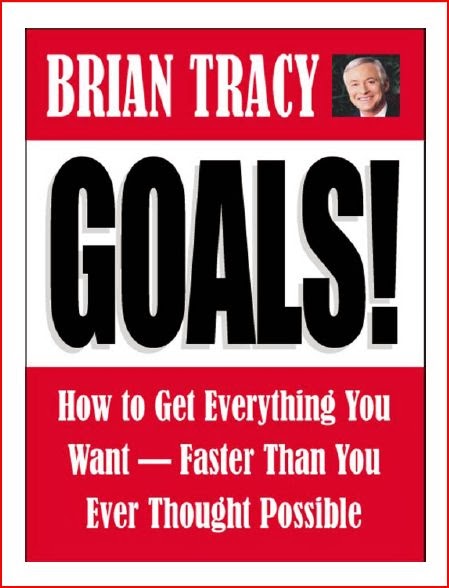
We Lutherans tend to be smugly skeptical of self-help books, programs, and speakers, because there is so much of this kind of stuff "playing church" out there - supposedly Christian books teaching you how Jesus can help you to have a whiter smile, better breath, bigger hair, a faster private jet, health, wealth, and fame in just seven easy steps - that I think we have a healthy (or sometimes not so healthy) cynicism toward any hint that we can improve ourselves. We certainly don't want to be accused of denying original sin or not placing the Doctrine of Justification at the front and center, so we typically don't even try to improve ourselves (an endeavor with which the sinful flesh is ever eager to assist).
In fact, the Rev. William Weedon may be on the trajectory to canonization for taking slings and arrows from many of his Lutheran brethren who see his enthusiasm for being healthy and fit to be scandalously un-Lutheran, bordering on the worship of Baal or siding with the French in the Franco-Prussian war.
Well, that's the caricature, anyway.
In spite of my Lutheran scruples, I found the Tracy book (as well as another book of his called No Excuses!) to be intriguing. The gist of the Goals! book can be found here.
Our own auto-educational program here at Chez Hollywood has included the One Year Bible for several years now, and it is the foundation of our home study and family devotions (along with the LSB family prayer cards from CPH). We typically add another reading of some sort, before or after COSEMP (the Caffeinated Order of Scrambled Eggs and Morning Prayer) - and the nature of the lection has been wide and varied over the years, e.g. spiritual authors such as Augustine, Chesterton, Pascal, and Lewis, etc. along with the pursuit of academic interests, such as the Free Market newsletter and political, philosophical, and economic thinkers by way of articles, essays, and various other books and podcasts.
For this year's devotional readings, we decided to take up the bibliography given by the Rev. Dr. Joel D. Biermann of Concordia Seminary - St. Louis as part of his course called "Woman and Man According to God's Plan" (we attended an abbreviated version of the lecture series last year in Pensacola). We also listened to the entire lecture series on a subsequent road trip (available free of charge at iTunes University as video and audio).
Disclaimer: I heartily endorse Dr. Biermann's treatment of the vocation of male and female according to the order of creation, but I completely disagree with his views of government.
Anyway, given that the issue of the roles of the sexes is "the" issue in society, in the Church at large, and even the source of great disagreement within the Lutheran Church - Missouri Synod (which I would refer to as the GMWO issue: gay 'marriage' - women's 'ordination'), we have decided to systematically read through all of the texts referenced in Dr. Biermann's lectures - some of which are theological, some secular.
Here is the list (dates refer to publication):
- Bonhoeffer, Dieterich. Creation and Fall. New York: Touchstone, 1983.
- Budziszewski, J. What We Can't Know: A Guide, Dallas: Spence Publishing Co., 2003.
- Eggerichs, Emerson. Love and Respect: the Love She Most Desires; the Respect He Desperately Needs, Brentwood, TN: Integrity, 2004.
- Grudem, Wayne, ed. Biblical Foundations for Manhood and Womanhood, Wheaton, IL: Crossways Books, 2002.
- John Paul II. The Theology of the Body: Human Love in the Divine Plan: Boston: Pauline Books & Media, 1997.
- Rhoads, Steven E. Taking Sex Differences Seriously. San Francisco: Encounter Books, 2004.
- Sax, Leonard. Why Gender Matters: What Parents and Teachers Need to Know About the Emerging Science of Sex Differences, New York: Doubleday, 2005.
- Zerbst, Fritz. The Office of Woman in the Church: A Study in Practical Theology. St. Louis: CPH, 1955.
Since it was available electronically, we started with Eggerichs's Love and Respect right off the bat. The author is a Ph.D. and an ordained Protestant minister who spent many years serving as a pastor. We both found his book remarkably illuminating - even as we celebrate our 20th anniversary next month. We would love to have had this book when we were first married. Today's feminist culture virtually assures that men and women go into marriage brainwashed that there are no fundamental differences between the sexes other than the obvious plumbing, and to the really radical, perhaps admitting some very slight difference in upper body strength (although TV shows and movies have largely taught us that women and men are even identical in regards to physical strength, Girl Power and all that).
We highly recommend Dr. Eggerich's book for married people, engaged couples, and anyone who might want to be married. I recommend the book also to pastors. It is a scriptural treatment of how husbands and wives can better communicate with one another, and avoid the communication breakdown the author calls "the crazy cycle." It is a very practical work, fun to read, based on both scripture and years of seminars given by the author and his wife.
We have bought Grudem, Rhodes, and Sax in non-digital form, and they are patiently waiting their turns. We will buy the others as the time gets closer, though the Fritz book is out of print and may prove more of a challenge. We are working through Dr. Sax's book (Why Gender Matters) now. The author is both an M.D. and a Ph.D. His book is culturally iconoclastic, arguing from a purely clinical and biological secular perspective that the sexes are wired differently. He cites a lot of research and presents it in an engaging way. It is funny, though, how often he tries to weasel out of the obvious conclusions to be drawn. We're just shy of being a quarter of the way through the book, and find it fascinating. The egalitarian and feminist foundations of our entire culture - which is driving the current debate about marriage, sex vs. "gender," the role of women in the church, women in combat, etc. - are really laid bare for the fraud that they are.
Another project - which actually takes about five minutes a day - which Grace and I are pursuing separately, is the reading of St. Augustine's epic The City of God over the course of this year. We joined a facebook group dedicated to that goal and have joined up with more than a thousand people on the moderator's reading schedule. I am also taking a more disciplined approach to reading literature that I should have read in school, but didn't. I began reading Fyodor Dostoevsky's Crime and Punishment while in Russia two years ago, but got busy and stopped reading. I restarted, made an overall goal and reading plan, and am now more than halfway done with the book. This is especially good reading at bedtime (I'm reading this one without the electronic screen, as it seems that e-reading interferes with the production of melatonin which helps the body sleep). The chapters are not long, and as long as I don't "stall" again, I should be able to complete it within a few weeks with just a short bit of reading each day. We're also finishing up a delightful book about books, given to us as a Christmas gift by a friend: Howard's End is On the Landing by Susan Hill. It makes for good reading in the car while running errands. We'll have that one done in a few days.
Along the suggestions of Brian Tracy's Goals! book, I am tracking our reading and various projects using a planning Moleskine. So far, I like the way this keeps us focused. I'm using this same Moley to work on other projects that I have let slip because of not writing things down.
For example, I am working on the Pimsleur Russian course, which is an outstanding audio based series. I own all 90 half-hour lessons broken down into three courses. I have never gotten past about lesson 17 or so. I am going to see if Tracy's premise that writing things down is the key to getting things done really works. So far, it is helping! I started back at the beginning with Unit 1 and and trying to get through 5 units or so a week (more if I am able). I'm currently on Unit 10. And since this course is audio, I listen while walking (which I am doing now), jogging (which will be a transition), and running (which I'm looking forward to doing regularly again, once more using the journal to keep myself in line). I am also figuring out how to work in some more ambitious fitness goals, but at age 49, running a marathon by just showing up the morning of the race isn't an option the way it was when I was in my 20s (though even then that wasn't my brightest, shining moment, not that I regret doing it, for like most crazy things we do in life, I got a story out of the deal). So I'm taking it a little slower these days. We also eat paleo, though we need to tighten up after loosening the reins a bit during the holidays.
Another goal I've set for myself this year is to work on my Latin in a more disciplined way. I have never completed the entire book Lingua Latina Per Se Illustrata: Pars I Familia Romana by Hans Oerberg (which is the natural method Latin course I taught to Junior High students for many years). I want to not only complete all 35 chapters (I restarted with Chapter 1, and am currently on Chapter 9), but also want to read the sequel, Roma Aeterna. Once those are done, I might like to tackle the two volumes of ecclesiastical Latin in Latin Grammar and Second Latin by Cora and Charles Scanlon. Of course, elephants are eaten one bite at a time.
FH readers will note that I have not been keeping up with posting my sermons nor have I done much blogging. I hope to be more diligent on both counts.
I also have other projects that need to be done bit by bit, and I am journalling those as well. I adopted this Circle System for project management, and here is how it works, as explained below by Sara Caputo at Radiant Organizing (note: some of the links are dead):
The Circle System is another that was developed out of pure need and logic by another gentleman from Amsterdam. Simply put, it’s a blending of his own to-do list with a series of circles that he devised and gave meaning to — here’s a picture of what it looks like:

Cool, huh?
Here’s the jist from his site:
Ok, this was about the bones and now it’s the meat. The Circle.
We now have projects with its actions, all with circles in front. And we surely have individual actions that are not part of any project, like Pay this bill and so on. Put everything in, every action you need to execute at home or work. Don’t try to remember everything — except one thing: The notebook remembers.
As things progress I add few things to the circles. Here a list that explains in words and the pictures should be helpful guides too.
- Circle : Project or an action
- Stroke, a diagonal line across the circle : Work has started
- Filled lower part of the circle : Work is half done (or waiting for some other step)
- Filled circle : Work on the project or action is finished or off my hand (delegated)
- Cross over the circle, second stroke : Cancelled
This makes up the basic Circle system and is a great starter. I also use a few extras for emphasis In addition to this you could also use:
- Numbers to note in which order I need to execute
- Exclamation mark in front of the circle for an important action
- Arrow or > after any circle tells that a project or an action has been delegated or moved to my GTD application. Don’t forget to fill the circle at the same time. And also write down who is continuing the work if that is important. It usually is.
- Dot in the middle of the circle is a subtle attention mark.
I like them both because they were created around NEED and the system was devised around the individual’s workflow. Very often, task management systems that we try to plug into that others have created don’t work well because it is not a system that follows our individual needs. When we devise our own system, as the gentlemen above have done, we are better able to follow it and have it be sustainable. Just my own 2 cents. More to come next Tuesday as we review 2 more systems…. have a great week of getting stuff done!

I don't carry my planning book around with me, but I do keep a personal notebook on me at all times. In it, I have made my own calendars for several months, a to-do list for day-to-day tasks using the Circle System, a section for quick incidental notes, and I use the rest of the notebook for taking notes for all other meetings or other situations requiring note-taking. At the first of the year, I completed my pocket Moleskine that I used for July through December 2013, and am now trying a notebook that I hope will be more robust: a German-made Leuchtturm 1917 pocket ruled notebook. So far, I'm quite impressed with it. I used my Leuchty to take notes at the 2014 Mises Circle in Houston, where we heard lectures by Jeff Deist, Tom Woods, Lew Rockwell, and Ron Paul (note: Dr. Woods's lecture is linked, the rest are on the way!). The Leuchtturm is slightly larger than the Moleskine, and has very nice cream-colored high quality pages that are pre-numbered! I'm hoping that it is more robust than its Chinese-made Italian cousin.
In terms of economics self-education and personal development, we attend the unique and delightful Dr. Walter Block's Human Action seminars held at Loyola University twice per month (which restared this month after a long Christmas break). In that ongoing seminar, we are reading, discussing, and debating Murray N. Rothbard's Economic Controversies (available as a free download here). These seminars and the discussions that come afterwards really keep the brain running in overdrive!
While at the Mises Circle, we picked up the following which we also look forward to working into the reading program:
- The Production of Security by Gustave de Molinari (1849)
- A Libertarian Critique of Intellectual Property by Butler Shaffer (2013)
- The School Revolution by Ron Paul (2013)
- 33 Questions About American History by Tom Woods (2007)
- Freedom Under Siege by Ron Paul (1987)
- Crony Capitalism in America 2008-2012 by Hunter Lewis (2013)
Since we were on a road trip, we started reading together aloud Dr. Paul's The School Revolution. We're more than halfway through, and it is an insightful read!
I know someone is going to respond: "You have too much time on your hands." (I used to get that a lot when I was more prolific at writing and when I used to post funny broadsides at seminary). Actually, we all have the same amount of time. Well, here is what Grace and I have found helps us to get things accomplished. These work for us, and I'm sure other people have great techniques as well for reclaiming time:
- Get up early (last year, we set the alarm for 4:45 but got out of the habit later in the year when we were swamped with work that caused us to stay up too late - but are working our way back).
- Don't watch TV. Aside from an occasional Netflix movie, we don't watch anything on the television: we don't have cable, we don't watch network broadcasting, no football, no news - no nothing.
- Eat at home. We used to go to restaurants a lot, but now eat almost exclusively at home. Not only does this save a ton of money, it buys us loads of time not spent getting ready, waiting for a table, dining, waiting for the check, and driving back. During food preparation at home, we have additional time to read aloud to one another.
- Turn the car into a 4-wheeled university. Road trips are perfect for podcasts or long stretches of reading. Running local errands is great for reading a chapter here and there aloud to one another.
- Take Advantage of supermarket lines with a book, e-reader, or books on the iPhone. Instead of complaining about the long line, turn it into a class, an opportunity to learn!
There is actually a lot of time for reading, studying, thinking, and writing - if it is a priority. In spite of the time it takes to be a parish pastor and high school teacher; in spite of the time it takes to homeschool a third-grader, run a home, and serve the church as a volunteer - there is time to continue to learn and grow if we make the time and have the self-discipline to stick with it.
I hope Brian Tracy is right.
Saturday, October 19, 2013
Excuses, Excuses!

My last post "What's Your Excuse?" generated some comments that I have chosen not to publish. Not because they express disagreement with me, but rather because they mischaracterize the argument and are attacking a straw man. I'm also going to protect the identities of several people because it is the right thing to do.
Let me clarify a few things:
1) I am not equating eternal salvation with being physically fit. In eternity, we will be bodily resurrected and our physical beings will be perfect. Life in this fallen world is different. We struggle with many things beyond our control - especially in matter of physical health. Having said that, we also abuse our bodies by making poor choices. Sins are indeed committed in our bodies. All ten commandments are broken in "thought, word, and deed" - in our thoughts as well as in actions in our sinful flesh. We do not own our own bodies; we are stewards of God's creation. Some of those commenting seem to be under the impression that anything and everything we do with our bodies is okay. I do not believe Scripture teaches this at all. Baptism forgives sin; it does not turn sin into a virtue, nor does it absolve us from the need to resist temptation. Being baptized is not license for vice. Being baptized calls us to take up our cross and to confess when we stumble into sin, as we all do. The catholic faith is not "do what you want on Saturday night because you'll go to confession anyway on Sunday morning."
That being said, good health is not an indicator of salvation; bad health is not an indicator of damnation. No-one should infer such a conclusion from what I have written.
In fact, some of the attitudes of the responses make the very point I was making about our oversensitive culture that lashes out at the messenger instead of taking a look in the mirror.
2) I am equating the reaction to Mrs. Kang to how preaching is often received in the current culture. Mrs. Kang is not preaching. She is not addressing the Gospel at all. She is not broaching the topic of the Christian faith. But she exists in the same culture that we 21st century American preachers live and work in. There is a cultural parallel. She wrote "A," but in their sensitivity and narcissism, her readers understood "B" and then attacked her for things she did not say. What pastor hasn't had this happen to him? Political correctness and emotional sensitivity have clouded the view of reality in our culture.
Mrs. Kang's clear message is "Look, I accomplished my goal; you can too." But many readers misheard heard her say: "I'm better than you" - which is the unforgivable sin in our postmodern and egalitarian culture. In the persona of the demon Screwtape, C.S. Lewis, in The Screwtape Letters, argues that this is one of Satan's chief weapons: to draw people into that kind of defensive and reactionary "I'm as good as you" thinking.
The feeling I mean is of course that which prompts a man to say I’m as good as you.
The first and most obvious advantage is that you thus induce him to enthrone at the centre of his life a good, solid, resounding lie. I don’t mean merely that his statement is false in fact, that he is no more equal to everyone he meets in kindness, honesty, and good sense than in height or waist measurement. I mean that he does not believe it himself. No man who says I’m as good as you believes it. He would not say it if he did. The St. Bernard never says it to the toy dog, nor the scholar to the dunce, nor the employable to the bum, nor the pretty woman to the plain. The claim to equality, outside the strictly political field, is made only by those who feel themselves to be in some way inferior. What it expresses is precisely the itching, smarting, writhing awareness of an inferiority which the patient refuses to accept.
And therefore resents. Yes, and therefore resents every kind of superiority in others; denigrates it; wishes its annihilation. Presently he suspects every mere difference of being a claim to superiority. No one must be different from himself in voice, clothes, manners, recreations, choice of food: “Here is someone who speaks English rather more clearly and euphoniously than I — it must be a vile, upstage, la-di-da affectation. Here’s a fellow who says he doesn’t like hot dogs — thinks himself too good for them, no doubt. Here’s a man who hasn’t turned on the jukebox — he’s one of those goddamn highbrows and is doing it to show off. If they were honest-to-God all-right Joes they’d be like me. They’ve no business to be different. It’s undemocratic.”One can only imagine how St. Paul was received when he wrote and preached, "Be imitators of me, as I am of Christ" (1 Cor 11:1). We have become such a sensitive culture that preachers are sometimes castigated - even to the point of removal - for "you" preaching instead of "we" preaching (meaning: "You need to repent" instead of "we need to repent").
It has always been hard for people to hear unpleasant truths. Both Old and New Testaments testify to this ad nauseum. But the people living in biblical times did not have social media and television to spur them on in their attitudes. People did not have 'Christian' pastors and churches rewriting the Ten Commandments and promoting a "Gospel" of antinomianism. They did not have bishops denying the resurrection and the virgin birth. They did not have mainstreamed popular preachers - in some cases with a cultlike following or audiences in the millions - endorsing homosexuality as compatible with Scripture.
Our particular American culture is typified by Oprah Winfrey - emotional and postmodern. This is why people look upon Maria Kang's challenge as the worst of all "sins" - insensitivity - instead of a call and invitation to do better.
I find calling people to repentance to be the most difficult pastoral obligation in our current culture. Perhaps it has always been that way. But it is hard to deny the emotional oversensitivity that typifies our culture, thus making it especially resistant to the Christian faith.
3) This is a blog post, not a sermon. Again, it is an observation on the whiny culture we live in, and it is the culture into which we pastors are called to proclaim both Law and Gospel, while shortchanging neither - which is a challenge in a culture in which everybody gets a trophy, nobody loses, everybody goes to heaven, nobody is sinning, our job is to make people feel Easter Sunday good without introducing all that Good Friday talk of sin.
I am in no way telling people how to eat. You are free to do as you wish. If Mrs. Kang's reflections and story prompt you to reconsider your eating habits (as my trip to Russia did in 2011, when I was the "fat American" surrounded by fit Russians), then that should be a good thing. And if you think she is wrong, well, maybe she is. My point, once again, is not so much Maria Kang, but rather the fascinating way in which people responded to her - which I believe were so out of proportion and emotional and even manipulative as to indicate that we have become a thin-skinned culture of self-pity and bullying by playing the victim card. This has implications to our preaching of both Law and Gospel. It may tempt us to gut the former and preach only the latter. But that is not what we are called to do.
One respondent to me took issue with this paragraph of mine:
"But the good news is this: God continues to call us to confess and repent, to be forgiven and live in the mercy He has given us by the work of His Son on the cross. And we have the power to resolve to eat and live our lives more responsibly in accordance with the bodies we have been given by our Maker - which is a blessing not only to us in the form of better health, but also a temporal benefit to our families, congregations, and nation."This person wrote in response:
There is no Good News in that paragraph. It is telling me that I am fat (which I am) and to get busy not being fat (which I do in fits and spurts).As for me, I eat or don't eat like I am baptized. Let's all be careful (yes, even me) that we don't preach virtue gospel or, far worse, despair gospel. Your paragraph is despair gospel. Christ died for my sin of eating and drinking too much. I struggle daily with it. Christ has overcome it. For the sake of my neighbor, I do try to do something about it, but have failed. Nevertheless, I am baptized. Amen.However, the paragraph this person cited includes both the call to repent and being "forgiven," as well as the gift of the Lord's "mercy," the atoning work of the "Son," and the sacrificial "cross." That is the very beating heart of the Gospel! This blind-spot reveals the very issue I am raising, the issue that stunned Maria Kang. To those whose hearts are hardened to any correction, they cannot even see the good news. Sometimes people react so emotionally to the Law that they shut down, effectively blinding themselves to the Gospel.
Moreover, Holy Baptism is not a substitute for repentance; it is not an either/or proposition.
Baptism and repentance go hand in hand; they are both/and. If eating and drinking too much is a sin (and in some cases it can be), Jesus died for that sin. But he did not die so that you can willfully and defiantly continue in that (or any other sin). We have been baptized to be forgiven - not as a free pass to act like swine - figuratively or literally.
Dr. Luther teaches us in our Small Catechism that baptism and good works are interconnected, that sanctification flows from justification:
[Baptism] indicates that the Old Adam in us should by daily contrition and repentance be drowned and die with all sins and evil desires, and that a new man should daily emerge and arise to live before God in righteousness and purity forever.... St. Paul writes in Romans, chapter six: 'We were therefore buried with Him through baptism into death in order that, just as Christ was raised from the dead through the glory of the Father, we too may live a new life' (Romans 6:4).I recall an incident many years ago in which I saw a group of pastors (I will not say what church body or where this occurred) in a bar. Being in a bar is not sinful. They were drinking alcohol. That is not sinful either. One of the pastors (who had his clerical tab in his pocket) openly and publicly gave another pastor "the finger" and dropped an f-bomb. Some would say this is not sinful. For the sake of argument, let's assume that it is not sinful to behave this way in a crowded barroom. Is this why we have been baptized? Is this a good witness and confession of the faith? Shortly thereafter, another pastor (a colleague of the bird-flipping cleric) was on hands and knees at the doorway of the bar puking his guts up. "Praise God from whom all blessings flow!" In later discussions about the incident, I was informed that any critique of this behavior was (of course...) a manifestation of "Pietism." I was assured that this was all okay because of baptism. In fact, I was the one who was sinning by being disturbed by the behavior. I needed to repent because I wasn't "gospelly" enough or some such. I may have even been accused of "worshiping a different Christ" at that time, though it might have been a later incident when that card was trotted out.
Interestingly, Dr. Luther makes a "different Christ" reference in his repudiation of the antinomianism he struggled with as a pastor and preacher in the post-Reformation 16th century, a perversion of the Gospel ideally positioned for a postmodern 21st century revival:
That is what my Antinomians, too, are doing today, who are preaching beautifully and (as I cannot but think) with real sincerity about Christ’s grace, about the forgiveness of sin and whatever else can be said about the doctrine of redemption. But they flee as if it were the very devil the consequence that they should tell the people about the third article, of sanctification, that is, of new life in Christ. They think one should not frighten or trouble the people, but rather always preach comfortingly about grace and the forgiveness of sins in Christ, and under no circumstance use these or similar words, “Listen! You want to be a Christian and at the same time remain an adulterer, a whoremonger, a drunken swine, arrogant, covetous, a usurer, envious, vindictive, malicious, etc.!” Instead they say, “Listen! Though you are an adulterer, a whoremonger, a miser, or other kind of sinner, if you but believe, you are saved, and you need not fear the law. Christ has fulfilled it all! . . . They may be fine Easter preachers, but they are very poor Pentecost preachers, for they do not preach… “about the sanctification by the Holy Spirit,” but solely about the redemption of Jesus Christ, although Christ (whom they extol so highly, and rightly so) is Christ, that is, He has purchased redemption from sin and death so that the Holy Spirit might transform us out of the old Adam into new men . . . Christ did not earn only gratia, grace, for us, but also donum, “the gift of the Holy Spirit,” so that we might have not only forgiveness of, but also cessation of, sin. Now he who does not abstain from sin, but persists in his evil life, must have a different Christ, that of the Antinomians; the real Christ is not there, even if all the angels would cry, “Christ! Christ!” He must be damned with this, his new Christ (On the Council and the Church, AE 41:113-114).Is this how our catechism characterizes Holy Baptism? As license to raise the middle finger in public and vomit in a drunken stupor while wearing clerical garb? Is this really what Luther and St. Paul are talking about?
Do we really need to argue about the propriety of such things? Isn't it possible to agree that this is behavior that is indeed forgiven by our Lord's blood and by baptismal water, but at the same time, we are called to repent of our sins and to "walk in newness of life"? Are pastors not held to a higher standard of conduct as well?
Whether we are preachers or hearers, we are Evangelicals, people of the Gospel, of Ephesians 2:8-9:
For by grace you have been saved through faith. And this is not your own doing; it is the gift of God, not a result of works, so that no one may boast.That is the Good News. But lest we stop there, fellow Lutherans, let's not forget that St. Paul immediately follows with verse 10:
"For we are his workmanship, created in Christ Jesus for good works, which God prepared beforehand, that we should walk in them."Indeed, all throughout his epistles, the blessed apostle engages in "exhortation" - which is the pastoral equivalent to Maria Kang putting you in front of a mirror (the Ten Commandments) and challenging you to live out this baptismal "newness of life."
So, whether the messenger is Maria Kang challenging us to do better physically and to quit making excuses, or it is your pastor exhorting you (now that you have been forgiven as a baptized and justified child of God) to live a life of repentance, bearing the fruit of the Spirit, don't shoot the messenger.
Friday, October 18, 2013
What's Your Excuse?
There is a firestorm in Internet Land over this.
Maria Kang is a 32-year old mother of three young children who is obviously very physically fit. Not only, but particularly to, women in their thirties who have had weight issues - especially after having children - she should be an example of encouragement, a role model of sorts concerning what can be done to achieve optimal health in spite of the challenges of age and station in life. This is especially true given her history of eating disorders, genetic tendency toward obesity, and recent pregnancy.
She lays down a challenge, an encouragement to engage in some tough-self-love, an opportunity to look at oneself and resolve to eat and exercise in a more healthy manner, and to carry out one's plan because there is a payoff. She is encouraging people to be honest with themselves, to engage in self-discipline, and to rise to self-improvement. She also provides help for people interested in replicating her success. She is, after all, only human, and if these methods work for her, there is a good chance that many people who currently suffer the effects of poor diet and exercise habits can be helped. She might even save lives. Maybe she can help you. People ought to be grateful.
Instead, she is being attacked and maligned.
The responses are an interesting window into our culture - which has become whiny, narcissistic, excuse-ridden, envious, and enraged at anyone who succeeds. We live in a culture of "victimolatry." Those who fail make excuses for themselves, and malign those who succeed - even to the point of trying to tear down the successful as a means to "even the playing field." This is the very cultural phenomenon Ayn Rand saw coming down the pike half a century ago in her dystopic novel of politics and economics, Atlas Shrugged.
Maria Kang, who lost 40 pounds of post-pregnancy fat in eight months of eating right and exercising, was gobsmacked by the responses - all of whom came from people she had never met.
She was accused of "bullying" and "shaming" fat people. She was accused of being insensitive to people suffering serious diseases, not to mention being a bad mother. She is being abused by self-righteous people whom she has "stung" by her call to repentance of a sort.
She is sticking to her guns, and writes:
"The first step in owning your life, your body and your destiny is to OWN the thoughts that come out of your own head. I didn't create them. You created them. So if you want to continue 'hating' this image, get used to hating many other things for the rest of your life. You can either blame, complain or obtain a new level of thought by challenging the negative words that come out of your own brain.
"With that said, obesity and those who struggle with health-related diseases is literally a 'bigger' issue than this photo. Maybe it's time we stop tip-toeing around people's feelings and get to the point."
Good for her! She is right. We are a country that is way too fat. We do not eat well as a nation. We suffer from self-inflicted diseases. We spend far too much time indoors. We eat too much junk food. We depend all too much on drugs and symptom management instead of holistic health.
We don't need to be lectured by privileged politicians or their pampered wives. We don't need legislatures and councils to take away our liberties regarding what we can buy, eat, or drink. What we need is voluntary self-discipline, role models, genuine encouragement, and a challenge to push ourselves. But to change, we must admit that something is wrong. We must look in the mirror and accept responsibility. We can delude ourselves right into an early grave, or we can admit and confess our shortcomings, repent, and make changes that will allow our bodies to react the way God designed them to: with healing and strengthening.
In this fallen world, we are mortal beings, and we cannot defeat death with running or giving up cigarettes and Twinkies. But we can maximize our effectiveness in God's kingdom and in the world in the time we have on this side of the grave by maximizing our bodies' effectiveness. Our bodies are indeed temples. The Lord Jesus Christ sanctified the bodies of all men by becoming Man Himself. Maria Kang is an inspiration, and is living proof that amazing self-improvement can be done. I would add that the mind can be made sharper and stronger as well as the physique.
A picture is worth a thousand words, as they say, as well as the true success stories of those who have achieved their goals.
And she is correct that the firestorm is not really about her, but is rather in the eye of the beholder. The person looking at the picture can react in different ways. One is to admire her accomplishment, and to ask: "How can I get into good shape too?" Or, we can make excuses ("I could never do that!") or accuse her of either lying, doctoring pictures, getting liposuction, or just plain spitting sour grapes at her picture. We could lash out at her for her alleged "crimes" against women, her "hypocrisy" or her inflated ego.
And the Christian Church serves her Lord and her neighbor in this very same self-centered, oversensitive culture. This is indeed a difficult culture to minister in.
We pastors, we holders of the "Preaching Office" are called to proclaim the whole counsel of God. While we are not called to preach a gospel of physical fitness, we pastors, when proclaiming Law and Gospel, routinely run up against the same self-defeating and lashing-out attitudes as has Maria Kang.
As Luther is reputed to have said, "When you throw a stick into a pack of dogs, the one that yelps is the one that got hit." When a preacher proclaims the Law in its fullness, he often gets pushback from his hearers, sometimes to the point of antagonism and virulent hatred to the pastor and his family. This is so common in my many conversations with brother clergy as to be cliche. The ones who complain are inevitably the ones that the stick of the Law has hit. A few years ago, I was actually confronted by a former parishioner who wagged a finger in my face and told me that in New Orleans, it is not acceptable to preach against gluttony.
Maria Kang is running up against this same attitude. It is perilous to refuse to repent spiritually when called to repentance of ones sins, and it may well be physically dangerous not to heed Maria Kang's warning against making excuses not to be in good physical condition insofar as one is able.
There is another angle on this story that is a window into our culture: envy. Envy is (along with gluttony) one of the seven deadly sins of medieval theology. Envy is the root of the 9th and 10th commandments against covetousness - and thus impels our Old Adam to further sinful behavior. Envy sees someone else succeed and responds with anger borne of an inflated sense of self. Envy is grounded in self-pride and is the very opposite of the humility that produces repentance, that opens the door to faith, that pushes down the sinful flesh so that one may be built back up - whether in Holy Absolution, or in physical fitness.
Either way, a self-righteous, arrogant, and hostile attitude is a sure way to failure, sickness, death, or even hell itself.
But the good news is this: God continues to call us to confess and repent, to be forgiven and live in the mercy He has given us by the work of His Son on the cross. And we have the power to resolve to eat and live our lives more responsibly in accordance with the bodies we have been given by our Maker - which is a blessing not only to us in the form of better health, but also a temporal benefit to our families, congregations, and nation.
I've had a lot of success by altering my own diet and habits. But I do not have the muscle tone that I could, and should, have. I'm grateful for people like Maria Kang, whose success is an inspiration and whose challenge is a breath of fresh air in this politically-correct culture that refuses to say that we can do better, that coddles the lazy, and rewards those who stubbornly make excuses for the fruits of their own actions.
My excuse? I don't have one. I need to push my body and mind harder. How about you?
Friday, May 03, 2013
Paleo Coach!

I have been paleo/primal now for quite some time - more than a year. I am still enjoying it, eating awesome tasty food, have no belly fat, wear 28 inch pants, have lots of energy, and almost never get sick. Just skimming through the book, this may be the best quick and easy intro to primal/paleo living and eating.
Page 12 basically tells you all you need to know in one fell swoop:
"The Paleo Lifestyle At a Glance
Foods to Enjoy
- Meat
- Vegetables
- Fruit
Foods to Avoid
- Grains
- Legumes
- Vegetable Oils
- Refined Sugar
- High-Fructose Corn Syrup
- Artificial Sweeteners and Sugar Substitutes
- Soy
- Most Dairy
Exercise
- Walk
- Lift Heavy Things
- Sprint
- Get Flexible
- High Intensity Interval Training
- Avoid Traditional Cardio
That's pretty much it!
The book includes some testimonials, some detailed explanations of the above, a few recipes, and some "coaching" to encourage the transition to a healthier life. There are some before-and-after pictures and case studies, and a helpful short bibliography.
The author, Jason Seib, includes this wonderful challenge on page 193:
Disbelief?
Maybe you just can't get your head around the fact that most of what you have been taught is complete bunk. To you, my friend, I issue my favorite challenge. Do you think that anything I am suggesting will kill you in a month? If not, then eat strict Paleo for at least three weeks. If you see no benefit in the way you look, feel, or perform, put a brick through my window and tell everyone on Facebook that I am a scam artist. Also, be sure to come to one of my seminars and heckle me.
I would certainly not say that if I had not seen the results with my own eyes, time and time again. While other diets ask you to dupe your body into the illusion of health, Paleo actually delivers health, and it usually begins working its magic right away. I am not claiming that Paleo will give you the results you want immediately, but you will see enough improvements in your health and vitality within three weeks to know that you have finally found what you have been looking for.
Nothing is more frustrating for someone like me than the critic who has never tried Paleo. I am not interested in discussing anyone's theories about why Paleo would not work for them. You have to come at me with something more tangible than that. All I am asking is that you give it a shot. Even if your only motivation is to make me eat my words. Please give it a shot.
I agree with Seib on this. Some of the biggest critics of paleo/primal seem locked into their belief that this is another fad, it won't work for them, they "could never do that," there is something evil about not eating bread when Jesus used bread (though without all the additives and genetically altered garbage that is in our food supply today) for the Lord's Super, and they are simply and contentedly doomed to being fat, sick, and headed to a health crisis. I agree with Seib. You can take charge of your health and do something about it.
Try it. You won't look back, and you won't be sorry!
Tuesday, February 12, 2013
Another Primal Success!

Read here for an epic primal success story.
Heath is a 35 year old self-described former "doughnut eating cop" who, in six months, went from 299 pounds, wearing size 42 pants, carrying 40% body fat, to 206 pounds, size 32 pants, and 17% body fat.
Heath explains how two of his friends lost a combined 70 pounds in two months - which mirrors my own timeframe and weight loss. Anyone can do this. And it is worth it!
With Lent starting tomorrow, a person could be looking at a virtually new body in the mirror, with more energy and greater overall health by Easter.
Monday, November 12, 2012
"Is Popcorn Paleo? Who Cares!" (and a Primal Update)

Here is Karen in her own words:
I am a Certified Public Accountant and freelance writer who is devoted to the causes of liberty, individualism, and the free market. I embrace the right to keep and bear arms; recognize the superiority of the Articles of Confederation; subscribe to a motley assortment of minor conspiracy theories; and believe that government is evil, immoral, corrupt, and unnecessary in a free society. I am also an ardent lover and student of Austrian economics, the pro-market, anti-statist school of economics. Additionally, I proudly wear the title “Queen of Political Incorrectness”, given to me by my friend Tom DiLorenzo.
Anyway, I enjoyed her article here about the merits of popcorn - which is generally a huge "no no" when it comes to eating primally.
The bottom line? "Who cares?"
I can relate to that! I have not given a Primal Update in a while, and I'll just say this: it is the best thing I have done for my physical health ever! I am still around 145 pounds (thirty pounds of belly-fat and four inches or more of trouser cloth the lesser). I do not count calories, deprive myself, or maintain any rigorous discipline with food. I most certainly do not consume anything "low calorie" or "low fat." There is a very good side to fat! Is it possible that all of this low-fat craze is making everybody fat?
.jpg) |
| Cured of "Dunlop's Disease" - too bad I didn't take a "before" pic |
My taste buds have changed, and I just don't get wound up about those things any more. I drink bubbly water now - maybe a bit flavored, maybe not - and consequently, Diet Coke tastes harsh to me now - kind of like something you clean mildew off of the shower with. Having said that, if I want a soft drink - even a full-blown sugar drink - I'll have one. And I do every now and then. Sometimes I jones a bit for a root beer or a ginger ale. So I have one. And when we drink coffee (which is often in the Hollywood Residence) - we don't mess around: we use heavy whipping cream - no skim, no chemical powder, no government approved poison. If we had an Amish "dealer" like Karen De Coster, that would be better than the store-bought cream we use - but when it comes to Paleo, it's like mainstream politics: the art of the possible.
But most of the time, I don't drink Cokes or eat sweets. It's not because I'm on a "diet." I simply have retrained my body and taste buds to recognize that this is junk food. Having one won't kill me, but making a habit of it will make me fat, sickly, and tired. And I have no desire to eat industrial waste. If I want a goody, I want it to be a GOODy. I want to savor it, enjoy it - not slurp it like a pig in a trough.
And this is why we do not skimp on antioxidant-rich dark chocolate in the Hollywood Manse. We may even eat enough of it to give a calorie-counter or establishment physician or dietitian the vapors (which is always fun). And on those rare occasions when I feel like some cheap chocolate (we have recently had Halloween, of course), I have one: be it a "fun size" Twix or a Reese's or a Snickers, etc. I just don't really find myself craving it very often at all. I can do without it just fine.
The same goes for cake and ice cream (I used to eat it by the ton). Now, I'm really content with a small goûté. I might even eat a whole piece for someone's birthday. We visit CherryBerry for frozen yogurt fairly often - just not every day like our Baskin Robbins runs in a previous life. Mrs. H. and I had a little taste of gelato a couple days ago, and our reaction was the same: "too sweet!" We used to eat huge helpings, but now, just a couple spoonfuls was enough. Still yummy, just not an obsession or outright gluttony.
And yet I am not "starving." I do miss lunch fairly often, but my system is just fine. I snack on nuts, fruits, and boiled eggs - and frankly, sometimes I'm just not that hungry at lunchtime. And if we go out for fast food (which we are curbing not for health reasons so much as for economic austerity), I load up on burgers, bacon, steak, omelets, etc. Yum! One wonderful benefit is that we do eat at home a lot more, and we pull no punches: grilled steak, grilled chicken, grilled pork chops, and grilled vegetables (by the ton!). I mean, how can that be anything but good?
I am still hoping to work in more physical activity. Time is extremely scarce for me right now. However, I am on my feet a lot at my secular job, and I try to perambulate around as much as possible - scurrying up and down the stairs whenever I can. And when the really busy time of year passes, I hope to work in some simple physical muscle-building exercises. Nevertheless, I wear the same size pants as I did in high school, and my belly is flat - which is not bad for a nearly fifty-something.
So, it's all good! I like not being fat, not being tired, not being on the insulin roller coaster. I like taking charge of my health, not visiting doctors, not following the uncritical advice of the Establishment. I like not being on a diet, not counting calories, not keeping a log of what I eat or how I exercise, and enjoying our God-given freedom to eat and enjoy what I eat!
Bonus: here's a recent Karen De Coster piece on how government has messed up the modern washing machine. And, by the way, you can subscribe to Karen De Coster's facebook here.
'via Blog this'
Tuesday, October 16, 2012
An Unwelcome Pulmonary Visitor

I had a small piece of boiled egg "go down the wrong pipe" - which sent my body into a tizzy. The lungs are not made to digest food, and sometimes, weird things can happen when things get out of wack.
The above article also shows the tenacity of life, especially given the Creator's implantation of DNA and life's ability to germinate and survive in the most extraordinary circumstances.
I wonder if the guy was able to keep the plant alive?
Monday, August 27, 2012
Power Packed Paleo/Primal Podcast

How often do you get free information from someone (with proof that this stuff work)s who comes out and says: "You don't have to buy the book."
You don't need to buy pills, powders, gimmicks, or gadgets. There are no special meals to buy, drinks to load up on, calories to count, or gyms to join. Just make a few basic changes in your approach to your body - especially in the choices that you make regarding eating. Try it for 30 days! It could not only save your life by preventing you from getting diabetes and heart disease, making you more resistant to auto-immune disorders and even cancer - it could save wear and tear on your joints and cardiovascular system, increase your longevity, and just plain make you feel better.
I have not yet read any of Robb Wolf's materials, but from this interview, his philosophy is very similar to that of Mark Sisson. Again, take a month and try this and see if the federal government, Big Pharma, the corporate food industry, and the medical establishment have been telling you the truth. This is not a matter of opinion, but is rather demonstrable and measurable in a way that can absolutely change your life for the better.
Anybody can do this! Prepare to be amazed at how easy it is to be healthy!
Saturday, July 14, 2012
Where are you on the global fat scale?

This quick quiz (height, weight, age, sex, country) from the BBC based on world data will statistically calculate your BMI and then plot you on a graph showing where you stand within your own country as well as the world. It will also give you a profile as to what country has people most like you in terms of BMI.
If you're too shy to plug in your own data, you can see a sample of five random people in London and where they fall on the scale.
Tuesday, July 10, 2012
Primal-icious!

All that's missing is the red wine and the dark chocolate!
Bonus: a blogger with a Christian view of "going primal."
Monday, July 09, 2012
Where Are They Now? | Mark's Daily Apple

Thursday, July 05, 2012
Primal Update - Update
.jpg) |
| Left: May 17, 2012 - Right: July 5, 2012 |
Same pants, less fat. I still have been very lazy about starting to exercise. I am beginning (beginning!) to do some push-ups and I have been trying to do more walking. Mrs. H. and I went on vacation for two weeks, and we both lost weight! I'm down to about 145 - which is in the neighborhood of 30 pounds lost since I got rid of the starchy carbs about three months ago. I just bought some 28-inch shorts (I believe this is the size of pants I wore in high school). The 32-inch pants shown above were (not that long ago) pretty tight. In fact, I actually had my gut hanging over - known as "Dunlop's Disease" - where one's gut "done lops" over one's trousers.
One thing that I am very glad that I did (actually Grace and I did this together and I recommend it to anyone wanting to "go primal") was to read Mark Sisson's book The Primal Blueprint. The book is a kind-of owner's manual for the body - not for the whole body, but rather for the metabolism system. He explains concisely the way insulin works and why the SAD (Standard American Diet) leads directly to what we are seeing these days: obesity, diabetes, increased allergies, and a frustrated backlash that goes too far the other way: people burning out due to "extreme cardio" regimens. And, he points out a better way by means of his "blueprint."
Sisson's argument - though based on a mythological view of the origins of man - is that the SAD is a train-wreck right down to the cellular level, that our modern western diet - based heavily on grains and starchy carbs - runs contrary to our genetic programming. He argues (correctly, I believe) that federal dietary guidelines are based more on the exigencies of lobbyists and corporate interests than sound science and principles of good health.
His "Primal Blueprint" is a way of once more aligning our lifestyle (diet, exercise, sleep patterns, etc.) with the way we were designed instead of the demands we put on ourselves in our frenetic modern life heavily influenced by Big Pharma and Big Media. He compares two fictional families: one ancient and one modern, and shows why the current paradigm of eating a high-carb, low-fat diet, and being concerned with things like cholesterol, leads us to the lifestyle of being unhealthy and overweight and trying to recover our health with over-exercise and prescription drugs - which actually make the problem worse.
I have found his maxim that 80% of the key to health involves food rather than exercise, to be born out by experience. And this is not a "diet." If I really want a hot fudge sundae or a piece of pizza, I will have one. But what I have found is, knowing the "cost" in terms of insulin production and fat storage (as opposed to metabolism), and knowing how good it feels to be in better shape - I simply find myself wanting such things less and less. There are so many healthy and tasty alternatives (meat, oils and fats, nuts, fruits, seeds, and vegetables), why should anyone eat "junk"? Living primally is not a list of rules and regulations, but rather a way of getting to know how your body metabolizes foods and how eating and exercise affect you - and making decisions based on this realistic paradigm.
Personally, I really love having more energy, carrying about 30 pounds less of strain on my joints, and knowing that I am rebuilding healthier tissue from the cell level up. I get a lot more excited about that than eating a piece of cake or having a bowl of pasta or a plate of fries - though if I want to, I have the liberty to do so. It is not the job of government to tell me how to eat, nor can government be trusted to protect my interests. I think this is partially why the primal lifestyle is popular among more libertarian-minded people: it is taking personal responsibility for our health by making better choices and relying on ourselves instead of Big Government and Big Business. Ultimately, what you eat and how you move your body is up to you.
When you "go primal" you see results fast, and you don't have to count calories. The Primal Blueprint does provide links to a couple of websites that help calculate grams of carbohydrates, fats, and proteins based on what you are eating, and this can really help to identify areas that need to change in one's food intake on an average day. But once the overall diet has been analyzed, there is really no reason to keep journals and look things up online.
Also, the book is practical and is a quick (and entertaining yet informative) read. As for me, I can't argue with the results! If you are thinking of trying this, there is a 21-day experiment that you can take for a spin, and then decide how to live the rest of your life based on your how body reacts - not on what laws and rules and guidelines lobbyists have convinced Wa$hington to pass, telling us what we should and should not be doing.
The choice is yours!
Update - Update (update): I'm back in 28-inch pants!

Sunday, June 03, 2012
Primal Cure for Anorexia

Check out Melissa's primal success story from Mark's Daily Apple.
 |
| Before primal... |
 |
| and after! |
Tuesday, May 29, 2012
The Unconquerable Dave
 |
| From about 300 pounds of fat, size 44 pants... |
Read this and be inspired: The Unconquerable Dave from Mark's Daily Apple.
The "before" and "after" pictures tell a lot - but the story behind the pictures is really the good stuff.
And here is a later update on Unconquerable Dave's success even in very trying circumstances.
 |
| ...to 200 pounds of muscle and size 34 pants - at age 53 in less than a year and no gym membership! |
Wednesday, May 23, 2012
"No, no, no, I don't eat it no more..."
I can't help but think about this song when consider the stuff I don't eat any more, even foods I considered my favorites. It was a lot easier than I thought to go "cold turkey" (Turkey?, Yum!). Going primal is so worth it! I just broke the 150 barrier this morning (weighed in at 149). I may be going back to 29 inch trousers in the near future.
And here is a great article that is a sort-of small catechism or FAQ about what it means to go primal: Top 8 Most Common Reactions to Your Grain-Free Diet by Mark Sisson. HT: Lew Rockwell.
Thursday, May 17, 2012
Primal update

I'm still blown away by how well this works!
I took a few pictures of me in my jeans that I was wearing a little more than a month ago (32-inch waist). I'm now wearing 30s and they are a little loose at this point. And this was accomplished without any working out at all, with lots of bacon cheeseburgers (without bread!) at McDonald's and Wendy's (not to mention visits to Chopsticks Chinese buffet and Texas Roadhouse, and plenty of snacks of beef jerky, nuts, eggs, and vegetables).
I do want to start working out again, though, and the more muscle you build, the quicker the fat disappears. What I have seen is basically the result of a "slacker's" version of the primal lifestyle. I could be doing so much better! With summer coming, I think my schedule may be more amenable to working in some push-ups, sit-ups, pull-ups and some running. I don't plan on doing anything too sophisticated, and certainly nothing that calls for gym membership.
Again, this progress represents two months or so of only simple dietary modification, no calorie-counting, no starvation regimen, and no drugs. I don't even want the size of meals I used to eat, and I'm shocked at how easy it has been for me to give up pizza and sweets. I'm also very pleased to find it not difficult to make this work even in travelling and visiting people, and when I absolutely must have some bread or a cookie or something (not to mention beer), it's really not a big deal. The primal lifestyle advocates the 80-20 rule. It does not demand perfection. But then again, I like the results, and it makes me really want to keep it up.
Not only have I had to buy new pants, but even my shirts no longer fit the same. I bought new clerical shirts and a collar for the first time since seminary (ten years ago) - as my old shirts (and clerical collars) have become comically too large for my neck. I started off weighing in the mid-170s a couple months ago, and am now down to about 151 pounds. I have basically reverted to my physique as it was when I was in my late twenties. I also feel a good 20 years younger as well.
This is doable for anyone!
So, if you want to give it a shot, check out Mark's Daily Apple and start reading. Or, if you want the skinny in ten seconds or so, stop eating the following: junk food, potatoes, rice, bread, grains of any kind (including corn), and sugar. Replace it with meat, nuts (not peanuts), seeds, veggies, and fruits (in moderation), and oil.
Or, approximately, whatever health recommendations the federal government says, do basically the opposite. :-)
Wednesday, April 11, 2012
Losing Fat Without Work?

Mostly that kind of claim (weight loss without hard work) is nonsense. But only mostly.
I want to report that I am stunned and amazed at my shrinking belly and how it has almost gone completely away in about a month - without working out and without taking pills. I ran across a website by a guy named Mark Sisson, a remarkably fit middle-aged former marathon runner who has come to the conclusion that our entire approach to healthy eating and exercise is not just all wrong, but almost opposite of what really works.
He calls his approach The Primal Blueprint.
He starts with a premise based on evolutionary theory to explain why it works, and he introduces a mythical caveman to make the argument. You can ignore all the evolutionary theory, however. It makes no difference whether we are acting contrary to our natural bodies as evolved (according to the myth) or as created (and corrupted by original sin). His caveman tale as a foil to present the approach doesn't validate it or invalidate it.
I began to see how far we Americans have let ourselves go when I went to Russia last summer. I saw almost no fat people anywhere. A person who was "a bit chunky" there was a rarity. I saw nobody who was morbidly obese - while this is increasingly common in the U.S. Here in the states, I have always been considered "thin" - even with my middle aged paunch. I saw how different my physique was when I was in Russia. I was embarrassed.
Russians typically walk more than we do (especially in the summer), and that's part of it. But the diet is really where we differ. Russians typically do not eat junk food, prepackaged snacks, and sugary drinks. They eat much simpler and healthier meals, usually consisting of a soup, a salad, and a meat dish. The serving sizes are much smaller. Food is not typically industrial and prepackaged. They do not constantly walk around with Cokes and bags of chips in their hands "grazing" all day the way Americans typically do. They don't eat a lot of sweets. Fast foods are not part of the daily regimen. Many people still grow their own vegetables. Their meat and milk are not laced with hormones and chemicals.
They drink a lot of water, and a good bit of tea. I found that they drink a lot less coffee than we do - and of course, far (far!) less by way of carbonated drinks - diet or otherwise. They do have some of these things, but practice great moderation and self-control - something we Americans are not known for.
Until about a month ago, I was more than 170 pounds (I'm about 5' 10" and 48 years old), mostly with my excess fat distributed in my belly. I don't drink much beer at all, but I was really getting a "beer gut." I like candy, sweets, sodas, and snack foods. I love ice cream, and became fond of a midnight snack of a bowl (or even two) of cereal. I generally drank diet drinks, but very little water.
I did get in the habit of drinking a lot less coffee and more tea (including antioxidant-rich green teas) when I came back from Russia.
About a month ago, I joined a gym and resolved to get back into shape. I used to run marathons in my 20s and 30s. While at seminary, in my late 30s, I did the Bill Phillips Body for Life challenge (along with Grace). We went like maniacs and were, if I may say so myself, quite buff by the end. We basically continued the lifestyle, while easing up a bit after the challenge actually ended. BFL is a 12-week plan of balance between carbs and protein, lots of supplements (protein shakes), no sweets, and hitting the gym hard three days a week and doing aerobic exercise (running) the other three days. We had a gymnasium to use free of charge at the seminary, and we pounded a lot of pavement and pumped a lot of iron. My vicarage year (after leaving the seminary) was basically a continuation of the physical regimen without the supplements and less emphasis on diet.
But over the years since then, middle age crept up, and we (myself more than Grace) put on the pounds. Grace's cross to bear was recovering from pregnancy (which she did quite well over time).
So, bottom line: just a few weeks ago, we decided to go back to the gym and try out Mark Sisson's philosophy (which is rather like Atkins - basically very low carbs, lots of protein).
So here is what I did:
- Cut out the starchy carbohydrates entirely: rice, potatoes, bread, cereal - all gone. That means no more of my favorite food: pizza. No more French bread. No more bowls of cereal. All gone. No "cheat day." Gone in toto. I figured this was a short-term experiment, and I needed to see results.
- Cut out the desserts. No more ice cream, cake, pie, etc. We do allow ourselves little squares of dark chocolate (which is an antioxidant and good for the heart if consumed in small quantities) eaten sparingly as a treat.
- I upped the protein considerably. Nuts, seeds, meat. Almost limitless quantities of beef, chicken, boiled eggs, beef jerky - even bacon. Yum!
- I enjoy fruits in moderation (they are carbs and laden with sugar, but are also healthy).
- I eat lots of vegetables!
That's pretty much it on the diet. No calorie counting, no extensive planning. We have continued a basic vitamin regimen that has served us very well over the past few couple years - we are almost never sick. We take a One-a-Day, a B-vitamin, some D, and Glucosamine-Chondroitin for joint health (which we actually have stopped recently). We also drink a powdered Vitamin C and immune system boost to ward off colds. I have them all ready to go in the morning. (If I feel a cold coming on, I hit the Zinc and "Airborne" tablets hard and fast. I find them very effective).
For breakfast, I continue to have my cappuccino (double espresso with whole foamed milk, but I have abolished the sugar). For a morning snack, I eat some nuts (not peanuts though, as they are carbs), a few grapes, and a boiled egg. At lunch, I eat a can of chicken and microwave juicy frozen vegetables (Bird's Eye Stir Fry, no sauce!) with olive oil (a tablespoon and a half) and seeds (a full tablespoon) on them. Yum! I try to drink tea here and there during the day - especially green tea - no sugar (except once in a while).
Dinner is typically chicken (or beef) and vegetables. We enjoy ethnic vegetable and meat dishes. Sometimes we go out to eat. It's really pretty easy to go primal even at fast food joints and other restaurants. For example, at McDonald's, I usually get two Angus bacon and cheese snack wraps - and get rid of the wrap. I eat the meat, cheese, onions, bacon, and pickles with a fork. No fries! Absolutely no fries! I may get a diet soda as a treat, since I don't really drink them at home.
You can basically do the same at Wendy's. Taco Bell, no. Fried chicken and fish is not the best, but if we go to Chick Fil-A or eat fried catfish (our church had fish fry Fridays during Lent), that's not so bad - so long as there are no potatoes or goodies involved.
Chinese buffet is really easy - no rice, just meat. Lots of it! Yum! And Texas Road House is also easy: just avoid the bread and fries. Order the steak with two sides, and make the sides veggies and green beans. That's it! And drinking water saves money.
I have found it surprisingly easy to give up the goodies. It's just about starting a new habit. We can have as much as we want for snacks - so long as we're talking meat, eggs (boiled eggs are really convenient - make them ahead of time and load up the fridge), beef jerky, etc.
Working out became almost impossible though, as I work full-time in the parish ministry and have a part-time job as well. I went to the gym almost every day for a week - and then we had things that needed attending to, and Grace and I both fell out of the habit of going to the gym. But something interesting happened...
I lost weight quicker and easier than I did doing BFL even without the working out six days a week! The pounds seemed to melt away. I was losing about a half-pound a day. My posture improved. My mind became sharper. My aching joints became healthier. Grace and I noticed that our skin really improved (thanks to the oil). I was not starving. I also had (and have) far more energy.
On Good Friday, I wore a dressy cincture (belt) with my cassock that I had not been able to get into in about seven years. A couple days later, just for kicks, I wore my 1986 Aerosmith concert t-shirt without my belly protruding. I bought that shirt when I was 22 years old. I can wear it after a month of basically cutting out carbs - without even having to work out. I went from the 170s (I don't even remember my beginning weight, as I was not taking it very seriously at first), and now I have broken the 160 barrier. My last weigh in brought me to 158 pounds. My 32 inch pants are hanging off of me. I have to hike my belt tight to keep my trousers from falling off!
So now, I am indeed ready to take things to the next level. Some of our issues have ironed out. We are actually going to cancel our gym membership. We live near a path for biking and running, so we can do that. We have a pull-up bar and are considering making a small area in the shed to do free weights (which we already have). A former teacher of mine - who was very fit well into middle age and actually bore a striking resemblance to Mark Sisson - once explained to me that you don't need to go to the gym - just do push-ups and crunches. It worked very well for him.
So there you have it. I think anyone can do this. It is so worth it! And it is not an inflexible program. I actually had a piece of carrot cake for Easter. But just one - not two or six.
I wanted to pass this along to anyone wanting to give it a shot. I know that the Rev. William Weedon is a primal guy. I know there are several others in the Lutheran blogosphere who have tried it and praise its effectiveness. You can't argue with success!
Here are a few links: This is a young Asian guy who stopped eating rice and got amazing results. Here is a similar story from a lady of Italian extraction who finally gave up pasta, and saw tremendous results. Finally, here is a 71-year old man whose life has been changed by going primal.
Mark Sisson isn't selling anything. He's not trying to hawk supplements or exercise gadgets. He has authored a book (which he is quick to tell you that you don't really need - all the information is actually on his free website) and he gives away an e-book specifically about Primal Fitness. Dr. Joseph Mercola has some similar thoughts on exercise (see here). There are a lot of other "testimonials" on Mark Sisson's site here. It is especially encouraging to read about people getting off of prescription drugs for things like high blood pressure and acid reflux. Our diet in America is not commensurate with what our bodies need. Sisson's website includes a lot of free articles and video, such as today's offering about using a pull-up bar.
His approach does run against the grain (pun intended) of some "conventional wisdom" - especially when it comes to FDA recommendations. Keep in mind, the government is run by lobbyists, and government's conclusions are not necessarily the healthiest, but rather the wealthiest (for them, anyway). If their guidelines were as good as they claim, we would not see so much childhood obesity, diabetes, and all the other health problems associated by being too fat. Mark Sisson advocates for more nature and less industrial processing. This fits in well with what I saw in Russia.
So take responsibility for your own health, and leave the government bureaucrats to what they do best: making money for those industries who bribe them. I have no financial dog in this hunt. I'm not invested in anything I've mentioned. I'm not selling anything. I'm just stunned at how well this works. It's like magic - mainly because it is rooted in truth instead of what is convenient for Big Pharma and Big Agribusiness.
I'm skeptical about claims of weight loss and "easy" programs. But I can't argue against my own success.
Subscribe to:
Posts (Atom)