Showing posts with label Devotional life. Show all posts

Wednesday, January 22, 2014

Goals! Devotional and Educational Reading for 2014, etc.

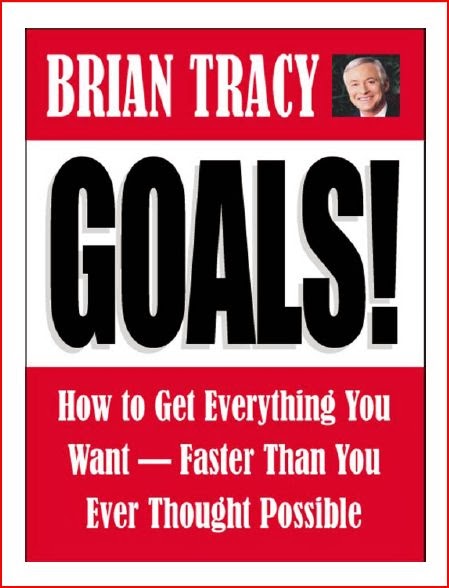
Last year, I read an article that mentioned a book by self-help guru Brian Tracy called Goals(also available in Kindle format).  I was intrigued enough to buy the e-copy and give it a read.

We Lutherans tend to be smugly skeptical of self-help books, programs, and speakers, because there is so much of this kind of stuff "playing church" out there - supposedly Christian books teaching you how Jesus can help you to have a whiter smile, better breath, bigger hair, a faster private jet, health, wealth, and fame in just seven easy steps - that I think we have a healthy (or sometimes not so healthy) cynicism toward any hint that we can improve ourselves.  We certainly don't want to be accused of denying original sin or not placing the Doctrine of Justification at the front and center, so we typically don't even try to improve ourselves (an endeavor with which the sinful flesh is ever eager to assist).

In fact, the Rev. William Weedon may be on the trajectory to canonization for taking slings and arrows from many of his Lutheran brethren who see his enthusiasm for being healthy and fit to be scandalously un-Lutheran, bordering on the worship of Baal or siding with the French in the Franco-Prussian war.

Well, that's the caricature, anyway.

In spite of my Lutheran scruples, I found the Tracy book (as well as another book of his called No Excuses!) to be intriguing.  The gist of the Goals! book can be found here.

Our own auto-educational program here at Chez Hollywood has included the One Year Bible for several years now, and it is the foundation of our home study and family devotions (along with the LSB family prayer cards from CPH).  We typically add another reading of some sort, before or after COSEMP (the Caffeinated Order of Scrambled Eggs and Morning Prayer) - and the nature of the lection has been wide and varied over the years, e.g. spiritual authors such as Augustine, Chesterton, Pascal, and Lewis, etc. along with the pursuit of academic interests, such as the Free Market newsletter and political, philosophical, and economic thinkers by way of articles, essays, and various other books and podcasts.

For this year's devotional readings, we decided to take up the bibliography given by the Rev. Dr. Joel D. Biermann of Concordia Seminary - St. Louis as part of his course called "Woman and Man According to God's Plan" (we attended an abbreviated version of the lecture series last year in Pensacola).  We also listened to the entire lecture series on a subsequent road trip (available free of charge at iTunes University as video and audio).

Disclaimer: I heartily endorse Dr. Biermann's treatment of the vocation of male and female according to the order of creation, but I completely disagree with his views of government.

Anyway, given that the issue of the roles of the sexes is "the" issue in society, in the Church at large, and even the source of great disagreement within the Lutheran Church - Missouri Synod (which I would refer to as the GMWO issue: gay 'marriage' - women's 'ordination'), we have decided to systematically read through all of the texts referenced in Dr. Biermann's lectures - some of which are theological, some secular.

Here is the list (dates refer to publication):

Since it was available electronically, we started with Eggerichs's Love and Respect right off the bat.  The author is a Ph.D. and an ordained Protestant minister who spent many years serving as a pastor.  We both found his book remarkably illuminating - even as we celebrate our 20th anniversary next month.  We would love to have had this book when we were first married.  Today's feminist culture virtually assures that men and women go into marriage brainwashed that there are no fundamental differences between the sexes other than the obvious plumbing, and to the really radical, perhaps admitting some very slight difference in upper body strength (although TV shows and movies have largely taught us that women and men are even identical in regards to physical strength, Girl Power and all that).

We highly recommend Dr. Eggerich's book for married people, engaged couples, and anyone who might want to be married.  I recommend the book also to pastors.  It is a scriptural treatment of how husbands and wives can better communicate with one another, and avoid the communication breakdown the author calls "the crazy cycle."  It is a very practical work, fun to read, based on both scripture and years of seminars given by the author and his wife.

We have bought Grudem, Rhodes, and Sax in non-digital form, and they are patiently waiting their turns.  We will buy the others as the time gets closer, though the Fritz book is out of print and may prove more of a challenge.  We are working through Dr. Sax's book (Why Gender Matters) now.  The author is both an M.D. and a Ph.D.  His book is culturally iconoclastic, arguing from a purely clinical and biological secular perspective that the sexes are wired differently.  He cites a lot of research and presents it in an engaging way.  It is funny, though, how often he tries to weasel out of the obvious conclusions to be drawn.  We're just shy of being a quarter of the way through the book, and find it fascinating.  The egalitarian and feminist foundations of our entire culture - which is driving the current debate about marriage, sex vs. "gender," the role of women in the church, women in combat, etc. - are really laid bare for the fraud that they are.

Another project - which actually takes about five minutes a day - which Grace and I are pursuing separately, is the reading of St. Augustine's epic The City of God over the course of this year.  We joined a facebook group dedicated to that goal and have joined up with more than a thousand people on the moderator's reading schedule.  I am also taking a more disciplined approach to reading literature that I should have read in school, but didn't.  I began reading Fyodor Dostoevsky's Crime and Punishment while in Russia two years ago, but got busy and stopped reading.  I restarted, made an overall goal and reading plan, and am now more than halfway done with the book.  This is especially good reading at bedtime (I'm reading this one without the electronic screen, as it seems that e-reading interferes with the production of melatonin which helps the body sleep).  The chapters are not long, and as long as I don't "stall" again, I should be able to complete it within a few weeks with just a short bit of reading each day.  We're also finishing up a delightful book about books, given to us as a Christmas gift by a friend: Howard's End is On the Landing by Susan Hill.  It makes for good reading in the car while running errands.  We'll have that one done in a few days.

Along the suggestions of Brian Tracy's Goals! book, I am tracking our reading and various projects using a planning Moleskine.  So far, I like the way this keeps us focused.  I'm using this same Moley to work on other projects that I have let slip because of not writing things down.

For example, I am working on the Pimsleur Russian course, which is an outstanding audio based series.  I own all 90 half-hour lessons broken down into three courses.  I have never gotten past about lesson 17 or so.  I am going to see if Tracy's premise that writing things down is the key to getting things done really works.  So far, it is helping!  I started back at the beginning with Unit 1 and and trying to get through 5 units or so a week (more if I am able).  I'm currently on Unit 10.  And since this course is audio, I listen while walking (which I am doing now), jogging (which will be a transition), and running (which I'm looking forward to doing regularly again, once more using the journal to keep myself in line).  I am also figuring out how to work in some more ambitious fitness goals, but at age 49, running a marathon by just showing up the morning of the race isn't an option the way it was when I was in my 20s (though even then that wasn't my brightest, shining moment, not that I regret doing it, for like most crazy things we do in life, I got a story out of the deal).  So I'm taking it a little slower these days.  We also eat paleo, though we need to tighten up after loosening the reins a bit during the holidays.

Another goal I've set for myself this year is to work on my Latin in a more disciplined way.  I have never completed the entire book Lingua Latina Per Se Illustrata: Pars I Familia Romana by Hans Oerberg (which is the natural method Latin course I taught to Junior High students for many years).  I want to not only complete all 35 chapters (I restarted with Chapter 1, and am currently on Chapter 9), but also want to read the sequel, Roma Aeterna.  Once those are done, I might like to tackle the two volumes of ecclesiastical Latin in Latin Grammar and Second Latin by Cora and Charles Scanlon.  Of course, elephants are eaten one bite at a time.

FH readers will note that I have not been keeping up with posting my sermons nor have I done much blogging.  I hope to be more diligent on both counts.

I also have other projects that need to be done bit by bit, and I am journalling those as well.  I adopted this Circle System for project management, and here is how it works, as explained below by Sara Caputo at Radiant Organizing (note: some of the links are dead):


The Circle System is another that was developed out of pure need and logic by another gentleman from Amsterdam.  Simply put, it’s a blending of his own to-do list with a series of circles that he devised and gave meaning to — here’s a picture of what it looks like:
Cool, huh?
Here’s the jist from his site:
Ok, this was about the bones and now it’s the meat. The Cir­cle.
We now have projects with its actions, all with cir­cles in front. And we surely have indi­vid­ual actions that are not part of any project, like Pay this bill and so on. Put every­thing in, every action you need to exe­cute at home or work. Don’t try to remem­ber every­thing — except one thing: The note­book remem­bers.
As things progress I add few things to the cir­cles. Here a list that explains in words and the pic­tures should be help­ful guides too.
  • Cir­cle : Project or an action
  • Stroke, a diag­o­nal line across the cir­cle : Work has started
  • Filled lower part of the cir­cle : Work is half done (or wait­ing for some other step)
  • Filled cir­cle : Work on the project or action is fin­ished or off my hand (delegated)
  • Cross over the cir­cle, sec­ond stroke : Can­celled
This makes up the basic Cir­cle sys­tem and is a great starter. I also use a few extras for empha­sis In addi­tion to this you could also use:
  • Num­bers to note in which order I need to execute
  • Excla­ma­tion mark in front of the cir­cle for an impor­tant action
  • Arrow or > after any cir­cle tells that a project or an action has been del­e­gated or moved to my GTD appli­ca­tion. Don’t for­get to fill the cir­cle at the same time. And also write down who is con­tin­u­ing the work if that is impor­tant. It usu­ally is.
  • Dot in the mid­dle of the cir­cle is a sub­tle atten­tion mark.
I like them both because they were created around NEED and the system was devised around the individual’s workflow. Very often, task management systems that we try to plug into that others have created don’t work well because it is not a system that follows our individual needs.  When we devise our own system, as the gentlemen above have done, we are better able to follow it and have it be sustainable.  Just my own 2 cents.  More to come next Tuesday as we review 2 more systems…. have a great week of getting stuff done!

I don't carry my planning book around with me, but I do keep a personal notebook on me at all times.  In it, I have made my own calendars for several months, a to-do list for day-to-day tasks using the Circle System, a section for quick incidental notes, and I use the rest of the notebook for taking notes for all other meetings or other situations requiring note-taking.  At the first of the year, I completed my pocket Moleskine that I used for July through December 2013, and am now trying a notebook that I hope will be more robust: a German-made Leuchtturm 1917 pocket ruled notebook.  So far, I'm quite impressed with it.  I used my Leuchty to take notes at the 2014 Mises Circle in Houston, where we heard lectures by Jeff Deist, Tom Woods, Lew Rockwell, and Ron Paul (note: Dr. Woods's lecture is linked, the rest are on the way!).  The Leuchtturm is slightly larger than the Moleskine, and has very nice cream-colored high quality pages that are pre-numbered!  I'm hoping that it is more robust than its Chinese-made Italian cousin.

In terms of economics self-education and personal development, we attend the unique and delightful  Dr. Walter Block's Human Action seminars held at Loyola University twice per month (which restared this month after a long Christmas break).  In that ongoing seminar, we are reading, discussing, and debating Murray N. Rothbard's Economic Controversies (available as a free download here).  These seminars and the discussions that come afterwards really keep the brain running in overdrive!  

While at the Mises Circle, we picked up the following which we also look forward to working into the reading program:
Since we were on a road trip, we started reading together aloud Dr. Paul's The School Revolution.  We're more than halfway through, and it is an insightful read!  

I know someone is going to respond: "You have too much time on your hands."  (I used to get that a lot when I was more prolific at writing and when I used to post funny broadsides at seminary). Actually, we all have the same amount of time. Well, here is what Grace and I have found helps us to get things accomplished.  These work for us, and I'm sure other people have great techniques as well for reclaiming time:
  1. Get up early (last year, we set the alarm for 4:45 but got out of the habit later in the year when we were swamped with work that caused us to stay up too late - but are working our way back). 
  2. Don't watch TV.  Aside from an occasional Netflix movie, we don't watch anything on the television: we don't have cable, we don't watch network broadcasting, no football, no news - no nothing. 
  3. Eat at home.  We used to go to restaurants a lot, but now eat almost exclusively at home.  Not only does this save a ton of money, it buys us loads of time not spent getting ready, waiting for a table, dining, waiting for the check, and driving back.  During food preparation at home, we have additional time to read aloud to one another.
  4. Turn the car into a 4-wheeled university.  Road trips are perfect for podcasts or long stretches of reading.  Running local errands is great for reading a chapter here and there aloud to one another.
  5. Take Advantage of supermarket lines with a book, e-reader, or books on the iPhone.  Instead of complaining about the long line, turn it into a class, an opportunity to learn!
There is actually a lot of time for reading, studying, thinking, and writing - if it is a priority.   In spite of the time it takes to be a parish pastor and high school teacher; in spite of the time it takes to homeschool a third-grader, run a home, and serve the church as a volunteer - there is time to continue to learn and grow if we make the time and have the self-discipline to stick with it.

I hope Brian Tracy is right.


The Best Lent/Easter Devotional Reading


It's almost that time again. Here is a link to my pre-review of Thy Kingdom Come:Lent and Easter Sermons by David H. Petersen.

You can order a copy here from Emmanuel Press, or here at Amazon.

I can't recommend this magnificent proclamation of the Lamb of God, sacrificed and risen, enough!

Sunday, December 30, 2012

"Better late than never" and a Lesson from the Magnificat


I just got caught up on posting my Advent sermons - from 2011.  As of now, I have 531 sermons posted here on FH.  I am actually only lacking my earliest sermons from vicarage - and I'll get those caught up when I get the proverbial "round tuit."  But I'm really pleased to be caught up to this point.

This is one of those lingering "to dos" that I can now scratch off on the old Moleskine!

Anyway, in last year's Rorate Coeli (Advent 4) sermon, I made an observation about the Blessed Virgin Mary and how Protestants and Catholics squabble over her significance to the Christian faith.  I believe that this matter ought to be put to rest by the Blessed Virgin's own words in the Magnificat - which are God's Words as recorded by the holy evangelist St. Luke (1:46-55).

Here is an except...

There is a belief about Christianity among the unbelievers in Christianity that the first Christian was St. Paul.  What they mean by this is that Paul invented the Christian religion, that the Jesus he preached was not the “historical” Jesus, and that we are really more followers of Paul than of Christ.
This is an interesting theory that awkwardly tries to explain the origin of Christianity.  But if we believe Christianity is true, the question of who is the first Christian becomes interesting.  Some might argue that the first disciple, St. Andrew, was the first Christian.  Others might say that Abraham, as the first man called by God under the old covenant would be the first Christian.  We could even argue that Adam was the first Christian, the first to see God face to face.
It all depends on how you want to define “Christian.” 
The Blessed Virgin Mary was the first human being to be in the physical presence of the fleshly incarnate Jesus, and immediately, she confesses Him as both God and Savior.  In that sense, Mary is the first Christian.  She is not only the beloved mother of Jesus, but also the beloved elder sister of every Christian.  And this young girl, a lay person: not a rabbi or a priest, not an apostle or a pastor, not a deaconess or a professional church worker – blazes a trail for all Christians in confessing the Christ within her very body: “My soul magnifies the Lord, and my spirit rejoices in God my Savior.” 
“God my Savior.” 
Dear friends, this confession of the Blessed Virgin Mary, the mother of God, is the beating heart of the Christian faith.  For the Christ child within her is not only a savior, a prophet, a deliverer like Moses – but He is also God.  And equally important, she is not merely worshiping a God who is afar off, but a God who has come into space and time, becoming an embryo within the womb of His mother – even as have been every one of billions of human beings ever born (with the exceptions of Adam and Eve). 
And notice also that the Blessed Virgin confesses Jesus as not only “God” and as “Savior” – but also as “My.”  For even the devil has to confess the truth that Jesus is God and that He is a Savior.  But Christians also confess the “my” part.  Mary’s threefold confession is a complete confession of Christ: Almighty God, humble human being, our Savior. 
This “first Christian” is utterly unique in all of human history.  For she is indeed as we confess in our Lutheran confessions and with the Church of every age: “holy” and “pure.”  She is the mother of God.  And yet she too needs a “Savior” – a rescuer from sin.  Mary is pure because Jesus has made her so.  Jesus is born because He came to our world through His mother.  God created Mary, the God the Father called Mary, God the Holy Spirit overshadowed Mary with His presence, and Mary conceived God the Son within her womb.  And from this created creature emerges the uncreated Creator.  From one descended from sin comes One who is sinless.  The tiny embryonic Christ child conceived miraculously within the virgin is also the Savior of the Virgin who created for Himself a pure portal into our impure world. 
Christians sometimes squabble over how this can be.  Such arguments happen when fallen man attempts to impose reason on a miracle.  Was Mary conceived without sin?  God did not reveal this to us to be either true or false.  He did something to protect His Son from inherited sin – beyond that, God is silent.  But we know this much: Mary calls her Son her Savior, and Jesus was born of a pure womb.  Rather than argue over dogma, we Christians, like the first Christian herself, would do well to fight less and rejoice more!

"Fight less, rejoice more."  That might be a good New Year's Resolution for each and every member of the One Holy Catholic and Apostolic Church as a witness to this conflicted world.

!שלום   Pax!   !سلام  ειρήνη!  Frieden!  Paix!  ¡Paz!  Мир!  Peace!

Saturday, December 29, 2012

Meet my New "Old Friend"

Some books are destined to become dog-eared "old friends" very quickly.

I suspect this is going to be the case between me and my new "old friend" Thy Kingdom Come: Lent and Easter Sermons by David H. Petersen (Emmanuel Press, Fort Wayne, Indiana, 2012, 215 pages, paperback, $20.00).

I just received the book today, and in fairness, I have not yet read the book in its entirety.  However, 67 sermons are included in only 211 pages (not including the Forward by Rev. Todd Wilken, the Introduction by Rev. Michael Frese, the Table of Contents, and the Scripture Index), and it won't take long to read the book in its entirety.  However, as is the case of devotional books, it is best not to rush reading it, but rather take one's time and savor it, ponder it, apply it, and allow God's Word to do its work through unhurried meditation and prayerful study.

So far, I have carefully read the Introduction, the Forward, and the Holy Week and Easter sermons.  I have skimmed through some of the other sermons.  I can honestly say that so far, with very high expectations of the book (based on my own experiences as a hearer of Pr. Petersen's proclamation), I have not only been delighted, but edified as a fellow pastor and preacher, and as a Christian sinner-saint in need of the Good News.  This book is so far exceeding my expectations!

As Pastor Todd Wilken says in his Forward, "But whether you are a hearer or a preacher, I pray this book does for you what it has done for me.  For there is far more here than mere textual insights and sermon ideas; here is the Gospel for sinners.  This book delivers Christ crucified for sinners.  And we all need that" (page xi).

I heartily agree with Pastor Wilken, and would like to add a few thoughts of my own.

Like many men educated at Concordia Theological Seminary - Fort Wayne in the past few years, I was shaped as a preacher by many men, including Pastor Petersen.  Upon starting seminary, it doesn't take long for liturgically-minded seminarians to learn which congregations in the area are faithful to the liturgical and historical traditions of "Evangelical Catholic" Lutheranism.  Redeemer Lutheran Church is always one of the names at the top of that list - if not the apex.  Bright-eyed seminarians are typically wowed by Redeemer's architecture, reverence, the incense and bells, the magnificent vestments, the genuflecting and bowing and the unabashed sign of the cross, the High Mass (with celebrant, deacon, and subdeacon), the degree of reverence in the Divine Service, the polished acolyte corps, the musical dignity and beauty of Kantor Reuning and the choirs, the many conferences hosted by the congregation, as well as daily prayer offices and even daily Low Masses during the penitential seasons.  On those occasions when Pastor Petersen was the guest celebrant at Kramer Chapel at the seminary, "high church" seminarians would excitedly pack the pews to see and hear Pastor Petersen the celebrant.

But we students quickly learned something else: Pastor Petersen is also a preacher.  And how!

One found out pretty quickly about the law's ability to sting, to bludgeon, and yes to kill.  The entire sanctuary would be filled with silent men and woman staring at their shoes as Pastor Petersen condemned our Old Adams without allowing a loophole or even any wiggle room.  With his intonation of one word: "Repent!" he would have his hearers almost in tears.  And just when you think you could not take any more, you didn't have to, as Pastor Petersen proclaimed the cross, the forgiveness of sins, the sweet and refreshing Good News that Jesus, the Crucified One, is our Savior and our Redeemer.  If I could sum up David Petersen as preacher and as celebrant in one word, I would say: intense.

In his interactions with students, I found him to be truly "apt to teach," possessing a sense of humor and a candor that was formative to the many men who count it a privilege to have been formed - at least in part - by his work and ministry in Fort Wayne.  Obviously, men who served as field workers and/or vicars at Redeemer (I was not) have been the most influenced by him and credit him for making them the preachers they are today.

Thy Kingdom Come is a book that is not only wonderfully deep devotional material for any Christian, it is also a mini-homiletics course for pastors.  Just as I counted Pastor Petersen to be a great teacher to me before I was a pastor, I count him an even greater teacher now that I am considered to be his colleague - both in the ministerium of The Lutheran Church - Missouri Synod, and as a fellow editor at Gottesdienst.  Although I am the sermons editor, I continue to look to my brother-in-arms in the Lord's service as an instructor and mentor.

In no particular order, I would like to point out things that jump out at me from the book and from Pastor Petersen's preaching contained inside:

As I said, Pastor Petersen is a teacher.  Preaching is not primarily teaching, but teaching goes on in the process of proclaiming the Good News.  Pastor Petersen has a way of cutting to the chase quickly in explaining biblical symbolism, such as the meaning of the palm tree in Hebrew poetry as an insight into Palm Sunday (page 127).  He is able to succinctly explain literary devices (e.g. the kiss as relating to Mary of Bethany and to Judas, page 130) without pedantry or pomposity.  He gives historical explanations, again often in a sentence or two (such as his explanation of the Roman whip used on our Lord, page 132).  He preaches with an eye on the text's literary devices, such as tying the forbidden fruit hanging in the Garden to our Lord's body hanging at Golgotha (page 139) - imagery that is not only vivid and striking, but theologically connecting Eden to the cross, and further making the connection between the cross and the Lord's Supper (page 140).  He has the gift to speak with accessible profundity without falling into academic jargon.

Pastor Petersen also brings in etymology and translation issues from the original languages, at times preaching in poetic patterns and lushly picturesque turns of phrase, thereby searing biblical imagery into the mind.  He is never flippant in the pulpit, but there is at times what I would call a "reverent playfulness" in his preaching, sometimes quoting movies, novels, or even pop songs, not in a way that is fishing for entertainment, but in a genuine way that focuses on his point.  As we students were counselled by the late Rev. Prof. Kurt Marquart (who served at Redeemer with Pastor Petersen), our preaching must not become formulaic and predictable in its rhetorical style.  Pastor Petersen lives up to this advice, giving his sermons a freshness and certain unpredictability as to how he might treat any given text.

There is an eschatological element to many of these sermons, a constant reminder of the Big Cosmological Picture of Christ the Victor and our march through time toward the end of time, even unto eternity itself.  There is a constant reminder of the warfare between good and evil, of the fallenness and corruption of this world, and of the real meaning of Christ as the world's Redeemer who is setting creation anew and aright.

Pastor Petersen teaches how to properly borrow, modify, and include outside references - be they theological, historical, or homilectical.  The footnotes throughout the book freely attribute those places where Pastor Petersen has adapted ideas of other preachers and authors and applied them to his own hearers.  Pastor Petersen is not shy in using biblical turns of phrase, even though they may not be in the particular text assigned by the lectionary.  There are also times in Pastor Petersen's preaching where a big emotional uppercut is delivered in almost shocking language and metaphor.  Pastor Petersen is a wordsmith, and he applies the language necessary to get the job done - and he understands what that job is: to deliver Christ!

Just a few remarks on the book itself: it is paperback, reasonably priced, sports a simple and yet beautiful cover depicting our Lord's crucifixion.  Pastor Wilken's Forward is delightful and an accurate description of what you will find in this book.  The Introduction by the publisher Rev. Michael Frese (also serving as a pastor at Redeemer) has helpful explanations of not only the title and the relationship between preaching and God's kingdom, but also provides an explanation of how the book came to be and the background of how Pastor Petersen goes about crafting his sermons.

The book is tight and well-edited.  I have not encountered any typos or mistakes in formatting.  As a minor nit-pick, the book does not typically capitalize the divine pronouns as is normally done in modern English.  Given the ESV (the primary translation used in the book) does not capitalize these pronouns, there is bound to be a difficult editorial decision one way or the other - which Pastor Frese addresses in his Introduction (page xvi).  If I could have a wish-list, I would like to see a complete index in addition to the Scripture Index - but this would be a luxury and it would also inevitably add time and expense to the project.  The font and layout are easy on the eye, and there is ample margin space to jot notes.

I think Emmanuel Press has not only done a professional and high quality job as a publishing house, I believe Pastor Frese has given the Church a great gift in making Pastor Petersen's preaching available and accessible to everyone!  Thank you to Pastor Frese and of course to Pastor Petersen.

I am really looking forward to getting to know my new "old friend" even better!

Friday, December 30, 2011

Make room at the table...

As the year winds down, we are mixing things up at the family breakfast table.  In fact, we have invited a rather large and rotund guest to spend the next few days with us - whose mind is even more expansive than his physique: Mr. G. K. Chesterton (1874-1936).

As I mentioned a little over a month ago, our morning coffee and meditation ritual has grown to become a lecture series as well.  And it is one of the greatest things that we have instituted here at the Hollywood Mansion.

A few days ago, we wrapped up our breakfasts with Dr. Peter Kreeft (1937- ) and M. Blaise Pascal (1623-1662) - and I am sorry to see them have to go!  Christianity for Modern Pagans (a collaboration by Pascal and Kreeft) is one of those books that needs to be read again and again.  I can't thank Rev. David Petersen enough for sending me the book as a gift, and I am grateful to Dr. Kreeft for reintroducing Pascal to modern readers.  Pascal is utterly unique, prescient, brilliant, and yet easy to read - especially with Kreeft's cut-to-the-chase explanations and elucidations.  In short "Read this book!"  Buy it now.  In just a few minutes a day, we had it done over coffee in not much more than a month of readings.  If I can put together some time, I will blog a recap/review/reflection or some such.  As I said, the book has already become an old friend.

So here is where we are right now, and where we are going for the coming year...

  • We continue with the ESV One Year Bible as read by the narrator.  Mrs. H. follows along in her paperback copy and attends to the computer narration while I prepare the cappuccino during the Old Testament reading.  And by the way, our ancient Krups espresso-maker is still carrying out its matinal and quotidian duties as if yet in its prime.
  • After the Old Testament reading, I bring my offering to the table just in time to join in the New Testament reading.  I skim along in Greek as the narrator reads from the ESV (I like using my my sleek leatherbound Reader's Edition - thank you to Rev. Daniel Johnson for introducing me to it).
  • For the Psalm, I follow along in Latin using my Gaba bilingual Psalter.  
  • For the short Proverbs reading, I just listen.
  • After the Bible reading, we embark on our lecture (see below) 
  • We conclude with a brief closing meditation and prayer - this past year from St. Augustine.  Beginning January 1, we will broaden these meditations to other saints (unfortunately, the latter volume, unlike the former includes prayers to the saints, which we will simply modify as prayer to God).

So, regarding the lecture portion, having said "goodbye" to our good friends Kreeft and Pascal, we decided to invite C.S. Lewis (1898-1963) to the breakfast table, but in looking at schedules, we found that it fit in better with everyone's plans to first invite Mr. Chesterton for a reading of his brilliant Orthodoxy.  I've read it twice before myself (with nearly every other sentence highlighted), but this time, we are reading it together thanks to a narrator from LibriVox.  (And thanks to Rev. Philip Miller who told me about Librivox - a source of free audio books for works in the public domain).  We both follow along with the text in our Nook readers.  As of today, we are about a third of the way through Chesterton's witty and rollicking 1908 work defending the traditional Christian faith against both heresies of atheistic materialism (on one side) and pantheistic postmodernism (on the other) - though the word "postmodernism" would not be coined for another 40 years after the publication of Orthodoxy.  If you have not read Orthodoxy, it is a must read!  It is also free in many formats being out of copyright.

Indeed, we have had to shift around the furniture to make room for Mr. Chesterton.

He is a big man, with a big brain, a big personality, and big ideas!  He also has a big heart and a big humility, and we are delighted to have him join us!  We are also greatly looking forward to a lengthy visit from Dr. Lewis when we must say goodbye to Chesterton.  Our kitchen is simply not big enough to entertain all of our friends at once.  We expect to have bigger accommodations in eternity.

Once we complete Orthodoxy, we plan on reading through the works of Lewis as contained in The Complete C.S. Lewis Signature Classics, namely Mere Christianity, The Screwtape Letters, The Great Divorce, The Problem of Pain, Miracles, A Grief Observed, and The Abolition of Man (some, and possibly all, of these are available in audio format).  When we get to Screwtape, we will have to scramble to find an extra chair for Mr. John Cleese of Monty Python, whose reading of the letters is beyond perfect.  Interestingly, a couple parishioners just gave us another collection of Lewis works for Christmas: The Beloved Works of C.S. Lewis, containing Surprised By Joy, Reflections on the Pslams, The Four Loves, and The Business of Heaven - if we can get Dr. Lewis to commit for a longer stay, maybe we can work through those as well.

Anyway, we are pleased with the depth and direction of our morning routine.  It is a good way to get the mind and soul moving in the morning along with the body.  We encourage anyone and everyone to turn the breakfast table into a monastery and university.  It is the highlight of our day.


Friday, November 18, 2011

On Quality of Life

From Peter Kreeft's commentary on Blaise Pascal's Pensées called Christianity for Modern Pagans, page 58:

[Pascal writes]: Man's greatness comes from knowing he is wretched: a tree does not know it is wretched.  Thus it is wretched to know that one is wretched, but there is greatness in knowing one is wretched. (No. 114).

[Kreeft writes]: Thus the greatness and high dignity of Greek drama.  It is not only that the wise sufferer is rewarded in the end, like Oedipus (and Job), but that even in the act of suffering well there is dignity, because the suffering is not just a negative event in the physical world but also a positive event in the spiritual world.  By the sufferer's understanding and will, his suffering is granted entrance into this second world.  It becomes not merely an event in space but an event in consciousness.  It is taken up to Heave: the Heaven of thought, even if not the Heaven of bliss.

How utterly low and brutish is the level to which a human mind has to sink before it csn look at an old lady in a nursing home bed suffering some incurable disease and call this life and this suffering "meaningless", lacking in "quality of life".  To call this the "quality of life ethic" is like calling a cannibal a chef.

If this sneeringly snobbish judgment is true of the old lady, it is true a fortiori of Christ.  If her cross of suffering, her death-bed lacks "quality", then His cross and death-tree also lack "quality".

"Quality" is thus used as a professional euphemism for sex and money.  We find this brutish mentality only  in the "upper" classes, the professional and "educated" people, especially journalists and professors, not among the poor, not among real people.  Such "intellectuals" are as intelligent as radical "feminists" are feminine."


Sunday, November 13, 2011

Two new guests for breakfast

Two years ago, I reported on the Hollywood family's morning ritual of Scripture reading.  Since that time, the practice has been expanded and altered to an extent.

Back in January, we decided to add a guest lecturer to our morning ritual - St. Augustine of Hippo.  We began to read a chapter from his Confessions each morning, followed by a very brief meditation and prayer from Augustine as found in Augustine Day by Day.

A few weeks ago, we made a slight modification to the rite by having the ESV narrator read the daily offering from the One Year Bible while we follow along.  For further study, as the narrator reads, I skim the New Testament text in Greek and the Psalm readings in Latin.  The narrator moves along at a good clip, and this is not the time for parsing and memorizing vocabulary.  The timing works out pretty well as the narrator wraps up the Old Testament lesson about the time that I am serving the cappuccino.

After ten months of learning from our dear brother in Christ and doctor of the church, the sainted bishop of Hippo, we have for the past week invited a couple of other great Christian minds into our home (upon the advice of, and kindly introduction by, the Rev. David Petersen): a fellow named Blaise Pascal (1623-1662) and his modern-day commentator and interpreter Dr. Peter Kreeft.  We are still praying with St. Augustine and enjoying his short meditations through the end of the year - but it is getting a little crowded at our breakfast table.  It is fortunate for us that we don't have to feed all of these people - though they are certainly feeding us.  The Pascal-Kreeft book is entitled Christianity for Modern Pagans - and it is a running conversation between the two as the latter engages the former's famous work, the Pensées, carrying on like old friends.

Our lectio continua is truly the highlight of the day: a time of God's Word, meditation, theology, and philosophy - a few moments of monastic peace each morning, any of which can become a day transformed into a sudden maelstrom of activity, stress, tragedy, or just plain hard work.  Our morning ritual is a time to stop and listen to the still, small voice of God's Word and to bask in the glow of saints and Christian thinkers - washed down with the most un-monastic treat of a frothy cappuccino.

Saturday, August 06, 2011

Bonhoeffer on the Sign of the Cross


"Signabis te signo santae crucis. ("Sign yourself with the sign of the holy cross.")

     ~ Martin Luther, Small Catechism


Joel J. Miller discovers the sign of the cross through the writings of Lutheran theologian Rev. Dr. Dietrich Bonhoeffer as described in this blogpost.


Tuesday, June 21, 2011

The Athanasian Creed on Issues, Etc.

This is the week of Trinity Sunday, and in many denominations of Western Christianity, it is customary to recite the Athanaisian Creed.

Roman Catholics tend to bury it in the Office of Prime, a prayer office typically said by monks and nuns.  Some so-called "high church" Anglicans use the Creed on Trinity Sunday.  But where we find its use really blossom is among Lutherans - where it is not only the third document in our 1580 book of confessional writings known as the Book of Concord, but where it is also traditional to recite this ancient confession of  faith during the Trinity Sunday Divine Service.  In fact, the constitution of the Lutheran Church - Missouri Synod requires that the "Synod, and every member of the Synod" accept the Athanasian Creed and must do so "without reservation" (page 13).

You can find it in your Lutheran Service Book on page 319.  And here is a Lutheran Witness article (by the Rev. Christopher Hall) from the current (June 2011) issue on the Athanasian Creed (also known by its Latin name, Quicumque Vult).

In some ways, the Athanasian Creed is shocking.  It opposes the popular modern view that all religions are equal, that any god is God by any name.  The Creed makes the unequivocal case that salvation is dependent upon holding "the catholic faith."  The word "catholic" is a Greek transliteration of the words κατά (kata) and όλος (holos) that mean "according to the whole."  It points us to the wholesome, holistic faith of the apostles and of the whole Church - as opposed to the private opinions of this individual or that person or of this cult or that sect - whose theology stands at odds against the church in its collective confession.  The opposite of "catholic" is not "Protestant," but rather "heretic."  According to the Athanasian Creed, the catholic faith can be boiled down to two main overarching concepts: the Trinity and the Incarnation.  This is described as "the Christian truth" and "the catholic religion."  And the Creed makes it clear: there are no non-catholics in heaven: "This is the catholic faith; whoever does not believe it faithfully and firmly cannot be saved."

The Creed also concludes with this sobering warning: "Those who have done good will enter into eternal life, and those who have done evil into eternal fire" - which if misunderstood, could be interpreted to be "works righteousness" and a repudiation of salvation by grace alone.  Actually, the conclusion of the Creed is a paraphrase of our Lord's equally sobering warning.  Jesus does not say that salvation is a result of works.  Rather we know that good works flow out of a living faith, just as good fruit appears on healthy trees, and diseased fruit grows from rotten trees.  It is good for us to hear this warning lest we become complacent and begin to take advantage of God's grace and to forget why we were created and for what purpose we were saved by grace!

Issues, Etc. has recently concluded an outstanding four-part interview with the Rev. William Weedon on the Athanasian Creed.  You can listen here.

Wednesday, December 29, 2010

A New Friend for the New Year

We're looking forward to another trek through the Bible this coming year

I'm not a morning person, by any means, but in our hectic hustle-bustle existence of family and parochial life, our morning lectio caffea is a refreshing little mini-retreat of God's Word, prayer, quiet time, and recaffination for the daily "grind."

In fact, we want to expand our meditation, but only a little.  And so we have decided to invite a friend to join us in the kitchen for 2011: St. Augustine, bishop of Hippo and doctor of the Church.

So, in addition to our readings from the One Year Bible: Old Testament, New Testament, Psalm, and Proverb, as well as its corresponding little Q&A from the Companion Volume, we will be adding a reading from the Confessions of St. Augustine, and closing with a short quote from the good doctor and a little prayer.

I have a nice edition of the Confessions that will add to the pleasantness of the experience, and by reading only a chapter a day, we will, Deo volente, get through all thirteen "books" by about the end of September.  Also, to give us a brief supplement and a short prayer, we will close with Augustine Day by Day.

Although our kitchen is small, and it is already crowded with humans and felines, there is always room for one more.  We are gratified that Augustine will be joining us for our little retreats and daily dalliance with monastic meditation.  We expect to have much to learn from him.

St. Augustine of Hippo is simply a huge figure in not only the theology, but also the spirituality, of the Western Catholic tradition - including (and especially) among us Lutherans, given Augustine's status as the Doctor of Grace who argued against the works righteousness of the Pelagian heresy.  Augustine stands as a foremost apologist of the faith whose writings came once again to the forefront during the Reformation.

And now, he will be spending a year with us at coffee.  How exciting!

.

St. Thomas Becket, d. 29 December 1170 A+D


On this date in 1170 AD, St. Thomas Becket, archbishop of Canterbury, was slain by assassins at the altar of his church as he sang vespers.

Above is the trailer to the 1964 Oscar-winning movie starring Richard Burton and Richard Harris.  Here is a famous scene from the film that captures the powerful acting and compelling cinematography.  The movie is both gritty and larger than life, a real epic of the kind not made any more in Hollywood.

But let us not forget that this isn't just a well-made movie, but St. Thomas is a real churchman, a brother in Christ, and a faithful servant in the Holy Ministry only separated from us by the thin veil that temporarily segregates the Church Militant from the Church Triumphant.  St. Thomas placed his loyalty to the Triune God and the Holy Church even above his friend and king - and for that he was martyred.  May we all be blessed with such steadfastness and courage.

Let us pray:

"O Almighty God, by whose grace and power your holy martyr Thomas triumphed over suffering and was faithful even unto death: Grant us, who now remember him with thanksgiving, to be so faithful in our witness to you in this world, that we may receive with him the crown of life; through Jesus Christ our Lord, who lives and reigns with you and the Holy Spirit, one God, for ever and ever. Amen."

Tuesday, December 21, 2010

Et incarnatus est


A beautifully incarnational, Christological, and Christocentric understanding of Christmas is found on page 120 of Max Anders's 30 Days to Understanding the Bible in 15 Minutes a Day (1998 edition):

 "Dr. Richard Selzer is a brilliant surgeon who wrote a penetrating book entitled Mortal Lessons: Notes on the Art of Surgery.  In it he writes:

I stand by the bed where a young woman lies, her face postoperative, her mouth twisted in a palsy, clownish. A tiny twig of a facial nerve, the one to the muscles of her mouth, had been severed. She will be thus from now on. The surgeon had followed with religious fervor the curve of her flesh; I promise you that. Nevertheless, to remove the tumor in her cheek, I had to cut the little nerve.

Her husband is in the room. He stands on the bed, and together, they seem to dwell in the evening lamplight. Isolated from me, private, Who are they, I ask myself, he and this wry-mouth I have made, who gaze at each other, and touch each other generously, greedily?

The young woman speaks. 'Will I always be like this?' she asks. 'Yes,' I say. 'It is because the nerve was cut.' She nods and is silent. But the young man smiles. 'I like it,' he says. 'It's kind of cute.'

All at once I know who he is. I understand, and I lower my gaze. One is not bold in an encounter with a god. Unmindful, he bends to kiss her crooked mouth, and I am so close I can see how he twists his own lips to accommodate hers, to show that their kiss still works. I remember that the gods appeared in ancient Greece as mortals, and I hold my breath and let the wonder in.

That is the spirit of Jesus.  Man's link with God had been severed through sin.  And He twisted Himself to accommodate us, and give us the kiss of eternal life.  But not without giving His own life on our behalf.  Jesus.  At the same time, so tender and powerful.  The most remarkable figure ever to have lived.  And why not?  He was God incarnate.

The birth of Jesus split history like a thunderbolt on a hot July evening.  Everything before His birth we call B.C., before Christ.  Everything after, we call A.D., anno Domini, in the year of our Lord." 


.

Friday, November 26, 2010

It's that time of year again...

The calendar year is winding down, and the time of preparation for Christmas is at hand.  In fact, the new church year begins this coming Sunday.  And, if you do belong to a church body that keeps the Advent season, it is a penitential time, that is, a season of the year in which we have the opportunity to take heed of our spiritual life, to examine ourselves, and employ the means of grace that not only give us full and free salvation, but also the means to grow in our Christian life and faith.

It is also the time of year of New Year's resolutions.

I think most such resolutions are a waste of time.  But there is one commitment for the new year that you will not regret, that will provide you with being immersed in the Word of God, a commitment that can become a treasured part of your daily routine for the rest of your life: the One Year Bible.

The OYB is a systematic read through the Holy Scriptures in which the Bible is already divided into 365 readings, one from the Old Testament, one from the New Testament, one from the Psalms, and one from the Proverbs.  In this plan, the Psalms are actually read twice over the course of the year.

While the readings technically begin on January 1, I would strongly urge anyone who wants to begin this journey for the first time not to wait until New Year's day.  In fact, I would recommend starting in early December if not before.  I don't remember where I read it (ironically, because it has to do with memory), but I have read somewhere that it takes doing something 21 times before it becomes a habit.  You can get a running start in December, reading the minor prophets and Revelation, and be ready for Genesis and Matthew on New Year's Day - after the habit and routine has been established.

And for Christians who believe the Scriptures are the very Word of God, that they are a means of grace, that they are the constant companion of the believer, and that it is our responsibility (and our privilege) to make Bible reading and reflecting a routine part of our family life - per God's own exhortation.  The OYB is an outstanding way to go.

I'm not suggesting that this replace devotional uses of Scripture, such as the Treasury of Daily Prayer.  To the contrary!  I find that a systematic read through the Bible makes praying the Bible all the more meaningful.  It allows the opportunity to look up difficult passages, to become familiar with chronologies and historical details and cultural matters, and to get the Big Picture of the sweep of God's Word from eternity to eternity, from Genesis to Revelation. 

The One Year Bible provides a way for couples and for families to spend 20 minutes or so together each day drinking in God's Word, providing an opportunity for reading aloud, for questions, for reflection, and for meditation.  There is also a small companion book with a short page of Q&A on each day's readings.  I would recommend this book in a qualified way - as the questions and answers reflect a Protestant bias that most of the time is okay, but for Lutherans, some of them are contrary to our confession (such as whenever sacraments are discussed).  So just be careful if you use that resource.

If you want to do the readings online (including many different translations and languages), you can do that here. There is also a helpful blog with resources and encouragement.

If you are interested in including the Apocrypha, you do have an option.  There is a so-called Catholic edition of the OYB that adds a supplemental reading from the Apocryphal books of the Old Testament.  The bad news is 1) it seems to be out of print, and 2) it is a paraphrase translation (NLT).  So, you could find a copy of this Catholic edition, record the readings for each day, and read the Apocrypha in the version of your choice - including the LCMS quasi-official version, the ESV.  (Note: the ESV's apocrypha translation is not without its own faults.)  This tends to make the whole process more cumbersome, which is one of the advantages of the OYB.  The point is this:  If you really want to read the Apocrypha, you can do it.  But at very least, the OYB provides you with daily readings from the 66 books considered canonical by all Christian churches.

The One Year Bible is also available in several different translations.

One way or the other, at the end of 2011 you will be another year older.  Time passes either way.  You could have read the entire Bible cover to cover, or not.  The commitment is (like I said) about 20 minutes or so each day.

It's worth it, and I guarantee it will be a blessing to you!

Monday, November 22, 2010

A Stacy McDonald Twofer


If you aren't familiar with Mrs. McDonald's blog Your Sacred Calling, now is an excellent time to pop in.  Here are two recent posts to ponder...

  1. Jesus-full
  2. I am What I am: Growing in Thankfulness

Two excellent musings on the Christian faith and life from a conservative Presbyterian pastor's wife.  YSC is especially meaningful reading for Christian ladies, but there is great wisdom here that is (pardon the subliminal "golden arches" metaphor) "food for thought" for Christians of every sort.

Tuesday, October 12, 2010

Christian persecution and prayer


Tuesday's prayer in the Treasury of Daily Prayer calls upon Christians to pray for their persecuted brethren around the world. Here in America, we are comfortable, if not exceedingly wealthy, as compared to the rest of the world. We are free to attend church on Sunday, or sleep in or do something else. No-one will round us up and put us in torturous dungeons for simply gathering for prayer, scripture, and the celebration of the Most Holy Eucharist.

But this is not the case in many places.  Just meeting with other Christians is an ordeal, and people will risk their freedom and even their lives just to gather with a few other Christians in secret, even if only for a few moments, to hear the precious Word of God, and if they are fortunate, to receive the Holy Sacrament from the hands of a pastor - dodging nosy neighbors and police investigators who dog their coming and going.

There are still places where Christians languish away in dungeons for doing nothing other than believing in Christ with their hearts and confessing him with their lips (Romans 10:9).

And even where Communism has been mercifully overthrown, people still bear the scars of its cruelty, and churches continue to struggle amid the social and economic ruins created by atheistic collectivist ideology that "a rat is a pig is a dog is a boy."  The idea that human beings are created in God's image and have worth and value and that Jesus died to liberate all mankind from the prison of sin are still dangerous and revolutionary ideas in much of the world.

The Rev. Richard Wurmbrand and his wife Sabina, upon being liberated from prison, fled to the west and started the organization Voice of the Martyrs. The Wurmbrands' books are still available - including Richard's Tortured for Christ (which is available for free) and Sabina's The Pastor's Wife.  The Wurmbrand's story is told in cartoon form for young people in The Richard Wurmbrand Story.  You can see the trailer here.

The Treasury's Tuesday prayer (page 1307) reminds us to use our greatest weapon: prayer against the crafts and assaults of the devil who mercilessly attacks our brothers and sisters around the world.  Let us not be complacent and insulated from them, nor from our Lord who was also tortured for our sakes!

Almighty God, heavenly Father; we praise Your fathomless mercy, with which You take pity on sinful men.  All the prophets and apostles preach this to us in Your Holy Word.
Let our hope not be put to shame when we pray to You for all who suffer at this time.  For behold, the evil foe has become mighty, and the great ones of this world rule often with unrighteousness.  O God, who in former times caused Your saints to overcome injustice, strengthen also today all who stand in need of Your help.  Grant that all prisoners of war - held as slaves and sacrifices of earthly wrath - may return to their home.  Stand by all refugees and homeless people, and be their justice.  Be a father to the widows and orphans with Your strong protection.
Go through bars and fences to those who are imprisoned for the sake of Your name; strengthen them for a good witness, and let them not waver in the confession of Your name.  Teach us through their example, and the example of so many holy martyrs, to be ever watchful of the confession of Your Son's name.  Let us not be put to shame when the evil foe lays his hand on us.  But if it is Your will that we be persecuted for confessing Jesus as our Lord and only Savior, then support us in Your grace that we may withstand all trials, and grant us peaceful rest; through Jesus Christ, Your Son, our Lord, who lives and reigns with You and the Holy Spirit, one God, now and forever.  Amen. 

Thursday, October 07, 2010

Because it's Thursday...


The Thursday prayer from the Treasury of Daily Prayer (page 1308) from the section "Daily Prayer for the Christian" is especially poignant.  It reads as follows:

O Lord Jesus Christ, true King of heaven and earth, You promised to Your Church that the gates of hell would not prevail against her, and You still cause Your Word to be preached and Your Holy Sacraments to be administered among us.  But ah!  O Lord, the sins of Your people obscure the majesty of Your Bride.  Your holy vineyard is trampled and Your blessed sacrifice stands neglected.  Many think themselves strong and despise the life-giving food that You have ordained for Your people, for the forgiveness of their sins.
Pardon all our arrogance and do not come to us in wrath to remove the lamp of Your Word from before our eyes!  O Lord, we pray You: visit this vine, which You once established for Yourself, and renew us with the sun of Your mercy and the water of eternal life.
Give us a great hunger for the food of Your true body and blood, and let all Your faithful people ever be found in the apostles' doctrine, in the fellowship, in the breaking of Your bread, and in the prayers.
We implore You O Lord, for our altar, that it may ever be a place where the medicine of eternal life, the forgiveness of our sins, strengthens us in body and soul; that disbelief and impatience may stay far from all who come there so that they may not eat and drink to their own judgment.
O Eternal High Priest, let the fruit of Your Spirit grow in us, which is love, joy, peace, patience, kindness, goodness, faith, gentleness, and chastity.  Cause us to live in holy conduct toward one another to the glory of Your holy name, here in time and hereafter in eternity; for You live and reign with the Father and the same Holy Spirit, one God, now and forever.  Amen.

I don't know the source of this prayer.  It doesn't seem to be noted in the Acknowledgments in the Treasury.  The Treasury of Daily Prayer is aptly named, and I highly recommend it especially for those who want not only guidance in prayer, but the fellowship of praying the same prayers and reading the same readings with Christians around the world.

Saturday, April 24, 2010

Crabby confessionals

Lutherans who pay attention to the confessions of our church often have a reputation for crabbiness. And in South Louisiana, crabbiness is a virtue - at least when it comes to seafood.

Thanks to Ron (wearing the hat) and Shelly Cantrelle (in the red shirt), tonight's Book of Concord class was treated to a first class crab boil. We also had a boatload of shrimp, lots of spicy potatoes, corn, and sausage, and even some mint juleps and some mighty fine desserts.

You can see the pictures here.

We had a wonderful turnout (from every age group) as we took up Augsburg Confession Article 10 on the Lord's Supper. This evening's devotion from the Treasury of Daily Prayer, including a writing from Thomas Kempis, was most fitting indeed.

Thanks, Ron and Shelly, and to everyone else who brought food and drink!

We also had a few other reasons to celebrate. First, it was announced that Dale Barrois, Kelli's husband (both of whom were in attendance), has been received into membership at Salem! Second, the first of our classroom crucifixes has been installed in Schmid Hall, which doubles as our school's lunchroom. Third, our class was enjoyed by former Salem member, Michael Green, currently living in Utah, thanks to teleconferencing by Skype! We got to enjoy our god-daughter, Mike and Amy's baby daughter Jillian, thanks to the wonders of technology.

Mike also kept Leo in stitches.

We really are having a blast studying the Lutheran confessions on Saturday evenings. All are welcome! We typically start around 7:00 pm with a brief order of prayer from the Treasury, followed by our class and discussion on the particular reading from the Book of Concord. Next week: Augsburg Confession Article 11 on Confession and Absolution.

Y'all come! And lâche pas la patate!

Tuesday, February 23, 2010

A Prayer for the Feast of St. Polycarp


Along the lines of my last post, here is a collect for this day of commemoration of St. Polycarp taken from the LCMS's Treasury of Daily Prayer, page 1233:

O God, the Maker of heaven and earth, You gave boldness to confess Jesus Christ as King and Savior and steadfastness to die for the faith to Your venerable servant, the holy and gentle Polycarp.

Grant us grace to follow his example in sharing the cup of Christ's suffering so that we may also share in His glorious resurrection;


Through Jesus Christ, our Lord, who lives and reigns with You and the Holy Spirit, one God, now and forever. Amen.

A technical note for users of the TDP: since February 23 can fall either before or after Ash Wednesday (depending on the date of Easter), this prayer only appears when St. Polycarp (Feb 23) falls before Ash Wednesday (TDP page 1233) as part of the "Time of Christmas"). As St. Polycarp (Feb 23) falls within Lent this year ("Time of Easter"), the actual daily readings for today begin on page 42 (Tuesday of Lent 1) with a supplemental reading for St. Polycarp (Feb 23) on page 1282. Note that there is no collect for St. Polycarp in this section, only a biography and a reading taken from the Martyrdom of Polycarp.