17 August 2019
Saturday, August 17, 2019
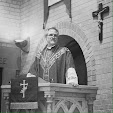
A Eulogy for Louis E. Perez, Sr. (1920-2019)
17 August 2019
Saturday, September 01, 2018
The Economics of Death
Interestingly, Pastor Glover looks at the issue not from the moral, cultural, or ethical aspect, but rather from the political viewpoint of "policies and laws." He goes on to express ambivalence toward the political issue of Supreme Court justices, even a bit of skepticism, while also expressing the possibility that Supreme Court appointments might help.
The real answer, the author opines, is politics of a different stripe: "policies and laws that end, or at least seek to radically reduce, poverty."
His well-intentioned argument is that abortion is not at its root an ethical or philosophical issue, but rather one of economics, and that as such, it is actually rooted and grounded in poverty. Poverty is the keystone. If we can "end" it or "radically reduce" it, that would in fact "end" the "hundreds of thousands of abortions that occur every year in America."
Of course, poverty is not something that can be cured with enough research, the right policy prescription, technology, or even the milk of human kindness. Poverty is caused by scarcity: demand exceeding supply, which, according to Christian anthropology, is a consequence and curse of the Fall. Poverty will always be with us in this age, if we are to believe Jesus. This is not to say that we should not seek out behaviors which bring relief to our fellow man. Quite the opposite! That is what charity and alms-giving are all about. Though we cannot cure poverty in the abstract, though we cannot overcome the Fall by our own prowess, though we cannot scientifically make supply exceed demand - we can love our neighbor in need.
Pastor Glover, however, proposes that the road to the ending or the radical reduction of poverty lies in Socialism. Interestingly, he begins his argument by an appeal that we "imagine."
Pastor Glover writes: "[I]magine a nation that insures every one of its citizens from conception to death." Has socialized medicine resulted in fewer abortions in nations where it is the norm? And how does it work for a fertilized egg to have health insurance, but at the same time, can be aborted?
The author invites us to "imagine a nation that guarantees a living wage to every one of its citizens." He invites us to "imagine a nation that has more generous maternal leave policies and begins to have a serious conversation about paternal leave." He alludes to the myth of "the gross income disparity between men and women." He calls for "radically expanding foster and adoptive services and supporting them in ways far beyond what our budgets currently allot" meaning more government intervention in the economy. Do all these things, and "maybe" says the author, "just maybe, more women will choose not to have an abortion."
Of course, the argument that Socialism alleviates poverty is monstrous. What brings countries out of poverty are markets, not Marxism. This is not opinion; it is empirically and historically demonstrable.
Moreover, even Europe's soft democratic-socialist countries already have these very policies and laws that the author asks us to "imagine", as if such Utopias were only a glimmer in the mind of Lennonesque dreamers. Has abortion ended in these countries? Has it been radically reduced? Or have we seen a further degradation of the value of human life by an increase in related atrocities such as euthanasia and its related boon for tourism in countries that champion such policies?
What about the Soviet Union? In its seven decades of socialized medicine from cradle to grave, its guaranteed living wage, its maternal leave policy, its unabashed advocacy for women's rights, as well as its famous government-run orphanages - did the USSR end or radically reduce abortion?
There are two fatal flaws in Pastor Glover's argumentation:
1) That Socialism is a way out of poverty, and
2) That abortion is primarily a matter of having more money as opposed to how one views human life.
A little perspective is also called for. In the United States today, most of the people we consider poor have a place to live, clean potable drinking water, indoor plumbing, electricity, television, and telephones. They typically have access to free health care through Medicaid, greatly reduced food bills through EBT and other welfare programs, breakfasts and lunches for their children enrolled in the nation's free public schools and free head start programs. People that we consider poor often have luxuries like cellphones, cable TV, sports tickets, pets, tattoos, video games, jewelry, cigarettes, air conditioning, automobiles, etc. Moreover, they also often manage to find the money to get abortions.
I do agree that we should support policies and laws that push back against poverty (even though it is impossible to eradicate it in this fallen world). I believe that the free market system, not Socialism, has demonstrably proven itself to be exponentially and consistently superior in that endeavor. Socialism has not only given us more abortions - paid for by tax money - but has also given the world a hundred million corpses and a legacy of the concentration camp and the mass grave.
Pope St. John Paul II - a player in the downfall of the very Union of Soviet Socialist Republics that championed Pastor Glover's various policy prescriptions - put his finger on the problem. At its root, the issue of abortion is not economic or political. Politics follows the anthropological philosophy, of the culture. Economics is about choice and human action based on one's subjective values.
The root issue which underlies the politics and economics of abortion, according to Pope John Paul, is the "culture of death." And so it is.
Wednesday, October 18, 2017
Are human beings valued intrinsically or instrumentally?
Alan Shlemon speaks on two opposing worldviews of what it means to be human: the Intrinsic Value Theory, vs. the Instrumental Value Theory (beginning at 28:44)...
Summer White with Apologia Studios interviews feminists on the most basic questions of what it means to be human and to have rights...
Shlemon's distinction between these two worldviews is clearly demonstrated by such interviews. This topic is worth pondering and discussing.
Sunday, December 02, 2012
Wednesday, November 14, 2012
Is 1984 now?
Tuesday, October 16, 2012
An Unwelcome Pulmonary Visitor
I had a small piece of boiled egg "go down the wrong pipe" - which sent my body into a tizzy. The lungs are not made to digest food, and sometimes, weird things can happen when things get out of wack.
The above article also shows the tenacity of life, especially given the Creator's implantation of DNA and life's ability to germinate and survive in the most extraordinary circumstances.
I wonder if the guy was able to keep the plant alive?
Thursday, September 20, 2012
A Video-Encyclical from the Archbishop
Tuesday, April 10, 2012
One of the Best Books I Have Ever Read
Thanks to this article (which is an outstanding read in and of itself) I learned about the heroic Russian dissident Vladimir K. Bukovsky and his out-of-print remarkable biographical work To Build A Castle: My Life as a Dissenter - which I promptly ordered through inter-library loan.
I literally could not put the book down.
Bukovsky is an outstanding writer, and he structured the book almost as a novel or a fast-paced thriller. It is so well-done that I think it would make for a compelling film. It chronicles his life and work as a Soviet-era dissident, his work with fellow dissidents, scientists, and writers in not only producing samizdat (anonymous free-press newspapers) but also openly engaging in public demonstrations - only to be arrested by the KGB again and again. It covers his many years in Gulag prisons, how he kept his sanity, how he was mistreated (though his prose is not gratuitous), how the Soviets misused Psychiatry as a means of political control, and how the bureaucrats who ran the country and the prison system eventually devoured one another - especially in the light of international scrutiny.
Castle is an epic of courage and devotion to liberty.
Vladimir Bukovsky was born during World War II (The Great Patriotic War) in the immediate aftermath of the end of Stalinism. In his teen years, he rejected Communism and became involved in the burgeoning dissident movement. Those were frightening times, and it took courage and a willingness to be imprisoned for years on end, being sent to "psychiatric hospitals" and exiled internally to labor camps - only to be released and have the whole process repeated again - all in order to continue to put pressure on the tyrannical Soviet government to start respecting human rights and liberties. Eventually, their pressure on the bureaucracy led to the collapse of the Gulag system, the end of the USSR, and the tearing down of the Iron Curtain.
In 1976, Vladimir Bukovsky was exiled to the west.
He moved to Cambridge, England where he still lives. A neurophysiologist, he earned a Masters degree from the University of Cambridge in Biology. He remains politically active. In a 2005 Washington Post article, he warned the United States about the dangers of normalizing torture as public policy. Embedded below is a video of Bukovski warning his fellow British citizens about the dangers of the European Union - which he sees as just another incarnation of the Soviet Union. He is a member of the UK Independence Party (whose president is the intrepid Nigel Farage).
And here is a link to an interview with Bukovsky on the shortcomings of the EU. Here is a link to much of Bukovsky's writings in both English and Russian.
What follows are a couple of quotes from To Build A Castle: My Life as a Dissenter that I found particularly interesting:
On Marxist Economic Theory:
This dream of absolute, universal equality is amazing, terrifying, and inhuman. And the moment it captures people's minds, the result is mountains of corpses and rivers of blood, accompanied by attempts to straighten the stooped and shorten the tall. I remember that one part of the psychiatric examination was a test for idiocy. The patient was given the following problem to solve: "Imagine a train crash. It is well known that the part of the train that suffers the most damage in such crashes is the carriage at the rear. How can you prevent that damage from taking place?" The idiot's usual reply is expected to be: Uncouple the last carriage. That strikes us as amusing, but just think, are the theory and practice of socialism much better?
Society, say the socialists, contains both the rich and the poor. The rich are getting richer and the poor poorer --- What is to be done? Uncouple the last carriage, liquidate the rich, take away their wealth and distribute it among the poor. And they start to uncouple the carriages. But there is always one carriage at the back, there are always richer and poorer, for society is like a magnet: there are always two poles. But does this discourage a true socialist? The main thing is to realize his dream; so the richest section of society is liquidated first, and everyone rejoices because everyone gains from the share-out. But the spoils are soon spent, and people start to notice inequality again --- again there are rich and poor. So they uncouple the next carriage, and then the next, without end, because absolute equality has still not been achieved. Before you know it, the peasant who has two cows and a horse turns out to be in the last carriage and is pronounced a kulak and deported. Is it really surprising that whenever you get striving for equality and fraternity, the guillotine appears on the scene?
....It is difficult for man to resist this dream and this noble impulse, particularly for men who are impetuous and sincere. They are the first to start chopping heads off and, eventually, to have their own chopped off. (pp 106-108).
On Resistance and Inner Freedom
[I]f you answered lawlessness with lawlessness, there was precious little chance of ensuring observance of the law. There was simply no other way. In exactly the same way, answering violence with violence would only multiply violence, and answering lies with lies would never bring us closer to the truth....
[T]he suggestion was that citizens who were fed up with terror and coercion should simply refuse to acknowledge them. The point about dealing with the Communists is that to acknowledge the reality of the life they have created and to assent to their notions means ipso facto to become bandits, informers, hangmen, or silence accomplices. Power rests on nothing other than people's consent to submit, and each person who refuses to submit to tyranny reduces it by one two-hundred-and-fifty-millionth, whereas each who compromises only increases it.... It presupposed a small core of freedom in the individual, his "subjective sense of right," as Volpin put it. In other words, a consciousness of his personal responsibility. Which meant, in effect, inner freedom. (p. 240).
On Non-Violence
Until people learn to demand what belongs to them by right, no revolution will liberate them. And by the time they learn, a revolution won't be necessary. No, I don't believe in revolution, I don't believe in forcible salvation.
It is easy to imagine what would happen in this country if there were a revolution: universal looting, economic collapse, internecine butchery, and in every district a different band of outlaws with its own "gangleader" at its head. And the passive, terrorized majority would gladly submit to the first strong system of government to come along, in other words, a new dictatorship. (pp. 323-324).
Sunday, January 22, 2012
Chaplain Hollywood
I was installed as chaplain of the David Crockett Steam Fire Company No. 1 on January 7, 2012.
Here are my pictures from the installation.
David Crockett is the oldest continuously operating volunteer fire company in the United States. As Mayor Harris pointed out, Crockett has not merely met monthly since its founding in 1841, the company has provided uninterrupted 24-7 fire protection on a volunteer basis to the City of Gretna since that time - absolutely without interruption!
This is extraordinary, especially considering the rough ride Gretna has been through in the last 171 years: the War Between the States, federal occupation, two world wars (keep in mind Gretna's German heritage), the Great Depression, and numerous hurricanes. Through all of these catastrophes and upheavals, David Crockett has not even shut down for one second.
Crockett also has not just a sterling record but a well-earned reputation for excellence and diligence.
The annual installation was a joyful celebration that had many high points, such as the swearing in of officers, the mayor's speech, the address by the state fire marshal, and the acknowledgment of fifty years of perfect attendance by Anthony Labruzza. The meal was excellent, and fitting to such an auspicious occasion. I also got to meet the Rev. Frank Carabello, the retired pastor of our good neighbor St. Joseph Roman Catholic Church, having served there for thirty years.
I am very grateful to fire service veterans treasurer Lynn Coyne (who invited me) and president Gordon Carbo (who appointed me). I'm also grateful to LCMS chaplain the Rev. Dean Kavouras of Cleveland, Ohio, who serves as police, fire, and FBI chaplain, for his advice to me and also for his wonderful book (published by the Lutheran Heritage Foundation) chronicling his chaplaincy work in the immediate aftermath of Sept. 11, 2001: Nine One One The Aftermath: The Word Works.
I'm looking forward to supporting the men who protect Gretna from fire and other disasters.
Monday, December 26, 2011
Where does this road end? And when?
Sobering. Q: How long can we "kick the can down the road" spending "money" we don't have on a worldwide trillion-dollar empire of military bases abroad, and a spiralling ponzi-scheme of entitlements at home, desperately begging and borrowing from China (and whoever else will buy our increasingly risky debt) and printing money out of thin air to "pay" for it all? A: Until the road ends.
Saturday, December 17, 2011
Which Candidate Supports the Troops, and Is Supported By the Troops?
Which candidate really supports the American soldiers, sailors, airmen, and Marines - and is a veteran himself? Check it out...
Friday, November 18, 2011
On Quality of Life
[Pascal writes]: Man's greatness comes from knowing he is wretched: a tree does not know it is wretched. Thus it is wretched to know that one is wretched, but there is greatness in knowing one is wretched. (No. 114).
[Kreeft writes]: Thus the greatness and high dignity of Greek drama. It is not only that the wise sufferer is rewarded in the end, like Oedipus (and Job), but that even in the act of suffering well there is dignity, because the suffering is not just a negative event in the physical world but also a positive event in the spiritual world. By the sufferer's understanding and will, his suffering is granted entrance into this second world. It becomes not merely an event in space but an event in consciousness. It is taken up to Heave: the Heaven of thought, even if not the Heaven of bliss.
How utterly low and brutish is the level to which a human mind has to sink before it csn look at an old lady in a nursing home bed suffering some incurable disease and call this life and this suffering "meaningless", lacking in "quality of life". To call this the "quality of life ethic" is like calling a cannibal a chef.
If this sneeringly snobbish judgment is true of the old lady, it is true a fortiori of Christ. If her cross of suffering, her death-bed lacks "quality", then His cross and death-tree also lack "quality".
"Quality" is thus used as a professional euphemism for sex and money. We find this brutish mentality only in the "upper" classes, the professional and "educated" people, especially journalists and professors, not among the poor, not among real people. Such "intellectuals" are as intelligent as radical "feminists" are feminine."
Wednesday, September 21, 2011
My Siberian Adventure - Day 15 - July 11, 2011
Drive to: Yurga, Tomsk
Drive back to: Novosibirsk
Dan and I have breakfast of leftover sausages from yesterday’s picnic, as well as some cheese, bread, and tea.
I get packed for our trip to Tomsk. We leave in the bishop’s Jeep about 10:00 am, accompanied by Natasha. Vsevolod is a good driver – sufficiently aggressive for Siberian roads. The lines on the road are more of a suggestion than anything else. It’s great fun!
The bishop needs to gas up the car, but we are not having much luck. One station was out of gas. The roads are choppy and inconsistent. Some are better than others.
After a couple hours of driving, we stop for a break. The first order of business is the toilet. We park at a stop – the local version of the rest area. We park the car and have to cross the highway in a human version of Frogger. There are many cars parked, as well as a couple tour buses. The public toilet has a small crowded entrance. It costs 10 rubles to use the facilities – about 30 cents U.S. There is a subway-like turn-style that only accepts the old-style 10-ruble coin.
People bustle in – especially given the arrival of the tour bus outside. We hurriedly put our coins in the turn-style and pass through the tripod of metal arms that swivel around while people hurriedly exit through the same narrow space. It is a mass of confusion. Men go to the left and women to the right – not that it matters a great deal as the doors are wide open. Since the line to the women’s room is long, several women decide to come into the crowded men’s room. At least the stalls have doors that go all the way to the floor. Many of the men, however, stand with their backs to the open doors.
A tired-looking washerwoman mops the floor – or more accurately, slops dirty water around the floor in a futile attempt to clean.
I enter the stall. The toilets themselves are porcelain holes in the floor. There are a few small rolls of brown industrial toilet paper (so-called) strewn around the stall. I exit and wash my hands. I have trouble finding a hand-dryer that works, and so I dry my hands on the paper towels – which seem to be identical with the toilet paper.
There is a great contrast between the smartly-dressed high-heeled fashion-conscious women and these unfashionable and uninviting bathrooms. I can’t imagine the status quo won’t change as Russian women travel abroad. If nothing else, as McDonald’s and other fast-food restaurants spread across Russia (which is probably inevitable), the expectations of public restrooms will likely be raised. Or maybe not! I’m speculating.
We leave the public toilet, emerge into the daylight, and we cross the busy highway to go to the little diner. It is run (like the public toilet) by Armenians. The diner offers traditional Russian fare. I enjoy a shashlik and a nice bowl of plov (плов) – an Asian dish of rice and meat.
I’m offered a blini (pancake) with meat. I only want one, but end up with two – with sour cream (сметана). I’m not a fan of sour cream, but the Russians put it on (and in) just about everything! Admittedly, it tastes different than its American cousin. I also take a small piece of obviously homemade bread, and an instant coffee. It is a wonderful meal. The bishop pays for all of us.
We sit at a round table down the hall – Dan, Natasha, the bishop, and I. In spite of the bustle of people coming and going, we do not feel rushed. We enjoy our lunch and lunchtime conversation.
Afterward, Dan and I go back to the counter on our own. Father Daniel buys an ice cream and I buy a Coke. I really need the caffeine as well as the bubbles for my stomach. The bishop also buys a Coke and scolds me teasingly for me for being “a bad American influence.” I smile and apologize. I get real Coke (not Diet) – as the real Coke has real sugar (unlike the American version sweetened with high fructose corn syrup). The Diet Coke in Russia does not taste good to me. I think it still has saccharine.
We get back on the road as the bishop drives us to Yurga.
The SELC has a parish there, though it is in transition and we won’t be visiting it. The congregation formerly met in a flat in an apartment building that was torn down by the government. They gave the church a different flat – a nicer one than the old one. The new flat is on a nice building, but is on the ninth floor. The church is meeting there temporarily until they can sell the flat and buy a different one on the first floor.
At one point, we have to wait for a herd of horses to cross the street. At least one of them is a very young colt.
Yurga is the site of a concentration camp where Russians of German ethnicity were deported under Stalin’s reign of terror. Most of these deportees were Lutherans. There is a plot of ground in Yurga that is a mass grave from the days of the concentration camp. The bishop explains how horrific the place was. Some people were even buried alive there – rather than receive treatment for illnesses. At the end of Stalin’s regime, the camp was closed – and most of the records were destroyed. People began to build dachas on the site. Many of the camp inmates continued to live there after they were freed. Their freedom, however, was limited by the fact that they could not get passports until the 1970s. In Soviet times, even internal travel required a passport.
After the fall of Communism, relatives of the victims petitioned the Yurga government for a small plot of ground to build a memorial. Today, this park is filled with crosses, stones engraved with names, and a large cross with a wind chime built into it that calls to mind the ringing of church bells. Many of the inscriptions are in German.
Bishop Vsevolod had consecrated the the plot at the invitation of the local government. There is also a small garden area with flowers in the shape of a cross.
The Lutheran Church as invited to build a chapel on the site – but they have no money to do so. How different from the situation with the Russian Orthodox Church, with new and elaborate – and even opulent – churches springing up like gilded mushrooms across the country – paid for by government money.
It is a long haul down the expressway to Tomsk. Some roads are, of course, better than others. It begins to rain heavily.
As he navigates the puddles with his windshield wipers doing yeoman’s work, the bishop puts on an eclectic mix of guitar music. One tune was a haunting anthem by Mark Knopfler (formerly of Dire Straits) with the poignant refrain “We will remember them.” It is called “Remembrance Day" (listen here). After just visiting the memorial at Yurga, this was providentially appropriate.
I have the opportunity to interview the bishop about Lutheranism in Siberia. It seems that the last Lutheran priest in Siberia (until post-Soviet times) died in prison in the 1940s. He had been arrested and sent to a labor camp, but escaped and heroically returned to his parish to continue his pastoral work. He was re-arrested and shot.
The history of post-Soviet Lutheranism is complicated. In fact, many of the answers to my questions addressed to our Siberian brethren concerning their history and existence in the current culture begin with, “It’s complicated.”
One such complication involves two Russian Lutheran church bodies born of the same mother church. Both the Ingrian and Siberian churches were established as missionary endeavors of the Estonian (Lutheran) Church. The Ingrian Church (centered in St. Petersburg) does not “ordain” women, but sometimes allows female “priests” from the Church of Finland (with whom they share fellowship) to serve in their parishes. The LCMS is also in full communion with this church body.
It’s complicated.
The Siberian Evangelical Lutheran Church is also a daughter jurisdiction of Estonia. Bishop Vsevolod Lytkin is the first bishop of the autonomous Siberian Church. While the SELC is in communion with its mother church, it does not recognize the validity of "ordained" women (nor their "sacramental" acts) in any church body, nor will it participate in any churchly acts with "ordained" women.
After a long ride, we arrive in Tomsk. It is a big, old (by western standards), university city. The old Lutheran congregation, St. Mary’s, was torn down by Stalin as part of his purge. It was maliciously replaced by a circus – with the ferris wheel (which stands there to this day) being erected on the site of the church's altar. The Russian word for “ferris wheel” is “devil’s wheel.” You can read more about it here.
The pastor, Rev. Ivan Lokkenberg, was imprisoned and died after a few years. There is still a street in Tomsk called Lutheran Street. The pastor lived near the church, and was courageous throughout the persecution.
The bishop explains that before the Bolshevik Revolution (1917) about 10% of Russians were Lutheran. 60% were Orthodox. The number of Lutherans was significant.
About six years ago, under a post-Communist law, a Lutheran church was built to replace St. Mary’s building that had been destroyed. So, SELC restarted St. Mary’s in this beautiful rustic building that we have just entered. It is utterly remarkable! There is a pipe organ in the loft (Natasha gladly plays as we gladly listen). There is also a small antique pump organ on the main floor. The bishop took video of me playing a scale.
We meet the congregation’s two pastors: Father Daniel Burlikov and Father Alexander Hahn. They also rotate service in Yurga. I meet Father Daniel first. He speaks very good English having served a vicarage in the United States. He is also Olga Netaeva’s brother. Father Alexander also speaks English, and is actually the only SELC clergyman who was raised in the Christian faith. Both men are kindly, soft-spoken, and devout in their faith. Father Daniel presents me with a beautiful gilded coffee mug illustrating the city of Tomsk. It has since become my vessel of choice for tea drinking (the one on the right). Father Alexander is gregarious and loves to talk. English not being his native tongue is no obstacle!
What a great privilege to count these honorable brothers in Christ as fellow servants of the Lord and brothers in arms in service of the His Bride the Church!
We all climb the narrow ladder to the bell tower for an excellent view and wonderful conversation with the two pastors.Father Daniel explains to us the complex situation regarding St. Mary’s and SELC's relationship with ELKRAS - a more liberal Lutheran church body. SELC owns the building, but they are supposed to allow the local ELKRAS congregation to also use the building. ELKRAS is threatening to send a woman "pastor" to lead services.
After our tour of St. Mary's and a drive around town to see the interesting architecture - we go out for coffee and dinner. Fr. Alexander says goodbye to us. We visit a nice little a la carte style restaurant. I get a cappuccino, potato pancake , and a piece of Vienna cake.
The rain has cleared up, and so we head downtown for a walk. Tomsk is a gorgeous city - very European looking. We walk to the Lenin statue and take funny pictures of the anachronistically triumphal dictator being dwarfed by the Orthodox Church that he tried so hard to extinguish. We stroll around the downtown area. We visit the Tomsk History Museum and walk up the observation tower to take pictures of the city. We stroll along the Ob River, and visit the whimsical statue of Anton Chekov, the writer who "praised Tomsk’s food, criticized its women, and ultimately recommended that the city wasn’t worth visiting."
The city's square is beautiful and has statues representing periods in Tomsk history. The Orthodox church prepares for Vespers as a clergyman stands in the belfry and rings the bells in a hypnotic melody. We walk back to the bishop's car, say our goodbyes to Father Daniel, and pile in for the four hour return drive.
Again, I have the privilege to sit in the front passenger seat to converse with Bishop Vsevolod about church history, polity, the diaconate, and the history of Lutheranism in Russia.
The ride back never seems to end. We do stop at the same туалет (toilet) and shashlik joint. This time the Russians eat heartily - me, not so much. I ate more than they did on the way up.
We drop off Natasha and head back to the seminary. I believe it is about 1:00 am when we made it back.
Here is a link to all of my pictures of Day Fifteen (and Sixteen).
Tuesday, August 02, 2011
I hope he's wrong...
... but I'm sad to say that I think Dr. Paul's somber warning is spot on.
Sunday, July 31, 2011
Monster: Portrait of Stalin in Blood
![]() |
| Gulag mugshot of Russian writer Aleksandr Solzhenitsyn |
Monster: Portrait of Stalin in Blood is a six-part documentary by Russian filmmaker Alexandre Ivankin that makes use of "recently released archival footage" of the terrors of life under Stalin. The film has been uploaded in parts on YouTube and they are linked above.
HT: Charles Burris on Lew Rockwell
Monday, May 17, 2010
A Big Voice Silenced
.jpg)
Saturday, March 13, 2010
Government at Work

Hence, part of the exhortation of Romans 13 is for government to obey the moral law and any other limits imposed on the government by the law itself.
In 1849, Henry David Thoreau wrote: "That government is best which governs least" (a quote sometimes incorrectly attributed to Jefferson or Paine). Since this writing, we've seen such worldwide exponential growth in government as : the American federal government's complete takeover of the states, the centralization of Italy and Germany, the creation of the American Federal Reserve and the IMF and World Bank, two world wars, the Great Depression, the rise and fall of worldwide Communism, the press for a united European state, and the rise of the post-WW2 American superstate. In the 20th century alone, government has killed 203,000,000 people.
Some recent arbitrary and ridiculous examples of why small government is better than big government:
- Lap dancing teachers get "punishment by paid vacation"
- Private citizen prosecuted for not handing over a coin found on private property as a child
- Government takes money from citizens to buy 7,000 olympic personnel 14 "free" condoms a day, and sends more when that runs out
- Heroic county bureaucrats ban coffee and doughnuts at hardware store
Bonus: a commenter on this last story wrote:Even a cursory glance at the news on the internet on a day to day basis is chock full of the folly of government - even here in my small city Gretna, Louisiana (the Louisiana part should have been a giveaway of funny business). And the one guy on the City Council who is saying what needs to be said is himself a crook.
Stop me when this sounds familiar:
Step 1: You are free to do XYZ.
Step 2: You are free to do XYZ, but you must ask permission first.
Step 3: You are free to do XYZ, after getting permission, but are subject to reasonable "health and safety" regulations.
Step 4: You are free to do XYZ, but only after applying for a permit or license, paying the fee and getting permission. XYZ is subject to a variety of restrictions and regulations for the good of the community.
Step 5: You are free to do XYZ, but only if you are a member of a class with a certain kind of education or training and accredited by an "independent" XYZ organization or association. You must apply for a license with a steep price tag, and only a few licenses are available each year. XYZ is heavily regulated and managed by distant government bureaucrats. Cottage industries spring up to navigate you through the legal, procedural, and insurance issues involved with doing XYZ.
What's step 6? Come on, everyone, you know it.
Quis custodiet ipsos custodes?
Since government officials are God's ministers, they should be held to the same standards of conduct that you would expect of any other minister. We should not allow government officials to use Romans 13 as a fig leaf to cover their own misdeeds.
If you're being tired of being taxed and controlled to the hilt by corrupt government at all levels, you might want to read this book. It also explains why the majority of Americans now believe this about their own federal government and several states are starting to decentralize and wrest control back from the feds. And when you are ready to hold government accountable, you might want to read Lew Rockwell every day instead of the MSM and pro-government talk radio mouthpieces from the left and the right who all complain about Big Government and then propose the solution: Bigger Government.
Friday, February 26, 2010
+ Joseph DeHart, R.I.P.
It is with a heavy heart that I report the death this afternoon of my friend and fellow presbyter of Christ's Church, the Venerable Reverend Father Joe DeHart, rector (pastor) of St. Mary's Anglican Catholic Church in Akron.
Fr. Joe was first and foremost a churchman. He was a servant of Christ. He loved his parish and was loved in return. Always smiling, generous, witty, and bubbling over with practical wisdom, Joe always made people feel at home, ever ready with a funny story - a rascal with a twinkle in the eye, a deep voice, a big personality, and a hearty laugh. And his devotion to his equally-devoted and sharp-witted wife Edy was apparent to everyone. Fr. Joe was a kind of American and Anglican version of Fr. Duddleswell.
While I was a seminarian in Fort Wayne, Indiana, we would visit St. Mary's from time to time while visiting my folks just outside Akron. On one occasion, Sunday happened to be October 31. And although the Anglican tradition of Christianity grew out of the 16th century Reformation, and in fact owes much to Luther and the Wittenberg reformers - Anglicans are not Lutherans. That October Sunday was Christ the King to the Anglicans, not Reformation Day. But because Grace and I were in attendance, just before the last hymn, Fr. DeHart announced to the congregation and the organist that there would be a change in plans. We sang A Mighty Fortress Is Our God instead of the assigned closing hymn. The parish sang it with gusto.
We were always treated like members of the parish when we would visit (though we never asked for communion, and like the LCMS, the ACC practices closed communion and never offered it). In spite of the differences between our communions, Grace and I were always treated with great warmness by Fr. Joe and Edy and the entire parish - and I still exchange e-mail with one of the parishioners of St. Mary's. We spent many a joyous Sunday sipping coffee in the undercroft of St. Mary's after Mass.
Fr. Joe also gave me a copy of the Anglican Missal and the 1928 Book of Common Prayer. The Book of Common Prayer, originally published in 1549 (bearing some influence of the Lutheran reformers), became the standard English translation of the ancient liturgy - much of which has survived even to our own current Lutheran Service Book. What a treasure we western catholic and anglophone Christians have in the common liturgy that we share!
Needless to say, Joe's gift to me is itself a treasure, and his kindness in giving these books to me typified his generosity and hospitality.
Grace and I remember fondly when Fr. Joe and Edy once took us out to dinner. It was glorious, something we will always call to mind with joy. Knowing that I was going into the pastoral ministry, and being a "second career" couple themselves, Joe and Edy really took us under their wings and were of immeasurable value as friends and mentors. They always welcomed our phone calls and e-mails. We always learned from (and laughed with) both of them.
Please keep Edy DeHart and St. Mary's in your prayers. Fr. Joe has entered eternity victoriously in Christ. Thanks be to God for his life and priestly ministry at altar, font, and pulpit. Even in grief, I look forward in hope and in joy to being reunited with my fellow churchman in that heavenly eternal Jerusalem where sin, death, and the devil will be no more, where the light of Christ will shine unimpeded for eternity!
May Fr. Joe rest in peace, and may all of his family, parishioners, and friends take comfort in the resurrection of our blessed and risen Lord Jesus Christ!
His obit can be seen here.
Tuesday, February 23, 2010
St. Polycarp, Bishop and Martyr
St. Polycarp was perhaps the last living link to the last of the living apostles, being a disciple of St. John the beloved apostle. St. Polycarp (whose name means "much fruit") was martyred about 155 or 156 AD, in the ninth decade of his life on this side of the grave, for his refusal to worship Caesar. While waiting for the flames that would blaze around him at the stake, Father Polycarp was promised his freedom if he would only renounce Christ and just burn a pinch of incense in acknowledgment of the emperor's divinity.
The grizzled warrior of the cross replied: "Eighty and six years I have served him, how then can I blaspheme my King and Savior? Bring forth what you will." Instead of offering a pagan sacrifice to the imperial false deity, he defied the emperor by offering his life as a thank offering to the True God.
St. Polycarp's heroic witness for the Gospel was a powerful testimony of Christ and His Church, serving to fortify the thousands of Christians who were persecuted and martyred by the Roman government. Even today, St. Polycarp continues to give courage to our brothers and sisters around the world who are still being put to the sword for the sake of our Blessed Lord and as a consequence of their good confession.
Below is St. Polycarp's letter to the Philippians (c. 110-140 AD). It is the only surviving written work of Bishop Polycarp, and it is chock full of quotations from Holy Scripture - showing the reverence and submission the apostolic fathers had for the Word of God. St. Polycarp was the teacher and pastor of St. Irenaeus, one of the greatest theologians and defenders of orthodoxy against the attacks of the numerous heretics and heresies of his day - whose heirs continue to this very day to do Satan's work in attacking the two natures of our Blessed Lord Christ and the mystery of the Most Holy Trinity.
We give thanks to God for the testimony of the apostolic fathers, those who learned at the beautiful feet of the holy apostles of Jesus; men who served humbly and faithfully in perilous times and places, even unto death: doctors and presbyters of the Church whose preaching was backed by their works - even the work of following Jesus by taking up the cross of suffering and martyrdom. In this, they bore "much fruit" and offered their lives as a fragrant offering to the Lord, the "Savior of our souls, the Governor of our bodies, and the Shepherd of the catholic church throughout the world" (Martyrdom of Polycarp 1:43).
May we be graced with their courage, faith, devotion to pure doctrine, and most of all, love.
THE EPISTLE OF POLYCARP TO THE PHILIPPIANS
Polycarp, and the presbyters with him, to the Church of God sojourning at Philippi: Mercy to you, and peace from God Almighty, and from the Lord Jesus Christ, our Saviour, be multiplied.
CHAPTER I.--PRAISE OF THE PHILIPPIANS.
I have greatly rejoiced with you in our Lord Jesus Christ, because ye have followed the example of true love [as displayed by God], and have accompanied, as became you, those who were bound in chains, the fitting ornaments of saints, and which are indeed the diadems of the true elect of God and our Lord; and because the strong root of your faith, spoken of in days long gone by, endureth even until now, and bringeth forth fruit to our Lord Jesus Christ, who for our sins suffered even unto death, [but] "whom God raised froth the dead, having loosed the bands of the grave." "In whom, though now ye see Him not, ye believe, and believing, rejoice with joy unspeakable and full of glory; " into which joy many desire to enter, knowing that "by grace ye are saved, not of works," but by the will of God through Jesus Christ.
CHAPTER II.--AN EXHORTATION TO VIRTUE.
"Wherefore, girding up your loins," "serve the Lord in fear" and truth, as those who have forsaken the vain, empty talk and error of the multitude, and "believed in Him who raised up our Lord Jesus Christ from the dead, and gave Him glory," and a throne at His right hand. To Him all things" in heaven and on earth are subject. Him every spirit serves. He comes as the Judge of the living and the dead. His blood will God require of those who do not believe in Him. But He who raised Him up from the dead will raise up us also, if we do His will, and walk in His commandments, and love what He loved, keeping ourselves from all unrighteousness, covetousness, love of money, evil speaking, falsewitness; "not rendering evil for evil, or railing for railing," or blow for blow, or cursing for cursing, but being mindful of what the Lord said in His teaching: "Judge not, that ye be not judged; forgive, and it shall be forgiven unto you; be merciful, that ye may obtain mercy; with what measure ye mete, it shall be measured to you again; and once more, "Blessed are the poor, and those that are persecuted for righteousness' sake, for theirs is the kingdom of God."
CHAPTER III.--EXPRESSIONS OR PERSONAL UNWORTHINESS.
These things, brethren, I write to you concerning righteousness, not because I take anything upon myself, but because ye have invited me to do so. For neither I, nor any other such one, can come up to the wisdom" of the blessed and glorified Paul. He, when among you, accurately and stedfastly taught the word of truth in the presence of those who were then alive. And when absent from you, he wrote you a letter, which, if you carefully study, you will find to be the means of building you up in that faith which has been given you, and which, being followed by hope, and preceded by love towards God, and Christ, and our neighbour, "is the mother of us all." For if any one be inwardly possessed of these graces, he hath fulfilled the command of righteousness, since he that hath love is far from all sin.
CHAPTER IV.--VARIOUS EXHORTATIONS.
"But the love of money is the root of all evils." Knowing, therefore, that "as we brought nothing into the world, so we can carry nothing out," let us arm ourselves with the armour of righteousness; and let us teach, first of all, ourselves to walk in the commandments of the Lord. Next, [teach] your wives [to walk] in the faith given to them, and in love and purity tenderly loving their own husbands in all truth, and loving all [others] equally in all chastity; and to train up their children in the knowledge and fear of God. Teach the widows to be discreet as respects the faith of the Lord, praying continually for all, being far from all slandering, evil-speaking, false-witnessing, love of money, and every kind of evil; knowing that they are the altar s of God, that He clearly perceives all things, and that nothing is hid from Him, neither reasonings, nor reflections, nor any one of the secret things of the heart.
CHAPTER V.--THE DUTIES OF DEACONS, YOUTHS, AND VIRGINS.
Knowing, then, that "God is not mocked," we ought to walk worthy of His commandment and glory. In like manner should the deacons be blameless before the face of His righteousness, as being the servants of God and Christ, and not of men. They must not be slanderers, double-tongued, or lovers of money, but temperate in all things, compassionate, industrious, walking according to the truth of the Lord, who was the servant of all. If we please Him in this present world, we shall receive also the future world, according as He has promised to us that He will raise us again from the dead, and that if we live worthily of Him, "we shall also reign together with Him," provided only we believe. In like manner, let the young men also be blameless in all things, being especially careful to preserve purity, and keeping themselves in, as with a bridle, from every kind of evil. For it is well that they should be cut off from the lusts that are in the world, since "every lust warreth against the spirit; " and "neither fornicators, nor effeminate, nor abusers of themselves with mankind, shall inherit the kingdom of God," nor those who do things inconsistent and unbecoming. Wherefore, it is needful to abstain from all these things, being subject to the presbyters and deacons, as unto God and Christ. The virgins also must walk in a blameless and pure conscience.
CHAPTER VI.--THE DUTIES OF PRESBYTERS AND OTHERS.
And let the presbyters be compassionate and merciful to all, bringing back those that wander, visiting all the sick, and not neglecting the widow, the orphan, or the poor, but always "providing for that which is becoming in the sight of God and man ; " abstaining from all wrath, respect of persons, and unjust judgment; keeping far off from . all covetousness, not quickly crediting [an evil re port] against any one, not severe in judgment, as knowing that we are all under a debt of sin. If then we entreat the Lord to forgive us, we ought also ourselves to forgive; for we are before the eyes of our Lord and God, and "we must all appear at the judgment-seat of Christ, and must every one give an account of himself." Let us then serve Him in fear, and with all reverence, even as He Himself has commanded us, and as the apostles who preached the Gospel unto us, and the prophets who proclaimed beforehand the coming of the Lord [have alike taught us]. Let us be zealous in the pursuit of that which is good, keeping ourselves from causes of offence, from false brethren, and from those who in hypocrisy bear the name of the Lord, and draw away vain men into error.
CHAPTER VII.--AVOID THE DOCETAE, AND PERSEVERE IN FASTING AND PRAYER.
"For whosoever does not confess that Jesus Christ has come in the flesh, is antichrist;" and whosoever does not confess the testimony of the cross, is of the devil; and whosoever perverts the oracles of the Lord to his own lusts, and says that there is neither a resurrection nor a judgment, he is the first-born of Satan. Wherefore, forsaking the vanity of many, and their false doctrines, let us return to the word which has been handed down to us from the beginning; "watching unto prayer," and persevering in fasting; beseeching in our supplications the all-seeing God "not to lead us into temptation," as the Lord has said: "The spirit truly is willing, but the flesh is weak."
CHAPTER VIII.--PERSEVERE IN HOPE AND PATIENCE.
Let us then continually persevere in our hope, and the earnest of our righteousness, which is Jesus Christ, "who bore our sins in His own body on the tree," "who did no sin, neither was guile found in His mouth," but endured all things for us, that we might live in Him. Let us then be imitators of His patience; and if we suffer for His name's sake, let us glorify Him. For He has set us this example s in Himself, and we have believed that such is the case.
CHAPTER IX.--PATIENCE INCULCATED.
I exhort you all, therefore, to yield obedience to the word of righteousness, and to exercise all patience, such as ye have seen [set] before your eyes, not only in the case of the blessed Ignatius, and Zosimus, and Rufus, but also in others among yourselves, and in Paul himself, and the rest of the apostles. [This do] in the assurance that all these have not run in vain, but in faith and righteousness, and that they are [now] in their due place in the presence of the Lord, with whom also they suffered. For they loved not this present world, but Him who died for us, and for our sakes was raised again by God from the dead.
CHAPTER X.--EXHORTATION TO THE PRACTICE OF VIRTUE.
Stand fast, therefore, in these things, and follow the example of the Lord, being firm and unchangeable in the faith, loving the brotherhood, and being attached to one another, joined together in the truth, exhibiting the meekness of the Lord in your intercourse with one another, and despising no one. When you can do good, defer it not, because "alms delivers from death."" Be all of you subject one to another? having your conduct blameless among the Gentiles," that ye may both receive praise for your good works, and the Lord may not be blasphemed through you. But woe to him by whom the name of the Lord is blasphemed! Teach, therefore, sobriety to all, and manifest it also in your own conduct.
CHAPTER XI.--EXPRESSION OF GRIEF ON ACCOUNT OF VALENS.
I am greatly grieved for Valens, who was once a presbyter among you, because he so little understands the place that was given him [in the Church]. I exhort you, therefore, that ye abstain from covetousness, and that ye be chaste and truthful. "Abstain from every form of evil." For if a man cannot govern himself in such matters, how shall he enjoin them on others ? If a man does not keep himself from covetousness, he shall be defiled by idolatry, and shall be judged as one of the heathen. But who of us are ignorant of the judgment of the Lord ? "Do we not know that the saints shall judge the world ?" as Paul teaches. But I have neither seen nor heard of any such thing among you, in the midst of whom the blessed Paul laboured, and who are commended in the beginning of his Epistle. For he boasts of you in all those Churches which alone then knew the Lord; but we [of Smyrna] had not yet known Him. I am deeply grieved, therefore, brethren, for him (Valens) and his wife; to whom may the Lord grant true repentance! And be ye then moderate in regard to this matter, and "do not count such as enemies," but call them back as suffering and straying members, that ye may save your whole body. For by so acting ye shall edify yourselves.
CHAPTER XII.--EXHORTATION TO VARIOUS GRACES.
For I trust that ye are well versed in the Sacred Scriptures, and that nothing is hid from you; but to me this privilege is not yet granted. It is declared then in these Scriptures, "Be ye angry, and sin not," and, "Let not the sun go down upon your wrath." Happy is he who remembers this, which I believe to be the case with you. But may the God and Father of our Lord Jesus Christ, and Jesus Christ Himself, who is the Son of God, and our everlasting High Priest, build you up in faith and truth, and in all meekness, gentleness, patience, long-suffering, forbearance, and purity; and may He bestow on you a lot and portion among His saints, and on us with you, and on all that are under heaven, who shall believe in our Lord Jesus Christ, and in His Father, who "raised Him from the dead. Pray for all the saints. Pray also for kings, and potentates, and princes, and for those that persecute and hate you, and for the enemies of the cross, that your fruit may be manifest to all, and that ye may be perfect in Him.
CHAPTER XIII.--CONCERNING THE TRANSMISSION OF EPISTLES.
Both you and Ignatius wrote to me, that if any one went [from this] into Syria, he should carry your letter with him; which request I will attend to if I find a fitting opportunity, either personally, or through some other acting for me, that your desire may be fulfilled. The Epistles of Ignatius written by him to us, and all the rest [of his Epistles] which we have by us, we have sent to you, as you requested. They are subjoined to this Epistle, and by them ye may be greatly profited; for they treat of faith and patience, and all things that tend to edification in our Lord. Any more certain information you may have obtained respecting both Ignatius himself, and those that were with him, have the goodness to make known to us.
CHAPTER XIV.--CONCLUSION.
These things I have written to you by Crescens, whom up to the present time I have recommended unto you, and do now recommend. For he has acted blamelessly among us, and I believe also among you. Moreover, ye will hold his sister in esteem when she comes to you. Be ye safe in the Lord Jesus Christ. Grace be with you all. Amen.