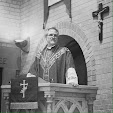
Sunday, January 28, 2024

Sermon: Septuagesima – 2024

28 January 2024

Text: Matt 20:1-16

In the name of + Jesus.  Amen.

The parables of Jesus are shocking, dear friends.  And they are supposed to be.  The only problem is that we are too familiar with them – unless we’re not familiar enough with them.  But imagine hearing this story of the Workers in the Vineyard for the first time.  Imagine yourself as the first one hired.

Imagine that you were a fast food worker, and you were hired for ten dollars an hour.  It’s hard work, but you were hired first among your co-workers who are all doing the same job.  Maybe you hope that by being hired first, and by working hard, you might get a promotion and a raise at some point.  But then you find out that your coworker – who does the same job right next to you – is making twelve times as much per hour as you do.  Instead of ten dollars an hour, that’s one hundred and twenty dollars an hour.

Would you feel cheated?  Would you feel angry?  What would you think about the franchise owner who just shrugs and says, “Well, you agreed for ten dollars an hour.  I can pay my workers whatever I want”? 

In our world, this would be on the news, all over social media, and Congress would be passing a law against income inequality.  It would probably be called the “Income Fairness Act” or some such.  Labor unions would come in and organize to prevent this horrible situation from ever happening again.  You might join the Socialist Party and rail against “the system.”  If your son or daughter were making a twelfth as much as his or her colleagues, would you side with the boss? 

Now imagine if you were a white collar worker making a hundred thousand dollars a year.  That’s pretty good money.  Most people would consider that a great job.  But how great would it be if you just learned that your co-workers doing the exact same job were making one point two million dollars a year?  You might have been really happy with your job just ten seconds ago, but now, you are probably thinking that you are being exploited, discriminated against, and that your boss is a jerk.  You might be calling your lawyer about now.

Now think about who the Boss is in Jesus’ story, you know, the jerk boss who is taking advantage of you.  That Boss is God.  That is why this parable is shocking.

But, let’s be honest: we do think that God is a jerk, and is unfair.  That’s what it means to be a poor, miserable sinner.  We need to not only rethink what we believe about God, but about ourselves.  For we poor, miserable sinners think we’re entitled to be treated better by God – and especially if we go to church.  How dare God let anything bad happen to me?  What an unfair Boss who allows other people to prosper while I struggle.  How can God allow people in my life to get sick or die?  How can God allow me to suffer from inequality or temptation or not enjoying the American Dream like my friends and colleagues and the people on TV with charmed lives who have the latest cars, take the best vacations, and live in dream homes? 

Why does it seem like it’s always the jerk boss, the lazy worker, the crooked politician, the liar, the cheater, the person born to wealth, the sinner, who gets away with it, and even gets ahead?

Sometimes when people think about God as the jerk Boss who allows such evils in the world, they become angry at God and become atheists.  Of course, that makes no sense, but it is a common argument of atheists: “God isn’t fair.”

Well, dear friends, God isn’t fair, and let us give Him thanks and praise that He isn’t.  And let us also accept the fact that we aren’t entitled.  He is God, and we are not.  He knows everything, and we do not.  He owns everything – including us – and we do not.  And it is what we call “faith” when we put our trust in Him, that He knows what He is doing.  It is also faith when we accept that what we consider “fair” is really just our own sense of self-centered greed and entitlement.

We are not entitled, dear friends.  Our culture and society and government and even our labor laws have conspired to stir us up like the angry worker in Jesus’ story.  Yes, we are the bad guy in the parable – as we always are.  We think we are entitled, but we aren’t.  We are something better: we are privileged.

For when it comes to our salvation and eternal life, we who put our trust in the “very God of very God” who is telling us this parable, who is showing us God’s mercy and generosity, we get the denarius.  We are paid the same whether we have been Christians for one second or one century.  We are given the same reward of eternal life whether we are educated theologians or infants struggling for life in the intensive care unit.  We are paid according to the work of Jesus on the cross whether we are wealthy or poor in this world, and no matter what we have done.  And when we examine ourselves honestly, and when we look in the mirror and see the truth of who we are, that we are not entitled, but we are rather poor, miserable sinners, we can take comfort in our Lord’s words: “So the last will be first, and the first last.”  And instead of being paid as “poor, miserable sinners,” according to our “sins and iniquities” with God’s “temporal and eternal punishment,” instead we hear that we are forgiven in the very same Triune name into which we were baptized, probably when we were too young to be valuable to anyone as a worker, let alone to God.

The inequality of God in how He treats us is seen in “the holy, innocent, bitter sufferings and death of [God’s] beloved Son, Jesus Christ,” who is “gracious and merciful to me, a poor, miserable sinner.”

We don’t deserve a denarius, but we receive one anyway. 

The one who truly suffered for hours, who has “borne the burden of the day and the scorching heat,” is Jesus, dear friends.  He labored on the cross, suffering not only physical pain, but mental and spiritual anguish beyond what we can imagine, bearing the weight of the sins of the whole world on the cross, pouring out His blood as a sin offering upon all of us, so that we, the last, might be the first.  And though we deserve to be paid with eternal death and hell, we are instead paid the denarius of salvation that Jesus earned, even though our labor doesn’t deserve any such thing.  This is God’s mercy, dear friends.

This is the unfair God that we worship, and this is the unfair kingdom we live in that has no labor unions or wage laws, no lawyers to sue the boss, and no entitlement that we be treated the same as everyone else.  For we are not entitled, but privileged.  We are indeed paid what we don’t deserve.

In God’s kingdom, we are the fast-food worker making a hundred and twenty dollars an hour.  We are the office worker making one point two million dollars a year.  We do have a God who is merciful upon whom He has mercy, who does what He chooses with what belongs to Him.  He is generous beyond measure, and instead of begrudging His generosity, let us rejoice in it.  Let us rejoice in our Lord’s words: “Friend, I am doing you no wrong… Take what belongs to you and go.  I choose to give to this last worker as I give to you.” 

For we labor now, we suffer now, we struggle now – as we live in the world that we ourselves have corrupted.  But “at the end of the day, at the end of our life, at the end of the world,” as the ancient bedtime prayer goes – we are paid not for what we have done, but for what Christ has done.  And we will enjoy eternal rest from our labors.  That ancient prayer is in our hymnal, by the way, in a daily prayer office for the close of the day.  It is called “Compline,” and that prayer is found on page 257.  That prayer continues: “Abide with us with your grace and goodness, with Your holy Word and Sacrament, with Your strength and blessing.  Abide with us when the night of affliction and temptation comes upon us, the night of fear and despair, the night when death draws near.  Abide with us and with all the faithful, now and forever.”

Amen.

In the name of the Father and of the + Son and of the Holy Spirit.  Amen.

Tuesday, January 23, 2024

Sermon: Wittenberg Academy – Jan 23, 2023

23 Jan 2023

Text: Rom 11:25-12:13

In the name of + Jesus.  Amen.

St. Paul explains the “mystery” of the “partial hardening [that] has come upon Israel” as Gentiles are being grafted in.  “In this way,” says the apostle, “all Israel will be saved.”  The “this way” that Paul is referencing is found three verses earlier, when he said, “if they do not continue in their unbelief, will be grafted in.”

What Paul calls “election” is indeed a “mystery.”  It is beyond our understanding.  God saves us by grace and through faith (Eph 2:8-9), but exactly how He makes that happen is “above our paygrade,” as the old saying goes.  The tension between the universal nature of sin and of Christ’s sacrifice – combined with the individual necessity that we receive the gift by faith – creates vexation for Christians who want a perfect, rational, and systematic explanation for everything. Some things are simply beyond our human limitations.  Hence the “mystery.”

Indeed, St. Paul reminds us of the divine quality of omniscience: “Oh, the depth of the riches and wisdom and knowledge of God!  How unsearchable are His judgments and how inscrutable His ways?”  Paul paraphrases God’s rhetorical questions to Job (chapters 35, 36, and 41): “Who has known the mind of the Lord?”  Who counsels God?  Who shows grace to God, and then says that God owes him something?  The reality is that God owes us nothing.  He will save whom He chooses to save (Matt 20:1-16), and yet, God is not arbitrary.  He calls us to receive the “Deliverer… from Zion” by faith.  And instead of trying to know the mind of God beyond what He reveals, we should simply pray, “To Him be glory forever.  Amen.”

And as a result of our salvation, and because we are not given to know His mind or His ways, we are called to “present [our] bodies as a living sacrifice, holy and acceptable to God, which is [our] spiritual worship.”  We no more offer the blood of slain animals, but rather receiving the sacrifice of “Christ crucified” (1 Cor 1:23), we offer our flesh with our blood still in it: not death, but our lives to God as a thank-offering.  And this “living sacrifice” consists of our good works based upon our callings: teaching, exhortation, contributions, leadership, mercy.  And all Christians offer “love” to God and to their neighbor.  We are called to “brotherly affection,” honor, zeal, service, hope, patience, and hospitality.

Israel is no longer limited to a single nation, and Israel’s worship is no longer blood sacrifice in the temple.  Spiritual Israel transcends ethnic boundaries, as our spiritual worship is no longer found in the killing of animals.  Instead, we offer our lives in service to the God who saved us, by His offering of blood, and by the mystery of His unsearchable and inscrutable grace!

Amen.

In the name of the Father and of the + Son and of the Holy Spirit.  Amen.


Tuesday, January 16, 2024

Sermon: Wittenberg Academy – Jan 16, 2023

16 Jan 2023

Text: Rom 7:1-20

In the name of + Jesus.  Amen.

How is the Christian freed from the Law?  St. Paul compares our covenantal obligation to the Law to be like marriage.  And marriage is a legal arrangement that ends when one of the couple dies.  St. Paul had earlier explained that in baptism, we are united to the death of Christ (Rom 6:3-4).  “Likewise, my brothers,” the apostle now explains, “you also have died to the law through the body of Christ, so that you belong to another, to Him who has been raised from the dead.”

The Law accuses.  The Law kills.  The Law condemns.

But in His life, death, and resurrection, and in our baptism and faith (Mark 16:16), we are no longer “married” to the Law, but to our Lord Jesus Christ.  “But now we are released from the law, having died to that which held us captive, so that we serve in the new way of the Spirit and not in the old way of the written code.”  And though we have been freed from the Law’s tyranny, dear friends, the old Adam is stubborn. For as St. Paul points out, “[We] do not understand [our] own actions.  For [we] do not do what [we] want, but [we] do the very thing [we] hate.”  It is as though we have been released from a dungeon, but are afraid to walk through the open door of the cell to freedom, remaining prisoners of our own making.  And as St. Paul reasons: “Now if I do what I do not want, it is no longer I who do it, but sin that dwells in me.”

This is the great dilemma of the Christian life.  We know that Jesus died for us.  We believe that we have received His righteousness.  We even see glimpses of the new man come through in our sanctification. But we are far from perfect – and will not be perfected in this life.  So how do we live, dear friends?

We must neither be driven to despair, like Judas, and lose our salvation.  Nor must we be lured by pride, like the Pharisees, and falsely place our trust in ourselves, our works, and the Law, and thus not benefit from our Lord’s work on the cross.  We must be realists, like St. Paul: informed by the Law as an unbending reminder of God’s iron-clad expectations of us, as well as an unforgiving tape measure that shows us our sin in all its ugliness.  And like the apostle, we must allow the Law to drive us to Christ and to His cross, where we do indeed find freedom from the Law – not in permission to ignore it nor license to break it, but in forgiveness that comes only by means of the blood of our Savior.

So, instead of despair, we find hope.  Instead of hypocrisy, we find the truth.  Instead of looking toward ourselves and seeing sin, we look to Christ and see perfect obedience.  For in the atoning death of Jesus, we find life.  And in Christ, instead of seeing the Law as our bitter foe and accuser, we can look upon it as does the Psalmist, who sees the beauty of God’s Law in that it leads us to the Christ, and thus to life: “Oh how I love Your law!  It is my meditation all the day.”  Thanks be to God!

Amen.

In the name of the Father and of the + Son and of the Holy Spirit.  Amen.

Tuesday, January 09, 2024

Sermon: Wittenberg Academy – Jan 9, 2023

9 Jan 2023

Text: Rom 2:1-16

In the name of + Jesus.  Amen.

Having established the existence of natural law in the first chapter of Romans, St. Paul explores the implications in chapter two.  In other words, Paul takes the objective reality of a moral absolute and brings it down to our subjective experience of it.  Or to simplify things even further: “Therefore you have no excuse, O man.” 

St. Paul writes to each one of us, to “everyman,” to every person who makes any kind of moral judgment.  And we all do, especially when we are wronged.  We complain about being wronged, because we know right from wrong.  And in spite of our sinful flesh trying to justify our own wrongs, in spite of our culture’s constant message that morality is an individual matter, deep down inside we all know better.  For even those who have never read the Scriptures – the Gentiles of the Old Testament, and the unbelievers in our own day – nevertheless cannot claim ignorance of right and wrong.  For even without being able to recite the Ten Commandments, “they show that the work of the law is written on their hearts, while their conscience also bears witness.” 

There is no society, no matter how much people living in it may claim that morality is subjective, that denies objective morality.  Even the most hostile atheist on the left is convinced that racism, sexism, and homophobia are evil, and the most hostile identitarian neo-Pagan on the right is convinced that capitalism and race-mixing are evil.  Unbelievers across the spectrum hold some kind of objective morality, whether it is correct or not.  And they do judge others by an objective standard.

“Therefore you are without excuse, O man, every one of you who judges.”

And lest we forget, dear friends, we Christians are the main recipients of this letter from Paul, who is writing to those “who are loved by God and called to be saints.” So, we too are without excuse, we who judge others while overlooking our own sins.  We too deserve “wrath for [ourselves] on the day of wrath.”  God is indeed judging our works.  For “there will be tribulation and distress for every human being who does evil, the Jew first and also the Greek.” 

Like the unbelievers, we have no excuse.  In fact, as our Lord teaches us, “Everyone to whom much was given, of him much will be required, and from him to whom they entrusted much, they will demand the more” (Luke 12:48).  So it follows that we who have the Ten Commandments and break them anyway, we who are clear, both about natural law and God’s revealed Word, have no excuse.  And indeed, we do not.

Jesus did not die merely for those who “know not what they do,” but He also died for those of us who do, and who sin anyway.  St. Paul teaches us that we are indeed “without excuse,” O men, all of us, “everyman.”  We are universally in need of a Savior, and not one of us can judge ourselves objectively by God’s Law and conclude that we are without sin.  St. Paul is clear: we are sinners in need of a Savior.  That Savior is our Lord Jesus Christ, the crucified one, who rescues us by His grace, by His atoning blood, by His sure promise.  We are without excuse, but we are not without hope, O men.  We plead the blood of Christ, for ourselves, and even for those who are hostile to us and to Jesus.  We are without excuse.  So pray earnestly for all, O man: “the Jew first, and also the Greek.”

Amen.

In the name of the Father and of the + Son and of the Holy Spirit.  Amen.

Monday, December 25, 2023

Sermon: Christmas Day – 2023


25 Dec 2023

Text: John 1:1-18

In the name of + Jesus.  Amen.

The four Gospels introduce us to Jesus.  But only two of them include Christmas: Matthew and Luke.  Mark makes no mention of Christmas, and begins his biography of Jesus at His baptism.  John makes no mention of Christmas and begins His biography with the creation.  It might seem odd that the church fathers decided that on Christmas Day, we would read the beginning of John’s Gospel, without the narrative of our Lord’s birth.

But St. John – who was part of our Lord’s inner circle in His earthly ministry, and appears to be His closest friend – wants you, dear friend, to know who Jesus is.  We all need to know who Jesus is.  The world needs to know who Jesus is. 

For even unbelievers want to claim Jesus as their own.  They want Jesus to approve of their politics and lifestyles.  They desperately want a Jesus who rejects Christians.  They want a safe Jesus, meaning a Jesus who has been dead for two thousand years.  They want a Jesus that they can put words into His mouth.  They want a Jesus that only reflects the parts of the Bible that that they like, but a Jesus whom they can reject when He says inconvenient and hard things that they don’t like.  They want a philosopher Jesus, a nice-guy Jesus, a hippy Jesus, an accepting Jesus.  They want a Jesus who is their sock puppet, and their weapon to use against the church (the same church that is Jesus’ beloved bride).

And this is nothing new, dear friends.  This is why we read John at Christmas, and the world reads “Rudolph” and “Frosty.”  This is why, at the end of the first century AD, John began His Gospel not with a pregnant Mary, but rather with a yet-to-be created universe.  John wants you to know that Jesus is more than a baby in a manger who grew up to be great; John wants you to know, right off the bat, in the beginning of his Gospel, that Jesus is God.

And that, dear friends, is the wonder and the miracle of Christmas: not a cartoon about a talking snowman, not a Santa on 34th Street, but rather the historical reality of the birth of God in human form.  The first thing that John wants you to know about Jesus is that He was “in the beginning” at creation, and that He is the “Word.”  The Greek word used here for “Word” is the word “Logos.”  It means that before the universe was created, there was a Logos: an already-existing intelligence.  “Logos” is where we get the word “logic.”  The universe was already planned by Jesus before anything existed.  It didn’t happen by accident.

The very first thing that the apostle John wants you to know about His best friend Jesus is that the universe is not an accident – which means that you are not an accident.  The first thing that John wants you to know about Jesus is that Charles Darwin was wrong.  There are some Christians who insist that all of the rules of logic be followed, and so, for example, they reject our Lord’s presence in the Lord’s Supper – since, as they say, “the finite cannot contain the infinite.”  Or to put it more simply, God cannot be contained in a wafer.  That is normally true.  Just like it is normally true that God cannot be contained in the little town of Bethlehem (which means “House of Bread”).  It is normally true that God cannot be contained in a manger (which means “Food trough”).  It is normally true that God cannot be contained in the body of a newborn (whose name “Jesus” means “God Saves,” and whose nickname “Immanuel” means “God With Us.”).

But there is both nothing normal about Jesus, and there is everything normal about Jesus.  Mary and Joseph and the shepherds and the wise men saw a baby boy.  The prophets and John the Baptist saw a King.  Pontius Pilate saw an innocent  man rejected by His own people (who did not receive Him), a prisoner who would not cooperate with the judge who wanted to halt His execution.  The apostles, including John, saw a miracle-working God-man who died on a cross and rose again.  Through the lens of the Gospels and the rest of the books of the New Testament, we see the finite containing the infinite.  We see a God who is the Logos, who is not bound to the rules of logic that He Himself established.  We see God contained in the flesh of the man Jesus, and yes, contained in a wafer of bread and a sip of wine that He Himself declares to be His flesh and blood.  Jesus is the almighty Logos, and He is not limited to anything safe or reasonable or politically acceptable.  He is the King of everyone – including the unbelievers.  John wants you to know that this baby we celebrate at Christmas is God Almighty.

For John not only saw Jesus fishing and teaching and eating and weeping and hungry and thirsty and cold and tired, he also saw Jesus transfigured on the mountain in His full, frightening, divine glory, beaming with uncreated, radiant light.  That’s why John says, “In Him was life, and the life was the light of men.  The light shines in the darkness, and the darkness has not overcome it.”

Every generation has its own darkness, dear friends.  Mary and Joseph lived in dark times of the political oppression of the unbelievers, and their own nation and religious leaders being corrupt hypocrites.  Adam and Eve lived in the darkness of being deceived by the devil and left in the darkness of the shadow of death.  Noah lived in a world so overcome by darkness that God destroyed it all except for eight people.  The prophets lived in such darkness that God had to speak through a handful of men who were usually abused and killed for speaking the Word.  And even after Jesus established His church, we see the church lapse into disbelief and error, again and again: corrupted by wealth and led around by the nose by the forces of this world’s darkness.  And yet, through it all, there is a Light that the darkness simply cannot overcome.  There is the Word.  There is His promise to be with us to the end of the world.  There is His body and blood and the preaching of the Word that delivers the Word.  There is His Word that you are baptized and forgiven by the power of the triune God Himself.

For as John teaches us – which is His only hint at Christmas: “The Word became flesh and dwelt among us.”  This miracle, this most illogical happening that we call the Incarnation, is why the ministers kneel in the creed at the point where we confess: “And was made man.”  It is appropriate for you to kneel or bow as well, dear friends, when you say those words: “And was made man.” All of the heavens and the earth kneel before King Jesus at His Incarnation.  “And was made man.”  It is appropriate for all of creation to worship the man Jesus, for as John wants you to know, this man is unlike any other man who has ever lived.  For He is the Word who was there at the beginning.  “In the beginning was the Word, and the Word was with God, and the Word was God…. And the Word became flesh and dwelt among us, and we have seen His glory, glory as of the only Son from the Father, full of grace and truth.”

This baby in the manger is God almighty.  He is here on earth with us for a reason: to die as a man in order to bear the justice that we deserve for our sins.  Jesus has come on a mission of love to those who receive Him.  For “to all who did receive Him, who believed in His name, He gave the right to become children of God, who were born not of blood, nor of the will of the flesh nor of the will of man, but of God.”

But He is also here on a mission of wrath against His enemies, against those who hate us.  And all of humanity is one or the other, dear friends.  If Jesus is your King, if you believe that He is the Word Made Flesh who has come to redeem you, then He is your Savior: your King who rescues you.  So repent of your sins, and come to where your King is every chance you get.  Read about Him in His Word.  Listen to His Word read and preached in the church that He promises to be with.  Eat His body and drink His blood, and enjoy a mini Christmas every week of your life as you are able.  For “from His fullness, we have received grace upon grace.” 

Merry Christmas!  Christ is King!

Amen.

In the name of the Father and of the + Son and of the Holy Spirit.  Amen.

Sunday, December 24, 2023

Sermon: Christmas Eve – 2023

24 Dec 2023

Text: Matt 1:18-2:12

In the name of + Jesus.  Amen.

Two of our readings this evening come from St. Matthew’s Gospel, and they show us the coming of Jesus into our world, as well as His reception by those who receive Him.

Matthew is very clear that this is not a legend or a myth.  It’s not just a heart-warming story to make us feel good.  It’s not a morality tale about marginalized ethnicities or Marxist economics.  It has nothing to do with open borders or immigration.  It is a factual account of a miracle.  Or more accurately, it is the factual account of the beginning of the greatest miracles of all: the life, death, resurrection, ongoing Presence, and return of Jesus: who is God in the flesh.

Matthew says: “Now the birth of Jesus Christ took place in this way.”  St. Luke tells us that the birth of Jesus took place during the reign of Caesar Augustus, at the time of his empire-wide census, when “Quirinius was governor of Syria.”  This is not a “once upon a time” tale that happens in a “galaxy far away” in our imaginations.  This is not a fictional story.  This is a historical narrative concerning the birth of Jesus of Nazareth, and it is the beginning of the recounting of the most extraordinary events in the history of the universe. 

The narrative begins with a virgin named Mary, “betrothed to Joseph.” Young Mary is pregnant.  But she is “with child from the Holy Spirit,” just as Isaiah the prophet spoke of seven hundred years before: “The virgin shall conceive and bear a Son, and shall call His name Immanuel.”  This name “Immanuel” is Hebrew for “God with us.”  Isaiah’s hearers in 700 BC understood this to be a miraculous sign that would indicate the coming of the Messiah, the Christ, the one who will crush the serpent’s head and save us.  He is the “man of sorrows” that Isaiah also spoke of, a man who is God, the Lamb who takes away our sin.

Things weren’t looking good at the time when Jesus was born.  The people of God were held captive: to their Pagan Roman occupiers, to their fraudulent collaborator half-breed “king,” to their priests and scribes and rabbis – who were self-serving and corrupt.  God’s Word had not been heard from a prophet in four hundred years.  Their situation calls to mind this winter time of year, when the days are shortest and the darkness is the longest. 

But, dear friends, if you read your Bibles, you will recognize the pattern: it is precisely when everything seems hopeless and dead that God plants seeds, brings life out of death, and asserts victory over evil: when it all seems impossible, when it takes a miracle to get out from under the oppressive darkness.

This is when the virgin gives birth: when all hope seemed to be gone.  That’s when our God likes to do His miraculous work the most: when the devil, the world, and our sinful flesh are boasting in their pride, power, and arrogance that they are invincible.  Well, they are not.  They are a house of cards waiting for our Lord to overturn their tables and send their moneychangers fleeing for the exits.  That is how Jesus comes into this world, but He does so as a baby in order to mock them.

His enemies are afraid.  And they should be.  They try to kill Him as a child.  It’s understandable from a strategic point of view.  Satan will later try to tempt Him, but to no avail.  The devil will try to lure Him out of His mission to die for the sins of the world, but Satan’s temptations fall flat.  And today’s world mocks us, and uses our own schools, universities, courts, and laws – that we pay for – against us. Politicians, celebrities, and even leaders of the church to try to defeat our Lord.  But it’s all in vain, dear friends.  Jesus has already won, and so have we. 

A thousand years before our Lord’s birth, His ancestor, King David, wrote in the Psalms: “Why do the nations rage and the peoples plot in vain?  The kings of the earth set themselves and the rulers take counsel together, against the Lord and against His anointed [that is, in the Greek of the New Testament, “against His Christ”].”  And they conspire with each other and say, “Let us burst their bonds apart and cast away their cords from us.  He who sits in the heavens laughs.  The Lord holds them in derision.”  And furthermore, dear friends, the Psalmist tells us that God will “speak to them in His wrath” and He will install His King “on Zion,” on His “holy hill.”  And the Father says to the King: “You are My Son; today I have begotten You.”

Think of how remarkable this is, dear brothers and sisters!  In the worst of times, God comes to the earth Himself, fulfills all of the prophecies of the Old Testament from Moses, the Psalms, and the Prophets, and God laughs at His enemies, and the enemies of His people.

We live today in a time of apostasy in the church and oppression from outside the church.  But it doesn’t matter.  Jesus is King.  He rules, reigns, and conquers.  He holds His enemies in derision, and protects us from their harm.  We bear the seal on our foreheads: the sign of the cross.  We are marked and claimed by our baptism, and we see the salvation of the entire world in the form of the weakest of the weak: a baby born to a family descended from kings, but who have been reduced to poverty by wicked men.  Nevertheless, the King is still the King, and He remains King to this day.

And indeed, “let earth receive her King.”  Matthew tells us of the “wise men from the east” who have been tipped off about this “great and mighty wonder” in the “little town of Bethlehem.”  They saw His star in the sky, and they came to “worship Him” who “has been born King of the Jews.” 

And the enemies of God know that truth is found in the Word of the God whom they reject, and the phony King Herod’s bureaucrats and hangers-on actually unroll the forgotten scrolls to discover that “Bethlehem, in the land of Judah” is the place.  From there “will come a ruler who will shepherd [God’s] people Israel.”

And so they learn of the birth of the one who is the “Light of the world,” and loving the darkness, they seek to snuff out His light.  Of course, the Lord holds them in derision and laughs at their futility.  God is not mocked.  The Christ child grows and smashes the serpent’s head, crushing the entire Herod crime family, the phony, corrupt leaders of the Jews, and even the Pagan Roman Empire, in the process. 

And as exciting as this account is, dear friends, this is just the beginning of Matthew’s account of the destruction of evil and the triumph of light over darkness, of life over death, of good over evil, of love over hate, of the church over the world. 

I would encourage you to read Matthew’s Gospel.  Don’t be discouraged.  Don’t be put off by the devil, the world, or your sinful flesh not to.  Read it and revel in it.  It is the most exciting and encouraging account in all of human history: when God became a man, lived for us, fought for us, died for us, rose for us, comes to us in Word and Sacrament for us, and is coming again on the Last Day for us.  It is God’s Word.

It is easy to be discouraged by the world around us, to be convinced that all is lost.  But it is not, dear friends.  Shut off the television.  Throw it in the garbage if you need to.  Pick up the Bible and read.  Read Matthew’s Gospel.  Read it, be amazed, and watch your life transform from defeat to victory, from the black pill to the white pill, from pessimism to optimism. 

Yes, I will give you a spoiler: Jesus wins and we win.  Satan doesn’t want you to read it.  Your government doesn’t want you to read it.  Your schools don’t want you to read it.  Your celebrities that you watch don’t want you to read it.  Reading the Scriptures – and partaking in the Divine Service and the Lord’s Supper – are the ultimate acts of rebellion and optimism that allow you to join God in holding our enemies in derision and laughing at them. 

Our victory began with the Incarnation of Jesus, the miracle of Immanuel: God With Us: the fulfillment of the prophets.  And we participate in the miracle by being part of the narrative itself.  So read, dear friends.  Listen, dear friends.  Take, eat, dear friends.  Take, drink, dear friends.  Confess Christ, dear friends.  Join the wise men who looked upon these signs “with great joy” and who “fell down and worshiped Him.”  Let us too give Him our gifts: the gold, frankincense, and myrrh of our very lives.  Let us hold all those who try to snuff out the Light of Christ, who seek to destroy our worship and confession of Him, with derision.  Let us laugh with the God who saves us, with the King who reigns over us, “evermore and evermore!”

Amen.

In the name of the Father and of the + Son and of the Holy Spirit.  Amen.

Sermon: Rorate Coeli (Advent 4) – 2023


24 Dec 2023

Text: John 1:19-28

In the name of + Jesus.  Amen.

“Who are you?”  This strange question was posed to John the Baptist by the Jewish priests and Levites when crowds came pouring into the desert to hear John preach and to be baptized by him.  The question: “Who are you?” was asked out of fear.  Of course, they all knew who he was.  He was the son of an elderly priest named Zechariah and his elderly wife Elizabeth.  They knew that his name was John.  Their question, “Who are you?” was not really asking him who he was.

Some three years later, a similarly strange question was posed to John’s cousin Jesus, not by Jewish priests and Levites, but by the Roman governor.  Jesus was in the custody of Pontius Pilate, and was being interrogated by him.  The Jews told Pilate that Jesus was claiming to be the Son of God.  Pilate’s response is interesting.  He didn’t roll his eyes.  He didn’t laugh at them.  He didn’t tell the priests and the Levites and Jesus Himself to just go home and stop wasting the governor’s time.  Instead, as John writes, Pilate, hearing “this statement… was even more afraid.”  And his question for Jesus was not “Who are you?” but: “Where are You from?”  He too asks this question out of fear.  Of course, Pilate knows where Jesus is from.  He put it on the sign above His cross: Nazareth.  Jesus is a Galilean from Nazareth.  That’s where He’s from.  Pilate’s question, “Where are You from?” was not really asking Jesus where He came from.

Both of these questions are really the same, dear friends.  For the Jews and the Roman governor were both afraid of the supernatural.  They were afraid of the Christ, the Messiah.  The priests and the Levites controlled the people with the Law, and John was preaching without their approval.  Pilate controlled the people by virtue of Roman law and military occupation, and Jesus was preaching as a King – not to mention as the Son of God – without their approval. 

When Jesus was asked this fearful question, “Where are You from?” – He refused to answer it.  And this made Pilate even more afraid, seeking to release Jesus.  When John was asked the fearful question, “Who are you?” – “He confessed, and did not deny, but confessed, ‘I am not the Christ.’”  For that was their real question.  They knew who John was, but his preaching was so unlike anything that they had ever heard, recognizing it as supernatural, that they were afraid that John might be the Christ.  “I am not the Christ,” John answers.

But the priests and Levites are still afraid.  Their interrogation continues: “Are you Elijah?”  “I am not.” “Are you the Prophet?” “No.”  And losing patience, they order John to make it clear what his mission is.  “I am the voice of one crying out in the wilderness,” says John, “Make straight the way of the Lord.”  John is confessing that he is not the Christ, the Messiah, but he is the one announcing that the Christ has come – he is the one prophesied by the prophet Isaiah.

John tells them, “I baptize with water, but among you stands one you do not know, even He who comes after me, the strap of whose sandal I am not worthy to untie.”

And now, the priests and Levites are really afraid.  For John is indeed a fulfillment of prophecy, but one greater than he is already out there: “among you,” says John. 

The priests and Levites were afraid of the coming of the Christ.  So was Pontius Pilate.  So are the rulers of our world today, dear friends.  And so are all unbelievers.  They are terrified.  They cannot abide people wishing one another Merry Christmas.  They cannot stand public nativity displays – either trying to outlaw them, or to put statues of Satan next to them.  They are afraid.  Satan is afraid.  For our Lord did not come into this world to be an example of niceness.  He came to smash the serpent’s head.  He came to call the priests and the Levites to repentance.  He came to call the governors, kings and emperors of this world to repentance.  He came to call each one of us to repentance. 

He has come to retake the world that was taken from him, going all the way back to the Garden of Eden. 

Thirty years before this incident in our Gospel reading, where John is asked, “Who are you?” a Jewish king, King Herod, who was actually a puppet of the Romans, was also afraid.  St. Matthew said that he was “troubled.”  For “wise men from the east came to Jerusalem, saying, ‘Where is He who was born king of the Jews?’”  For Herod thought that he was himself king of the Jews.  He didn’t want any competition.  So Herod “killed all the male children in Bethlehem and in all that region two years old or under.” 

Herod’s son – whose name was Herod Antipas – eventually executed John the Baptist, and also joined Pilate to put Jesus on trial.  Jesus would also die by execution.  For these powerful people: priests, Levites, kings, and governors, all live in fear.  They are afraid of the Christ.  So are presidents and congressmen and senators and governors and justices today, dear friends.  So do people who control our culture through movies and sports and movies.  They are all afraid.  And like the priests and Levites, Herod and Pilate, and like the Roman Emperors that martyred Christians – they fear our King: Jesus.  Even the simple act of saying, “Merry Christmas, Jesus is King” enrages the demons, and the demons inflame our leaders: political and cultural.

And to this day, a lot of people who ask us questions aren’t really asking questions, dear friends.  They are making accusations.  And we should not fear them, and we should not deny, but confess.

We are not the Christ, but we are Christians.  We worship the one born in Bethlehem, and we confess Him to be nothing less than Emmanuel: God with us, the Word Made Flesh, the Son of God and Son of Man, our King, our God, and our Savior.  And no matter what insults or lies or questions that aren’t really questions that they hurl at us, we don’t care.  We will confess, and will not deny, but confess that Jesus is the Christ.  He is our King.  He is their King.  He is the King of the universe.  And He is coming again.

His coming to us the first time, His miraculous conception and birth, His escape from Herod, His perfect life, His ministry of preaching the kingdom, healing the sick, forgiving sins, raising the dead, and shedding His blood for our redemption, His resurrection and His coming again, are all about Him whose coming we celebrate today and tomorrow, and year after year, Christmas after Christmas, until He returns in glory.

When the world asks us who we are, let us confess and not deny, but let us confess that we are Christians: believers in King Jesus our Redeemer.  Let us celebrate Christmas without fear of who might not like it.  We don’t worship priests and Levites and kings and governors.  We join the wise men from the east in worshiping the miraculous baby born to Mary, the Son of God and the Son of Man.  We are not worthy to untie His sandal, but He is worthy to unbind us from our sins and from the power of death, and to restore our bonds to our God that were broken by our fall into sin and rebellion.  He has come to fix it, and to fix it all. 

Let us worship our King, and let those who are terrified of Him repent and join us in our worship of the Christ.  As we earlier sang the words of the prophet Isaiah, let us ponder our Lord Jesus Christ when we pray: “Rain down, you heavens from above, and let the skies pour down the Righteous One; let the earth open her womb, and bring forth Salvation.”  For we know who He is, and we know where He is from!

Amen.

In the name of the Father and of the + Son and of the Holy Spirit.  Amen.

Tuesday, December 19, 2023

Sermon: Wittenberg Academy – Dec 19, 2023

19 Dec 2023

Text: Rev 7:1-17

In the name of + Jesus.  Amen.

St. John reports a vision of the future in his Revelation.  As the Lamb tears open the seven seals on a scroll that only He is worthy to open, and as each seal brings forth various horrific things on the earth, we find ourselves in an interlude between seals six and seven.  And John writes what Jesus reveals to him about what is happening to His people, His church, at this time.

We see 144,000 people being “sealed.”  They come from the twelve tribes of the Old Testament, and there are 12 x 12 x 1000 people in all, pointing to both the twelve tribes and the twelve apostles.  We see the glorious vision of the church of all times: Old and New Testament, Jew and Gentile, the redeemed of every tribe and tongue, being “sealed” (Eph 1:13-14, 2 Cor 1:22), set apart and claimed by God the Holy Spirit, even in these times of tribulation. 

But the church doesn’t stop there with the Church Militant, who are enduring the trials of the world as it comes to an end.  We also see the church beyond the veil: the Church Triumphant: “a great multitude that no one could number, from every nation, from all tribes and peoples and languages, standing before the Lamb, clothed in white robes, with palm branches in their hands, and crying out with a loud voice: ‘Salvation belongs to our God who sits on the throne, and to the Lamb!”  And even then, there are more creatures around the throne of the Lamb: “all the angels” and “the elders and the four living creatures.”  The entire heavenly host “fell on their faces before the throne and worshiped God.”

What a beautiful picture of the Divine Service, dear friends, when we, the 144,000 still on earth, behind the veil, unable to see the Church Triumphant and the Lamb on the throne with our eyes.  Nevertheless, we see by faith, we see by the Word, we see by the Revelation of Jesus Christ (Rev 1:1) given to John, and given to us!  And we join with those whom we cannot see: “angels and archangels and all the company of heaven.”  We do not see the Lamb with our eyes, but we eat His body and drink His blood.  We do not enter the heavenly throne-room, but heaven comes down to us like unto an embassy of our King.  And the joy of the heavenly hosts, the awe and reverence, the triumph of the church because of the triumph of our King are central to our worship: “Blessing and glory and wisdom and thanksgiving and honor and power and might be to our God forever and ever, Amen.

Dear friends, let us keep this vision central when we gather with the 144,000 saints on this earth with each and every celebration of the Mass.  And may our celebrants never lose sight of this vision, make themselves into the focus, turn the chancel into a stage, and treat worship as if it were a dinner theater that involves the audience – turning John’s Revelation into a joke.

Worship is no joke.  It is a privilege granted by the King.  It unites us with our departed loved ones.  But more importantly, it draws us by invitation not only into the throne-room, but to the table of our King as His guests.  And even while we of the symbolic 144,000 of the Church Militant, in the words of the great hymn, “feebly struggle,” let us not forget the promise that we will join the Church Triumphant, who “in glory shine.”  For we shine with the reflected light of Him who is the “Light of the World” (John 8:12)!

“For the Lamb in the midst of the throne will be their Shepherd, and He will guide them to springs of living water, and God will wipe away every tear from their eyes.”  Indeed, “Salvation belongs to our God who sits on the throne, and to the Lamb,” now and even unto eternity!

Amen.

In the name of the Father and of the + Son and of the Holy Spirit.  Amen.

Sunday, December 17, 2023

Sermon: Gaudete (Advent 3) – 2023


17 Dec 2023

Text: Matt 11:2-11 (Isa 40:1-11, 1 Cor 4:1-5)

In the name of + Jesus.  Amen.

Today is one of two days in the church year where you look through, as we say in English, “rose-colored glasses.”  This is the third week in Advent, and we light the pink candle on the Advent wreath.  This Sunday is called by its Latin name: “Gaudete,” meaning “Rejoice.”  It is the first word in the opening Psalm known as the Introit.  “Rejoice in the Lord always, again will I say, rejoice” we sang in the antiphon.

Advent is a time when we reflect on our sins and upon the cause of our sinfulness, but we also reflect on how we are forgiven, meaning, our eyes and ears are turned to our King Jesus and His coming to save us. 

And this time of year, you may hear an old English Christmas carol that is not in our hymnal, called “God Rest Ye Merry Gentlemen.”  The chorus speaks of “tidings of comfort and joy.”  The author clearly understood why we break out the rose-colored vestments on this day.  For “comfort and joy” go together, and are reflected in our Old Testament reading from Isaiah (as well as our closing hymn), saying, “Comfort, comfort My people, says your God.” 

The word “comfort” does require a little thought, dear friends.  For when we 21st century Americans hear the word “comfort,” we hear it differently than what Isaiah means.  We think of comfort in terms of car seats, the temperature in the house, how our shoes feel, or how our living-room furniture feels.  We live like kings compared to most of the world, or even compared to how our great-grandparents lived.  This kind of comfort is what Jesus speaks of when He mocks King Herod, “a man dressed in soft clothing” who lives in a king’s house.  And that is not what people came to see when they sought out John the Baptist.  They sought the comfort not of a pillow or Egyptian cotton sheets – but rather the comfort of the Word of God.

The prophet Isaiah explains “comfort” in delivering the prophecy as to how the prophet and preacher should speak: “Comfort, comfort My people, says your God.  Speak tenderly to Jerusalem, and cry that her warfare is ended, that her iniquity is pardoned, that she has received from the Lord double for her sins.”

Isaiah spoke this Word of the Lord when the people had just lost everything.  Their country had been conquered.  Their capital city had been destroyed.  Their temple had been leveled.  They and their children had been captured and enslaved and sent to Babylon, ruled by foreigners of a different religion and language.  And now the prophet speaks of comfort and joy.  And they can only receive this Word of God by faith.  For there is no worldly comfort in Babylon.  There is no soft clothing, and no king’s house for the Israelites, who were being punished for their sin of idolatry and unfaithfulness to the God of their comfort.  They took their comfort for granted.  And now the prophet preaches comfort.

Their comfort is promised, and it is delivered: by the Word of forgiveness: “tidings of comfort and joy.”  But not as this world gives, dear friends.  For “the grass withers, the flower fades, but the Word of our God will stand forever.”  The Word of our God is Jesus.  And the Word is also the Scriptures.  And the Word is also preaching.  For the Word of God is comfort: comfort and joy.  Jesus even speaks of the Holy Spirit as “the Comforter.”  The Holy Spirit is the one who gives all of us exiles and sinners comfort by means of the Word, and who commands preachers to “comfort, comfort My people,” says your God.

Jesus offers this same comfort to John the Baptist.  He is in a dungeon.  It is not a comfortable place.  It is not a king’s house.  And John didn’t wear “soft clothing” even when he was free.  John will be put to death by those wicked ones who were made uncomfortable by God’s Word.  John sends messengers to Jesus seeking comfort, “Are you the one?”  John doesn’t ask his cousin, “Can you do a miracle and break me out of here?”  John doesn’t ask for blankets or legal representation to get him more comfortable prison conditions.  John the Baptist is seeking comfort in the Word of God: the word spoken, and the Word Made Flesh.  John is seeking “tidings of comfort and joy.”

Jesus does not send John’s messengers back with chocolates or an order for his release.  Jesus has comfort far greater: the tidings that He is the one: the one prophesied by Isaiah, promised to the patriarchs, and first mentioned at the Garden of Eden as a prophecy of destruction to the devil himself.  Jesus points John’s disciples to what is happening: “Go and tell John what you hear and see: the blind receive their sight and the lame walk, lepers are cleansed and the deaf hear, and the dead are raised up, and the poor have good news preached to them.”  For John knows the Scriptures.  John knows Genesis and the rest of Moses.  John knows the Psalms.  John knows the prophets.  John is being reminded of the Word of God and its fulfillment in Christ.  For these are the “tidings of comfort and joy” sung by Christmas carolers.  Jesus gives the greatest comfort of all to St. John: Himself and His Word, His promise, His grace, His forgiveness, life, and salvation. 

Even in exile in Babylon, as slaves without a country, the people of God find comfort, yes, even joy, in the Word of God.  Even in a dungeon, John finds comfort, yes, even joy in the Word Made Flesh who fulfills the Word of God.  Even in our own day and age, in our own struggles with sin, death, and the devil, even as we are increasingly under the occupation of those who worship Satan and who wish to exile and imprison us Christians in our own country, we find comfort, comfort and joy, in the Word: the Word of Scripture, the Word proclaimed, the Word Made Flesh. 

For the comfort spoken of by Isaiah has been fulfilled, dear friends: your “warfare has ended,” your “iniquity is pardoned.”  And it really doesn’t matter if we wear soft clothing or rags, and we are comforted by God in His Word whether we live in king’s houses or shacks.  It doesn’t matter if statues of Satan are placed in our rulers’ houses, and our own brother and sister Christians are sent to prison for refusing to bake cakes or take pictures.  Our comfort is in the Word and in its fulfillment.  Our wicked rulers can imprison us, but they cannot take away our comfort and our joy. 

For no matter how much comfort they take in their own wealth, their own soft clothing, their own king’s houses, their statues of Satan, their repressive laws, their vile culture, their hatred of God and of His Word, and of His people – everything that they cherish withers and fades and passes away.  “But the Word of our God will stand forever.”

God’s people regard us preachers of these “tidings of comfort and joy” as “stewards of the mysteries of God.”  The steward does just what the Lord orders them to do through Isaiah: “Comfort, comfort My people…. Speak tenderly to Jerusalem, and cry to her that her warfare is ended, that her iniquity is pardoned.” 

Dear friends, Jesus comforts us with His Word, and just as He comforts His cousin John by “tidings of comfort and joy,” He promises us, His brothers and sisters: “So also you have sorrow now, but I will see you again, and your hearts will rejoice, and no one will take your joy from you.” 

So yes, we wear rose-colored glasses, provided by our Lord Himself by His Word, even in the worst of circumstances.  For our vision is tinted by “tidings of comfort and joy.”  Your warfare is ended.  Your iniquity is pardoned.  For “the mouth of the Lord has spoken.”

Amen.

In the name of the Father and of the + Son and of the Holy Spirit.  Amen.