
Wednesday, March 15, 2006

Sermon: Wednesday of Reminiscere (Lent 2 Midweek)

15 March 2006 at Salem Lutheran Church, Gretna, LA

Text: 2 Sam 13:1-22

In the Name of + Jesus. Amen.

The script-writers in Hollywood have really missed out by not reading 2 Samuel 13! Why, here is a story line that could give Crash, Brokeback Mountain, and Transamerica a run for their money in terms of “left coast values.” Indeed, this chapter in the Bible is not what we would normally consider “family devotional reading.” In one chapter, we have incest, rape, and fratricide (that is, murder of a brother). We also have deceit, intrigue, and a family so dysfunctional that not even Dr. Phil would know what to do.

And this is in the Bible! This is the family of Jesus!

Yes, indeed, sin is always lurking about the family of the promised Messiah, as the devil tries to confound the ancestors of Jesus and snuff out the Christ centuries before his birth.

For this lurid and yet true story isn’t preserved for us by the Holy Spirit and read to us this day for the purpose of appealing to our base desires to hear filthy and violent stories. And yet, here it is.

This dreary chapter of Scripture is a gift from God, not only to warn us about sin, not only to assure us that even the most seemingly pious and holy family is plagued with scandal and shame – but most importantly, this chapter tells us about Jesus!

How can this be?

One of the titles of the Messiah is the Son of David. And just as all of the heroes of the Old Testament are dimly-drawn foreshadowings of the One to come, even the fallen in their own way point us to the Savior. For just as Jesus is a New and Greater Adam, a New and Greater Moses, a New and Greater Elijah, he is also a New and Greater Son of David.

The past two Wednesdays, we have learned how the sons of David were weak, fallen, sinful men – and yet their stories point us to the coming Son of David who would be without blemish, whose death would not be a result of his own sin or stupidity, but of his love for us who are sinful, stupid, and fallen.

Today’s reading is the same.

For David’s beloved firstborn son, Amnon, whose name means “the faithful one,” falls short in ways that Jesus does not. Amnon transgresses where the Law forbids him to go. He is tempted by his fleshly appetite, and he falls, he yields to Satan’s lure, and he is ensnared in its web. This is in sharp contrast to Jesus, the truly “Faithful One,” who would likewise be tempted by the fleshly appetite as he fasted in the desert – only he was to overcome that temptation by hurling the Word of God at Satan, thus entangling the devil in a web of the Faithful One’s making.

Whereas Amnon sins by seeing not a sister, but rather an object of lust, our Lord Jesus looks upon all Christians as his mother and brothers and sisters. Amnon has no regard for his father, who would be terribly hurt and scandalized by his family’s conduct, and the consequences of this horrific sin. But look at our Lord, who obeys his Father’s will, faithful even unto death, an act of reconciliation for all of the children of God. Amnon’s selfish act of lust divided and destroyed his family, whereas our Lord’s selfless act of love bound every baptized Christian together into a New and Greater family, a family connected not by a family tree, but rather by the Tree of Life!

Consider poor Tamar. She was entirely innocent. She didn’t entice Amnon. She didn’t seduce him. She resisted him, but was overcome by force. Listen to her pain as she pleads to her brother not to rape her: “Where could I take my shame?” Even though she is the innocent party, she will be tainted physically, psychologically, and spiritually by this act. She will likely be treated as an outcast. She weeps and wears ashes in her pain.

An innocent woman bears the shame and devastation of sin.

But consider another woman, the adulteress brought to Jesus, whom the priests were going to stone. She too had nowhere to take her shame – except perhaps to a painful death and a scorned grave. While not innocent, she was about to pay the ultimate penalty for her sin. But what does Jesus do? He shows mercy on her. He takes away her shame and her guilt. He places her sin onto his own body, and remits her sin. He tells her to go and sin no more.

Through the New and Greater Son of David, this woman, this “sister” of our Lord, though guilty, is relieved of her shame and the devastation of sin.

In the case of Amnon, Tamar, and Absolom, the effects of their sin ripple outward, intensifying, until more violence would erupt. Absolom (a son of David who is described as being “without blemish”) is filled with rage. He seeks revenge. In the remaining verses of this chapter (which are not part of this evening’s reading), two years pass, and Absolom tricks his father David into allowing Amnon to accompany him on a business trip. Absolom orders his servants to slay Amnon – David’s firstborn son.

David’s family is left in tatters. The firstborn is dead. Another beloved son is a murderer and on the lam (and he would later rebel against his father and would be found dead hanging in a tree and pierced with spears. But this is another son of David for another time.

But look at how Jesus is truly the Son of David, the “one without blemish.” If anyone had reason and justification for revenge, it would be Jesus. He was rejected by the religious experts of his own people, was deserted by his own followers, was betrayed by one of them, was permitted to be tortured by a cowardly Roman governor and an effeminate deviant puppet King of Judea. He was tortured amid a mob of his own people, all for sins he never committed. But does this New and Greater Absolom, the Son of David who is truly without blemish, lurk and wait for revenge? No indeed. Instead, he prays “Father, forgive them, for they know not what they do.” And while he too hangs in a tree, and is pierced by a spear, he is no rebel. In fact, he obeys his father’s will even to his own death. As the hymn proclaims, he is the “Lamb who goes uncomplaining forth.”

Of course, it’s easy for us to throw stones at David for being such a poor father in many ways, and to throw stones at Amnon for his selfish lust and violence, and to throw stones at Absolom for his vengefulness and rebellion, but we dare not, for as we pick up our stones, we can hear the Word of our Lord, the true firstborn, the true one without blemish, the true Son of David telling us that whichever one of us who is without sin may indeed cast the first one.

For we too are lustful, violent, vengeful, and rebellious. And while our sins and scandals may not be written down in the best selling book of all time, nor will they likely be read in public places three thousand years after the fact, we know of our own dark side. We know full well when we look into the mirror of David and his family, we see our selves looking back at us – and it isn’t pleasant.

Like the father of this dysfunctional family, we need a shepherd willing to proclaim law to us, to call us to repentance. Like David, we need to come to grips with the accusing finger of the Law that says: “you are the man.” We need to be willing to confront the Amnon and Absolom that lurks within us. We need to admit that we are as frail and wretched as they are, trapped in our sinful flesh, and without hope. Well, not really without hope. For the New and Greater Son of David rescues us just as he rescued the adulteress. And like King David, we can sing “Create in me a clean heart, O God, and renew a right spirit within me!” And this, dear friends, is only because of the sacrificial death of the New and Greater Son of David.

Let us pray again and again, “Lord Jesus, Son of David, have mercy on me, a sinner!” Let us again and again return to the font, where Jesus disarmed the stone-throwing devil. Let us hear the words of absolution that flow freely like the blood and water from Jesus’ side. Let us eat the flesh and drink the blood of the crucified and risen Son of David, so that his victory is our victory, his purity is our purity, his eternal life is our eternal life. Amen.

In the Name of the Father and of the + Son and of the Holy Spirit. Amen.

Sunday, March 12, 2006

Sermon: Reminiscere (Lent 2)

12 March 2006 at Salem Lutheran Church, Gretna, LA

Text: Matt 15:21-28 (Historic)

In the Name of + Jesus. Amen.

Sometimes Jesus shocks us with his behavior. Today is one of those days. Look at what he does and says in our Gospel text!

A woman asks for his help. She cries out to him the same way we did this morning: “Lord, have mercy! Christ, Son of David, have mercy!” She did everything right, didn’t she? She came to Jesus. She acknowledged who he was. She pleaded with him – not for herself, but for her daughter who was plagued by the very enemy of our Lord.

Of course, what we would expect is for Jesus to have compassion on her, and immediately give her the miracle. But what happened?

Jesus ignored her. The disciples wanted her to go away. Jesus explains that he was not sent to give her anything. He was sent for the children of Israel. Jesus is refusing to help her because of her ethnicity.

Jesus’ behavior is, to say the least, baffling. But it gets even better.

The poor, dejected, rejected half-breed woman, not a Roman, not a Jew, a person on the bottom of society’s totem pole, refuses to go away.

She is familiar enough with the Old Testament to know who Jesus is and what he can do for her. She walks right up to Jesus, refusing to allow the disciples to keep her from their Master, and she worshiped him. She worshiped him! You don’t worship rabbis and preachers. You don’t even worship prophets. You worship God. She obviously knew who he was. Maybe she knew from her recollections of the Old Testament – as her ancestors were likely Samaritans. Maybe she knew him by reputation. Perhaps even the demon that plagued her daughter told her. However she found out, she knew. She knew this was God in the flesh. She didn’t merely hope this was the One, she didn’t hedge her bet – she flat out worshiped the God-Man, and was so bold as to ask him for a favor. “Lord, help me” she pleads.

So what does Jesus do?

He calls her a dog. Can you think of anything more harsh to call a woman? Even in our language, to speak about a woman in canine terms is about the most rude, insulting, and nasty things a person can say. Fights get started with this kind of language. In the culture of Judaism, it’s an even worse insult – since dogs are creatures that are ceremonially unclean! Jesus is not only calling her a beast, he is telling her she is filthy, and not worthy to be in his presence. Jesus tells her: “It’s not good to take the children’s bread,” that is himself, the very Bread of Life, “and give it to the little dogs,” that is, the filthy, unworthy, unclean Gentiles.

At this point, one would expect a woman so insulted to slap Jesus across the face and say: “This is no way to treat a lady!” If this incident were to happen today, Jesus would be called a sexist, or a racist, or at the very least, would be made to attend sensitivity training. I’m sure the synod and district would be less than thrilled if pastors were to speak this way. Fortunately for Jesus, he is one preacher that can’t be put on restricted status or removed from potential call lists.

But how does this dear woman respond to this curious behavior?

First, let’s consider how she doesn’t respond. She doesn’t lash out. She doesn’t argue. She doesn’t turn on her heels and walk away. She doesn’t report him to the authorities. No indeed, she acknowledges that Jesus is right. She is unclean. She is unworthy. It is befitting for her to be spoken of as a dog.

But she also knows the promises of the Old Testament. She knows that the Bread of Life is not only for Israel. She knows that the Messiah is promised to be a blessing to all. She knows that through the Son of David, all the world will be blessed. She knows that he is the one who will crush the serpent’s head, the same serpent that is at this moment wrapping its malignant coils around the vulnerable body of her helpless daughter.

And she responds: “Yes, Lord.” She gives him her “Amen.” She acknowledges his assessment of her. In this “yes” she is saying the same thing as Jesus is saying, expressing agreement. The Latin word for saying the same thing is: “confessio.” She confesses not only her sins, but she also confesses her Lord! “Yes, Lord, yet even the little dogs eat the crumbs which fall from their master’s table.”

Look at the magnificent faith she has! She knows Jesus is the Bread of Life. She knows life, salvation, healing, and the conquest over Satan come from eating this bread. She knows she is unworthy to come to the Master’s table to eat this divine Bread. And yet, she knows that by God’s grace, all of fallen creation, even the filthy dogs, have redemption through him. By consuming even the very crumbs of this bread, she can lay claim to the kingdom of God.

She has passed the test. Notice how Jesus blesses her: “O woman, great is your faith!” He answers her prayer by removing the demon from her daughter.

Jesus’ great praise for her faith is reminiscent of the reading a few weeks ago in which Jesus praises the faith of another Gentile, the centurion whose servant was sick. Jesus was astounded, and could not find such faith in Israel.

The faith of the Canaanite woman is especially a marvel – considering the treatment she received at the hands of our Lord and his disciples.

She was being tested, she was being confronted harshly by the Law, and her faith carried her through. Notice I did not say her self-confidence carried her through – for she was willing to be compared to a filthy, begging dog. Notice I did not say her self-professed love of Jesus carried her through – for she didn’t come with high fives and hugs and kisses, but rather she fell on her face in an act of submission and worship. Notice that I didn’t say her good works impressed the Lord and purchased her daughter’s healing – no indeed. Jesus doesn’t praise her works, but rather her “faith,” her belief – belief that refused to be shaken even when it looked for all the world like Jesus was rejecting her and treating her like trash.

Dear brothers and sisters, what a great example this unnamed saint is for us this Lenten season. When confronted by the Law, and confronted harshly, she offers up a “Yes, Lord.” When her prayers seemed to have been ignored, she responded by persistence and by going to Jesus in worship. When even the disciples, the ministers of the church seemed to offer no help, she continued to believe. She holds the Lord to his promises. Having confessed both the faith and her own sinful nature, she comes to the Master’s table to receive the Bread of Life. She believes in the Bread above all else. She knows she is worthy even in her unworthiness. She knows that even a crumb of the Bread of Life is enough to heal both body and soul, enough to conquer the devil, enough to make a dog worthy to eat at the table with the Master.

Yes, indeed, what great faith she has!

And this, dear friends, is the same faith that we have when we confess our sins with a hearty “Yes, Lord” and “Amen” when confronted with the Law. This is the same faith we have when we confess who Jesus is in the Creed. This is the same faith we have when we come to the Master’s table and eat the Bread of Life, and drink his Blood, given and shed for you for the forgiveness of all your sins.

This faith was won for you when the Lord, the Son of David conquered the very prince of demons when he defeated him on the cross. And that faith is given to you here, as his Word is proclaimed.

This kind of faith is not positive thinking, not “name it and claim it,” nor the “prosperity gospel” type of faith. Nor is it faith in ourselves, our works, our good intentions, our knowledge, or our worthiness. This kind of faith can’t be bought or sold (whether by medieval indulgences or the “seed of faith” offering to the TV preacher with his or her fancy cars and private jets). This kind of faith is given to you as a gift, is imprinted on you at baptism, is implanted in your ear by the preached Word and in absolution, and is fed and nourished by the Body and Blood of Jesus at this table.

So, my fellow dirty dogs, those of us whose families are beaten about by the devil, and whose prayers seem to go unanswered, who unworthy as we are to eat the crumbs, let us by virtue of the faith the Lord gives us, feast on the Body and Blood of the very Bread of Life at the Master’s Table.

“Great is your faith! Let it be to you as you desire.” Your sins are forgiven, and you are released from the bonds of the devil…

In the Name of the Father and of the + Son and of the Holy Spirit. Amen.

Tuesday, February 28, 2006

Mardi Gras - Dina's visit wrap-up


Grace's mother Dina went back to Ottawa today, after a week-long visit. We all had a really nice time, and thanks to Dina for being such a big help making suggestions for selling the house and assisting Grace with various projects.

For the benefit of our family members (the rest of you will probably not find the following to be compelling reading...), here is a wrap-up of the week's activities...

Tuesday, Feb 21 - Dina arrives from below-zero Ottawa. Grace picked her up at the Louis Armstrong airport in 60-something degree weather. They came back to the house and made a loaf of pear cardamom bread, made a turducken roll, and prepared poached pears. Not bad for the first day off the blocks! I was putting in a long day at the church, so I didn't get home until 10:00 pm. I had a nice dinner, that's for sure! Also, our long-awaited Gevalia shipment came in - what great timing, and what great coffee!

Wednesday, Feb 22 - We all went in to Salem in the morning. Dina, Grace, and Leo sat in on my 6th grade religion class. The class turned into a press conference about Canada. Grace sang "O Canada" in both official languages, with Dina on backup vocals. The questions were rather interesting. One kid asked if Canada had more cars or horses. Another kid asked Dina if she could speak Canadian. Several kids wanted to know if Canada had McDonald's. Latin class was less interesting, as I gave my students a reward for academic excellence by letting them go outside. We ate a scrumptious school lunch (spaghetti), followed by chapel - at which I was the liturgist and preacher.

In the afternoon, we went to Magazine Street, 5400-5500 block. It was warm and sunny, in the upper 70s, as we strolled the beautiful uptown neighborhood. We visited several shops, took in a coffee and chickory at CC's coffeehouse (as well as shared some King Cake - filled with pecan pralines).

We headed back to the West Bank, ate an outstanding dinner at Common Grounds (Dina: crabcake, Grace: grilled ginger tuna steak, myself: BBQ chicken). The waitress was the sister of one of my students, and gave us outstanding service. Leo began fussing, so we headed back to the van for a little n-u-r-s-e (the little guy is getting clever, so we have to spell it sometimes).

We went back to church for my Bible Class, where we had an interesting discussion of Genesis 32 while Leo crawled about the sanctuary pointing and chattering. At 7:30 pm, we had Divine Service - I was liturgist and preacher.

After that, we went back home, and hit the hay. Long day!

Thursday, Feb 23 - I went to work in the morning. Grace and Dina went to the fabric store to get cushions and fabric to convert our daybed into a nice sofa, as well as lace to repair Grace's antique mantilla that got shredded by a certain little furry orange creature. Grace made Indian food for dinner (coriander chicken, Indian cabbage and peas, and spiced Indian potatoes), as well as some Gewurtztraminer wine. I got home, and we all ate and thoroughly enjoyed the repast. For dessert, we went to Cafe Du Monde on Veterans for cafe au lait and beignets. Leo's fourth tooth emerges!

Friday, Feb 24 - I worked from home Friday, writing Sunday's sermon. Grace and Dina made prune and apricot bread, as well as creme brulee for the dinner's dessert. Spent the morning relaxing. We ate leftovers and cheese and crackers for lunch. In the afternoon, we returned to the West Bank, visiting World Market, Barnes & Noble (where Dina bought us birthday and anniversary presents, for Grace, a calligraphy kit, and for me, the latest Stephen King book), and Best Buy (where Dina did some research on laptops).

I had to sign some papers at church, and we arrived just in time for the annual children's parade. It was held in the gym, due to the rainy weather. However, it was lively, with many of my young students answering my cry: "Throw me somethin' mistah" with tosses of beads. Grace and I got to the gym just in time to catch a glimpse of Elijah Woods, the actor who played Frodo in Lord of the Rings, who popped in for a visit.

Dinner was tilapia covered in cornmeal and provencal spices with leftover Indian cabbage, and Indian rice. And, of course, the creme brulee, which was comme-il-faut, magnifique, un triomph, and all that. We also indulged in a daiquiri (our usual flavor pineapple-amaretto was not in the Mardi Gras rotation, so we went for mudslide, which is made with 190 proof alcohol.

Saturday, Feb 25 - a visit to the hurricane-devasted area of Lakeview via the Veterans "boat launch." We drove by Ramsey's former home. We headed to the Riverwalk for lunch, and were shocked at how few restaurants were open. We had Mexican, and shared a marguerita. We walked around the French Quarter, which was, as usual, quite a scene: tarot card readers and Christian protestors outside of the door of the cathedral. A pretty decent turnout of Carnival revelers. We went to the 5:00 pm vigil Mass at St. Louis Cathedral. After the service, it was raining pretty hard, and was rather chilly. We headed back to the van, and went home. We ate crawfish etoufee for dinner, with root beer floats for dessert (as well as coke-and-Southern-Comforts). We had a supplimental dessert of coffee ice cream and king cake. Grace and Dina began mantilla-repairing operations, while I studied Latin and struggled with a blog posting that kept wanting to delete large sections of itself without explanation.

Sunday, Feb 26 - I went to the early service and Bible class on my own. Keith was in Houston, so I was again both liturgist and preacher. Grace, Dina, and Leo showed up just in time for the 11:00 service. After church, we headed over to the church parking lot for the Adonis parade. Dina wasn't feeling too well, so she stayed in the van - which was strategically parked to give her a front-row seat to the madness. Grace, Leo, and I were bedecked with beads, a few doubloons, stuffed toys, cups, and decks of cards retired from the local casino. Floats made fun of the "late unpleasantness" - which in today's context doesn't refer to the War for Southern Independence and Reconstruction, but rather Katrina, Evacuation, and Reconstruction. We lunched on snacks during the parade. We went home and relaxed. We can't remember what we ate for dinner! We watched the first episode of Bless Me, Father.

Monday, Feb 27 (Lundi Gras) - More fabric store shopping (three times!). I stayed in the van with Leo, studied and slept. We had lunch at Oki Nago, a Japanese-Chinese buffet, where we stuffed ourselves to the gills! We picked up a praline-cream cheese king cake at CC's. Dina and Grace continued their sewing project. Leo attempted to drink a cup of coffee, and ended up spilling it everywhere - which made it necessary for Leo to have a bath. We took it easy, and relaxed around the house.

Tuesday, Feb 28 (Mardi Gras) - Wrapped up sewing project. Dina made suggestions for selling the house. Took Dina to the airport (where people were still dressed in costumes and beads), had coffee (where Leo again dumped it on the floor), and went with Dina to stand in line at security, and sent her on her way back home, from the upper-70s to the below-zero temperatures of Ottawa.

Leo enjoyed seeing his grandmother, and he began to mimic her when she would cough. He also sqints at her and laughs. We're not exactly sure why. We figure the next time Dina comes to visit, Leo will be walking. Again, we had a great time, and look forward to Dina's next visit to come and help us prepare the house for sale.

Monday, February 27, 2006

Mardi Gras, Carnival, and Christianity


People who don't live in New Orleans have a lot of misconceptions about Mardi Gras and Carnival. The stereotype is that it's a pornographic display of public nudity and drunkenness. Church groups even send "evangelists" to try to convert the revelers.

We saw a couple guys dragging large crosses mounted on wheels on Bourbon Street. One of the observants of this protest called it right: "Jesus didn't have wheels."

My Roman Catholic mother-in-law is in town for a visit, and we took her to Mass at St. Louis Cathedral in the French Quarter. There were a group of dour sign-bearing protestors trying to convince people that Jesus doesn't approve of the merry-making. The funny thing is, the protestors were standing outside the cathedral where the Mass was to begin in five minutes. I invited some of the stony-faced "Christians" to come into the cathedral and actually meet Jesus. Nobody took me up on the offer. Maybe they distrusted me, a "fool for Christ" in my silly hat and beads...

Anyway, Mardi Gras is a religious festival - French for "Fat Tuesday," signifying the last day of feasting before Lent begins the next day on Ash Wednesday. It is elsewhere called "Shrove Tuesday." It is a time of joy and feasting - a time to "get it out of your system" before the season of self-examination, self-discipline, and mortification of the flesh of the six-week Lenten season prior to Easter. Carnival ("farewell to flesh") refers to the several weeks between Epiphany (January 6) and Mardi Gras. Mardi Gras is the pinnacle of the Carnival season.

So, our misguided Christian brethren don't get it. Perhaps they are unfamiliar with the Church's ancient traditions and calendar. But as Scripture tells us "to everything there is a season and a time for every purpose under heaven" (Ecclesiastes 3:1ff) there is a time for joy and celebration, as well as a time for introspection and self-examination. Carnival and Mardi Gras are times for the former, and we will indeed participate in the latter, long after they have packed away their signs and loaded their wheeled crosses into the attic.

Indeed, if you're looking for sinners, you can find them everywhere (in fact, the very best place is our own mirrors!). If you're seeking out those who abuse times of joy and warp them into self-destructive and sinful behavior, you can sure find it - whether on Bourbon Street in New Orleans or Rural Road 1 in any corn town in the midwest. Most of the time, people who carry signs and bullhorns are looking for attention.

And attention is hard to get during Carnival! I guess that's why they try to be just as garish as the rest of us who are enjoying ourselves. But truly calling folks to repentence just isn't dramatic and theatrical

Maybe the protestors ought to leave that to us "fools for Christ" who wear the black robe and white collar. We'll be here during Lent when they are long gone. We'll also be here for Easter when we celebrate the resurrection anew, and the joie de vivre (joy of life) will return again to New Orleans and the world

Meanwhile, check out this article by Angus Lind, a reporter who "get's it," from today's Times Picayune.

So for now, "Throw me somethin' mistah!" and let the good times roll!

Sunday, February 26, 2006

Sermon: Quinquagesima


26 February 2006 at Salem Lutheran Church, Gretna, LA

Text: Luke 18:31-43 (Historic)

In the Name of + Jesus. Amen.

Lord, have mercy. Christ, have mercy. Lord, have mercy.

The theme of today’s Gospel text is blindness and restoration of sight. But as is always the case with Holy Scripture, there is more here than meets the eye.

First, there is the obvious. A blind beggar cries out to Jesus for mercy, addressing him as the Son of David. The beggar knows he is blind. He doesn’t insist that people use euphemisms to downplay his affliction. He doesn’t insist people call him: “visually impaired,” “differently abled,” or “handi-capable.” No, he understands full well his condition. He can’t see. His world is one of darkness. He must beg and rely on help for the most basic things. He seeks wholeness and healing.

And he knows where he must go to get it.

He seeks out the Son of David, that is, the Christ, the Messiah, the King of Israel. Though his eyes do not see, he “sees” who Jesus is by faith – unlike the “blind guides and hypocrites,” the Pharisees, who don’t suffer physical blindness.

And so he cries out to Jesus for mercy. His cries are an embarrassment to the community, and they try to shush him, “but he cried out all the more.” Jesus hears his cry for mercy, and listens to his prayer. He addresses Jesus using the term “Lord,” which in Greek is “Kyrie,” and which in Hebrew is “Adonai.” Adonai is itself a euphemism for the name of God: Yahweh, I AM. Again, the blind man is not so blind at all, for by faith he “sees” that Jesus is none other than God Almighty from the Old Testament. And like his ancestors, he cannot see God. For it was said in those days, if you saw God face to face, you would die. But this was no longer to be the case, for because of Jesus, this man would indeed see God and live!

He prays for his sight to be restored, and immediately, that is, straightaway, he receives his vision! And he becomes a disciple of Jesus, a follower. All of the people witnessed this miracle, and they praised God.

Notice that Jesus links faith to this miracle, “your faith has made you well.” There is a temptation to look at faith in a superstitious way. Kind of like magic dust that we can store up by going to church, saying prayers, and leading a holy life. When we see faith in this way, faith becomes a kind of token that we can trade in for valuable prizes: a miraculous healing, a financial miracle: the old “gospel of health and wealth.” But to read this passage in this way is to be blinded to the meaning. Faith means “belief.” It does not mean the power of positive thinking. It doesn’t mean self-confidence, or “name it and claim it.” For the faith, the belief, Jesus speaks of is faith in Jesus. Notice the man’s cry and prayer: “Son of David, have mercy on me!”

His faith is not in himself, not in his own power to conjure up a miracle, nor even faith that Jesus will cure him. Rather, he prays Jesus to cure him, with faith that Jesus is capable of doing so. Why? Because Jesus is the Christ: the Messiah. Because Jesus is Lord: very God of very God. And in this faith, this belief, he makes his request. He begs for “mercy,” that is, clemency, leniency, pardon. He knows he deserves to be blind – as all of us do. And so he seeks the opposite of justice. He asks not for what he deserves: punishment – but rather for what he does not deserve – forgiveness.

This is pure Gospel, pure grace, pure mercy. Jesus’ healing of this poor, miserable sinner is the living embodiment of the love Paul speaks of in our epistle text. Pure divine love doesn’t seek revenge or just retribution, but rather this love wipes the slate clean and forgives.

The blind man’s faith has indeed made him well. No magic dust, no positive thinking, but rather belief that the incarnate God was passing by in the flesh, and trust in his authority even over disease, darkness, and death.

But notice what precedes this miracle. Jesus is speaking with the Twelve, the ones he called “you of little faith.” And their lack of faith is making them blind. Jesus tells them quite plainly what is going to happen. They’re going to Jerusalem, and just like the law and prophets testify, the Son of Man, the Son of David, the merciful one will be “delivered to the Gentiles and will be mocked and insulted and spit upon.” He will be whipped and killed, and he will rise again the third day. Jesus lays it all out for them. But their lack of faith blinds them to the proclamation of God’s Word! For “this saying was hidden from them.” They were completely in the dark about what Jesus was talking about.

We need the Light of Christ to illuminate the Word of God.

This is how it is we Christians can read the Scriptures and hear the Gospel proclaimed and by faith comprehend and take it to heart – all the while the world cannot see it. They mock, and in their blindness, revel in deeds of darkness.

You see, we’re all blind, we’re all beggars, we’re all immersed in a self-imposed darkness. We are those of “little faith.” We are like the Twelve who want a different Jesus than the Jesus of the Gospels. We become annoyed when God’s will is not our will, when we must endure our own crosses. Who among us embraces his cross and joyfully follows the Lord to be “delivered to the Gentiles,” mocked, insulted, spat upon, scourged, or even killed for the faith?

And so the example of the beggar is clear. We need to accept the reality of our blindness, our darkness, our brokenness. We’re not “morally-impaired,” we don’t simply have “different standards of behavior.” We’re not ugly ducklings waiting to become swans if we only work hard enough, repeat lots of affirming phrases in the mirror, and become ablaze for the Lord. No indeed. As Dr. Luther wrote shortly before his death, “we are beggars.” The only “affirming” things we can say in front of our mirror is: “I am a poor miserable sinner.” Indeed, the Law itself is for us a mirror that shows us every blemish and imperfection. And we gaze into that mirror dimly, imperfectly. But one day we will be able to look into the mirror in the pure light of Christ, all imperfections gone, all blindness taken away.

As a blind beggar, what do we do? We cry out “Lord!” This is why we begin our liturgy in the name of the Lord, the Triune God. We begin our cry by invoking the One who can help us. Then we acknowledge our sins and ask Jesus to forgive us, to have mercy on us. We sing the very prayer of the anonymous blind man every Sunday: “Lord, have mercy! Christ (that is, the Son of David), have mercy! Lord, have mercy!”

For we don’t dare approach the throne of God with a swagger and strut, demanding what we deserve. No, rather we gaze upon this altar with eyes cast down, bowing and scraping before the King. We fall face down as blind beggars – for then and only then does the Son of David gently touch us, raise us up, and restore us to worthiness to stand before God, face to face, and live.

For the blindness of this world is a passing thing. Disease and death are on their last legs. Unhappiness and sorrow, separation from loved ones, pain and suffering are quickly passing away into non-existence in these last days. So, dear brothers and sisters, “Strengthen the weak hands and make firm the feeble knees…. Be strong, do not fear! Behold, your God will come with vengeance, with the recompense of God; he will come and save you!”

For every day that passes, we are closer to the fulfillment of Isaiah’s words in our Old Testament lesson: “The eyes of the blind shall be opened, and the ears of the deaf shall be unstopped. Then the lame shall leap like a deer, and the tongue of the dumb sing. For waters shall burst forth in the wilderness, and streams in the desert. The parched ground shall become a pool, and the thirsty land springs of water; in the habitation of jackals, where each lay, there shall be grass with reeds and rushes.”

Jesus gives us a foretaste of this wondrous new creation without sin, death, and the devil, without blindness, disease, and sorrow, without hunger, thirst, and fear, when he responds in love to the persistent blind beggar who in faith cries out: “Kyrie eleison! Jesus, Son of David, have mercy on me, a sinner.”

Lord, have mercy. Christ, have mercy. Lord, have mercy. Amen.

In the Name of the Father and of the + Son and of the Holy Spirit. Amen.

Sunday, February 19, 2006

Sermon: Sexagesima

19 February 2006 at Salem Lutheran Church, Gretna, LA

Text: Luke 8:4-15 (Historic)

In the Name of + Jesus. Amen.

Today’s gospel text is often called the Parable of the Sower. Perhaps this isn’t a very accurate title. The sower isn’t really the important character in this story. Rather, the mover and shaker of this tale is the seed. Maybe we should call this the Parable of the Seeds.

Seeds are remarkable things. They’re small, unimpressive, and easy to overlook. But look at what they do! The mightiest redwood tree, the most ancient bristlecone pine, the most fragrant rose, and the most luscious fruits all find their genesis in a tiny pellet. A pellet imbedded with complex DNA codes and intricate chemical systems that start a chain reaction when something as simple as water is added to it.

Jesus said something similar when he spoke of the seemingly unimpressive little mustard seed which grows into a tall shady tree that birds can even nest in.

But there is so much more to this parable than the lesson that great things come in small packages. No, indeed, this is no ordinary tiny bit of matter – but rather seeds are in a way a sacrament – an earthly element that quickens into life by the command of God. For seeds bear in them the creative power of God himself.

The Lord God created a perfect world teeming with life – and seeds were part and parcel of this great creative plan. In fact, only twelve verses into the Bible, we read: “And God said, ‘Let the earth sprout vegetation, plants yielding seed, and fruit trees bearing fruit in which is their seed, each according to its kind.’” Seeds have always been integral to God’s creation. And these seeds were there to give food to mankind and all living creatures, who were given permission to eat “every green plant.” Seeds are the ongoing creative work of God to sustain man and beast alike.

But what did man do? He abused the seeds, he took advantage of God’s gift – eating that which was not sown for him. And after the Fall, God announced the consequence to man: “cursed is the ground because of you; in pain you shall eat of it all the days of your life; thorns and thistles it shall bring forth for you; and you shall eat the plants of the field. By the sweat of your face you shall eat bread…” No more would seeds sprout effortlessly for man. No indeed, birds will eat what the man has sown – no longer living in harmony with man, but in competition. Rocky ground and lack of moisture would make his job harder – making him till and water the ground. Thorns would entangle the seed and choke it out – requiring constant weeding and hoeing. Good ground was to become hard to find – and the man would have to labor to eat his bread.

Interestingly, God announces only a few verses later, to the Serpent, that a seed was coming to fix what had been broken. He tells the devil that the Seed of the woman will crush his head. The Seed from the body of Eve, the DNA of the very woman who committed the first sin would come to conquer the Serpent and set the world aright once more.

The Seed was promised throughout the Old Testament: to Moses, to Abraham, Isaac, and Jacob, to all of the prophets. Through David who reigned over a prosperous kingdom, and through God’s messengers who saw the Temple destroyed and the people captive. Through wars and conquests, occupation and bloodshed, the promise of the Seed remained alive, passing from generation to generation.

And when the ground was ready, the Seed was at last sown. Unlike any other human seed sown by an earthly father in the natural way, this Seed was sown supernaturally by God Himself, through the Holy Spirit. The angel of the Lord appeared to Mary and sowed the Seed into her ear! The Seed is none other than the Word of God – the Word made flesh! And once implanted, that Seed germinated into the fertile ground of the Blessed Virgin, and grew into a grown Man, the fulfillment of God’s promise to the Serpent. He, the very Word of God, crushed the Serpent’s head in an unthinkable way: by dying, and rising from the dead. For Jesus himself told us that unless a “grain of wheat” – that is, a seed – “falls into the earth and dies, it remains alone; but if it dies, it bears much fruit.”

And look at how this Seed falls to the earth, notice how our Lord suffers on the cross. Jesus, the Word of God, the Seed, is thrown onto the wayside, the road, where he is dragged to his cross. But notice that the birds of the air do not devour Jesus’ body as with other condemned criminals. And this Seed is hurled upon the rocky ground of Golgotha, where he lacked moisture – but in spite of his suffering and thirst, this Seed was not to wither away. He was even crowned with thorns, the very symbol of Adam’s curse – and yet this Seed would not be choked out of existence.

For while the Seed did die, He fell into good soil, and he rose again having crushed the Serpent’s head, descending into hell to announce his victory.

For indeed, the Seed fell on the good soil of the New Israel, the Church, where the Word of God is implanted, where his life is given to us, like Mary, into our ears – by preaching. The Seed is also given to us through bread and wine (both of which come from seeds), and through water that germinates and nourishes the life within the Seed, baptismal water.

Of course, sowers continue to scatter the Seed of the Lord’s Word. The sower has no mandate to try to genetically engineer the seeds or to try to strategically figure out where all the good ground is. His job is to cast it everywhere. And while good ground may be hard to find, the Word of God does what God intends it to do. Just as the rain and snow fall from heaven, so the Word of the Lord will not return void. For even in the midst of thorns and thistles, the prophet Isaiah, himself a sower of the Word of God, prophesies that cypress and myrtle trees will grow and replace the briars.

And even though a sermon from a preacher, or a few words chanted over bread and wine, or a spoken declaration of the forgiveness of sins, or a sprinkle of water on a baby’s head don’t look very powerful, they are indeed the very same Seed that crushed the Serpent’s head: the Word of God is “living and powerful, and sharper than any two-edged sword.”

The Word of God is the most powerful thing in creation. It dwarfs the power of the atomic bomb and makes a mockery of the energy of the sun. For only the Word of God can overcome death, can make us worthy to stand in the presence of God, can give us life beyond the grave itself.

Even on this side of the grave, where nature conspires with the devil himself against us, where the rockiness of our shallow hearts attacks us, where the weeds and thorns of the cares of this world choke us out, we have a Seed who is also our Savior, the One who crushed the Serpent’s head, the One who has replaced the stony ground of our hearts with a heart of flesh, the One who took our crown of thorns to his cross, and exchanged it for a crown of victory for us.

Dear Christians, let us thank God for his Word, for his Seed. “Go out with joy, and be led out in peace; the mountains and the hills shall break forth into singing before you, and all the trees of the field shall clap their hands.” All of creation rejoices because of the fruit that the Seed bears. And that Seed is in your ears and on your lips, and will remain so even as we eat of the tree of life unto eternity. Amen.

In the Name of the Father and of the + Son and of the Holy Spirit. Amen.

Sunday, February 05, 2006

Sermon: Transfiguration

5 February 2006 at Salem Lutheran Church, Gretna, LA

Text: Matt 17:1-9 (Historic)

In the Name of + Jesus. Amen.

“Then God said, ‘Let there be light’; and there was light.” So says the third verse in the Bible.

Of all the things God could have begun creation with, light is the very first. Of course, cosmologists and physicists understand the importance and uniqueness of light. Even to the most unbelieving, rationalist, materialist scientist, light is a mystery, an enigma. Is it a particle? Is it a wave? It seems both at the same time. It challenges our reason, and forces us to simply accept what it is on faith.

Why would the almighty Creator make light on that first day of creation? Without probing into what has not been revealed to us, we can conclude that light makes it possible to see. Nearly every life form depends on light. Plants convert it into sugars that nourish. Animals use it to see. Humans rely on it for civilization itself.

Light is mentioned in the Nicene Creed. Jesus is described as “God of God, Light of Light, very God of very God.” Jesus calls himself the “Light of the world.” The Psalmist prays: “Thy Word is a lamp unto my feet and a light unto my path,” and “The Lord is my light and my salvation. Whom shall I fear?”

Light enables us to see, to sense the reality around us. And darkness is its opposite. Darkness conceals reality, confuses us, disorients us. We are unable to read, and are less able to communicate in the dark. Darkness breeds fear. Violence and crime often occur under cover of darkness. Long bouts of darkness can lead to depression. Satan is himself called the Prince of Darkness. Jesus describes Hell as a place without light.

It is no surprise that God’s presence is almost always described in Scripture as being accompanied by a glorious, shining radiance. His presence in the Ark of the Covenant was signified by a pillar of light. As we heard in our Old Testament lesson, Moses’ face shone with residual light from standing in the glorious presence of the Lord. So as not to become a distraction from the Word of God that he was called upon to preach, and in deference to the fears of the people, Moses veiled his face. The shutting off of this light was an act of mercy.

For as much as light is a blessing to us, the light from God’s presence is disturbing to us. This light shines upon our sinfulness and exposes our filthiness. This is why Isaiah, in a wondrous vision, when exposed to God on his throne, cried out: “Woe is me, for I am undone. Because I am a man of unclean lips, And I dwell in the midst of a people of unclean lips; For my eyes have seen the King, the Lord of hosts.” Even the angels in this vision shielded their faces in God’s presence. However, these same angels mercifully purged away Isaiah’s sin by placing a hot coal on his lips.

Peter behaved the same way when he encountered Jesus miraculously putting a huge load of fish into his nets. He responded: “Depart from me, Lord, for I am a sinful man.” Peter’s encounter with the glorious and divine Jesus was terrifying. Peter would later be present as Jesus revealed his glory in today’s Gospel text, the transfiguration. And Peter, like Isaiah, would have his sins purged away as the Lord would give him his very own body and blood upon his lips at the very first celebration of the Lord’s Supper.

So while light is a good and beneficial thing, sometimes it’s a blessing that the Lord veils himself, just as Moses veiled himself. Peter and the disciples dealt with Jesus for three years. Aside from the transfiguration, Jesus’ face did not glow. Jesus’ divine glory was veiled by his humanity. And this was an act of mercy for those around him, just as it is an act of mercy for us today.

Skeptics will often scoff, demanding that God reveal himself. They don’t know what they are asking for. In every instance in which God speaks directly to man, it is terrifying. Again, our sinful flesh can’t stand to be in God’s perfect, glorious presence. God knows what we can bear, and so he reveals himself to us in rather unimpressive ways: through his preached word, through the ministrations of a pastor, through the work of a parent, teacher, shop girl, or delivery boy. Through the doctor and the street cleaner. Through a helpless baby in a manger, through a wandering rabbi, through a convicted criminal dying by execution. Through unextraordinary water poured in the name of the Trinity. Through bland wafers of bread and unimpressive wine that has been blessed by the word and command of Jesus.

God loves us, and so veils himself. He asks us to see him with eyes of faith. The author of Hebrews tells us the very definition of faith is “the substance of things hoped for, the evidence of things not seen.” Though he may be veiled, we see him through faith. Though he may be hidden from our eyes, through faith we see him where he promises to be found. Though the world scoffs and bares its teeth and rages against us for our supposed folly, we continue to joyfully walk by the light of faith.

In the Creed, we confess that God is Creator of things both “visible and invisible.” Luther pointed out God’s mercy in veiling our eyes from the reality of the spiritual warfare that surrounds us. Can you imagine the horrifying sights we would see if angels and demons were not hidden from our eyes? When we are ready to see all, God will reveal all. But until that time, we see through the glass darkly. We should be content and grateful for God’s being veiled, and for his gentle revelations of himself. The word “revelation” means “unveiling.”

Notice in our Gospel text, Jesus shines “like the sun,” and even his clothing became overwhelmed by the light. Of course, Peter, James, and John were inhibited from looking directly at Jesus. But beyond the phosphorescence, they did see Moses and Elijah talking to Jesus. Now at last the mystery of Moses’ glowing face has been revealed. Like the moon, Moses’ illumination is only reflected light, light that comes from somewhere else. That light comes from Jesus, the light of the world, the source of all light, the selfsame Word of God that called light into existence, the Light of Light and very God of very God. Jesus, shining in his own glory is the fulfillment of both the law and the prophets. Apart from Jesus, the history of Israel is meaningless. But in Jesus, the Scriptures are illuminated, history fulfilled.

This is not merely a good man, a great teacher, a sage dispenser of spiritual advice. No indeed, Jesus is Yahweh in the flesh, the one “begotten, not made. Being of one substance with the Father, by whom all things were made.” In case there are any doubts about who he is, Jesus sheds glorious light on the situation. And by the light of this Christ, we see through the darkness of sin and death into the radiance and glory of God, the uncreated light. The book of Revelation, the “unveiling,” tells us that new Jerusalem will be lit only by this magnificent and radiant light of Christ.

During this miraculous transfiguration, God the Father reiterates his homily preached at Jesus’ baptism: “This is my beloved Son, in whom I am well pleased. Hear him!” And the disciples fell face-down, as did Isaiah in the divine throne room. And Jesus heals their sinfulness with his touch, and tells them not to be afraid. And when they looked at him again, his glory was once more mercifully hidden beneath his manly veil, and they “saw no-one but Jesus only.” Again, they only see the humanity of Jesus with their fleshly eyes.

But in revealing his glory even for a moment, Jesus prepared them for a time when their faith would be tested to the limit. And yet, in his mercy, he quickly covered up his glory, so that all they saw once again was his humble human form.

Dear friends, the Lord is merciful. For he takes away our sins, gives us eternal life, communes intimately with us, taking our flesh and blood and giving us his own flesh and blood. In our sinful inability to stand in his glorious presence, he stoops mercifully to stand in our sinful presence. And he continues to do so today.

Every time the Sacrament of the Altar is celebrated, Jesus’ modern day servants of the Word hold aloft the chalice and the host as the people sing: “Oh Christ the Lamb of God.” The elements are held up for us to behold as we sing - because Jesus is there! His glory is veiled, his presence hidden under bread and wine – but he is still in our midst doing his work: forgiving, strengthening, reconciling, healing, giving life, removing guilt, and rolling back the ravages of death and darkness.

For 800 years Christians have sung the marvelous communion hymn by St. Thomas Aquinas – himself named after the apostle who doubted Jesus’ presence until he could touch him physically:

“Word made flesh, the bread He taketh
by His word His flesh to be
wine His sacred Blood he maketh
though the senses fail to see
faith alone the true heart waketh
to behold the mystery.”

So, dear brothers and sisters, let us give thanks for the mighty and glorious Jesus, whose face shone, revealing his divinity and bolstering the faith of our first bishops of the Church. And let us equally give thanks to the humble and lowly Jesus, who, robed entirely in humanity, walked among us and continues to speak to us by his Word and makes himself present with us by his sacraments. Let us praise him for his mercy in protecting us from horrific and terrifying sights, while bathing us in the warm glow of his Word that lights our path.

And just as Moses’ face shone with light reflected from his God and his Savior, Jesus tells us in the Sermon on the Mount: “You are the light of the world.” Let us remember that his glorious light and his merciful veil go together paradoxically. Just as light is both wave and particle, and just as Jesus is both human and divine, and just as the Holy Supper is both bread and body, wine and blood. May the Lord make his face shine on you and be gracious to you, you who have been baptized into his name and called “out of darkness into his marvelous light.” Amen.

In the Name of the Father and of the + Son and of the Holy Spirit. Amen.

Sunday, January 22, 2006

Sermon: Epiphany 3

22 January 2006 at Salem L.C., Gretna, LA

Text: Matt 8:1-13 (Historic)

In the Name of + Jesus. Amen.

By virtue of our Gospel reading, we are today witnesses of two miracles of Jesus. Both involve physical healings. Both are illustrations of faith and humility.

In the first, a leper comes to Jesus. He addresses him as “Lord,” an Old Testament code-word for Almighty God. He comes to Jesus, to God, and he says: “If it is indeed your will that I may be healed, I know that it will come to pass.” Notice that he doesn’t come before God in anger, in rage, in a demanding tone of voice. Perhaps he has already gone through the normal psychological stages of a person with a serious disease, and has at last come to a peaceful acceptance of his condition. Perhaps not. The evangelist doesn’t give us this detail. But what we do see is this: the diseased man comes humbly, and he instinctively prays the petition from the Lord’s prayer: “Thy will be done.” He prays the same prayer of our Lord in Gethsemane: “Not my will but yours be done.” He knows the difference between the Creator and the creature.

And it is our Lord’s will to restore his fallen creature to wholeness, to recreate his damaged flesh anew, to roll back the effects of sin upon the skin of this humble, faithful man.

This fortunate man is certainly a Jew, for Jesus links his healing to the law of Moses – as he tells him to fulfill the law by going to the priest for a public declaration of cleanness. Notice that the priest doesn’t heal the man, Jesus does. And yet the priest is acting under holy orders by God-given authority to speak God’s declaration of cleanliness, not only to the man who has been cleansed by Jesus, but also as a proclamation of the good news to everyone who will listen.

Following this miracle, the healing of the leprous Jew and his public vindication by a priestly declaration and proclamation, another miracle happens. This time, it is a gentile, a captain in the army.

The captain, called a centurion (because he commands a company of a hundred men), asks for Jesus’ help. He has a servant who is paralyzed. Whether this was due to a degenerative disease, or caused by a sudden accident, we don’t know. But whatever the cause, he is suffering something ultimately caused by man’s fall into sin, the degeneration of God’s good creation into chaos, disorder, disease, and death.

Notice the centurion’s humility. Knowing that Jesus would have to break Jewish custom (and law) to enter his home (being a Gentile), the centurion suggests that Jesus perform the healing long-distance. “I know you can do it from here, Jesus. You are a soldier, like me. You command the forces of nature, and you can give an order and have it carried out by subordinates just like I can in army matters.” The centurion’s faith is so strong, he is willing to walk away from Jesus and trust him to carry out a miracle on his behalf in his absence.

Both the centurion and the leper pray to Jesus in humility. Hence St. Paul’s exhortation in our epistle lesson: “Do not set your mind on high things, but associate with the humble. Do not be wise in your own opinion.” Indeed, both of our supplicants associate with the humble, as Jesus himself is humble. In their humility, they trust in Jesus. Jesus immediately sees their faith.

And regarding the centurion, Jesus announces that he has not seen such faith as in the case of this Gentile in all of Israel. He uses the centurion’s example of faith and trust in Jesus as a “sermon illustration” of how God will invite people of every nationality, humble Gentiles from east and west, into his heavenly kingdom with Abraham, Isaac, and Jacob, while the “sons of the kingdom,” the too-often arrogant fleshly descendants of those patriarchs, will find the kingdom taken from them. Too often, their faith is only in themselves.

But by contrast, the centurion, praying to Jesus in a spirit of trust and humility, also understands something very subtle and powerful about Jesus. Our centurion “gets it,” that Jesus is a “man under authority” – divine authority. By submitting to the Father, Jesus in a sense has a “superior.” And so, Jesus acts under the authority of God the Father. And Jesus is also an officer in command of others – all others in fact, the forces of nature, hosts of angels, the workings of the human body, and all of space and time – not to mention his army of pastors under his holy orders. Jesus acts by the Father’s power and commands all of creation to do his will. Jesus works through means.

It’s no coincidence that for centuries people have prayed a slight modification of the centurion’s prayer when taking Holy Communion. As the host is elevated before our eyes, we pause, and like the faithful centurion, we pray to Jesus: “Lord, I am not worthy that you should come under my roof, but only say the word, and my soul will be healed.” And if you think about it, this simple prayer sums up the entire Bible! It confesses our unworthiness, our sin. It proclaims the incarnation, the coming of Jesus under our roof of space and time, of flesh and blood, of bread and wine. It declares the mighty and powerful Word of God, the limitless force that created the universe. And finally, it trumpets the Gospel, the fact that God, in his mercy, heals his humble, sin-sick, leprous, and mortal servants. Again, even as we grope for words as we partake of the divine mysteries of God, the Lord himself, through his very word, even through the words of a Roman soldier, tells us what to say. As God tells us through the psalmist, the Lord himself opens our lips, and we are empowered to declare his praise.

The kingdom of God is ours by the Word of God, through the healing work and ministry of Jesus. We cling to the kingdom by faith, in humility, and the kingdom ours remaineth – not by virtue of being able to trace our family tree to Abraham, but rather by being adopted sons of Abraham by baptism.

In fact, it isn’t by accident or coincidence that we see a type, a foreshadowing of this baptism in our Old Testament lesson, as Naaman is told to go to the waters of the Jordan River to wash away the effects of sin, manifested as leprosy. Of course, this isn’t just any water (a fact Naaman misses by complaining that there’s other water besides the Jordan’s waters), it is water combined with God’s Word and promise! Once again, it is no accident or coincidence that God’s preacher Elisha, through a messenger, directs Naaman to the same river where Jesus would centuries later himself be baptized.

And notice how else Naaman drops the ball: he doesn’t understand why he is directed to wash in water, and bristles at the suggestion. “Can’t the prophet just wave his hand over me and cure me? Can’t God work without means? Isn’t it inconvenient that I must go to where God promises to be present sacramentally under the water?”

In spite of his gripes, Naaman goes to the holy waters of the Jordan. He encounters God sacramentally, where God promises to be found, and Naaman is healed.

Again, we see God working through preachers, messengers under divine orders who point the sick, the diseased, and the dying to the waters of life, to the means through which God works his miracle of restoration. The Lord does it through his means, using his ministers, on his own timetable. The Spirit blows where he wills, and what else can we creatures do but bow down before him humbly and pray: “Thy will be done.”

Dear friends, our Lord continues in his ministry of rolling back the corruption of this world and of our flesh. He continues to work through water sanctified by Jesus, water combined with the Word of God. He continues to speak his word through New Testament prophets who point to the means of his grace and proclaim his word to the world to Jews and Gentiles, to Naamans and centurions, to those who believe and those who do not believe. He continues to work through New Testament priests, men likewise under orders, who declare us clean – not by their own power to cleanse, but rather by their God-given authority to apply the Word of God to those of us who have been washed of our leprous sins by water and the blood of the Lamb.

And so, just as the faithful and humble centurion prays, let us continually pray to Jesus: “Lord, I am not worthy that you should come under my roof, but only say the word, and my soul will be healed.” Amen.

In the Name of the Father and of the + Son and of the Holy Spirit. Amen.
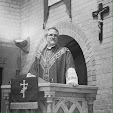
Sunday, January 01, 2006

Sermon: Circumcision and Name of Jesus

1 January 2006, Salem Lutheran Church, Gretna, LA

Text: Luke 2:21 (and Gen 17:1-14; Gal 3:23-29) (Historic)

In the Name of + Jesus. Amen.

Circumcision isn’t a topic we typically address in polite conversation. In fact, when the topic comes up in, say a sixth-grade religion class, there’s usually some nervous laughter going on. And yet circumcision is a pretty major thing in the Scriptures – both Old and New Testaments.

In the Old Testament, circumcision is established by God with the patriarch Abraham as a sign of the covenant, an Old Testament sacrament that initiates a boy into the promise and people of God. And by virtue of that boy growing up, it initiates his wife and daughters into the covenant as well.

In the New Testament, a dispute over whether or not Christian men need to be circumcised threatened the very existence of the Church even before the New Testament had been written! It caused St. Paul all sorts of headaches, to the point where he wished his opponents would do even more to themselves than administer circumcision. Only a meeting of bishops in Jerusalem, as recorded in Acts 15, would prevent the Church from dividing over the issue of circumcision.

And notice that the Church in her wisdom has decreed today – which the whole world now recognizes as New Year’s Day – to be a commemoration of the circumcision of our Lord Jesus Christ. So important is this considered that our Gospel text for today is only a single verse!

Why all of this fuss over circumcision?

In our Old Testament lesson, God establishes circumcision as a sign of his covenant with Abraham. Every male descendant of Abraham, every son of the promise, must submit to this ritual bloodletting. Any son of Abraham who is uncircumcised has forfeited his standing as a son of the promise, and breaks the covenant.

Why did God choose such a sign? He doesn’t tell us. But we do know that circumcision is a permanent sign. It can’t be undone. Perhaps it serves as a reminder to a descendant of Abraham that his body is holy to God, and any offspring he procreates is also a child of the promise. In any case, this is the sign, an Old Testament sacrament that joins the Word of God to a physical element bringing grace and salvation.

This sign, this sacrament, this guarantee that the son of Abraham has not broken the covenant was fulfilled, as was the rest of the ceremonial law, by Jesus. Jesus is the Promised One, the Messiah, the True Son of Abraham, Isaac, and Jacob. He is the one man who truly keeps the covenant as a man, just as he is also God who likewise keeps the covenant from God’s end of the deal.

Our Lord’s circumcision was the first shedding of his holy blood, a foreshadowing of the draining of all his holy blood on the cross. And in this first shedding of blood, this event which calls to mind the sacrifices of the Old Testament, was done to fulfill the law. Ever obedient, our Lord submits to a covenant he himself, as Yahweh, established. The circle is complete, and the ceremonial law is no longer binding on us children of the covenant. In fact, we have a new sacrament of initiation, one which is administered to male and female children alike, one which permanently marks us as children of the promise, one which, like circumcision, can never be undone: Holy Baptism.

When a boy was circumcised, he was also named. Today is known to the Church as the Circumcision and Name of Jesus – as our Lord was named according to custom, on his eighth day of age at the time of his circumcision and initiation into the people of God.

Our Lord’s name “Jesus” is also of great importance. It is a Greek rendering of his Hebrew name: “Joshua.” Remember that Moses, the great lawgiver, could not bring the people of God into the promised land. His own sins held him back. That task was given to a general named Joshua, the successor of Moses, who by right of conquest led the children of the covenant to the Promised Land.

Jesus is a new and better Joshua, another successor of Moses, who fulfills the Law, who conquers sin, death, the devil, and hell. He leads his people into he Promised Land as a conquering general and king.

The prophet Zechariah tells of another Joshua, who served as high priest as the children of Israel were returning from exile. In a vision, Zechariah’s sees Joshua, the high priest, standing before the Lord in filthy garments while Satan accuses him. But Satan is rebuked, and Joshua (whose name in Greek is Jesus) is clothed with new garments, priestly vestments. God tells him he is given “charge of my courts” and “right of access among those who are standing here.” God says: “Hear now, O Joshua, the high priest, you and your friends who sit before you, for they are men who are a sign: behold, I will bring my servant, the Branch.”

Jesus is the greater Joshua, the general, the high priest, the Branch, the maker of the covenant, and the fulfillment of the covenant. He is the maker and the fulfillment of the law. He is the alpha and the omega. He is the one whose name is above every other name, who was named as the angels instructed: as Jesus – whose name means “savior.”

All of these signs of the Old Testament point to Jesus, and are fulfilled in Jesus. The ceremonial law of the Old Testament – including circumcision – points us to their fulfillment in Jesus. For as Paul tells us in our epistle text, “the law was our tutor to bring us to Christ, that we might be justified by faith. But after faith has come, we are no longer under a tutor.” Circumcision is there to lead us to Christ. Once it has done that, once our Lord fulfilled it, we have outgrown it. For we are not sons of Abraham through circumcision, but rather as Paul tells us: “you are all sons of God through faith in Christ Jesus. For as many of you as were baptized into Christ have put on Christ.”

You are all sons, and as sons, you are heirs. You, dear Christian friends, men and women alike, are adopted sons. The kingdom is yours, not by virtue of circumcision and the Law, but by virtue of baptism and the Gospel. For notice what Paul says: “There is neither Jew nor Greek” (remember that Jews were circumcised while Greeks were not). Paul says: “There is neither male nor female” (though women benefited from circumcision, they didn’t directly receive it). Notice what Paul concludes: “if you are Christ’s, then you are Abraham’s seed, and heirs according to the promise.”

In other words, dear brothers and sisters, in baptism, you have all been “circumcised” and are all sons of Abraham –Not by virtue of your own obedience, but by virtue of Christ’s obedience. Not by virtue of your own flesh, but by virtue of Christ’s flesh. Not by virtue of your own shed blood, but by virtue of Christ’s shed blood.

And that holy flesh and blood of Jesus is yours, for just as you share in our Lord’s circumcision, and just as you have been given our Lord’s name in Holy Baptism, you have been given his body and blood to eat and drink in Holy Communion.

We worship a real, flesh and blood God. We don’t worship a distant, far off character from a story book. We worship a God who was a baby boy, who bled at his circumcision at the age of eight days, who was given a name, who fulfilled the law, who died in the flesh, and who rose from the dead at the age of thirty-three years. He still lives in the flesh, still bears the scars from all of his holy wounds, and who will come again in glory to raise our flesh from the dead and to once and for all rid the universe of the devil and his followers.

Our God, the only True God, is a man. He is the new and better Adam, one who did not yield to the serpent’s temptation. He is the new and better Moses, who completes and fulfills the law for us. He is the new and better Joshua, who defeats the enemies of God and leads his people forth in joy. He is the new and better high priest, who not only stands as a man before God, but is both man and God. He is a high priest who is also the high victim. He is the sacrificer, and the sacrifice.

Dear friends, welcome to a new anno domini, a new year of our Lord. We are indeed another year closer to the fulfillment. While making New Year’s resolutions and striving to keep them is certainly a good and noble thing, there is only one New Year’s resolution that will never be broken. That is the covenant, the promise our Lord made with Abraham, Isaac, and Jacob, the promise whose sign was circumcision, the promise fulfilled when a little boy named Jesus was circumcised, and when an innocent grown man named Jesus was crucified.

In the Garden of Eden, God made a promise, a resolution of sorts, to the devil that the seed of the woman would crush his head. God spoke the same promise to Abraham when he promised a savior from his seed. God spoke the same promise to Moses and all the prophets when he told of one who would fulfill the law. And God kept his promise by taking flesh and dying for us, by achieving victory over the devil on the cross, and by fulfilling the destiny of his name by keeping the law for us. And God continues to keep that promise with you, and for you, by giving you his flesh and blood to eat and drink for the forgiveness of all your transgressions of the law.

You children of Abraham, rejoice in the circumcision of Jesus – for the flesh of that baby boy is your salvation! You children of God, rejoice in the divine name of Jesus – for there is no other name by which we can be saved! For you who have been baptized into Christ are all sons of God through faith in Christ Jesus! Amen.

In the Name of the Father and of the + Son and of the Holy Spirit. Amen.

Happy New (Orleans) Year!

Hope y'all are having a great new year! So far, no hurricanes - so 2006 is a great year here in the Big Easy up to now. ;-) We thought we'd share with y'all our amusing New Year's Eve in Post Katrina N'Awlins.

In the afternoon, with the weather a beautiful seventy-something degrees and sunny, we decided to go "out" and do something "normal." Things have not been "normal" around here since the end of August. So, we decided to visit the only store where Grace likes to shop: "Prima Donna's Closet" - a consignment clothing boutique. This was our first Post-Katrina visit.

The owner is an outgoing lady named Stephanie - who on this day was wearing a "Make Levees Not War" T-shirt. She recognized us from our Pre-K visits to her shop, and immediately were exchanged The Two Questions, viz, 1) How d'ya do? (translation: do you have a home?) and 2) Where d'ya go? (translation: where did you evacuate to?). We learned that one of her two stores was completely destroyed. However, the store we were in was doing well. Grace went all out and bought a skirt for four bucks. I read Swedish while Leo pointed at, and chatted with, the caged birds around the store.

We decided to head to Magazine Street for Indian Food. Magazine Street is on the edge of the French Quarter, and is lined with shops and bars. However, we arrived five minutes after the buffet closed, so we had to activate Plan B, which in this case was "Igor's Buddha Belly Bar, Grill, Laundromat, and Game Room" (that's what it's called, no lie). There was an older man at the bar reading the paper. The loudly-dressed barmaid was conversing with him about new movies. As a result, the topic of gay cowboys came up. We settled at a table near the window, and ordered burgers and beers. Some more patrons came into the bar, and the older man began involving a twenty-something guy in his discussion about gay cowboys. Soon the topic was changed to rock and roll music.

The bar/grill/laudromat/gameroom sported a large laughing Buddha, a video poker area, and humorous signs. One read: "Gentlemen: No Shirt, No Service. Ladies: No Shirt, Free Beer." I asked Grace if Leo needed to nurse...

Just outside the window, a couple drank beer, read the paper, and discreetly smoked marijuana. Three cops on motorcycles stopped in front of the bar. Two of them preceded to block the street while a third came into the Buddha Belly. He hastily ordered three burgers, and rushed out, promising to be back in a few. New Orleans' Finest were blocking the street for a parade. Along they came, the Pussyfooters and Highsteppers with their little brass band. They were followed by a couple dozen malt-beverage-equipped citizens. The parade was completely over and done in about five minutes.

We strolled on over to the Boulangerie (a French bakery) across the street. We took a table outside and enjoyed the sunshine, the breeze, and the strolling crowds lingering after the parade. I got in line. There was a large sign above the counter that read: "Le patron mange ici" (the boss eats here). In front of me, a middle aged woman spoke in French as her young-adult daughter responded to her in a mixture of English and French - with no rhyme or reason as to when which language was being employed. The owner spoke French with the employees and with some customers. Beautiful large round loaves and delicate pastries were for sale, as were "gateaux de roi" (king cakes) - a French/New Orleans tradition of a festive cake with an effigy of the Baby Jesus baked inside. King cakes are signs that Carnival (the pre-Mardi Gras time of partying) is near. It officially begins on Epiphany Day (January 6).

I took our order outside (coffee, blueberry tarte, and an apple-cinnamon danish).

People from all walks of life promenaded by - some with pets. Several people hooked their dog leashes to a pole out front, which made Leo happy. A couple of guys walked by, one of whom was carrying his large pet hen in his hands. Nobody batted an eye. The two guys took the chicken into a bar (I suspect many of these types of jokes originated in New Orleans).

We drove around and ended up in the French Quarter. Being New Year's Eve, it was rather busy. By happenstance, we found our minivan right in front of the main stage that was being set up for the evening's festivities. Arlo Guthrie was strolling by with his long curly white locks blowing in the breeze. We drove around the French Market and saw a lady wearing a "Christ Is Our Hope" T-shirt - the slogan of Lutheran Church Charities headquartered in Addison, Illinois. I have spent the last three months working closely with this wonderful organization. I hollered out of the window: "Lutheran Church Charities! Y'all do good work!" The lady was stunned that someone recognized the shirt. I told her I was a local pastor. She was in New Orleans with a group of volunteers from Chicago.

Before dark, we went home. We watched Dick Clark on TV. We went to bed at about 12:30 am. We really enjoyed the return to "normalcy," but all in all, we had a pretty boring "normal" time for New Year's Eve. But that's not so bad - we've all had enough excitement here in New Orleans for a while. But hurricane season is only six months away!

Bonne annee, et laissez les bons temps roulez! (Happy New Year, and let the good times roll!)