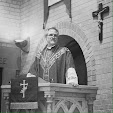
Sunday, June 17, 2018

Sermon: Trinity 3 - 2018


17 June 2018

Text: Luke 15:1-10

In the name of + Jesus.  Amen.

Our Lord teaches us yet again in parables.  St. Luke records three of them in this one chapter, two of which are contained in this week’s Gospel: the Lost Sheep and the Lost Coin.  The third parable is the Prodigal Son, which is better entitled, the Lost Son.

Jesus gives the same lesson in three different ways – which means that this is important to understanding God and His kingdom.  The idea of being lost and then being found is crucial to Christianity.

We may be tempted to trivialize the idea of being lost.  Losing a coin and then finding it may not seem like that big of a deal to us if we see coins as annoying and worthless bits of change.  Losing a sheep may be hard for us to relate to, given that few of us are animal herders that make a living from them.  In our culture, if you lose something, it’s usually not that big of a deal.  We can always get it replaced on Amazon with two-day shipping.

But these parables are actually timely.  For our culture is drifting away from its moorings.  Younger people are increasingly finding themselves lost.  This has fueled levels of depression and angst and risk-taking and self-injury not seen since perhaps the Lost Generation of World War I a hundred years ago. 

To be lost is to be without a home.  And one can be homeless while living in a massive house surrounded by luxuries.  This is increasingly what we see today: people who have money and fame and the freedom to travel the world, and yet they commit suicide.  They are lost. 

And while the movers and shakers of our culture and society wring their hands looking for explanations, once again, the answer is here in the dusty old book that sits on the coffee table, or worse, is held up for ridicule as a silly old myth written by dead white men to oppress everyone else.  Meanwhile, Jesus will speak to anyone with ears to hear.

Interestingly, Jesus recounts the joy of the owner upon finding something that was lost.  In the first parable, the Parable of the Lost Sheep, we aren’t taught what the sheep thinks about it.  Maybe the sheep was eyeball to eyeball with a wolf and was happy to see the shepherd.  Or maybe the sheep finally felt free and saw the shepherd coming to take him back as his “oppressor.”  But at any rate, the sheep is safe, and the shepherd “calls together his friends and neighbors, saying to them, ‘rejoice with me, for I have found my sheep that was lost.’” 

In the second story, the Parable of the Lost Coin, a woman has lost one of her ten silver pieces.  She is so motivated to find it that she doesn’t even wait for the morning light to look for it (remember, in those days, there were no bright electric lights to  turn on and off like magic with the flick of a switch).  She spends precious oil on lighting a dimly-burning oil lamp to search for it.  “And when she has found it,” says Jesus, “she calls together her friends and neighbors, saying, ‘Rejoice with me, for I have found the coin that I lost.’”

In these stories, God is represented by the shepherd and by the woman.  We are the lost ones.  We are the ones who need to be found.  Jesus calls being found “repentance.”  And what started this lesson of three stories was the fact that self-righteous scribes and Pharisees were grumbling that Jesus allowed some of these “found” people to join Him at the table: “This man receives sinners and eats with them,” they gossip to one another.

Jesus reminds them of the joy that ought to break out among everyone when the lost are found. 

Think about when a child goes missing.  The parents become hysterical.  They call the police, who go into high gear to search the neighborhood.  Social media lights up as the story goes viral.  Amber alerts are issued.  There may be helicopters and canine teams dispatched.  Nobody can rest until the child is found safe and sound.  And when that happens, there is a huge sigh of relief and great joy.  There is no grumbling about the cost or the trouble expended to reunite a little one to his or her parents.

And think about this from the perspective of the lost one, dear friends.  A lost coin might well fall through the cracks of the floor to be buried in the dirt for the rest of time, never again to be carried and traded, treasured and saved.  It is out of place with no hope of again being useful.  A lost sheep is in grave danger of being hunted and eaten by predators.  Being lost is not freedom; it is not liberty from an “oppressor.”  Being lost is being away from the love and kindness and protection of others, from a sense of usefulness and belonging.  Being lost is to be subject to unseen dangers.  Being lost risks eternal displacement. 

Being lost is a tragedy, dear brothers and sisters.  I recently drove a passenger home from a bar.  It was on a Sunday night at midnight.  One of her friends paid for the ride and another friend came along with her to get home.  I believe that she was in her twenties.  In spite of having her whole life ahead of her, living in a nice home in one of the richest countries of the world, having the luxury to spend time and money on going out, she was utterly lost.  She had no friends other than her “bar friends.”  She had no family, and apparently nothing to look forward to except drinking every day.  She was suicidal.

This is a lost sheep, a lost coin, a lost child.  This is what our Lord is talking about, dear friends.  And she is far from alone.

The problem is that she has a house, but no home.  She is free from responsibility and the demands of husband and children, but she is actually oppressed by loneliness and despair.  She knows her way around the city, but she is lost.  Hopefully, she will be found.  There is One who searches diligently for her.  There is a shepherd who will leave the ninety-nine Pharisees and scribes to seek after this one lost sheep; there is a lady of the house who will burn the midnight oil to seek after her to prevent her from falling through the floor.  There is a Father who gave her freedom, and even though she has misused it, will run after her and have a feast for her when she comes back home.

So where is home?  How are the lost sheep and coins and children found?  Jesus says that they are found in repentance: a change in mind.  When we stop seeing God as a rule-maker who imposes on us and start seeing Him as our dear Father and protector, we repent and are found.  When we stop rejecting ourselves by rebelling against whom God made us to be, accepting ourselves as His creature, His creation, His design, when we submit to the reality of His will to us, we repent and are found.  When we embrace the sense of usefulness that God has given us through creation, when we willingly provide for others out of what God has given us, when we seek to serve rather than being served, we repent and are found.

Our Lord Jesus had no need of repentance, and yet He endured the cross for us.  He shed His blood for us.  He came looking for us.  He took human flesh as one of us and for all of us.  He taught us what it means to be lost and to be found.  And He, the Good Shepherd, became the sacrificial Lamb for the sake of the lost sheep that we are.  He was betrayed for us at the cost of some of those silver coins.  He rose again from death and returned to the Father, and proves to us that we can even triumph over the grave, that the end of this life is not loss to the Christian, but rather to be found to eternal glory with the Father.

And in repentance there is joy, dear friends, in heaven and on earth, to the one who is found and to the Finder.  This joy is also found among the rest of those who were formerly lost but who have been found by the unrelenting love of the Father, the sacrifice of the Son, and the calling of the Holy Spirit.  Let us pray for the lost.  Let us provide a home for those who need to hear good news.  Let us be the instruments of God in recovering the sheep that have wandered, the coins that have rolled away, and the prodigal sons and daughters who think they have found freedom, but instead are enslaved to despair.  

And in carrying out the work the Lord has given us to do, we too find ourselves at home.  Amen.

In the name of the Father and of the + Son and of the Holy Spirit.  Amen.

Sunday, June 10, 2018

Sermon: Trinity 2 - 2018


10 June 2018

Text: Luke 14:15-24

In the name of + Jesus.  Amen.

Why are you all here?

There are other things that you could be doing right now: sleeping, watching a movie, having a cup of coffee, eating, getting some work done around the house, working outside before it gets hot, hanging out with friends, participating in social media, taking in a round of golf…  The possibilities are endless.

So why are you here?

Is it a habit?  A chance to catch up with friends?  Do you feel like you did something for God by coming here?  Are you getting a friend or relative off your back who nags you to go to church? 

Why are you here?

Are you bored?  Do you wish the pastor would just stop talking and get this over with?  Do you think this ritual is meaningless and stupid?  Is what we’re doing old fashioned and out of touch with the modern world?  Is your mind wandering as you think about other things?  Are you resentful that you have to be here?

In our Gospel reading, Jesus tells a story about a great banquet.  And let’s face it, banquets can be boring: bland food, people you would rather not hang out with, long-winded speeches, boring rituals – and worst of all, it takes time away from what we would rather be doing.  But in our Lord’s story, this man throws a banquet and “invited many.”  He prepares the food, the drinks, the venue, the agenda, and now he sends out servants for the RSVPs.  “But they all alike began to make excuses.”  These reasons given for refusing to come seem to make sense: work, business, family obligations, etc.  The banquet looks like it will become an embarrassing fiasco, a hall filled with empty seats.  The servants report back to their master that this banquet is shaping up to be a failure.

The “master of the house became angry” according to Jesus, as He continues His story, “Go out quickly to the streets and lanes of the city, and bring in the poor and crippled and blind and lame.”  The servants do this.  Those who were invited but who had made excuses are being replaced by people who are more likely to be grateful to be there.

Jesus has the master in the story bring in still more outsiders.  And He’s pretty angry at the ones who spurned the invitation: “None of those men who were invited shall taste My banquet.”

So what is the point of this story?

Just before Jesus told this story (which was at a banquet), a man said something that is both simple and profound: “Blessed is everyone who will eat bread in the kingdom of God!” 

Do you see yourself as blessed?  Are you happy to be here where the Word of God is proclaimed, where Jesus is present in the bread and wine of the sacrament?  Of all the places where you could be right now, is this the place you would most rather be at this moment?  Would you prefer to have the freedom and the opportunity to come to the Divine Service, or would you rather be a billionaire.  Before you answer the question, dear brother, dear sister, think about it honestly.

For we are all poor, miserable sinners.  There are indeed times when this banquet is tedious: it’s too hot, it’s too cold, the hymns are not to our liking, the sermon is boring, we don’t like the wine, certain people annoy us, the service is too long, too early, too late, too different than what I grew up with, too high church, too low church, too whatever.

And there are times when we, like the original invitees in the Lord’s story, just opt out.  We just stay home.  We just figure that it isn’t that important anyway.

The Lord has a warning for us, dear friends.  This banquet is important.  You have been invited by God.  This is where your sins are forgiven.  This is where Jesus speaks to you.  This is where you have actual communion with the Triune God.  This is where God truly speaks to you: not some kind of vague sign or superstition, but the pure, unshakable, and perfect Word of God.  And God will fill His kingdom: with us or without us.  If we are unfaithful, our American churches will shrink and die off while churches in China and Africa are filled with those who aren’t making excuses, but who are blessed to eat bread in the kingdom of God.

If we are not studying and reading the Word of God, if we don’t pray, if we don’t teach our children the catechism, if we aren’t regularly communing and being absolved, if we aren’t supporting our church and the work of the kingdom with our time, talent, and treasure, if we feel annoyed and put upon to be here, if we are making excuses – then others will be called and we will be left to our own devices.  And even as the finest of foods is set at the heavenly table, even as a precious chalice of the choicest of wine sits at a place with our name on it, we will content ourselves to eat garbage out of the dumpster – the rot and the crud that the world has to offer.

Dear friends, let us not take this banquet for granted!  Our Lord suffered on the cross.  He died so that you will live!  He rose so that you too will conquer death!  He has given you His body and blood as the greatest banquet ever!  He surrounds you in words of love and forgiveness, calling us back when we wander, and placing us upon His shoulder to lead us as His beloved sheep.  He provides for us a place at His table, a place of honor.  This participation in the banquet of the Eucharist is a time-transcending foretaste of eternal life, of the great reunion with our loved ones, a little glimpse and an actual participation into the new heaven and the new earth, a life in which there will be no suffering, no death, no sorrow, no regrets, no boredom, and no excuses.

Why are you here, dear friends?  You are here because you are a sinner, and you are loved, and you are to be fed and lovingly doted upon by Your Father.  You are here because you have been invited by Jesus Himself, baptized, named as one of His own, worthy to sit at His table, one who has been chosen to live eternally.  You are here because of all the places on planet earth, there is no place better than to be at the table of the Lord and listening to good news.

There are indeed valid reasons that we may have to miss this banquet from time to time.  But there are also excuses, and we know the difference.  And the good news is that even your past excuses and grumbling are forgiven, and your name is still engraved in gold at the head table.  You were issued a garment to wear at this banquet, and you have been invited, even if you are poor and crippled and blind and lame, plagued by doubts, haunted by a past, weak in willpower, or even bearing the scars of a hostile world and your own sinful flesh.  None of that matters!  You are here at the eternal banquet by the Lord’s grace!  You are His beloved child!  You are surrounded by His peace and joy even if you desire to run away.  Resist the devil, and rejoice in what is offered to you at this banquet, this feast of feasts, each and every week, dear brother, dear sister!

For indeed, “blessed is everyone who will eat bread in the kingdom of God!”  Amen.

In the name of the Father and of the + Son and of the Holy Spirit.  Amen.

Sunday, June 03, 2018

Sermon:Trinity 1 - 2018


3 June 2018

Text: Luke 16:19-31

In the name of + Jesus.  Amen.

The theme of our Lord’s story about Lazarus and the Rich Man can be summed up in a single word that only appears one time in the text: “mercy.” 

The Christian faith in many ways is nothing more than mercy.  God is merciful to His creation: we creatures who have betrayed Him, rejected Him, running into the arms of His enemy.  And when the Lord sent His Word to enlighten us, we rejected it.  When the Lord sent prophets to warn us, we turned on them.  When the Lord sent His only Son into the world to bear our sin and be our Savior, we crucified Him.  And our Lord Jesus is so merciful that as He was suffering on the cross, because of us and for our sakes, He prayed to the Father on our behalf: “Father, forgive them.  They know not what they do.”  He pleaded for mercy for us.

And so at the beginning of our Divine Service, we Christians have cried out for centuries: “Lord, have mercy upon us.  Christ, have mercy upon us.  Lord, have mercy upon us.”  For without mercy, we are without life, and we are without hope.

Mercy is like freedom: you cannot have it unless you are willing to give it to others.  One of the Lord’s parables involved a man who begged to be forgiven a large debt.  And when he was forgiven, he used his new freedom to demand that someone else who owed him a small debt pay it back immediately.

The Parable of Lazarus and the Rich Man is a lesson about mercy and a warning about withholding mercy. 

Lazarus was a poor man who suffered ill-health.  The rich man showed him no mercy.  But at death, the Lord showed mercy to Lazarus, who was “carried by the angels to Abraham’s side.”  However, the reversal of fortune went to this certain rich man as well, who was sent to “Hades, being in torment.” 

The rich man had a lifetime to repent, to show mercy to his neighbor, to live out the Golden Rule, and do unto Lazarus as he would have Lazarus do unto him.  In the story, the rich man now becomes the beggar: “Father Abraham, have mercy on me, and send Lazarus to dip the end of his finger in water and cool my tongue, for I am in anguish in this flame.”

His lack of mercy was revisited upon him: “Child,” says the voice of the patriarch Abraham in this story: “Child, remember that you in your lifetime received your good things, and Lazarus in like manner bad things; but now he is comforted here, and you are in anguish.”

The rich man’s lack of mercy is now the very judgment that the rich man faces now that his life is over.  Even as the rich man withheld mercy from Lazarus, so does God withhold mercy from the rich man.

For even as there is mercy, there is still justice.  But the good news, dear brothers and sisters, is that even with justice, there is mercy.  God will forgive each one of us who asks for mercy.  And in asking for mercy, we demonstrate repentance by showing mercy.  “Forgive us our trespasses,” the Lord teaches us to pray, “as we forgive those who trespass against us.”  “For we sin much,” as we say in our Catechism, “and surely deserve nothing but punishment.  So we too will sincerely forgive and gladly do good to those who sin against us.”  This is mercy.

But there is another warning that our Lord is mercifully teaching us right here and right now, dear friends.  The warning is this: the time to repent is now.  It is not tomorrow, not next year, not when you are older.  The time to repent is now, for that is where we live.  We live in the present.  The past is done.  The future may not come at all.  We can die at any moment, without warning.  There is nothing in our Lord’s story that implies that Lazarus and the rich man knew when they would die.  The rich man had daily opportunities to repent, to show mercy, to ask for forgiveness, and to be a good steward of the wealth with which the Lord had blessed him.

Each day that went by was another day lost, another opportunity squandered, another step closer to torment, to justice, to the loss of the opportunity to receive mercy.

In that sense, this is a terrifying parable.  The rich man speaks of “anguish in this flame.”  There is permanence in this condemnation: “Between us and you a great chasm has been fixed, in order that those who would pass from here to you may not be able, and none may cross from there to us.”

But there is still good news, dear friends.  You can still pass from death to life, from sin to forgiveness, from living for yourself and squandering the Lord’s riches to living a life of mercy and investing the Lord’s riches by living in the kingdom, even as we repent each and every day.  You can still show mercy to others, in whatever way that might manifest itself in your life.  You may be rich or poor, but the Lord will provide for you very real ways to show mercy to your neighbor. 

And what’s more, God is merciful.  For even as the rich man begged for a warning, and it was too late for him – it is not too late for us!  For indeed “we have Moses and the Prophets,” let us hear them!  We have our Lord Jesus Christ and the Word that we are given anew right now, let us hear Him!  We have the full counsel of God summed up in the Catechism: let us hear that Word of God!

Let us hear, let us repent, let us receive mercy, and let us live!  For unlike the situation of the rich man whose life was squandered only upon himself, we do indeed have someone who has risen from the dead who is warning us, and what’s more, who is showing us mercy and saving us: our Lord Jesus Christ Himself, the one who truly said, “I am,” before Abraham was.  Our Lord is the very Word of God made flesh, whose flesh was crucified for us, who rose from the dead, not to convince us of Moses and the Prophets, but to fulfill them and show us mercy!

We are the recipients of divine mercy, dear friends, from our baptisms to the opportunities we have to hear the Word of God preached and the Gospel proclaimed, from Holy Absolution to the most holy body and blood of our Lord, given and shed for the forgiveness of sins, offered to us in mercy, and received by us in repentant joy!

The Christian faith is all about mercy.  It is given to us without strings attached, and we are given the opportunity to show it to others out of gratitude for the mercy shown to us.

Lord, have mercy upon us.  Christ, have mercy upon us.  Lord, have mercy upon us.  Amen.

In the name of the Father and of the + Son and of the Holy Spirit.  Amen.


Sunday, May 27, 2018

Sermon: Holy Trinity - 2018


27 May 2018

Text: John 3:1-17 (Isa 6:1-7, Rom 11:33-36)

In the name of + Jesus.  Amen.

“For God so loved the world, that He gave His only Son, that whoever believes in Him should not perish but have eternal life.”  For many people, this is their favorite verse in all of Scripture.  Dr. Luther called it “the Gospel in miniature.”

This passage beautifully sums up the Gospel.  But there is a temptation to put this verse on a bumper sticker, hang it from a banner in the end zone, have it tattooed on our body, or send it out in a tweet – as a single verse removed from its context.  And that context is very important.  Jesus is teaching a teacher of Israel who doesn’t understand what Jesus is teaching him.  This is where Jesus tells Nicodemus that, “You must be born again.”  Nicodemus is struggling with this second birth that Jesus is talking about.

Indeed, to a lot of people, being born again is an experience, a feeling, an emotional high.  To many people, being born again means not drinking, dancing, or playing cards; watching your language, voting the right way, and not being judgmental.  But this has nothing to do with birth, with the process of being born.

When you were born the first time, dear friends, you weren’t even aware of what was happening.  You did not make a choice.  You did not feel a certain emotion.  In fact, when you were born in the flesh, you were helpless, dependent, and not capable of decisions.  And Jesus uses this metaphor of fleshly birth to teach us about spiritual birth.  This is not the only time Jesus will befuddle His listeners about what it means to enter the kingdom of God.  On one occasion, when the disciples were arguing about which one of them was the greatest, our Lord put a child in their midst and told them that unless you “become like children,” you “will never enter the kingdom of heaven.”

And this is very similar to what our Lord teaches the teacher of Israel: “Unless one is born of water and the Spirit, he cannot enter the kingdom of God.”  This is what it means to be born again, dear friends: “water and the Spirit.”  Our Lord cleared up this mystery when He commanded the apostles: “Go and make disciples of all nations, baptizing them in the name of the Father and of the Son and of the Holy Spirit.”

St. Peter made it very clear when he wrote in Scripture: “Baptism now saves you.”  St. Paul likewise wrote in Scripture: “He saved us through the washing of rebirth and renewal by the Holy Spirit, whom He poured out on us generously through Jesus Christ our Savior, so that, having been justified by His grace, we might become heirs having the hope of eternal life.”

To be born again is to be baptized, and to be baptized is to be reborn of water and the Spirit in the name of the Trinity.  It is not about intellectual understanding.  It is not about being “the greatest” as the world judges such things.  It is not about decisions or emotions.  It is about being baptized in the name of the Trinity.  And having been born, we grow: we learn to eat, to read, to reason, and to live.  So too in our spiritual life, we are born helpless, and we grow: we learn to hear the Word of God, to believe, to eat and drink the Lord’s body and blood, and to confess the name of the Father, Son, and Holy Spirit, into whose name we are baptized.

And, dear friends, it is no accident of language that Jesus doesn’t say the “names” of the Father, Son, and Holy Spirit, but rather “the name.”

His Jewish listeners knew what He meant by saying “the name.”  For that is what they called God: “השם” (Ha-Shem).  They called God “The Name.”  It was the name that they didn’t speak for fear of misusing it.  This, dear friends, is “the Name” that Jesus commands us to be baptized into: the one name of the one God: God the Father, God the Son, and God the Holy Spirit.

We Christians are under a lot of pressure to back off of our confession of the Trinity.  We may be tempted to pray to a generic “God” such as the Creator which is mentioned in the Declaration of Independence, or the God of the Pledge of Allegiance.  We are sometimes encouraged to treat Jews and Muslims – and sometimes even Buddhists and Pagans – as people who pray to the same God as we Christians. 

But what does our Lord say? “Unless one is born of water and the Spirit, he cannot enter the kingdom of God…. Go and make disciples of all nations, baptizing them in the name of the Father and of the Son and of the Holy Spirit.”  Unless we pray to the Trinity, we are praying to a false god.  If we deny that Jesus is God, we are praying to a false god.  If we are praying to a “life force in the universe,” we are praying to a false god.  If we deny the divinity of the Holy Spirit, we are praying to a false god.

Our Lord could not be more clear.  The Church sums it up in our creed: “the Father is God, the Son is God, the Holy Spirit is God; and yet there are not three Gods, but one God.”

And this is an important distinction.  Jesus doesn’t tell Nicodemus that being born again is a luxury.  Nor does He tell the disciples that baptism is a nice ritual and a chance to take some pictures.  Jesus also makes it clear that we are baptized in the name, in השם: that is, in the name of the Father, Son, and Holy Spirit.  And we must be born again!  As St. John the Evangelist put it: “Whoever believes and is baptized will be saved.”  What we believe is important.  The name into which we are baptized is important.  For as we confess in the church’s ancient creed: “whoever desires to be saved must, above all, hold the catholic faith.  Whoever does not keep it whole and undefiled will without doubt perish eternally.  And the catholic faith is this, that we worship one God in Trinity and Trinity in Unity.”

Our creed makes it clear that: “It is also necessary for everlasting salvation that one faithfully believe the incarnation of our Lord Jesus Christ” and that He “suffered for our salvation.”  The cross is part and parcel of this Trinitarian faith, the faith into which we are baptized.  And just before the Lord teaches Nicodemus that famous John 3:16 passage, the Lord mentions the cross: “And as Moses lifted up the serpent in the wilderness, so must the Son of Man be lifted up, that whoever believes in Him may have eternal life.”

God the Son came into our world to suffer for our sins, to die on the cross for our salvation, to rise again for our justification, and to come again for our redemption and the redemption of the world.  God the Son is no mere prophet, avatar, or great teacher.  He is God the Son, “begotten from the substance of the Father before all ages: and He is man, born from the substance of His mother in this age.”

The faith into which we are baptized and born again is the faith of the Holy Trinity, the faith that confesses that the “Father is Lord, the Son is Lord, the Holy Spirit is Lord; and yet there are not three Lords, but one Lord.”

And this catholic faith of the Trinity, of the incarnate Lord Jesus, of the Cross, and being born again by water and the Spirit in השם “of the Father and of the Son and of the Holy Spirit” is beautifully summed up in the “Gospel in miniature,” that beloved passage of Scripture that delivers such comfort and joy, as well as the profound nature of the Trinity and the Sacraments:

“For God so loved the world, that He gave His only Son, that whoever believes in Him should not perish but have eternal life. For God did not send His Son into the world to condemn the world, but in order that the world might be saved through Him.”  Amen.

In the name of the Father and of the + Son and of the Holy Spirit.  Amen.


Sunday, May 20, 2018

Sermon: Pentecost - 2018


20 May 2018

Text: John 14:23-31 (Acts 2:1-21, Gen 11:1-9)

In the name of + Jesus.  Amen.

Once again, we hear the promise of Jesus to the disciples, to the Church, that the “helper, the Holy Spirit” will come.  And the Holy Spirit will “teach you all things and bring to remembrance all that I have said to you.”

He then reminds us of His mission: “Peace I leave with you; My peace I give to you.”  The peace of Jesus, dear friends, is not the peace that the world gives, which is, at best, a temporary ceasefire.  The peace that Jesus gives to those who believe on His name is peace with God, the forgiveness of sins, the neutralization of death, the resurrection of all flesh, the conquest of hell, the reconciliation of mankind, and the complete restoration of the universe when this current age passes away and all things are made new.

This is the ministry and work of Jesus, which reaches its pinnacle at the cross. 

The Holy Spirit continues to help us, to call us to repentance, to draw us to the Word of God and to the sacraments, to bring us to Christ, to point us ever toward that which is eternal, to sanctify us by His grace, and to draw us closer to our eternal destiny.  The Spirit turns curses into blessings, even as it was by a tree that we became cursed slaves of sin, and so also that by the tree of the cross we became blessed new creatures in Christ.

At the feast of the Pentecost, fifty days from that first Easter, on the third day after the Lord’s ascension, the Holy Spirit turned yet another curse into a gift.

Suddenly, when it was the will of God for this promised event to take place, “there came from heaven a sound like a mighty rushing wind.”  They saw the manifestation of the Spirit as “divided tongues of fire” landed upon them.  “And they were all filled with the Holy Spirit and began to speak in other tongues as the Spirit gave them utterance.”

Tongues, that is, languages, had been a curse: the punishment for the hubris and disobedience of our human race.  For in the years following the rebuilding of humanity after the flood, “the whole earth had one language and the same words.”  The people refused to obey God’s command to spread out and repopulate the earth.  Instead, they gathered at the Plain of Shinar and decided to challenge God’s sovereignty using new technology: “Come, let us make bricks…. Come, let us build ourselves a city and a tower with its top in the heavens, and let us make a name for ourselves, lest we be dispersed over the face of the whole earth.”

Instead of hallowing the name of God, they sought to glorify their own names.  Instead of worshiping the God of heaven to seek His favor, they sought to force their way into heaven by means of their own power.  Instead of obeying the will of God to repopulate the earth, they sought to consolidate and do as they pleased.

God cursed our sinful ancestors with the curse of the multiplicity of tongues.  For divided tongues led to divided tribes, to divided nations, to a divided mankind.  Human beings divided themselves up into “us” and “them” and made war on those who spoke differently than they.  And even when the intent was not malicious, how many misunderstandings resulted from the confusion of languages?  How much misery flowed from this curse?

And the Babel of the Book of Genesis is why the Pentecost of the Book of Acts is so utterly remarkable!  The Holy Spirit, the Helper, the Spirit of Truth came into our dysfunctional and broken world, and for the sake of Christ, brushed aside millennia of confusion, division, hatred, and the curse of the multiplicity of tongues.

Just as the curse of the cross became the gift of the cross, so too, the curse of tongues became the gift of tongues.

And even as our tongues are engines of sin, filled with curses and disobedience and hatred and gossip, in Christ, our tongues are being transformed into means of blessing and obedience and love and proclamation of the Gospel of Christ!  This, dear friends, is the work of the Holy Spirit in our own day!

For what did those “Parthians and Medes and Elamites, and residents of Mesopotamia” hear in their own languages on that Pentecost?  What do the French and Germans and Africans and residents of Louisiana hear in their own languages on this Pentecost?  By the Holy Spirit we hear what they heard: the redemptive work of our Lord Jesus Christ at the cross, His victory over sin, death, and the devil, and the gracious gift of our redemption in His name through Word and Sacrament! 

And we should hear the preaching of the Gospel with the same wonder, just as they were “amazed and perplexed, saying to one another, ‘what does this mean?’”  We too should marvel, asking ourselves how it is it that I, a poor, miserable sinner, can be declared a saint by means of the blood and water shed by our Lord at the cross, and through the blood and water of the Holy Sacraments, and under the proclamation of the forgiveness of sins?  And indeed, we study the Word of God under the guidance of the Holy Spirit, repeating the refrain from our catechism again and again, “What does this mean?”

And even when we are mocked as those Pentecost preachers were, we scorn the insults of those who hate us, and we join St. Peter in the great confession of Pentecost, proclaimed to those gathered in every tongue known to man: “Everyone who calls upon the name of the Lord shall be saved.”

That, dear friends, is the peace that the Lord leaves with us.  That is the peace in which we live and the peace which we proclaim.  It is the peace of God that passes all understanding.  It is the peace that gives the Church in every generation the strength and the courage to say along with our Lord, “Rise, let us go from here!”

In the name of the Father and of the + Son and of the Holy Spirit.  Amen.

Wednesday, May 16, 2018

Sermon: Wednesday of Exaudi (Easter 7) - 2018


16 May 2018

Text: John 15:26-16:4 (Ezek 36:22-28, 1 Pet 4:7-14)

In the name of + Jesus.  Amen.

Christ is risen!  He is risen indeed!  Alleluia!
 
“I have said all these things to you to keep you from falling away…. Indeed, the hour is coming when whoever kills you will think he is offering service to God.”

This prophecy was to come true very quickly, as Christians became subject to persecutions: first by the Jewish authorities, then by Roman state, and later at the hands of radical Islam.  This latter persecution persists to this very day.  “Whoever kills you will think he is offering service to God.”

Jesus doesn’t tell us this so that we would despair, but rather so that we would rejoice at the coming of the Holy Spirit.  Our Lord also said, “But when the Helper comes, whom I will send to you from the Father, the Spirit of truth, who proceeds from the Father, he will bear witness about me. And you also will bear witness, because you have been with me from the beginning.”

The Helper is the Holy Spirit, the Spirit of truth.  He is not our own spirit.  He is not an emotional shot in the arm.  He is not enthusiasm.  He is the Third Person of God, sent to us in an objective way to guide us into all the truth, and to keep us from falling away.  He inspires the Scriptures to be written, and He comes to us in Word and Sacrament.  He keeps the Church faithful, and He draws individual believers back to the Father by pointing them to the Son.  And as the Lord Jesus Christ was revealing this to the apostles, the Holy Spirit was yet to unleash His might upon the Church and the world at Pentecost.  We have the blessing of 20-20 hindsight, knowing what the coming of the Helper truly meant to them, and means to us today.

The Holy Spirit’s presence, unlike the false claims of false teachers, doesn’t mean that you will never suffer, never doubt, never struggle, never wrestle with health issues, and never endure poverty.  The Holy Spirit is not a genie in a bottle that does our bidding because we are so wonderful.  The Holy Spirit’s ministry is not to dole out mansions, yachts, and private jets to prosperity preachers on TV.

That, dear friends, is a great lie.  For what does our Lord teach us about the ministry of the Spirit?  Once more, the Lord tells us that the Spirit comes to us because we will be harassed and hounded, put out of polite society, and be dehumanized and demonized, so that even our lives and the lives of our children might be taken from us.

Doctor Luther described “the cross” as one of the marks of the Church.  Asia Bibi, who has been in prison on death row in Pakistan for her Christian faith, bears that cross; Joyce Meyer and Jesse Duplantis, false TV preachers who have gotten rich off of diabolical lies, do not bear the cross, but rather inflict that cross upon the true Church.

Dear friends, the Christian life is a warrior life.  We realize that we are under the constant attacks of the devil, the world, and our sinful flesh.  We resist, led by the Holy Spirit, armed by the Word of God, fortified by the Holy Sacraments, and fighting under the command and protection of our King, the Lord Jesus Christ.

Evil is all around us.  We are constantly being lied to: by the culture, by the state, by the once-Christian institutions of entertainment, media, and education.  Our faith is under constant assault, even here where we have not yet gotten to the point where we are allowed to be killed.  Instead, we are bullied and browbeaten to abandon our faith and just go with the flow of the culture of death and the ways and works of the devil (which we have renounced at our baptisms, as the Holy Spirit descended upon us to protect us from the evil one).

For at our Holy Baptism, the Lord sprinkled us with clean water, and we were cleansed from sin and death.  The Lord removed the heart of stone, the cold, dead mind of sin that is our heritage as sons of Adam and daughters of Eve, and He replaced that malignant heart with a heart of flesh, the pure, renewed flesh of the resurrection.  Indeed, this renewal is also the work of the Holy Spirit, and His reclamation of our bodies and souls is an ongoing project that will not end until we have been raised from the dead to eternal life, the life that will itself have no end.

St. Peter exhorts us: “The end of all things is at hand; therefore be self-controlled and sober-minded for the sake of your prayers.”  In this fallen world, this culture of death, because of our stony hearts, we are out of control and we are anything but sober-minded.  But the Holy Spirit comes to us to being about a profound change, a re-orientation toward the holy: the good, the true, the beautiful; to the restoration of our true humanity, shedding off the evil shell like a serpent shedding its old skin.  The Spirit comes to us in Word and Sacrament, and blesses us, even as we grow ever closer to the Father – both in the sanctification of the conduct of our lives, and in the hallowing of the time we have left in this life.

St. Peter reiterates our Lord’s words about both persecution and the Holy Spirit: “Beloved, do not be surprised at the fiery trial when it comes upon you to test you, as though something strange were happening to you. But rejoice insofar as you share Christ's sufferings, that you may also rejoice and be glad when his glory is revealed. If you are insulted for the name of Christ, you are blessed, because the Spirit of glory and of God rests upon you.”

The Holy Spirit, the Spirit of glory, enables us to rejoice even in the midst of persecution – which should not come to us by surprise.  “Above all,” says the apostle, “keep loving one another earnestly, since love covers a multitude of sins.”

Indeed, love – the love of our Lord Jesus Christ who died on the cross to atone for us and for the sins of the world – “covers a multitude of sins.”  By the grace of Christ and by the ministry of the Spirit, according to the will of the Father, we live in this love that has been poured out upon us lavishly, like the water and blood that issued from His side, like the water of Holy Baptism and the blood of the Holy Supper to which the Holy Spirit draws us according to our need.

Let us take our rest in the Holy Spirit and in His gathering together of the flock of the Lord’s people, the called and the forgiven, that is, the Church.  Let us receive this love and pour out this love with equal liberality.  

And by the Spirit’s guiding, let us remember the words and promises of our Lord Jesus Christ, that we may remember that He told them to us, now, and even unto eternity.  Amen.

Christ is risen!  He is risen indeed!  Alleluia!

In the name of the Father and of the + Son and of the Holy Spirit.  Amen.


Sunday, May 13, 2018

Sermon: Exaudi (Easter 7) and Baptism of Sophie Ricks - 2018


13 May 2018

Text: John 15:26-16:4 (Ezek 36:22-28, 1 Pet 4:7-14)

In the name of + Jesus.  Amen.

Christ is risen!  He is risen indeed!  Alleluia!
 
“I will sprinkle clean water on you, and you shall be clean from all your uncleannesses,” says the prophet Ezekiel.  The prophet speaks of this cleansing and also of the Spirit coming to us to put a heart of flesh in us, to replace the heart of stone that is our sinful condition (“we are by nature sinful and unclean” as we say in the liturgy).  The Holy Spirit guides us to obey the Lord, and God repeats His promise: “You shall be My people, and I will be your God.”

And this morning, this final Sunday in the season of Easter, we have yet again watched the Lord keep His promise.  We have witnessed the moving of the Spirit.  We have seen the Gospel of Jesus Christ applied physically to a little one: one whose words and deeds clearly cannot merit what God has done for her.

It is appropriate that this little one’s middle name is “Grace” – for this is a confession of both her weakness and her strength.  She relies on God alone: “The Lord is my light and my salvation, whom shall I fear?” she is entitled to pray to her Father, along with the prayer, “Teach me Your way, O Lord.”

And this is where her first name is also appropriate: “Sophie” – based on the Greek word for “wisdom.”  And the beginning of this wisdom, the beginning of Sophie’s new life, is indeed the “fear of the Lord.”

Sophie Grace Ricks has been cleansed by clean water, and she has been redeemed by grace, set apart in holiness to be instructed the wisdom of the very Word of God.  And this water and Word and Spirit have been given to her on Mother’s Day, not only honoring the mother who bore her in the flesh, but also the mother who has borne her in spirit, in the new birth, from the womb of the baptismal font: her mother, the Holy Church.

Little Sophie is going to need wisdom and grace to navigate this fallen and corrupted world.  She will need the love and perseverance of her parents, Erik and Aimee.  She will need the prayers and support of her godparents: Emery and Erin.  She will need the love and care of her extended family and the encouragement and spiritual care of her brothers and sisters in Christ.

This is a major undertaking that we are all committing to, dear friends.  All of us.  We are all responsible.  Erik, when we recite the catechism saying: “How the head of the family should teach his household,” that means you.  Aimee, when you gave birth to Sophie, this was not the conclusion of a pregnancy, but rather the beginning of a lifetime of the fervent prayers as only a mother can offer on behalf of her dear children.

Sophie has been washed and cleansed and claimed by God.  She has been given the gift of eternal life.  But she needs to be nurtured, every day of her life.  At this point in her life, she needs constant care: feeding, cleaning, educating, praying, hearing the Word, and learning the priority of the faith from her parents: not by words, but by deeds.  She will never know a time when she didn’t come to the communion rail and witness her parents reverently receiving the body and blood of Christ and offering their “Amen.”  Her earliest memories will include having the sign of the holy cross traced on her forehead as the events of this very day are recalled, the promises made by God repeated to her again and again in this holy house.

She will be brought up in the discipline of the Law and the forgiveness of the Gospel, the promises of God, the dominion over the devil, and the conquest of death. 

She will need to be raised in the Spirit, the Helper who bears witness about our Lord Jesus Christ – the one who bore the cross for her, who shed His blood for her, who rose from the grave for her, and who will return to give her, by His wisdom and by His grace: “the resurrection of the body, and the life everlasting.”

Whether we like it or not, Sophie has been brought into the world during a time of testing.  “Indeed, the hour is coming when whoever kills you will think he is offering service to God.  And they will do these things because they have not known the Father, nor Me,” says our Lord.  But remember, our Lord gives us His holy Word, “I have said these things to you to keep you from falling away,” He promises.  Just as St. Peter says, “Beloved, do not be surprised at the fiery trial when it comes upon you to test you.” 

We Christian parents have an obligation to train our children for battle, to stand for that which is righteous and true and just and honorable, for that which is godly and beautiful and in accordance with the Lord’s glorious design for each one of us.  All of us in this congregation have the holy obligation of prayer and commitment for the sake of this little one.  As she gets older, what will she see here in this holy house?  Will she see lukewarm people going through the motions?  Or will she see the power of the Holy Spirit at work?  Will we teach her that Christianity is just one of many options, or will she know that it is the one true faith by which eternal life comes to us in our Lord Jesus Christ?  Will she hear the prayers and hymns of others like her who have been baptized into Christ?  Will she experience wisdom and grace in truth and in deed?

We have been baptized into Christ, dear friends!  We have been given the mark of the Lord!  We have been sealed and set apart in the baptismal grace offered to us by God in His holy wisdom.  We are not motivated by a desire to save ourselves or prove ourselves worthy.  We are motivated by love.  St. Peter teaches us the urgency we face: “The end of all things is at hand; therefore be self-controlled and sober-minded for the sake of your prayers.  Above all, keep loving one another earnestly, since love covers a multitude of sins.”

The thing that children need more than anything is love.  The thing that adults need more than anything is love.  The thing that the church needs more than anything is love.  And that love is carried out daily in acts of service to this little one: mainly offered by her parents, but shown to her by each one of us as our vocations suggest.

Holy Baptism has placed wisdom and grace upon Sophie.  She has been received into the kingdom and into the promises of God.  “I will sprinkle clean water on you,” says the Lord, to Sophie and to us, “and you shall be clean from all your uncleannesses, and from all your idols I will cleanse you.  I will give you a new heart, and a new spirit I will put within you.”

This is indeed the wisdom and the grace of God!  Amen.

Christ is risen!  He is risen indeed!  Alleluia!

In the name of the Father and of the + Son and of the Holy Spirit.  Amen.

Thursday, May 10, 2018

Sermon: Ascension - 2018


9 May 2018

Text: Mark 16:14-20 (2 Kings 2:5-15, Acts 1:1-11)

In the name of + Jesus.  Amen.

Christ is risen!  He is risen indeed!  Alleluia!
 
It is that time of year, of caps and gowns and Elgar’s “Pomp and Circumstance,” of Valedictorians and Salutatorians and speeches that are too long.  We watch in amazement as High School students, now adults, make their way to university or into marriage and grown-up jobs.  We are stunned to see college students cross the stage to receive degrees of advanced study.  Seminarians likewise take a more stressful walk to find out where the church is sending them to serve in the Lord’s vineyard.

The Feast of the Ascension is just such a time of change, dear friends.  And it is an important transition.  The most central piece of art in our sanctuary is the statue of our blessed Lord.  It represents Jesus ascending to the Father with His hands raised to bless the church, His feet leaving the blue ball that is the earth.  The Ascension follows Easter, represented by the window to the left, and precedes Pentecost, represented by the window to the right.  And our Lord ascends above the holy altar, where the successors of the apostles continue in the Word that the Lord has given His church.

Our forebears of a century ago understood the importance of the Ascension when they placed the ascended Christ at the center and above our altar.

For the ascension of our Lord marked a transition in the life of the church.  The students of our Lord, that is to say, His closest disciples, matriculated and graduated, after three long years of seminary studies under the Rabbi, the Master, the Professor, and they are now being sent, that is to say, “apostled”: “Go into all the world and proclaim the gospel to the whole creation.”  No longer will the lips of Jesus herald the good news, but now the mouths of the men whom the Lord has called into the office of the holy ministry.  The mouths are different, but the proclamation is the same.

For “whoever believes and is baptized will be saved, and whoever does not believe will be condemned.”  Jesus is no longer physically preaching and absolving.  For He has passed this sacred work on to the apostles to carry out this work in His name, by His authority, in His stead, and under His command.

No more will we hear words from the mouth of Jesus casting out demons; but now it will be the mouths of those called to speak in Christ’s name.  No more will our Lord preach directly to Jews and Gentiles, but now it will be missionaries who will speak in the diverse tongues of those from around the globe, preaching on the Lord’s behalf.  No more will it be the Lord directly contending with serpents and poison, but now it will be the flesh of those who are called and ordained who will struggle against evil.  No more will we see Jesus lay hands on those in need of forgiveness, life, and salvation, but rather we will see the Lord deliver these priceless gifts by the hands of those to whom He has delegated this authority.

“And they went out and preached everywhere,” says the evangelist, “while the Lord worked with them and confirmed the message by accompanying signs.”

The Lord did not abandon the disciples.  Rather He chose to work through them and with them in a different way, for they have graduated to go to work, with hands and feet and mouths, to do the work the Lord has given them to do: to baptize, to administer the Holy Supper, to absolve, and to preach.  To evangelize and to visit, to admonish and to comfort, to proclaim in season and out of season, the good news that our Lord indeed died on the cross and rose again, that He forgives the sins of all who are baptized and who believe, and that the Lord has sent the Holy Spirit to the church to guide her into all truth, to protect the integrity of the proclamation and to continue the missionary zeal of the work of making disciples of all nations.

Our Lord laid out this pattern in His last spoken words to us on this earth: “You will receive power when the Holy Spirit has come upon you, and you will be My witnesses in Jerusalem and in all Judea and Samaria, and to the end of the earth.”

The Holy Spirit indeed came at Pentecost, empowering the apostles to go out and carry good news.  They filled Jerusalem with this good news and with signs.  They fanned out into Jewish Judea, and also into Gentile Samaria, and indeed, as St. Paul evangelized the Mediterranean and the other disciples ventured even further outside the boundaries of the empire, the whole world was to hear this proclamation – even as preachers centuries later would board ships with the explorers into new worlds and unchartered territories – including this hemisphere that we now occupy, including this very building that stands as an icon and temple of the Gospel of Jesus Christ.

What a responsibility the Lord lays upon His recent graduates!  It’s little wonder that they are standing around at first, “gazing into heaven,” so that the angels had to goad them: “Men of Galilee, why do you stand looking into heaven?”  They need to get on with the work that He has trained and called them to do.  For our Lord will indeed return.  As the angel said, “This Jesus, who was taken up from you into heaven, will come in the same way as you saw Him go into heaven.”

He will return to end our struggling in this fallen world.  He will return to banish Satan into hell.  He will return to relieve us of the sin that still clings to our Old Adam.  He will return to raise our lowly bodies into glorious bodies, incapable of death, incorruptible, and unsullied by sin.

He has accomplished this renewal of our flesh and our world by means of His cross – and His cross is the very thing that we proclaim, the very reason the apostles had to stop gawking at the clouds and get to work.  The cross is why seminarians continue to be sent into pulpits and altars around the world.

We have continued this proclamation since that day when our Lord ascended, and we will continue until He returns.  We carry out our work – whether we are preachers of the Word or hearers of the Word – during the span of our lives and in the places to which we are called. 

The torch is passed from master to disciple, from teacher to student, just as Elijah passed his cloak to Elisha, who received a double portion of the Spirit.  Prefiguring our Lord’s ascension, Elijah, the righteous preacher and prophet of the Word, was himself taken up.  The prophecies concerning the return of our Lord suggest that Elijah will return and will finally die in the service of our Lord Jesus Christ before the Lord Himself returns triumphantly.

So, dear brothers and sisters, we don’t stand staring into the sky, nor do we panic and head to the mountains with every rumor of war and every earthquake.  Our Lord told us to stand up straight, hold our chins up, and await His coming.  The angel told us to expect His return, and to get to work.

We have a mission.  We have a message.  We have a world to save through the proclamation of the Good News.  We are light in the darkness; we are life in the midst of death; we are love in the coldness of sin and decay.  And Jesus has not abandoned us.  He continues to work with us, confirming the message by the accompanying signs: Holy Baptism, Holy Absolution, Holy Communion, and Holy Preaching. 

As our Valedictorians and Salutatorians are quick to remind us, this is not a season for termination, but of commencement.  Every day is a new beginning as we carry out the holy work given to us by our risen and ascended Lord Jesus Christ, who has triumphed at the cross, at the tomb, at the Mount of Olives, and in all the world! 

Amen.

Christ is risen!  He is risen indeed!  Alleluia!

In the name of the Father and of the + Son and of the Holy Spirit.  Amen.

Sunday, May 06, 2018

Sermon: Rogate (Easter 6) - 2018


6 May 2018

Text: John 16:23-33 (Numbers 21:4-9, Jas 1:22-27)

In the name of + Jesus.  Amen.

Christ is risen!  He is risen indeed!  Alleluia!
 
“In the world you will have tribulation.  But take heart; I have overcome the world,” says our Lord Jesus.  This is an elegant translation, but I think it might be a little too elegant.  When Jesus says, “take heart,” the Greek word used here carries the connotation of “be bold and courageous.”  It reminds me of some advice I once received from a dear old friend, an aristocratic Virginian and veteran of the Battle of the Bulge.  He said, “Always look your enemy in the eye.”

Jesus tells us to look our enemy in the eye – even if we are being mocked, oppressed, tortured, or even killed.  We can look our enemies in the eye: the devil, the world, and our sinful nature – and we can look them squarely in the eye –
because our Lord Jesus Christ has overcome them.

And this is also a weak translation: “overcome.”  This word actually means “conquered.”  It is the word that the Greeks chose for the name of their goddess of military victory.  In the Latin translation used by the church for a thousand years, the word is “vici.”  It is a word famously uttered by Julius Caesar when he said, “Veni, vidi, vici” – “I came, I saw, I conquered.”  But as mighty as Caesar was, he only conquered a few territories, and was then killed.  He did not defeat sin, death, and the devil.  He did not die to redeem us and give us eternal life.  He did not rise from the grave.

Jesus is the true conqueror.  He came: incarnate in the flesh.  He saw: with His own eyes, our suffering and misery in this fallen world.  He suffered: in our place.  He died: atoning for our sins.  He rose again: to celebrate His victory over death.  He conquered: not just a territory, but the world.  He overcame sin, death, and the devil. 

So Jesus tells His disciples (including us) that though we suffer tribulation, though we are oppressed and abused, we are to defiantly look the enemy in the eye, for Christ Jesus has conquered him.  Our Blessed Lord has already won the war.  And because He is the victor, we too are more than conquerors.  Because He looked death in the eye, we can live forever with our heads held high – in victory, in joy, in love, in communion with God Almighty, and in courage to face whatever the world throws our way.

Of course, these tribulations are horrific: be they afflictions like cancer, or a troubled mind, or seemingly insurmountable problems with family or work, anxiety or stress, the loss of friends and loved ones, uncertainty about the future, and a myriad of other things this fallen world throws at us.  These tribulations can even manifest themselves as things which shake our faith, as persecution, as being declared an enemy of the state and imprisoned, of being subjected to torture.  These tribulations are real and genuine suffering, but these tribulations are temporary and in vain.  For Christ has conquered.  He has defeated all evil.  He has won eternal victory for us at the cross, at the empty tomb, at the baptismal font, at the communion rail, in the preaching of the Gospel, and in the declaration of Holy Absolution: Jesus has overcome!  So take heart, dear friends.  Look your enemy in the eye because Jesus has conquered!

And so often, to look our enemy in the eye is to look into the mirror.  So often we are our own worst enemy, our impatience and lack of faith being the cause of much of our suffering.  The children of Israel grumbled against Moses in their impatience; even to the point of longing to go back into slavery for the sake of better-tasting food.

The Lord got their attention by means of a plague of “fiery serpents” that bit the people and delivered the sting of death to them.  “We have sinned,” they confessed.  They prayed for deliverance, and the Lord gave them victory over death: they looked upon the figure of the bronze serpent held up on a pole.  The people did as the Lord commanded, and they lived.

That bronze serpent lifted upon the pole prefigured our Lord Jesus Christ lifted high upon the cross.  We look to the cross, dear friends, and we live.  We do as the Lord commanded: we repent and we believe the Gospel, we take and eat, we take and drink, we live out the new birth and new life given to us at Holy Baptism – and we live!

We are victors, but only because Christ is the victor.  We overcome the world, but only because Christ overcame the world.  We take heart only because Christ courageously stared down death and Satan, and gave His life as a ransom for us, delivering us from the deadly venom of the fiery serpent that has plagued us from the day of the fall in the Garden.

And in living the Christian life, dear friends, this life of grace, this life delivered to us as a gift by God’s mercy, by the cross, by the victory of Jesus, we are doers, not merely hearers, of the Word.  For we have not been healed for the sake of just looking in the mirror and forgetting what we look like.  No indeed!  We hear the Word of God, and that Word, dear friends, enables and emboldens us to live, to do, to act.

It is not enough to be spiritual, but we are indeed called upon to be religious.  We are not called to simply pontificate and virtue-signal, but to actually serve our neighbors bodily, in what we do, in how we act.  We are to bridle our tongues and control ourselves.  We are to “visit orphans and widows in their affliction” and not merely complain and grumble like the Israelites.  We are to keep ourselves “unstained from the world” instead of becoming indistinguishable from the mass of unbelievers.

Spirituality apart from religiosity – that is the “religion that is pure and undefiled,” such a “spirituality” is nothing more than idle talk that is also idolatry’s walk.  Because Jesus has conquered the world, we can go out into the world like the conquerors that we are in Christ – not like Caesar, but rather like our Lord Jesus Christ.

Indeed, Jesus has won the victory for us and has secured the peace: “I have said these things to you, that in Me you may have peace,” says our Lord.

This peace, won for us by our Lord at the cross, is that peace that passes all understanding.  It is the peace of knowing that our enemies have been defeated.  And even in the midst of the tribulation of this fallen and hostile world, we can indeed take heart.  For Jesus has overcome the world.

Always look your enemy in the eye, dear friends.  Christ has conquered!  Amen.

Christ is risen!  He is risen indeed!  Alleluia!

In the name of the Father and of the + Son and of the Holy Spirit.  Amen.