Wednesday, August 10, 2016

A letter to the Jefferson Parish Council

Dear Councilman Templet

I was present for the August 10 council meeting and was hoping to speak.  However, as the ordinances concerning ride-sharing were delayed, it turns out that my 17-mile drive each way across the river and my entire morning were wasted.  It is my understanding that this has happened repeatedly, and for people who work multiple jobs, this makes it very difficult to have a voice in government.  And so I am writing this letter to you instead.  I may still address the council at a later time.

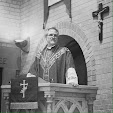
I have served as the pastor of Salem Lutheran Church in Gretna since two weeks before Katrina. As with many other people, the skyrocketing cost of health insurance and other expenses has resulted in my accepting several jobs to make ends meet. 

I have driven for Uber since November of last year, and with Lyft since they began operations in our area.  Ride-sharing enables me to work a flexible schedule and still carry out a full-time ministry serving my congregation and my family.

Ride-sharing provides many benefits to our parish and to our community.  Most important is keeping drunk drivers off the road.  I have given more than 800 rides and have excellent ratings.  A majority of my customers have been drinking (they are mainly tourists, conventioneers, and college students).  In particular, my younger passengers often drink excessively, and it is not only money in my pocket, but also a community service to make sure they are not on the road.  I believe quite firmly that if Jefferson Parish regulates Uber and Lyft out of Jefferson Parish, many, if not most, of these young people will not call cabs.  They will get in their cars and drive. Their entire culture is lived out through technology.  They are used to very short wait times and being able to track their driver – as well as to rate their driver, and to know what they are paying up front, paying by phone app, and all without the suspicious use of a meter.  As a rule, they loathe taxicabs.

Studies have proven that Uber and Lyft significantly diminish drunk driving and thus save lives.  I urge you not to regulate us out of business and thereby cause the unnecessary deaths that would inevitably result.

This is also an issue of liberty.  For example, in my ministerial duties, I fly to other locations to speak and teach.  I have never been picked up at the airport by a cab. Instead, someone from the church will come and get me at the airport – a person whom I have never met.  There has been no drug test, background check, vehicle inspection, or check of driving record.  As an adult, I can choose whose cars to get into.  It is not the business of government at any level to tell me with whom I can ride, or whom I can drive. 

Ride-sharing is the wave of the future.  It is now possible and thriving due to technological innovation and the business culture of peer-to-peer marketing.  Government is not our nanny or our parents.  As the namesake of our parish wrote in the Declaration of Independence, government exists in order to secure our rights and to protect our liberties.  It is the duty of parish government – and all government – first and foremost to respect our freedom – which includes our freedom to travel and our liberty to engage in free trade.

I would also like to add that given that I am using my personal car – the one in which I drive my wife and children – there is greater incentive for me to maintain and keep my car clean. I am routinely told by passengers that Uber cars are cleaner and appear better maintained than taxi cabs – which are often smelly, dinged-up, and messy – government regulations notwithstanding.

Finally, in reading the arguments of the cab industry, this isn’t about safety.  Rather it is about a protection racket to bottleneck entry into the marketplace and thus inflate prices, a cartelization that is detrimental to the consumer and stifling to the economy.  It is not government’s job to economically manipulate an industry so as to inflate prices.  The fact that cab companies are not joining us to call for reduction or abolition of regulations is evidence of this fact.  They can afford the costs of compliance, where a part-time Uber or Lyft driver – perhaps a single mom, or a person saving to buy a house, or a professional person defraying healthcare costs – cannot.

Again, if a person feels calling an Uber or Lyft to be risky, he or she can continue to call a cab.  I still see a lot of cabs while I am out driving.  It is the nature of competition to increase innovation and cause prices to fall for customers.  By contrast, it is the nature of monopolies and cartels to stifle innovation and delink customer service from the product being offered.

In short, ride-sharing is here to stay.  It is not going to go away from Orleans Parish, but it could leave Jefferson Parish.  If that happens, count on tourists avoiding Jefferson Parish hotels and Jefferson Parish restaurants and bars – since they will have to take a cab instead of a ride-share.  Ride-sharing is used successfully around the country and world.  It is part of the evolving business model of peer-to-peer marketing.  Change is hard to navigate, especially for government, which itself is under no pressure to innovate and streamline.  But I do believe in this case, the people and government of Jefferson Parish will be well-served by welcoming Lyft and Uber, but will be ill-served by regulating them out of Jefferson Parish.

I would also like to make the political argument that Uber and Lyft are extremely popular.  This is an issue that people will not just shrug and walk away from.  If you kill ride-sharing, I do believe that you will pay for it at election time.  There are just certain issues that are political hot-potatoes.  I believe this is one of them.

I urge you to either deregulate the car-transportation industry, or take a minimalist approach (perhaps like Orleans Parish) with our commerce and thereby encourage and enjoy the benefits to our economy, to the people of the parish, to drivers, and to your own standing with your constituents. 


Thank you,

Rev. Larry L. Beane II

Note: If you would also like to write to the Jefferson Parish Council regarding what you think about ride-sharing and how it might affect your potential visits to Jefferson Parish, here is the info,,,

Christopher L. Roberts, Councilman-at-Large, Division A, ChrisRoberts@JeffParish.net
Deano Bonano, Assistant (East Bank), DBonano@JeffParish.net
Brett J. Lawson, Assistant (West Bank), BJLawson@JeffParish.net
East Bank: Suite 1016, Yenni / Phone: 736-6615 Fax: 731-4646
West Bank: Suite 6200, GGB / Phone: 364-2616 Fax: 364-3499
Cynthia Lee-Sheng, Councilwoman-at-Large, Division B, CynthiaLeeSheng@JeffParish.netGreg Giangrosso, Assistant, GGiangrosso@JeffParish.netEast Bank: Suite 1018, Yenni / Phone: 736-6016 Fax: 736-6598
West Bank: Suite 6200, GGB / Phone: 364-2624 Fax: 364-2657
Ricky J. Templet, Councilman, District 1, RickyTemplet@JeffParish.net
Terry Talamo, Assistant, TJTalamo@jeffparish.net
West Bank: Suite 6400, GGB / Phone: 364-2607 Fax: 364-2615
Paul D. Johnston, Councilman, District 2, PaulJohnston@JeffParish.netBryan St. Cyr, Assistant, BSTCyr@JeffParish.netEast Bank: Suite 1013, Yenni / Phone: 736-6607 Fax: 731-4433
West Bank: Suite 6300, GGB / Phone: 364-3446 Fax: 364-3417
Mark D. Spears, Jr., Councilman, District 3, MarkSpears@JeffParish.netCasey Jumpiere, Assistant, CJumpiere@JeffParish.netEast Bank: Suite 1011, Yenni / Phone: 736-6591 Fax: 736-6598
West Bank: Suite 6500, GGB / Phone: 364-2603 Fax: 364-3704
E."Ben" Zahn, III, Councilman, District 4, BenZahn@JeffParish.netJeff Zapata, Assistant, JZapata@JeffParish.netEast Bank: Suite 1015, Yenni / Phone: 736-6622 Fax: 736-6639
Jennifer Van Vrancken, Councilwoman, District 5, JenniferVanVrancken@JeffParish.net
Jeffrey Simno, Assistant, JSimno@JeffParish.net
East Bank: Suite 1014, Yenni / Phone: 736-6634 Fax: 736-6632
Eula Lopez, Parish Council Clerk
West Bank: Phone: 364-2626 Fax: 364-2633
East Bank Council Address
Joseph S. Yenni Building
1221 Elmwood Park Blvd., 10th Floor
Jefferson, LA 70123-2337
Receptionist: 736-6600
 
West Bank Council Address
General Government Building
200 Derbigny Street, 6th Floor
Gretna, LA 70053-5850
Receptionist: 364-2600

Sunday, August 07, 2016

Sermon: Trinity 11 – 2016

7 August 2016

Text: Luke 18:9-14

In the name of + Jesus.  Amen.

The basis of any kind of thinking or doing anything in this life is to accept reality.  Things are what they are.  If you need a small Phillips screwdriver to do a job, no amount of wishful thinking is going to make a sledgehammer do the trick.  Things will probably not end well.

The importance of accepting reality is also the case in matters of faith.  Dr. Luther once said that a true theologian, a theologian of the cross, calls a thing what it is.

One of the most popular expressions among Louisianans is the concession, “It is what it is.”

It is what it is.

Of course, nowadays we are told that things are not what they are, but what they are identified as.  This is why such formerly uncontroversial topics such as men’s and ladies’ restrooms are now topics for the Supreme Court to figure out.  For nowadays, especially with human beings, it is becoming controversial to say that a person is this or that, even when reality itself says so.

Our Lord’s Parable, “The Pharisee and the Tax Collector”, could also be called “It Is What It Is.”  Of the two characters in the Lord’s story, one of them is a true theologian of the cross, while the other is condemned to hell because he has not been “justified.” And like many of the Lord’s short stories, your expectations are challenged.

Let’s consider the Lord’s story in which two men come to the Temple to pray.

The first man is a Pharisee.  This means he is a very clean-cut religious guy. He “stands by himself” – which is a way of saying that he perceives himself to be holy, that is, set apart from other men.  And in fact, he thanks God for that kind of separation: “God, I thank you that I am not like other men” – and then he lists a bunch of sins that he thanks God that he doesn’t commit.  Then he regales God with a litany of his own good works: “I fast… I give tithes.”

In fact, our Lord actually instructs us Christians to pray, to fast, and to give alms, teaching us this in the Sermon on the Mount.  And so our Pharisee is obviously doing all three.

But the Pharisee is not addressing reality in his own self-examination.  For the Lord Jesus Christ invents this character as a rebuke to “some who trusted in themselves that they were righteous, and treated others with contempt.”

Where is our Pharisee’s trust?  Is it in the blood of the sacrifice?  Is it in the grace and mercy of the Lord?  Is it in the promises of God revealed to the prophets and in the Scriptures?  Or is his faith ultimately a faith in himself, in his supposed goodness, and in his own works?

And what is our Pharisee’s view of others?  Does he treat the struggling tax collector with love and encouragement?  Or is he using prayer as an excuse to insult the tax collector who has come seeking the mercy of God?

Before we can really think too much about the Pharisee, the Lord introduces us to another character, a tax collector.  This means that he is a dirty collaborator with the enemy, a cheat and a thief, a liar, and one greedy for gain who intimidates and threatens his way to other people’s money. 

And notice that the tax collector stands “far off” – perceiving himself to be damaged goods and unclean, unworthy of the holiness of God’s presence.  He won’t even raise his eyes for fear of offending God on account of his sins.  He beats his breast, a sign of sorrow.  And he makes no reference to the sins he is innocent of, to the guilt of others, or to claimed good works.  Instead, he cries out simply: “God, be merciful to me, a sinner.”

In his humility, the tax collector faces the reality of his own sinful condition, one that no man is exempt from, corruption springing from Adam and Eve, and carried about by every man ever born of woman with one sole Exception – who is Himself telling the parable.

Our tax collector does not trust in himself, but in the mercy of God as his only hope of righteousness.  He does not attack or insult the Pharisee, but simply focuses on his own sins and his own need for a Savior. 

The Lord Jesus Christ dies on the cross for every fallen son of Adam and daughter of Eve.  The sins of all have been paid for by the blood of the one who not only tells parables but who works forgiveness by His atoning death on the cross.  And what’s more, He has been raised from death for our justification, a justification that is applied to every poor miserable sinner ever born.

And yet, our Lord says something very exclusive and shocking to modern ears: one of these men is not justified.  One of these men is bound for hell.  Only one of these men goes down to his house having received the free gift of justification that Jesus has won for everyone. 

“Everyone who exalts himself will be humbled, but the one who humbles himself will be exalted.”

Who has exalted himself, dear friends?  Was it the religious Pharisee or the filthy tax collector?  Who has humbled himself?  Our aloof self-righteous braggart or our broken and sorrowful tax collector?

Which of these two men acknowledges the reality about himself?  Which is the real theologian of the cross?  Before one can repent and believe the Gospel, as our Lord preaches to us, one must see the reality of who he is.  The tax collector saw reality, confessed reality, and received the reality that Jesus has forgiven his sins and won for him everlasting life.  The Pharisee ignored reality and followed a fantasy, identifying himself with something not real, and thus there is no repentance here, and no desire for God’s mercy.

The tragedy is that Jesus truly justified the Pharisee on the cross, but the Pharisee chose instead to justify himself with a lie.  And as a result, he never asks for that which God would gladly give him: mercy, forgiveness, and eternal life.

Dear friends, the Christian faith is not about self-righteousness and earning a place in heaven by good works.  The Christian faith is not about seeing oneself as good and looking down at others.  For this is to deny reality.  The Christian faith is receiving the mercy of God because we need that mercy.  We lack righteousness on our own.  For we are sinners. That is the reality.  But Jesus has come to save sinners and restore us to life.  It is what it is.

We Christians call a thing what it is.  We confess the simple reality of the Gospel.  We are not justified by anything other than the mercy of God which we receive only in humility.  “God, be merciful to me, a sinner!”

Yes, indeed, it is what it is!  Thanks be to God!  Amen.


In the name of the Father and of the + Son and of the Holy Spirit.  Amen.

Sunday, July 31, 2016

Sermon: Trinity 10 – 2016


31 July 2016

Text: Luke 19:41-48

In the name of + Jesus.  Amen.

One of the charges against our Lord Jesus that got Him in trouble with the Romans was this false story that Jesus was threatening to destroy the Temple.  Our Lord’s enemies were trying desperately to get Him in trouble with the Romans so that they could execute Him, and one way to do that would be to portray Him as a revolutionary, a rabble-rousing zealot who wants to blow things up and overthrow the government: in other words, a terrorist.

In fact, when Jesus spoke about rebuilding the Temple three days after its destruction, He was referring to the Temple of His own body.  But a rumor got started that Jesus was threatening to destroy the Jewish Temple as some kind of terrorist plot.

And maybe His prayer recorded in our Gospel lesson was twisted and distorted to promote this false narrative.  For Jesus is prophesying not only the destruction of the Temple: “And they will not leave one stone upon another in you because you did not know the time of your visitation,” but also of “the city” – that is Jerusalem itself.  For Jesus draws near and sees the city, and “weeps over it.”  He laments, “Would that you, even you, had known on this day the things that make for peace!  But now they are hidden from your eyes.  For the days will come upon you when your enemies will set up a barricade around you and surround you and hem you in on every side.”

Jesus is describing a military maneuver known as the siege.  The Romans were good at sieges, in which a city is surrounded.  Nothing goes in or out.  And gradually, a city has to surrender because it is starving and lacking water.  This process often takes years, but it is very effective.

And our Lord’s prophecy came true about forty years after He spoke this prayer.  In the year 66, the Jewish zealots revolted, and the Romans laid siege to the City.  In the year 70, the Romans entered Jerusalem and attacked it ruthlessly, flattening the Temple.  It has never been rebuilt to this day.  Not one stone stands upon another.

After reporting on this prophecy, St. Luke tells us that our Lord entered the Temple and drove off the merchants, saying, “It is written, ‘My house shall be a house of prayer, but you have made it a den of robbers.’”

And so when they were groping around for some imperial crime to pin on Jesus, treason and terrorism, supported by provocative speech and actions regarding the Temple, was seen as a solution. 

Ironically, our Lord did not destroy the Temple, nor Jerusalem.  In fact, in His knowledge of these events yet to come, Jesus weeps for the city.  He loves the city.  He loves the chosen people of God.  But they did not love Him, for they “did not know the time of [their] visitation.”

So what brought on this shocking destruction of Jerusalem and the toppling of the ancient treasure that was the holy Jewish Temple?  One could argue that the Romans – whose bloodthirsty legions under General Titus – who was later to become Caesar – were to blame in their lust for domination and power.  One could also argue that agitators and rebels among the Jews, the party of the Zealots, were responsible by their rioting.  But there is a much more basic reason: sin.

For in rejecting their visitation, the Herodian kings, the Sanhedrin, the priests, the Levites, the Temple police, the Temple merchants, the Pharisees, the Sadducees, the Zealots, the Essenes, the scribes, the “principal men of the people” and finally, most rank and file Jews “did not know the time of [their] visitation.”  Their God, their Messiah, their Savior, the living embodiment of their sacrifices for the forgiveness of sins, the living bread from heaven, had come to visit them – and the vast majority of them rejected Him.

And like a terminal patient who refuses life-saving treatment, there was nothing to do but watch the people die – while all the while, the cure was in their midst, visiting them.

Thus Jesus weeps at what is to come.

Of course, Luke doesn’t record this to give us an interesting history lesson or a classical study in military tactics.  The Evangelist isn’t reporting this for the sake of giving us a sense of superiority over the Jews, nor hatred for the Romans, nor to teach us about politics, nor to encourage us to scold people that they should have listened to Jesus.  No indeed.  We have heard this Word of God yet again, dear friends, right here and right now, because we need to hear and to heed the Lord’s warning.

For God’s people can stumble and fall away.  God’s people can become ignorant of their time of visitation.  God’s people can put more faith in their leaders or their politics or their own status as God’s people than in Jesus Himself, who comes to visit us, to call us to repent, to forgive us, to make us new, and to dwell with us in Word and Sacrament.

For like our Lord’s listeners, we have many distractions.  Like the first century Greco-Roman Jews, we have the circus of politics.  We have theaters and sports.  We have shopping malls.  We have road-trips and getaways.  We have money and families and jobs.  We have our own reputations and self-esteem.

Of course, there is nothing inherently wrong with these things, so long as they don’t interfere with, or eclipse, what is truly important: that we recognize the time of our visitation from our Lord Himself.

Jesus continues to visit us, dear brothers and sisters.  I am not giving you a history lesson today, but the very Word of God.  Jesus is not telling us what we want to hear, but telling us what we need to hear: that we are sinners in danger of hellfire, and that we are sinners for whom He gave His lifeblood at the cross.  He calls us to repent and believe the Gospel, to fix our eyes upon Him.  He calls to know and live out our visitation.  He bids us to take and eat, and to receive the gift of eternal life, of the promise of the resurrection in a new heaven and a new earth.  He invites us to this House of Prayer where He visits us, and He turns our lowly flesh into Temples of the Holy Spirit.  And though our flesh will die, we will live yet again according to His promise and His baptism that He has given us as part of this “visitation” of which He speaks.

Dear friends, our Lord warns us and He invites us: to pray, to study and meditate upon His Word, to live out the forgiven baptized life, to confess our sins and receive absolution, and to receive His bodily visitation in Holy Communion. 

For we do not have Romans seeking to besiege us, but we have rather the far more dangerous and cruel world, devil, and sinful nature.  But Jesus has visited us, dear friends, and He is our impregnable wall and mighty fortress!  He is our food and drink, our sustenance, our defense, and our life.  He is our victory!  And even as “Jerusalem” means the “City of Peace,” our congregation’s name “Salem” is the part of the word “Jerusalem” that means “Peace.”  The peace that stands in stark contrast to warfare and destruction and rebellion and the attacks of the devil, the peace that passes all understanding, is ours, dear brothers and sisters, by Him who is the very prince of Peace, through His visitation, and by His grace, by His blood, and by His cross. 

Peace be with you in this time of your visitation!  Amen.


In the name of the Father and of the + Son and of the Holy Spirit.  Amen.

Wednesday, July 27, 2016

Sermon: Wednesday of Trinity 9 – 2016


27 July 2016

Text: Luke 16:1-13 (2 Sam 22:26-34, 1 Cor 10:6-13)

In the name of + Jesus.  Amen.

Trouble comes to us in this fallen world, and sometimes very quickly.  And nobody is exempt.  You may enjoy perfect health, but that will fail.  And it could happen suddenly.  Your family relationships may be perfect, but they can sour in a moment.  You may be at the top of your game in terms of your job, but out of nowhere, downsizing and layoffs can and do come.

Father Jacques Hamel, a Roman Catholic priest in Normandy, France, lived a quiet life as a retired pastor.  He served the same parish for over 30 years.  Though 86 years old, he was still able to conduct the liturgy and preach.  He was beloved in the community and lived a peaceful life – until yesterday.  During the church service that he was leading, ISIS terrorists stormed in and beheaded the pastor, took hostages, and killed and wounded parishioners.  All in a few minutes.

Remember, we live in a fallen world.  We are mortal.  And no matter how well things are going, they will not always be this way.  We cover this reality up by escapism: turning our work and money and family and prosperity and entertainment into gods.  We avoid uncomfortable subjects and convince ourselves that no harm will come to us.

But it inevitably does.

And Jesus tells us Christians that we are often stupid about it.  He tells us that we can learn a thing or two from the crooks of this world, who though they are crooked, are often wiser in confronting reality than we are.

So, he tells us a story about this guy who had a great life.  He was a manager.  His boss was rich.  And in fact, the manager’s life was even more luxurious because he was a crook.  He treated the boss’s assets like they were his own and wasted them.  Of course, he never thought he would get caught, but he did.  He thought the gravy train would run forever, but it didn’t.

He got word that he was being fired.  “What shall I do,” he asked himself, “since my master is taking the management away from me?”  He didn’t want to dig ditches, and he was too proud to beg.  So this shrewd crook came up with a plan: he had meetings with people who could help him later on, and cut deals with them.  He did nice things for the very people who could do nice things back to him.  Thus the crooked manager arranged for his own soft landing after being fired.

Of course, he was still cheating his boss right up to the bitter end, but even the boss was amazed, and “commended the dishonest manager for his shrewdness.  For the sons of this world are more shrewd in dealing with their own generation than the sons of light.”  The dishonest manager knew where to turn in order to get what he didn’t deserve and to receive that which he did not earn.

Jesus is telling us that we Christians are foolish.  For we know that tough times will come to us – even if all is well now.  We are surrounded by a world of evil, and we are harassed by the devil and betrayed by our own sinful nature.  We have relationships that go awry, bodies that wear out, we have jobs that disappear, money that dries up, social and political security that can vanish in a moment.  Our money won’t save us, our entertainments won’t prevent our suffering, our friends and family may even betray us.  We might even find ourselves at the point of a Muslim sword one day.

And even if we live an enchanted and wealthy life until we are 120 years old, our bodies will decline and we will die.  We may live long, but we will then outlive our loved ones. 

And so what shall we do, dear friends?

Jesus is telling us to be shrewd.  Not dishonest, but shrewd.  Where do we turn to for help? 

Like the dishonest manager, we should know where to go in order to get what we don’t deserve, and to receive that which he we do not earn.  And more than just knowing, we ought to act shrewdly on this knowledge. 

For where, dear friends, can you go to have your bill torn up, to have your debts forgiven, to be received into a house as a guest, to be fed without paying, and to have your own acts of crookedness and dishonesty covered up? 

The truly shrewd sinner makes friends with the one who can give him that which he doesn’t deserve and hasn’t earned.  That is called grace. And it comes as a free gift of God.  It was earned at the cross and given to you by means of love.  It is handed over to you in the form of a torn-up bill and a debt forgiven.  You are welcomed under this roof and invited to this table.  You are washed by baptismal water, and you are received into the eternal dwellings by the very Christ who shrewdly defeated the devil and won for you the perfect and eternal life that is elusive on this side of the grave.

But how foolish we are, dear friends, when we refuse to pray, instead squandering our time on things that will not be of help to us in times of trouble.  Or when we opt not to hear the Word of God, the good news of the Gospel, and turn down the Lord’s gift of Holy Communion because of competing pursuits and desires.  How sad it is when we opt to squander opportunities to read and study God’s Word and instead use that time for something that will not bring us help in time of need.

And even money itself can help us when it is used to advance the kingdom instead of only filling our bellies.  We should use our time, talent, and treasure in the service of God rather than sacrificing God for time, talent, or treasure.

Father Hamel’s life of struggle is over.  As a forgiven sinner, he is truly a saint, and one who is an example for us of confessing Christ in the face of the enemy.  He was ready to meet death and evil, even though he did not have much warning of what was to happen. 

Such is life in this fallen world, dear brothers and sisters, but we have a Friend in the highest of places, who truly desires that you be in communion with Him in this life, in daily and faithful prayer, in study of His Word, and in a continuous and ongoing commitment to receiving forgiveness, life, and salvation in this holy place. 

Be wise. Be shrewd.  And receive that which you don’t deserve but that which He nevertheless gives to you by grace.  And when those inevitable times of trouble come, you will find peace – the peace that passes all understanding will guard your hearts and minds in Christ Jesus.  Amen.

In the name of the Father and of the + Son and of the Holy Spirit.  Amen.

Sunday, July 03, 2016

Sermon: Consecration of Deacon Richard Iverson

Consecration of Deacon Richard Iverson


3 July 2016

Text: Acts 6:1-6 (Ex 20:1-17, Rom 6:1-11, Matt 5:17-26)

In the name of + Jesus.  Amen. 

There are not many things we can count on, but one thing we certainly can count on is that history repeats itself.

In the aftermath of our Lord’s ascension, the apostles found themselves with the difficulty of confessing and preaching the faith in a pagan culture.  On Pentecost, the Holy Spirit came and thousands of people were converted through the Word of God.  Holy Baptisms took place as our Lord commanded the apostles: “Therefore, go and make disciples…”  The Lord’s Supper was administered every Sunday, with hymns and preaching and scripture readings.

But there were many things in the life of the early church that caused pastors to become so busy as to make it difficult to carry out the ministry of Word and Sacrament.

So, in Acts Chapter 6, in response to the needs of distributing charity, the pastors were overwhelmed.  So the apostles “summoned the full number of the disciples and said, ‘It is not right that we should give up preaching the Word of God to serve tables.  Therefore, brothers, pick out from among you seven men of good repute, full of the Spirit and of wisdom, whom we will appoint to this duty. But we will devote ourselves to prayer and the ministry of the Word.’ And what they said pleased the whole gathering, and they chose Stephen, a man full of faith and of the Holy Spirit, and Philip, and Prochorus, and Nicanor, and Timon, and Parmenas, and Nicolaus, a proselyte of Antioch.  These they set before the apostles, and they prayed and laid hands on them.”

These were the first deacons of the church.  And the first one mentioned, Stephen, was to become the first martyr of the church.

Deacons were very important in the New Testament.  St. Paul always greets them with the pastors.  In fact, in First Timothy, Paul lays out the qualifications for deacons, and they are nearly identical to the qualifications of pastors.

Over the centuries, as the Christian Church became the dominant religion, the role of the deacon sadly became diminished.  Sometimes, it was just a hoop to jump through in order to become a pastor.

But in modern times, churches began to once again appreciate the service of deacons.  In our sister church in Siberia, a man must serve at least five years as a deacon before ordination as a pastor.  But a deacon may remain a deacon and serve in that ministry for his whole life.  Wherever pastors are spread thin, the Lord has raised up deacons to serve the church and serve the pastor.  In fact, the word “deacon” means “servant.”  And it is a fitting custom that pastors be deacons as part of their formation.  I was consecrated a deacon while I served on vicarage.

I was once at a diaconal consecration in an Anglican church, and the preacher told the man being consecrated to remember that even if he were to become a priest, even if he were to become a bishop, he would always also remain a deacon, a servant.  Those are indeed wise words.  Our Lord Jesus taught us to be servant-leaders, and diaconal service is a way for a man to be a servant of the congregation and to help his pastor even though he is not called to preach and to administer sacraments.

And Rick, you may be wondering what you have gotten yourself into.  You may feel unworthy of this holy office.  You may question whether or not you are ready to wear the stole and be placed into this holy order.  And that is completely normal.  Of course, it is only by God’s grace and the blessing of the Holy Spirit that any of us can carry out the vocations to which we are all called.  The Lord cares for His church through servants of every kind, all living day to day by God’s grace, fueled by the Word and the Lord’s Supper, empowered by Baptism, and re-invigorated  through the Words of Absolution.  We are strengthened by prayer and fortified by study.

Rick, you stand in the train of the thousands of deacons who have come before you, even as you stand within the great cloud of witnesses of all of our brothers and sisters from every time and place who, by God’s grace, confess Christ, and are transformed by His blood shed upon the cross and given to us in the chalice.

Today, dear friends, we are reminded yet again that the Lord works through instruments, and He has promised to preserve His church and provide for her needs until the end of time.

We have heard anew the Ten Commandments, knowing that we do not keep them, knowing that they convict us of our sins, and reinforcing the fact that we need men to preach the Word and to absolve us.  We also know that our pastors cannot be everywhere at once, that the burdens of the office are great, and that some men, like St. Paul, must make tents in addition to carrying out the Holy Ministry.  And we know that with our time being limited, it is a great blessing to have deacons and other servants of the church whose service makes time for us pastors to proclaim Law and Gospel to the church and to bear that prophetic voice of right and wrong to a broken world.

We have heard anew St. Paul’s beautiful discourse on the forgiveness of sins and how that free and full gift is delivered through being baptized into Christ’s death.  And we know that for our pastors to be able to baptize, to catechize, to teach, to hear confessions and absolve sins, to visit the sick and bear with our parishioners’ burdens, to carry out marriages and funerals and administrative duties in the church, we need brothers and sisters in Christ to help us.  We have many people in this congregation who have answered that call, those who serve officially and unofficially on behalf of our parish’s needs.  And to have a deacon in the parish is one more way for us all to live out the baptismal life to which we have all been called.

We have heard anew our Lord’s reminder that He did not come to abolish the Law but to fulfill it.  We are reminded of the importance of the entire counsel of God, Law and Gospel, of the importance of the Christian life as laid out in our teaching and in our doing; in our doctrine, and in our practice.  We are reminded of our need to be humble, as servants, as always on guard lest we fall into hypocrisy.  We are reminded to be a people of peace and reconciliation.  Once again, having the assistance of a deacon greatly helps the pastor in that endeavor to bid the congregation to not only believe in the Christian faith, but to walk the way of the Christian life.

Indeed, there are not many things we can count on, but one thing we certainly can count on is that history repeats itself.  Even as the early church found itself in a pagan culture, and even as the pastors were bogged down in matters like making a living in the secular world, overseeing church programs, and providing care for the flock, and even as the early church laid hands on men of good repute, full of the Spirit, and consecrated them as deacons, so also we do this today.  The church will always need deacons, and the Holy Spirit, by God’s grace, will continue to raise them up, provide for them, bless them, and consecrate their labors for the people of God.

And as St. Paul reminds us: “Those who serve well as deacons gain a good standing for themselves and also great confidence in the faith that is in Christ Jesus.”  Thanks be to God.  Amen.

In the name of the Father and of the + Son and of the Holy Spirit.  Amen.


Investiture of Deacon Richard Iverson


Sunday, November 01, 2015

Sermon: All Saints – 2015


1 November 2015

Text: Matt 5:1-12 (Rev 7:2-17, 1 John 3:1-3)

In the name of + Jesus.  Amen.

Jesus said, “Blessed are those who hunger and thirst for righteousness, for they shall be satisfied.”

Dear friends, the word “saint” means many things and has many contexts.  It also has many misunderstood meanings.  On this day in which we honor all of the saints of the Church, known and unknown, great and small, those who were martyred for the faith, and those who died comfortably in their beds, it is particularly fitting that we ponder what it is to be a saint.

The popular culture has it all wrong, as usual.  To them, a saint is judged solely by how nice he is, how much of a humanitarian he is, and how famous he is for his work.  To the world, Gandhi and the Dalai Lama are saints.  John Lennon is a saint.  All soldiers who die in battle are saints.  Teachers  who take interest in them or idealists who wished to change the world are examples of saints as far as the world is concerned.

But this is not what is meant in the Scriptures by sainthood.

Many Christians likewise have a wrongheaded view of sainthood, thinking that a saint is a person who has lived so holy a life that he or she is admitted directly to the gates of heaven upon death because of his or her goodness. 

Others may get caught up in the bureaucratic definition of sainthood, a matter of jumping through procedural hoops, filling out the right forms, and getting the proper rubber stamps to be officially canonized by a church hierarchy.

Dear friends, when St. Paul’s addresses his letters in the Bible to the “saints,” he is not even referring to the dead, but rather to the ordinary living and far-from-perfect Christians who work hard during the week, who raise their families, and who attend the services of the Church on the Lord’s Day.

On this day, dear friends, we are honoring the saints who have gone before us, those who have passed from this life to eternity, and who now sing the praises of God for forever, taking their rest from their labors, and waiting for the day when their bodies will rise, and they will be reunited with us as well in the flesh.

But what makes a saint is not a seal from a church bureaucrat, nor is it a person’s righteous deeds.  Now, to be sure, we do emulate the great acts of the saints.  We all need heroes and role models after all.  But they didn’t get to be saints by earning the title through their sweat.  Rather they are saints because of our Lord’s blood shed on the cross and by the waters of Holy Baptism, which claimed them in the name of the Triune God to be God’s own child, given a new birth.  The saints live in their baptism, and their deeds reflect their faith that was given to them by grace.

But notice again what our Lord says: “Blessed are those who hunger and thirst for righteousness, for they shall be satisfied.”

Of course, our blessed Lord is not using the words “hunger” and “thirst” in a literal sense.  These words both have a figurative meaning, “to long ardently” for something.  For these words indicate a lack of something.  To be hungry in the literal sense goes back to the garden of Eden, after the fall, when humanity had to struggle with the soil just to eke out food to eat, food which is often denied because of draught or disease or insects or just plain uncooperative land.  To be thirsty in the literal sense also goes back to the garden of Eden after the fall, when the perfect rivers no longer brought fresh waters in abundance, as draught and polluted water supplies and the malice of enemies mean that there is no assurance of a drink of water at any given time. 

Jesus uses these powerful words that remind us of the fall, namely “to hunger” and “to thirst”, in a figurative way, meaning that we lack something that we really want, something that we desperately yearn for and seek after, as though our life depends on it – because it does!

For our Lord isn’t talking about food and water, but something far more elusive since the fall: righteousness.  To be a saint is to be hungry and thirsty for righteousness, not because we are righteous, dear brothers and sisters, but precisely because we aren’t!  We hunger and thirst for it first and foremost because we lack it, and we know it.

This perplexes the world.  How can we honor people who lack righteousness as saints?

Well, in order to hunger and thirst for it, you must desire it.  The unholy trinity of the world, the devil, and our sinful flesh do not desire righteousness, but rather satisfaction.  We want to be comfortable and rich.  We want to feel good.  We want to be entertained.  We want what we want, and we want it when we want it.  As one popular song puts it: “I want it all, and I want it now.”

But, dear friends, sainthood seeks after something the world scoffs at because it is considered worthless: and that is righteousness.  To be righteous is to be freed from sin.  It is to have a new nature, one that seeks after spiritual things (treasure stored up in heaven) rather than corrupted material things (those things that rust, are eaten by moths, and are stolen).  To hunger and thirst for righteousness seeks communion with God in love, rather than that which the world admires: money, fame, power, comfort, entertainment, and control of others.  But before one can be righteous, one must recognize that one is not righteous, but desires to be. There is a desire to be changed, transformed, and made into something different.

In other words, the saints we honor today are people who understood how unsaintly they were, but wanted to be changed.  They also knew that they could not become righteous through prayer, by buying a token from the church, by good works, by being social justice warriors, or by will power.  One who hungers and thirsts for righteousness is drawn to the cross, to the preaching of the Word, to the Holy Absolution, to the body and blood of the Lord, to the transformative and life-giving power of the Word and Sacraments.

Sainthood is humility, not pride.  It is love, not ambition.  It is being blessed by Christ in spite of our mourning and meekness, and our lack.  It is rooted in mercy and purity instead of power and might.  It is to be a peacemaker instead of a warmonger. And it is to bear the cross of mockery, hatred, oppression, and perhaps even the loss of life itself for the sake of Jesus Christ and the confession of the Gospel.

For notice the promise, dear friends.  Those who hunger and thirst for righteousness, those who know their lack of righteousness and yet who desire it, will be blessed.  By the blood of the Lamb, through His Word, by means of Holy Baptism, they who hunger and thirst “shall be satisfied.”  Their hunger will be ended by eating living bread from heaven.  Their thirst will be quenched by living water.  Their desire for righteousness, their acknowledgement that they are poor, miserable sinners will be replaced by the very righteousness that they seek after.

It is an alien righteousness, that is, a righteousness won for you by someone else at the cross.  That someone else is Christ.  And yes, dear friends, you are saints.  You are still feebly struggling in this fallen world, even with your own fallen flesh.  You still hunger and thirst, and struggle, and fall into sin, to be raised to life again and again by the promise of the Lamb. And when your life in this vale of tears comes to an end, those who persevere in the promise will be saved and made anew, to be received into the Church Triumphant, they who in glory shine, those who rest from their labors, who worship God, saying: “Salvation belongs to our God who sits on the throne and to the Lamb!” “Amen!  Blessing and glory and wisdom and thanksgiving and honor and power and might be to our God forever and ever!  Amen.”

We honor these beloved saints today, our heroic brothers and sisters in Christ, and we look to their examples of faithfulness to spur us on to good works.  And yet we also know that it is Christ who lives in us, the Holy Spirit who guides and protects us, and the Father’s love for us that satisfies our hunger and thirst for righteousness. 

For it is by God’s grace that you saints have gathered here in this saintly, holy place to join the saints triumphant in this very worship of the Lamb, to unite around the altar to eat and to drink His body and blood, to be satisfied with the food that cures hunger, and to drink the blood of Him that ensures that we shall never thirst again when we join that heavenly band.  For as St. John bids us: “See what kind of love the Father has given to us, that we should be called children of God, and so we are…. And everyone who thus hopes in Him purifies himself as He is pure.”

For indeed, our blessed Lord has declared it unto us: “Blessed are those who hunger and thirst for righteousness, for they shall be satisfied.”  Amen.


In the name of the Father and of the + Son and of the Holy Spirit.  Amen.

Sunday, October 25, 2015

Sermon: Reformation – 2015

25 October 2015

Text: Matt 11:12-19 (Rev 14:6-7, Rom 3:19-28)

In the name of + Jesus.  Amen.

Since the fall in the Garden of Eden, the world has been the very opposite of what it was created to be.  It fell from being a paradise, becoming instead a war zone.  Conflict is everywhere.  Man fell out of favor with God, men fell to other men, and even the natural world fell into becoming a bloody place of predators and prey. 

The red on our altar and in our sanctuary today is, in part, a reminder of this, because red is the color of bloodshed.  Red is the color of martyrdom.  And indeed, red is the color of the Reformation.

The Reformation was a sad and sorrowful time of violence.  The areas in Germany where the reforms were first being made in the churches became places of violence, places of conflict, places of bloodshed.

Confessors of the faith, pastors and lay people alike, were imprisoned and put to death.  Families were devastated. Books were burned.  The peasants had a bloody revolt, and the princes put it down with vicious cruelty. Governments were overthrown.  Armies clashed in the fields as the emperor tried to force Lutherans back under the pope at the point of a sword – something we today associate more with radical Islam than with the religion of the Prince of Peace.

Although today we remember the incident of Martin Luther quietly nailing an academic paper to the church door, something that was nothing more than an ordinary debate between Latin-speaking scholars at a remote university, the fallout of this event would change the world.  Dr. Luther’s paper was translated and published.  Ordinary people were reading it.  And before long, the streets would run red with the blood of people from every walk of life who believed that salvation is by grace alone, through faith, and that the bishops of the church were under the authority of the Bible, and not the other way around. 

And yet, in remembrance of this monstrous time of bloodshed, our church is bedecked in the festive color of red, and we are celebrating.  To be sure, we do not celebrate cruelty or war, violence or bloodshed.  Christians are lovers of peace, even as our Lord is the Prince of Peace. But we do celebrate courage and steadfastness, faithfulness, and the witness of the testimony of the saints who loved the kingdom of God more than they loved their dear life’s-blood itself.  For at no point in history has the Church’s life in this fallen world been peaceful. Christian blood has run from our veins and dyed the earth red since the very beginning of the Church. And all of the enemies of the cross, outside the church and inside, all who have sought to muzzle the Gospel, have ended up in ruin.  But yet, as St. Peter the apostle wrote, citing Isaiah, “The grass withers, and the flower fades, but the Word of the Lord remains forever.”

The armies who defended the Lutheran territories from the pope’s armies had the letters VDMA on their flags, Latin for: “Verbum Domini Manet in Aeternum: the Word of the Lord endures forever.”  For as all Christians know, all flesh is indeed like the grass.  It is like a flower.  Like all things in our broken world, everything is temporary, everything except the Word of God.  And that Word is worth dying for, and it is worth living for.  For the Word-made-flesh Himself died to give us life.  And He, Jesus, is the heart of the confession that makes people so angry and filled with hatred and rage so as to want to spill our blood.

As our Lord said: “From the days of John the Baptist until now the kingdom of heaven has suffered violence, and the violent take it by force.”  We are a sinful people who are never happy.  We grumbled at John the Baptist for not eating and drinking.  We grumbled at Jesus for eating and drinking. We beheaded John. We crucified Jesus.  We are most certainly poor, miserable sinners for whom Christ died.

And indeed, the red in our sanctuary stands for the blood of the saints and martyrs, but also for the blood of the One whose blood sets us free from death itself: the blood of our Lord Jesus Christ, the blood of Him who saved us.

For our Lord’s blood ran from His veins at the cross, and His blood covered the whole world’s sins. This is the confession of our forbears who would at some point be called “Lutherans” by their attackers.  Being saved from sin, death, and the devil is free – it is a gift.  You don’t need a pope to interpret or even mangle the words of the Bible.  You don’t need to buy an indulgence or attempt to earn your way into the kingdom of heaven.  For the kingdom of heaven suffers violence whenever the work of our Lord on the cross is minimized or obscured by false doctrine or by false prophets.

It took Dr. Luther and the so-called Lutherans to remind the world what the Word of God actually says: “All have sinned and fall short of the glory of God, and are justified by His grace as a gift, through the redemption that is in Christ Jesus, whom God put forward as a propitiation by His blood, to be received by faith…. For we hold that one is justified by faith apart from the works of the law.”

Dear friends, this is not some kind of “Lutheran” doctrine, it is the Christian faith in a nutshell.  It is the Word of the Lord, and it endures forever. It is the Gospel testified to by the blood of every holy martyr, including the holy confessors of the Reformation.

For just as the grass withers and the flower fades, and just as all flesh is grass, everything in this fallen world is temporary, dear brothers and sisters.  The things we love and hold so dear are all temporary: our homes, our country, our vehicles, our friendships, our hobbies, our heirlooms, our treasures – all of it.

Bloodshed is also temporary and will cease, as swords will be beaten into plowshares.  Conflict is temporary and will cease, as the lion will lie down with the lamb.  Sin, death, and the devil are temporary and will cease, as the Lord Jesus Christ defeated all three by His own death upon the cross, and promises to cast them all into the lake of fire. 

And that victory, the victory of the cross, belongs to you, dear friends, to each one of you who have been baptized and who believe this Gospel.  That victory is a free gift. For the word “Gospel” simply means “good news.”  The war has been won.  The enemy has been defeated.  Our own sinful flesh that is in rebellion has been recreated anew by the flesh and blood of the Savior. And He speaks to us today in His Word that endures forever, and His flesh becomes your flesh through eating and drinking of the Lord’s Supper: His very body and blood given and shed for you, for the forgiveness of sins and eternal life, and eternal communion with the Triune God, with angels and archangels, and with all the company of heaven.

And so, yes, dear friends, we are so bold as to celebrate, even festively decorating our church in the red of the blood of our fallen brothers and sisters.  For that blood is also Christ’s blood, spilled for our behalf and given to us in a saving communion with the One who created a perfect conflict-free world in the beginning, and who has saved us by that same blood at the cross, paying for something that we could never earn or afford, and sharing it with us free of charge right here in this sanctuary. 

And He promises us an even greater Reformation: the reforming of heaven and earth, one that will endure forever.  Amen.


In the name of the Father and of the + Son and of the Holy Spirit.  Amen.

Sunday, October 11, 2015

Sermon: Trinity 21 – 2015

11 October 2015

Text: John 4:46-54 (Gen 1:1-2:3, Eph 6:10-17)

In the name of + Jesus.  Amen.

“In the beginning, God created…”

Once more, dear brothers and sisters, we have heard the account of our origin, of the world’s origin, of the universe’s origin, from the very Word of God itself, from the Word Himself.  For there was a beginning, and there was a creation.  There is a Creator, and there are creatures.  God created time and matter and energy from nothing, and the will of God created the laws of the universe, by which all things move and have their being.  Our existence is purposeful, meaningful, and holy.

The Creator, moreover, is no mad scientist, no tinkerer.  He is a Father.  He loves His creation, even to the point of granting us freedom: freedom to love Him or reject Him.  He created matter and energy and time, and set them into motion according to the laws of nature.  But He gave us minds by which we can act with a will of our own.  We are free to love God, and we are free to reject our Creator, even to the point of self-destruction.

Dear friends, we all know what happened with our first parents in that “very good” creation, that perfect creation.  We invited disharmony and discord.  We invited disease and disfigurement.  We invited death and damnation.

And with that He was wounded with the cruelest blow of all, with betrayal and unrequited love, with treason and treachery. And yet, nevertheless, He loves us.

The world hears this and laughs, mocks, rages, and hates.  The world patronizingly pats us on the head as though we believe in genies in lamps and leprechauns in the woods, but it rages against us with raw hatred and maliciously seeks to cut off our heads.  Our brothers and sisters are, at this very moment across the world that God created, suffering in lonely cold prison cells, being tortured, being beheaded, and worse.  Even here in a liberal, free, civilized society, Christians are jailed for conscientious objection to rulings that defy the laws of nature and the laws of the people.  Christians are subjected to brutal and cruel fines from unelected commissioners who have admitted that they are motivated by hatred.  Christians are gunned down methodically in schools.  All the while, those who hate us mock us and assure us that we are not being persecuted.

Tell that to confessors Pastor Saied Abedini and Mrs. Asia Bibi – for whom we have been praying for years.  Tell that to confessors Aaron and Melissa Klein.  Tell that to the nine martyred students at Umpqua Community College who were shot after confessing their Christian faith.

The betrayal that we feel at the hands of our fellow men, whom we love and for whom we pray, is a small taste of the cross of our Lord, whom we betray by our sins, whom we deny when it is inconvenient to confess, whom we ignore when we look for other gods to serve.

And yet, dear friends, in spite of our sins, in spite of our betrayals, in spite of our persecution of Jesus Himself, He endures the shame of the cross; He suffers death; He permits His dead body to be sown into the earth like a seed.  And that seed, the Seed of the Woman, blasted through the shell of the tomb, like a plant-yielding seed, that is for us, the very Tree of Life.  He rises from the death we deserve, even as He shed the blood we ought to have shed.

This, dear brothers and sisters, is the meaning of the miracle of the healing of the son of the official of Capernaum.  For officials understand the power of the word. One little word with the seal of an important enough official can give life to a condemned prisoner, or send an innocent man to his own execution.  But this official at Capernaum knew that all the signatures and seals and fancy parchments in the world were powerless to save a dying son.

This official goes to where true power resides and is wielded, to the One who has more than a fancy letterhead or luxurious robes of royalty.  This official of Capernaum has true faith, for he knows that he is powerless in the face of death, but knows One who is to defeat death and the grave: Jesus.  This man prays.  He asks the Christ: “Sir, come down before my child dies.”  And the man “believed the Word.”

For Jesus is the Word.  “In the beginning was the Word, and the Word was with God, and the Word was God.” “In the beginning God created...”  “And God said, ‘Let there be… and there was…’”

Our Lord Jesus is not a creature, but the Creator. He is not the word that is spoken, but the Word that speaks.

He came to set the tottering creation right.  He came to heal the broken universe.  He came to restore harmony: peace between God and man, between man and man, and between man and nature.  He came to love us even though we are unlovable.  He does not betray us, though we betray Him.  He comes to hold out the olive branch from the nail-pierced hand of God Himself, so that we might find not just requited love, but unconditional and eternal love.

“Go; your son will live” – even as the Son of God likewise lives, though He was crucified.  

Jesus has come to give His life as a ransom for the world.  Nobody is excluded from the Father’s grace. Though “all have sinned and fall short of the glory of God,” He “so loved the world, that He gave His only Son, that whoever believes in Him should not perish but have eternal life.” And yet, even then, most people opt out of the gift.

Many find the creation account repulsive.  Many refuse to believe in objective truth as we Christians confess. Many simply hate us because they hate Christ – and as Jesus asks, can a disciple be above his teacher?  If they crucified Christ, how can we expect to be treated by the world?

How has the world treated the confessors Pastor Saied Abedini and Mrs. Asia Bibi?  How has the world treated the confessors Aaron and Melissa Klein?  How has the world treated the nine martyred students at Umpqua Community College who were shot after confessing their Christian faith?

Dear friends, it is not an easy thing to be a Christian.  St. Paul encourages us to “put on the whole armor of God, that you may be able to stand against the schemes of the devil.”  For our fight is a spiritual fight.  Behind the madmen with bullets and fanatics with swords and malicious bureaucrats with power to levy fines are “spiritual forces of evil.”  We must look past our comfortable modern American lifestyle to see, with the eyes of faith, the pitched battle being waged in the world that we confess in the creed that is “invisible.”

Gird yourself with truth, dear friends.  Never give in to the lie.  Wear the breastplate of righteousness, never fight this battle in an unrighteous way.  Shoe your feet by means of the readiness of the Gospel, a Gospel of peace, and never forget that we are the people of peace and the people of good news.  Don’t neglect to shield yourself, dear friends, not with anything in this material world, but with faith, faith in Christ, the faith of the official of Capernaum and his household who believed.  Wear as a crown for your head the salvation given to you as a gift, and avoid the temptation to be crowned with the worldly honor of this crooked generation.  And do not forget, dear friends, your one offensive weapon in this spiritual warfare, your sword, the sword of the Spirit, the very Word of God.

We know what that Word is, what that Word says, and most importantly of all, who that Word is.  He is the Word who created us, the Word who redeems us, the Word who declares us righteous, the Word who loves us, heals us, saves us, and recreates the universe anew.  

“In the beginning was the Word…” Amen.

In the name of the Father and of the + Son and of the Holy Spirit.  Amen.

Wednesday, October 07, 2015

Sermon: Wednesday of Trinity 20 – 2015


7 October 2015

Text: Matt 22:1-14 (Isa 5:1-9, Eph 5:15-21)

In the name of + Jesus.  Amen.

God invites all of mankind to a feast, and our sinful flesh thinks we have better things to do.  There are other feasts: parties, festivals, sports events, rest and relaxation, flashing screens and shiny things, or even just staying in bed.

Why does our sinful flesh behave this way? 

One would think that free food would entice us, or perhaps the opportunity to be near the king.  Of course, if nothing else there is a political advantage, and the opportunity to be seen.  Even in the world, if the boss throws a party, we are wise enough to attend, or at least put in an appearance.

Indeed, the invitation should get our attention: “Come, everyone who thirsts, come to the waters; and he who has no money, come, buy and eat!  Come, buy wine and milk without money and without price…. Delight yourselves in rich food.”

It sounds like the opportunity of a lifetime, or even of eternity.  God Himself is offering to throw an eternal and magnificent banquet, and admits us to the head table.  And in the case of this banquet, it includes a complete pardon of every sin we have ever committed in this life; it includes citizenship in the kingdom of God and fellowship with God Himself.

And yet, the excuses for not showing up are legion.  They are also weak and unconvincing.  For the real reason people turn down the offer is that they think they can hold the ticket in their back pockets and use it any time.  Meanwhile, there is fun to be had and a self to serve.  For in the minds of the sinful flesh, wisdom can wait.  Now is the time to walk unwisely, “because the days are evil.”  There is time to be foolish, to “get drunk with wine” and “debauchery” or with any number of hobbies and diversions from God’s gracious invitation.  For there will always be time later for “psalms and hymns and spiritual songs” and “submitting to one another out of reverence for Christ.”  I am baptized, and therefore, I can repent later, so says the sinful flesh.

The prophet Isaiah warns us: “Seek the Lord while He may be found; call upon Him while He is near; let the wicked forsake his way, and the unrighteous man his thoughts; let him return to the Lord, that He may have compassion on him, and to our God, for He will abundantly pardon.”

For the sinful flesh ignores the invitation. It refuses to come to be where the Lord invites us to be.  The sinful flesh focuses upon the self instead of the Savior, paying mind to the clock instead of the cross.  The sinful flesh is even capable of murdering the prophets and treating the king’s messengers shamefully.

And to those who refuse to repent, the King becomes angry.  He eventually revokes the invitation and sends forth the Spirit to call, gather, enlighten, and sanctify others into His holy Christian Church, those who participate in the wedding feast of the Son through all eternity.  God calls others instead of those who continue to harden their hearts.  Some of the refuseniks even become violent: murdering the prophets, shooting up schools and churches, mangling the institution of marriage, killing children and planning the profits of the sale of their yet beating hearts over glasses of wine.

The Lord sends His servants to the main roads, gathering in those who repent, who heed the call of the Gospel, those who are baptized and saved and participating in the pardoning feast of the Lord’s Supper, hearing the prophetic word, and enjoying a seat at the head table with the Lamb and the Ancient of Days and the Spirit, reigning with them unto all eternity.

And so here we are, dear friends.  It may not look to the eyes like a grand banquet hall, but that is exactly what it is.  It is a sanctuary, an embassy of heaven.  We gather here around a bowl of water, a lectern, a pulpit, and a table with wafers of bread and a cup of wine that we share.  It is not course after course of decadent and expensive foods, and yet it is the richest meal in history: the body of Christ.  It is not the most expensive and exclusive of drinks, but it is the choicest of all in the universe, for it is the blood of Christ.

The banquet starts here, but it never ends.  It begins in time, but will continue into eternity.  To the eyes of the world it looks like a pathetic affair: a handful of people with aches and pains and ailments hobbling to a wooden rail to be hand-fed a tiny piece of bread and poured a sip of wine by a guy in what looks like robes.  Some words are said.  An old book is read. 

But what a banquet this is, dear friends!  For God Almighty, the Creator and King of the universe, is here with us physically and intimately in space and time, joining us at this table, which by His presence, becomes the head table, the Holy of Holies, the divine throne.  He declares us forgiven and worthy by the cross and the empty tomb, to be regarded as righteous and able to sit with God at a never-ending feast.  He fills us with food that always satisfies, and drink that always slakes.  He transforms us by His mighty Word and by His ever-present transformative Spirit.  He packs His banquet hall even with the likes of us, “both bad and good,” forgiven sinners, redeemed saints, men, women, and children from every walk of life.

And for us men and for our salvation, He has prepared His dinner, dear friends.  The Lamb Himself has been slaughtered, and He is risen!  The bread of life has come down from heaven.  His flesh is bread for the life of the world.  By His Word, we are made alive.  By His stripes we are healed.  By His cross we are reconciled.

And though His thoughts are not our thoughts, nor our ways His ways, and though the heavens are higher than the earth, and though His ways and thoughts exceed ours, He has nevertheless filled His heavenly banquet hall with us, dear friends, with each one of us, with believers of every time and place, with angels, archangels, and all the company of heaven.  

We are at this banquet because we have been invited.  We wear the baptismal garment.  We have been called.  We have been chosen.  And this is why, dear friends, we can receive this admonition from St. Paul with joy: “Look carefully then how you walk, not as unwise but as wise, making the best use of the time, because the days are evil.  Therefore do not be foolish, but understand what the will of the Lord is.  And do not get drunk with wine, for that is debauchery, but be filled with the Spirit, addressing one another in psalms and hymns and spiritual songs, singing and making melody to the Lord with all your heart, giving thanks always and for everything to God the Father in the name of our Lord Jesus Christ, submitting to one another out of reverence for Christ.”

Our sinful flesh has been crucified with Christ.  We have been invited, the bad and the good, we are clothed with the wedding garment, we are here to buy and eat, without money and without price.  Welcome to the feast, dear brothers and sisters, now and even unto eternity! Amen.


In the name of the Father and of the + Son and of the Holy Spirit.  Amen.

Sunday, September 27, 2015

Sermon: Michaelmas – 2015

27 September 2015

Text: Matt 18:1-11 (Dan 10:10-14; 12:1-3, Rev 12:7-12)

In the name of + Jesus.  Amen.

“In the beginning, God created the heavens and the earth.” 

And they were both good, perfect in fact.  But something happened in heaven: Satan and his rebel angels defied God’s will.  And in this context we are taught about the Archangel Michael: “Now war arose in heaven, Michael and his angels fighting against the dragon.” St. Michael is a warrior. 

And though angels exist in a plane of reality outside of our universe, being eternal and having no fleshly body, artwork depicting St. Michael the Archangel shows him not only with angel’s wings, but with a muscular, masculine form, and carrying a weapon.

And as is often the case, this cosmic conflict was not contained. It spread from the heavenly plane to the earth, from the invisible to the visible, from the realms of spirit to the world of flesh.  The angelic rebellion was then joined by the humans, by Adam and Eve, who in their greed to “be like God,” were tricked into joining Satan’s rebellion.

And so the entire creation is at war.  We cannot see with our eyes the underlying reality of this vast War Between the Angels. But as with any war, there are casualties, atrocities, death, destruction, and both courage and cowardice, as well as both honor and horror.

And in this epic conflict, St. Michael is the chief archangel, whose name means “Who is like God.” 

In the days of our Old Testament reading from Daniel, God’s people were under the domination of the Persians.  And this earthly conflict seems to spill over into the heavenly realms, as St. Michael, “who is like God” in his faithfulness, contends for the people of God, even though they are descendants of Adam and Eve who wanted to “be like God,” but who most certainly were not “like God” in their sin.

And even today, the warfare is all around us, even when we can’t see it. 

Our Lord Jesus even tells us that the “little ones” are under the divine protection of “their angels” who “always see the face” of the Father in heaven.  Even children who innocently snuggle in with their mothers are targeted for death and destruction by Satan and his ruthless rebellious demons.  What a great blessing that St. Michael and his holy legions defend us, though we can’t see them.

Before the two falls, both the one in heaven and the one on earth, there were no conflicts.  Everything was just as it should be.  Every creature carried out the will of God like a precisely running clock.  Every galaxy and every electron spun perfectly in its orbit without conflict or collision.  But when sin was introduced, it all changed.  Now things crash into other things: be they inanimate objects, animals, or humans.  The clock is broken, and is winding down thanks to wear and tear and friction and competition for space and time.

And this is the warfare, dear friends.  This chaos explains everything from dying stars to hurricanes, cancer to genocide, violence to vainglory.  And angels are dispatched by God to protect His people.  This is why Luther’s morning and evening prayers both ask God to send his holy angel to be with us, that the evil foe may have no power over us.

Most of these warriors are not known to us by name.  But Michael (who is like God), is mentioned by name in Scripture, as is Gabriel (whose name means “God is my strength”), and as is Raphael, (whose name means “God heals”) mentioned in the Book of Tobit.  All throughout the Bible we are told that there are legions and myriads of angels. 

And just as all of these names end in “el” – which means God – they are all under the command of a man whose name also ends in “el” – that is Immanuel, “God with us.”  Immanuel is our imminent God, the God who is indeed with us as one of us.  Jesus is not merely like God, but is God who has come to restore humanity to communion with God.  He is not merely one who reminds us that God is our strength, He is our strong God who defeats death and the devil for us.  He is not merely a messenger who reveals that God heals, rather He is the God in the flesh who heals us by His Word and Sacraments.

For as high and exalted as the angels and archangels are, we humans have cause to consider ourselves of even higher estate. For one of us, Jesus of Nazareth, Immanuel, is God.  He is the commander of Michael, Gabriel, and Raphael, of angels and archangels, and of all the company of heaven.

What comfort, dear friends, to know that God doesn’t leave us on our own to face sin, death, and the devil. Jesus has conquered all of these, and sends His angels to keep us safe.  For how many temptations have we been spared from because Michael, under the orders of the God that he is like, threw the dragon down?  How many accidents have been diverted and never happened because Gabriel is strong on God’s behalf and protected us?  How many illnesses never took hold of us because Raphael heals us under the authority of Christ, our great physician?

Indeed, how many children avoided falling into the minefield of sin and death and the devil because “their angels always see the face” of our heavenly Father?

And while the war rages on until the second coming of our Lord, we know who the victor is.  He won the victory at the cross when He paid for our sins by His blood and declared once and for all, with the authority of the One who is God: “It is finished!”  He celebrated that victory when He descended into hell to strongly proclaim His kingdom even to death and the demons.  He made that victory known when He healed His own dead body when He rose from death.

He shares that victory with the very little ones whom He protects through His angels, by calling men to forgive sins by His authority, to baptize in His name, to give out the Holy Supper in accordance with His Words of Institution and life-giving gospel.  And at the preaching of this Word and the administration of the sacraments, there is truly joy in heaven that cannot be contained.  For the final victory in the heavens and the earth is imminent and certain. 

And, dear friends, when this happens, chaos will be replaced by communion; our crashing and clashing universe will again run like a perfect clock; discord will give way to concord; swords will be beaten into plowshares; no more will galaxies and electrons crash into one another; no more will accidents, natural and manmade, occur.  Thus will all sadness and sorrow come to an end.  There will be no more separation, conflict, want, misery, warfare, rebellion, punishment, nor death itself.

And Michael will lay down his sword and join us in the perfect peace of eternity.  Gabriel will no more have to be the messenger of the strength of God, for we will all be in God’s presence.  Raphael will no longer have to communicate to us the healing power of God, for there will be nothing left to heal. 

And these guardians, these watchers and holy ones, will no more have to protect the little ones from harm, for there will be no more harm.  Indeed, dear friends, we look forward to the end of the strife, the spoils of victory, and the triumph of harmony over and against the evils of chaos.  And these angels and archangels will join us, the company of heaven, to laud and magnify the name of the Lord, praising the Triune God with us, we who will “shine like the brightness of the sky above; and those who turn many to righteousness, like the stars forever and ever.”  Amen.


In the name of the Father and of the + Son and of the Holy Spirit.  Amen.