Sunday, February 24, 2019

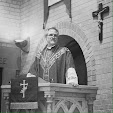
Sermon: Sexagesima - 2019


24 February 2019

Text: Luke 8:4-15 (Isa 55:10-13, 2 Cor 11:19-12:9)

In the name of + Jesus.  Amen.

Until recently in human history, we didn’t know how seeds worked.  Now that we live in an information age, we know about computer programs.  A seed is essentially a tiny biologically-driven computer program, in which DNA code gives a complex series of exact instructions for cell division to germinate, to create a division of labor between root, stem, leaves, and flowering mechanism, and to carry out a precise life-cycle.  The DNA calls the shots as the plant flowers, bears fruit, produces new seeds with this embedded DNA code, and sends out new plants according to these same instructions.  Leaves and stems die, the flower fades, but the instruction of the DNA code endures forever.

But the seed isn’t just code in someone’s head.  The seed actually biologically modifies itself in space and time according to the code.  In other words, the seed is a self-modifying computer program, or as technocrats like to say, “artificial intelligence” – only it is real, not artificial.  

So, who wrote the code in the first place?  For we know that computers don’t program themselves unless they were originally programmed by a first programmer.

Our Lord Jesus is being cheeky when He compares the kingdom of God to the sowing of seeds.  For He is the original Seed, and the original program.  For God said, “Let there be… and there was.”  “In the beginning was the Word.” And like the seeds in the parable, Jesus doesn’t exist as a spiritual abstraction of theoretical ones and zeros made up of electrons, but is rather of the dirt and grass and rain and sun; of blood, sweat, and tears; of waking and sleeping and talking and listening, of dying and rising again.  

There is nothing artificial about plants.  We eat them.  We plant them.  Our planet depends on them for survival.  And Jesus likewise is flesh and blood, breaking into space and time, and His Word upholds and nourishes creation.  Jesus is the Logos, the logic embedded into the DNA of the universe, the data that exists eternally, or, as John the Evangelist calls Him in the prologue to His Gospel: the Word Made Flesh.

But of course, what we see with our eyes is not so spectacular.  Seeds are tiny things that we often throw away.  They may be sprinkled on our bread for a little flavor.  They are often spat out and thrown away by aficionados of watermelon.  Seeds are used by creative people in arts and crafts.

But the real power of the seed is the embedded data of God’s creative might latent in the DNA, which awaits the launch sequence to begin carrying out the very instructions of God Himself, instructions that date back to the beginning of the universe.  And in this work of the seed, entire forests and wheat fields emerge, nations of people and animals are fed, and there is no limit to the ability of the seeds to replicate.

We would look at it as a miracle if it weren’t so common.  We would consider this undeniable proof of the existence of God if we weren’t so blinded by our obsession with explaining away God by illogical logic.

But for seeds to begin their launch sequence, they must be triggered into action.  And this is where the soil comes into play.

Jesus explains the kingdom like a sower who sows seeds.  Now, our farmer isn’t like our modern agribusiness who plans (and in some cases holds copyright) on every seed.  Our sower instead “broadcasts” the seeds, scattering them everywhere.  And so, the seeds fall on different kinds of soil.

“Some fell,” says Jesus, “along the path and was trampled underfoot,” and given that it could not embed in the soil, our Lord explains, “the birds of the air devoured it.”  Some fell into rocky ground, grew up quickly in the shallowness, but did not get enough moisture and “withered away.”  Some “fell among thorns” and its growth was “choked” off, and it died.  

With each of these three soils, the seeds’ instructions are cut short by death.  There is no flower, no fruit, and no reproduction.  These seeds never reach the potential that God built into them, because His instructions are not carried out.

But then there is the “good soil” in which the seed prospers, easily executing the computer code line by line, growing, bearing fruit, and yielding “a hundredfold” of new seeds carrying the Word and spreading far and wide, cast by other sowers unto the blessing of the world.

Of course, Jesus isn’t giving us a lesson in agriculture.  The Word of God makes its way to us in the same way that a seed bears its powerful DNA into the soil.  We are the various soils in the parable that receive the Word of God.  Our Lord even explains the meaning of this parable to his disciples.  The seed that never embeds and is eaten by birds is like the Word of God coming to a person who doesn’t take it to heart.  The “devil comes and takes away the Word.”  The rocky soil is like those who “receive it [the Word of God] with joy,” but lacking a solid root foundation, doesn’t last when a “time of testing” comes, and they fall away.  The thorny soil is like unto those who are distracted, and the Word of God is choked off by “cares and riches and pleasures of life.”  

In each of these three examples, the Word of God is prevented (by the person to whom God has given it) from bearing fruit and propagating the Word – which is what we are called upon to do.  

But we are called to be the “good soil,” who “hearing the Word, hold it fast in an honest and good heart, and bear fruit with patience.”

Dear friends, the Christian life is not about willing ourselves to be what we think God wants us to be.  It is about getting out of the way and letting the Word of God have His way with us.  Don’t interfere with God’s will, with His instruction, with His ongoing work of creation in our world, and of us.  

Even in our technologically-advanced world, we can’t make seeds.  But we can see to it that seeds find their way to good soil.  When asked about how the Reformation brought the Gospel to Germany against all odds, Dr. Luther shrugged and said that he didn’t do anything.  He and professor Philip Melanchthon sat around drinking Wittenberg beer while the Word did everything.

The Word does it all, dear friends.  What we do is interfere.  We sin.  Our sinful flesh gets in the way of God’s Word.  We are lazy and our priorities are messed up.  We would rather sleep than go to where the sower casts the Word of God, allowing Satan to rob our hearts of God’s Word.  We are often shallow, and don’t allow the Word to sink in by study and prayer and by drinking deeply of the riches of Word and Sacrament.  We often allow the “cares and riches and pleasures of life” to choke out the Word in our lives.  We need to repent of all of these interferences that prevent our lives from bearing fruit, from being what God has created us to be.

For ultimately, dear friends, the Word is not a series of instructions.  The Word is the one who gives the instructions.  Jesus is the Word.  He is the Logos.  He is the Seed.  And in fact, in Genesis, Chapter 3, after our fall into sin, God promised the coming of a champion, the “Seed of the Woman,” who would crush our enemy’s head.  Jesus is the Seed.  And He Himself explains that seeds only carry out the will of God by dying: “Truly, truly, I say to you, unless a grain of wheat falls into the earth and dies, it remains alone; but if it dies, it bears much fruit.”  Jesus points out that the seed goes into the ground.  It is dead, but the Word brings about a renewal of life.  And the plant lives again to bear fruit. 

Jesus died and was buried.  But He is the Logos, the very Word of God in the flesh.  His Word re-emerged from the soil of the earth.  His Word is spread by sowers who preach and baptize and administer the Holy Supper.  He re-emerges on the third day, rises again to life, and He is with us as the Word Made Flesh, embedded in our lives by the Word of God proclaimed, and the Word eaten and drunk in the sacrament: forgiveness, life, and salvation as a free gift!

Yes, dear friends, seeds may not look like much.  But they bear God’s almighty power.  The Word of God may not look like much, but it bears the might of the creative work of God.  As Isaiah prophesied: “For as the rain and the snow come down from heaven and do not return there but water the earth, making it bring forth and sprout, giving seed to the sower and bread to the eater. So shall My Word be that goes out from My mouth; it shall not return to Me empty, but it shall accomplish that which I purpose, and shall succeed in the thing for which I sent it,” and, “The grass withers, the flower fades, but the word of our God will stand forever.”

Indeed, let us remember that the little seed of the Word is all we need, as St. Paul quotes the Lord: “My grace is sufficient for you, for My power is made perfect in weakness.”

May the Seed of the Word Made Flesh find good soil in your hearts according to His Word.  May it bear fruit a hundredfold, even unto eternity!  Amen.

In the name of the Father and of the + Son and of the Holy Spirit.  Amen.

Sunday, February 17, 2019

Sermon: Septuagesima and Baptism of David Kononov - 2019


17 February 2019

Text: Matt 20:1-16 (Ex 17:1-7, 1 Cor 9:24-10:5)

In the name of + Jesus.  Amen.

Is God fair?  Does he give us what we deserve?  No.  And for that, we should be grateful.  And to illustrate this point, our Lord Jesus tells a story, a parable, to teach us how His kingdom works.  

In this story, which we call “The Parable of the Workers in the Vineyard,” a boss goes out in the morning to hire workers.  As the sun rises, he strikes a deal with some laborers for the standard rate of a denarius a day.  Today, we call this a “contract.”  And “he sent them into his vineyard.”

Two hours later, about eight in the morning, he hires another group, and their contract is for “whatever is right.” And “so they went.”

The same thing happens at about noon, and then about three.  Finally, at five in the afternoon, with only a single hour left in the workday, the boss hires one last group, and sends them into the vineyard too.

As the sun sets, the foreman brings the workers in to get paid.  The boss says, “Call the laborers and pay them their wages, beginning with the last, up to the first.”  The guys that worked one single hour received their pay: “each of them received a denarius,” that is, a full day’s wage.

Imagine that!  They were paid for 12 hours, but only actually worked one hour.  So the guys who worked twelve hours, were really looking forward to getting paid.  Surely, they would receive much more, maybe as much as 12 days pay for a single day’s work (if the pay rate were to be equal).  At very least, they should be getting a lot more than what they originally contracted for. “But each one of them also received a denarius.”

Ouch!

Clearly, Jesus can’t favor such unfairness.  After all, they “have borne the burden of the day and the scorching heat” unlike those Johnny-come-latelies who were sitting idle all day, and who then only worked an hour in the cool air, and got paid for twelve hours.  When you look at it from the point of view of “equal pay for equal work,” this is outrageous.  Maybe this unfair boss is going to be punished in the story.  Maybe he will be forced to pay his workers more fairly.  Jesus has to fix this, right?

But instead, Jesus sides with the boss.  “Friend,” says the business owner to one of the men who worked twelve long hours for a single denarius, “Friend, I am doing you no wrong.  Did you not agree with me for a denarius?  Take what belongs to you and go.  I choose to give to this worker as I give to you.  Am I not allowed to do what I choose with what belongs to me?  Or do you begrudge my generosity?”

This is not what most people would expect.  Jesus sides with management over the workers, with capital over labor.  The workers are to be content with the contract that they had originally agreed to, and if the boss pays others more, that is his right – since the business and the money belong to him.  

Jesus is no Socialist, and He does not advocate the right of workers to seize what does not belong to them, or to violate their contracts.  Having said that, the main point of this parable isn’t property rights and contract law, not labor relations or economic theory.  Jesus told us that this is what “the kingdom of heaven is like.”  Jesus says that in God’s kingdom, “[T]he last will be first, and the first last.”  Jesus says that “fairness” according to the ways of the world is not how His kingdom operates.  If God gives someone something that He doesn’t also give us, if God shows undeserved mercy to someone else and does what He wishes with what belongs to Him, are we to begrudge His generosity?

By no means. 

In fact, we should thank God that He doesn’t judge us by what is fair; He doesn’t give us what we deserve.  For we deserve death and hell.  We deserve His wrath.  We justly deserve His temporal and eternal punishment.  Unlike the rigid laws of our fallen world, God is free to show mercy to us.  Yes, He is unfair.  Though justice demands that we die, Christ’s death pays our debt.  Though the Lord Jesus bears the burden of hour after hour suffering under Pontius Pilate, though He endures the scorching heat of exposure to the elements upon the cross, though He does not deserve to bear this punishment that is rightfully ours – He willingly does so.  He does what he chooses with what belongs to Him, even His very body and blood, offered and shed for us as our all-atoning sacrifice, given to us us here at this altar, paying each one of us a “denarius” of salvation whether we have been Christians for years, or only for minutes.

God is not “fair,” and He does not give us what we deserve.  Instead, He shows us mercy.  He gives each and every worker in the vineyard a “denarius” of salvation, as we hear the words: “the body of Christ, given for you; the blood of Christ, shed for you.”  For we are not being paid for our own work, but rather for our Lord’s work upon the cross.  God is merciful and generous.  He keeps His end of the bargain, His covenant: which is our salvation, which is our redemption, which is eternal life to those who have been baptized and who believe.

David, on this day, you are among all of us latter workers.  Like us, you don’t deserve it.  And you are made equal to all of the Lord’s redeemed.  For you have received that which is right, not in the eyes of the world, but according to the contract, the covenant, that God made with us.  

He has given you everlasting life as a free gift, by grace, through faith, poured out upon you by water and the Spirit.  God has called you to this font.  He has cleansed you of your sins.  He has placed His Son’s righteousness upon you, according to His Word and promise.  He has given you the sign of the holy cross.  He has written your name in the Book of Life.  He will not revoke, renege, or refuse to honor His covenant.  Verbum Dei manet in aeternum, that is, the Word of God endures forever.  And His Word is truth. 

It was His will to bring you to this font on this day.  He arranged this to happen before the foundation of the world.  You are not the inferior of any Christian on the planet, for you, like all of us, are a sinner who has been redeemed by the blood of the Lamb.  You are a saint, not by virtue of your work, but rather by the Lord’s work in the vineyard of His Church.

The Lord Jesus is the true Passover Lamb, whose flesh we eat under the form of the bread that he Himself broke and shared with His disciples “for the life of the world.”  His blood is the cup of the New Testament: the same spiritual food and the same spiritual drink: the Rock that is Christ.  The partaking of the body and blood of Christ is your Passover, even as your baptism is your watery escape in the ark of the church, your crossing of the Red Sea to the Promised Land, a salvation through water.  You have been “baptized into Christ’s death” so that “you might walk in newness of life.”  You have gone from being in the position of grumbling about God’s unfairness, to one who rejoices in His mercy, in His generosity.  

For we are all beneficiaries of His grace.  We are all those last fortunate workers who squeaked by according to His loving kindness, though we do not deserve it. 

“So the last will be first, and the first last.”  Thanks be to God, now and even unto eternity!  Amen.

In the name of the Father and of the + Son and of the Holy Spirit.  Amen.

Tuesday, February 12, 2019

1984

George Orwell's Nineteen Eighty Four is one of the most important works of literature in the 20th century. 

It has shaped our view of totalitarianism and even provided a vocabulary, or more accurately, a shorthand for recognizing and articulating government overreach and abuse of our liberties.

If you have never read it, now is the time!

I have taught this book to my high school students at Wittenberg Academy since the 2013-2014 school year.

I'm sharing with you three videos: 1) a brief overview by me to my WA students, 2) a background of the alternative world of Orwell's creation (spoiler alert), and 3) a SparkNotes summary of the book (spoiler alert).

If you don't want spoilers, don't watch the latter two videos!

And if you want more information about Wittenberg Academy (a fully-accredited online classical Lutheran junior high and high school), feel free to contact me or WA directly: mrsbenson@wittenbergacademy.org!


Sunday, February 10, 2019

Sermon: Transfiguration - 2019


10 February 2019

Text: Matt 17:1-9 (2 Pet 1:16-21)

In the name of + Jesus.  Amen.

It always amazes me how so many people have no idea who Jesus is.  The cluelessness seems to increase with each passing year, and it’s not limited to unbelievers.

Some people think of Jesus as a kind of self-help guru, like the Dalai Lama (only with a beard and blue eyes) who spouts goofy spiritual soundbites.  Other people think of Jesus as a moral scold who has come into our world to remind you not say bad words and be sure to promote social justice causes.  Some people think of Jesus as the ultimate American (who of course drinks the same beer and cheers for the same teams that we do).  Others think that Jesus is the ultimate nice guy who drinks soy lattes and only says positive, uplifting things (and those people have never, ever actually read the Bible).  There are also other people who vilify Jesus as a backward rube whose hateful followers became a cult.  

Ironically, God created man in His image, but men like to create Jesus in their own image.

Even our Lord’s first disciples were guilty of this.  And this is one of the proofs that the Gospels are truthful: the apostles at times look foolish and clueless about who Jesus is.  There is no airbrushing going on in the pens of Matthew, Mark, Luke, and John.  Our Gospel reading from St. Matthew – the account of Peter, James, and John being given a glimpse of Jesus unveiled –  is one such passage.  We know it today as the Transfiguration.

At this point, the inner circle of the followers of Jesus still don’t get it.  In the chapter before our text, the disciples hear Jesus warning them of the leaven of the Pharisees and Sadducees, and they are so clueless that they think He is talking about their lunch plans.  Then Peter confesses Jesus as the Christ (for which Jesus praises him), and then immediately, Peter rebukes Jesus for saying that He must be crucified (for which Jesus calls Peter “Satan”).  Peter thinks he knows what Jesus is supposed to be doing more than Jesus does Himself.  And in the chapter just after our Gospel reading, the disciples want to know who is the greatest in the kingdom. 

In reading the Gospels, it becomes apparent that a good bit of the time, the Twelve seem as ignorant of who Jesus is, and why He has come, as a lot of people are today.

And so, Jesus takes Peter, James, and John and sets them straight about who He is.  For a brief moment, Jesus takes off the figurative veil and lets them see His unhidden form.  “He was transfigured before them” – or to use the Greek term, Jesus went through a metamorphosis.  Instead of the ordinary guy they have come to love hanging out with, they see something frightening.  Jesus’ face “shone like the sun, and His clothes became white as light.”  If this weren’t surreal and strange enough, they then see Jesus holding forth with Moses and Elijah.  

St. Peter, once again trying to tell Jesus how this is all supposed to work, starts plans for a building project to house Jesus, Moses, and Elijah.  But “while he was still speaking,” another frightening thing happened: “a bright cloud overshadowed them, and a voice from the cloud said, ‘This is My beloved Son, with whom I am well-pleased; listen to Him.’”

This interruption put an end to Peter’s pontification, and the three – Peter, James, and John – immediately fell “on their faces.” 

This is not a Jesus that they can control.

No soy latte guru, no swaggering John Wayne, no finger-wagging scold, and no Mister Nice-guy – just pure, unapologetic divine power emanating from Jesus in His flesh.  Jesus is not messing around.  This isn’t about making sure you say “please” and “thank you” and use the right fork for your salad.  Not that those things are bad, of course.  But Jesus has come to eviscerate our enemy and to cure us from our mortal illness called “sin.”  He has broken into our time and space to redeem us and the world that we have corrupted.  Jesus has also come to vanquish the devil and to restore creation to its original glory.

And in order to do this, He has to die.  He comes to fall on the grenade for us.  He comes to interpose himself between the assassin’s bullet and us.  He comes to do the messy, dirty, bloody work of extracting the poison from our flesh and blood, by cleansing us with baptismal water, and then giving us His transfigured flesh and blood.  We don’t see the blazing white light from His flesh, nor do we hear the voice of God bellowing out of the clouds.  For Jesus has again veiled Himself under the forms of bread and wine.  And the Word of God is spoken by a pastor who is under holy orders by God to speak the Word of Jesus: “This is My body, which is given for you… Drink of it, all of you; this cup is the new testament in My blood… for the forgiveness of sins.”

Those are not the pastor’s words, but the Son’s words.  And it is God the Father who says: “This is My beloved Son, listen to Him.”

Jesus has come into our world to redeem the world.  Jesus has come in the flesh to cure our flesh of its mortality.  Jesus has not come to scold, but to save; not to promote a nationality, but to make disciples of all nations; not to promote niceness, but to crush our enemies: sin, death, and the devil – into the dust.

He has come to drag us out of the pit, to pull us out of hell’s flames, and to bring breath and life into our dying bodies and souls that are ridden with gangrenous sin that threatens to drag us down into the grave.  Our blessed Lord means business.

Jesus has come to put the world into its proper orbit, to order the particles and emanations of energy of the universe, to restore harmony to every creature that lives and breathes, and to put an end to all suffering and conflict, to all scarcity and want, to every manifestation of disease and discord.  Jesus has come to re-create the universe, and He comes to start with us: His often clueless disciples upon whom He has mercy.

Jesus was transfigured for our sake – to prove His divinity.  Jesus spoke with Moses and Elijah for our sake – to demonstrate His fulfillment of the law and the prophets.  Jesus receives the approval of the Father who tells us to listen to Him – for our sake, to point us to the Word – even as Jesus was crucified, died, and rose for our sake.

And once more we hear His voice, His invitation to “Rise, and have no fear,” for He has come to redeem, to heal, and to save.  He has come to forgive our sins and to restore us to life.  And when we lift up our eyes, dear friends, let us see “Jesus only,” confessing Him both as God and man, both as Lord and Savior, both as the one who has come to destroy evil, and to sanctify us by His Word.

And though we did not witness this transfiguration, one who did, St. Peter, reminds us that “we have something more sure, the prophetic word, to which you will do well to pay attention as to a lamp shining in a dark place, until the day dawns and the morning star rises in your hearts.”  

“For the Lord God is a sun and shield; the Lord will give grace and glory.”  Amen.

In the name of the Father and of the + Son and of the Holy Spirit.  Amen.

Friday, February 01, 2019

The Orwellitarian Party


Nicholas Sarwark is the chairman of the Libertarian (sic) Party (LP). 

In recent years, the LP has been abandoning the libertarian principles that gave it its name.  Libertarianism is a political philosophy that stresses the limitations of government based on the Non-Aggression Principle (NAP), a belief that initiating violence against peaceful people is morally wrong, and that human interaction ought to be based on voluntary cooperation instead of coercion.

Libertarianism therefore stresses private property, free trade, non-intervention in foreign policy, and advocates for private sector solutions to social problems versus a reliance on the State.  Libertarianism is thus grounded in free markets, and is the antithesis of totalitarianism that manifests itself in various forms of dictatorial Statism, such as Communism (International Socialism) and Nazism (National Socialism).  There are degrees of libertarianism, such as the more moderate minarchism, and the more radical anarcho-capitalism.

What is so vexing about the LP in recent years is its tolerance, or even advocacy of, well... Socialism!  It's right out of Alice in Wonderland, or worse yet, an Orwellian dystopia.

It has become fashionable for prominent LP members to attack noted successful and influential libertarians like:


All of the above-mentioned are readers or students of Dr. Murray Rothbard, who was one of the founders of the LP and of the Cato Institute, as well as one of the most prolific libertarian writers in history - but who is now repudiated, if not loathed by many in the current LP leadership.

In recent years, the LP has become a laughable collection of stoners, sexual deviants, celebrity hangers-on, and open Marxists.

After speaking at the 2016 national convention and witnessing the LP's hard turn away from libertarianism, I changed my party affiliation to "independent" as soon as I got back home.  The attendees (delegates and candidates) indeed included some solid and serious-minded libertarians, but the party had clearly been hijacked. 

The above quote by Chairman Sarwark is a case in point.

Stokely Carmichael was a Marxist black nationalist/supremacist who advocated violence.  It's hard to get more antithetical to libertarian principles than that.

In 1981, while I was a 17-year old college freshman, my openly-Socialist professor of Sociology strongly encouraged us to attend a lecture on campus by her hero Stokely Carmichael (who at this time was calling himself Kwame Ture).  She was so embarrassingly excited that I though she might wet herself.  I attended this event, which was essentially a Hitler rally for militant black nationalists.  Carmichael ranted against whites, referring to us as "animals" and called for our extermination.  He called for Marxist revolution and railed against "capitalist pigs."  Being a slightly built white teenager, I got out of there while the crowd was whipped up into a frenzy.  I was appalled by what I had seen.

At the next class, our professor was gushing about Carmichael's performance.  She asked for reactions.  The class was quiet.  After a couple of awkward minutes, I piped up.  I did not approve of calls of violence against whites, nor of the endorsement of Marxism.  In less than a decade, the Berlin wall and the Iron Curtain would fall, and the USSR would break up.  In the early eighties, as the wheels were coming off, we were starting to hear more and more about the cruel Gulag system and the unspeakable repression and poverty that the people of the USSR were suffering - especially as defectors managed to escape the horror.

Other students also expressed their disapproval of Mr. Ture's rhetoric.  The professor looked like a deflated tire.  Had this happened in the current environment, perhaps I would have been sent to sensitivity training or expelled on account of my criticism.

And this Stokely Carmichael is the kind of person that Nicholas Sarwark quotes as an exemplar of libertarian thought, while at the same time, trashing Rothbard and Woods and others who blazed the trail for libertarian ideas to be promulgated in contemporary America.  If libertarians wonder why the LP considers itself successful if it exceeds a mere three percent of the votes, look no further than its tired, Socialist-friendly leadership and weak candidates

If this is what the LP wishes to be, it will continue to be (at best) nothing more than an option for people to cast a none-of-the-above protest vote, and the LP can continue congratulate itself on its great success.  Any similarity to libertarianism is becoming increasingly coincidental.

The good news is that libertarianism is an intellectual tradition, a school of thought, an alternative to Marxism that transcends things like political parties, a political philosophy that is being embraced around the world in spite of the efforts of Sarwark and the LP leadership to undermine the principles of liberty and markets and human flourishing, and in spite of their tarnishing of the term "libertarianism." 

Those who are interested in libertarianism would do well to ignore the LP - like the vast majority of Americans already do.


Sunday, January 27, 2019

Sermon: Epiphany 3 - 2019


27 January 2019

Text: Matt 8:1-13 (2 Kings 5:1-15a, Rom 1:8-17)

In the name of + Jesus.  Amen.

The great enemy of the Christian faith is pride.  For pride is a particular vice that actually gets in the way of receiving help.  Pride fills us with a sense of shame that we should depend on others.  Pride teaches us that we don’t need anyone’s assistance, because we’re good enough to get by on our own.

The problem is that we can’t.  And only those with the humility to seek help actually receive help.  Hence the famous passage from the Book of Proverbs: “Pride goes before destruction, and a haughty spirit before a fall.”

In our fallen world, having a position of authority is often a source of pride rather than what it ought to be: a sense of humility and obligation.  It’s a story that seems to be repeated again and again among men of great power.  In 500 BC, King Tarquin was the last of the tyrants of Rome.  He was overthrown and Rome became a republic.  Tarquin is known to history as Tarquin the Proud.

But there are many much older examples, including the example of “Naaman, commander of the army of the king of Syria” from about 800 BC, recorded in our Old Testament lesson.  Naaman was a great general, a man of power and arrogance, albeit a leper.  Leprosy was a terrible disease that was incurable until the 1940s.  It disfigured its victims and eventually killed them.

Naaman was told by a Hebrew servant girl that the prophet Elisha could cure his leprosy.  He sent a letter to the king of Israel, who “tore his clothes” in fear that Naaman was coming to cause trouble.  Elisha the prophet told Naaman, by means of a messenger, to “go and wash in the Jordan seven times, and your flesh shall be restored, and you shall be clean.”

But rather than humbly submit to the word of the prophet, Naaman “was angry” and “went away, saying, ‘Behold, I thought that he would surely come out to me and stand and call upon the name of the Lord his God, and wave his hand over the place and cure the leper.  Are not Abana and Pharpar, the rivers of Damascus, better than all the waters of Israel?  Could I not wash in them and be clean?’  So he turned and went away in a rage.”

Naaman’s pride was wounded, first by feeling snubbed by Elisha, and second, by this sense of Syrian supremacy.  But fortunately, his servants calmed him down.  Naaman humbled himself to obey the word of the prophet, which was the Word of God, “and his flesh was restored like the flesh of a little child, and he was clean.”

How often pride gets in the way of the Lord’s work!  How often we think we know better than God!  How many blessings we miss out on because humility is too great a price to pay.  For even the original sin of Satan was pride: pride that prevented his submission to God, as well as pride that was spread to Adam and Eve in their quest to “be like God.”  And their pride went before the Fall indeed!

And this is why, eight centuries after Naaman, our Lord Jesus Christ “marveled” at his own encounter with a powerful military officer.  He was a centurion: a captain of about hundred Roman legionaries.

Only this officer “appeals” to Jesus, even addressing Him as “Lord,” saying, “Lord, my servant is lying paralyzed at home, suffering terribly.”  Jesus hears his prayer and promises to go to the centurion’s home to heal his servant.  And here is where the centurion amazes Jesus: “Lord,” says the captain, “I am not worthy to have you come under my roof, but only say the word, and my servant will be healed.”

Imagine this!  A mighty Roman officer saying to a lowly Jew that he is unworthy!  He is sensitive to the fact that Jews were not permitted under the roof of a Gentile, and he bids Jesus, in whom he has faith, to “only say the word,” and his servant “will be healed.”

And he explains to Jesus that he knows how authority works.  As an officer, he knows that he can just give orders, and those orders will be obeyed.  He knows that Jesus has authority even over things like sickness and health.  He may or may not understand that Jesus is God, but he certainly ascribes to Jesus powers that seem to be divine.  And he expresses faith in our Lord’s Word, that a mere utterance from Him can cure.

Our Lord “marveled and said to those who followed him, ‘Truly  I tell you, with no one in Israel have I found such faith.”  He tells the centurion, “Go; let it be done for you as you have believed.”  His servant was cured indeed by the spoken word of Jesus, by His authority, for even nature is under the command of Jesus.

And though we don’t know this man’s name, we honor him for his example of faith.  He is not haughty, but humble.  He does not try to get what he wants by force, but rather by prayer.  He believes in the power of Jesus, and in His Word.  He trusts in our Lord’s ability to save.

We also remember the centurion’s faith in the words of our church’s liturgy.  In visiting people in their homes or in the hospital, the pastor often prays the general confession for, and with, the person he is visiting.  Often, the person may not be able to speak, so the pastor prays for both himself and the penitent.  He will then ask the person he is visiting: “Do you believe that my forgiveness is God’s forgiveness?”  When the ailing person nods or answers in the affirmative, the pastor says: “Let it be done for you as you believe.  I forgive you all your sins in the name of the Father and of the Son and of the Holy Spirit.”  For how often have we heard our Lord tell people, “Your faith has made you well.”?  The faith of the centurion received the Lord’s power and mercy.  And our faith in the Word of Jesus is the means by which His forgiveness is received by us.

Also, just before receiving the Lord’s Supper in the Divine Service, it is customary to pray: “Lord, I am not worthy that You should come under my roof,” just as the centurion said.  And we continue, “but only say the word and my soul will be healed.”

For the Lord comes under our roof: our home that is this fallen world.  We are truly not worthy that He should come to us, and yet He does.  And we know that His Word brought the universe into being.  His Word combined with water cured Naaman, not only of his leprosy, but also of his pride.  We know that His Word, received in faith by the centurion, cured the centurion’s servant.

We have the Word of Christ when He promises to be with us in His Supper.  We have His Word and promise in that Holy Supper when our Lord says, concerning His blood that we receive in the cup, that it is: “shed for you for the forgiveness of sins.”

And this is why we, as did the centurion, can express our unworthiness, and yet trust in the Word and promise and authority of Jesus.  For His blood was shed for our forgiveness, life, and salvation.  And in the Greek language of the New Testament, to be saved is to be healed, and to be healed is to be saved.

For our sinful flesh is like the flesh of a leper.  To be healed is to be forgiven of our sins.  To be saved is to be healed, to have our own flesh to be “restored like the flesh of a little child,” as was Naaman’s flesh.  Moreover, the ancient Greek translation of the Old Testament actually describes the experience of Naaman in receiving the healing and saving Word of God by means of water by using the Greek word “baptism.”

Dear friends, we too have been washed clean by water given under the promise and command of Jesus.  We too have been saved from the rotting flesh of our mortality, all by God’s grace.  We too receive His gift of eternal life in humble faith, knowing that we are not too good and too haughty to ask for help, for we most assuredly cannot save ourselves.

The power of the Lord’s Word resides in His divinity.  And the way that this power to heal and to save is applied to us is by our faith in His Word: faith received in baptismal water; faith received by His blood shed on the cross and given to us in the cup; faith that is received in humility.

For though we ask in humility, dear friends, we are not ashamed.  We confess with St. Paul, “For I am not ashamed of the gospel, for it is the power of God for salvation to everyone who believes, to the Jew first and also to the Greek.  For in it the righteousness of God is revealed from faith for faith, as it is written, ‘The righteous shall live by faith.’”

For faith is the means by which we receive salvation from the God the Father.  Faith assures us that we depend on the Son and His Word for our healing.  Faith teaches us that we are saved by grace alone through the working of the Holy Spirit by means of  water, wafer, and wine – all combined with the Word.

“Go; let it be done for you as you have believed.”  Amen.

In the name of the Father and of the + Son and of the Holy Spirit.  Amen.

Sunday, January 20, 2019

Sermon: Epiphany 2 - 2019


20 January 2019

Text: John 2:1-11

In the name of + Jesus.  Amen.

“There was a wedding at Cana in Galilee.”

What used to be the most normal and natural and universal of all human institutions has just in the last few years descended into chaos and confusion and infighting.  What used to be the ultimate symbol of human love found in every culture, has now become the source of lawsuits and threats of jail-time for those who understanding it biblically instead of according to the world’s recent radical redefinition.

Marriage is older than any human institution, older even than the state.  St. Paul teaches us that marriage is a “mystery” through which a man and his wife, “become one flesh.”  And the mystery of this union “refers to Christ and the church.”  The language of a man and a woman becoming “one flesh” is found  four times in Scripture: in Genesis Chapter Two, when God created Adam and Eve; twice in the Gospels, where Jesus confirms that this is what marriage is; and in St. Paul’s letter to the Ephesians, where he speaks eloquently and beautifully about married life.  Even the book of Revelation speaks of the Bride of Christ.  From Genesis to Revelation, we have God’s understanding of Holy Matrimony as He created it to be.  

And God created it to be one man and one women who become one flesh, in a lifetime union, which normally results in children.  But saying this today might get you fined or jailed or fired, or at very least, ostracized by polite company and shunned by one’s so-called “friends.”

But in the beginning, God created a perfect universe, a perfect world, and perfect humanity.  And in this perfection, we saw Adam and Eve becoming one flesh: Eve gladly submitting to her husband; Adam gladly serving his wife before himself.  But when the serpent came into the garden, Adam and Eve both forgot the vocations into which God placed them.  Eve stopped submitting to Adam, forgetting her place in creation, seeking to “be like God.”  Likewise, Adam failed as her husband, as he did not lay down his life for her protection, but instead allowing the serpent to deceive her.  They both failed.  And this, dear friends, is the answer to the question of evil.  Why is there evil in the world?  Why is there cancer?  Why is the war and hatred?  Why do children suffer?  Why are there natural disasters?  Why do we die?  Because Adam and Eve chose their way instead of God’s more excellent way.

And yet, even in our fallen world, marriage continues to be the mirror of God and His people.  God is the faithful husband who  gives of Himself without limit to His bride.  The people of God are the Lord’s beloved, placed into a position of loving submission to Him.  Of course, the history of the people of God has not been the perfect marriage.  We are an unfaithful bride, even though our bridegroom has given everything to us.

The church is the bride of Christ.  Her life goes well when she submits to her Bridegroom, Jesus.  Jesus is the perfect Bridegroom, who lays down His life to protect His beloved.  And that is the mystery of marriage according to the apostle Paul.

Our Lord’s first public miracle and His public ministry begin, appropriately enough, at a wedding.  And since this is the fallen world (and not the Garden of Eden), we deal with what economists call “scarcity.”  For whatever specific reason, “the wine ran out.”  This was to be a bad start for a young couple as “one flesh.”  This could have been a cause of shame.  But Jesus chose this union of one man and one women into one flesh to be where He, as the ultimate Bridegroom, demonstrates His love for His bride, as well as His divine power as the very Creator who puts men and women together in the first place.

Interestingly, He used “stone water jars” that were used for “Jewish rites of purification.”  This ritual water was an Old Testament prefiguration of Baptism.  Jesus has not come to abolish the law, but to fulfill it.  And so He fulfills this purification by performing a miracle in order to serve His bride, to show love to His people who are being ravaged by sin.  He turns the water not only into wine, but into the “good” wine.  This word “good” may not seem like much, but it is the word that God chose to describe the perfect world that He had created before man’s fall into sin.  For marriage is not a post-fall institution, but was part of God’s original plan for mankind: for “male and female He created them,” both sexes, in His image.  

The master of the feast notes that in our world of scarcity, the custom developed to serve the best wine up front, and as the guests have “drunk freely,” then bring out the “poor wine.”  Of course, the world that our Lord made had no scarcity and no “poor wine.”  Our Lord only wants the best for His bride. 

“This, the first of His signs, Jesus did at Cana in Galilee, and manifested His glory.  And His disciples believed in Him.” 

Dear friends, the greatest thing that a wife can do for her husband in this life is to “believe in him” even as the bride of Christ, the Church, the disciples, “believe in Him.”  We live in a day and age where wives believe that they must denigrate their husbands, badmouth them to their friends, and try to show them up.  This is part of our culture’s corruption of the beauty of male and female.  Wives are taught to be sassy and disrespectful.  Many of them, like Eve, think that they can “be like God.”  We all laugh, when, in a TV show or movie, a husband is made to look foolish by his wife, and then his children pile on with the disrespect.  

Do you think this is how the Church ought treat Jesus?  Is that how the bride of Christ ought to be?  If not, then why do so many wives behave this way toward their husbands?  If this is you, then need to repent.  You need to learn some humility and be the woman God made you to be, and stop trying to be the boss of the family.  Stop trying to “be like God.”  You’re not.

And then there are selfish husbands who live as if they are single, who badmouth their wives to their friends, who resent their wives and children because they infringe on their time with their friends or hobbies.  Is this what Jesus does for His bride?  Or is He willing to give up everything – even His life – for His beloved?  If this is you, you need to repent.  You need to man up and take responsibility.  Stop abdicating your role as the head of the family.  You’re not a little boy obsessed with toys.  You are a husband.  You are a father.  You are a warrior against Satan, the defender of your family.  You have been given a family to lead and protect.  Stop letting the world tell you how to do your job.  

Is it any wonder that half of our marriages end in divorce?  Why do we let the world tell us how to live?  We are now even to the point where we can’t even define male and female, where thirty percent of Americans cannot name their four grandparents, and where many young men and women are not interested in marrying at all – but rather just go for the hookups.  In some communities, there are more abortions than births. 

But our Lord Jesus Christ is the perfect Bridegroom who teaches us a “more excellent way”: a way of service, of love, of forgiveness, of submission, of respect, and of rejecting the world’s distortions of God’s good creation.

It is fitting that the Lord, our Bridegroom, begins His service to His bride at a wedding feast: service that will culminate in the ultimate act of a husband’s love, dying for His beloved upon the cross.  He withholds nothing from His bride, and she lives her fullest life when she respects her husband and submits to him.  Jesus has come to forgive us and offer us a fresh start.

We hear a lot about “toxic masculinity” these days, but in reality, both sexes have become septic in their relations to one another.  Men do not know how to be men.  Women do not know how to be women.  Both are locked in a cycle of selfishness and failure.  But when we see our Lord Jesus Christ, we catch a glimpse into what men and women were meant to be from the beginning, before the Fall.  We see the Lord’s glory manifest in the good wine of the marriage feast, and in the glory of His atoning death on the cross.  We see the epic and heroic husband who interposes Himself between the devil and His wife.  We see the faithful bride honoring her Bridegroom in humility and service, joyfully supporting Him and faithfully serving her family, knowing that He died for her.

Although our own marriages are not perfect, we should at least understand what we are called to do, how we are called to live, why God made us male and female in the first place – and we can look to Jesus – the one who created us in the beginning – to bring us to the fullness of what we were created to be as men and women, whether we are married or single.  For the mystery refers to Christ and the church.

Jesus gives us the good wine, dear friends: the wine of His blood, and the bread of His body. He gives His very flesh for the life of the world, and He lays down His life for His beloved bride – which includes you, dear brother, dear sister.

Let us eat His body and drink His blood unto godly obedience and repentance, seeking His superabundant mercy when we fail, and giving Him all honor and glory for all of the goodness in our lives.

“This, the first of His signs, Jesus did at Cana in Galilee, and manifested His glory.  And His disciples believed in Him.”  Amen.

In the name of the Father and of the + Son and of the Holy Spirit.  Amen.

Saturday, January 19, 2019

Sermon: Funeral of Robert Childress - 2019


19 January 2019

Text: John 10:10b-15, 27-30 (Isa 43:1-3a, 1 Cor 15:51-57)

In the name of + Jesus.  Amen.

Dear Rhonda and Robert, family and friends, brothers and sisters in Christ, and honored guests.  Peace be with you.

Robert has joined his beloved Betty in eternity.  The good news is that we Christians have a Good Shepherd who “lays down His life for the sheep.”  Jesus also went to His grave, but He didn’t stay there very long.  He died to redeem us from death and restore us to life.  

As we have just heard anew from our Gospel reading, our Lord says to us, “My sheep hear My voice, and I know them, and they follow Me.”  And no matter what happens in this fallen world, Jesus promises: “No one will snatch them out of My hand.”

But it seems that Bob and Betty have been snatched from our hands.  We can no longer talk with them, embrace them, or hear their voices on this side of glory.  This is why we mourn, dear friends.  We are filled with sorrow.  We have been unnaturally separated, and it causes us great pain.  God understands this.  He truly does.  For His own Son went to the cross as a sacrifice for us.  And this was done out of love for us, out of a desire that we live forever in happiness.  And so this is why, although we Christians mourn, we mourn in hope, knowing that we will see our loved ones again.  We will be reunited with them in eternity.

And it’s important to reflect on what this means.  So many people misunderstand what the Christian faith teaches – what the Bible teaches, what Jesus teaches – about life after death.  We are not angels, and we don’t remain as spirits floating around in the sky.  As we confessed in the creed, we believe in “the resurrection of the body, and the life everlasting.”  When Jesus rose from the tomb and was seen by thousands of people, He was not a ghost.  He made a point to let the disciples touch Him.  He even cooked up a breakfast on the beach and ate with them.  When God raises us to everlasting life, He means it.  In the fullness of time, God will “transform our lowly body to be like his glorious body,” and this is the promise that He made to Betty and to Robert, and to all who believe and are baptized.  God has plans for us in eternity with new and greater bodies – only without sin, without suffering, without aging, and without death.

Indeed, we will talk with them, embrace them, and hear their voices again on the other side of glory.  And that is why we Christians mourn – but we mourn in hope!

St. Paul speaks of the perishable body putting on the imperishable, and the mortal body putting on immortality.  And this is possible because our Lord Jesus Christ destroyed death by His own death, vanquishing evil on our behalf, shepherding us as His very own lambs who hear His voice, and who follow Him!

St. Paul leads us Christians in confessing “Death is swallowed up in victory.  O death, where is your victory.  O death, where is your sting?” as we heard anew in our reading.  We feel the sting of death in our mourning, dear friends, but that sting is temporary, for the Lord’s victory is our victory, as the apostle continues: “Thanks be to God, who gives us the victory through our Lord Jesus Christ.”

And we can take great comfort in this, dear brothers and sisters.  Just as the tomb of Jesus in Jerusalem is empty, all of our graves will one day be empty as well, “in a moment, in the twinkling of an eye, at the last trumpet.”

We can live the rest of our lives in expectant boldness, knowing that our reunion gets closer with each passing day.  Yes, we feel the pain of separation, but we will also feel the exaltation and unspeakable joy of reunion that will last forever!  

And as we heard in our first reading, the prophet Isaiah reminds us that God created us; the Lord formed us.  We are here by design, by the will of God.  We are all part of God’s grand scheme.  And the lives of Robert and Betty, who brought many of you into existence, and who nurtured you, taught you, and made your lives better – are intentional creations of God.  And so, we can have no fear, for God also redeemed them, and us, by the Lord’s death upon the cross.  

And so we have this promise of God as spoken to us again by Isaiah: “When you pass through the waters, I will be with you; and through the rivers, they shall not overwhelm you; when you walk through fire you shall not be burned, and the flame shall not consume you.”

And the reason that He gives us for our victory over all of the suffering of this world is this: “I am the Lord your God, the Holy One of Israel, your Savior.”

God is our Savior.  He rescues us.  Our Lord Jesus Christ redeems us – even from this broken and fallen world, even from death, even from mourning our beloved siblings, parents, grandparents, colleagues, and friends.

So, dear friends, ponder these words, for they aren’t my words, but rather God’s Word.  And this Word is God’s promise: the promise that our lives have purpose: eternal purpose.  Our lives do not end when we leave this fallen world, for the mortal puts in the immortal in Christ.  The perishable puts on the imperishable – just as the Lord Jesus rose from the death.

This is why Easter is so meaningful to us, dear friends.  Before we know it, it will be here, and we will reflect again on what it means that “Christ has died, Christ is risen, Christ will come again.”  The symbol of Good Friday is the cross: an instrument of death that has become an instrument of life – by the transformation of God.  The symbol of Easter is the empty tomb: a place of sorrow that has become a place of joy – by the resurrection of Jesus.

Let us reflect on the Word of God, especially that Word where Jesus reminds us that He is our Good Shepherd, knowing that He has shepherded our beloved Robert and Betty together, to eternity, where we await a glorious reunion with them.  And let us give thanks to God for His mercy, now and forever.  Amen.

Peace be with you.

In the name of the Father and of the + Son and of the Holy Spirit.  Amen.

Sunday, January 13, 2019

Sermon: Baptism of our Lord - 2019


13 January 2019


Text: Matt 3:13-17

In the name of + Jesus.  Amen.

Jesus was baptized.  This is an amazing thing.  For what is the point of baptism?  Mark’s Gospel teaches us that “whoever believes and is baptized will be saved.”  St. Peter’s first epistle teaches us that “Baptism… now saves you.” 

Saved from what?  What are we being saved from?  We are being rescued from death: the kind of death that leads to hell, to eternal separation from God as the righteous punishment for our sins.  So we Christians run to the baptismal font, even bringing our little ones, because this is where we are saved from the fires of hell and from never becoming whom God created us to be.  

As one of our hymns addresses Satan: “Now that to the font I’ve traveled, All your might has come unraveled, And, against your tyranny, God my Lord unites with me.”  And so for us, Holy Baptism defangs the devil, overturns his oppression, and brings us into communion with God.

So what is Jesus doing here?  Why did He travel to the font of the Jordan River?  What does Jesus have to do with Satan and his tyranny?  Isn’t our Lord already united in full communion with the Father and the Holy Spirit?

St. John the Baptist was equally baffled: “I need to be baptized by you,” he protests, “and do you come to me?”  It has been revealed to John that this Jesus, John’s cousin according to the flesh, is the Messiah, the one John spoke of: “He who is coming after me is mightier than I, whose sandals I am not worthy to carry.  He will baptize you with the Holy Spirit and fire.”  John expects the Christ to come baptizing, not being baptized.  But of course, our Lord has come not to be served, but to serve.  There are many surprises that Jesus has in store for the world.  This is not the only time people are shocked by our Lord.

Overriding John’s protestations, our Lord says: “Let it be so now, for thus it is fitting for us to fulfill all righteousness.”  

Jesus has come to rescue us by doing for us what we ourselves cannot do: “fulfill all righteousness.”  Jesus fulfills all of the Law for us, as our champion, as the New Adam.  And unlike the Old Adam, Jesus will not give in to Satan’s temptation nor submit to his tyranny.  And just as Adam ushered in original sin that is transmitted to us through the flesh into which we are born, our Lord Jesus Christ, the New and Greater Adam, removes this original sin and replaces it with His original righteousness, placing this righteousness upon us in our restored flesh into which we are born again, by water and the Spirit.

And to demonstrate this fulfilling of righteousness, Jesus submits to a baptism that we need: the baptism of repentance.  But remember, dear friends, John prophesied that the Messiah was coming to give us a New and Greater Baptism, the baptism of the Holy Spirit and fire.

John consents to this strange reversal of baptizer and baptizee.  He trusts that the Lord knows what He is doing.  Jesus humbles Himself to submit to the things that He doesn’t need, but these are things that we need, dear brothers and sisters.  We need Christ’s righteousness, Christ’s forgiveness, Christ’s atonement.  And the baptism by fire will not come upon us, but upon Him at the cross.  Our Lord will be the Lamb, presented as a burnt offering, the consuming of His flesh and blood as a sweet aroma rising to the Father.  His sacrifice upon the cross is known in Greek as a holocaust, an all-consuming offering by fire.  And His crucifixion purifies all of us who believe and are baptized, burning away our imperfections by His sacrifice.  And, dear friends, we participate in this once-for-all sacrifice by consuming His flesh and blood in the Holy Eucharist.  For this is a baptism of blood.  And just as blood and water flowed from our Lord’s pierced heart on the cross, the blood of Christ flows into us at Holy Communion, and water is poured out upon us at Holy Baptism.  

For “it is fitting for us to fulfill all righteousness.”  

The Lord fulfills all righteousness for us in His conception, His birth, His circumcision, His teaching in the temple, His baptism, His ministry of preaching and healing and casting out demons, His forgiveness, His Supper, His crucifixion, His resurrection, His ascension, and His coming again.  It is indeed fitting that He fulfills all righteousness on our behalf, for this is the Father’s will.  And we know this pleases the Father, for what do we hear immediately as Jesus “went up from the water?”  What does the Father say as the heavens are opened and the Holy Spirit descends upon Him?  We hear the Father say: “This is My beloved Son, with whom I am well-pleased.”

It pleases the Father that Jesus fulfills all righteousness, and that John obeys the Lord’s instructions even though it runs against his own inclinations.  It pleases the Father that Jesus humbles Himself, even to the point of death on the cross.  It pleases the Father that we are baptized, and we are adopted as sons of God, even as our Lord Jesus commissions the church to “make disciples” by the Lord’s ministers “baptizing them in the name of the Father and of the Son and of the Holy Spirit.”  This is indeed fitting unto the fulfillment of righteousness. 

The Father is pleased with the Son and with all of us as His adopted sons through the righteousness-fulfilling work and ministry of God the Son.  And the Son fulfills all righteousness in His obedience to the Father in laying down His life for us, taking our sins and exchanging them for His righteousness.  And the Holy Spirit descends and comes to rest upon all who are baptized: upon Jesus in the form of a dove, and upon all of us, who by the work of Jesus, are then called, gathered, enlightened, and sanctified by the descent of the Spirit unto the baptized.

Dear friends, the baptism of our Savior points to our own salvation through baptism.  We can take comfort that all righteousness is fulfilled not in our works, but in His works, including His work in bringing us to the font, and sanctifying Holy Baptism by His own baptism.  

And just as John is pleasantly surprised by the coming of Jesus, let us also be filled with joy, dear friends, as Christ has come to fulfill all righteousness and to give us eternal life as a free gift by means of water and the Word. 

“Let it be so now.”  Amen.

In the name of the Father and of the + Son and of the Holy Spirit.  Amen.